From classroom to COP30: Questions from children to climate leaders about Ocean protection

From classroom to COP30: Questions from children to climate leaders about Ocean protection

If a group of 7โ€“11-year-olds could interview delegates at COP30, what would they ask? 

Well in November 2025, Ocean Generation made this happen. We worked with 5 young Eco Ambassadors at Ballard School in New Milton, UK as they interviewed Professor Matt Frost, Head of International Office at Plymouth Marine Laboratory as part of the COP30โ€™s Virtual Ocean Pavilionโ€™s series of youth-led interviews.  

What is COP?
COP (Conference of the Parties) is the UNโ€™s annual climate summit. During the conference, parties negotiate climate action and review progress. COP is also a platform for scientific studies and activism. Read more about COP here. 

Ocean Generationโ€™s Youth Engagement Lead, Dr Gemma Connell, mentored the young people through the process and was so proud when they wrote their own (very difficult!) questions for Matt, giving him a bit of a grilling!  

It was heartwarming to witness Mattโ€™s honesty in his responses to the young people. He discussed where the problems are in the COP space, and most importantly โ€“ what we can all do to protect our Ocean.  

Join the Eco-Ambassadors as they ask Professor Matt Frost the important questions around COP30, the importance of the Ocean and what his favourite sea creature is.  

YouTube player

So, you wake up at COP30, what are you doing? What does you day look like? (Freddieโ€™s question) 

Mattโ€™s answer: 

Wake up, check the times on everything. You donโ€™t want the changing time zones to lead to you missing events and meetings.  

Planning where to be that day, making a list of places and times I need to be somewhere.  

The first day and the start of every day includes a lot of security. Making sure everyone has identification and the right badges to get through the security measures that are in place protecting some of the world’s most important people. 

COP can involve hundreds of thousands of people, so just working out where everything and everyone is, is a challenge. Got to make sure you know where the good coffee shops are.  

โ€œThe fun bit is that you walk around, and you meet all sorts of people.โ€  

Not just meetings or speaking events, but you might find yourself doing some media as well. 

โ€œRecently I was at a COP when I bumped into Tom Heap, who is one of the presenters on Countryfile. He said, โ€˜do you mind doing an interview while youโ€™re here that we can put on Sky News?โ€™โ€ 

Every evening there will be a reception, meeting all sorts of people from government ministers to scientists.
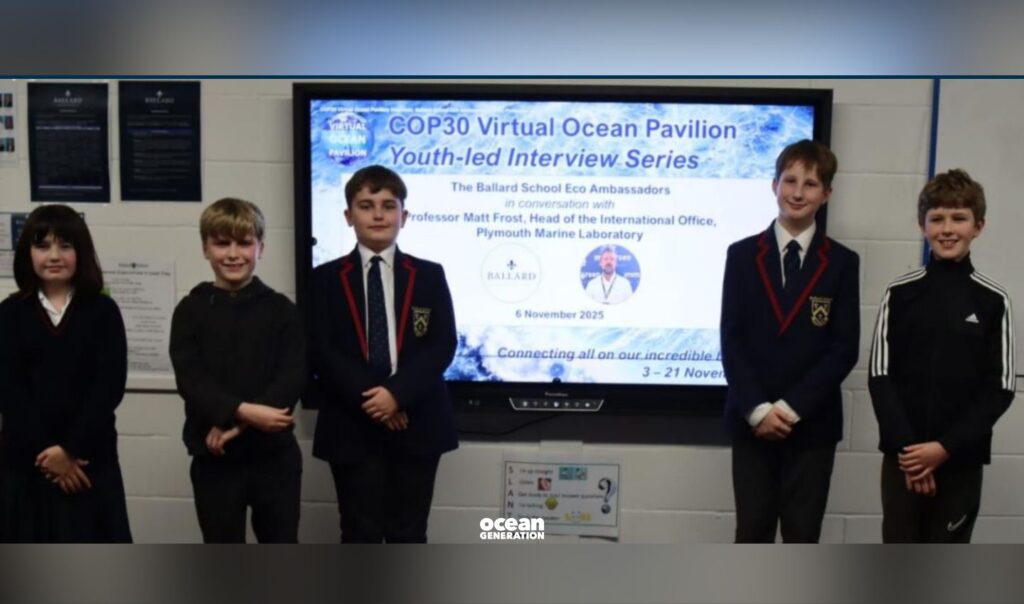

What are your expectations coming to the COP30 and what would you consider a successful result for the Ocean? (Tobyโ€™s question) 

Mattโ€™s answer: 

โ€œFor many years, when people came to these meetings, they were all worried about what was going on on the land.โ€ Matt noted how the conversations would focus more on forests, trees and farming, โ€œbut nobody really thought about the Ocean.โ€ 

โ€œSo, over the years, weโ€™ve had to explain to people that our planet โ€“ and Iโ€™m sure you know this, being Eco Champions โ€“ is mostly water. The Ocean is most of our planet. So, one of the main things that is a success every time we go to these meetings is to make sure that everybody is talking about the Ocean.โ€

Every leader talking about the Ocean is a success. The next step is encouraging action.

The people at these meetings donโ€™t have the power, they can go back to their governments to convince them to act. 

For example, the UK government going home and taking direct action to address the issues in the Ocean through laws and funding would be a real success from COP30.   
The Ocean has gradually grown in prominence on the global stage.

The Ocean has gradually grown in prominence on the global stage.  

Ocean Generation’s note:

Six years ago, COP25 recognised the connection between Ocean and climate, COP26 called for Ocean action to be integrated in work programs and COP27 encouraged countries to include the Ocean in their national climate goals.  

At COP30, the Ocean was formally included in the COP30 Action Agenda. It was the first time a COP decision included a specific Ocean angle, with goals and commitments. This included investing in marine conservation and renewable energy, reducing the environmental and ecological impacts of shipping, supporting aquatic food solutions and reducing the impact of coastal tourism.  

Practical tools were launched at COP30 to help achieve the goals. An Ocean Breakthrough Implementation Dashboard was launched to monitor country progress across those five areas (nature conservation, renewable energy, shipping, marine food and tourism). The Marine Biodiversity and Ocean Health Breakthrough and Roadmap gives the standards and methods to tackle Ocean assessment and actions.  

While COP30 included the Ocean more deeply than previous COPs, there was a lack of financing and binding agreements to ensure countries take action. It is now over to them to build on the outcomes of COP30 and take Ocean action.  

How can governments encourage private companies to not use single use plastic? (Leoโ€™s question) 

Mattโ€™s answer: 

If I could get a brilliant answer to that it would solve one of the world’s biggest problems. So, I will do my best and honestly, Leo, if you and your friends have got ideas… we need some help with this.โ€ 

As well as a pollution problem, plastic is also a climate problem, as 99% of plastics are made from fossil fuels. 

Governments like the UK have been banning things like plastic straws, microbeads in cosmetics and charging for plastic bags. 

Should we ban everything? โ€œI donโ€™t think that will help ultimately…โ€. It is a global problem and needs to be addressed globally. The Global Plastics Treaty is an opportunity for governments to make a real difference. Read more about the treaty here.  

Companies are willing to cut down on plastic but need incentives to do so. Encourage is a great word in the question. 

โ€œThey [world leaders] can make it difficult by putting taxes [on plastic] and making it more expensive to use single use plastic. But ultimately… governments will only do so much.โ€  

Government action can be encouraged by what we buy and say.  
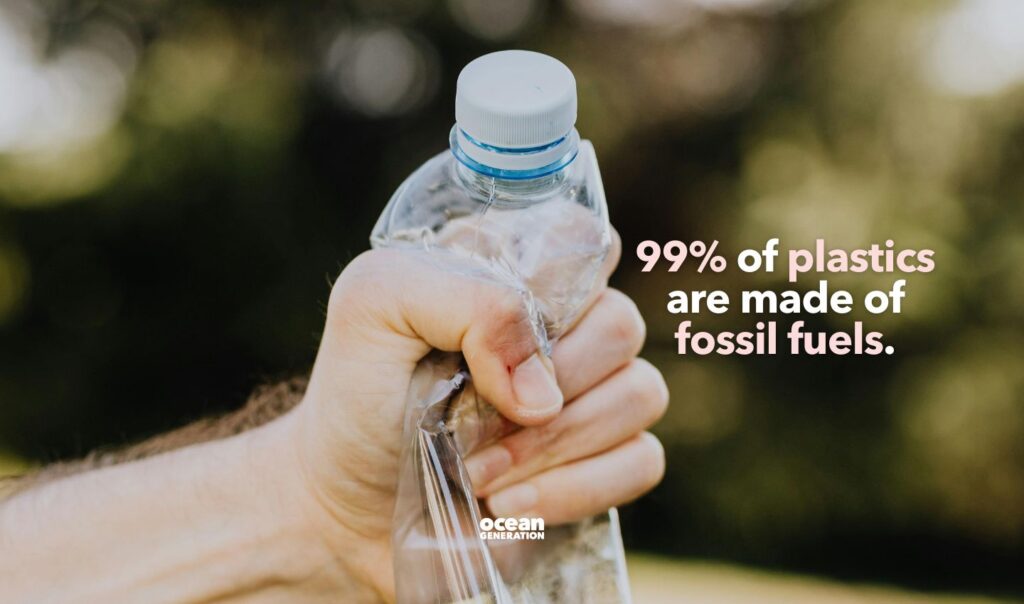
99% of plastics  are made of  fossil fuels. Posted by Ocean Generation, leaders in Ocean education.

Ocean Generation’s note:

The difficulty in banning all plastics, is where we havenโ€™t yet found an affordable alternative which does the same thing as plastic but doesnโ€™t have the impact on the environment.  

This is particularly difficult in industries such as healthcare, where single use plastic is often used to keep patients, doctors and nurses safe. We canโ€™t ban all plastics without looking at the other consequences that might have โ€“ context is very important! Read more about if plastic is good or bad here

Are there plans to introduce whale friendly cruise routes to reduce noise pollution in the seas? (Lilyโ€™s question)  

Mattโ€™s answer: 

Yes there are plans for whale friendly shipping, but we really need the shipping companies to start doing this now.โ€ 

Ships are big contributors to climate change, producing air pollution as they burn fossil fuels to power their engines.  

There are much more ships on the Ocean at any one point โ€“ over 70,000. There are two main ways they cause issues for marine life such as whales โ€“ noise pollution and ship strikes. 

Whale friendly cruise routes hope to minimise the impact of both of those things. The International Maritime Organisation and the International Whaling Commission are trying to implement rules on shipping. These include go slow zones where whales are known to feed and live, and special routes that avoid whale โ€œhotspotsโ€.  

It is down to the individual ships, shipping companies and cruise companies to act on the advice of the IWC and IMO.  
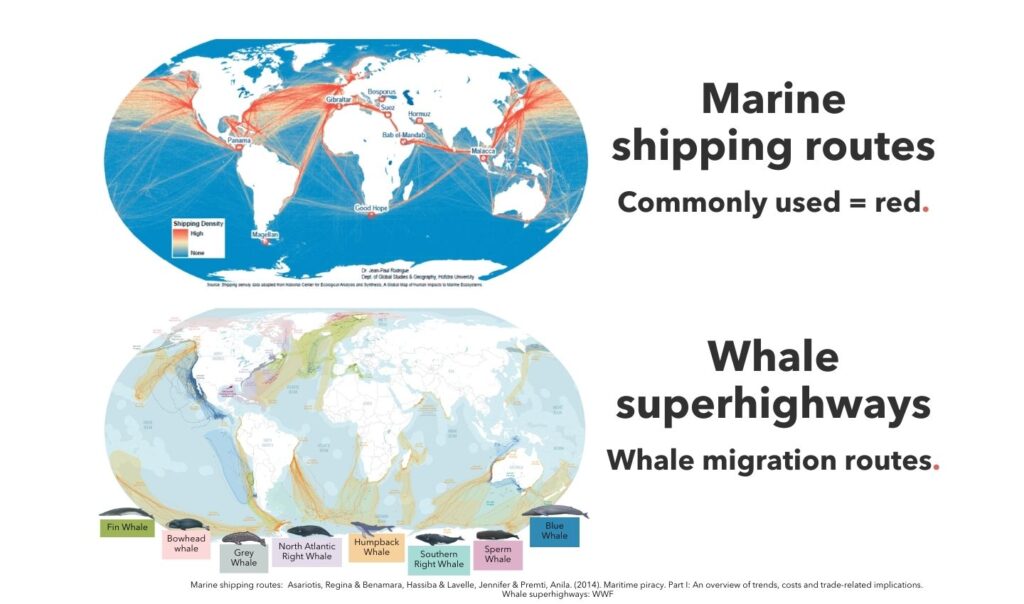
How marine shipping routes and whale's migration routes overlap. Explained by Ocean Generation.

Ocean Generation’s note:

Exact numbers of whales killed by ship strike are difficult to quantify, as data suffers from underreporting.  But recent work has shown that global shipping traffic overlaps with about 92% of whale speciesโ€™ ranges. Of that, only 7% of the areas that are high-risk for whale-ship collisions have any protective measures. Protecting just 2.6% more of the Ocean would eliminate many high-risk areas with minimal impact to shipping times.  

As Matt says, there are two main solutions. Slower ships give all marine life more time to dive or swim away, avoiding collision. Slowing ships to 10 knots can reduce the the number of whale deaths by 30%.  

The other approach is by re-routing ships from collision hotspots. In the Mediterranean, rerouting ships away from the Hellenic Trench has reduced the risk of collision by an estimated 27%.  

95% of hotspots fall within the exclusive economic zones of a country, so, each country can implement protective measures in coordination with the IMO recommendations. Whale safe routes are in reach.  

Does creating the infrastructure in order to host COP30 and transporting leaders there outweigh the positive outcomes of the conference? โ€ฏDo you assess the carbon footprint and is there a plan to offset this? (Seanโ€™s question) 

Mattโ€™s answer: 

The concern is that we might not have these conversations if we werenโ€™t all in the same room. Yes, we carbon offset but there is going to be some environmental impact. We think the positives outweigh the negatives.  

โ€œAt the moment we feel that if we didnโ€™t go, whoโ€™s going to be there to speak up for good science, to speak up for the Ocean, to speak up to actually look after things? And the danger is that, if all the people who feel very strongly about carbon decide not to go to the COP for the reasons youโ€™ve said, then it could be left with the people that donโ€™t really care much about it.โ€  

Ocean Generation’s note:

One of the intentions of hosts Brazil was to deliver a carbon-neutral COP30. They delivered this by offsetting their calculated emissions. They calculated that COP30 produced 130,000 tonnes of carbon dioxide or equivalent greenhouse gases. To counter this, they purchased 130,000 UN-certified carbon credits. The money for these credits goes towards carbon-negative projects, so COP30 is carbon-neutral in principle.  

However, this calculation only considers the emissions generated by hosting. The bulk of emissions are likely generated by the travel of attendees. There is no comprehensive calculation of these emissions. A large part of that relies on the attendees doing what they can to reduce environmental impact.  

โ€œYou can ask me again next year and maybe Iโ€™ll answer differently, but this year the positives outweigh the negatives.โ€  

Was COP30 carbon neutral? Explained by Ocean Generation.
Photo by Fernando Llano/AP

Is COP30 going to be used for fossil fuel deals like the last one? (Seanโ€™s question) 

Mattโ€™s answer: 

โ€œI canโ€™t promise that that will never happen at any COP.โ€   

Some people will want to see things stay as they are, but there are enough people with good intentions there to know that good things will come out of it. Multilateralism (global cooperation), connecting climate change messages to individuals and accelerating implementation are all main aims of this COP.  

Iโ€™m hoping the good things will outweigh the others.  

Ocean Generation’s note:

At COP29, there was backlash against the hosts, Azerbaijan, as one of their senior officials was found to be conducting meetings to coordinate fossil fuel deals. Find out more of what happened at COP29 in our article here.  

What is the extent of the impact of pumping carbon back into the Ocean underneath the seabed? (Lilyโ€™s question) 

Mattโ€™s answer: 

Itโ€™s possibly helpful, capturing carbon dioxide from the atmosphere and tapping it. However, there are risks โ€“ if it leaks it can cause harm to marine life and return the carbon to the atmosphere. 

Weโ€™re asking that we [humans] donโ€™t do it until we know more about the effects of it.  

โ€œIf you went to the doctor and said, โ€˜I feel really poorly,โ€ and the doctor said โ€˜well, Iโ€™ve got some medicine for you… I donโ€™t know if it works very well, and it might make you really ill, but I donโ€™t actually know that we havenโ€™t tried it.โ€™ Would you take that medicine?  

Impact of pumping carbon back into the Ocean: explained by Ocean Generation.

What key messages would you like us to share with our school community in order to look after the Ocean better? (Freddyโ€™s question) 

Mattโ€™s answer: 

There is an ongoing problem that people donโ€™t really understand the Ocean. They donโ€™t know what is in it, they donโ€™t really understand it, and they donโ€™t know that we rely on it.  

We need to remind people that most of our planet is Ocean. When the Ocean is healthy, we are healthy.  

We rely on the Ocean for our food, our breathing air and our mental health.  

If we look after the Ocean, it will look after us.  

Read more about how the Ocean keeps us alive here

Tobyโ€™s surprise question: What is your favourite marine animal

Mattโ€™s answer: 

Mattโ€™s answer: the leafy sea dragon!  

Ocean Generation’s note:

The leafy sea dragon is a fish closely related to seahorses and pipefish. The name of its genus, Phycodurus, comes from the Greek words for seaweed (phรปkos) and skin (derma), encapsulating its amazing camouflage. It can change the colour of its skin to match the seaweed around it and moves through the water like a drifting frond. 

Leafy seadragons typically swim solo, but will court each other through dance, mirroring each other’s movements. Males carry the eggs for 6-8 weeks on a specialised patch under their tail, before โ€˜giving birthโ€™ to 100-250 20mm baby leafy sea dragons (about the size of a peanut).  
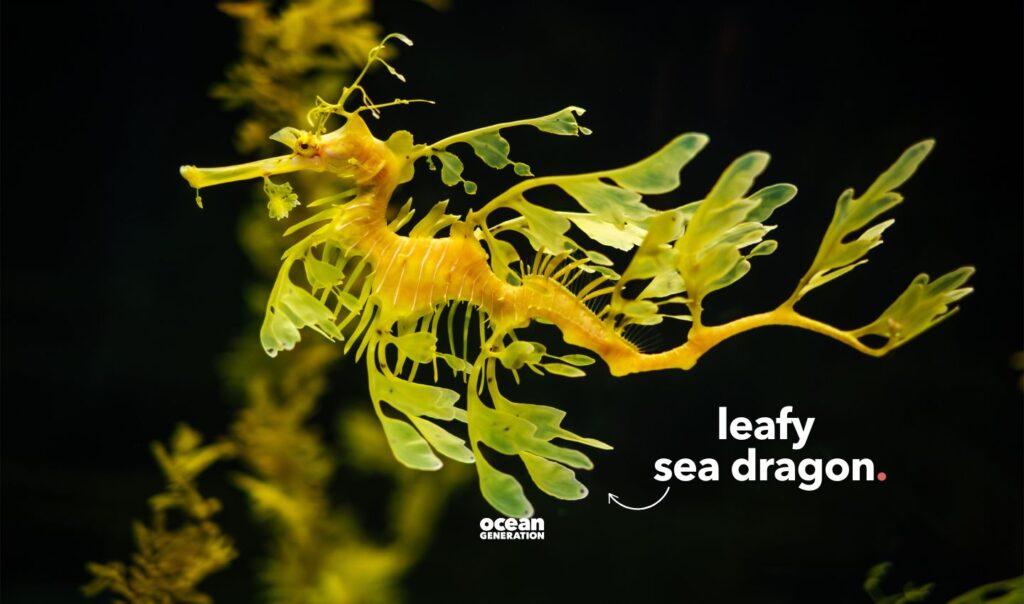
The leafy sea dragon is a fish closely related to seahorses. Posted by Ocean Generation.

Matt asked the students: what would the Eco Ambassadorsโ€™ message be for him to take to COP30?  

Toby answered, โ€œPlant more trees!โ€  

A week later, the Eco Ambassadors planted 30 saplings after school, doing their bit to live up to Tobyโ€™s โ€œplant more trees!โ€ answer.  

Alex Bellars, teacher at Ballard School said: 

โ€œOur Eco-Ambassadors absolutely loved taking part in the Virtual Ocean Pavilion interview with Professor Matt Frost on 6th November, 2025. It was inspiring to know that their voices and ideas formed even a tiny part of the global conversation at COP30!  

It was especially cool to know that our pupils were the youngest participants in the Virtual Ocean Pavilion – and therefore possibly at the whole of COP30 itself. And it was wonderful to see Toby grab the chance to put Matt on the spot with an unplanned bonus question!โ€  

Does the Meg exist? Hereโ€™s what scientists actually found.

Subscribe

Monthly: Impact in your inbox.

OceanGeneration-Join

Marine discoveries and Ocean wins in 2025

Marine discoveries and Ocean wins in 2025, posted by Ocean Generation.

What were the Ocean wins in 2025? 

The past year has seen some amazing developments in our understanding of and our relationship with the Ocean. Weโ€™re unpacking: what Ocean discoveries have we made, what Ocean protection have we brought in and what Ocean recovery have we seen in 2025? 

Jump to:

What Ocean discoveries happened in 2025? 

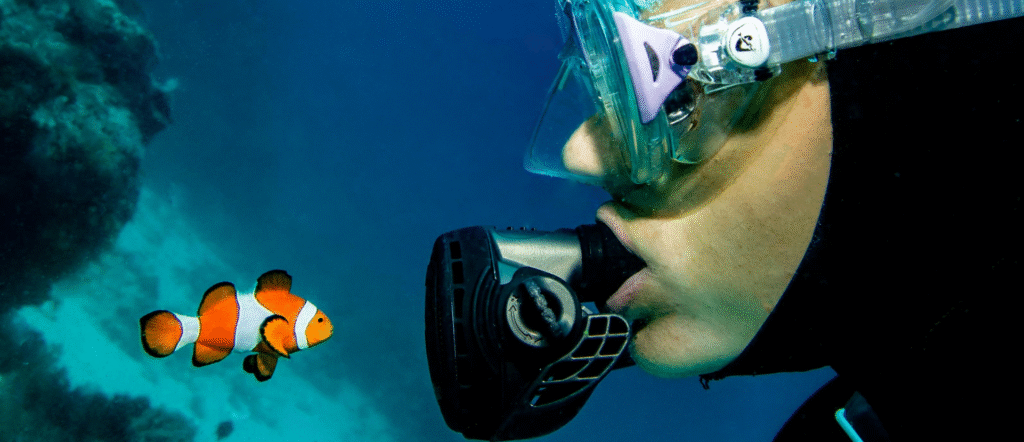
New clownfish related discoveries  

Over the course of 2025, there have been a series of discoveries centred around the clownfish, made famous by Nemo and Marlin in Finding Nemo (see our scientific analysis of the film here).  

How does the clownfish avoid being stung by the anemone? 

By having lower levels of sialic acid on their skin, clownfish avoid being stung by anemones. Sialic acid can be found on the outer surface of most animals โ€“ it is important in cell-to cell communication and immune response. The nematocysts (stinging cells) of the anemone have a special trigger, to avoid the anemone constantly stinging itself. Researchers found the fish that can live in an anemone have low levels of sialic acid, to โ€˜hideโ€™ from the anemone, and avoid triggering its stings.  

How does the clownfish avoid being stung by the anemone? Explained by Ocean Generation.

We discovered that the relationship between clownfish and anemone isnโ€™t as one-sided as it may seem. 

Anemonefish have been observed feeding their anemones large food they canโ€™t eat, or extra food after they have eaten their fill. This has also been shown to increase how fast anemones grow.  

Why do fish carry anemones around in their mouths? 

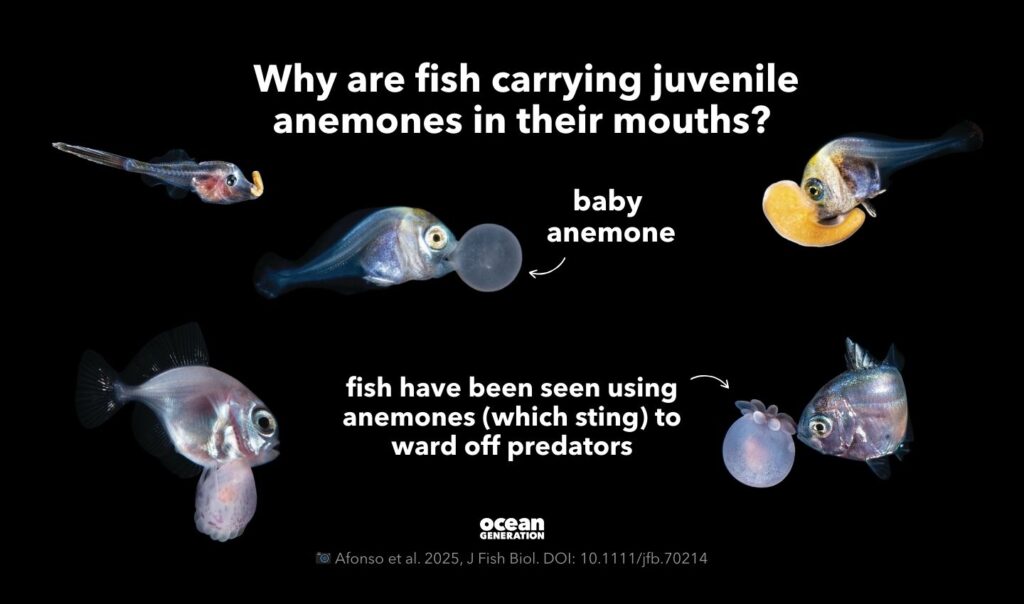
Clownfish arenโ€™t the only ones buddying up with anemones. Several species of fish have been photographed holding larval (baby/ juvenile) anemones in their mouths.

The assumption is that they are effectively arming themselves with marine (live) pepper spray. Predators can be warded off with a nasty sting. The anemones also benefit, as the young fish can swim and be swept much further than the anemone would normally reach.  

The young fish have a predator deterrent, and the anemone gets a lift to a new neighbourhood.  

Why do fish carry anemones in their mouths? Posted by Ocean Generation, leaders in Ocean education.
Picture credit: Afonso et al. 2025, J Fish Biol. DOI: 10.1111/jfb.70214

What new Ocean species were discovered in 2025? 

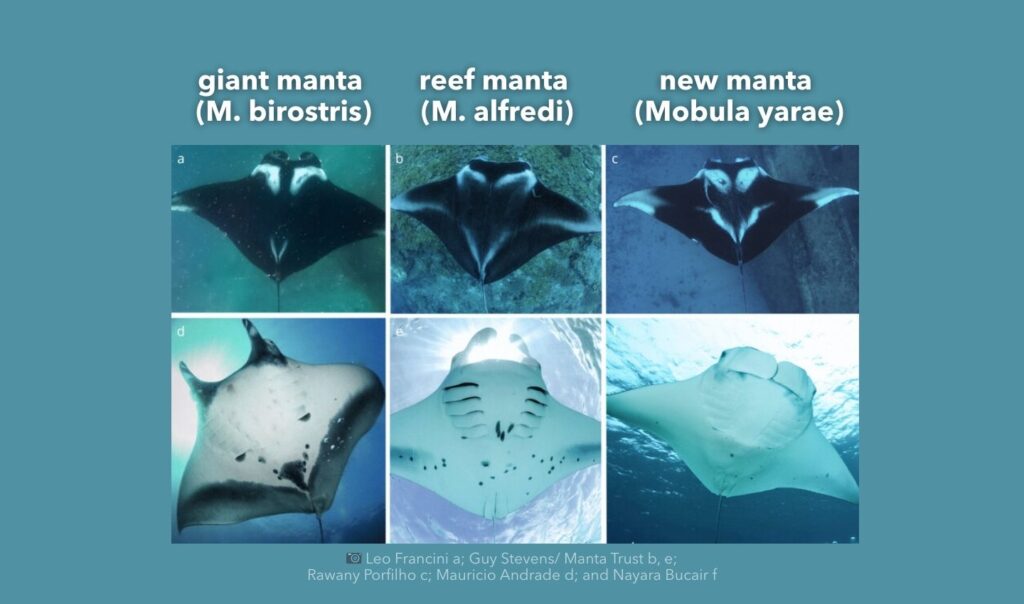
A new species of manta ray was distinguished in 2025, adding a third species to the manta ray family.  

Until 2009, there was only one species of manta ray.  In a study focussed on morphological characterisation, analysis of colour, teeth and other traits differentiated the reef and Oceanic manta rays

In 2025, after years of speculation, it was confirmed that there was a third species of manta.  

Lead author of the study identifying the Oceanic and reef manta species, Dr. Andrea Marshall, had theorised a third species after diving in the Atlantic Ocean with manta rays she didnโ€™t recognise. Years of study, including the description of a type specimen and genetic analysis, have confirmed her hypothesis: a third species of manta ray exists. 

New species of manta ray was described in 2025.
Picture credit: Leo Francini a; Guy Stevens/ Manta Trust b, e; Rawany Porfilho c; Mauricio Andrade d; and Nayara Bucair f

Facts about the newly discovered manta ray: 

Mobula yarae, more commonly known as the Atlantic manta ray, are named after Yara, the โ€˜mother of watersโ€™ from Indigenous Brazilian mythology.

Telling them apart from other manta rays starts with size: they reach an approximate size of 6m across, sitting between the Oceanic and reef manta in size. A โ€˜Vโ€™ shaped white shoulder patch, lighter colouration around the mouth and eyes and dark spots confined to the belly rather than between gill slits are the key identifying features.  

The Ocean Census announced that it has facilitated the discovery of 909 new Ocean species.  

The program, in its second year of running, hopes to fast-track Ocean discovery, and so far has increased the annual speed of species discovery by 38%.

A new kind of shark discovered 

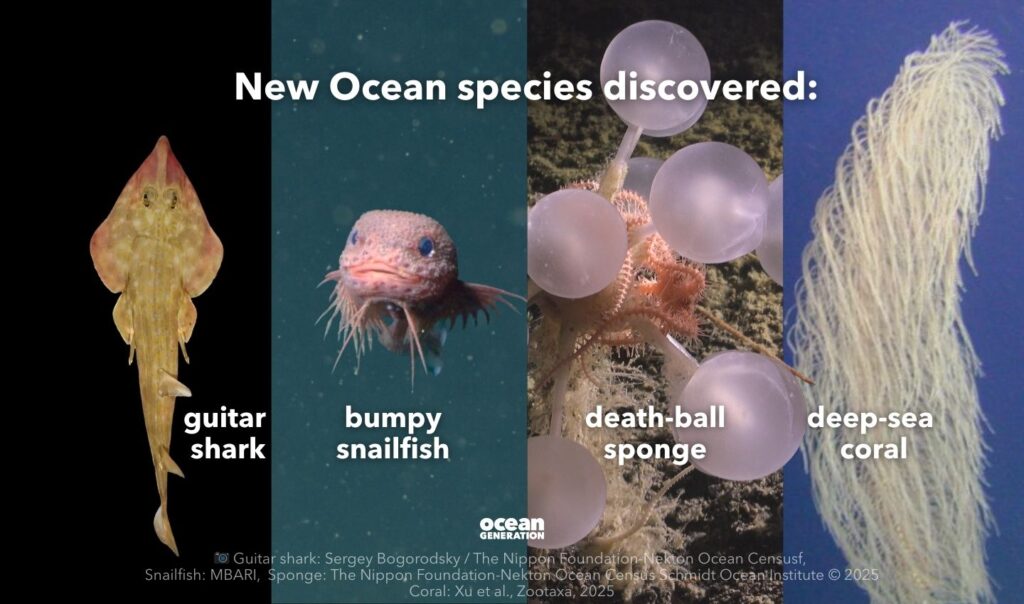
Sticking with our elasmobranchs (cartilaginous fish that include sharks, skates, and rays), a new kind of guitar shark was discovered off the coasts of Mozambique and Tanzania. It joins 37 other guitar sharks in one of the most threatened vertebrate families, with two thirds of them threatened.

New species of snailfish in the deep-sea 

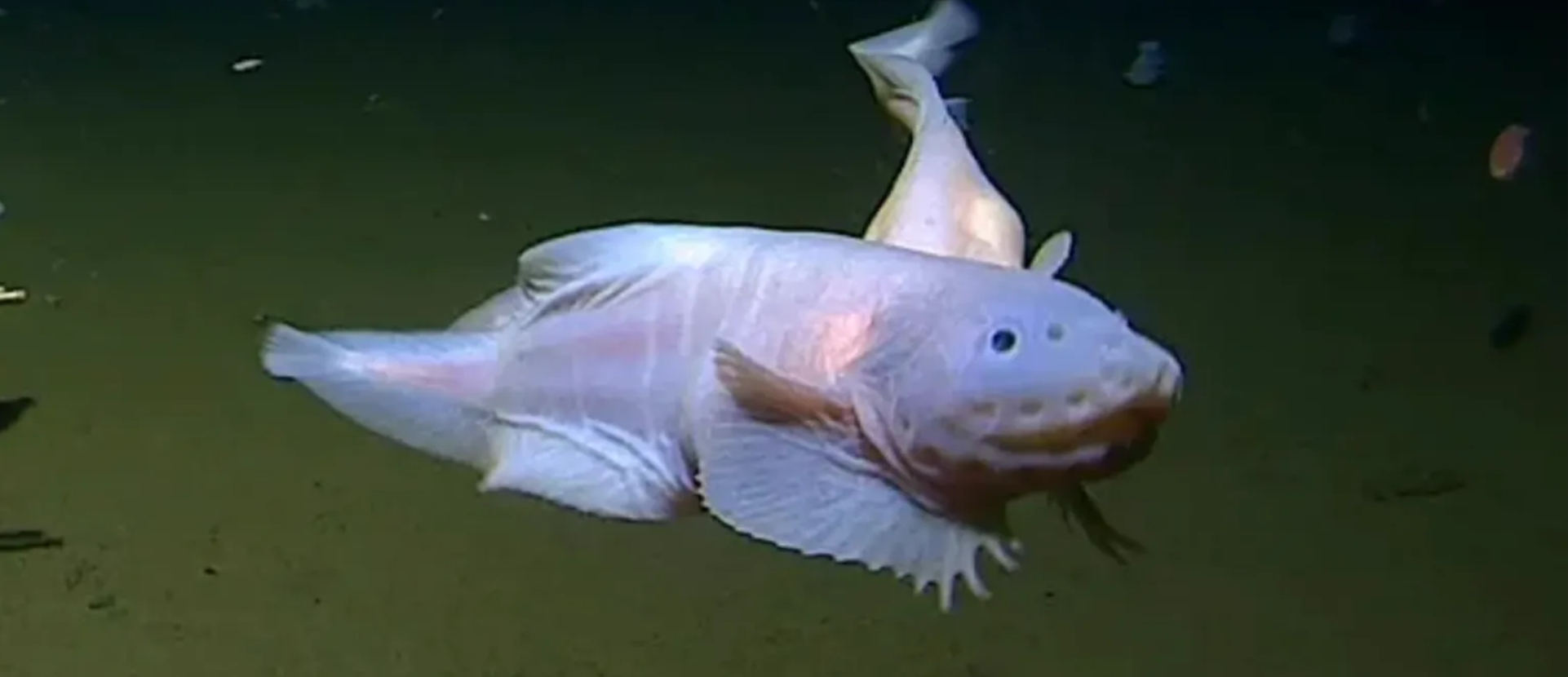
Looking deeper in the Ocean, a new species of snailfish was discovered 3,263m deep.

The suitably named โ€˜bumpy snailfishโ€™ is only two to three inches long and was one of three new snailfish species found on the expedition led by the Monterey Bay Aquarium Research Institute.  

There are over 400 species of snailfish, and the family holds the record for the deepest dwelling fish, with one found 8,338m deep.  

New Ocean species discovered in 2025. Posted by Ocean Generation.
Picture credit: Guitar shark: Sergey Bogorodsky / The Nippon Foundation-Nekton Ocean Census, Snailfish: MBARI, Sponge: The Nippon Foundation-Nekton Ocean Census Schmidt Ocean Institute ยฉ 2025 Coral: Xu et al., Zootaxa, 2025

Meet a newly discovered sea sponge: the Death-ball sponge 

As one of the more notably named, the death-ball sponge (Chondrocladia sp. nov.) received a lot of press.  

Where most sponges unobtrusively filter the water for food (ensuring highly efficient nutrient circulation where there isnโ€™t much to go round), this new species has a number of โ€˜ballsโ€™ covered in tiny hooks to trap their prey.  

New deep-sea discoveries with celebrity nicknames 

There were a couple of famous characters whose semblances were discovered in the deep Ocean.  

  • A deep-sea coral first spotted in 2006, but formally described this year, was given the name Iridogorgia chewbacca, due to its long hairy branches.  
  • An iridescent scale worm found in the freezing waters of Antarctica was given the nickname โ€˜Elvis-wormโ€™, its sparkling scales shimmering in the deep like the sequins of the King of Rock and Rollsโ€™ jackets in Las Vegas
  • And a bonus one (not a new species): the colossal squid was caught on camera in its natural habitat for the very first time. This one wasnโ€™t all that colossal: it was a juvenile just 30cm long. 

What Ocean protection happened in 2025? 

60 countries ratified The High Seas Treaty in 2025 

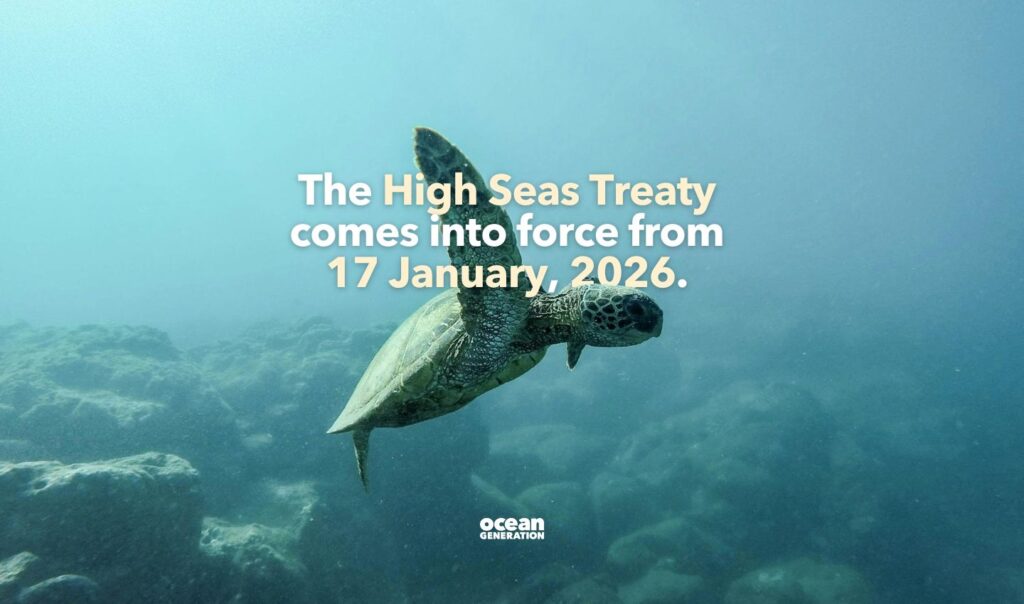
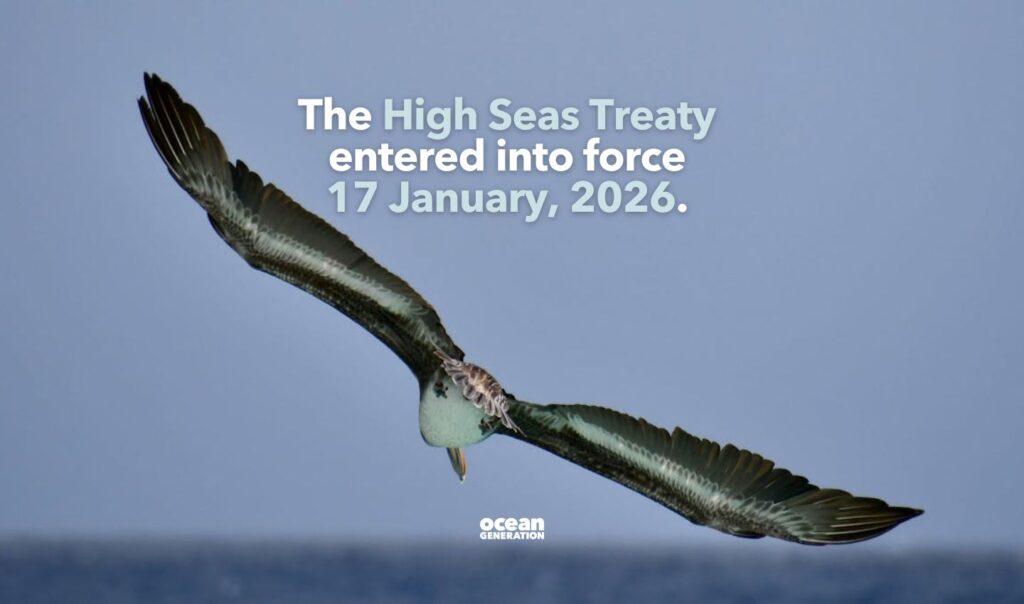
In September, the Agreement on the Conservation and Sustainable Use of Marine Biological Diversity of Areas beyond National Jurisdiction reached 60 ratifications, the milestone required to start the countdown to it becoming legally binding. From 17January 2026 the agreement, also known as the biodiversity beyond national jurisdiction (BBNJ) or High Seas Treaty, will enter force.  

Read more about the High Seas Treaty here. 

The High Seas Treaty will come into force in January 2026. Posted by Ocean Generation.

Many countries have been protecting the Ocean off their coastlines in 2025. 

Countries havenโ€™t been hanging about, waiting for the High Seas Treaty, they have been getting on with Ocean protection in their own patches.

Marine Protected Area, or MPA, is a general term for an area of Ocean in which human activities are managed or limited to protect the marine world. Depending on what they are aiming to protect, they can have different rules. Some will allow sustainable fishing and recreation; others may be no-take zones where no fishing is allowed. 

What is the largest marine protected area in the world? 

French Polynesia announced the creation of the worldโ€™s largest marine protected area in 2025. The protection of their entire exclusive economic zone, an area of 4.8 million square kilometres, now includes 1.1 million square kilometres of highly protected waters. 

An exclusive economic zone is the area of Ocean extending up to 200 miles from the coast of each country, in which they have the rights to explore and utilise any marine resources.  

A huge no-fishing zone has been expanded in the South Atlantic Ocean: 

For Marine Protected Areas (MPAs) around South Georgia and the South Sandwich Islands (not where sandwiches were invented), the โ€˜no take zonesโ€™ where no fishing can occur have been expanded to over 470,000km2, 38% of the MPA. This is to help protect the migration routes of humpback whales. 

How whales are being protected in marine sanctuaries? Explained by Ocean Generation.

How whales are being protected in marine sanctuaries:  

That isnโ€™t the only help weโ€™ve given our whale friends. In October, a proposal for a huge marine sanctuary in the North Atlantic was approved. Macaronesia is an area including the Azores, Madeira, the Canary Islands and the Cabo Verde islands. Itโ€™s rich in marine biodiversity, hosting 32 different species of cetacean. (Cetaceans include whales, dolphins and porpoises.)

The new marine sanctuary will hope to protect the Ocean from increasing pressures of boat traffic, underwater noise, industrial fishing and future threats such as deep-sea mining. 

Do marine protected areas really help protect the Ocean? 

In a little win of its own, a research paper was published this year that showed that fully and highly protected marine areas do work.  

There have been concerns that enforcement around MPAs isnโ€™t feasible, any fishing vessels can just โ€˜go darkโ€™ – turn off their identification systems and continue poaching.  

But analysis using artificial intelligence and satellite imagery has shown very little industrial fishing activity in highly protected MPAs. Conversely, there was substantial activity in MPAs with low protection.  

Weโ€™re protecting more of the Ocean, and it is working.  

What is the EU Ocean Pact

On money, the European Commission launched a unified framework for EU Ocean policy in 2025, backed by a โ‚ฌ1โ€ฏbillion investment in the Ocean, with six priority areas including: habitat restoration, decarbonisation of maritime sectors, blue economy competitiveness, coastal/island community support, Ocean diplomacy and innovation.

Progress on cutting shipping emissions

Member States of the International Maritime Organisation agreed a global standard for decarbonising shipping: fuelโ€‘intensity reductions, global emissions pricing for ships, and a fund for low/zeroโ€‘emission marine fuels. 

The agreement was agreed but not formally signed, as in a meeting in October 2025 delegations from Saudi Arabia and the United States lobbied for a delay.

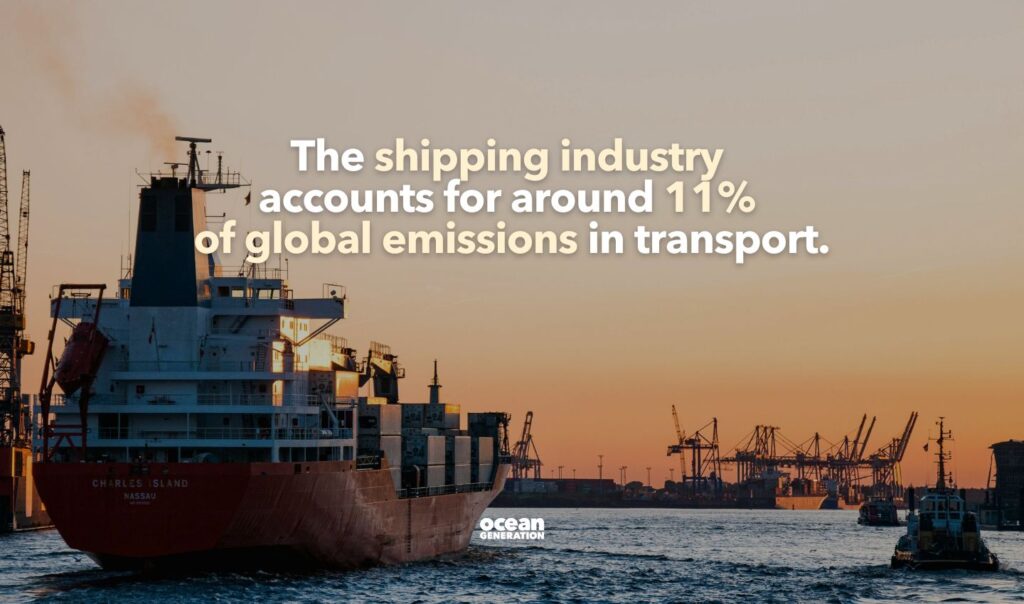
This is half a win this year and will hopefully be a full win for our Ocean in 2026, in a sector that accounts for around 11% of global emissions in transport.  

2025 saw progress cutting emissions from the shipping industry

What Ocean recovery have we seen in 2025? 

Are whale populations bouncing back? 

In a paper published towards the end of 2024 that examined historic databases on whales, it was suggested that we underestimate the longevity of whales by some distance.  

How old do whales get?  

Our estimates for the average age of whales were first shaken in 1979, when Japanese whalers found individual blue and fin whales that were 110 and 114 years old respectively. Prior to this, we understood these animals to live to 70 years.

This 2024 paper attributed the lower perceived longevity to our success in whaling. Whales werenโ€™t living as long because we were hunting them.  

But the world is changing. Whaling was made illegal in 1987, and populations have shown promising signs of recovery. Over the course of 2025 there were several markers of a better world for whales, and hints of the future we are creating for them. 

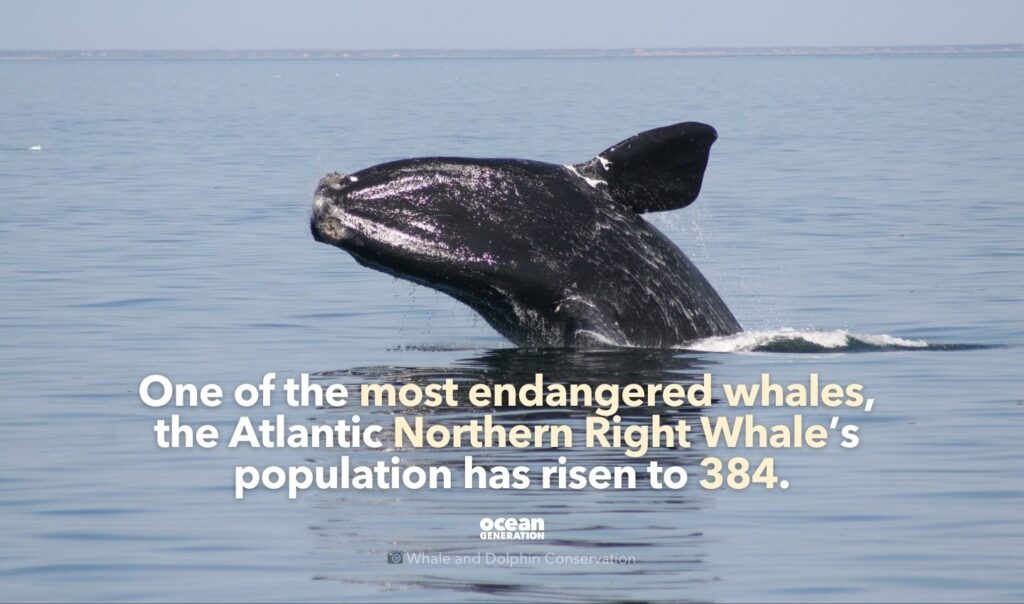
The Atlantic Northern Right Whale, one of the most endangered whales, has enjoyed an increase in population, up 8 individuals to 384 whales. This is off the back of a decade in which the population declined by 25% between 2010 and 2020 due to ship strikes and entanglement.

2025 saw the cancellation of the Icelandic fin whale season, meaning once again no fin whales were killed due to an unfavourable market, marked by diminishing demand for whale products and rising costs. 

Atlantic Northern Right Whale population is bouncing back.
Picture credit: Whale and Dolphin Conservation

Who is โ€˜crushโ€™ing it? Green turtles are no longer endangered

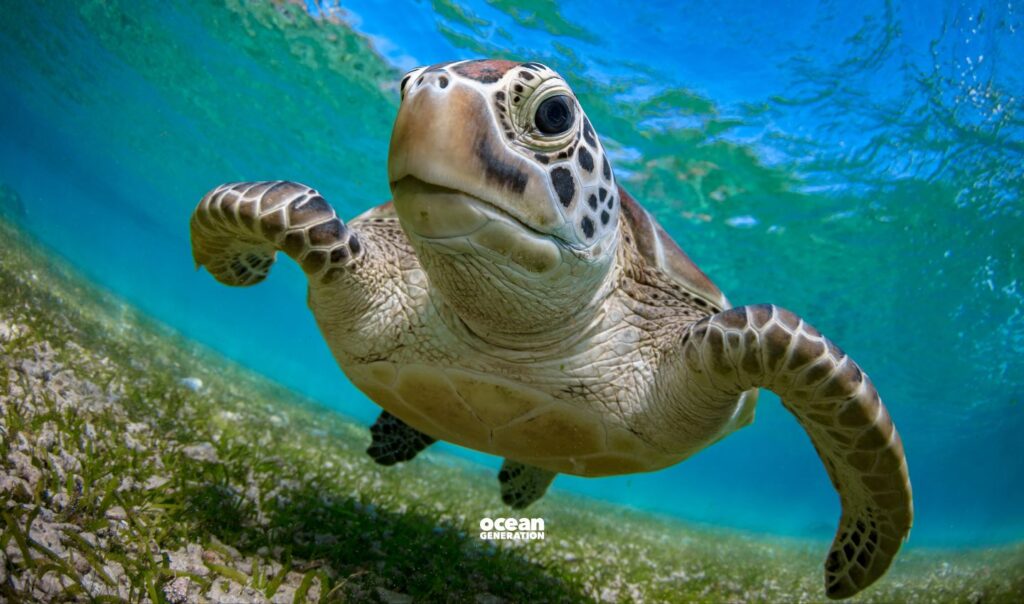
Itโ€™s a good time to be a green turtle (Chelonia mydas). The species, made famous by Crush and Squirt in Finding Nemo, has been upgraded on the International Union for the Conservation of Nature (IUCN) Red List, from Endangered to Least Concern.  

To best help them, we had to understand what was hurting them. Green turtles (and other sea turtle species) have long been hunted for their meat and their eggs, so legally protecting them was a good first step.  

When did we start protecting sea turtles? 

Legal protections started coming in in the second half of the 20th century, with bans such as that on Aldabra Atoll in 1968 safeguarding turtle mothers and their eggs. Since that ban, green turtle egg clutches have increased 410โˆ’665%.  

Even without the pressures of hunting, turtles still faced a struggle, becoming the poster of plastic pollution and entanglement in fishing gear, and facing the realities of a changing Ocean.  

But conservation efforts have continued. Excluder devices (devices designed to prevent bycatch) have been implemented on fishing gear to avoid entanglement. Nesting beaches have been protected from light pollution that could lead hatchlings away from the Ocean, or plastic pollution that could tangle or choke them. Turtle hatchlings have been released at sea to give the population a boost.  

Green turtle numbers are now up 28% compared to the 1970s.  

Some sub-populations are still struggling and need help, but it shows us, again, that the Ocean has a great capacity to recover when we allow it.  

โ€œThe ongoing global recovery of the green turtle is a powerful example of what coordinated global conservation over decades can achieve to stabilise and even restore populations of long-lived marine species,โ€ – Roderic Mast, co-chair of IUCNโ€™s Species Survival Commission Marine Turtle Specialist Group. 

Green sea turtles are no longer endangered. Posted by Ocean Generation.

Dam Good News for salmon 

In 1878, a lamp turned on. In itself, not a remarkable event, but this lamp was special. It was powered by water.  

Cragside House in Northumberland, England, saw the birth of hydroelectric power. Within ten years, hundreds of hydropower stations were running around the world. It remains the third largest source of electricity globally, behind coal and gas. Until 2004, it represented over 90% of the worldโ€™s electricity generated by renewables and is still over 50%.*

Benefits of hydropower 

Our World in Data compiles the data to examine its benefits. Hydropower is incredibly safe, with the 1.3 deaths per terawatt hour of electricity produced far lower than coalโ€™s 24.6, and almost all from a single event: the Banqiao Dam Failure in China in 1975, which killed 171,000.  

Hydropower is very clean, producing an average of 24 tonnes of CO2 equivalent per gigawatt hour, compared to coal which produces 970 tonnes. A world without hydropower would likely be a world that had burned more fossil fuels.  

Disadvantages of hydropower 

However, hydropower isnโ€™t all turbines and waterfalls – it comes with its limitations. Itโ€™s expensive, especially in upfront cost. It also has an environmental impact beyond carbon emissions.  

Huge dams create reservoirs, flooding land and cutting off rivers. Cutting off the rivers can lead to drought or famine downstream. Reservoirs can emit greenhouse gases by creating large areas of stagnant water full of decomposing material. As solar and wind have become far cheaper and more accessible, there is less need for the large projects.  

Salmon, returning home after 100 years: 

In 2023, the worldโ€™s biggest dam removal project re-opened the Klamath river in California and Oregon.

The project was initiated by local populations after 30-70,000 salmon died below the dams in 2002 due to low flow, the costs of maintenance and repair coupled with environmental costs and the reservoirโ€™s proclivity to harmful algal blooms.  

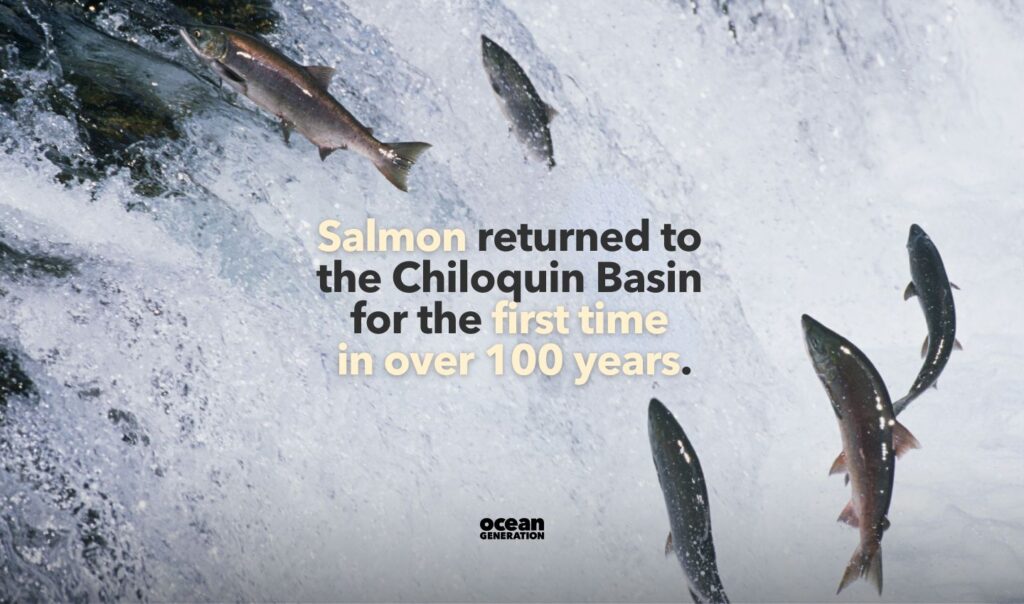
This year, the salmon returned to the Chiloquin Basin for the first time in over 100 years.  

โ€œA hundred and fifteen years that they havenโ€™t been here, and they still have that GPS unit inside of them. Itโ€™s truly an awesome feat if you think about the gauntlet they had to go through.โ€ said the visibly giddy Klamath Tribal Chair William Ray, Jr.

Salmon returned to a river in California after the removal of a dam.

This is a story mirrored elsewhere in the world too โ€“ salmon returned to the river Don in England for the first time in two centuries this year.

As we explored in some articles earlier in 2025, rivers and residents like salmon are vital in connecting different ecosystems.  

Hydropower can prevent the salmon migrating and breeding in their ancestral waters and poison the rivers they grow up in. Losing that connection impacts the people and life all along the river.  

We need energy to reinforce our high quality of life. That used to come at the cost of our natural environment. However, we are more aware of that impact, and we are getting far better at diminishing it. Stories like this are sprinkled with glimpses of a bright future, in which humans can flourish with nature. 


This pattern – discovery igniting protection, protection enabling recovery – reflects how our relationship with nature has evolved over decades, not just this year.  

The Ocean wins of 2025 demonstrate a shift in our relationship: we are learning to value and safeguard our seas, and in return, the Ocean is proving its remarkable capacity to heal.  

In ten years, we hope stories of recovery and flourishing will dominate the narrative, as the need for more protection fades.  

Discovery is good too; it will always be fun to hear about new death-ball sponges and bumpy snailfish. 

* Energy Institute – Statistical Review of World Energy (2025) 

Does the Meg exist? Hereโ€™s what scientists actually found.

Subscribe

Monthly: Impact in your inbox.

OceanGeneration-Join

What deep-sea creature is the best Halloween costume?

Five deep sea creatures that make perfect Halloween costumes. Posted by Ocean Generation.

Trying to avoid spending money on a new Halloween costume youโ€™ll only wear once?

Trying to be environmentally friendly? Just got a last-minute invite to an Ocean-themed costume party? Just love the deep sea? We got you. These deep-sea creature costumes should help you bring the Ocean to the Halloween party. 

For the main event: dress up as an anglerfish 

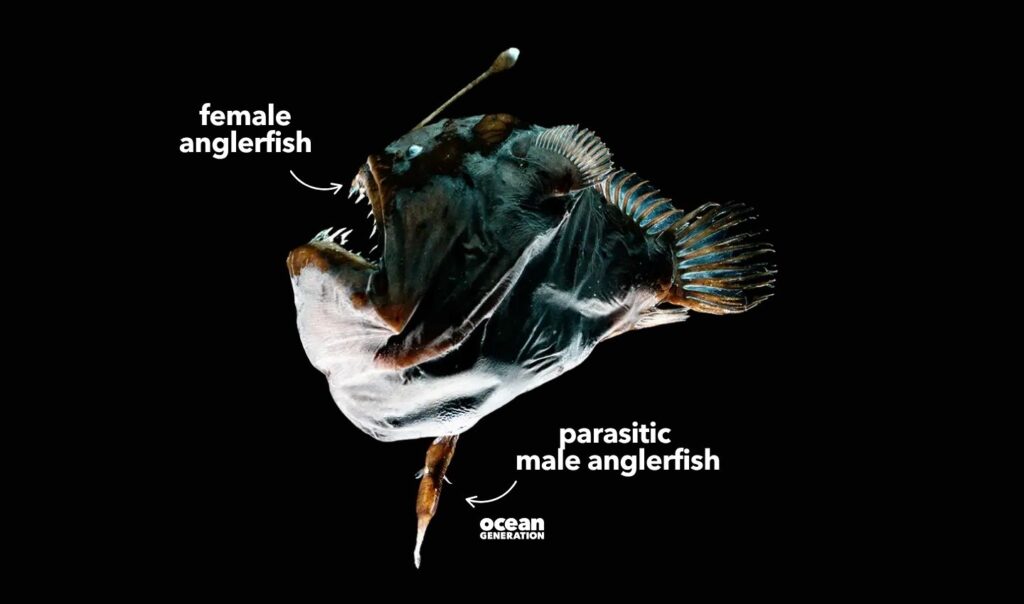
Anglerfish female and parasitic male. Posted by Ocean Generation.
Photo by Edith A. Widder

A classic. Anglerfish are the posterchild for the deep sea. Who hasnโ€™t dreamt of these creatures lurking in the depths, with huge teeth and a glowing orb of light to draw you in until it is too late to escape.  

Finding Nemo put this fish on the map for many of us (but it wasnโ€™t completely accurate โ€“ see here).  

We are using anglerfish liberally here:  there are many different animals that could be referred to as anglerfish, but we are talking about deep-sea species from the Ceratioidei family.

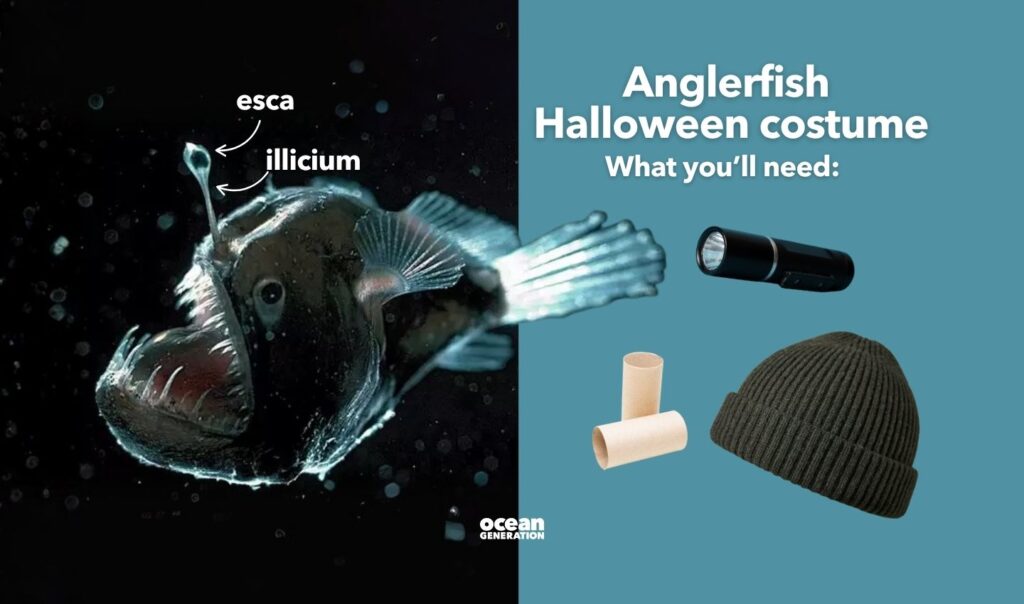
The name means horn bearers, referring to the modified dorsal spine that for many species has a lit up lure at the end.   Anglerfish host bacteria in their lure to generate light. This attracts fish, shrimp or squid close enough for the anglerfish to suck into its mouth, which is very big for their body.

Eyes too big for their stomach? Not likely for the anglerfish. They have extendable stomachs that can hold fish twice their size (useful if you arenโ€™t sure when your next meal will swim along).  

The main point to hit in your costume is the lure โ€“ the esca. Face paint for some big teeth would certainly add to the look.  

What you need for the anglerfish Halloween costume

  • Light source (headtorch, LED lights etc.) 
  • Something to hang it off 
  • Hat 
  • Black clothes 

I have done this outfit before on very little notice, using toilet rolls as the illicium (the modified dorsal spine tipped by the esca). Other good options are repurposed clothes hangers or just a good-sized stick from outside. Attach your esca to your illicium (some glue, blue tac or tape), attach your illicium to your hat and away you go!  

A battery pack on the back of the hat can act as a good counterweight to your lure.  

Now just watch your work entrance everyone around you, tempting them closer. Too close, and they risk your teeth.  

Optional extra: Add a parasitic male!  

We arenโ€™t telling you to invite your ex. But Anglerfish live in the deep Ocean, so when they get the chance for romance, they donโ€™t let it pass.  

The female anglerfish is far bigger than the male, who is little more than a sperm donor with a good sense of smell.  

This size difference is most on show in Kroyerโ€™s deep-sea anglerfish, Ceratias holboelli. Males can reach up to 1.3cm (while free-swimming), while the females are on average 77cm long.  

When he finds a female, he bites her and doesnโ€™t let go. Over time, he fuses with her, receiving nourishment in exchange for sperm. One female can have multiple males attached, and she can lay her eggs at her own leisure.  

To add your parasitic male, just stick an empty loo roll in a sock and staple/attach it to yourself. The more the merrier! 

For the witty one-liner: the cookiecutter shark 

This is a true Halloween shark, with the old nickname โ€œdemon whale-biters”.  

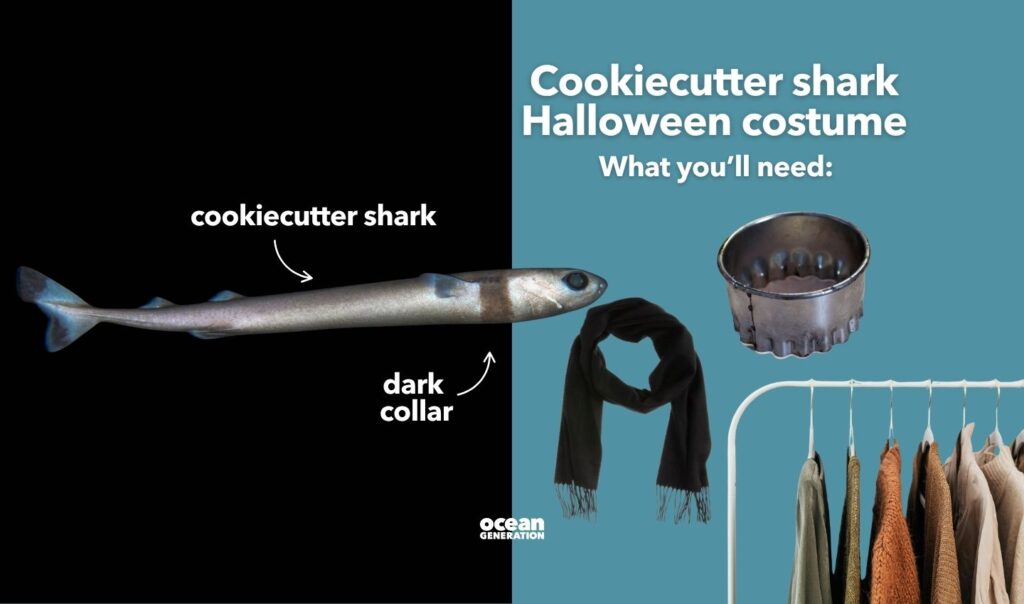
These little sharks gouge a circle of flesh out of animals, leaving bite marks as if cut out by a cookie cutter.  

Whales and dolphins are often spotted with the strange circular wounds, multiple if they were unfortunate enough to come across a group of cookiecutters. One sei whale was found with 138 โ€œcookiesโ€ cut out. Fortunately, these bitey biscuit bois are only half a metre long, so the damage they cause is limited.  

The cookiecutter doesnโ€™t need the dentist โ€“ rather than brushing their teeth, they lose the entire bottom row and usually swallow it with whatever meal they are enjoying (recycle some of the calcium).  

What you need for the shark costume 

What you need for a cookiecutter shark Halloween costume. Posted by Ocean Generation.
Cookiecutter shark photo by Blue Planet Archive/Alamy
  • A cookie cutter 
  • Cardboard/card 
  • A black scarf 
  • Brown clothes 
  • Optional: Chef hat 

Sometimes simplicity is the way. Wear brown clothes, hang a cookiecutter around your neck and fashion a shark fin to attach somewhere, with the cardboard.  

Add the black scarf around the neck, for the cookiecutters dark collar (this is one of the reasons they are also known as โ€˜cigar sharksโ€™). If you want to make it a couple’s costume, dress your partner as a whale with some bloody circles on them!  

Optional extra: glowing belly

Cookie cutters have photophores on their belly, to camouflage them from predators and prey by matching the little light that penetrates the depths.  

Why not add some flair to the costume? Add some glitter to the belly, or even better some glow in the dark stickers/paint or some fairy lights.  

N.B. Cookie cutters do not have a classic shark’s dorsal fin, only a small one towards the tail. The recommendation is for costume purposes only. Also, donโ€™t take any flesh out of your partner for this costume.  

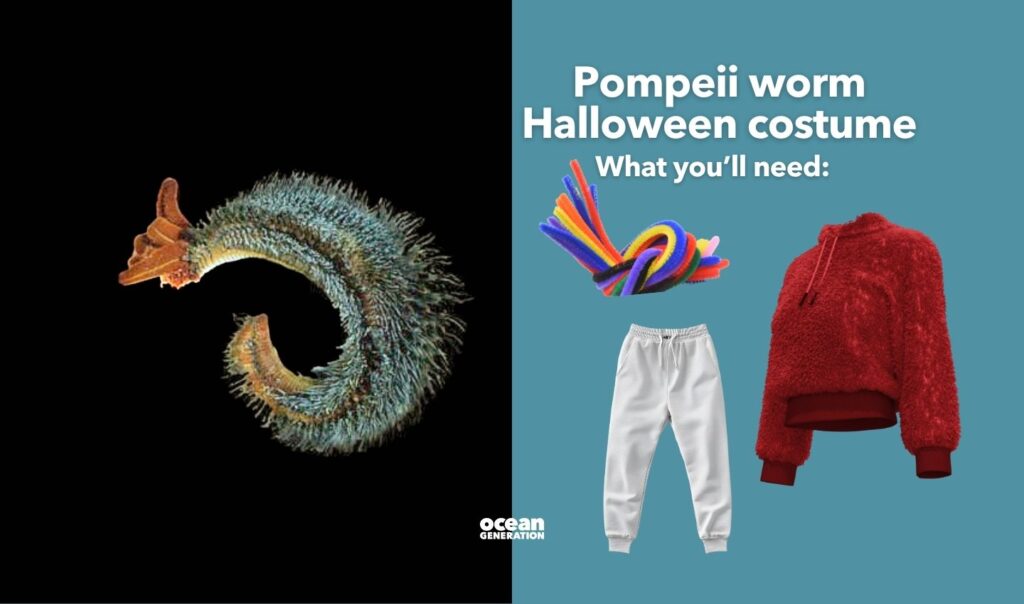
For the flamboyant and fiery: the Pompeii worm 

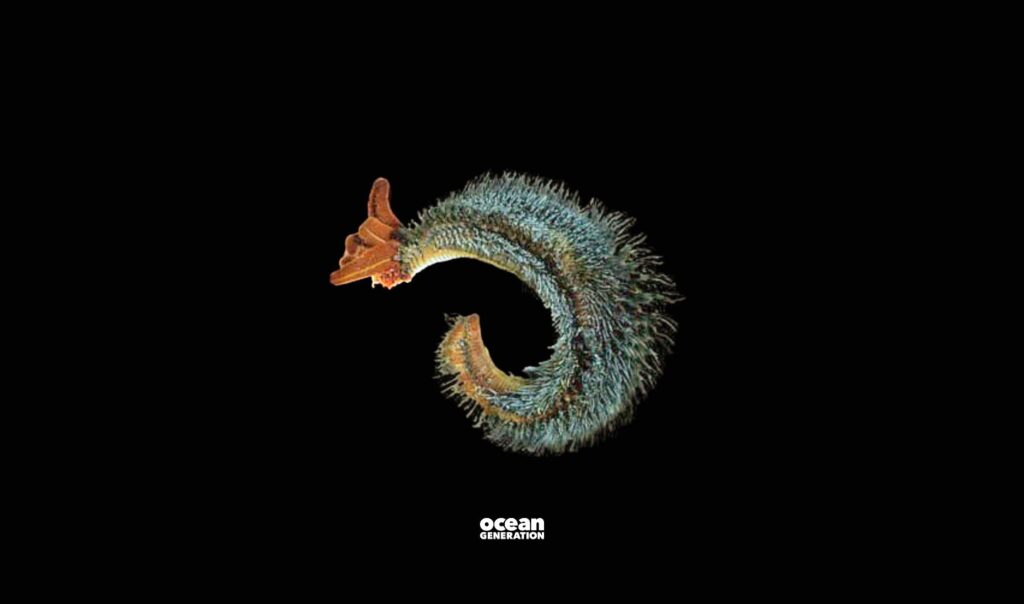
Pompei worms live around hydrothermal vents in the Ocean. Posted by Ocean Generation.
Photo by National Science Foundation (University of Delaware College of Marine Studies)

In the depths of the Ocean, there are huge chimneys belching out black and white smoke. Hydrothermal vents are where the Ocean meets the hot inside of our planet. Think of thermal spas with the heat turned way up. Combine the extreme heat with the crushing pressures and cold of the deep sea, it doesnโ€™t sound like an appealing neighbourhood.  

But they host rich ecosystems, full of incredible creatures adapted to these extremes. Hydrothermal vents may have been the origin of life on our planet

The Pompeii worm shows a flamboyant distain for the usual limitations for life. Bright red, building a tube for itself to live in, it dances in water that would kill most. It can take the heat up to 55 degrees Celsius (131 Fahrenheit). But a woolly jumper of bacteria helps it stay cool, despite living in waters that can be over 100 degrees C (212 F). This is no normal jacket, as the worm has to keep it well fed with mucus in a symbiotic relationship*.  

Four long, red-orange tentacles crown its head, used for breathing. Pompeii worms have the highest specific gill surface area of any marine worm and have acidic blood to encourage the oxygen to dissociate from their blood cells in their extreme environment. What other animal can work a feather boa with acid blood? 

What you need for the costume 

Pompeii worm Halloween costume, inspired by deep sea animals. Posted by Ocean Generation.
  • Grey/white/black trousers or skirt 
  • Red/white long sleeve top โ€“ preferably fuzzy 
  • Red/pink/orange pipe cleaners/paper/feather boa 

Be bold. Channel your inner Pompeii worm and dance in and out of your sulfur-and-protein based tube. A fluffy or fuzzy top will show off your bacterial biofilm and use some pipe cleaners or paper to make some tentacles around your head. Smaller feeding tentacles to add a bit extra. 

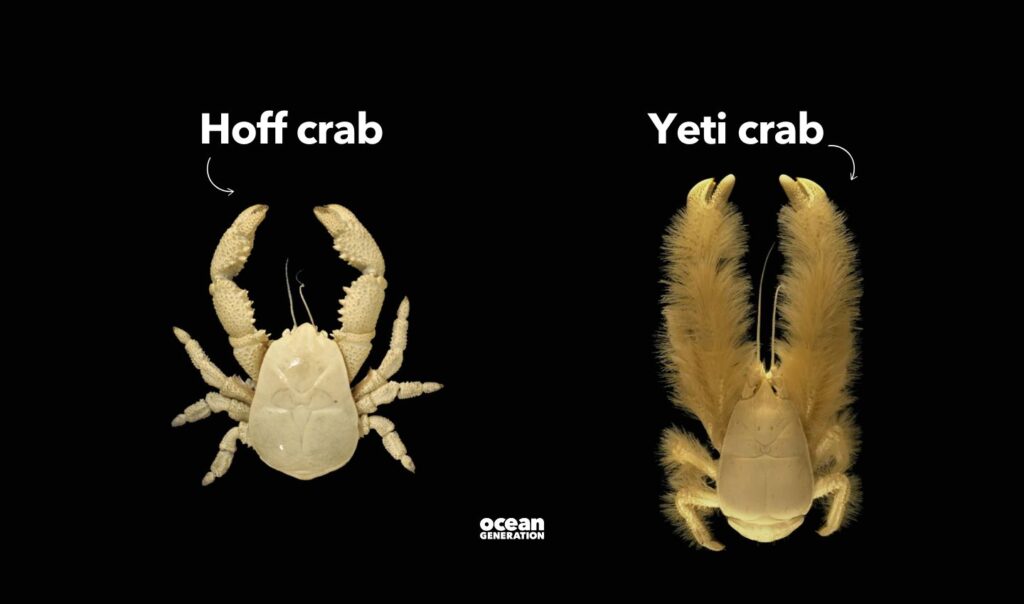
For the dancers: Hoff or yeti crab Halloween costume 

Hoff and yeti crabs grow their own food in the deep sea. Posted by Ocean Generation, leaders in Ocean education.
Hoff crab: University of Portsmouth / Yeti crab: A. Fifis, Ifremer/ChEss, Census of Marine Life

Another resident of the hydrothermal vents are crabs. There are two we want to spotlight. The Hoff and Yeti crabs.  

Both are named after their appearance. One has a hairy chest and so bears the name of Baywatch legend David Hasslehoff. The yeti crab is the more general term for the Kiwa genus, of which the Hoff crab is a member. 

These downy decapods are covered hairs. What is the other key to their success in the deep? Dancing. 

The crabs wiggle and wave, which moves water over the hairs, feeding the colonies of bacteria that live there. These crabs grow their own food in their fur, so the fuzzier the better.  

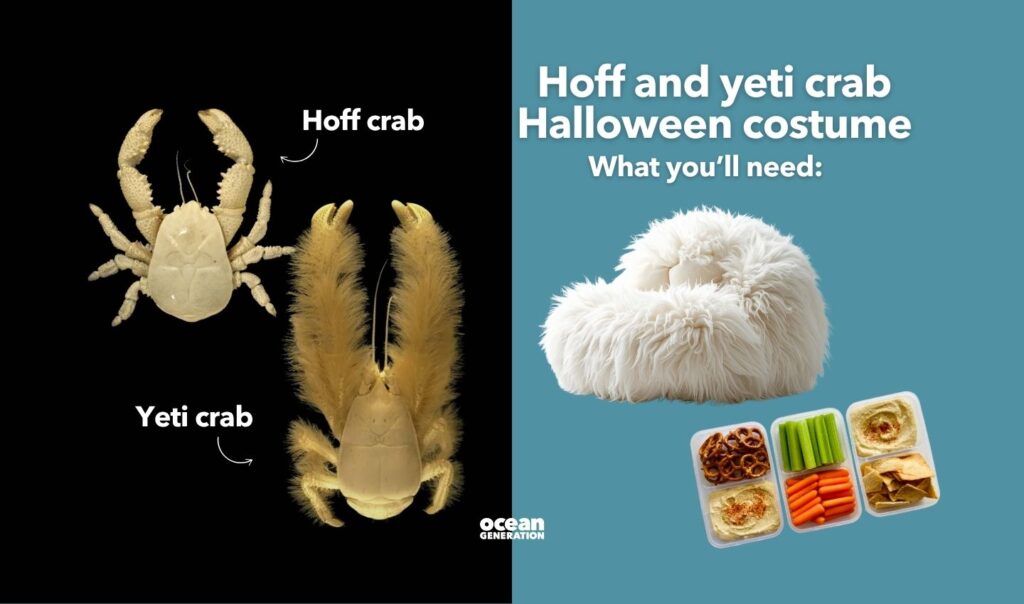
What you need for the crab costume 

Hoff and yeti crab
Halloween costume
  • Fuzz โ€“ for the Hoff, a hairy chest, and for a Yeti crab, get your arms fuzzy 
  • Creative claws  
  • Snacks in a pocket 

The key for the crabs is owning your hair and rewarding your dancing. Every wiggle is a snack earner. Get fuzzy, and for added authenticity get some snacks in the fuzz for easy snacking.  

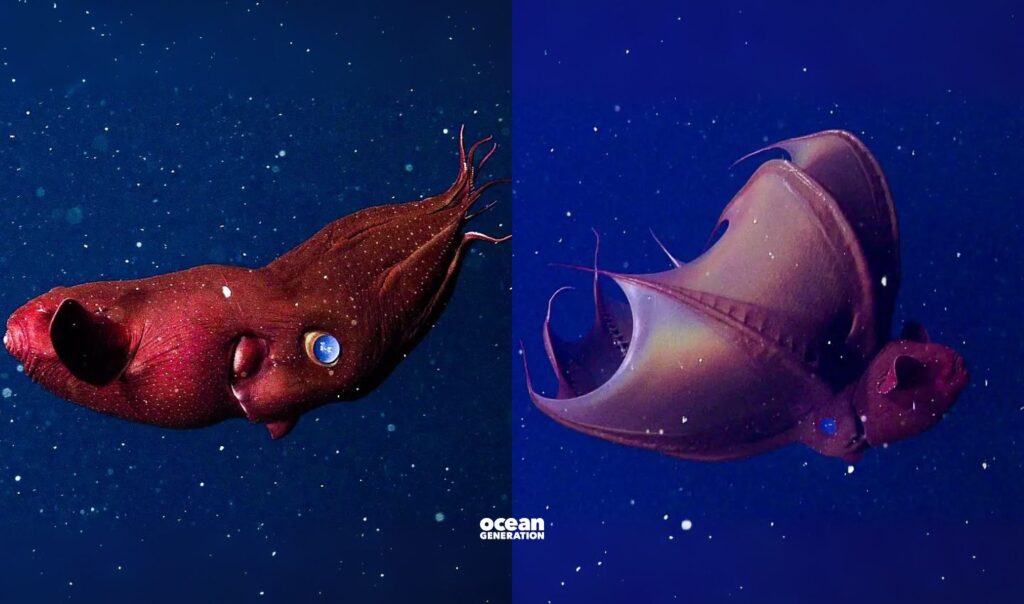
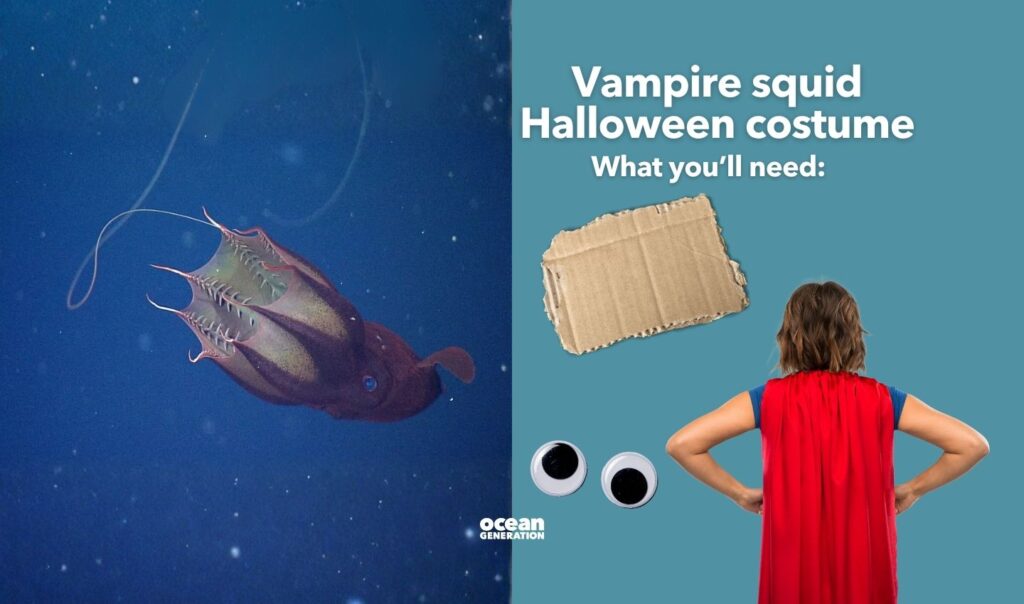
For the dramatic introvert: the vampire squid 

As another unfairly named creature, the Latin name of the vampire squid, Vampyroteuthis infernalis, literally means vampire squid from hell.  

Red eyes, black or red colouration, and spikes lining their arms (incorrectly known as tentacles), living in the abyssal depths of the Ocean. You can see what they were going for.  

Truly a survivor, these cephalopods live between 600m and 900m and can thrive where others canโ€™t – oxygen minimum zones. These parts of the Ocean donโ€™t have enough oxygen for most organisms to breathe. The vampire squid can survive where oxygen saturation is as low as 3% (the usual oxygen saturation in air is 21%).  

If something does dare to get in their personal space, the vampire squid has a lesson for all of us: when stressed, be a pineapple.  

The vampire squid will โ€˜invertโ€™ itself, pulling its arms over its head, covering its photophores and revealing the spiny projections (known as cirri) underneath.  

The glowing tips of its arms are held far above the head to draw attacks away from where they could do serious damage. The arm tips can grow back, so can be a handy (if youโ€™ll pardon the pun) distraction.  

What you need for the squid costume 

What you need for the vampire squid Halloween costume. Posted by Ocean Generation.
Vampire squid photo by Monterey Bay Aquarium
  • Loose black or red clothing, ideally a cape 
  • Cardboard to make some spines 
  • Lights/sparkles 
  • Fins on the side of the head 
  • Red eyes 

To embody the vampire squid, you need your own space. Space to let your cloak free. Line the inside with your cirri (the spines), in case of encroachment by unwanted parties. Coloured contacts or red eye makeup to give that squid from hell look. 

Have fun with your lights on this one โ€“ vampire squid can control their own light show. Lights over the cloak and in your hands can make an entrancing look, ready to be muffled and switched to a spiny dark outer should the mood change.  

Optional extra: Glitter juice 

If the pineapple pose doesnโ€™t work, a vampire squid has a secret weapon. A sticky cloud of bioluminescent mucus, which they can squirt at offending parties. This glowing goo can dazzle while the vampire squid escapes or stick to the transgressor and light them up for up to 10 minutes. Ten minutes is a long time to wait to see what else can see you in the dark Ocean.  

A spray bottle, with some (eco-friendly) glitter mixed with water will give you your last line of defence.  

*Grime, J. P., & Pierce, S. (2012). The evolutionary strategies that shape ecosystems. Wiley-Blackwell.

Does the Meg exist? Hereโ€™s what scientists actually found.

Subscribe

Monthly: Impact in your inbox.

OceanGeneration-Join

How do international treaties get created?

How international treaties get created? Explained by Ocean Generation, leaders in Ocean education.

Here are international treaties: explained.  

There have been a few international treaties, like the High Seas Treaty or the Global Plastic Treaty, that impact the Ocean, but in a world of complex language and changing timelines, we wanted to make the process make sense.  

The start of any treaty: Agreeing there is an issue 

The first thing to understand is that the process of international negotiation is rarely a quick one. One of the fastest processes was the Montreal Protocol, the treaty to protect the ozone layer, which moved from initial scientific discovery (1973) to being signed (1987) in just 14 years.  

The process of an international treaty is kicked off by proposal โ€“ a member state, or more commonly a group or coalition of states, can introduce a resolution to a governing body (such as the UN General Assembly, the UN Environment Programme etc.).  

This step is about agreeing there is a problem that needs solving.

How do international treaties work? Explained by Ocean Generation.

The mandate: Permission to negotiate 

So, weโ€™ve agreed โ€“ we have a problem that needs solving. The UN governing body adopts (votes on and approves) the resolution, which is a statement of intent.

The mandate will decide the scope of the agreement โ€“ is it going to make a legally binding agreement or a voluntary one, a regional or international?  

This gives the mandate to begin negotiations.  This usually means creating a committee for international negotiation โ€“ an International Negotiating Committee (INC) if you will.  

Then the fun begins.  

The hard part: Reaching consensus with negotiations 

The INC will have a series of meetings, attended by states and โ€œobserverโ€ parties โ€“ non-governmental organisations, industry groups and scientists amongst others.  

In these meetings, they will negotiate the text of the agreement. Wording is crucial, especially for a legally binding agreement, so agreeing a draft text is usually the longest stage.  

This stage is ended when consensus is reached: the vast majority of parties are happy with the contents and phrasing of the text. The text would then be adopted (voted on and agreed, in treaty language) and is open for signatures and ratifications.  

What signing or ratyifying a treaty means? Explained by Ocean Generation.

What does it mean to sign or ratify a treaty

States can sign an agreement or ratify it. Signing it is an announcement of intent, it isnโ€™t binding but it shows that a state intends to ratify. They will often sign as a placeholder while the relevant domestic processes are taken.  

Ratifying is the full involvement (legal obligation) to the agreement, whatever it may say.  

Most agreements will have a minimum number of ratifications before it comes into effect. Once enough states have ratified, the treaty will become reality. States can ratify after the treaty is in effect โ€“ latecomers are always welcome.  

Implementation: From agreement to action 

Once the treaty exists, a Conference of the Parties (COP) or Meeting of Parties (MOP) will take place to oversee progress, amendments and compliance. The regularity of meetings varies.  

How collective decision-making works: A practical example 

Imagine you live in a house with a number of other people and the heating breaks.  

First, one (or more) of you could raise this in the house group chat. You present evidence of the issue (the heating doesnโ€™t come on, and the house is cold). Some housemates may have a warm room, and donโ€™t agree initially. More evidence may be required โ€“ bring in a GP to talk about increased risk of illness or put some thermometers around the house. 

When the housemates agree the heating is broken, and they would be better off if it was fixed, they agree to have a house meeting (or five) to discuss how to go about fixing it.  

Is it a plumbing issue or an electrical one? Who should pay for it? If one housemate uses the heating all the time while others use less, should they pay more? To avoid future heating problems, what should the temperature be set at? This happens at the pub so, it takes a while.

Then, the plan is all sorted, but to get the ball rolling everyone needs to give a go-ahead. Five out of seven thumbs up in the group chat is the green light.  

It may take a couple months while people save from their pay checks, but finally there are five thumbs up and the heating can get fixed.  

The last two were grumbling about the hot water use but gave the thumbs up later on so they can use the heating.  

Success Story: How the Montreal Protocol was created to protect the ozone layer 

The Montreal Protocol is one of the biggest wins in international cooperation. In the 1970s, scientists Frank Sherwood Rowland and Mario Molina started to hypothesise that chlorofluorocarbons (CFCs) were depleting the ozone layer.  

CFCs were a replacement for toxic refrigerants used in the 1920s, developed in the lab. They were used in aerosol sprays and any units needing refrigerant โ€“ refrigerators, air conditioners, cars, water chillers, for example.  

The depletion of the ozone layer was shown to result in an increase in UV-B radiation, leading to higher rates of skin cancer and damage to crops and marine phytoplankton (the little guys producing over 50% of our oxygen).  

Aerosol and halocarbon industries lobbied against regulation. A board member of a company with 25% market share in CFCs, was quoted as calling the hypothesis, โ€œa science fiction tale…a load of rubbish…utter nonsenseโ€.  

The treaty text was agreed on 16 September 1987, with the condition that it would come into force if 11 parties had ratified by 1 January 1989. 

It met this condition and has since been ratified by all 198 parties in the UN, becoming the first treaty to do so.  

Since the treaty, the ozone layer has been recovering and is projected to reach 1980s levels between 2040 for most of the world and 2066 for Antarctica.  

Success story of the Montreal Protocol.

Does the Meg exist? Hereโ€™s what scientists actually found.

Subscribe

Monthly: Impact in your inbox.

OceanGeneration-Join

What is the Global Plastics Treaty?

What is the Global Plastics Treaty? Explained by Ocean Generation.

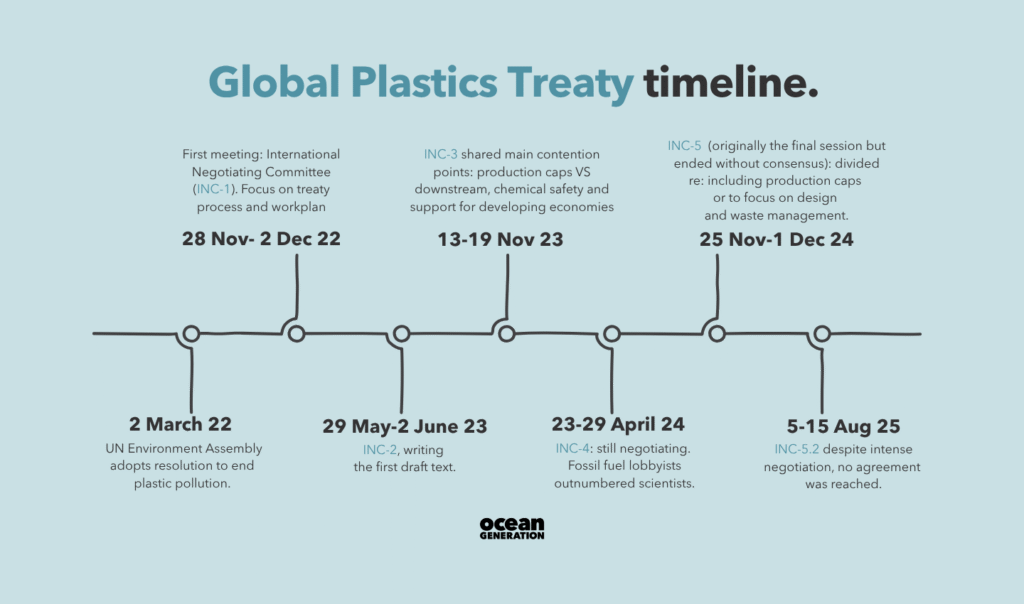
The Global Plastics Treaty refers to the (currently undefined) international agreement by which the countries of the world hope to reduce plastic pollution. 

How far have we got? Progress in the Global Plastic Treaty talks

In 2022, 175 countries of the world signed an agreement that declared: plastic pollution needed to be addressed. Stronger than that, plastic pollution should be ended.  

To meet this goal, countries agreed on a series of meetings across the globe to discuss and negotiate how to end plastic pollution and write it into international law (a treaty). 

Five meetings were planned, with the treaty aimed to be finalised by the end of 2024.  

This agreement created the International Negotiating Committee (INC) which first met in Punta del Este in Uruguay. Subsequent meetings happened in Paris, France; Nairobi, Kenya; Ottawa, Canada; and Busan, Korea. 

By the end of the fifth meeting, no agreement had been reached for the Global Plastics Treaty, so another (INC5.2) was scheduled for August 2025 in Geneva. However, this meeting also ended with no treaty. 

Timeline of the Global Plastics Treaty. Posted by Ocean Generation.
Timeline by Will Steen

What is stopping a treaty being agreed? 

For the treaty to come to life, all countries must agree on the terms, so while some disagree there will be no treaty.  

The main point of disagreement is whether making new plastic (plastic production) should be limited within the treaty. Countries are split largely into two groups, the High Ambition Coalition and the Global Coalition for Plastics Sustainability. 

What is the High Ambition Coalition?  

There is a large group of countries (around 100) in a group, called the High Ambition Coalition (HAC).  

The HAC has been pushing for the plastics treaty to include plastic production limits โ€“ reducing the amount of new plastic made. Before INC5.2 the HAC published a โ€œwake-up callโ€ at the United Nations Ocean Conference at Nice in June 2025, outlining a โ€˜wishlistโ€™ of five points: 

  • Limits on plastic production (to be regularly adjusted), and reporting on production, import and export of primary plastic polymers 
  • Phase out most harmful plastic products and chemicals of concern 
  • Improve the design of plastic products to minimise environmental and human impacts 
  • Financial support to support less developed countries in the transition 
  • A treaty responsive to changes in evidence and knowledge 

What is the Global Coalition for Plastics Sustainability

Another group of countries formed the Global Coalition for Plastics Sustainability (also known as the Like-Minded Group of Countries).  

A statement from a member country outlined the focus: 

โ€œThe [Global Plastics Treaty] should pave the way for improving the waste management systems in general, and to promote environmentally safe and sound management of hazardous plastic wastes, and to reduce uncontrolled hazardous plastic pollution.โ€ 

They want a bottom-up approach, prioritising dealing with plastic waste.  

What's next for the Global Plastics Treaty? Explained by Ocean Generation.

What do major businesses think of the plastics treaty? 

Businesses that produce and use plastic are key to tackling the plastic pollution problem. 

The UK hosted a roundtable with major business in June 2025 and produced a statement. It called for the plastics treaty to address the whole lifecycle of plastics, amongst other things. 

โ€œAs businesses and financial institutions, we stand ready to mobilise significant investments, and engage with the companies we invest in, towards achieving the objectives of the legally binding instrument, including towards innovation and infrastructure.โ€ 

Other businesses, such as fossil fuel companies (99% plastics are made from fossil fuels) take a different view:  

โ€œWhile there have been calls for production caps or bans, itโ€™s been reassuring to hear leaders share their belief that such measures could deprive the world โ€“ particularly the developing world โ€“ of the untold benefits plastics deliver in terms of health, food safety, the environment, the energy transition and more.โ€ – Exxon Mobil President  

Whatโ€™s next for the Global Plastics Treaty? 

The division has been entrenched from early in the process, with little movement on either side. It has led to questions about the process, and where to go next. Here are some options: 

  1. The process is changed to being decided by vote rather than by consensus, to make progress despite the disagreement of a small minority 
  2. The process continues via other means. For the Ottawa convention on landmines, a number of countries compiled texts outside of the process, that were then agreed upon. We could see this happening, for example, with the High Ambition Coalition.
  3. Another round: INC5.3 to try again! A (currently unnamed) country has offered to host, but has said they will not fund it. 

While the gears of global negotiation can feel like they turn slowly, they are turning. Read more about how international treaties work here. 

These countries have agreed that ending plastic pollution is an important issue. We want a world without the damage of plastic pollution.  

The Global Plastics Treaty is the representation of international intent. If it does produce legal guides to end plastic pollution, it will speed up progress. That it hasnโ€™t yet is not going to stall momentum.  

Plastic pollution is an international target.  

The Global Plastics Treaty aims to end plastic pollution. Posted by Ocean Generation, leaders in Ocean education.

Does the Meg exist? Hereโ€™s what scientists actually found.

Subscribe

Monthly: Impact in your inbox.

OceanGeneration-Join

What is the High Seas Treaty?

What is the High Seas Treaty? Explained by Ocean Generation, leaders in Ocean education.

Everything you need to know about the High Seas Treaty 

Officially, it is the Agreement on the Conservation and Sustainable Use of Marine Biological Diversity of Areas beyond National Jurisdiction. It is known colloquially as the High Seas Treaty. Or, BBNJ (biodiversity beyond national jurisdiction) Agreement.  

It entered force on 17 January 2026, 120 days after receiving the necessary 60 ratifications on the 19 September 2025.

What are the high seas

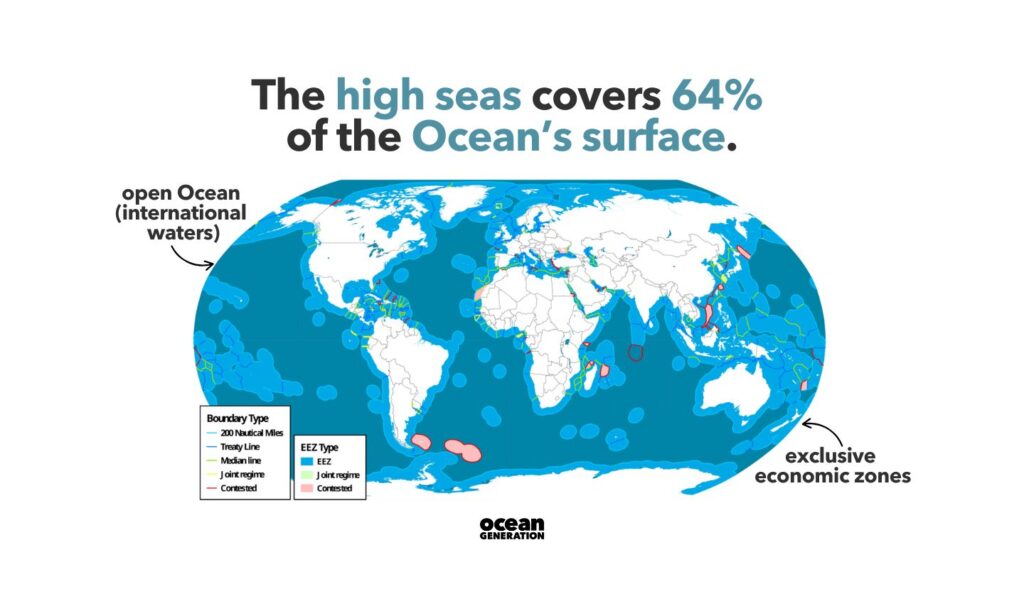
The high seas refer to around 64% of our Oceanโ€™s surface.  

In 1958, 63 countries signed the Convention on the High Seas, defining the โ€œhigh seasโ€ as the Ocean not within territorial waters.  

In 1982, the United Nations Convention on the Law of the Sea (UNCLOS) was signed, establishing exclusive economic zones (EEZs) reaching 200 miles out to seaโ€“ each country has sovereign rights (โ€˜ownershipโ€™) to the Ocean and seabed within 200 miles of its coast.  

The rest of the Ocean, including the water column and โ€œthe Areaโ€ (the seabed outside these EEZs), are the high seas. 

What does the treaty do?  

What does the High Seas Treaty do? Posted by Ocean Generation.

What is the process

The agreement can be traced back to December 2017, when the United Nations General Assembly voted to start creating the High Seas Treaty.

The agreed-upon five meetings (with a gap due to COVID-19) failed to produce an agreement.  

In March 2023, at the sixth meeting, the text of the agreement was finalised. The treaty was open for signatures for two years, from 20th September 2023, until 20th September 2025.  

68 countries immediately signed the agreement, and another 13 signed in the two days after. 

Palau was the first country to ratify, in January 2024.

At the United Nations Ocean Conference in June 2025, there were 20 signatories and 19 countries ratified, bringing the total number to 51. 

Whatโ€™s the difference between signing and ratifying

Signing the agreement and ratifying are not the same. Signing is announcing the attention to ratify. Ratifying the agreement means committing to the agreement officially.  

There is no deadline on ratification after signing; Parties can ratify at any point. Only Parties that have ratified the treaty are legally bound by it, and able to enjoy the benefits.  

The High Seas Treaty will come into force January 2026. Posted by Ocean Generation.

When did the High Seas Treaty come into force

On 19 September 2025, Morocco became the 60th country to ratify. This initiated a 120 day countdown, which ended on January 17th 2026. From then, it is legally binding (for those who have ratified).  

A year on, the first Conference of the Parties (COP) will meet to discuss high seas conservation, such as identifying the areas to protect. Belgium and Chile have submitted bids to host the Secretariat, and Chile has included a suggestion for the first high seas MPA.

Why protecting the high seas is so important 

The high seas used to be out of our reach. Untouchable and unaffected by human activities. But in just the last sixty years or so, our technology has improved, this vast wilderness has become far less wild.

This has enabled us to benefit from the Ocean beyond our national borders. Fishing flotillas can travel the world and cargo ships cris-cross the Ocean. This global reach โ€“ impossible to our grandparents โ€“ has changed our relationship with the Ocean.  

Without responsibility or ownership over the high seas, everyone has an incentive to extract as much as they can before anyone else. In just six decades, this free-for-all has led fishing stocks being depleted, marine animals being exposed to large amounts of noise from marine traffic and pollution accumulating out at sea.  

The High Seas Treaty aims to solve this and enables the protection of important marine areas that donโ€™t belong to any single nation. It enables the world to take responsibility for the wild Ocean. 

A common misconception is that the end goal of conservationists and the marine industry (such as fishing and tourism) are incompatible. But healthy fish stocks are all a fisherman asks for, flourishing ecosystems pull in tourists and rich biodiversity offers untold discoveries and advances in pharmaceuticals and engineering to name but two.

Protecting the Ocean means letting it thrive, and we all enjoy the boon of a thriving Ocean.  

The High Seas Treaty creates an opportunity. An opportunity to nurture our Ocean and share the benefits from it.  

Ocean Generationโ€™s Statement on the High Seas Treaty:  

โ€œWe are delighted to hear that the UN High Seas Treaty has finally become a reality. 

A healthy Ocean is vital for the survival of all living things, and this is the message we continue to deliver through our work at Ocean Generation. Protecting 30% by 2030 must, however, be seen as a minimum requirement. 

We view this agreement as a starting point. The Ocean is our ally in the fight against climate change and we must stop underestimating its role in our survival.โ€ 

Jo Ruxton MBE  
Founder of Ocean Generation 

Protecting the Ocean means letting it thrive. Posted by Ocean Generation.

Does the Meg exist? Hereโ€™s what scientists actually found.

Subscribe

Monthly: Impact in your inbox.

OceanGeneration-Join

How can we clean up plastic pollution in the Ocean?ย 

How can we clean up plastic pollution in the Ocean? Posted by Ocean Generation.

Why do beach cleans actually work: Explained. 

An army of passionate people take to the beach, litter pickers in hand. Sea spray in their hair and sand under their nails, they comb the beach. Their bags fill with cigarette butts, plastic bottles and crisp wrappers. Spirits are high, notable pieces of rubbish are held up with announcement.  

As the sun sets, the beach seems lighter, relieved of the weight of rubbish. The cleaners look over the coast with proud eyes at a job well done.  

But as the night draws in, so does the tide. When the sun rises again, it unveils a plastic-laden beach once more. The Ocean has coughed up some of its burdens.  

What is the point in beach cleans? Are we rearranging deck chairs on the Titanic or do they actually help combat Ocean pollution? 

How bad is the Ocean plastic problem?ย 

Ocean plastic is increasing. Many scientists have done deep dives into the science of knowing how much. While itโ€™s challenging to measure exactly how much plastic is in the Ocean, we know that as plastic production increases, so does plastic pollution in the Ocean.  

The Great Pacific Garbage Patch is a myth. Explained by Ocean Generation.

There arenโ€™t great islands of plastic floating in the Ocean (even the Great Pacific Garbage Patch is a myth). But we are creating a plastic soup. Microplastics fill the Ocean, with some โ€˜croutonsโ€™ of bigger floating plastic.  

This plastic can kill wildlife, carry toxins and enter the food chain โ€” all the way up to us. 

Itโ€™s obvious: we all want less plastic in the Ocean. The question is how to achieve that.  

What impact do beach cleans actually have?ย ย 

A beach clean is more than just a fun day out. They do a whole load of good. 

Firstly, they are good for us. Beach cleans (and most coastal activities) have been associated with positive mood and improving our understanding of the Ocean.  Combine a beach cleanup with some rock pooling and thatโ€™s a brilliant afternoon. Imagine all the things you can find! We feel better cleaning our beaches.  

Beach cleans are a chance for people to come together and make a tangible contribution. They act as displays, raising awareness for our pollution problem and encouraging more engagement. A snowball effect. 

Beach cleans provide immediate benefit to the natural world too. Removing plastic from the beach takes away its threats straight away, and removes the future threats as well.  

Plastic on the beach is exposed to the stresses and strains of the Ocean. Waves breaking, rubbing against the sand and rocks, the sun beating down. All these break up the plastic into smaller micro- and nano-plastics. Removing it before that stage is a lot easier. 

Our understanding of the journey of plastic waste is evolving. Recent studies suggest that the vast majority (88% is the quoted figure) of plastic in the Ocean remains floating close to shore. This means our beaches take the brunt of the plastic problem. But that also means itโ€™s accessible: We can remove the majority of the problem with ease and stop it getting worse.  

Beach cleans have a great impact. Posted by Ocean Generation.

Beach cleans treat the symptoms without addressing the illness.ย 

Beach cleans are not the whole answer. You canโ€™t keep bailing a sinking boat out and expect to float, until you bung the hole. A beach clean treats the symptoms without addressing the illness.  

We need more than litter-pickers.  

What are the other allies in the battle against Ocean plastic?ย 

The closer to source of plastic pollution we can get, the better. Try filling a glass from someone pouring three stories above you โ€“ a lot more water gets spilled compared to just filling from the tap.  

Single use plastic bans have shown to be effective in reducing litter. Increasing the responsibility of plastic producers for the end of their products lives would motivate innovation and stop plastic becoming litter at all. A circular economy would prevent the demand for oil to produce more and reduce the amount of plastic that becomes rubbish.  

As consumers, we also need to rethink how we use plastic.  

How can we change our relationship with plastic? ย 

Moving away from a single-use plastic world is, honestly, going to be tricky. We live in a world where convenience is king. Single-use plastic is very convenient. But there are solutions already working. 

Deposit return schemes have proved to be highly effective in increasing the collection rates of plastic bottles. When you buy a drink in a plastic bottle, for example, a small extra fee is paid, which is returned when the bottle is returned. For one scheme, 94% of bottles were returned compared to 47% without a scheme.  

Moving away from single-use plastic is tricky. Posted by Ocean Generation, leaders in Ocean education.

Nearly every major manufacturer (98%) now has commitments to reduce plastic packaging. Whether this represents genuine change or sophisticated greenwashing remains to be seen, but consumer pressure and regulatory requirements are making plastic reduction a business imperative rather than a nice-to-have. 

The challenge lies in balancing reduction with practicality. Sometimes plastic packaging actually reduces overall environmental impact compared to heavier alternatives – it’s the end-of-life management that needs sorting. 

The uncomfortable reality of waste management

Here’s the uncomfortable truth: much of Ocean plastic pollution originates from countries with limited waste management systems. Sub-Saharan Africa, for example, averages 44% waste collection rates compared to 98% in high-income countries. It’s rather difficult to recycle rubbish that’s never collected in the first place. 

We canโ€™t simply take Western waste management systems and apply them exactly as they are in other countries. Locally managed, decentralised circular economy models – using local resources and creating local markets for recycled materials – show more promise than imposing one-size-fits-all solutions. 

Is making plastic expensive a solution to pollution?ย 

Governments wield powerful economic tools: taxes on single-use plastics, subsidies for recycling infrastructure, and extended producer responsibility schemes that make manufacturers pay for their products’ end-of-life management.  

When virgin plastic (new plastic) becomes expensive and alternatives become cheap, behaviour changes remarkably quickly. But it has to be done without disadvantaging those that donโ€™t have access to a cheap alternative.  

So, back to the original question: Do beach cleans work?ย 

Yes. But they wonโ€™t stop the problem long term. Beach cleans deliver value beyond plastic removal. They’re powerful data collection exercises, providing crucial information about debris types and sources that inform policy decisions.  

Beach cleanups are also remarkably effective educational tools – nothing quite drives home the scale of plastic pollution like spending a Saturday morning filling bin bags with bottle caps. 

Removing larger plastic items helps reduce microplastics. Posted by Ocean Generation.

Perhaps most importantly, recent research from Norway found that removing larger plastic items from coastlines led to a 99.5% reduction in microplastics both on land and in water within a year. That’s a genuinely impressive result that suggests beach cleans have more direct environmental impact than critics assumed. 

โ€œRemoving plastic from the environment before it enters an active degradation phase, into microplastics, will reduce the formation of microplastics in the environment. The decrease of microplastic was over 99% in the water volumes we found on land. When we looked at seawater, the microplastics leaking into the sea was reduced by 99.9%,โ€ – Gunhild Bรธdtker, senior researcher at Norce 

Whatโ€™s the most effective strategy to deal with plastic pollution?ย 

The most effective strategy combines both approaches: upstream prevention (stopping plastic from becoming waste) and downstream management (dealing with what’s already out there). Think of it as both turning off the tap and mopping up the flood. 

Beach cleans work best when they inspire participants to tackle root causes – supporting deposit return schemes, choosing refillable alternatives, and pressuring companies to reduce packaging.  

The real measure of a successful beach clean isn’t just the bags of rubbish collected, but the number of people who leave determined to prevent that rubbish from appearing in the first place. 

Do a beach clean, but don't just stop there. Posted by Ocean Generation.

What should you do next to help tackle plastic pollution?ย ย 

So beach cleans wonโ€™t solve the problem. The good news is that effective solutions exist. The challenge is implementation at the scale and speed the problem demands. 

Join a beach clean, but don’t stop there. Support businesses with genuine circular economy commitments, lobby for deposit return schemes, and remember that every purchase is a vote for the kind of world you want to live in. 

The Ocean doesn’t care about our good intentions. It needs systemic change, and that requires all of us to think beyond the beach. All our jobs can be beach. 

Does the Meg exist? Hereโ€™s what scientists actually found.

Subscribe

Monthly: Impact in your inbox.

OceanGeneration-Join

Is plastic good or bad? What it means for you and the planetย 

Is plastic good or bad? posted by Ocean Generation.

A great scholar once said โ€“ life in plastic, itโ€™s fantastic. As one of the greatest revolutions in material engineering, plastic has undeniably changed the world.

But were we too successful? Did we end up with a committed friend who is always here for you โ€“ but really ALWAYS here, and we canโ€™t get them to leave?  

Letโ€™s look at our magic material, where plastic has done good and how we need to change our relationship with it.  

What is plastic 

Plastic can mean a lot of things.

We should be careful to define what we mean. Here, plastic is concerning synthetic or semi-synthetic materials composed primarily of polymers, that can mould, press or extrude into different forms. This feature, their plasticity, is key to their importance.  

Hereโ€™s a table summarising some of the most used plastics. Have a look around, I would guess, from wherever you are, you could see at least five of these. 

Polymer Abbreviation Examples of use 
Polypropylene PP Food packaging, automotive parts 
Low-density polyethylene LDPE Reusable bags, food packaging film 
High-density polyethylene HDPE Toys, shampoo bottles, pipes 
Polyvinylchloride PVC Window frames, floor covering, pipes, cable insulation 
Polystyrene PS Food packaging, insulation, electronic equipment 
Polyethylene terephthalate PET Beverage bottles 
Polyurethane PUR Insulation, mattresses 
ABS, elastomers, biobased plastics, PBT, PC, PMMA, PTFE, โ€ฆ Other Tyres, packaging, electronics, automotive, โ€ฆ
Fibres made of different polymers Fibres Textile applications but also in many other sectors 

Plastic is everywhere, from our food packaging to our computers, to our furniture. Our clothes, the paint on our walls, the tyres on our car; all have plastic in. So, letโ€™s look at why plastic has become so engrained in our lives.  

How does plastic save lives? 

Plastic has pioneered a revolution in medicine. Through its versatility, sterility, durability and low cost, plastic has made modern medicine more safe, accessible and effective. Plastic IS fantastic.  

Plastic has pioneered a revolution in medicine

Disposable plastic items such as syringes, IV bags and gloves prevent cross-contamination. Plastic has enabled minimally invasive surgeries, reducing recovery time and infection risks.  

Plastic prosthetics and implants can be printed or moulded to individual needs. Medical packaging made from plastic keeps drugs and equipment sterile (more on packaging later).  

A surgeon or trainee doctor can examine a 3D-printed organ to better understand the patient. Complex procedures can now be done through a single incision using flexible plastic implements. Medical imagery has advanced as machines made from plastic donโ€™t have the interference of metal. Due to the low price of plastic, everyone can benefit from better healthcare.  

Itโ€™s impossible to know how many lives have been saved by plastic.  

How has plastic helped our food systems? 

Food waste is a big environmental problem. 19% of food available to consumers is wasted, added to the 13% lost in supply chain.  

By the last attempt to calculate it, food waste made up 8-10% of annual global greenhouse gas emissions. In 2017, greenhouse gas emissions from food waste were estimated to be roughly the same as the emissions from the US and Europe combined

The UK and Japan are among the only countries to collect consistent food waste data. They have shown reductions of 18% and 31% respectively. Awareness, for consumers, is a powerful driver of behaviour change.  

Plastic can reduce food waste. Explained by Ocean Generation.

Plastic is a key ally in reducing food waste. 

Packaging reduces food waste and increases the shelf life of our food. Plastic packaging does this by stopping the aeration of food and providing thermal insulation. 

Of course, making plastic packaging produces emissions, but the food inside has a much bigger carbon footprint.  

Think of it this way: if plastic packaging stops your tomatoes going mouldy, you’ve saved all the emissions from growing, transporting, and processing those tomatoes – plus you’ve avoided the methane released when the tomato rots in landfill. The plastic wrapper can be the environmental hero, not the villain. 

One study found packaging innovations increased shelf life by 50% and cut food waste by 40%. Whilst they weren’t testing plastic specifically, it shows how crucial good packaging is. 

Take pork as an example. Yes, plastic foam trays create more emissions than butcher paper when they’re made. But only 5% of plastic-wrapped pork goes off, compared to 7-10% wrapped in paper. That means 35% less climate impact overall – the packaging emissions are nothing compared to a whole pig going to waste. 

This food preservation revolution has shrunk our world. A mango can now travel from Peru to Manchester and still be perfectly ripe when you bite into it. More food, travelling further, feeding more people – all thanks to a bit of clever plastic.  

The flipside of this is โ€“ do we need food travelling further? While food miles are a small part of food-related emissions, eating local is an easy way to reduce environmental impact.  

Plastic saves marine life. Posted by Ocean Generation, leaders in Ocean education

How is lightweight plastic doing its bit environmentally?  

Plastic is light, and strong. It has taken on roles previously performed by much heavier metals.  

A car fuel tank, for example, used to be made from steel, much heavier than plastics. A 10% reduction in vehicle weight can result in a 6-8% improvement in fuel economy. Plastics reduce the weight of a vehicle by up to 50%. This results in approximately 14 times lower greenhouse gas emissions than using a steel tank.  

In construction, the durability of plastic can be utilised. Due to the lighter weight, PVC pipes have much lower climate impact than concrete (45% less) and ductile iron (35% less). Every truck carrying plastic to the building site uses less fuel carrying PVC pipes. In water pipes, copper is recyclable but loses more heat than a cross-linked polyethylene (PEX) pipe. 

How is plastic saving marine life? 

There are many examples of plastic replacing consumer demand for natural products; saving marine life.

Tortoiseshell glasses are now made out of plastic, saving the hawksbill turtles who were harvested for their beautiful shells. How many trees are still standing because we have plastic furniture?  

Why do we call sponges sponges? Because they were originally the sea sponge, Spongia officialis, that we collected and used as a bath sponge. Replacing the sponges of the sea with plastic ones has alleviated another stress on our Ocean.

 Ivory’s another classic case. Before plastic, piano keys, billiard balls, and ornamental trinkets meant elephant tusks. Now, we get the same aesthetic from synthetic alternatives – and elephants get to keep their tusks. 

Plastic can replace natural products. Posted by Ocean Generation

What are the problems with plastic? 

Before we get too carried away with plastic’s positive impact on our planet, let’s address the elephant (with tusks) in the room – or rather, the gaps in our argument. 

Did plastic actually save those lives?  

Medicine improved dramatically alongside plastic adoption, but so did antibiotics, surgical techniques, and our understanding of infection control. We simply don’t know how many lives plastic specifically saved versus other medical advances happening simultaneously.  

We’ve built our entire food system around plastic packaging, then use that system to prove plastic’s necessity. It’s flawed logic. Considering the carbon emissions alone is one dimensional – what if we’d spent 70 years perfecting non-plastic preservation methods instead? We’ll never know – but it would be foolish to think plastic is the only solution.  

We’ve wrapped modern life around plastic like cling film around a sandwich – so tightly that peeling it away seems impossible. 

There are two key problems with plastic: 

Plastic has two big issues โ€“ its fossil fuel foundations and its longevity. The two mean that plastic can have a two-pronged impact environmentally.  

The perks of plastic havenโ€™t been lost on us, as a society. We canโ€™t get enough. Weโ€™ve gone from making 2 million tonnes of plastic in 1950 to over 400 million tonnes annually.  

Steel and cement are the only materials we produce more than plastic. Between 1950 and 2017, we are estimated to have produced over 9 billion tonnes of plastic. Half of that total was produced after 2004.

Hereโ€™s one of the issues – all the plastic weโ€™ve produced is still around in some form or another. Approximately 7 billion tonnes of it is waste. 

Medical masks were a signature of the COVID-19 pandemic. They blocked the spread of the virus, saved lives and helped get us back to normality. But, once used we threw them โ€˜awayโ€™. A back-of-the-napkin calculation estimates that in 2020, 1.56 billion face masks would enter the Ocean. That isnโ€™t a trade-off we (or our friendly neighbourhood Ocean creatures) should have to make.  

The vast majority of plastic is made from oil. It has a large carbon footprint, representing around 3.4% of global emissions through their lifecycle. A fossil fuel-free future isnโ€™t plastic wrapped.  

There are two key problems with plastic. Posted by Ocean Generation.

Are plastic alternatives the answer? 

It isnโ€™t that simple. Some alternatives are more emissions-intensive to produce, so if we maintain a single-use approach there will be greater environmental impact.    

The classic example is plastic bags to paper bags. Paper bags are approximately six times heavier than HDPE (plastic) bags, so have three times higher production emissions. Paper requires deforestation and lots of water use. Glass is energy intensive and heavy. There are no easy answers.  

Solutions, and their effectiveness, varies by region โ€“ in the US, PET bottles have the lowest impact by way of emissions, but in Europe it is aluminium, due to cleaner energy used to produce it and higher recycling rates. This also means the impact of a material can be lessened through wider changes (cleaner energy and higher recycling rates).  

Food packaging is an area of growing competition for plastic. Glass, metals and paper are long-standing packaging materials. Natural fibres and biopolymers are other possibilities, but they can be more energy intensive, more expensive and donโ€™t provide the same level of protection for the food. 

In medicine, alternatives require more time and energy to achieve the same levels of sterility, and often lack the advantages offered by the lightweight, malleable, cheap plastic.  

This material saves marine life. Posted by Ocean Generation, leaders in Ocean education

What is the answer: is plastic good or bad? 

Plastic is brilliant and has advanced modern society in a multitude of ways. Unfortunately, there were more skeletons in the closet than we realised. We have more information now than ever before, and more advanced technology is allowing us to come up with solutions to address plastic problems.  

There are no silver bullets here. But we need to change our relationship with plastic. One key attitude shift that should definitely change: single-use doesnโ€™t work at large scale. Regardless of material.  

Have a look at our article on how we can tackle the issue of plastic pollution and assess the effectiveness of beach cleanups.  

Ask yourself – if we started from scratch, with the knowledge we have now โ€“ how would we use plastic?  

Does the Meg exist? Hereโ€™s what scientists actually found.

Subscribe

Monthly: Impact in your inbox.

OceanGeneration-Join

How much plastic is in the Ocean? Depends who you ask.ย 

Plastic is at the heart of Ocean Generation; it is OGโ€™s OG.

Our founder Jo Ruxton MBE produced the award-winning documentary, A Plastic Ocean, and put plastic in the spotlight like never before. But it wasnโ€™t just showing people that plastic was an issue, it was showing that we didnโ€™t really understand the issue. 

Nine years on, weโ€™re taking a look at what we know (or donโ€™t) about plastic now.

How much plastic is in the Ocean? 

Somewhere between 0.13 million and 23 million tonnes of plastic enters our Ocean each year.  

Thatโ€™s quite a big range. Imagine your satnav saying your journey will take between 12 minutes and 2 weeks. Technically true, but not very helpful.  

So, why is this question so complex to answer? 

What are the estimates of plastic entering the Ocean? 

Here’s what the scientific heavy hitters reckon: 

*riverine emissions only 
โ€  all aquatic environments 

And then there’s OECD (2022): they predict that by 2060, 44 million tonnes of plastic will enter the Ocean each year. 

That’s a 30-fold difference between lowest and highest estimates.  

How much plastic is entering the Ocean? Explained by Ocean Generation.

Why are the plastic in the Ocean numbers so different? 

Letโ€™s visualise this better. Instead of trying to calculate the amount of plastic entering the Ocean, imagine that weโ€™re trying to calculate the amount of popcorn falling on cinema floors.ย 

Picture scientists trying to measure how much popcorn hits cinema floors for each film watched. Sounds simple? How would you tackle that?ย 

To compare this with our plastics range, our estimates could be 50kg to 1,500kg of popcorn annually.

Here’s how different research teams tackle the popcorn problem:ย 

The Jambeck Method: Cinema-Goer Profilingย ย 
Jambeck starts with the approximate number of people that go to the cinema. Then, she would factor in roughly how much popcorn each person would have and the โ€œmessy eaterโ€ rates, to get an estimate for how much popcorn ends up on the floor. ย 

The Lebreton/Meijer Method: Aisle Monitoringย ย 
These researchers use data from observation. Actually going to cinema aisles and collecting the popcorn.

They look at how much popcorn a group of people drop during a movie. Then, they predict how much would be dropped by all moviegoers. Meijer took the method further by visiting more cinemas.ย ย 

The Borrelle Method: Cinema Stocktakeย ย 
This method looks at the number of kernels purchased by cinemas. Using this as a base, they can predict how much gets sold to customers and predict how much will be spilled or dropped during handling and eating. ย 

This gives the amount present in cup holders, the floor of the lobby and hallway, as well as the cinema screen floor, so the numbers will be a bit higher.

The Zhang Method: Simulated Screeningsย ย 
Create a computer model predicting how much popcorn is dropped throughout the cinema. Go and check down the back of specific seats and compare the amount of popcorn found with the amount the model predicted would be there. Adjust and validate the model in line with the findings.

The OECD Method: Future Spill Forecaster ย 
It predicts how messy cinemas will be in 2060 based on rising ticket sales and supersized buckets.ย 

Why is it so challenging to estimate the amount of plastic in the Ocean?

What do the studies about assessing how much plastic is in the Ocean do differently? 

Each method tackles different bits of the popcorn (plastic) pipeline (the stages where popcorn (plastic) might be spilled on the floor). No wonder their estimates vary wildly. 

Bottom-up studies (like Jambeck and Borrelle) start with waste on land and model Ocean inputs. Top-down studies (like Lebreton, Meijer, or Zhang) start with plastic actually observed in seawater and work backwards to estimate how much is entering the Ocean. Like comparing cinema managers’ spillage predictions with cleaners’ floor surveys.

Interestingly, the bottom-up studies predict consistently higher plastic in the Ocean than studies using observed data. To use our analogy again: these studies might be overestimating how messy cinema goers are and so end up predicting too much popcorn on the floor. 

Plus, these studies use different years for their data. Jambeck is using data from 2010, while Borelle is using 2016 data. The data at the basis of their work is quite different.  

Are we counting all plastic that enters the Ocean?  

To show how much we donโ€™t know, a new study (July 2025) has highlighted nano-plastics. Nano-plastics are smaller than 1 ยตm, which is tiny. It is 1/75th of the width of your hair. Or โ€“ if you scaled a metre up to the size of a football pitch, a micrometre would be the width of your hair. Their size means they are very difficult to study.  

There has been debate that they can even exist, as it requires a lot of energy to break plastics up to that extent.  

This new paper from ten Hietbrink et al (2025) found nano-plastics from PET, PS and PVC (look at this table for the plastic acronyms) everywhere they studied across the north Atlantic.

The amount of nano-plastics they found are comparable to macro and micro-plastic, meaning we are missing a big piece of the plastic puzzle. If this study is accurate, it suggests nano-plastics make up 90% of the plastics in the Ocean by weight, compared to macro- and microplastic estimates. Turns out, our popcorn is shedding a lot of salt on the floor that we havenโ€™t been thinking about. 

Interestingly, the paper also highlighted the lack of nano-plastics from PE or PP sources. This could suggest a removal pathway or breakdown process we arenโ€™t aware of yet (which is really interesting). It serves as a reminder that we donโ€™t have the whole picture here. Who knows, maybe there are some ants eating some of the popcorn crumbs? 

How much plastic is produces each year? Posted by Ocean generation, leaders in Ocean education.

How much plastic is produced each year? 

For context, let’s look at the changes in plastic production over this time:  

Year Estimated Production Source & Notes 
2010~270 million tonnes PlasticsEurope (2011 report); includes thermoplastics, polyurethanes, thermosets, adhesives, coatings, sealants, and PP-fibres
2016~335 million tonnes PlasticsEurope (2017); reflects continued growth in Asia, especially China. 
2024~460 million tonnes  Based on extrapolation from OECD and UNEP trends; global plastic production is increasing at ~4% annually.  

Plastic production has increased by approximately 200 million tonnes over the past 15 years. This we can say with more confidence โ€“ we know how much we produce.  

What do we know about the amount of plastic in the Ocean?  

The Knowns:  

  • Plastic is accumulating in the Ocean  
  • The problem is growing โ€“ plastic production has doubled since 2000  
  • Rivers are major transport pathways of plastic 
  • Areas with poor waste management and high consumption of single use plastic have higher leakage to the environment
  • Fishing gear (as pollution) dominates remote Ocean areas, much land-based plastic remains close to shore 
  • Most plastic never reaches the Ocean  
  • We want to avoid more plastic entering the Ocean 

The Unknowns:  

  • Exactly how much plastic enters the Ocean 
  • Exact source breakdowns by region  
  • How much plastic is already out there in the natural environment 

Do the unknowns stop the need for action? 

Changes in plastic production. Posted by Ocean Generation.

What can we do about plastic pollution?  

Recent studies are showing that plastic pollution tends to stay in our coastal areas. Currents, winds and tides push plastic back against the coast. Why is this good? Because it makes it easy to clear up! It means that beach cleans are in fact a really useful tool to fight plastic pollution.  

Going back to our analogy: When the popcorn stays close to our seat, itโ€™s easy to get it off the floor again. And if everyone picks some up before it gets stamped into popcorn dust, it is much easier. 

We donโ€™t know exactly how much plastic is in the Ocean. However… 

Science isn’t about having all answers immediately โ€“ it’s about getting better answers over time. Does it really matter if 0.13 million or 12 million tonnes of plastic enter the Ocean annually?  

The scale of the problem might be debated, but the need to act isnโ€™t. Plastic in any amount is detrimental to the world we inhabit.  

While scientists debate over the amount of zeros, solutions remain largely the same: better waste management, smarter materials, improved recycling, reduced single-use plastics, and better fishing gear recovery.  

The uncertainty isn’t paralysing โ€“ it’s liberating. We don’t need perfect numbers to start fixing the problem. We just need to start. 

Each of us can reduce the amount of popcorn on the floor. By consciously buying less plastic you not only reduce plastic waste production but also signal to companies that less plastic is a customer preference.  

Picking up plastic from the beach will stop it being broken up by the waves, producing microplastics and nano-plastics, making the problem harder to solve.  

The little things matter. The big numbers donโ€™t change the picture.  

We don't know exactly how much plastic is in the Ocean. Explained by Ocean Generation.

Does the Meg exist? Hereโ€™s what scientists actually found.

Subscribe

Monthly: Impact in your inbox.

OceanGeneration-Join

How accurate is Finding Nemo?ย 

How accurate is Finding Nemo: Explained by Ocean Generation.

Finding Nemo introduced millions to the technicolour world of coral reefs.  

But beneath its heartwarming tale of family reunion lies a treasure trove of marine biology – some spot-on, some wildly imaginative. Let’s dive in and separate the science from the storytelling. How accurate is Finding Nemo?  

Letโ€™s start by identifying some of the main characters.  

Who are the fish in Finding Nemo?  

The clownfish 

Nemo and Marlin are orange clownfish or clown anemonefish (Amphiprion percula), and their home-bound lifestyle is spot-on. Unlike their cartoon counterparts gallivanting across the Ocean, real clownfish are the ultimate homebodies. Adult clownfish rarely venture more than a few metres from their host anemone, making Marlin’s anxiety about Ocean exploration biologically justified rather than neurotic. 

Finding Nemo: Nemo and Marlin are orange clownfish. Posted by Ocean Generation.

What type of fish is Dory? 

Dory goes by a lot of names: regal tang, palette surgeonfish, blue tang, royal blue tang, flagtail surgeonfish, regal blue tang to name a few (Paracanthurus hepatus).  

Regal tangs like Dory are common throughout the Indo-Pacific, so her presence on the Great Barrier Reef checks out perfectly. However, her famous memory problems contradict everything we know about fish cognition. Studies show that P. hepatus can remember spatial layouts for months and demonstrate complex social learning. More on fish brains later.  

Dory in Finding Nemo is a regal tang. Posted by Ocean Generation.

How accurate are the fish in Finding Nemo? 

Mr Ray the spotted eagle ray (Aetobatus narinari) makes a charismatic teacher, though real eagle rays are typically solitary creatures who’d probably skip group activities in favour of a solo swim.  

Gill the Moorish idol (Zanclus cornutus) represents one of the aquarium trade’s biggest challenges. These stunning fish are notoriously difficult to keep alive in captivity due to their specialised diet of sponges and tunicates (a group of marine invertebrates that include sea squirts which look, to non-divers like coloured blobs on the reef). This explains Gillโ€™s dissatisfaction with captivity and desperate escape plans.  

The film shows a fish dropping their kids off to Mr Rayโ€™s class using their mouth, representing one of nature’s most devoted parenting strategies.  

Cardinalfish (Apogon species) are the most common marine mouthbrooders, with males incubating eggs in their mouths for 8-10 days. This explains why they seem unable to speak clearly โ€“ try having a conversation whilst holding 200 delicate eggs in your mouth without swallowing. The cartoon, however, doesnโ€™t look much like a true cardinalfish. 

Supporting cast of Finding Nemo.

Crush and Squirt are green turtles (Chelonia mydas), shown as current riding nomads, which is entirely accurate. Green turtles have been tracked making migrations of almost 3000km (1,864mi)!  

Our current estimates are that green turtles live to approximately 80 years old, so the claim that Crush from Finding Nemo is 150 is a bit steep. Turtles arenโ€™t known to travel in family groups, but Squirt does show the independence of a baby turtle. Right from the egg, turtles are fending for themselves, which Squirt shows they are more than capable of.

Do sea turtles really cruise the East Australian Current

The East Australian Current (EAC) serves as nature’s highway in Finding Nemo, and this isn’t just Pixar imagination. The EAC is a genuine part of the Oceanic conveyor belt (global network of currents circulating water), flowing southward along Australia’s eastern coast at speeds up to 1.5 metres per second

Crush’s “express lane” concept isn’t pure fantasy either. Ocean currents do have acceleration zones, particularly near topographical features like seamounts and continental shelf breaks. These current jets can provide genuine fast-track transport for marine life, making the turtle highway a plausible, if simplified, representation of oceanic dynamics. 

Green turtles (Chelonia mydas) really do use these currents for epic migrations, though their navigation system is far more sophisticated than simple current-following. The sea turtles use magnetic field detection to create internal GPS systems, imprinting on magnetic signatures as hatchlings and using these for navigation throughout their lives

Green turtles use Ocean currents. Posted by Ocean Generation, leaders in Ocean education.

Are the vegetarian sharks possible? 

Bruce and his gang’s “fish are friends, not food” philosophy in Finding Nemo might seem biologically ridiculous, but nature occasionally surprises us.  

Bonnethead sharks (Sphyrna tiburo) can derive up to 62% of their nutrition from seagrass, making them the Ocean’s most successful vegetarian predators. These remarkable sharks have evolved specialised digestive adaptations to break down plant cellulose โ€“ essentially becoming underwater cows with teeth.

Whilst no shark is completely vegetarian (they still eat crabs, especially when they are older), the bonnethead’s plant-munching abilities suggest that Pixar’s gentle giants aren’t entirely impossible โ€“ just highly evolved.  

Bonnethead sharks are vegetarian. Posted by Ocean Generation.
Bonnethead sharks photo by Robin Riggs

Other creature features in Finding Nemo 

Pixar’s attention to detail shines with creatures like the Spanish dancer (Hexabranchus sanguineus) โ€“ a spectacular sea slug that really does inhabit the Great Barrier Reef and can reach 40cm in length. These crimson beauties are nature’s underwater flamenco performers, funky reef rugs on a magic carpet ride over the reef.ย ย 

However, some characters are biogeographical impossibilities. They wouldnโ€™t be in the same scenes.  

The anglerfish is most likely a black sea devil (Melanocetus johnsonii), the same species filmed swimming to the surface in early 2025. Whilst visually terrifying, the encounter represents a fundamental ecological error. These deep-sea specialists live 200-2,000 metres (656 โ€“ 6561ft) down, where they’d never encounter shallow reef fish. Our clownfish friends donโ€™t usually stray below 15m (49,2 ft). The poor blobfish is a good example of what happens when you take an animal out of the pressure range it’s adapted to.  

Similarly, Nemoโ€™s classmate Pearl is a flapjack octopus (Opisthoteuthis californiana). These are usually hanging out at depths of 200-1,500 metres (656 โ€“ 4,921 ft). These adorable cephalopods (who had a new species found in 2025) are built for life under crushing pressure and would be about as comfortable in shallow reef waters as a penguin in the Sahara.  

Letโ€™s really get stuck in. Pearl talks about one of their arms (they say tentacles, but we know octopus have arms) being shorter than the rest. This means two things โ€“ that Pearl is a male octopus, and that arm is their hectocotylus, or an arm shorter than the rest thatโ€™s specialised to store and transfer sperm during mating.  

Spanish dancer, anglerfish and flapjack octopus in Finding Nemo. Posted by Ocean Generation.
Anglerfish: @jara.natura & @laiavlr / Condrik, Flapjack octopus: Monterey Bay Aquarium

Finding Nemo got it wrong? Letโ€™s talk clownfish reproduction and genders

Since we are ruining childhoods, letโ€™s address the elephant seal in the room. Brace yourself for the biological bombshell that completely rewrites Nemo’s story. 

Clownfish live together in anemones, with the largest individual as the matriarchal female. The largest male mates with her, with other smaller males helping with the chores and waiting their turn.  

When Coral, Nemoโ€™s mum, died in that barracuda attack, the real biological story would be different. Within 10-18 days, Marlin would undergo a complete sex change, transforming into Marlina โ€“ the new dominant female clownfish of the anemone. This isn’t just changing wardrobes; it’s a full hormonal makeover involving suppressed testosterone and elevated oestrogen. 

But would Marlina then mate with Nemo, as some marine biologists suggest? (Because Nemo was the only clownfish in the anemone.) Probably not. Studies show that clownfish larvae typically disperse 7-12 kilometres from their birth sites, and genetics prove most anemone families aren’t actually related. Marlina would more likely wait for a wandering young male to join the family and restart the dynasty properly. Thank goodness.  

Does Mr Ray actually teach anything? 

We love that Mr Ray’s impromptu biology lessons contain genuine scientific gems, though we do have notes. His Ocean zone definitions are accurate โ€“ the mesopelagic (200-1,000m or 656 โ€“ 3,280ft), bathypelagic (1,000-4,000m or 3,280 โ€“ 13,123ft), and abyssopelagic (4000m+ or 13,123ft+) zones represent real oceanographic divisions with distinct communities. 

His species song (itโ€™s called โ€˜Letโ€™s name the speciesโ€™, if you want to look it up) is catchy and gives a fun overview of the species you can find on a coral reef.  

Ocean animals in Finding Nemo. Posted by Ocean Generation, leaders in Ocean education.

“Cnidaria” would be more accurate than “coelenteraโ€. Coelentera is an old term grouping a lot of the animals he goes on to name: hydrozoa (hydriods like the Portuguese man-o’-war), scyphozoa (true jellyfish), anthozoa (coral and anemones) and ctenophora (comb jellies). Add in the porifera (sponges), byrozoa (colonies of moss animals), echinoderma (urchins and sea stars) and โ€œsome fish like you and meโ€ and you have a pretty comprehensive overview of life of the reef.  

Mr Rayโ€™s excitement about โ€œstromalitic cyanobacteriaโ€ is understandable and surprisingly sophisticated for a children’s film. These layered rock formations, created by ancient cyanobacteria, represent some of Earth’s earliest life. They were crucial in the Great Oxygenation Event 2.4 billion years ago. We can thank them for introducing oxygen to the atmosphere! Even now, the Ocean provides around half the oxygen we breathe.  

Fish cognition: Smarter than we thought 

Dory’s memory issues might be Hollywood fiction, but fish intelligence is no joke. Recent research has revolutionised our understanding of piscine cognition. Fish can recognise individual faces, remember complex spatial maps, use tools, and even show signs of self-awareness

Cleaner wrasses (Labroides dimidiatus) pass the mirror test โ€“ a cognitive benchmark previously thought exclusive to mammals and birds. Meanwhile, archerfish demonstrate remarkable learning abilities, accurately spitting water at insects with ballistic precision that would make a sniper jealous. 

The idea that fish have three-second memories is complete codswallop. Goldfish can remember things for months, whilst cichlids can recognise their offspring years after separation. If Dory existed, she’d likely be suffering from a very specific neurological condition rather than general fish amnesia. 

(additional note โ€“ read What A Fish Knows By Jonathan Balcombe for more) 

Finding Nemo got it wrong? Posted by Ocean Generation.

Scientific pet peeves in Finding Nemo 

The blue whale 

The film shows Marlin and Dory falling to the back of the throat, to be blown out of the blowhole into Sydney harbour. But blue whales canโ€™t blow something out of its blowhole from its mouth.  

A whaleโ€™s blowhole is linked to the lungs, nothing else. It isnโ€™t spurting water out, itโ€™s a mix of mucus and water on its skin (think blowing your nose when youโ€™re wet). Scientists can actually find out a lot from a whale from its snot, and they use โ€˜SnotBotsโ€™ – drones to collect whale blowhole bits.  

The jellyfish 

The jellyfish in Finding Nemo arenโ€™t really any specific jellyfish, just mash of a few features to create a generic jelly. The closest real-life versions are the maeve stinger (Pelagia noctiluca) or the Amakusa Jelly (Sanderia malayensis), but neither are a perfect fit.  

Despite the sound effects, they donโ€™t electrocute their prey โ€“ they have small cells firing tiny needles loaded with venom into anything that touches them.  

Marlin claims โ€œI am used to itโ€. There isnโ€™t much science to say that would help. Remember Nemo brushing in the anemone before school? That is science! Clownfish avoid being stung as they have a protective mucus layer similar to the anemone (it has to avoid stinging itself). They brush up against the anemone to coat themselves in the mucus, keeping them safe from stings. But this is specific to their home anemone and wouldnโ€™t help much against a smack of generic jellyfish. Marlin isnโ€™t any more jellyfish-proof than any other reef resident. 

A blue whale can't blow something out of its blowhole from its mouth.

So, is Finding Nemo accurate

Finding Nemo succeeds brilliantly in capturing the wonder of marine life whilst taking considerable liberties with biological reality. Its greatest accuracy lies in depicting clownfish territorial behaviour and anemone relationships, whilst its most glaring errors involve biogeographical impossibilities that would make any marine biologist wince.

We canโ€™t not mention how clownfish would actually react in Marlinโ€™s situation โ€“ a biological reality that completely transforms the story’s foundation. It’s a perfect example of how nature’s truth can be stranger and more complex than fiction. 

Perhaps the real magic lies not in perfect scientific accuracy, but in inspiring curiosity about the Ocean’s genuine wonders. After all, reality is often far more extraordinary than anything Pixar could animate. 

FIN. 

Does the Meg exist? Hereโ€™s what scientists actually found.

Subscribe

Monthly: Impact in your inbox.

OceanGeneration-Join

Can we rebuild coral reefs? The promising (and weird) world of coral reef restorationย 

Can we rebuild coral reefs? Posted by Ocean Generation.

Hereโ€™s what you need to know about coral reef restoration: 

Corals are cool. But the reefs face danger. A warming Ocean causes corals to bleach more regularly. Some estimates say we have already lost 50% of the worldโ€™s coral reefs.  

While we work to reduce the emissions of greenhouse gases, to keep our world from warming, we can also look to support the recovery and rebuilding of impacted coral reef systems. So today we ask: how can we restore our coral reefs (and how is a coral reef like a struggling orchestra)? 

Why should we care about coral reefs? 

Anyone that has had the privilege of diving on a coral reef will tell you how special these places are.  

Reefs cover less than 0.1% of our Ocean floor but support 20-30% of marine species. We have tried to estimate the economic value coral reefs bring, but itโ€™s a difficult area, and economists canโ€™t agree on the price tag.  

The range of $30 billion to over $300 billion puts coral reef value somewhere between โ€œtremendously valuableโ€ to โ€œastronomically preciousโ€. Include the goods and services provided by coral reefs and the estimated figure is $2.7 trillion. Trillion with a T.  

Coral reefs are excellent shields โ€“ healthy reefs can absorb 97% of wave energy. This protects our coasts, on which many of us live. Think of the most famous reef in the world โ€“ the Great (what?) Reef for example. 

So, we have to keep our corals around. The question is: how are we going to?  Letโ€™s take a look at the three most common coral reef restoration methods. 

How can we help corals survive? Posted by Ocean Generation.
Image credits: Coral gardening photo by the BBC, Microfragmentation photo by Blue Corner Dive

What is coral gardening? 

The most used method of reef restoration is coral gardening.  

Fragments of healthy coral are taken from an existing coral reef and placed in a nursery. This nursery is set up for the baby coral to thrive. When the corals reach a big enough size, they are โ€˜plantedโ€™ back onto the reef.  

This is a very accessible, increasingly cheap way of tackling coral decline. Costs are estimated to drop from $150-$400 per coral to <$10 per coral with improving techniques. It doesnโ€™t require expensive equipment, and is a very visible, practical way to engage communities.  

Does coral gardening work long-term?  

Not sure. Short-term results? Pretty promising. Two large projects (Coral Reef Foundation in Florida and CARMABI in Curaรงao) claim over 80% survival after one and three years respectively.  

However, it isnโ€™t all sunshine and coral roses. These figures arenโ€™t peer-reviewed (cross-examined by other scientists) and likely reflect best-case scenarios for certain coral species.  

A more accurate long-term figure is likely 30-50%, and although it does increase coral cover, does not comprehensively improve reef health.  

A healthy coral reef is diverse.  

Gardening projects, however, tend to focus on fast-growing genus like Acropora, ignoring slower growing (but just as important) species.  This results in โ€˜restoredโ€™ reefs that are low in biodiversity.

Coral gardening projects tend to focus on fast-growing species. Explained by Ocean Generation.

Itโ€™s like trying to have an orchestra with only violins. It is technically music, and possible to even be good, but lacks the depth and the magic of the interplay between instruments that brings it to life.

(One of our marine scientists favourite orchestral pieces is the Planet Earth II Suite: the layering of the song as different instruments come in make your soul soar. What other piece can boast having sleigh bells?? Listen here.) 

This coral restoration method is also limited in scalability โ€“ can it be used to make a big difference?

Coral gardening is like trying to replant the Amazon by using window boxes. Itโ€™s cost effective, and great for fast-growing corals. BUT it produces reefs with low genetic diversity (making them vulnerable to disease) and low species diversity.  

Gardening alone isnโ€™t going to save our coral reefs.  

Can cutting corals into tiny bits help? 

Microfragmentation is chopping up coral colonies into little pieces. The fragments are placed next to each other, and will grow out, to form larger colonies.

The key advantage here is in the species this method targets, such as star or brain coral. 

Where, with coral gardening, we are predominantly working with fast-growing corals, this is for the slow-growing corals that are key to reef building, and for whom other methods wonโ€™t be effective. These are the bass section in our orchestra: there are less of them, and they are slower, but still crucial to the symphony.  

Studies have suggested that this method of coral restoration can accelerate the growth of massive colonies by 10-15%.  

However, this is limited to massive species and carries the same dangers of limited genetic diversity as gardening, if few donor colonies are used.

As coral reproduction is strongly linked to size, smashing colonies into little bits certainly impacts their reproductive capacity in the short term. Currently, we donโ€™t know how much or how long that effect lasts. 

While this method is an excellent boost for the big boys on the reef, itโ€™s not a reef-wide solution. If itโ€™s used with more conventional gardening, you can help specific species of corals grow more successfully. But how can we support the entire reef system, in all its complexity and diversity? 

Microfragmenttaion, a coral reef restoration method, can help slow growing corals. Posted by Ocean Generation.

How do corals reproduce? 

Coral reproduction is weird. A few nights of the year, all the corals on the reef will release their eggs and sperm to mix in the Ocean currents. These are called coral spawning events. 

The fertilised eggs will be Ocean floaters until they find a spot to settle. Most species settle within two weeks, but some can take as long as to 2 months.  

Can we increase the amount of coral larvae settling?  

Thereโ€™s growing appreciation of the different ways coral larvae decides where to settle. We now know that the sounds produced by a healthy reef act as a draw for young corals (find out more about the sounds of a coral reef here). Similarly, we are now realising that young corals โ€œsmellโ€ their way to their new home.  

What can we do with this information? We can advertise reefs in a way young corals can understand. Speakers playing the noises of healthy reefs, and a newly engineered gel releasing chemical cues replicating a healthy reef are some examples.  

These solutions increase coral settlement, helping the reef rebuild itself. This is like advertising for more players in the orchestra, looking to bring in new talent. But what if we take that further?  

Coral spawning is fascinating. Explained by Ocean Generation, leaders in Ocean education.

How do you help corals have more babies 

The Ocean is becoming a lot less of a love nest as it warms. The success rates of coral fertilisation drop with rising temperature and acidity.  

So, how can we help the corals? By collecting the eggs and sperm during spawning events and taking them back to the lab. There, they have the best chance at fertilisation, and the larvae can be reared until they are ready to settle. Then, they can be released back to the reef.  

We can protect the coral at their most vulnerable stage of life.  

In the wild, less than 1% of coral larvae will make it to settlement. Of those that do, up to 90% wonโ€™t survive the first few months. The proportion of larvae to survive to a juvenile coral is minute, somewhere between 0.001 – 0.1%.  

Through assisted reproduction, the success rates are still low, but much higher than the wild. Some studies have shown survival rates to a year to be 0.1-1%. That might seem small, but itโ€™s at least ten times better than the chances for a wild coral larvae. Others show an increase in coral cover after nearly three years. Even more promising? Drop the young corals in, rather than manually fixing them to the reef (a seeding approach), survival rates after a year can reach a whopping 9.6% while the costs remain low.

Here’s the real magic: these methods keep the gene pool diverse and interesting.    

Coral reef restoration methods. Explained by Ocean Generation.

We’ve already discussed fragment-growing methods like coral gardening and micro-fragmentation. But unlike fragment growing (which is basically coral cloning), assisted reproduction gives us reefs with genetic variety – think coral cousins rather than identical twins. And that variety? It makes reefs more resilient long term.  

This would be the equivalent of sponsoring a musical training programme, nurturing the next generation to guarantee the success of our orchestra.  

Where’s the catch?  

All the data here comes from projects with scientists doting on every need of the corals. Basically: If we were to strip back the money and the monitoring, the survival rates of corals will probably take a hit.  

Assisted reproduction works with the natural reefs, which is its strength as it maintains diversity and avoids the risks of disrupting the ecosystem with new species. Itโ€™s also a weakness, as some reefs have lost too many sexually mature corals to rebuild themselves.  

While it may not be the most efficient way to resurrect a reef, assisted reproduction could make the difference on degraded reefs needing a boost.  

Are artificial reefs the answer? 

Like corals, people are great builders. Like us, corals need a good foundation to build on. Some of the most fun coral reef projects focus around providing those foundations, through concrete blocks and 3D printed units.  

These foundations can encourage our polyp pals (AKA: coral babies) to settle down and make their home. We can build a new concert hall for our orchestra.  

These structures provide habitat immediately for non-coral animals to use as well (little fishies can hide and sponges and algae can grow).  

We have also found that running electricity through a concrete foundation helps coral growth (now that’s current science).  

Artificial coral reefs are a good initial boost.  

Plus, it works quickly and can be scaled up easily. Like coral gardening, artificial reef building is accessible enough for local communities to get their hands wet. And there’s nothing like a concrete reef structure to make conservation visible *literally* and raise the profile of reef protection efforts. 

Artificial coral reefs are a reef restoration method. Posted by Ocean Generation.

But we donโ€™t have a silver bullet here. There is concern that they could act as an โ€˜ecological trapโ€™. They are fish magnets, not factories โ€“ they concentrate, not create.

Natural reefs and their residents settle and thrive not just because of a hard surface, but because there are good water conditions, plenty of food for their inhabitants and their populations are balanced.  

A reef in a poor location could end up negatively impacting the local fish. Imagine a new housing estate, but with no water and no shops. And acid rain. And bears. This is not a good housing estate.  

For artificial coral reefs to work they must be designed AND located with care and understanding. Donโ€™t build a concert hall with terrible acoustics, no electricity and no public transport links. You need to know the area you are building in.  

Can we make super corals to survive climate change? 

None of the approaches so far tackle the root issue. The main threat to coral reefs is that the Ocean is changing faster than they can cope with.  

Could the answer then lie in us accelerating their adaption, selecting the more heat-resistant corals as evolution does, but faster?  

Our orchestra can experiment with new instruments and compositions to make a new sound.  

What is a super coral? 

Through selective breeding (choosing corals that can take the heat and breeding them) and microbial manipulation (like giving corals a probiotic yogurt, with beneficial bacteria and other tiny friends), we may be able to create โ€˜super coralsโ€™.  

When it works, it works brilliantly. Some lab studies showed that selectively bred corals could handle Ocean temperatures 1.5 degrees warmer than their non-selected colleagues.  

Itโ€™s an approach that directly addresses the main threat to corals, temperature rise, and could produce corals able to thrive in the predicted conditions of the Ocean in 2100

But temperature isnโ€™t the only thing at work. These super corals have shown decreased resistance to Ocean acidification, the co-conspirator to Ocean warming. Think of a triathlete that can swim *like a fish* but also cycles like one. One-trick ponies arenโ€™t what weโ€™re going for when it comes to building healthy coral reefs.  

Our high performer corals also put a lot of energy into being super, so have less to put into growth and reproduction.  

What are super corals? Explained by Ocean Generation.

Another simple hesitation is the amount we donโ€™t know. How could the super corals fit in? Will they outcompete naturally evolving corals? Disrupt ecological balances we donโ€™t yet understand? Will our new music find an audience? 

Despite these challenges, assisted evolution remains a promising way for reef conservation in a rapidly warming world.  

As one researcher memorably put it: “We’re not playing God with corals; we’re simply giving evolution a helping hand when we’ve rather inconsiderately moved the finish line.”  

But if we are making new music, maybe we need a different orchestra set up. 

Is coral reef restoration the way to go to save reefs?  

New approaches and ways of thinking suggest that we should embrace our changing world.

We may not be able to โ€˜restoreโ€™ our reefs to the way they were, as our world is not the same as it was. Instead of spending time, money, and effort trying to build the reefs that used to exist, we could help build a reef that can thrive in the future conditions of the Ocean.  

To play to the tune of the future, maybe we need more woodwind and brass. Think more jazz improvisation than classical recital.  

This could offer a more pragmatic approach, acknowledging that full restoration is not feasible in the long term. It focuses on ecosystem function rather than maintaining the old reefs and could integrate the use of โ€˜super coralsโ€™.  

But this comes with the issues of the unknown.  

Ecosystems are notorious for their chain reactions. Tweak one thing, and something you thought completely unrelated is affected.  Bring wolves back to Yellowstone? Suddenly the rivers change course. Remove tiger sharks from an area? Watch the dugongs reduce the seagrass to mud flats since they don’t have to watch their backs. 

How would the new ecosystem function and effect the life around it? What if the new saxophonist doesnโ€™t get on well with the trombone players? What if the audience donโ€™t like it? 

Coral reefs support 25-30% of marine species.

So how are we doing with coral reef restoration? 

One estimate calculates that less than 0.1% of degraded reef area is under active restoration. Most projects are small-scale (100m2 or less) and short-term, with monitoring lasting less than 18 months.  

Restoring just 10% of degraded reefs could cost billions.  

The reality is most restoration projects are in convenient places, not where the corals will thrive. This renders most restoration projects vulnerable. Some can be completely lost after promising growth

But reef restoration is a stark reminder โ€“ humanity can act.  

Coral bleaching is among the most visual representations of our changing climate. But the time, effort and care that is devoted to restoring coral reefs around the world shows the desire to protect our natural world.  

For us to have healthy coral reefs, to have our orchestra really sing, we need to combine approaches. We canโ€™t focus only on strings or on bringing in the young talent. We need to support the whole orchestra so we can enjoy the music.  

As corals have been a poster child for the degradation of our world, so too could they be the success story. Every young coral nurtured today could be the foundation of a healthy future reef, different to yesterday’s maybe, but no less important for our blue planet.  

Does the Meg exist? Hereโ€™s what scientists actually found.

Subscribe

Monthly: Impact in your inbox.

OceanGeneration-Join

Why is the sound of coral reefs important? Explained.ย 

Why is the sound of coral reefs important? Explained by Ocean Generation.

Take a deep breath. Immerse yourself. Imagine diving onto a coral reef. Multicoloured arms reach up from the seabed, fish fly by on their busy way, shrimps clean their clients, anemones wave in the water.

Energy and movement surround these bustling underwater cities. Let us explore the sounds of coral reefs (and letโ€™s see how many synonyms for noise we can get in).  

Had we asked you to put yourself in the jungle, or on a busy city street, you would have probably filled your ears with the calls of unseen birds and insects, or the honking of a taxi and chatter of fellow bipeds. The sounds of bustling coral reefs are just as diverse and entrancing.  

What sounds can you hear on a coral reef? 

Whistles, pops and hums. This background noise often stays as exactly that: background, largely unnoticed. Yet through advancements in bioacoustic research, we have begun to dissect the noises coral reefs make and realise their importance. 

YouTube player
Video by Will Steen

If you take deliberate notice you will begin to hear the background crackle produced by the sharp pops of pistol shrimp. Pistol shrimp produce sounds exceeding 200 decibels at the source – a conversation is around 60 dB, city traffic 85dB and a jet engine 30m (100ft) away is approximately 150dB. Using their specially modified claws, they rip the water apart, creating cavitation bubbles that briefly reach temperatures comparable to the sun’s surface (up to 4,700ยฐC).  

Then you hear the grunts of clownfish families talking to each other in their anemones. Gradually the other croaks, growls and even fish blowing raspberries come to your attention, and where there was only white noise is now a rich tapestry of sound. Coral reefs are bursting with sound and life. In fact, reefs support over a quarter of all marine life. 

Pistol shrimp and clownfish an coral reef. Posted by Ocean Generation.
Pistol shrimp: Arthur Anker/Flickr

Why is sound so important for coral reefs?  

The coral reef soundscape is crucial not only for the individuals communicating with each other, but for the survival of the reef itself.ย 

Residents of coral reefs use sound in different ways. The Ambon damselfish can be heard singing to attract a mate; saddleback clownfish grunt to other members of their colony, warning of potential predators. And predators use sound to co-ordinate their hunts. ย 

Each coral reef has its own acoustic signature, defined by the population it supports. ย 

We now understand that young animals will listen out from the open sea and select their future home by listening to it. ย 

This means that the health and resilience of coral reefs depends (at least in part) on their residentsโ€™ din. Recently, even coral larvae have been shown to move towards the sounds of a healthy reef, called home by the hubbub. ย 

Each whistle and whoop add to the cacophony of the reef: a healthy reef is a loud one.

Each coral reef has its own acoustic signature. Explained by Ocean Generation, leaders in Ocean education.

Why is listening to coral reefs important?  

Marine biologists are unpacking the cacophony for science. By listening in and identifying the various reef rumblings, we can identify whoโ€™s there.  

This is better than just looking at coral reefs, as we can find the species good at hiding and the nocturnal. Weโ€™re even putting AI to work to identify the sounds for us. 

How does human noise impact coral reefs? 

There are some new faces on the coral reef: us. Say what you will about people, but we are rarely subtle.

Our visitations to the marine world bring our own katzenjammer. Motorboats busy themselves buzzing around, whilst seismic surveyors searching for oil and gas fill the water with explosions, and construction work hammers the sea bed with steel piledrivers. 

Most of the noise on coral reefs comes from our boats – engines chugging and rattling, propellers producing bubbles through cavitation just as the pistol shrimp do – these bubbles bursting with a screech. We create an โ€˜acoustic fogโ€™ – as described by bioacoustic researcher, Steve Simpson.

We are realising with more clarity the effect of our racket. When motorboat noise is present, fish are more vulnerable to predation, perhaps due to warning calls being drowned out, or confusion slowing reaction times.  

Fish show signs of stress and stop their usual activities, including parents fanning their eggs with oxygen-rich water. This can mean young fish donโ€™t develop properly and less of them will survive.  

Human activities create acoustic fog.

As healthy reefs are noisy, the opposite is also true: damaged or dying reefs lose their song 

Coral reefs face many threats: from warming seas causing them to bleach and die, to increasing acidity making it harder for them to build their skeletons. ย 

In 2016, the most famous reef of them all, the Great Barrier Reef, cooked in hot seas and an estimated two-thirds of coral in the north of the reef died. With this we also lose its noise. In the north part of the reef, itโ€™s 75% quieter than before. ย 

The reef lost its voice.ย ย 

As our fog of noise descends and reefs quieten under the stresses created by us, young crabs, coral and fish listening as they drift in the Ocean canโ€™t hear their homes call to them. Less offspring to fill these underwater cities puts their future in further doubt.ย 

Why the sound of coral reefs matter? Explained by Ocean Generation.

What can we do to protect coral reef soundscapes? 

But hope isnโ€™t lost! Whenever we give it a chance, nature exceeds our expectations to recover. 

The growing research in bioacoustics is pushing our understanding of the noisy world under the waves. As we learn more about our Oceanโ€™s audio, the desire and ability to protect it grows too.  

โ€œSound is a pollutant we have the most control over, and we can really fix thingsโ€ – Prof Steve Simpson 

Ongoing research is decreasing the noise of our engines, and protection of our marine areas is growing. We now know minimising our audio footprint will improve feeding and mating behaviours of the animals on the reef, allow parents to feed and nurture their young better, and give fish a better chance to avoid predators.  

We can now listen to a reef and learn how healthy it is. Phonic richness – the diversity of animal produced sounds – is greater on a healthy reef

Early experiments with acoustic enrichment show promise. When speakers play healthy reef sounds, they attract significantly more juvenile fish and some invertebrates than areas where no sound was played.   

While still experimental, this approach could potentially become one tool in the coral reef restoration toolkit. Read more about the other approaches to reef restoration here

Our Ocean is resilient and, as we deepen our understanding of it, we can more effectively protect it. 

Dunk your head again onto your imaginary coral reef, take a deep breath. Close your eyes. Just listen to the Ocean sing.  

(Final noise synonym count: 11) 

Does the Meg exist? Hereโ€™s what scientists actually found.

Subscribe

Monthly: Impact in your inbox.

OceanGeneration-Join