

- Science: Explained
What is the deepest living fish?
The deep Ocean has some of the least familiar and harshest environments on the planet. Which animals can be found here? What is the deepest living fish?
The Ocean is deeper than you think. On average, it is 3,700m (12,139 ft) deep. At its deepest point, the weight of the water above would be like trying to hold a blue whale in your hand.
The deeper into the Ocean we travel, we lose the energy giving light of the Sun, lose temperature and increase pressure. As the pressure builds, life becomes fundamentally more difficult. There is a limit to how deep Ocean animals can live.
How deep in the Ocean has any animal holding its breath gone?
Some of the most successful animals in the Ocean still rely on breathing. Dolphins, whales, seals and turtles all have to fill their lungs with air from the surface, as human swimmers do.
Despite this, some lung-bearing animals still venture deep into the Ocean.
What is the deepest a reptile has gone?
There are only a few reptiles to be found in the Ocean now – most of them are turtles. Like birds and mammals, reptiles have lungs to fill with air, tethering them to the surface.
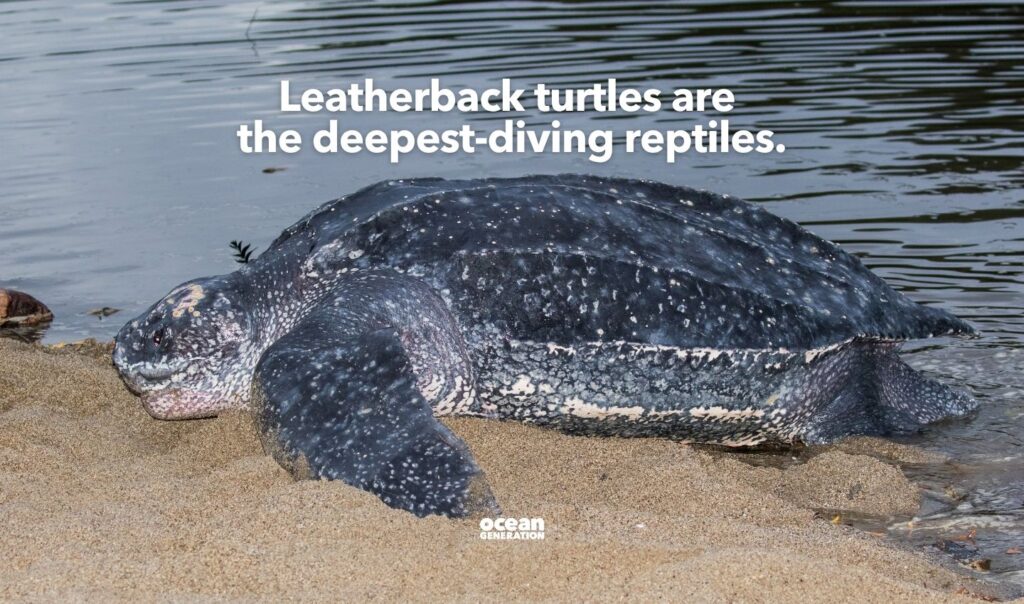
That doesn’t stop the deepest diving turtle: the leatherback turtle (Dermochelys coriacea), the largest turtle in the world.
In 2006, a tagged leatherback turtle named T2 dived to a depth of 1,280m (4,200 ft) southwest of Cape Verde. Impressive. But no turtle can keep up with the mammalian divers.
What are the deepest diving mammals in the Ocean?
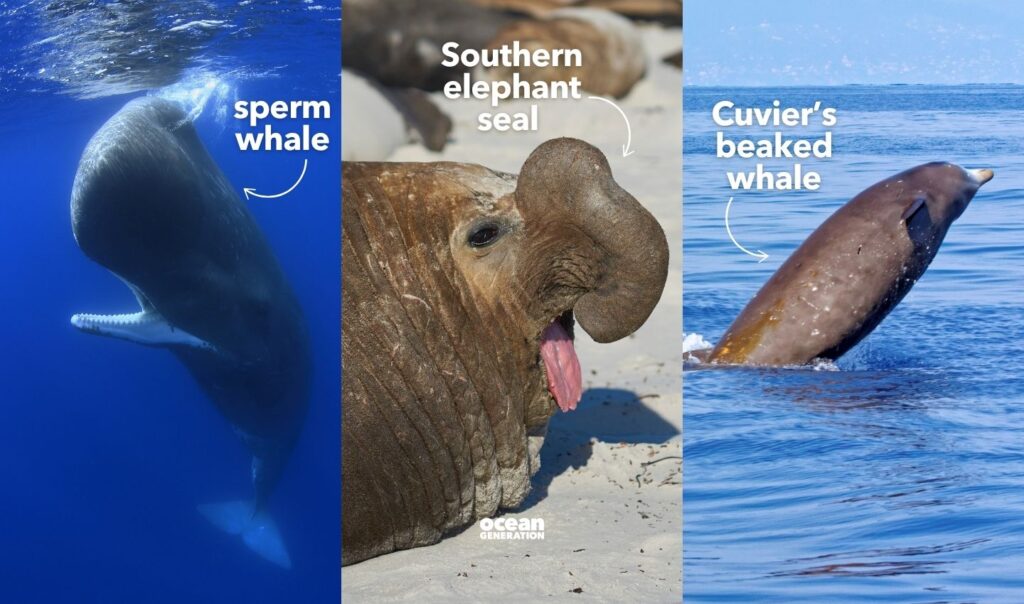
The sperm whale (Physeter macrocephalus) is renowned for its deep-diving exploits to hunt giant squid. One tagged individual was recorded reaching 1,202m (3,943 ft) in the Atlantic, but research using hydrophones to track the clicks sperm whales produce while hunting estimated dives as deep as 2,094m (6.870 ft).
Southern elephant seals (Mirounga leonina) are the most surprising champions of the deep Ocean. Large and clumsy on land, they dive up to 2,388m (7,834 ft) in some of the least forgiving waters on the planet; the Southern Ocean. Recent research has shown that elephant seals will go to sleep on these dives, spiralling gently downwards during their naps. How else do you sleep when you spend 8 months at a time at sea?
But the title of deepest diving mammal, and deepest diving animal with lungs, belongs to the Cuvier’s beaked whale (Ziphius cavirostris). One tagged whale ventured to a depth of 2,992m (9,816 ft) in dives recorded lasting as long as 137 minutes.
Pretty impressive, but most marine animals don’t have to come up for air. So, how deep can they go? Let’s start with one of the most successful and long-standing marine families: the sharks.
What are the deep-dwelling shark species?
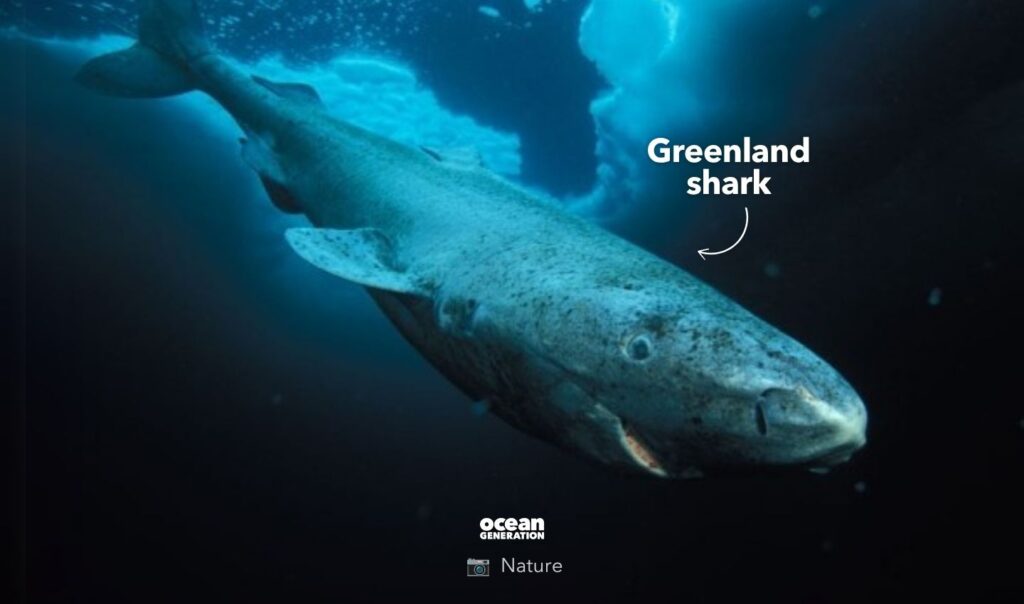
It’s very rare to find elasmobranchs below 3,000m (9,842 ft), only a few species can do it (we look at why later). The Greenland shark (Somniosus microcephalus) is the longest living vertebrate in the world, has been found as deep as 2,992m. A leafscale gulper shark (Centrophorus squamosus) was captured alongside a pale ray (Bathyraja pallida) at a depth of 3,280m.
How deep was the deepest shark found?
The Guinness World Records and most online sources give the title of deepest shark to the Portuguese dogfish (Centroscymnus coelolepis), with a recorded depth of 3,700m (12,139 ft).
This is tied with another distinctive shark, the cookie-cutter shark (Isistius brasiliensis), also recorded at 3,700m. But these are not the deepest elasmobranch.
A ray, close relative of the sharks, was recorded even deeper – a Bigelow’s ray (Rajella bigelowi) was found at 4,156m (13,635 ft).
They could possibly be found deeper: while setting the record for a manned dive in 1954, legendary deep-sea explorer Lieutenant Commander Georges Houot took an image of an unidentified dogfish, with their depth estimated as just over 4,000m (13,123ft). This could be another Portuguese dogfish, but there is no verifiable depth recorded, so it is not acknowledged as an official sighting.
How deep can octopus live?
Most octopus like the shallow, coastal waters of the world. But not all. Dumbo octopus (Grimpotethis sp.) are deep-living octopus known for swimming using the fins on the sides of its mantle, making it “fly” like the fictional elephant. In 2020 researchers found a record-setter in the depths of the Java trench off Indonesia, at a depth of 6,957m (22,824 ft).
Like their coastal cousins, these octopus live on and near the seafloor. Finding one nearly 7,000m deep in the Ocean means octopus can live on 99% of the seafloor – only 1% is deeper than 7,000m.
In other words: the deepest parts of the Ocean only make up a very small fraction, and there is very little out of reach for their many arms.
How deep in the Ocean was the deepest fish ever found?
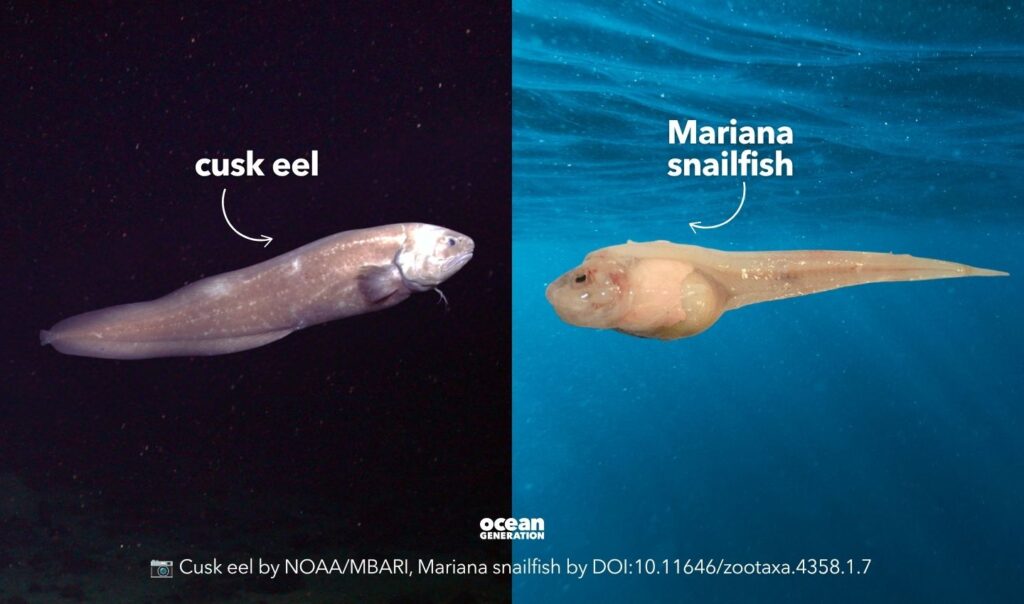
In 1970, a species of cusk eel (Abyssobrotula galatheae) was caught in an open trawl net that went 8,370m (27,460 ft) deep. Although it was hailed at the time as the ‘deepest fish ever found’, we have no way of proving it was caught at that depth, not as the net went down or came up. Therefore, we can’t say for sure this was the deepest fish.
The cusk eels (Ophidiidae) are one of only two fish families found below 6,000m (19,685 ft). The other are the snailfish.
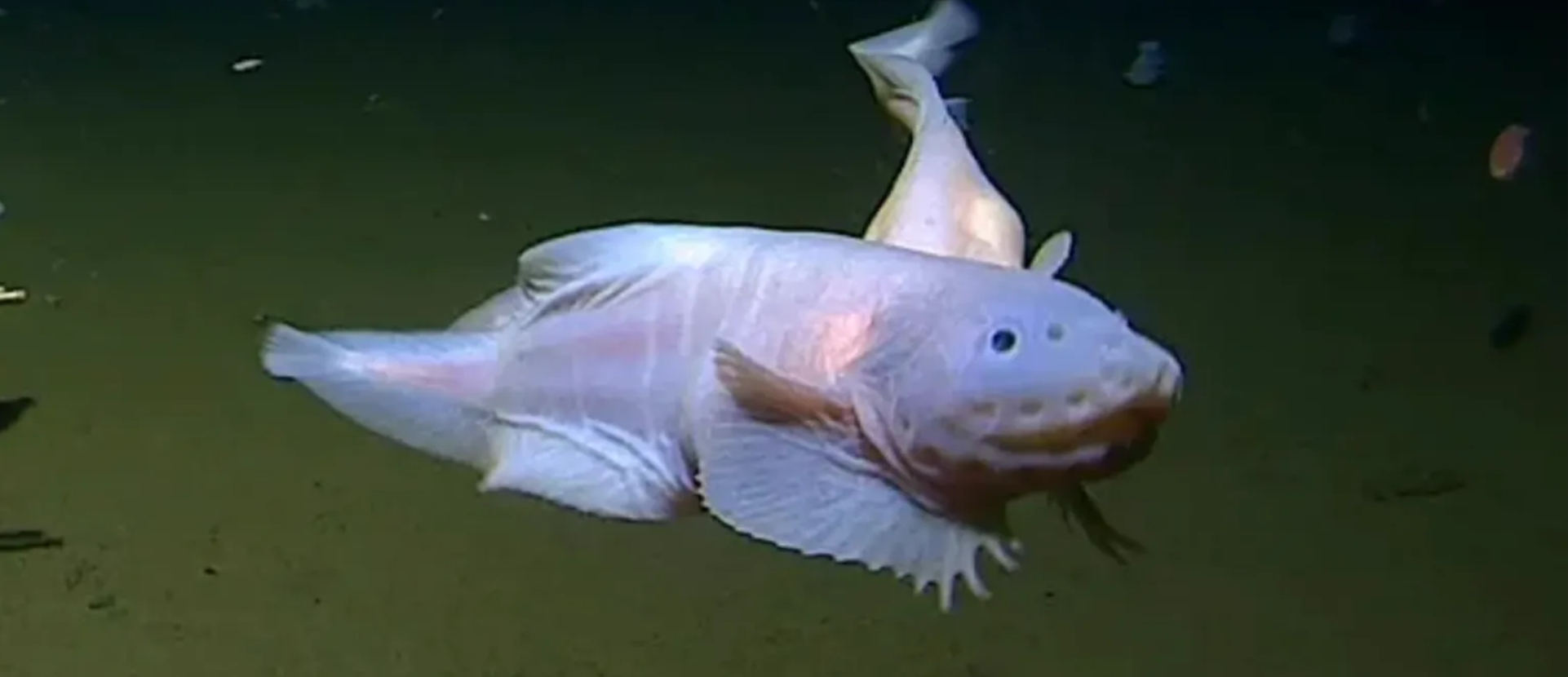
Imagine a tadpole that is half a metre long and you have a good likeness of a snailfish (Liparidae). They are a family that can be found in shallow coastal waters, and seven different Ocean trenches, the largest depth range of any family. The snailfish are the champions of the deep.
In 2017, a new species of snailfish was described. The Mariana snailfish (Psuedoliparis swirei) is named after its home: the deepest trench in the Ocean, the Mariana trench, about halfway between Japan and Australia.
Initially it was found 7,966m (26,135 ft) down, but later that year researchers found one even deeper at 8,178m (26,830 ft).
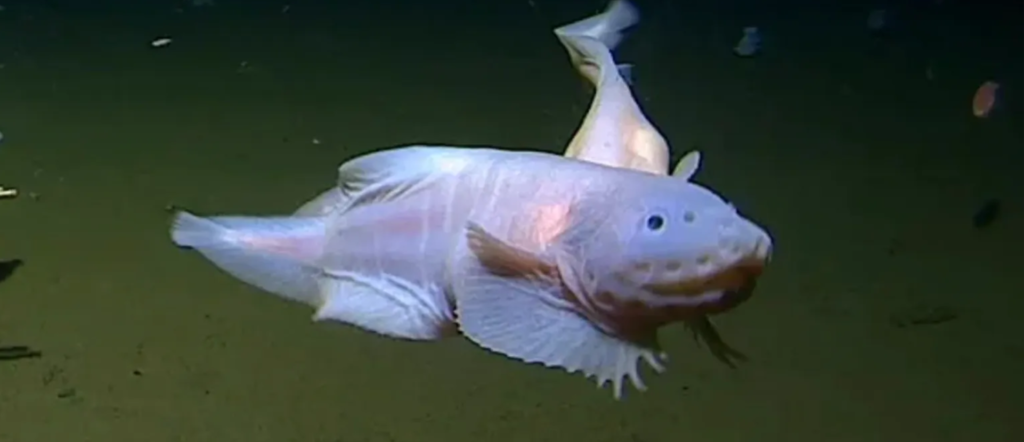
Even that isn’t the deepest. A different species of snailfish with no common name, Psuedoliparis belyaevi, was recorded by remote video cameras in 2023 at a depth of 8,336m (27,349 ft) to take the crown of deepest fish in the world. For now.
Below the depth limit of the snailfish there is over 3km (1.86 mi) more water to the deepest part of the Ocean. What, if anything, can survive these depths?
What are the deepest living animals in the Ocean?
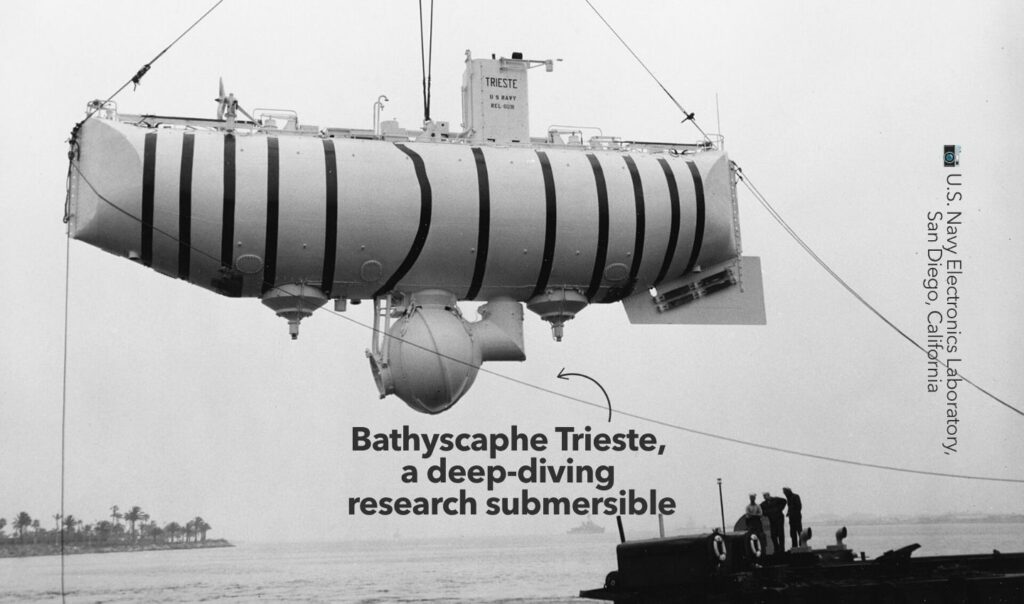
On the 23rd January 1960, humankind took a trip to the deepest part of the Ocean for the first time ever. The bathyscaphe Trieste, carrying Jacques Piccard and Don Walsh descended nearly 11,000m (36,089 ft) down. When they reached the bottom, Jacques Piccard looked out of the window into the abyss and saw, despite everything, a flatfish “resembling a sole”.
Don Walsh recalled stirring up a lot of sediment, that remained the whole 20 minutes they were on the bottom. He said “We could see nothing. It’s like somebody painted the front of the window with white paint.” Not ideal for observing new Ocean life.
Neither Don Walsh or Jacques Piccard were biologists, and they were looking out through a tiny porthole into murky dark waters. In the years since, this sighting has been disputed, and is no longer considered a fish. But they had seen something. What was moving in the murk?
What did the first dive to the bottom of the Ocean see?
They didn’t see any fish. The most likely explanation for the “sole” they saw is an animal that can be found even at these deepest corners of the Ocean – a sea cucumber. An expert in trench biology suggested the species Galatheathuria aspera, which is white and oval shaped.
It showed that complex life had reached even here, the very bottom of the Ocean. More recent research has confirmed this.
What is the deepest animal ever found in the Ocean?
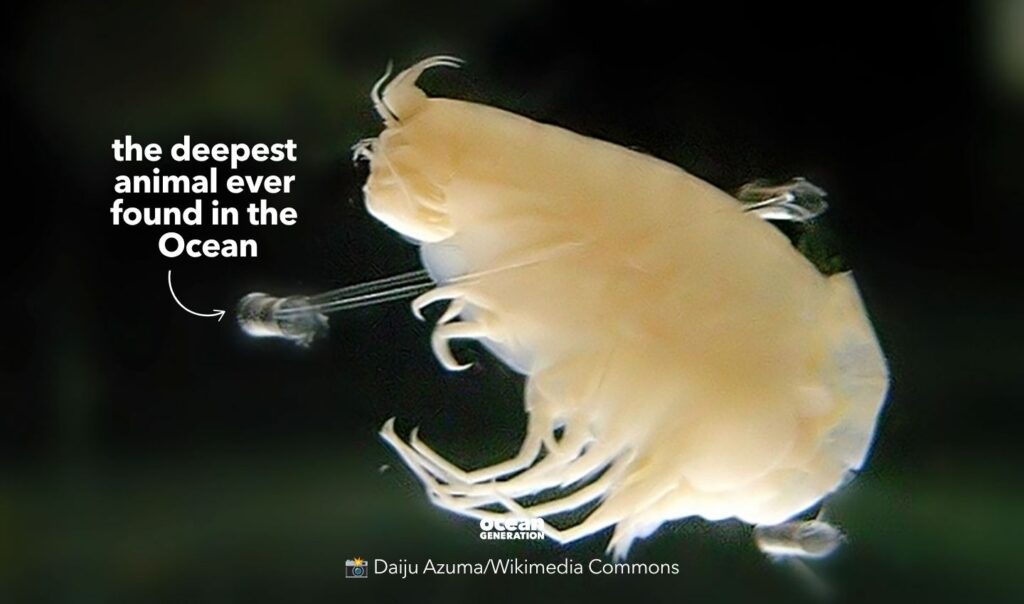
The deepest animal yet recorded is a species of giant amphipod: think of the sandhoppers that bounce around when you move some old seaweed on the beach, but over 30cm (11.8 inches) long.
A species of amphipod, Hirondellea gigas, has been found 10,897m deep. 185 of them were collected over a 3-hour bait deployment, suggesting that even at the bottom of the Ocean there is a surprising abundance of life.
The deep dive: What limits how deep Ocean animals can go?
For the air-breathing mammals and reptiles, the constraints are clear – they must return to the surface to breathe. The same is not true of sharks and fish.
By assessing the number of species of elasmobranchs (sharks and rays) we find at different depths, researchers predicted the maximum depth we would find a shark/ray at to be 3,893m (12,772 ft). The number of species decreases as we go deeper in the Ocean. The rate at which species decrease gives a rough idea of when there will be no species.
That number is an estimate, but the same method predicts bony fish to a depth of 8,350m (27,395 ft), which is also remarkably close to the actual depth they have been found. But what is preventing these animals from venturing deeper?
The secret may lie, ironically, with a compound used to enable living at depth.
What is TMAO?
Trimethylamine N-oxide, or TMAO, stabilises proteins in a fish’s body to help them retain their structure and function even at depth. Think of it as a mini engineer, preventing damage to the fish. Fish found deeper have higher levels of TMAO to battle the larger pressures. Makes sense.
But you can have too much of a good thing. Too much TMAO means the water balance gets disrupted. As a general rule, water travels to places where there is lower concentrations of water.
If there is too much TMAO in fish tissues, that lowers the concentration of water in the tissue below the concentration of water in seawater. Too much TMAO means water will start entering the fish and ‘drown’ it.
But if both sharks and fish face this issue, why are sharks found so much more shallow?
Why are sharks not found deeper?
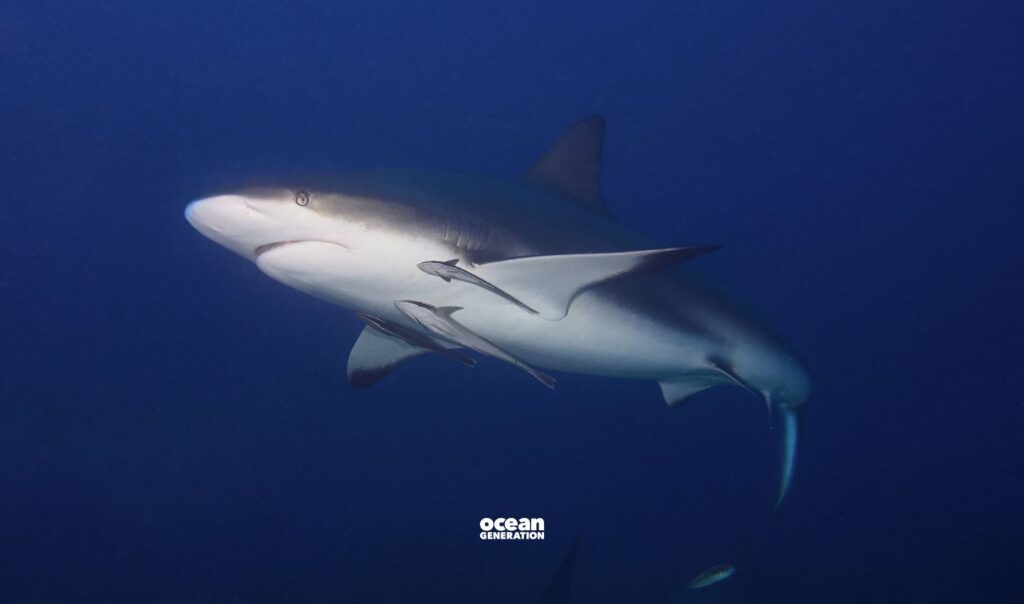
All findings suggest that elasmobranchs can be found up to and maybe just over 4,000m (13,123 ft) deep, but no further. Why are one of the Ocean’s most successful inhabitants limited to half its territory?
Ocean animals have to be careful about staying hydrated. As they are in constant contact with water, it is harder to retain the water they need to survive.
Sharks do this by retaining urea – a waste product excreted in urine – in higher concentrations to keep their tissues similar water levels with the seawater (some can change their body function to move between fresh and salt water – read more here).
They effectively make themselves as salty as the sea, so they don’t lose water. However, urea (like water pressure) can affect and damage proteins, making them malfunction.
So, sharks employ the mini-engineer TMAO here to counter the effects of the high urea levels on their proteins.
This means sharks have higher levels of TMAO in the shallows, so when they increase TMAO levels to survive in the depths they reach that critical level of TMAO concentration sooner.
Why do fish have a depth limit?
Fish don’t retain urea, they excrete it, which means they have to constantly drink seawater and use energy getting rid of the extra salt. It also means they don’t need TMAO to counter the effects of high levels of urea.
Fish then don’t need to increase TMAO levels until they are getting deep, so can reach deeper as their TMAO is only countering the effects of depth.
The maximum levels of TMAO allow fish to exist up to approximately 8,200m (26,902 ft) which lines up with observations. Going deeper would mean either the pressure of the water breaking the very molecules life relies on or bursting from water rushing into an over-salty fish.
No wonder the fish leave that last 3,000 m (9,843 ft) alone.
The Ocean is very deep, but still connected
Every record here comes with an asterisk – it is the deepest so far. Until recently we thought the depths were empty, but now we are discovering more species here than ever before: over 1,000 new species in a single year.
This is a world we are still only just beginning to understand, yet it is not separate. The deepest known animal, the amphipod Hirondellea gigas, has bacteria in its gut for digesting wood and plant matter that sinks from the distant land above.
Everything in the Ocean, from the air breathing divers to the deepest amphipods, are connected with our surface world. As we are to it.
Cover image: The University of Western Australia



#/media/File:Bathyscaphe_Trieste.jpg)