
- Science: Explained
How accurate is Shark Tale?
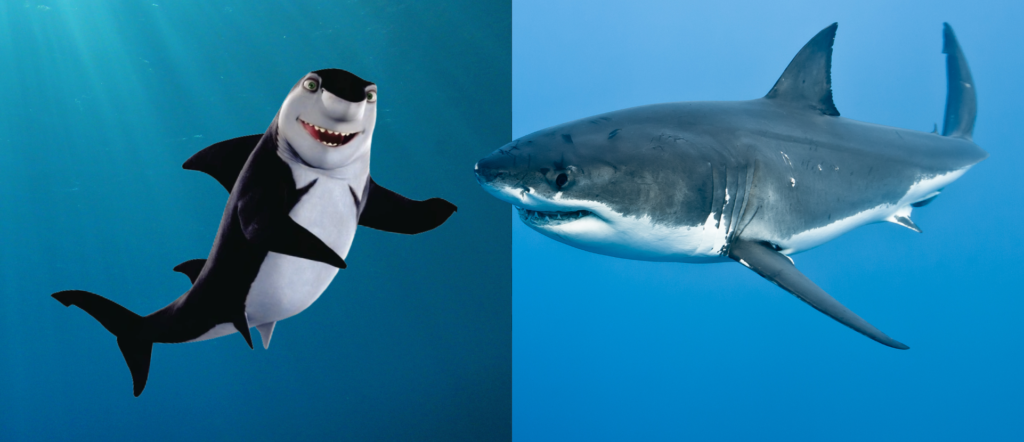
Shark Tale was DreamWorks’ underwater adventure released in 2004, and is a real nostalgia hit.
But with the rose-tinted glasses removed we ask: How accurate is Shark Tale? Let’s start by looking at the characters:
What Ocean creatures are the characters of Shark Tale? (in order of accuracy)
Most accurate characters in Shark Tale
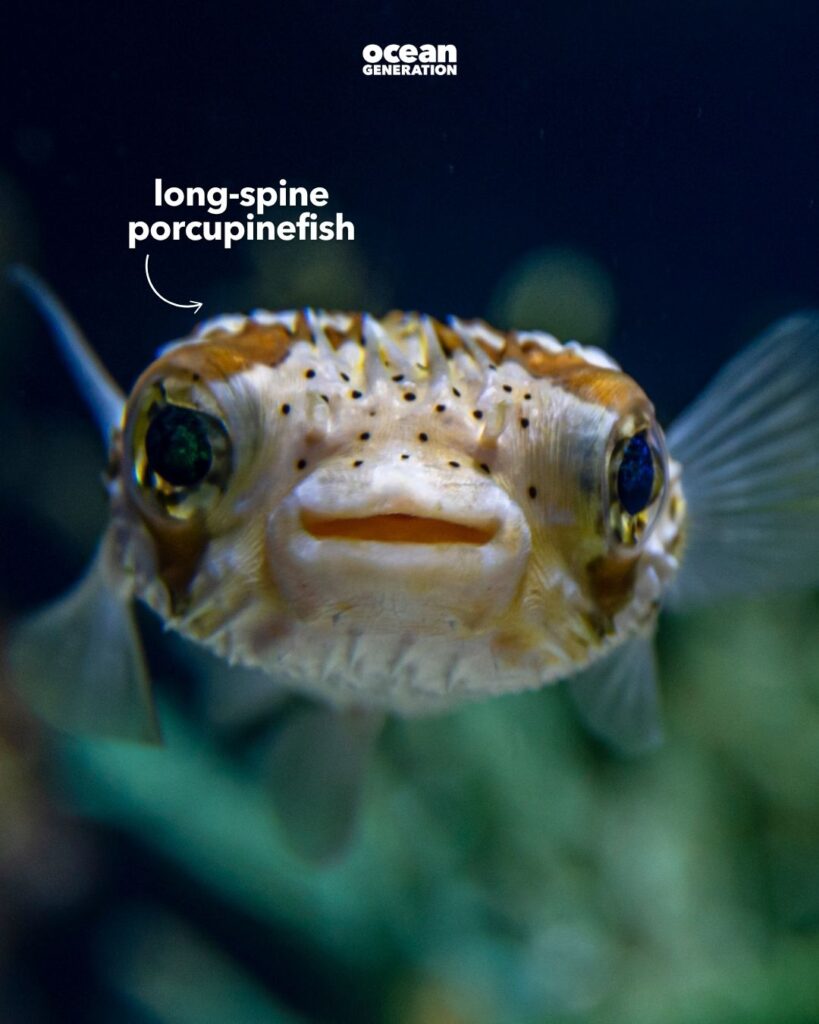
Sykes is a long-spine porcupinefish (Diodon holocanthus). Visually very accurate, bonus points that he ‘puffs’ up using water, rather than the usual mistake of making him puff up using air. 10/10
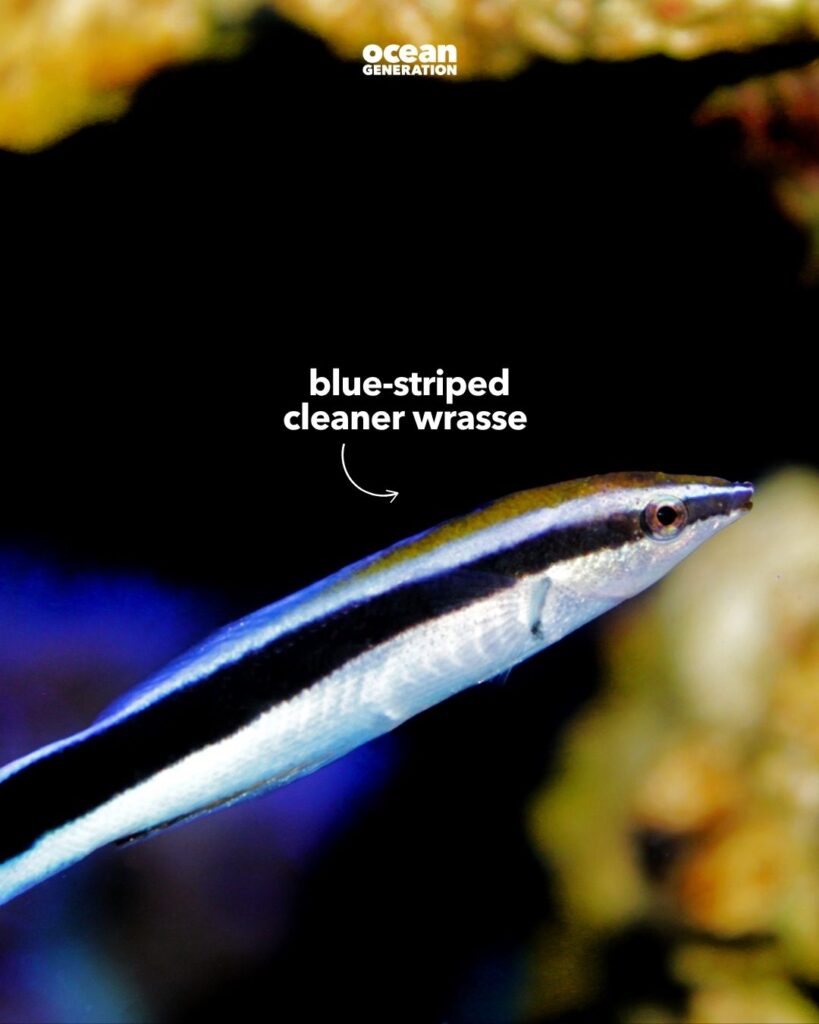
Oscar is a blue-striped cleaner wrasse (Labroides dimidiatus). Cleaner wrasse are indeed the cleaners of the reef, picking off dead skin and parasites, which he would eat. Oscar not having a fear of sharks would be accurate to his species, as they also clean sharks. 9/10
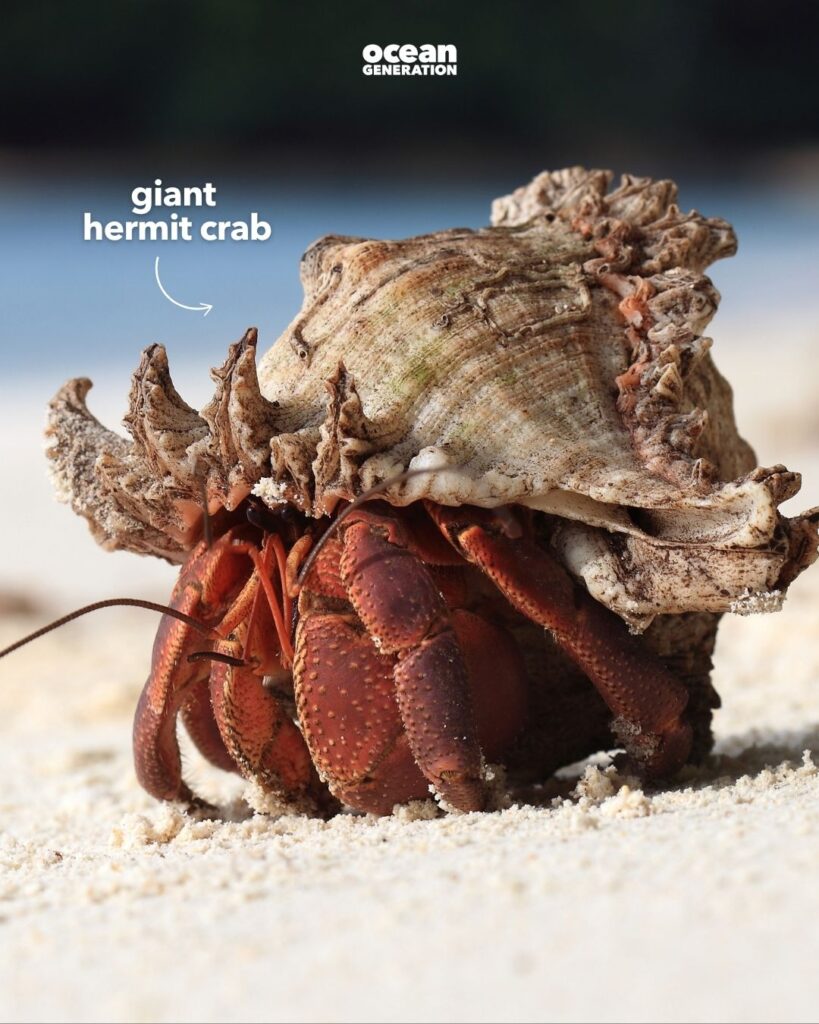
Crazy Joe is a hermit crab. His larger left claw singles him out as a left-handed hermit crab, and his striped antennae and relatively large size point to the giant hermit crab (Petrochirus diogenes). 8/10
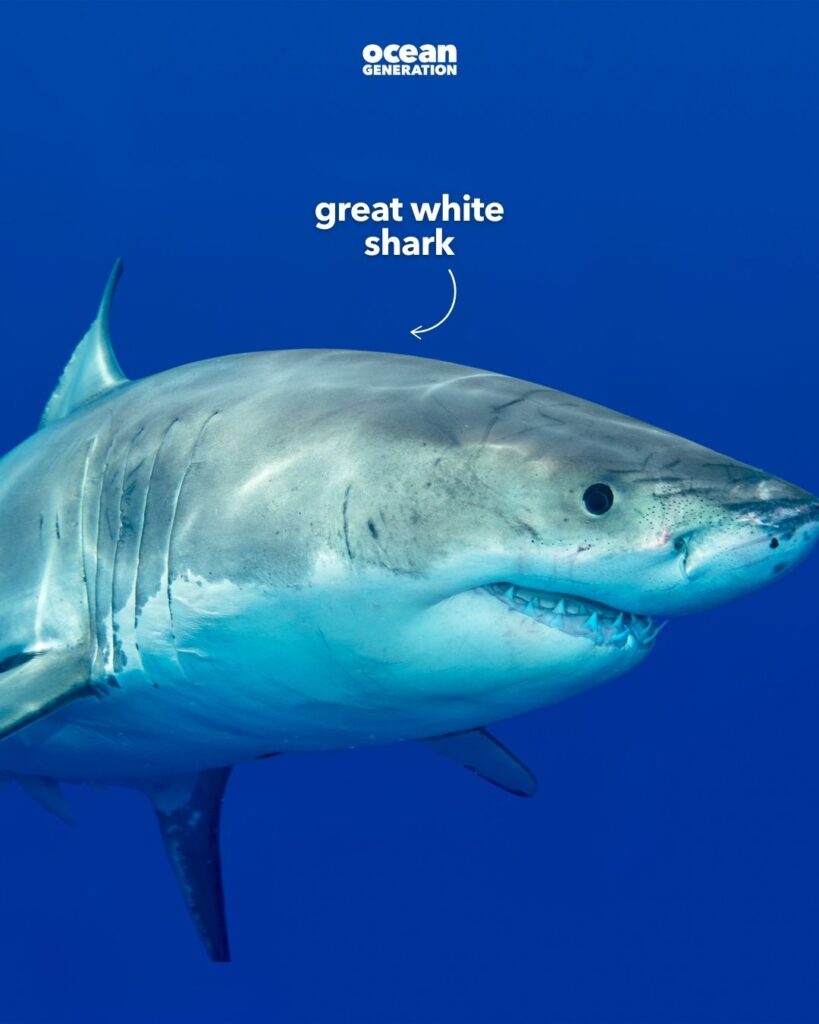
Don Lino, Lenny and Frankie and most of their ‘mob’ are great white sharks (Carcharodon carcharias). The distinct countershading, strong jaws and notorious dorsal fin sell it, although there is a lack of claspers (see below). 7/10
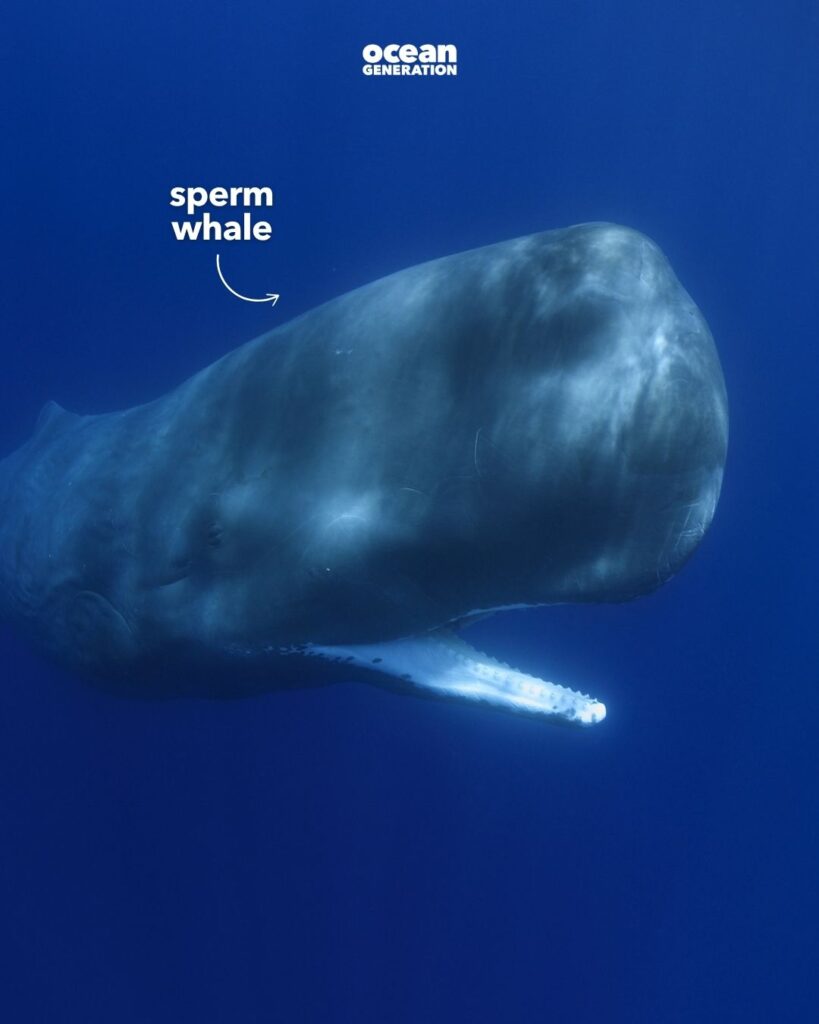
The whales at the whale wash all appear to be sperm whales (Physeter macrocephalus). While not impossible to find sperm whales around a coral reef, it is less likely than a humpback or other whale species. Sperm whales specialise in diving deep for their food, not usually spending time in shallow, coastal waters where you would find a reef. They look right, just wouldn’t likely be there. 6/10
Shark Tale characters that missed the mark
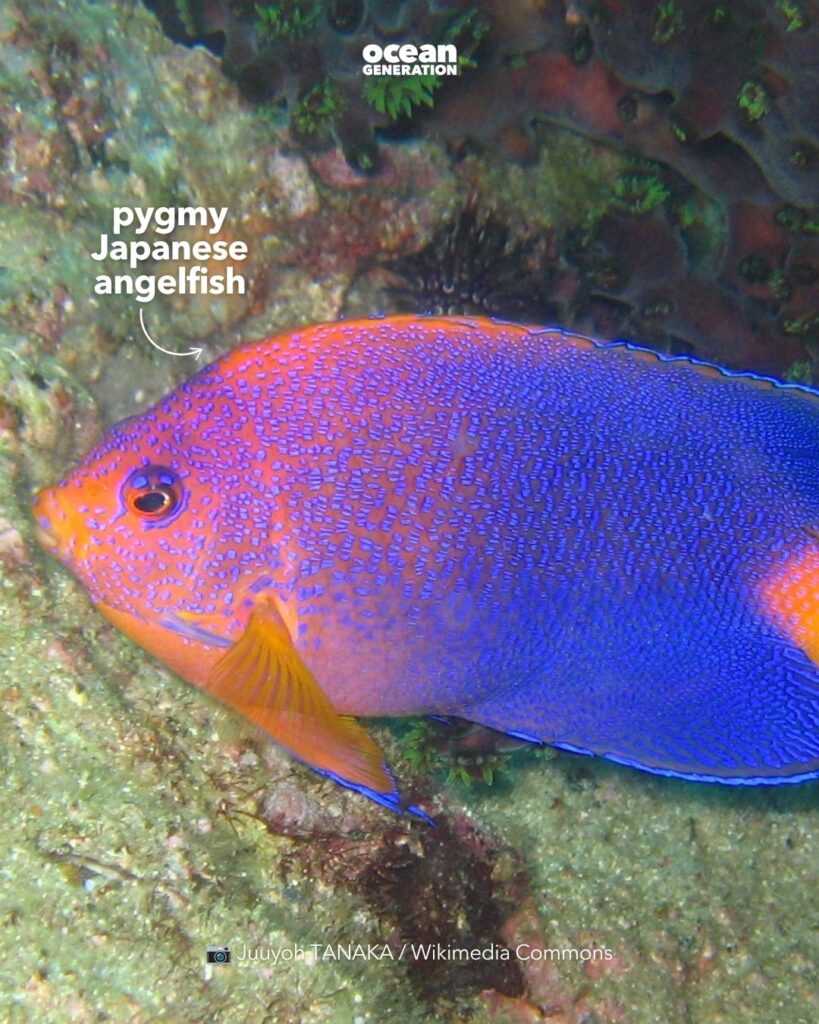
Angie is an angelfish, but it isn’t clear what species she is. Her colouration most closely matches a pygmy Japanese angelfish (Centropyge interrupta), but it isn’t a strong match. 5/10
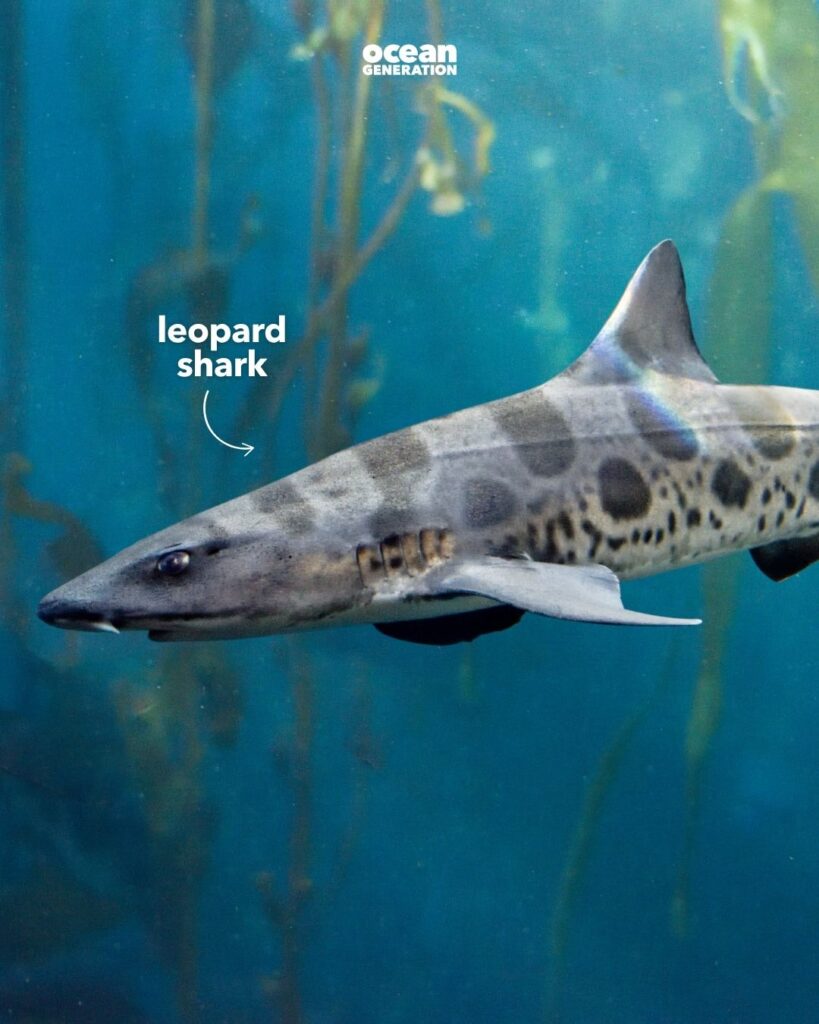
Ira Feinberg, or Don Feinberg, has markings identifying him as an elderly leopard shark (Triakis semifasciata). Leopard sharks are a lot smaller than great whites and also not found on coral reefs. 4/10
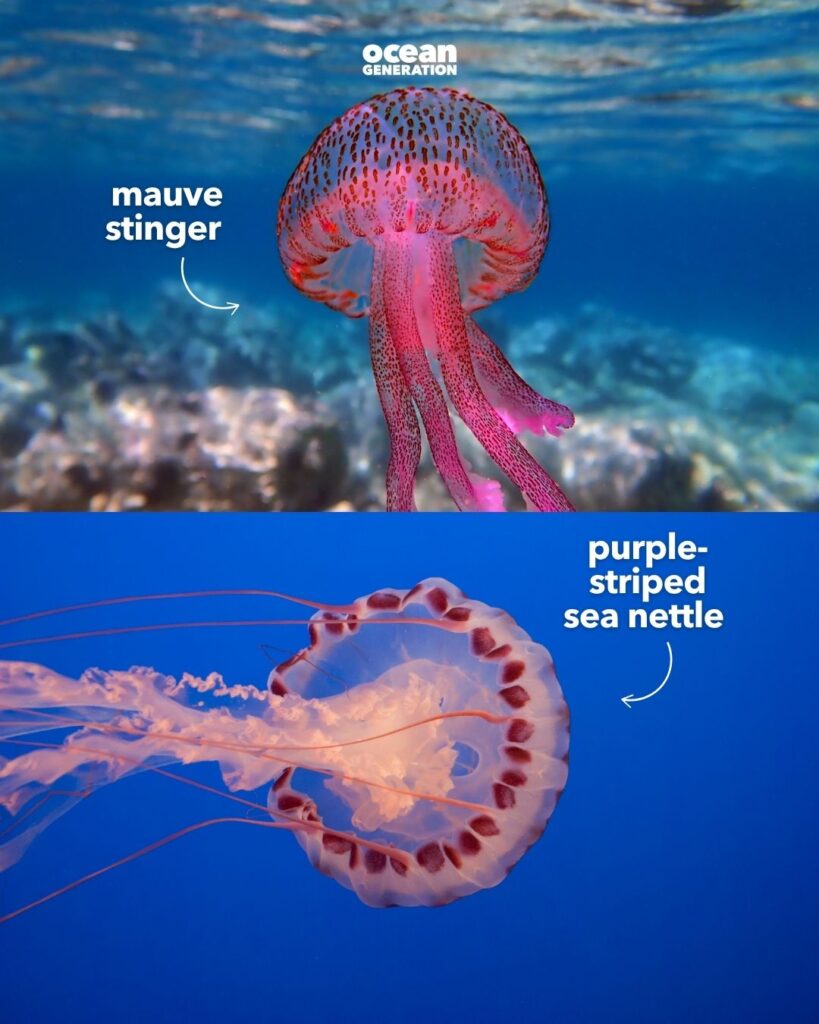
Ernie and Bernie, the Rastafarian jellyfish henchmen, fall into the same generic limbo that the Finding Nemo jellyfish do. The closest likeliness is a mauve stinger (Pelagia noctiluca) or a purple-striped sea nettle (Chrysaora colorata). Either way, the skeleton x-ray animation and sounds of electricity are misleading. Like bees and wasps, jellyfish stings are injections of venom rather than anything electric. 3/10
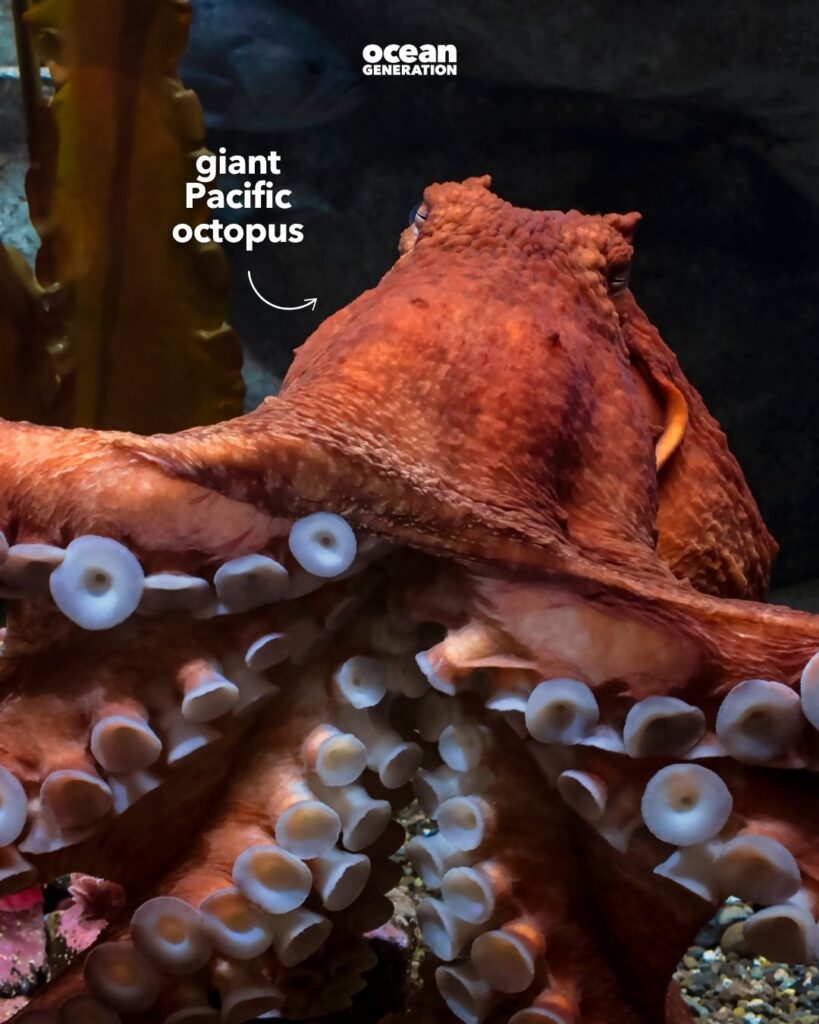
Luca is, judging by size, a Giant Pacific octopus (Enteroctopus dofleini). No other octopus comes close to the size of a great white. But these octopus are not found on coral reefs, preferring colder waters from California to Alaska and round to Japan. Generally, they are a rust-orange rather than Luca’s dark green colouration. We talk about his mouth later. 1/10
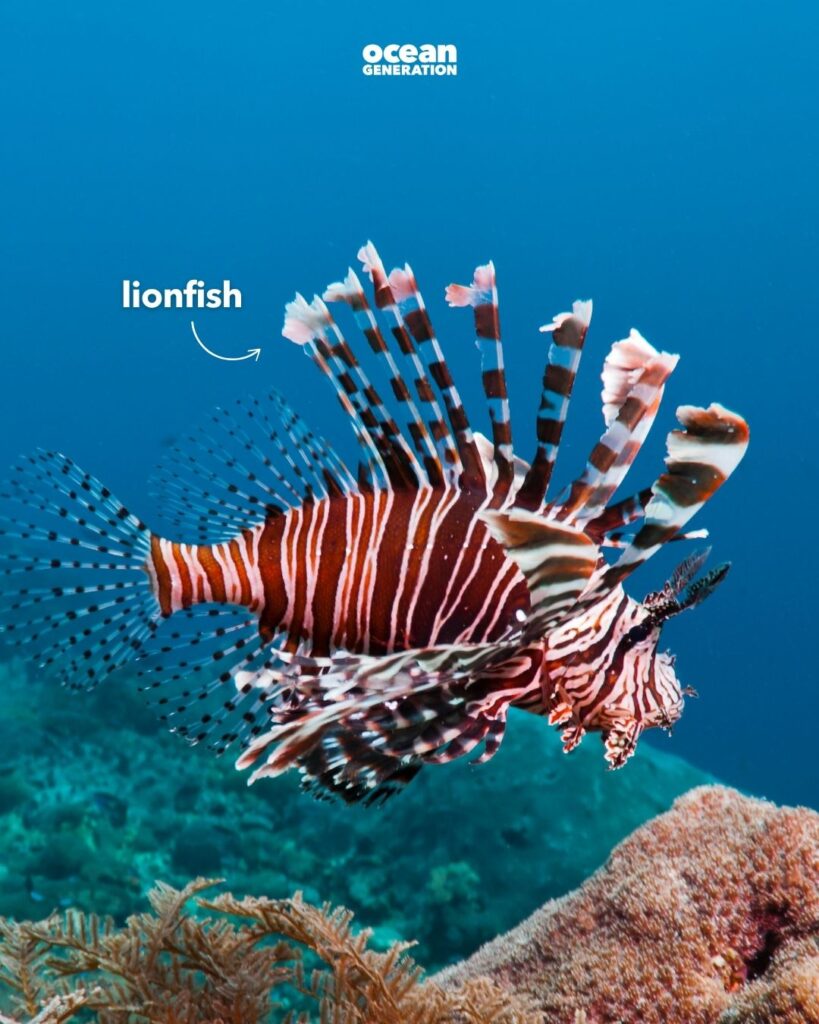
Lola is allegedly a lionfish. In character maybe – they are voracious predators, ambushing anything that comes across their path. Unfortunately, Lola doesn’t look much like a real lionfish. She is missing the characteristic spines and has no tentacles above her eyes or below her mouth. Lionfish don’t have a skinny waist in real life. 0/10
Are coral reefs underwater cities?
The opening shows off the base premise of the film: that a coral reef is a big underwater city. We love it.
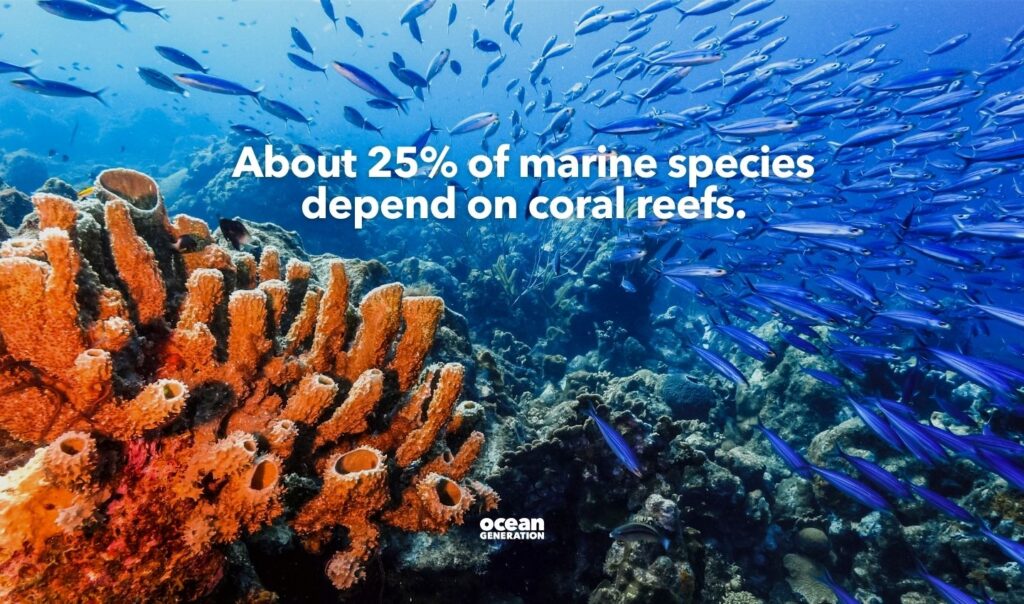
Coral reefs house a huge variety of life, with an estimated 25% of marine species dependent on coral reefs. Small fish live in the nooks and crannies of coral and use it to shelter from predators such as the sharks, exactly how it is shown in Shark Tale.
At one point, a fish is dumping its rubbish into another fish’s mouth. This is key to how a coral reef functions. The clear blue water we love is like a desert for those living in it – clear because there is very little food floating around. On a coral reef, all the waste is recycled – one fish’s garbage is another fish’s food.
Do whale washes exist in the Ocean?
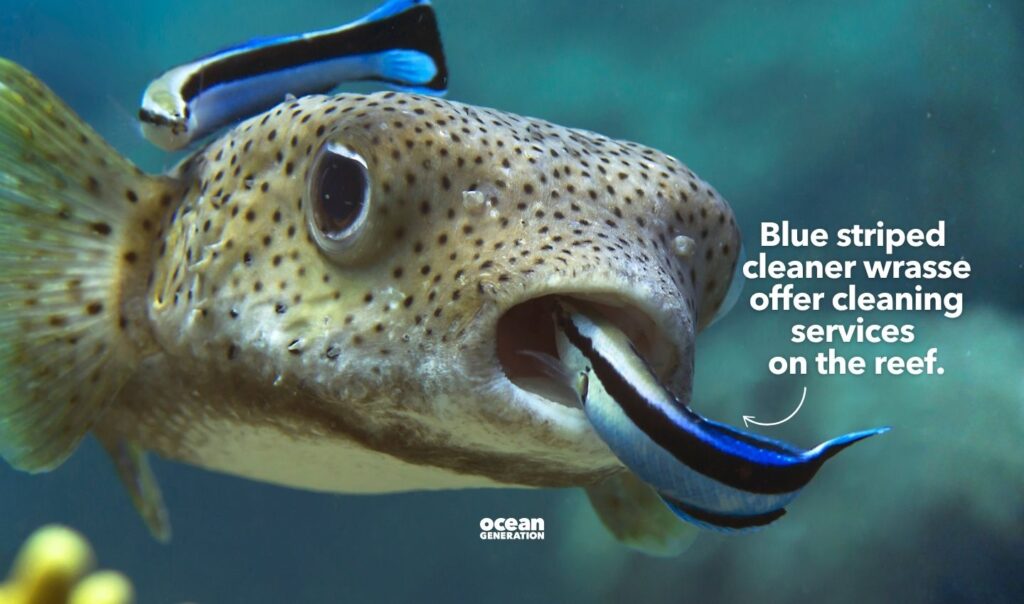
Blue-striped cleaner wrasse such as Oscar do indeed carry out cleaning services on the reef, but for a much more varied clientele than just whales. The core concept of the whale wash is real, but there are some details that go astray in the movie.
1. The Whales. These cleaning stations are more commonly for larger fish and marine reptiles such as turtles. Whales and other cetaceans can use other skin care routines, such as rubbing on stones or leaping out of the water. To make Shark Tale more accurate, we would make it a Ray Rinse, a Shark Scrub, or the Fish Freshen.
2. The Cleaning. Oscar is a tongue scrubber in the film, but most cleaning would be focused on the skin – picking off parasites and dead skin and sometimes venturing into the mouth. He certainly wouldn’t use a brush, instead would be using his mouth. Maybe better they left that out of the film.
3. The Staff. Cleaning stations on the reef can have lots of different staff, from cleaning wrasse like Oscar to cleaner shrimp. There were a few in Shark Tale that you wouldn’t find on the real reef.
- Turtles are customers, not cleaners.
- Dolphins, whether real or sharks in disguise, wouldn’t be found at the cleaning station
- Electric eels wouldn’t be anywhere near a coral reef, as they are freshwater fish. The only electric fish in the sea are the torpedo rays
What are the sharks in Shark Tale missing?
One anatomical inaccuracy shared between Shark Tale and its reef-based rival Finding Nemo is an important piece of shark missing. Don Lino and co are a little short down below.
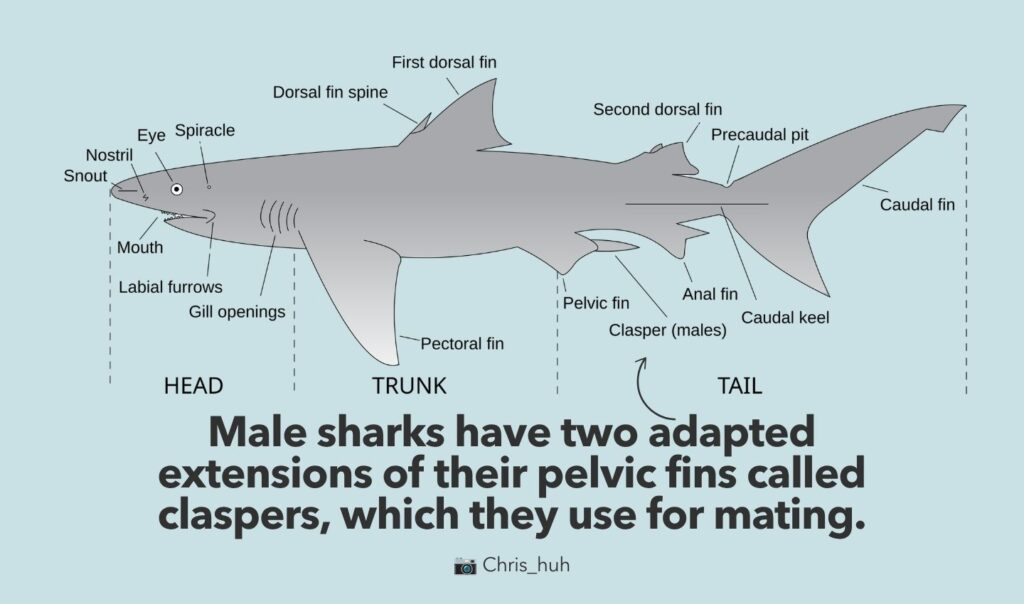
Male sharks have two adapted extensions of their pelvic fins called claspers, which they use for mating. Just like our friend Bruce, a quick look at any of the sharks in Shark Tale leads to questions of immaculate conception. Maybe, as some sharks have been known to do, the sharks on Southside Reef are pros in asexual reproduction (producing young with only one parent). Or perhaps we have a cast of Carcharodon (great white genus) drag kings.
Do octopus have mouths?
Luca is, judging by size, a Giant Pacific Octopus. There is one glaring error – as with all cephalopods, octopus have their mouths on the underside of their bodies, which house beaks. Giant squid (Architeuthis dux) have the largest beak in the animal kingdom.
Luca’s top-side trap is useful for animators to create recognisable emotions and speech (and create a brilliant background moment of Luca pouring and trying to drink tea) but a miss for accuracy.
Who is in the Shark Tale mob?
Don Lino, Frankie and Lennie are part of the great white shark family running a mob at odds with the reef. But their mob doesn’t make much sense.
Great white sharks do not typically socialise, and certainly don’t hang out with family, although new research does suggest that some populations do have socialite sharks, in South Australia and Guadalupe Island, Mexico.
The great whites are joined by some other sharks, leopard sharks like Ira Feinberg and great hammerheads (Sphyrna mokarran). Great white sharks don’t usually like other sharks and in fact are known to eat smaller species like leopard sharks.
The swordfish (Xiphias gladius) at the table would have similar anxieties. Great whites aren’t known to eat them, but their cousins the shortfin mako do. Great whites are unlikely mobsters, who don’t have a close family and have few natural allies.
The most likely mobsters are the orca (Orcinus orca). In the wild, orca maintain close family ties and cooperate to hunt and protect each other (and they have accents). A recent video showed a new example of this – one orca holding a sunfish still while another rams it. They can then eat the bits that fly off. Brutal.
But the orca in Shark Tale aren’t the orca of our Ocean. In the film they are goofy and scared, fainting when Oscar talks to them. In the real world, they eat swordfish and they are also known predators of great whites. They flip them upside down into a catatonic state called tonic immobility and then remove and eat their rich livers, leaving the rest. In reality, the orca would sit at the head of the table, ruling the Ocean mob.
What other animals belong in an underwater mob?
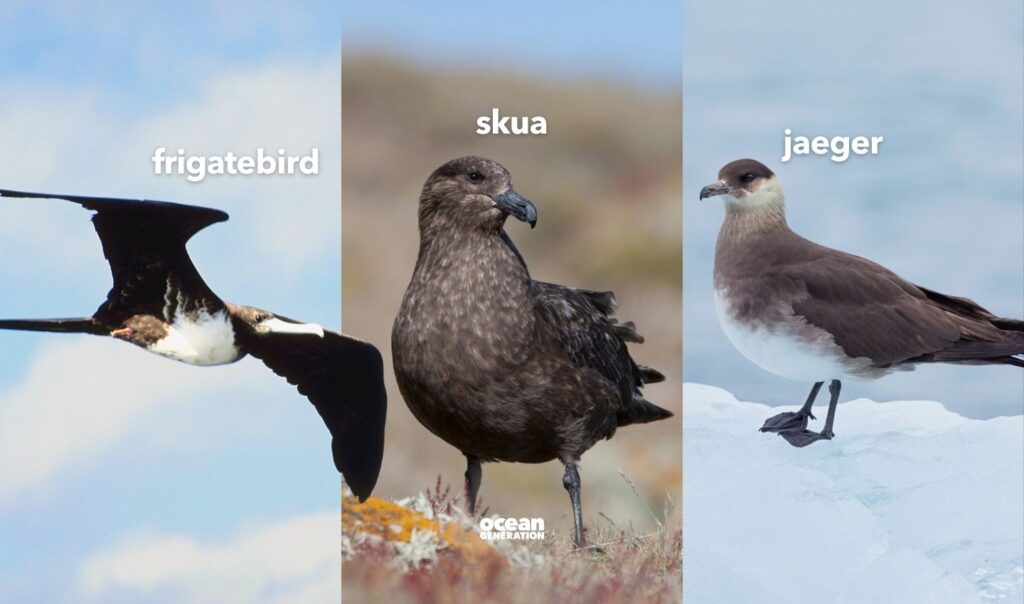
If we were going to re-make Shark Tale (live-action reboot anyone?), what animals would we have in our orca-led mob? Frigatebirds, skuas and jaegers are seabirds that harass other birds to regurgitate their food, chasing and bullying smaller species such as terns.
There are excellent fish con artists. The bluestriped fangblenny (Plagiotremus rhinorhynchos) is dressed the same as Oscar’s blue-striped cleaner wrasse, but instead of cleaning will bite a chunk of flesh off. Butterfly fish have a dark eyespot towards their tail, to confuse predators which way they are facing.
Some fish are just as territorial as any mobster. Damselfish are underwater gardeners, cultivating their favourite algae, which they tend to diligently. They will protect their patch enthusiastically against all odds and any size of intruder. The same can be said of the Titan triggerfish (Balistoides viridescens). Ask any SCUBA diver – Titans demand respect. They fear nothing, and will regularly chase and bite large sharks such as tiger sharks.
The mob in Shark Tale is based around a species that doesn’t like family, would eat some of the species and could be eaten by others. There are a lot of good other marine mobsters to choose from.
Do sharks live on the Titanic?
The main gangster hangout in Shark Tale is none other than the wreck of the Titanic.
Wrecks are popular hangouts for fish and the large predators that frequent natural reefs. In fact, research suggests that wrecks could attract more travelling predators than natural reefs.
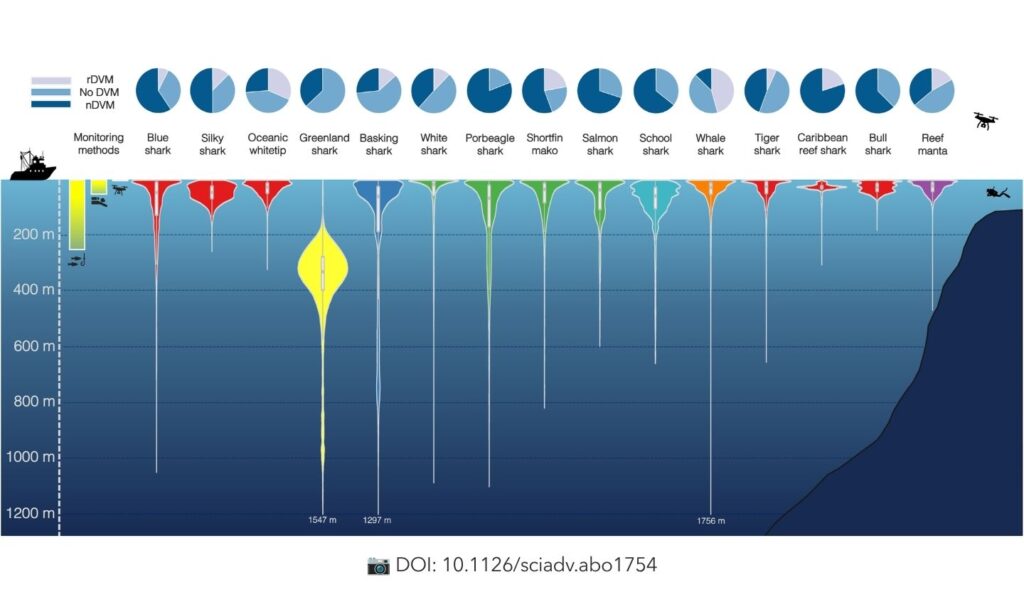
BUT. The real-life wreck of the Titanic is sat at 3,800m (12,500ft) deep, in the Northern Atlantic. Most of the mob could live that far north, but the depth would be an issue. Sharks are not generally deep-living marine creatures.
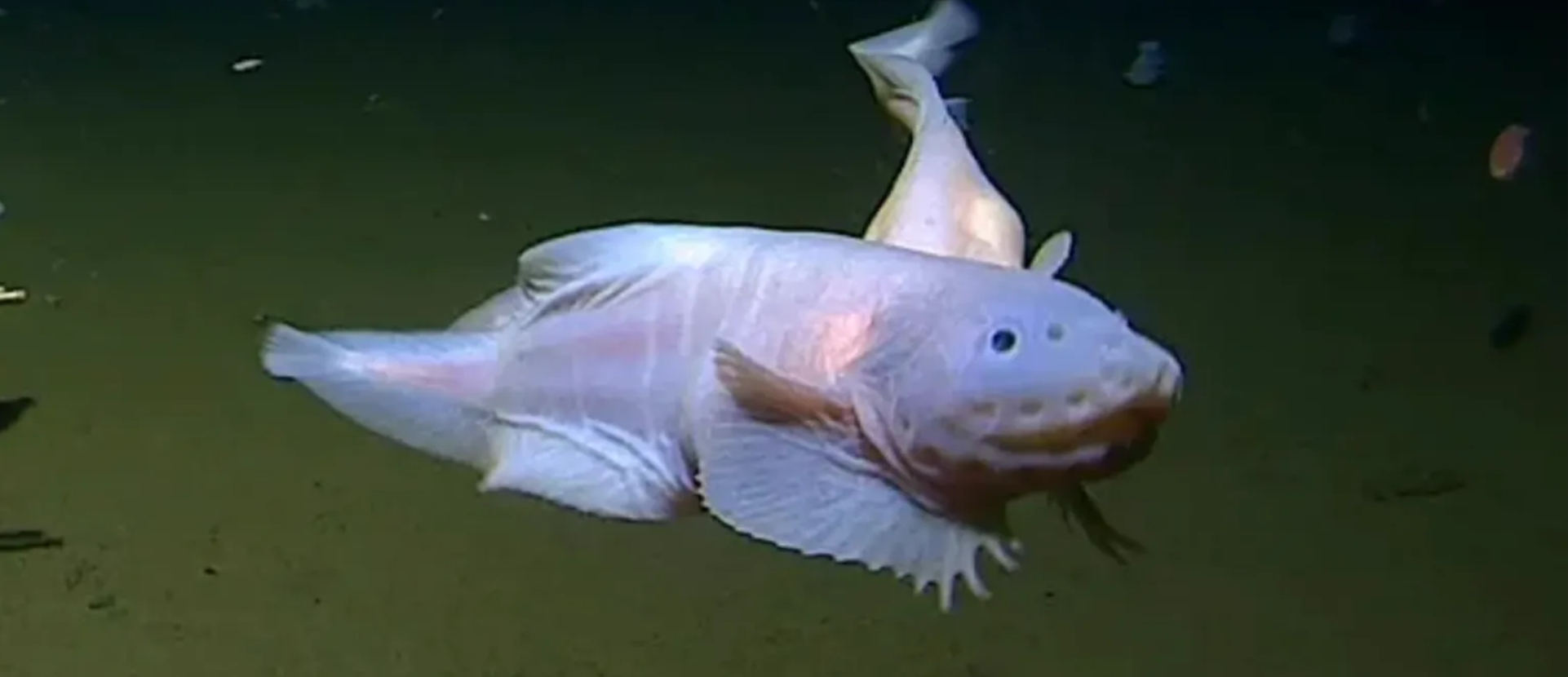
This image is from a study investigating the depths different shark species spend time at. White sharks were tracked to a maximum of 1277m (4,189ft). The deepest confirmed sighting of a large shark is a sleeper shark (Somniosus sp.) that was spotted by a remotely operated vehicle (ROV) at 2647m (8,684ft).
There are no large sharks in the Titanic. Scientists hypothesise that some elements of shark biology may prevent them from living in the deep, which we can explore another time.
Do great white sharks go to bed?
In the film, Lenny is excited to find a bed to sleep on while hiding with Oscar. Now, you may know great white sharks don’t sleep on beds, but did you know they don’t even stop swimming to sleep? Let’s talk shark sleep.
For sharks (and all fish) to breathe, they must have fresh, oxygen-rich water move over their gills, just as we need fresh, oxygen-rich air moving over our internal ‘gills’ – our lungs. Some sharks can do this while stationary – forcing water over their gills using a technique called buccal pumping.
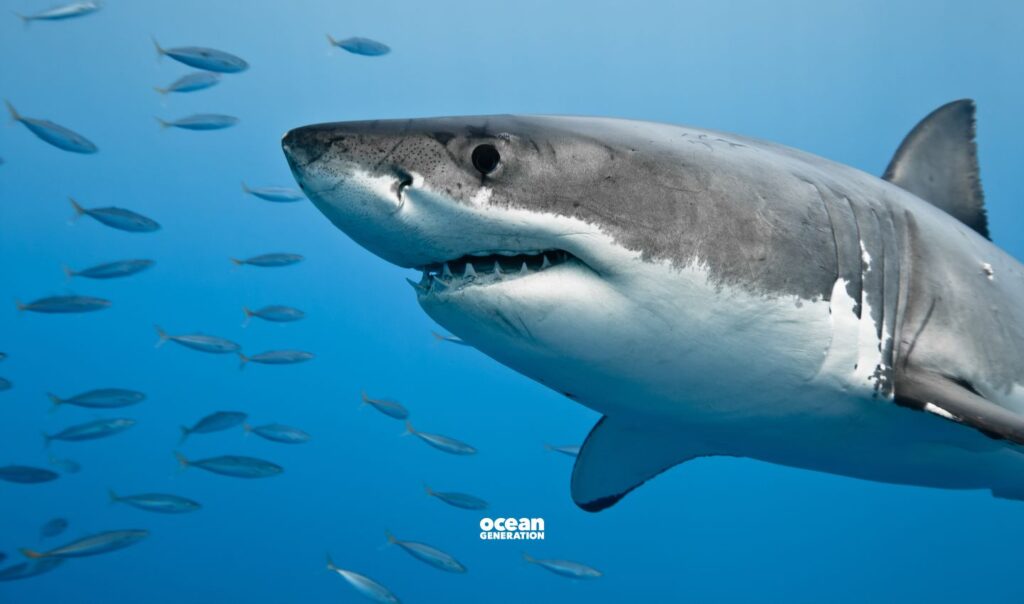
Great white sharks are among a group of sharks that can’t do this – they don’t have the nostril-like structures called spiracles behind their eyes which allow it. So, white sharks must keep the water moving over their gills through their movement – known as ram ventilation.
Research around sleep in these sharks is still lacking – we don’t really know what sleep looks like for them. But we know they don’t curl up in bed.
Are great white sharks cold blooded?
As Frankie is dying after being hit by an anchor, he tells Lenny “I feel so cold”, to which his brother helpfully replies: “but we’re cold blooded”. Frankie’s last word? “Moron”. That is probably because Frankie knew that great white sharks actually aren’t cold blooded.
Most fish are ectotherms – their body temperature is entirely determined by the temperature of their surroundings. Humans, along with all mammals and birds, are endotherms – “warm-blooded”, maintaining a favourable internal temperature utilising the heat produced by metabolism. Great white sharks, along with the other lamnid sharks (salmon sharks, mako sharks and porbeagle sharks), tuna and the leatherback turtle, are mesotherms.
What is a mesotherm?
A useful setup of blood vessels keeps the heat produced by the muscles in the system, rather than removing it with the deoxygenated blood. This is known as counter-current exchange.
This intermediary between the two means they can raise their internal temperature above that of their surroundings, but they do not have the high metabolic demand of being truly endothermic. The advantage is that these fish can work faster – these are some of the fastest fish in the Ocean. The leatherback can stay deeper for longer on its feeding dives before it needs to return to the surface to warm up.
Not cold blooded, but not warm blooded either.
Do sharks eat everything?
After holding Angie in his mouth, Lenny ends up throwing up a whole host of fun things. One of them is a number plate. This is based on fact: license plates have been found in the stomach of tiger sharks. This particular license plate is actually the exact plate Hooper pulls out of a tiger shark in Jaws, and that is discovered in the teeth of a tiger shark in Deep Blue Sea.
Other items include a radio, a violin, a beach ball and a broom.
Tiger sharks especially are nicknamed the rubbish bins of the Ocean and have been found with all manner of strange things in their stomach. A fur coat, a coil of copper wire, an unopened tin of salmon and a suit of armour are all among strange things recovered from shark stomachs.
Conclusion: How accurate is Shark Tale really?
Some of the core elements of the film are brilliant. The framing of a coral reef as a city is one we love – capturing the essence of so many species living and working together. The whale wash is a lovely idea, although making it a turtle wash, shark wash or any other large fish would have been more on the money.
But the shark mob, the Titanic and Lola the “lionfish” knock the accuracy score way down.
Verdict: Sleeping with the fishes… the dead ones. – Luca, 2004