There are over 500 species of sharks. Some live over 300 years old, some glow in the dark. All of them have different vibes, so we’re asking – which kind of shark are you?
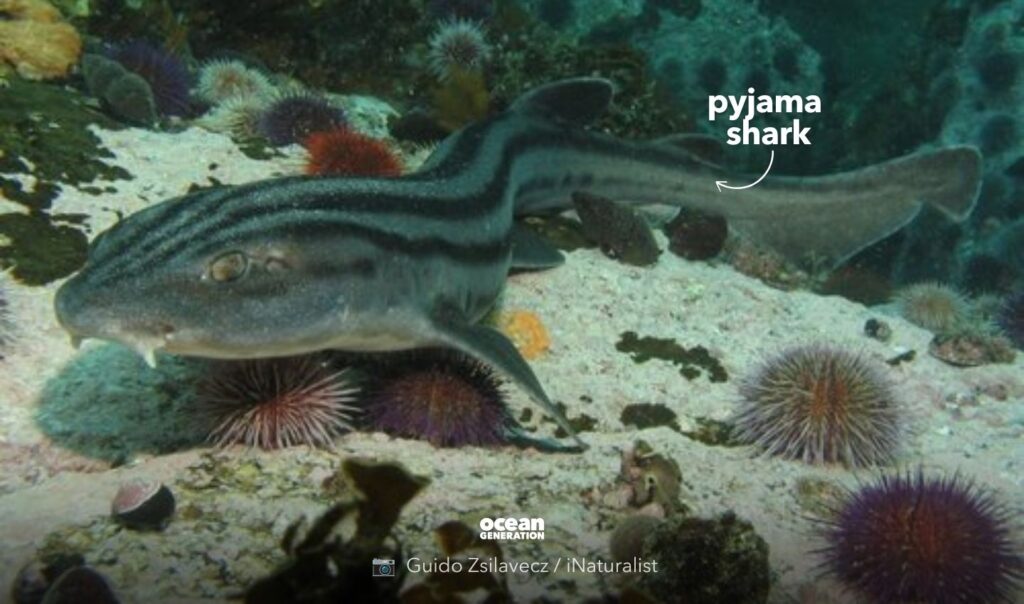
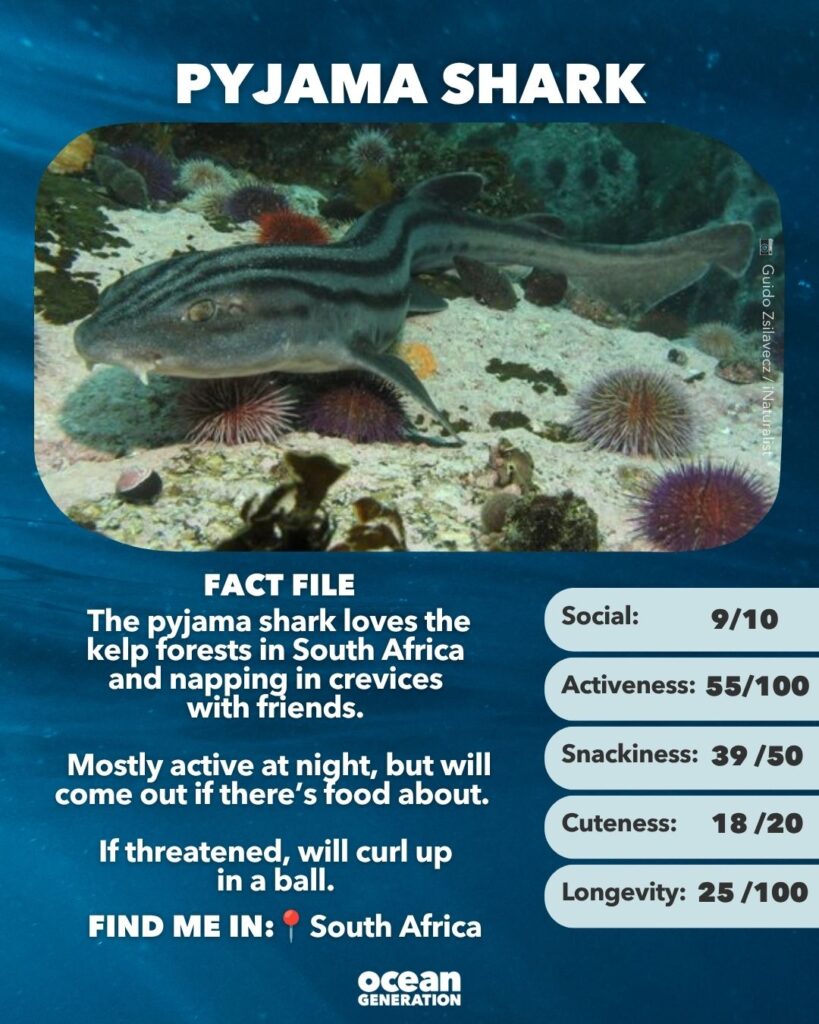
Pyjama Shark
In the temperate waters around South Africa, there is a small, stripey shark. The pyjama sharks live in the kelp forests, their small, slender bodies perfect for squeezing through the stipes and fronds in search of crustaceans, fish and other shark eggs.
Pyjama sharks are mostly active at night, but can come out in the day, especially if there is a lot of food, especially their favourite – squid. Usually, you can find them napping in crevices and caves with friends. If threatened, they will curl up in a ball to protect their eyes and heads. Relatable?
This is: the comfort-first homebody, whose ideal day is spent watching movies with friends and loads of snacks and maybe a nap or two on the way. They look great in stripes and hate horror films.
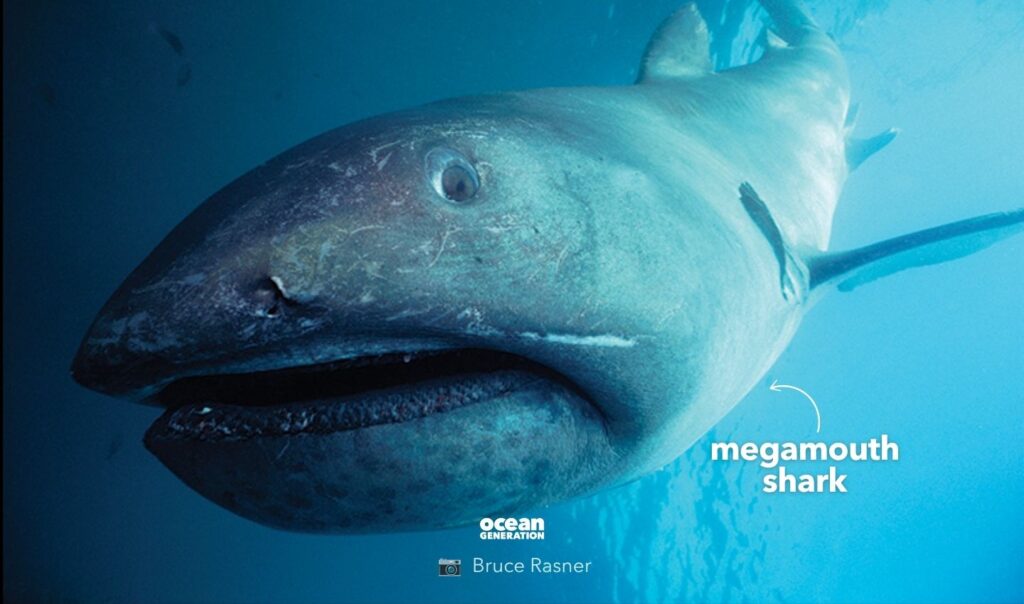
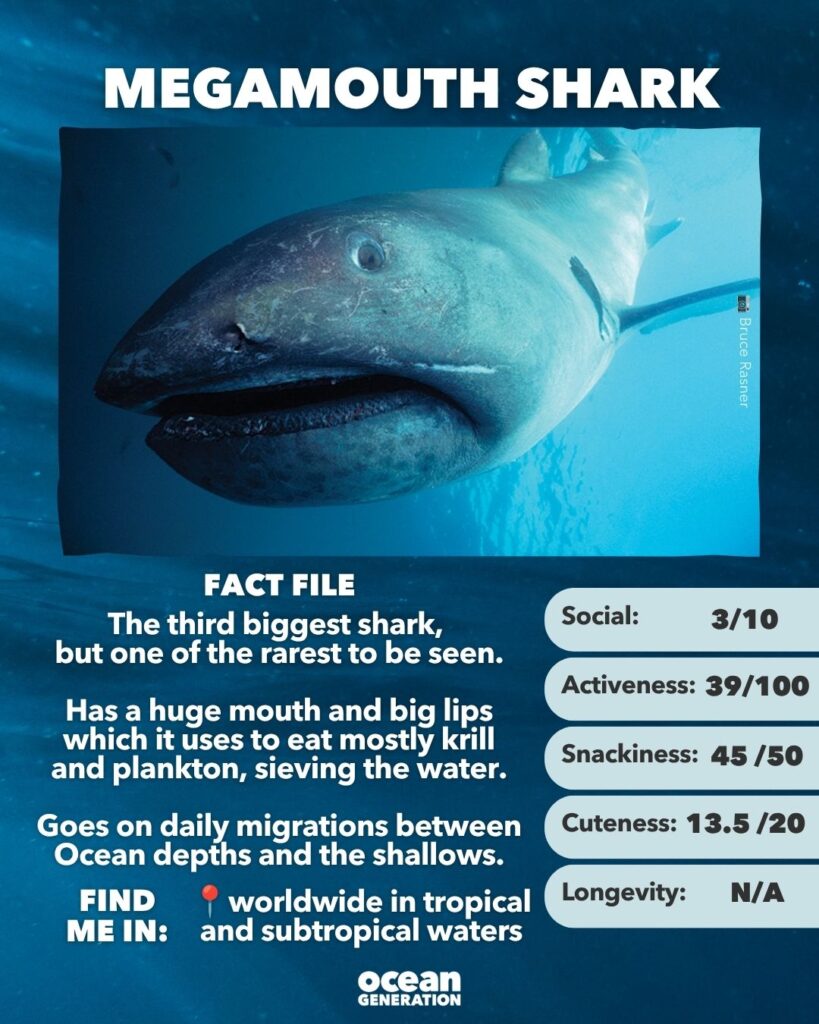
The third biggest shark, but one of the rarest to be seen. Only a few hundred have ever been seen since its discovery in 1976, and we still have a lot to learn. Read more about the discovery of the megamouth and how we learn about these sharks here.
The megamouth shark has a huge mouth and big lips which it uses to eat mostly krill and plankton, sieving the water in a way more like a whale than a shark. They go on daily migrations between the darker Ocean depths and the shallows at night, following their prey. Only a few times have they been seen with another megamouth and tagging surveys suggest that males and females remain largely separate.
Given how few we have seen, the precise limits of their range aren’t known, but they have been found in waters near the equator all around the world, from California to Japan, South Africa to Australia.
This is: the gentle giant who looks quite intimidating but is actually just here for the snacks. Works the night shift, is the one that people have heard about but never see. Has a quiet dating life, but a great kisser (apparently).
Photo by Bruce Rasner
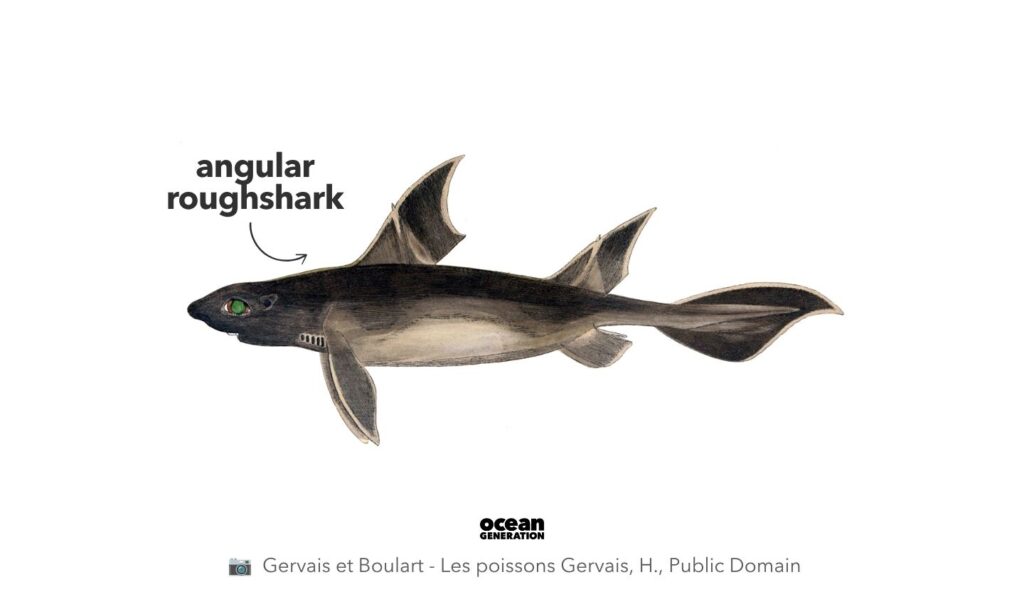
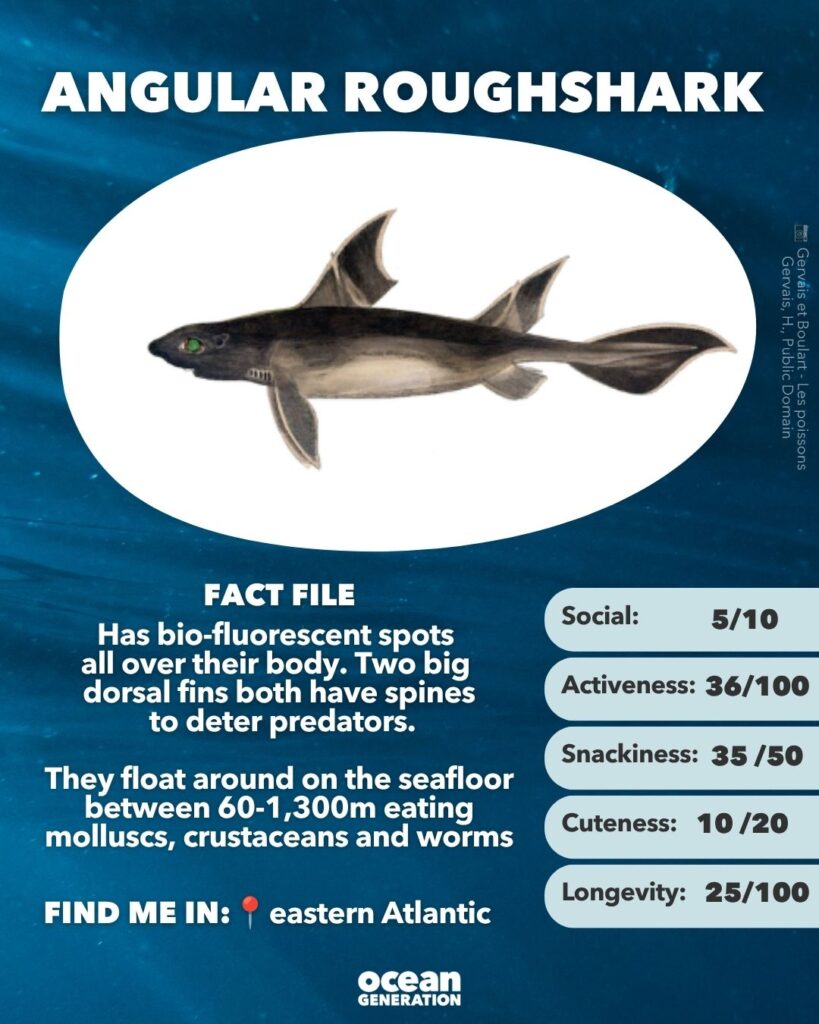
Angular Roughshark
The angular roughshark doesn’t care much for your views of what a shark should be. It is bold and it is sharp.
Angular roughsharks have a luminous organ, maybe to help with camouflage, or maybe just because it can. Two big dorsal fins both have spines to deter predators, such as larger sharks or nay-saying energy drains.
They float around on the seafloor from 60m to over 1300m eating molluscs, crustaceans and worms. Look at the angular roughshark face head-on and you are looking at a triangle with a pig-like face and an attitude.
Angular roughsharks are found all the way up the eastern Atlantic, from South Africa to Norway, including in the Mediterranean. You know they would rock a fez.
This is: the one with thick skin, prickly and a bit intimidating when you first meet them, but it is just a real trail-blazing style. Trend-setter, not follower. Thinks running is weird, loves a seafood linguine.
Illustration by Gervais et Boulart – Les poissons Gervais, H., Public Domain
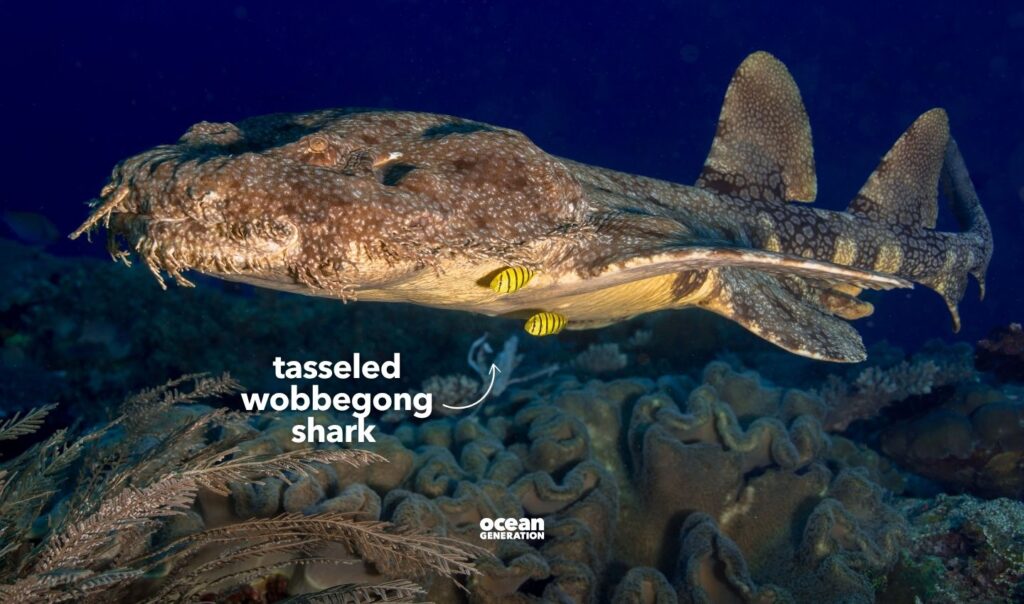
Tasselled Wobbegong Shark
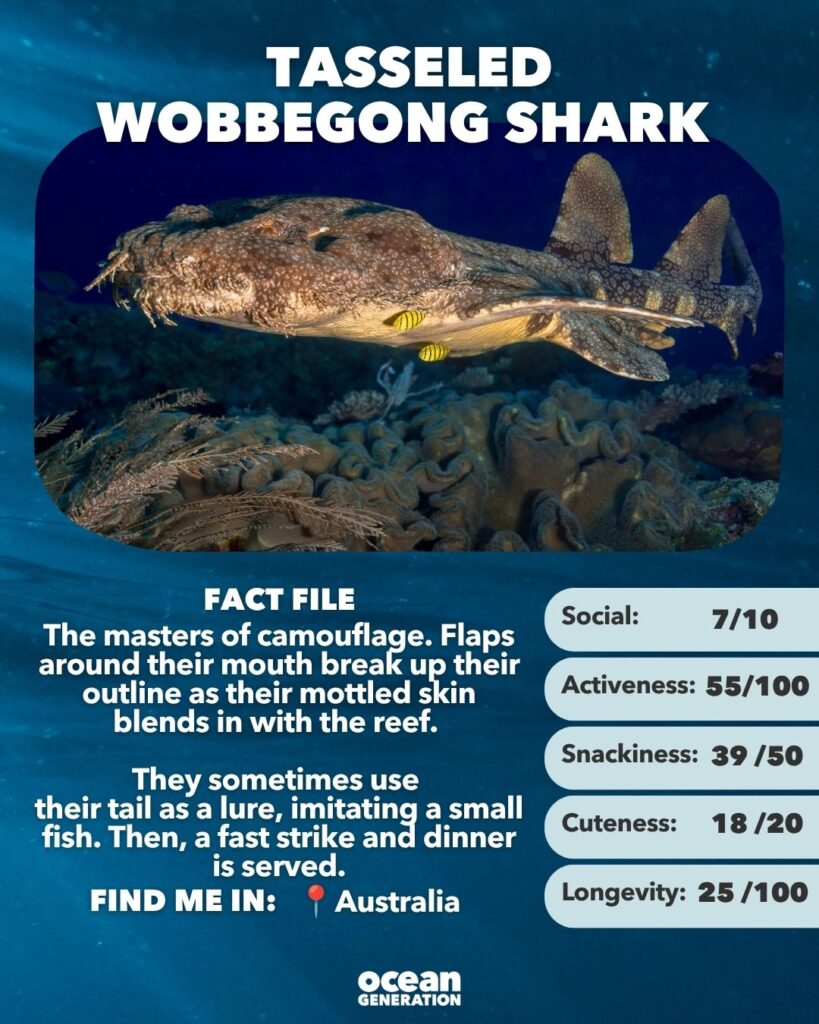
Living on reefs around Australia, the name of the tasselled wobbegong shark comes from the Aboriginal meaning “shaggy beard” referring to the skin flaps around their mouth. These are part of their incredible camouflage, breaking up their outline so they can lie in wait, sometimes using their tail as a lure, enticing an unsuspecting fish to get close enough.
This is: the funny one, rocking a funky, colourful shirt. Isn’t loud but will come through with a knee-slapper of a joke when you least expect it. Likes a laid-back lifestyle, believes good things in life will come to you. Fantastic facial furniture optional, but encouraged.
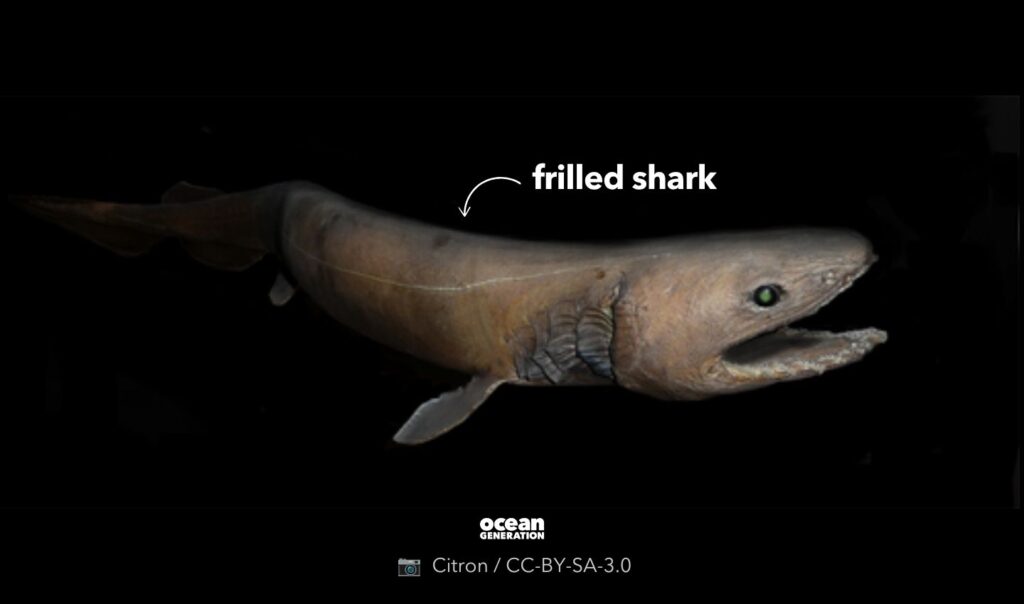
Frilled Shark
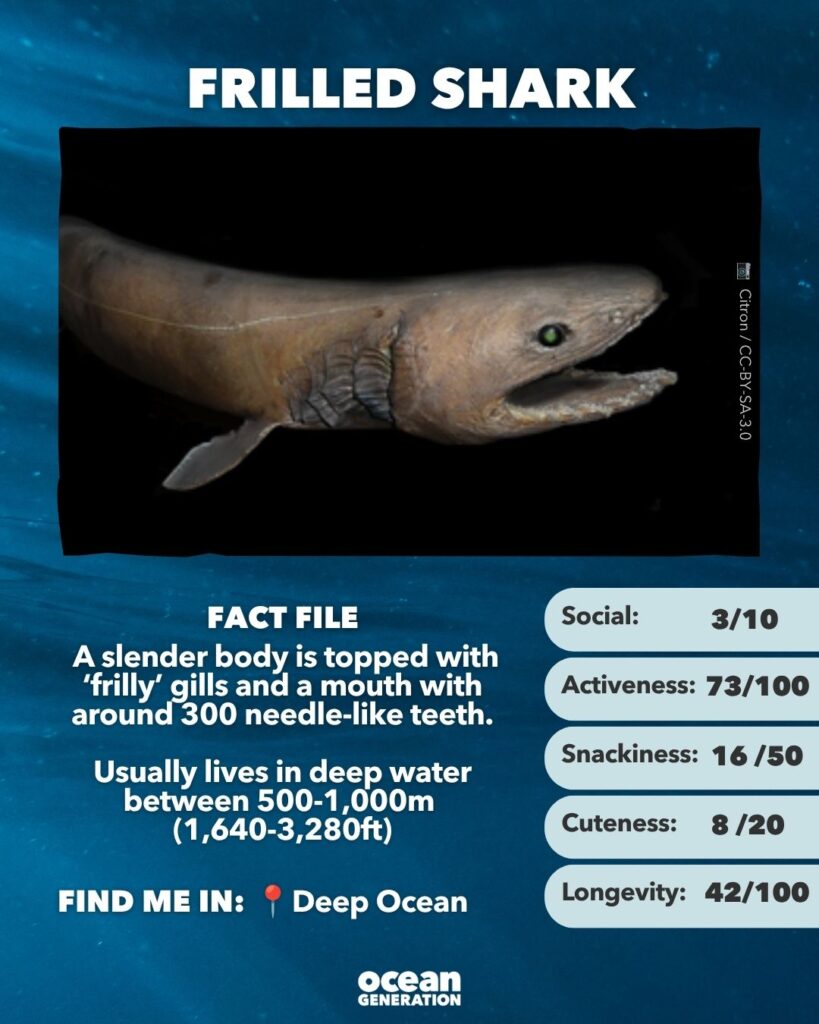
The frilled shark is an echo of the ancient Ocean. A slender, eel-like body is topped with ‘frilly’ gills and a mouth with around 300 needle-like teeth. These point back to trap soft-bodied prey like squid. Frilled sharks are another that’s rarely seen, as they usually live in deep water between 500 and 1000m (1640-3280ft). They are thought to ‘strike’ like a snake – lunging forward to grab prey.
Frilled sharks are found in depths around the world, preferring areas of the Ocean that are more biologically active with upwelling currents, such as seamounts.
This is: the old-soul, down to earth but not a big socialiser. When they do commit to something they are all in, no half measures. The one people describe as “an acquired taste”. Surprisingly athletic.
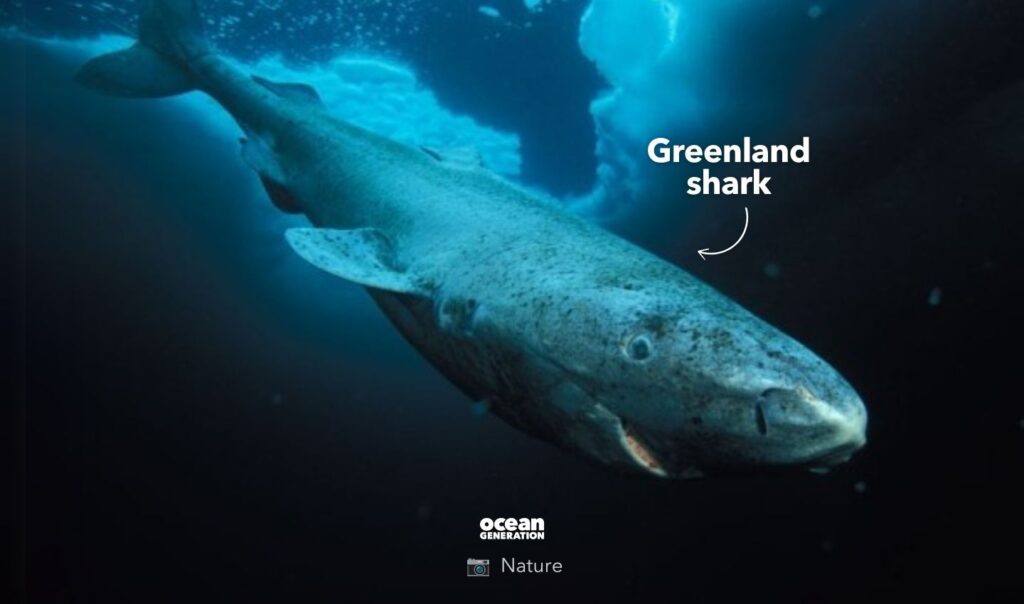
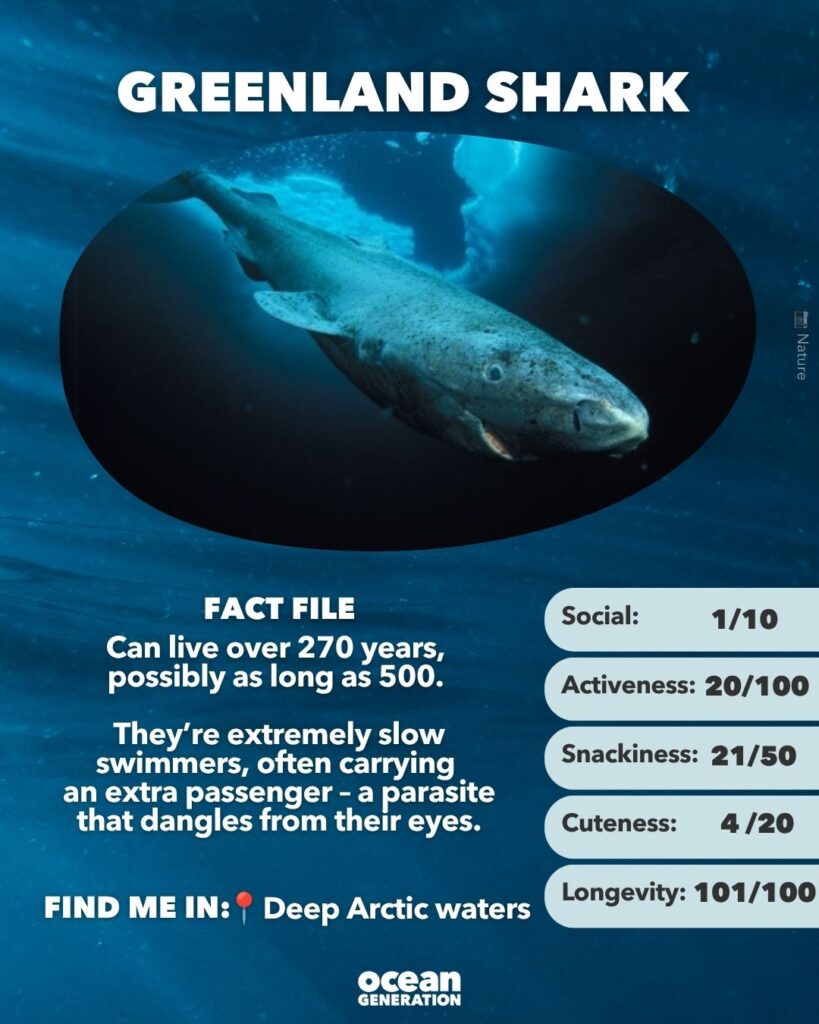
The Greenland shark is the longest-lived vertebrate on the planet. They can live over 270 years, possibly as long as 500 and don’t reach sexual maturity until approximately 150 years old. They are extremely slow swimmers, who cruise the cold, deep waters of the Arctic. The flesh of Greenland sharks is toxic to humans when raw due to high levels of urea and trimethylamine oxide, the compound that helps them live so deep.
They often carry an extra passenger – a parasite that dangles from their eyes. This may glow, attracting prey, but definitely does not help the Greenland shark’s eyesight. You win some, you lose some. Eyesight is overrated in the deep anyway.
This is: the patient one. No rush to do anything, is often late to things (we have all the time in the world!). Can be toxic if you don’t treat them right.
Photo via Nature
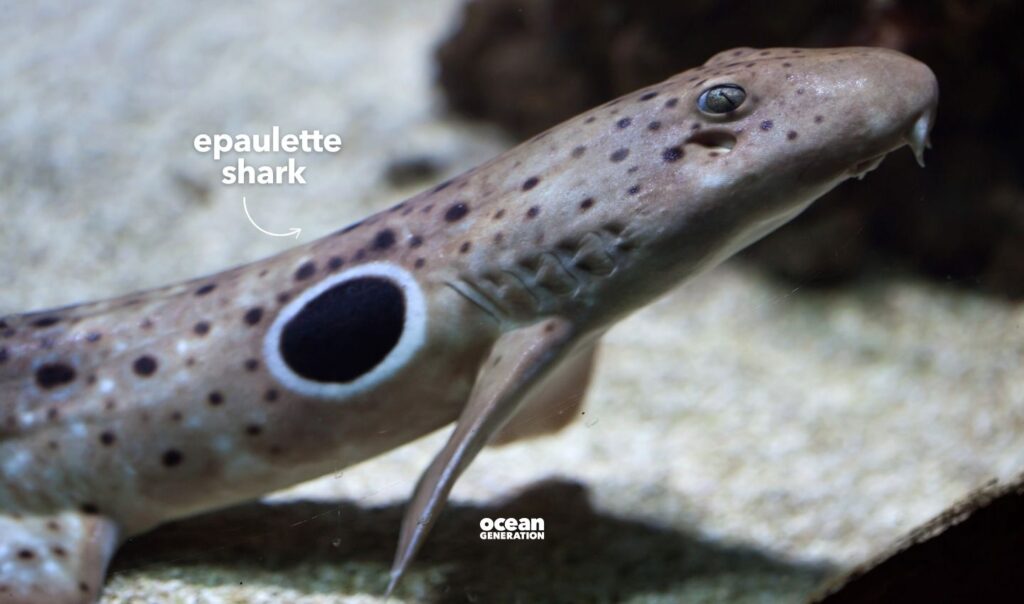
Epaulette Shark
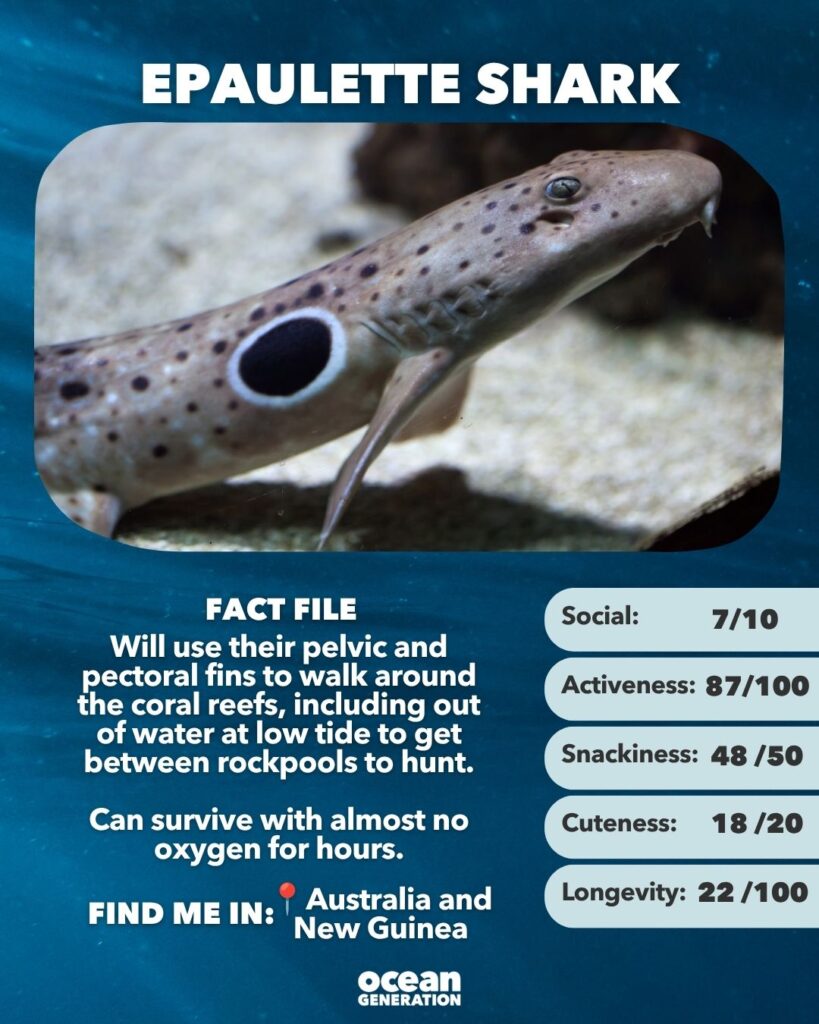
Famous as the ‘walking shark’, epaulette sharks will use their pelvic and pectoral fins to walk around the coral reefs, including out of water at low tide to get between rockpools. The rockpools that were sanctuaries for small fish, crabs and worms are now hunting grounds, trapping them in when the tide gets low. Epaulette sharks can survive with almost no oxygen for hours by shutting down non-essential brain function.
This is: the one that can survive (and thrive) on shockingly little sleep/coffee. They are adaptable, can and will get where they want to using any means necessary. Often turns up unexpectedly, usually looking for food.
Still not sure which you identify most with?
Maybe our cards will help you decide – do you agree with our scores?
Does the Meg exist? Here’s what scientists actually found.
Share this page
Copied
Yes, the Meg exists. No, it isn’t the one you are thinking of.
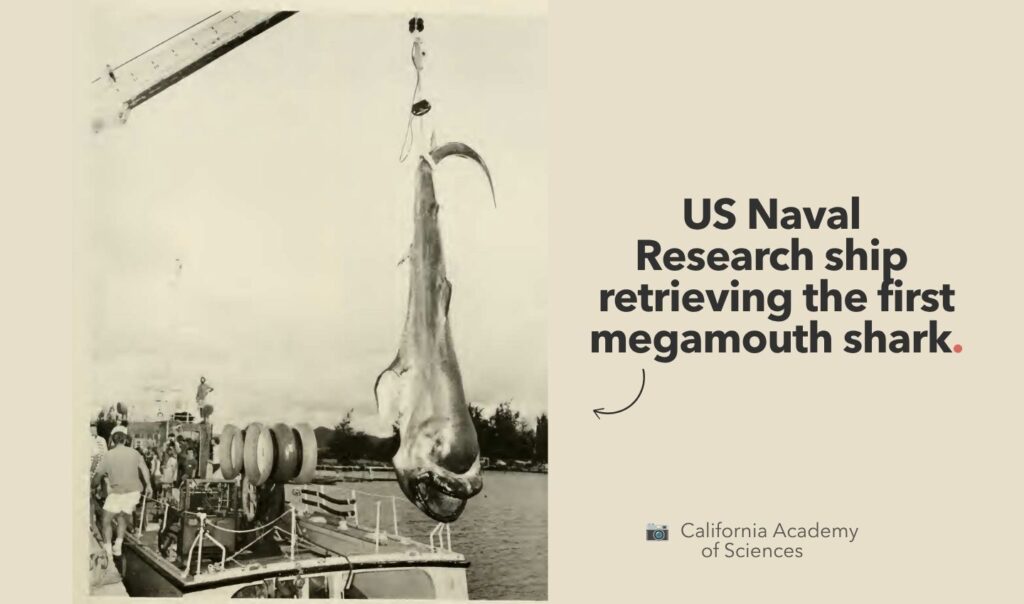
On the 15th November 1976, the US Naval Research ship with the catchy name AFB-14 was on a mission 42 km (26 miles) off the coast of Oahu, Hawaii. Suddenly, the sea anchor, a parachute-like tool for stabilising a ship at sea, caught and pulled. The crew hauled it up to find 4.5m (14.7 ft) of fish.
The crew brought the 750kg (1,653.5 lbs) shark on board with “much difficulty” and brought it back to Kaneohe Bay, tying it alongside the dock overnight.
The shark was so heavy it needed a Navy crane to lift it. During the operation the caudal fin (tail) broke off, dropping the shark into the water where it needed recovery by divers. Finally, though, it could be examined by the experts.
Amongst the first on the scene was the director of Waikiki aquarium, Leighton Taylor. Along with other marine biologists, they recognised a species that was entirely new to science.
Leighton Taylor had the honour of naming the species, and settled on Megachasma pelagios – from the Greek meaning “the large yawning hole of the open Ocean”. It is known more commonly as the megamouth shark – the largest shark you’ve probably never heard of.
50 years on, what do we know about this elusive shark? And after discovering this, does that mean there could be other huge shadows lurking in the depths?
Photo via California Academy of Sciences
What does the megamouth shark look like?
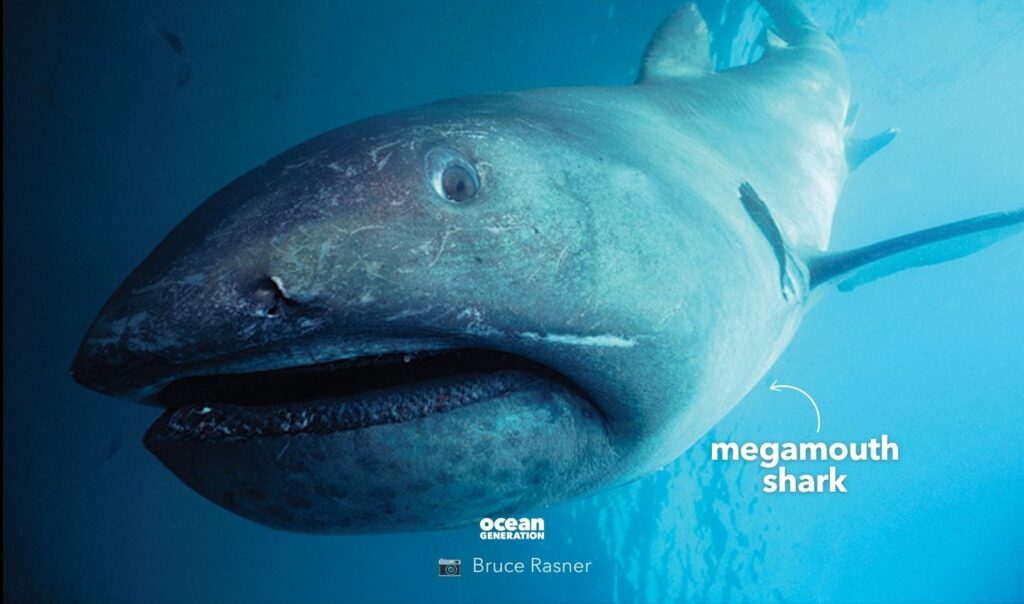
As the name suggests, the main feature of the megamouth is its vast mouth, which is housed in a huge bulbous head. This mouth is full of tiny teeth, not big white sharp things like its cousins, leaving the megamouth with a gummy grin. The tail also deserves a mention – similar to the thresher shark, the megamouth has a large upper lobe of its tail, which can be as big as a person.
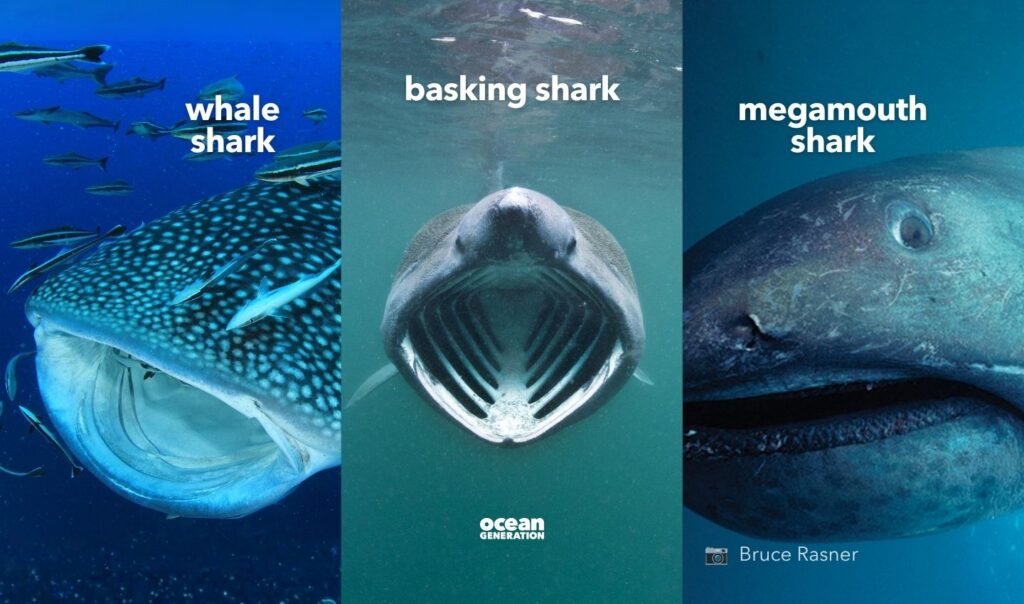
The megamouth is the third biggest species of shark behind the two other filter feeding sharks – the whale shark (Rhincodon typus) and the basking shark (Cetorhinus maximus).
Megamouth sharks can reach sizes of up to 8.2m long, maybe up to 9m, with females reaching larger sizes.
Photo by Bruce Rasner
What is filter feeding? Filter feeding is utilised by animals of all different shapes and sizes in the Ocean. The premise is to filter out the tiny algae and animals floating in the water. Whales do this using their baleen, flamingos with their special beaks, and most forage fish have gill rakers, catching anything in the water moving over their gills.
Megamouth shark photo by Bruce Rasner
On the 14 November 2023, a stranding gave us amazing insight into the reproduction of the large-lipped fish. A female megamouth was washed ashore while giving birth. 1 pup was found next to her, with 6 more in her belly. They measured 1.65m to 1.83 m (5.41-6 ft) long. That is approximately one Ocean Generation Marine Science Officer (not a scientifically accepted measurement) long.
The first descriptions of megamouths are less than kind. A “soft, flabby body and fins, low-flow branchial filter apparatus and small gill openings”. Taylor suggested that this pointed to an animal far less active than the other filter feeding sharks.
To confirm this, we had to find a live one.
When was the first live megamouth shark found?
On October 21, 1990, the sixth megamouth shark ever was found, caught up in a drift gill net off California. The big difference with megamouth number 6? He was still alive. We shall name him Luis, after the Luiseno people indigenous to the Californian coast he was caught off.
When the fisherman, Otto Elliot of the vessel Moonshiner, pulled up Luis, he recognised that this was a rare find. He managed to get a rope around the peduncle of the shark (the base of the tail) and towed it for five and half hours back to harbour.
Otto was asked by scientists to keep the shark alive until measurements had been taken, and so Luis was left tied by a short tail rope in the harbour. Quite remarkably, Luis survived.
The researchers formulated a release plan, and towed Luis back out to open water. Here, he become the first live megamouth shark to be filmed, and was released with a tag, giving us nearly 51 hours of insight into the lives of these mysterious sharks.
What did we learn from tagging megamouth number 6?
The research vessel R/V Discovery was assigned to tracking Luis, ensuring it was collecting data from his tag. It wasn’t difficult to keep up – Luis cruised at around 1.15 kilometre (0.73 miles per hour), although a current going against him led scientists to estimate his true speed: 1.5-2.1 km/h (0.73-1.3 miles). As predicted by the initial discovery, Luis was no speedster.
Luis showed us that megamouth sharks follow a crepuscular vertical migration: crepuscular meaning at dawn and dusk, vertical migration meaning moving up and down. He spent his days in the depths around 150m (492 ft), returning to shallow waters of around 20m (65.6 ft) during the nighttime. Luis used the light (or more accurately the dark) to guide his movements: a sharky anti-moth.
Why was he making this migration every day? Could he be chasing food?
What do megamouth sharks eat?
Researchers can use the chemical properties of tissue from an animal to work out where it has been eating, and what it has been eating.
A large study compared the diet and location of 91 megamouth sharks and 90 whale sharks.
Whale sharks tended to eat up the food chain as they got bigger (and older): they moved from phytoplankton to fish to bigger fish and so on. They had a far more varied diet than our mega-mouthed friends.
The very first megamouth was found with a stomach full of krill, and this was no coincidence. Megamouths love krill and jellyfish and that is kind of it. No matter how big they get, they don’t grow out of their krill phase. Imagine being stuck with that food you were obsessed with when you were young, for life.
The researchers also found that male and female megamouths were quite distinctly separated – they were eating in different places.
Why? We aren’t entirely sure yet, the researchers suggested that males may roam further to find mates while females stay in the productive, safer waters near birthing grounds. There is still plenty to find out about these secretive sharks, but why are they so good at remaining hidden?
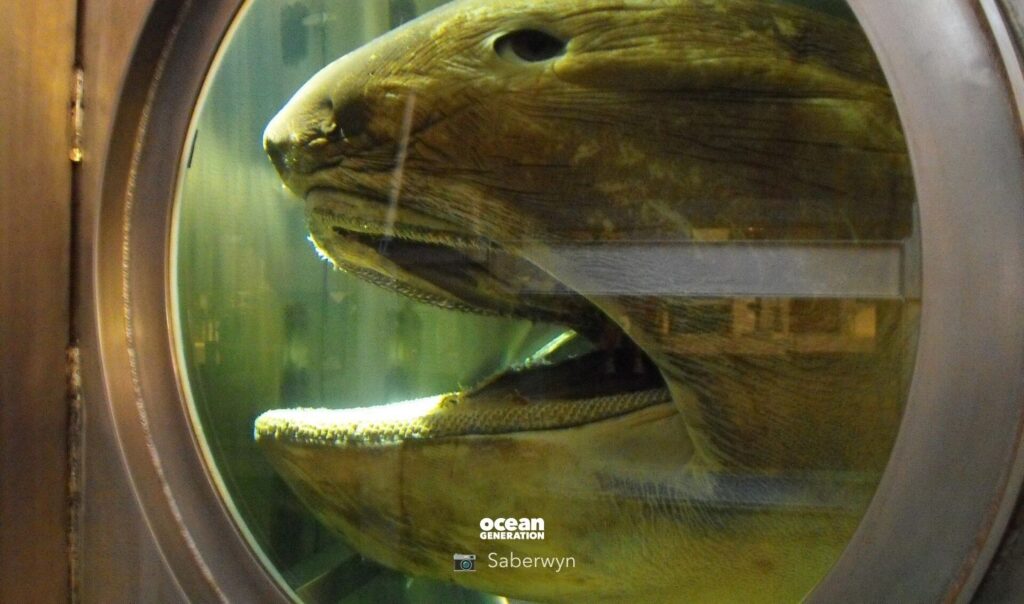
Image by Saberwyn via Wikimedia Commons
Why do we not see many megamouth sharks?
The Ocean is huge. Think of an Ocean creature – starfish, seahorse, the famous clownfish (find out how scientifically accurate Finding Nemo actually is here). Chances are, you are thinking of a coastal animal, that we land-dwellers cross paths with regularly.
The megamouth is from a different world, that we are not regular visitors to. During the day, they cruise through the darkness of the twilight zone, and only at night do they come more shallow. There are only nine sightings of megamouths in natural conditions – humans and megamouths don’t overlap.
230 of the 301 sightings (as of June 2026) come from megamouths caught up in fishing gear. And we are seeing more. 170 of the 301 megamouths ever found came in the last ten years, 131 coming in the 40 years before that. Why are we seeing more now?
Given the large portion that are found due to fishing, the increase is likely to be related to fishing. Maybe an increase in fishing activity is seeing more caught, or new equipment at different is catching more megamouths. Or maybe these fisheries have always caught megamouths, but the reporting of the catches has got a lot better. Being aware of our impact on the Ocean is the first step to controlling it.
Anyway, now we know there is a massive, nearly 10m (32.8 ft) shark swimming around out there that we only discovered 50 years ago: there is only one question to follow that.
Is the megalodon still alive and hiding in the deep?
No. There are two main reasons for this.
1. Amount of food – can’t hide the evidence.
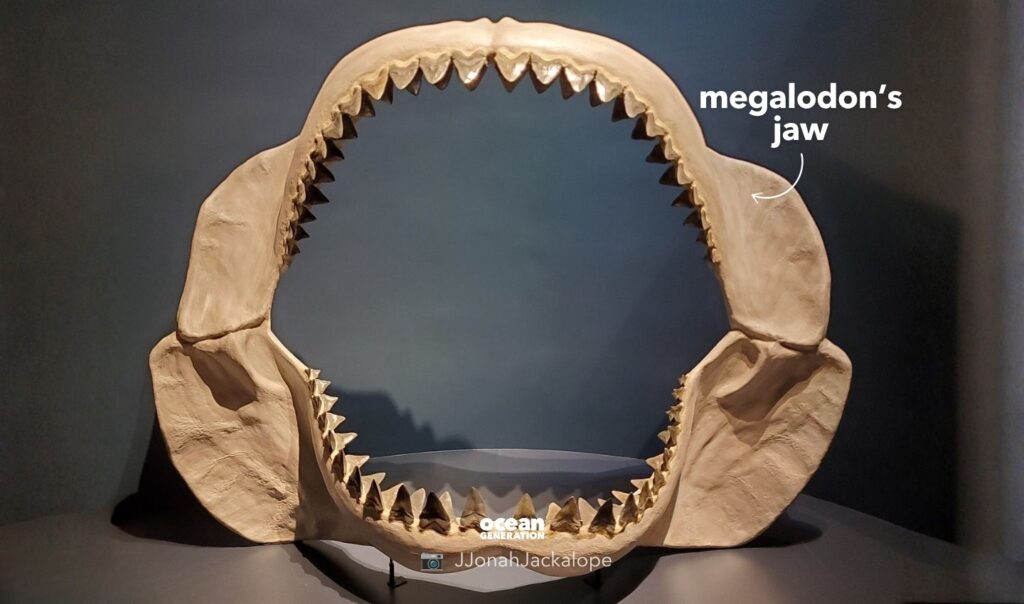
An active hunter that is estimated to have been over 24m (78.7 ft) long, the megalodon had huge teeth which it would have used to eat other sharks, fish and whales. Prey species like whales are mostly found in the surface Ocean, increasing the likelihood of even the stealthiest hunter being seen.
If not seen directly, the effects of having a huge hunter would be visible. Bite marks and teeth would be regularly spotted, and they aren’t. We haven’t found a megalodon tooth younger than 3.5 million years old, which is when we think megalodon went extinct.
2. Location – megalodon isn’t hiding in the depths.
We know megalodon was a tropical and subtropical dweller, that thrived in the warm waters. Suggestions that they could be hiding in the cold, dark depths of the Ocean are impossible. Especially when we consider the compound that protects sharks’ cells from the crushing pressures of the deep Ocean stops being effective around 3,000m (1.81 miles), suggesting that sharks absolutely can’t go below 4,000m (2.5 miles) deep.
The megamouth is a big shark, but smaller than megalodon, and eats tiny prey that lives in the pelagic depths (deep, open water). That is why it wasn’t discovered for so long.
Photo by JJonahJackalope via Wikimedia Commons
Could there be another huge species of shark still undiscovered?
We can’t rule it out completely (the Ocean is on average 3,682m (2.28 miles) deep – plenty of space for something to hide), but it is unlikely. We understand our Ocean more than ever, and large species would have been found if not by scientists, by the commercial fishing fleets that drag nets through most layers of the Ocean.
The most likely shark hiding out there would be a sleeper shark, similar to the Greenland shark. As the name suggests, these fish like life in the slow lane, cruising the Ocean depths for food. Their un-rushed lifestyle means low demand for food, and they can survive on less food, such as occasional whale falls (read more about how a dead whale means new life in the deep here).
What do we still not know about megamouth sharks?
There is plenty we still have to discover about megamouth sharks. Why are they usually separated like a school disco, the boys and girls staying far apart from each other? Do individuals migrate like whale sharks, or have their favourite spots they stay in? Do they have glowing mouths to attract prey?
How do they hunt? Is it like basking sharks, swimming with mouths agape? Or whale sharks, opening mouths quickly to create suction, drawing prey in? Or something else, more like a whale drawing its large mouth over prey?
The megamouth story is full of mystery and excitement. It also shows us our increasing presence in the Ocean. It does not mean the megalodon is still alive. That mystery has been solved. Trust us.
There is a unique whale song echoing through the Ocean, sung by the loneliest whale in the world. What kind of whale is it, and is he actually lonely?
The Ocean used to be thought of as noiseless. Legendary Ocean explorer Jacques Cousteau’s first book was named The Silent World. Swimming comes with ears full of water, muffling the familiar noises of the airy world above.
Only recently, and mostly by accident, have we begun to realise that the Ocean is far from silent. Noisy coral reefs call in larvae to settle, fish grunt and whistle at each other, and snapping shrimp fill the water with a white noise any focus app would be envious of.
The most famous of the Ocean songs is that of the whales.
How we discovered sounds in the Ocean
In the second half of the 20th century, the Ocean became the frontline of the Cold War. Submarines glided through the depths, carrying enormous destructive power but hidden from sight. In the Ocean, sound matters more than sight.
We began listening to the sounds of our Ocean, to keep track of those sneaky submarines, and discovered a new world we didn’t understand.
In March 1949, R/V Atlantis from Woods Hole Oceanographic Institution picked up some strange noises off the coast of Bermuda that couldn’t be identified. A haunting, eerie noise that could be mistaken for a wolf’s howl over the mountains. The noise was archived, unidentified.
1949 also saw bio acousticians William Schevill and Barbara Lawrence record beluga whales in Saguenay River, Canada. This was the first time that cetacean (whales and dolphin) noise had been identified.
“Bill helped defuse a tense moment between the USA and Soviet Union during the Cold War. The US military suspected that low frequency blips were being used by the Soviets to locate American submarines, whereas Bill showed these were produced by fin whales (Balaenoptera physalus) hunting prey.”
He wasn’t the only one battling misunderstood Ocean sounds. You can read about how herring farts nearly ended the world here.
In a naval listening station from the late 1950s into the early 1960s, engineer Frank Watlington was listening out for the sounds of submarines in the Atlantic. He would regularly hear rich and emotive melodies echoing around the Bermudian waters. He recognised the sounds as biological and recorded them, hoping to one day identify the singers responsible. He didn’t have to wait long.
Who identified humpback whale song?
In the mid-1960s, a biologist who had focused on echolocation in bats and the hearing of owls turned his attention to Frank’s recordings. His name was Roger Payne, and he was the man who would take the songs of the sea to ears around the world.
Payne analysed the recordings and identified the singers: humpback whales. He published a scientific description of the songs Frank had recorded in 1971, revealing their complex structure and rhythm. But a peer-reviewed scientific paper wasn’t going to make big enough waves (pun intended).
In August 1970, before that paper had been published, Roger Payne released the Songs of the Humpback Whales, a vinyl record just under 35 minutes long of simple, unaltered whale song. The sound took the world by storm.
But even this record paled in comparison to a further honour, bestowed two years earlier in 1977. The Voyager spacecraft left the Earth’s atmosphere with a golden record – a phonograph filled with details about humanity and life on Earth, should the spacecraft ever reach distant life. Track 3 on the record was: “United Nations Greetings/Whale Songs (Various Artists)”.
The songs of the humpbacks were part of the exclusive package: the first man-made materials to leave the solar system, which it managed in 2012. Cetacean song was cemented as a defining element of our planet.
When was the 52 Hz whale first heard?
The wonder of the whale song increased as we listened and learned more – they evolve and spread culturally between and across populations.
Looking through a human lens, we can see similar cultural transmission. Gangnam Style had people trying to sing Korean around the world in 2012, and schools across the Western world are currently shouting “six-sevvvan”. Orcas? They have fashion cycles of wearing salmon as hats.
In 1989, a song was recorded that piqued the curiosity of biologist William (Bill) Watkins. The singer became known as the 52 Hertz whale, or as we will use, 52.
To understand why it stood out, we need to first explore sound.
What is sound? What can humans hear?
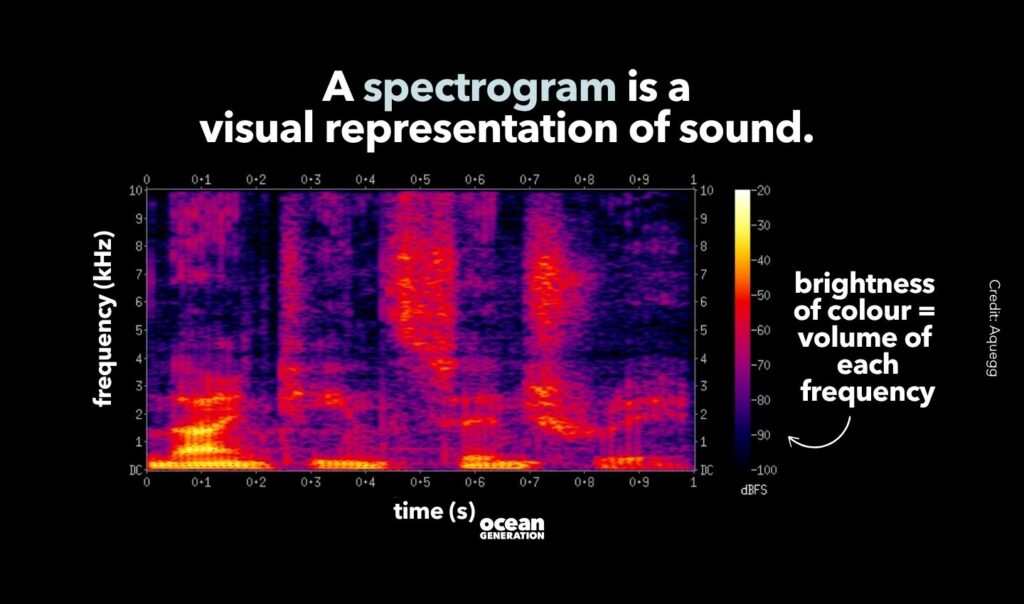
Sound has two basic properties: frequency and volume. Frequency translates as the pitch we hear – higher pitched sounds have higher frequencies. Frequency is measured in hertz (Hz).
Different animals have different ranges of hearing – some can hear higher frequencies, some lower. Humans are credited with a hearing range of 20Hz-20,000Hz, most sensitive from 2-5,000 Hz. Human speech is approximately 90-135Hz for an adult male and 160-240Hz for an adult female.
You can test your hearing range by listening to this video going through different frequencies – see how high you get.
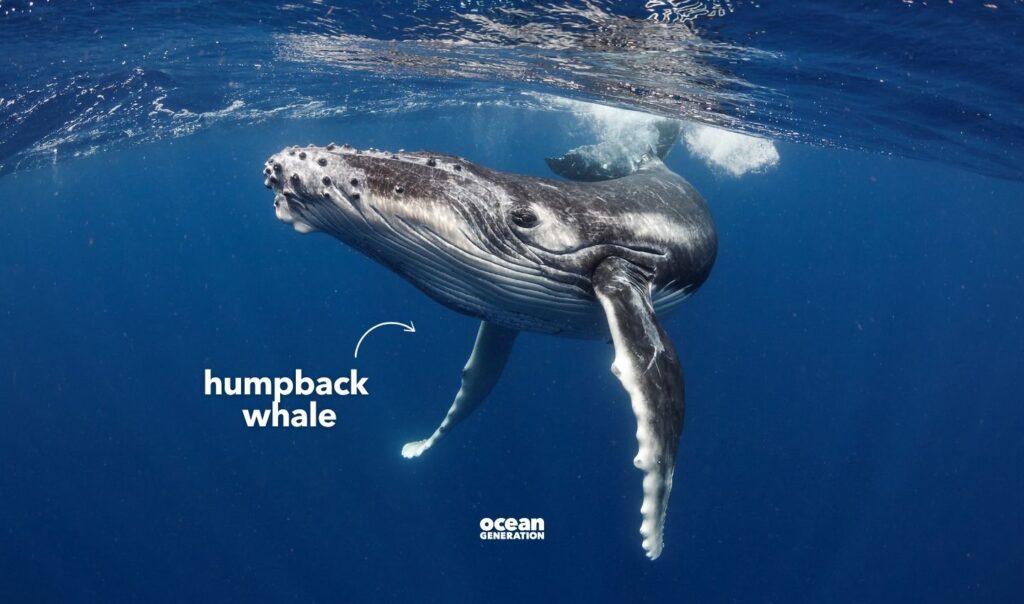
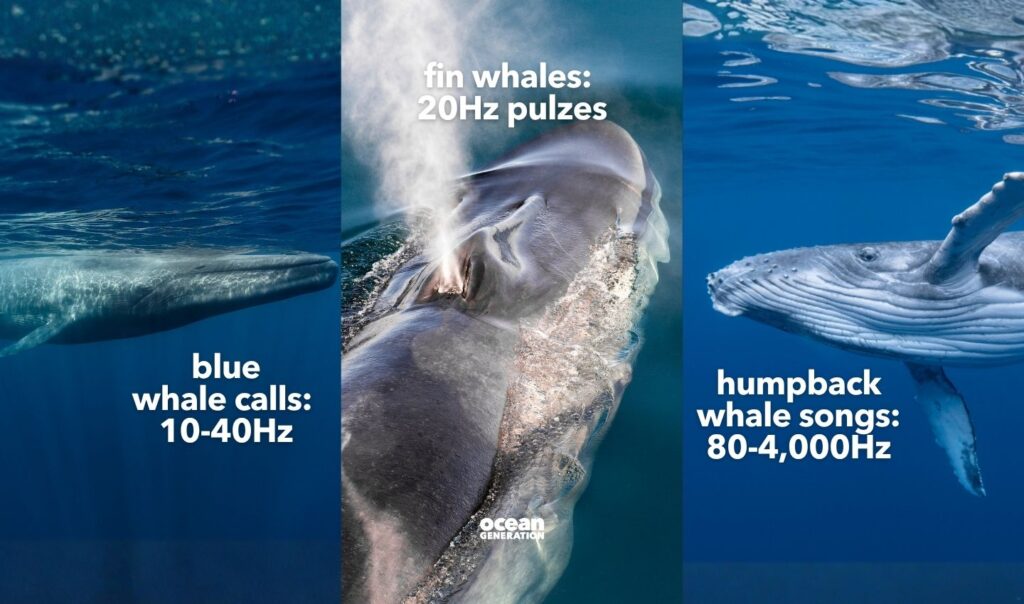
The humpback whales typically sing in the range of 80-4,000Hz, perfectly within our auditory range. Different animals use different frequencies to communicate: there is a whole world of noise that exists outside of our range of hearing.
Blue and fin whales produce songs of much lower frequency, slipping below our range of hearing (known as infrasound). Others, such as sperm whales and bottlenose dolphins, will use higher frequency clicks in echolocation that we can’t hear (known as ultrasound).
Why is the 52 hertz song so special?
The song we played earlier has been sped up by 10 times so we can properly appreciate it in our range of hearing. It would ordinarily be at the very bottom end of our hearing.
Blue whales will typically call between 10 and 40 Hz, soulful moans that would vibrate your entire body. Fin whale vocalisation is focused around 20Hz pulses, low chirps echoing through the blue.
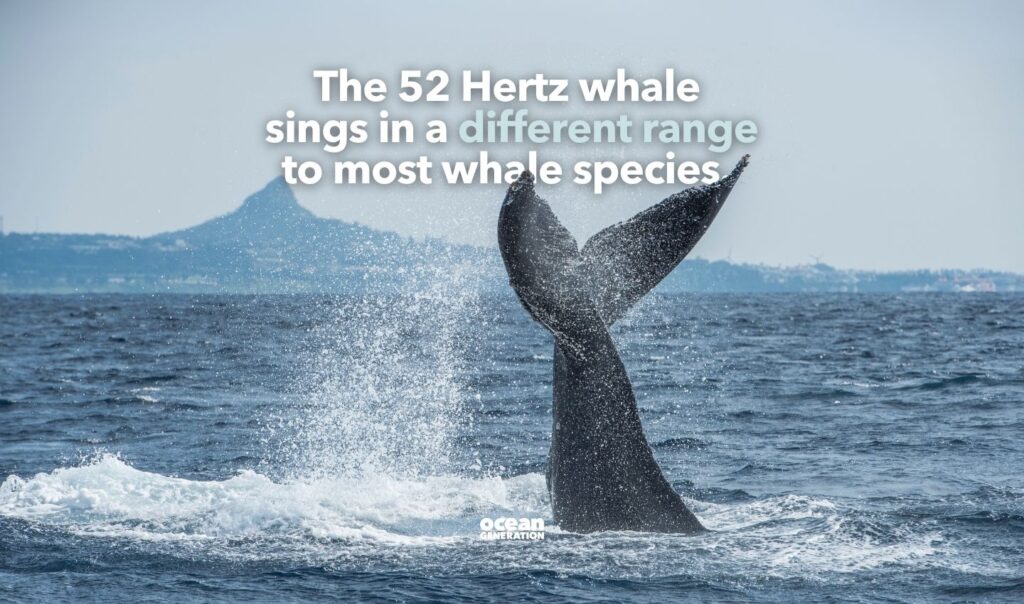
So when the hydrophones picked up a call focused around 51.75Hz, it didn’t fit. Too high for blue and fin whales, but too low to be a humpback. This whale was singing its own tune.
Listen to the 52 Hz whale recording
Audio courtesy of NOAA PMEL.
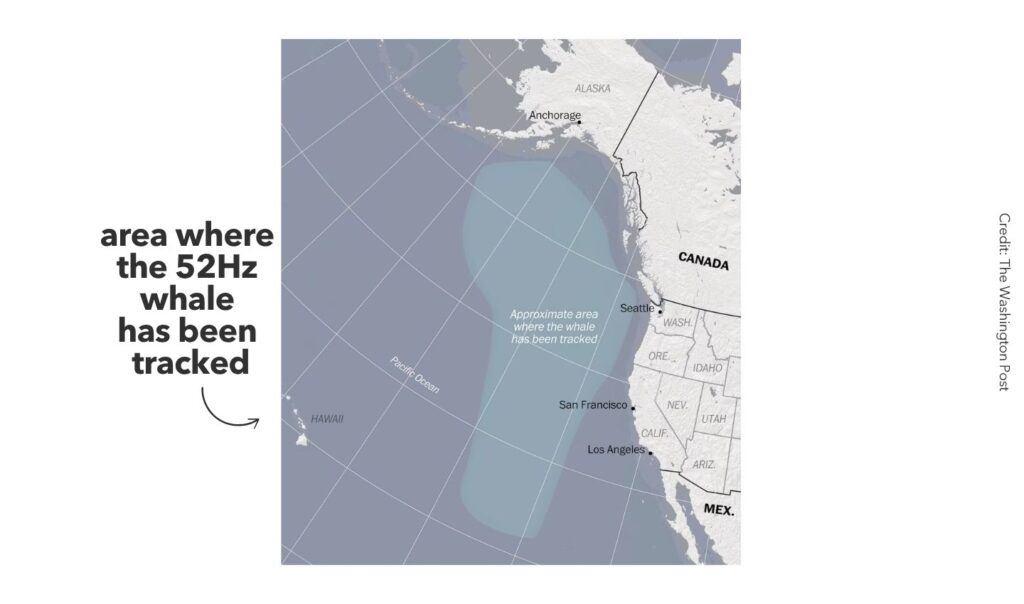
For 12 years, Bill Watkins tracked the whale he had dubbed the 52Hz whale, or 52.
Daily travel distance: 52 was a mover. Across the 12 years of seasonal tracking, the whale averaged 47 kilometres every day, and up to 69 km per day.
Seasonal travel distance: A real mover. In the 1992/93 season, 52 travelled just 708km. But across all the tracked seasons, the average distance travelled was 5,518km. In 2002/03, 52 travelled 11,602km. If you ran a marathon every day, it would take you 275 days to cover that distance.
Time spent with other whales: 52, whether intentionally or not, is a solo rider most of the time. The calls were separate from other closely monitored whale species – blue, fin and humpback.
Time spent in one place: 52 is a true nomad. In Bill’s words: “There were no apparent repeated patterns to the whale’s travel”.
Deepening singing: As is normal with whales (and humans) the distinctive voice of 52 deepened by about 2Hz over the study period.
Daily singing time: On some days, 52 sang for over 20 hours.
Credit: The Washington Post
The Symbol: The story of 52 captured the imagination far beyond the scientific community.
The paper caught the eye of a young science journalist, Jon Copley, who covered it in the New Scientist magazine, with the title “Lonely whale’s song remains a mystery”.
A New York Times article by Andrew Revkin built on this theme, painting the picture of a whale roaming the Ocean, calling out in a voice none could recognise, its song going unanswered.
To add melancholia of the whale’s song, Bill Watkins, the great listener and tracker of 52, died in 2004, a month before his paper was published. He would never see the impact his work had.
And it certainly had impact. The idea of a lonely, misunderstood whale resonated (sound joke) with the wider public.
A quick search of lonely whale will uncover endless articles, Facebook groups, TikToks, Reels, and videos exploring the legend of 52 (not all accurately). So, what do we know about this whale?
The Symphony: Is the 52 Hertz whale actually lonely?
Is 52 Hertz lonely? The short answer: we don’t know, but probably not.
The tracking study from Bill Watkins suggests 52 didn’t tend to hang out with other whales, preferring to meander and migrate on their own. But we don’t know how unusual that behaviour is. 52’s unique calls have allowed one of, if not the most detailed long-term tracking studies of any single great whale. It might not be unusual for a whale to spend a lot of time alone.
To clear things up – the other whales can still hear 52. They might just sound a bit strange, like a human talking after inhaling some helium at a birthday party.
One of the lead theories behind the 52 hertz whale is a hybrid between a fin and blue whale. These hybrids have been documented, and fin and blue whales are known to aggregate together on the west coast of North America.
The documentary The Loneliest Whale: Search For 52 set out to find the maverick cetacean singer. The team didn’t prove that 52 was a hybrid but did document a hybrid whale in amongst other blue and fin whales.
This hybrid was documented 20 times over a 16-year period, and at times with over 30 blue whales.IFthis is our whale, they have plenty of friends.
Another twist – in 2010, two separate listening stations picked up calls in the 52 hertz range. Could there be another whale hitting the same notes out there? We don’t yet know for sure, but we like to think so.
What’s next for the whales?
52 is certainly not alone in his sound-based struggles. The Ocean is a much noisier place than it used to be. Ships criss-cross the Ocean carrying food and goods between countries, and they are not subtle. Huge air guns fire, sounding out the seabed to find reserves of oil and gas. Piledrivers pound foundations for offshore constructions such as wind turbines.
The noise they produce creates an acoustic fog, making it harder for whales to communicate. One study estimated that North Atlantic Right Whales have lost over 60% of their communication space. Another shows that they have to ‘shout’ over the noise of propellers churning the whale’s waters. In the aftermath of 9/11, there was a significant drop in ship traffic and thus the noise they produce. Researchers examined whale poo and found less stress-related hormones in the excrement during this time: less noise = less stress.
Our noisiness is making all whales a bit lonelier (and a bit more stressed).
Fortunately, noise is one of the easiest pollutants to fix. Engines and propellers are getting quieter, and shipping slowdown areas where there are whales have reduced the acoustic intensity by 70%. We could see an Ocean far less impacted by our noise in the near future.
How has whale song connected us to the Ocean?
The discovery of whale song connected us to these Ocean giants like never before. The Songs of the Humpback Whale helped launch the Save the Whales campaign, ending industrial whaling.
52 has prompted songs, such as 52 Whalien by K-pop band BTS, tattoos, sculptures and stories. Wherever the story goes, there is an outpouring of sympathy and empathy. So many have found empathy, understanding and connection with 52.
The more we have listened to our Ocean, the more we have discovered, and the deeper our connection has grown. 52 has been a focal point for the misunderstood and unheard. But, as his popularity has shown, we aren’t as lonely or misunderstood as we may believe – and maybe 52 isn’t either.
Quick questions.
What kind of whale is 52 Hertz?
We don’t know for sure. Scientists have suggested a hybrid of a blue and fin whale, or one of those species with a slightly different morphology.
Where does the 52 Hertz whale live?
The calls of the 52 Hertz whale have been recorded off the west coast of North America, from Alaska to California and further south to Mexico.
To provide the best user-experience for our website, we use cookies. Consenting to these allows us to process data such as browsing behaviour on our site.
Functional
Always active
Technical storage or access strictly necessary for the legitimate purpose of enabling the use of a specific service on our site.
Preferences
The technical storage or access is necessary for the legitimate purpose of storing preferences that are not requested by the subscriber or user.
Statistics
Technical storage or access that is used exclusively for statistical purposes.The technical storage or access that is used exclusively for anonymous statistical purposes. Without a subpoena, voluntary compliance on the part of your Internet Service Provider, or additional records from a third party, information stored or retrieved for this purpose alone cannot usually be used to identify you.
Marketing
Technical storage or access is required to create user profiles to track the user on a website or across several websites for similar marketing purposes.