The History of Climate Change

A century of climate science history: Explained.

These days, you can’t go a week without the impacts of climate change making headlines – but that wasn’t always the case. When climate science first appeared in the media, it was batched with conspiracy theories and radical ideas.  

Now, we know better.

We’re hopping in a time machine to unpack the history of climate change, greenhouse gasses, global warming, and why climate skeptism existed for so long. 

When did climate science first make the news

Over a hundred years ago (hello, 1912), the Titanic set sail and sank, zippers were invented, Oreos were created. And Breaking News: Climate change entered the news for the first time.  

This caption appeared in the March 1912 publication of ‘Popular Mechanics’, directly linking burning coal and global temperature change: 
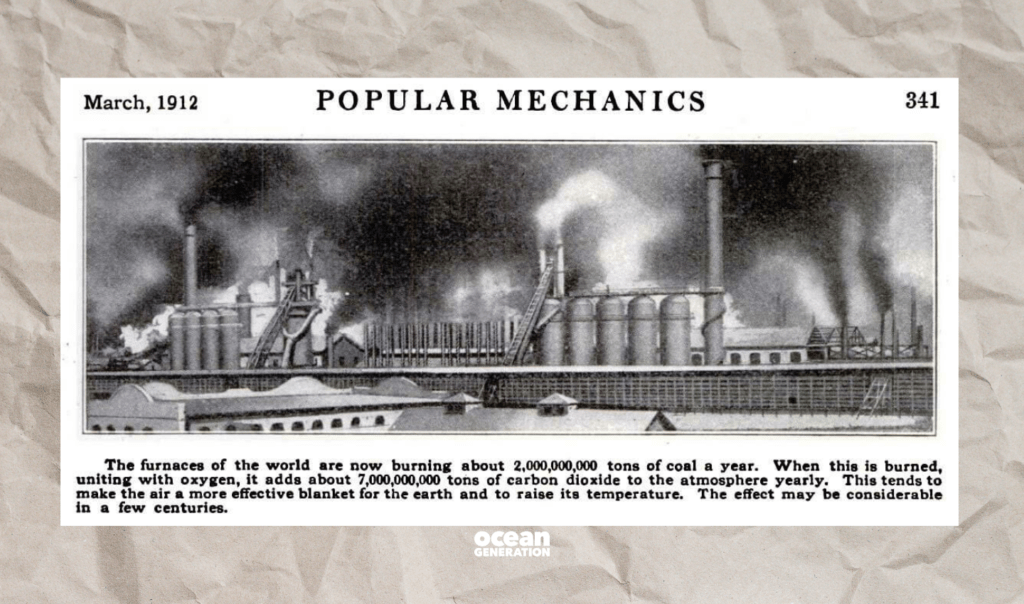
Snapshot of a caption that appeared in the March 1912 publication of ‘Popular Mechanics’, directly linking burning coal and global temperature change.

Several months later, on 14 August 1912, a paper in New Zealand re-shared the now-famous caption. They titled it: “Coal Consumption Affecting Climate.”

But before these publications, fundamental climate science was already understood.  
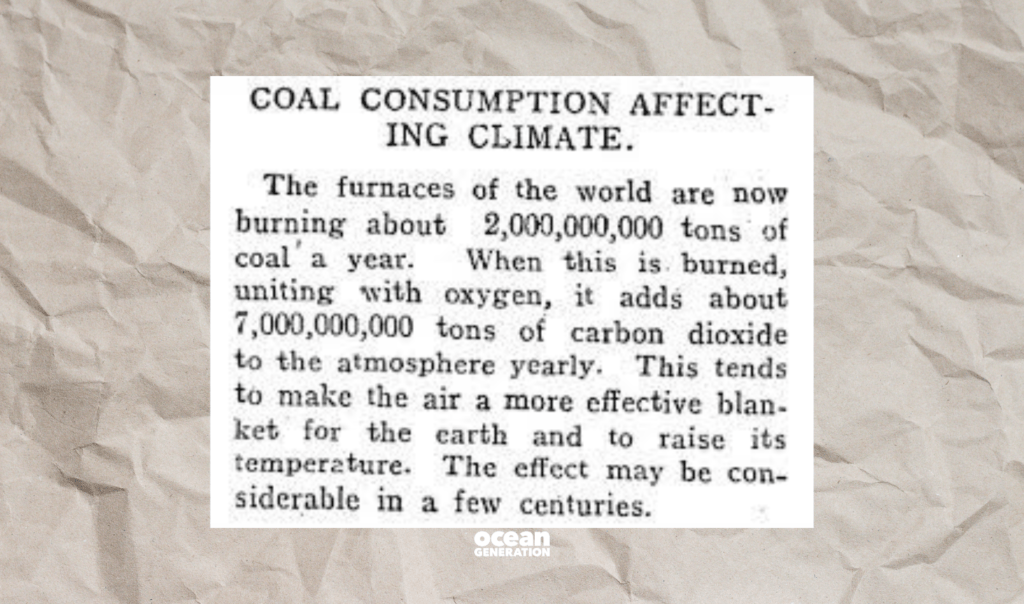
On 14 August 1912, a paper in New Zealand re-shared a now-famous caption titled: “Coal Consumption Affecting Climate.” 

Burning coal and climate change, for the first time, were linked in the media. Shared bY ocean Generation experts in Ocean health and inclusive environmental learning.

Scientists understood how greenhouse gasses contributed to rising temperatures in 1856.

What is the greenhouse gas effect and who discovered it? 

The greenhouse gas effect is how heat is trapped close to the Earth’s surface. Trapped by what? Greenhouse gas molecules like carbon dioxide, methane, and nitrous oxide.  

John Tyndall, an Irish physicist, is commonly miscredited with discovering the greenhouse effect.  

In 1856 (three years before Tyndall’s work was published), Eunice Foote, an American scientist, concluded certain gasses warm when exposed to sunlight. She concluded that rising carbon dioxide levels would lead to atmospheric changes, which could impact the climate.  

Human activity was suggested as the main driver of climate change in 1896.

Svante Arrhenius, a Swedish scientist, suggested that as humanity burned fossil fuels (non-renewable energy sources like coal, crude oil and petroleum), which added carbon dioxide to the atmosphere, we’d raise the planet’s average temperature. 

Over 100 years ago, the science was there. Why does it feel like we’re only waking up now? 

Climate science wasn’t accepted by the public.

We can point to these news articles and research pieces and say, “It’s been a century! Why was nothing done?” But climate change began on the fringe of society. The science – and these scientists – weren’t taken seriously.  

“Humans? Impacting the planet? No way!” – someone in 1912, probably.  

Turning our backs on fossil fuels, which were building the modern world, seemed outlandish. When the world went to war in 1914, the topic lost momentum and only picked up again in the 1930’s. 
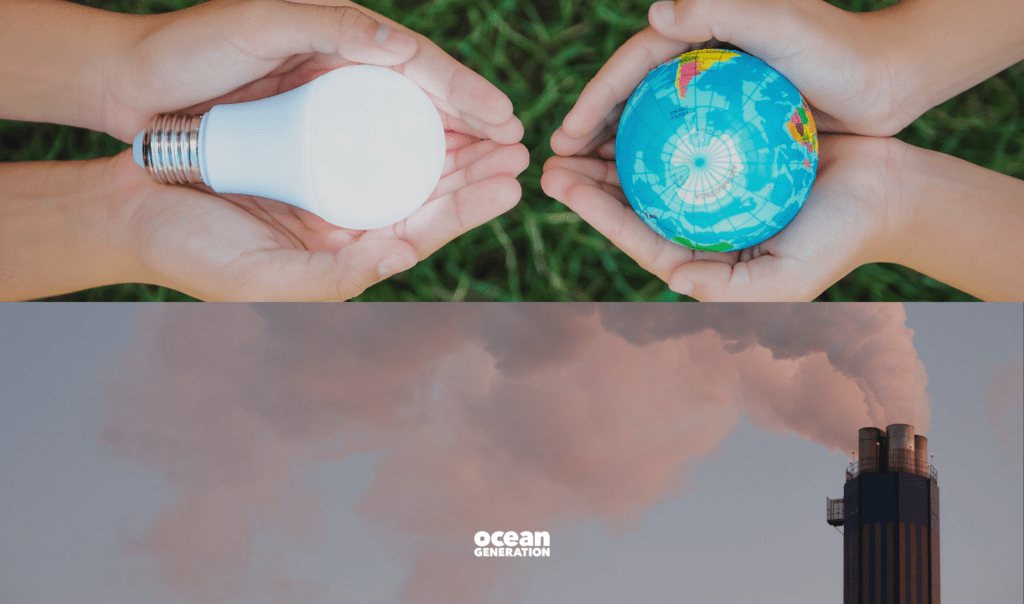
Ocean Generation is sharing the history of climate change. In this image, which is horizontally split in two, two sets of hands hold symbols of the modern world: a light bulb and a globe of Earth. The bottom image is of smoke rising from a factory, symbolising the connection between burning fossil fuels and the modern world.

The origin of global warming.

In 1938, Guy Callendar caused a stir in the science world when he put together weather observations and concluded that global average temperatures had already increased. 

Callendar was the first person to clearly identify a warming trend and connect it to carbon dioxide in the atmosphere. He was shunned by the science community for his research which became known as “the Callendar Effect.”  

Today, we just call it global warming. 

How does climate change impact our Ocean? 

The Ocean absorbs much of the sun’s heat which helps regulate land temperature and drive global weather patterns. More than 90% of the heat from global warming is stored in our Ocean. That makes the Ocean one of the most important carbon sinks on Earth.  

But this continual heat absorption is changing the characteristics of the Ocean. (Spoiler: not in a good way). Those changes have massive impacts on all life on Earth. 

Scroll: The 7 climate change indicators we’re seeing in the Ocean. 
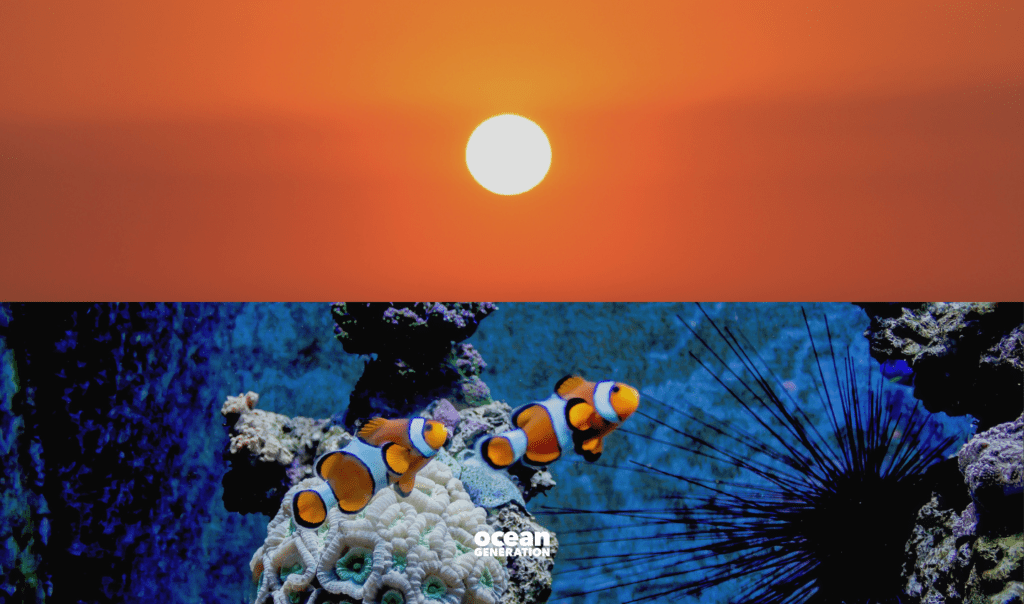
How does climate change impact the Ocean? Ocean Generation has the answers. In this horizontally split image half is made up by an orange sunset, in the bottom image a scene under the Ocean is captured: there are vibrant corals and clown fish.

Why was climate scepticism so strong for so long?  

Scientific coverage in the media that pointed to the reality we all know now – that human activity is a key driver of climate change – was often published alongside pieces that were sceptical of such facts. 

As recently as 2003, it was covered that global warming amplified death tolls in the 2003 European Heatwave. In the same year, at a speech given on the US Senate floor, a former Chair of the Environment and Public Works Committee called climate change, “The greatest hoax ever perpetrated on the American people.”  

With contradicting statements everywhere, people believed that the jury was out on climate change. We know better. 

The best time to take climate action was in 1912.

The second-best time is right now and every day from now. Because the history of climate change is just that: History.

Each decision we take, today, tomorrow, in three weeks or four years, sets up the future health of our blue planet.  

A hand reaching out above a body of water. The hand's reflection looms below. Shared by Ocean Generation.

Actions you can take to fight climate change.

The Hidden Price of Feeding Langkawi’s Eagles

Subscribe

Monthly: Impact in your inbox.

OceanGeneration-Join

The Ocean is turning green because of climate change

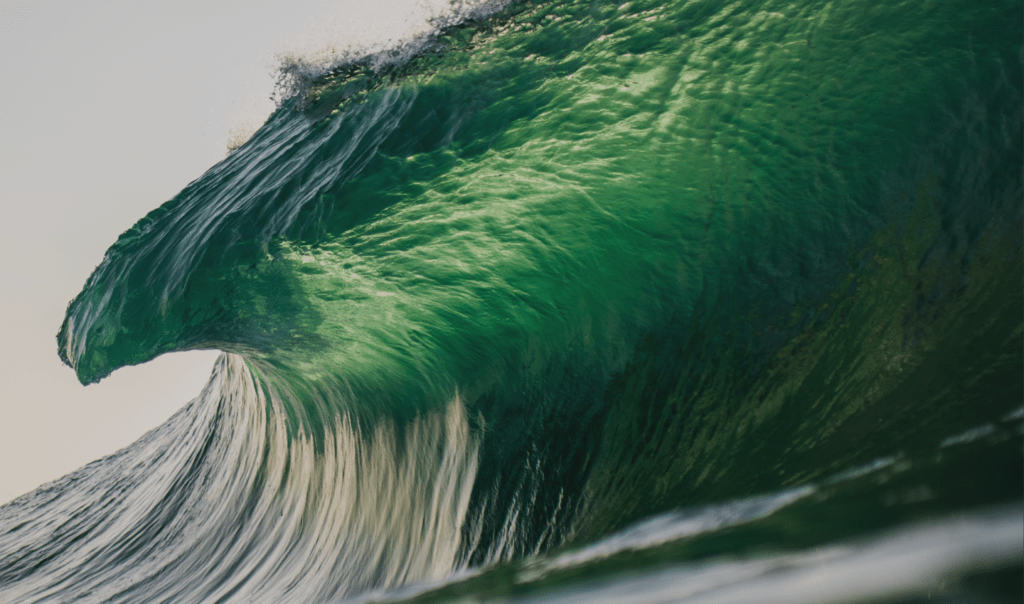
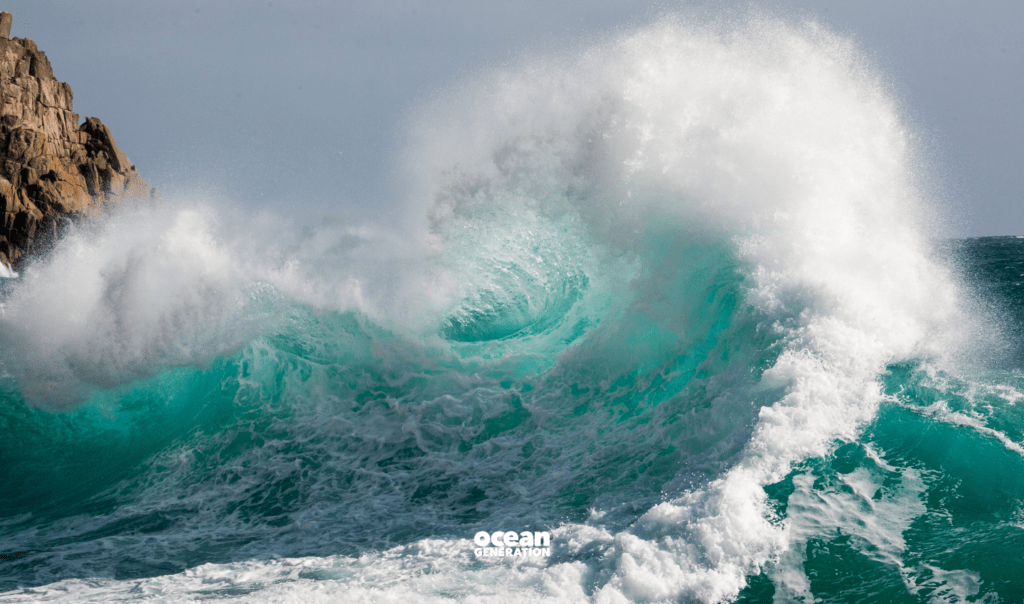
Breathtaking image of an Ocean wave breaking. The wave has a green hue. In this article, Ocean Generation explains why our Ocean is turning green because of climate change.

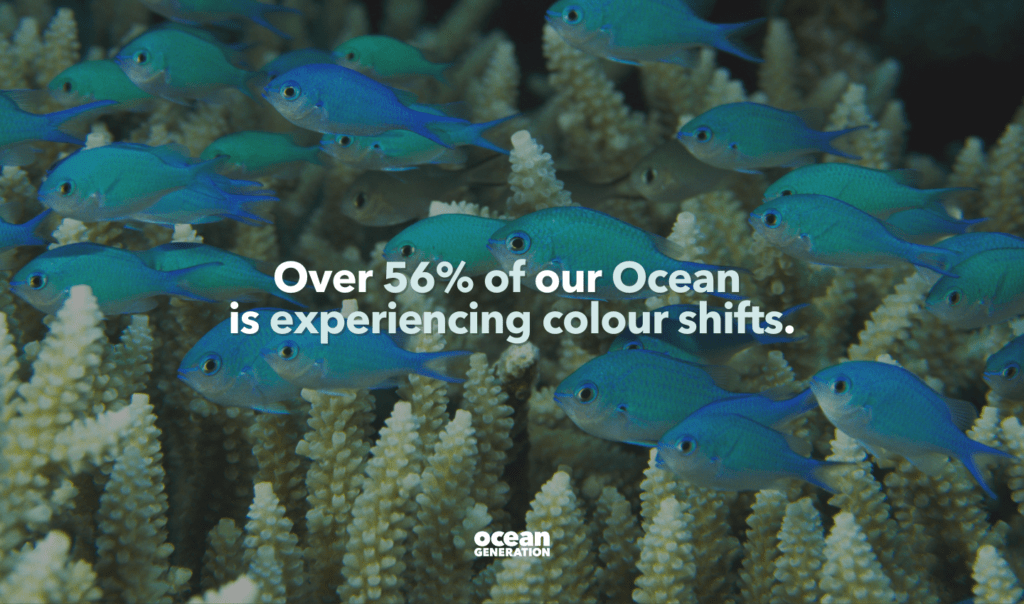
Over 56% of the Ocean is turning green.

More than half of our Ocean has changed colour in the last 20 years, turning more green than blue. (That’s more than Earth’s total land area.) The culprit? Climate change.

Nature published a study in July ’23 that analysed two decades of research which we’ve translated into a 5 minute read about why the Ocean is changing colour and why we should care.

More than half of the Ocean is turning green. It's changed colour in the last 20 years, becoming more green than blue. That's more than Earth's total land area. The culprit is climate change. Ocean Generation has translated the report into an easy read.

Why is the Ocean turning green?

Colour shifts in the Ocean happen for many reasons, like when light bounces off of particles (like plastic) and sediments in the water.

Phytoplankton (micro-algae) is the main reason the Ocean has a naturally green hue because it contains chlorophyll, like all terrestrial plants.

But phytoplankton is more than a just splash of colour. It’s the base of most Oceanic food chains, the main producer of our oxygen, and stores the bulk of our carbon.

So, shifts in Ocean colour aren’t really about the colour. We care about the colour shifts because they’re indicative of changes happening in important surface-level ecosystems.

How is the Ocean’s colour shift linked to climate change?

Good question. Tracking how changes in climate impact our Ocean can be challenging because of the sheer scale of our Ocean. So, often, time-series data is used to measure trends over long periods.

For this study, 20 years of observations from June 2002 to June 2022 by Nasa’s Modis-Aqua satellite were used.

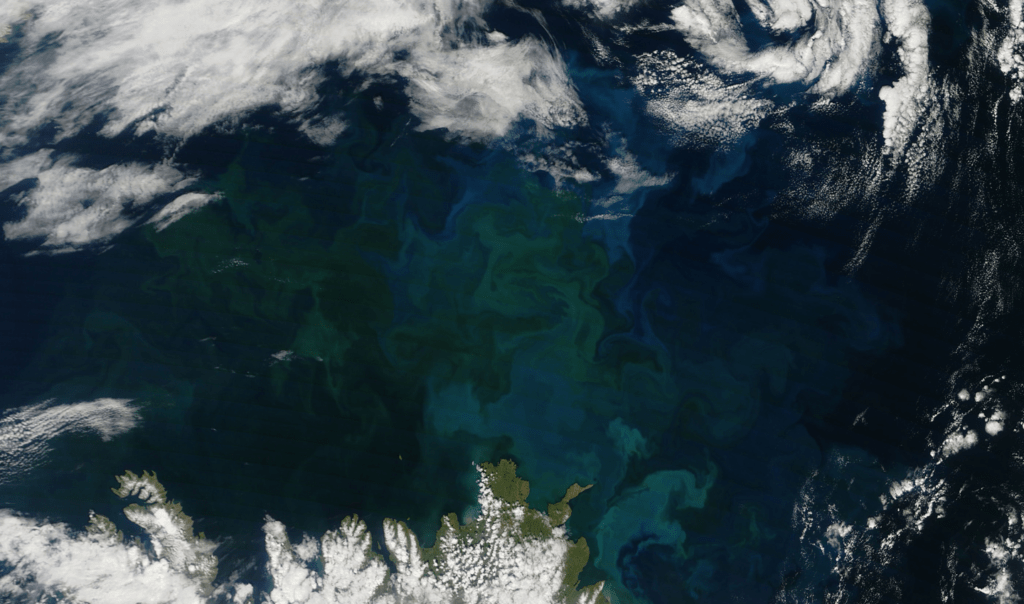
By studying wavelengths of sunlight reflected off our Ocean’s surface, the scientists tracked the fluctuations in greenness (basically: How much phytoplankton is living near the Ocean’s surface, based on estimates of how much chlorophyll there is).

Satellite image of phytoplankton populations from space. Phytoplankton is a micro-algae but so important to all life on our planet. Ocean Generation shares the importance of this Ocean-surface ecosystem.

Of course, phytoplankton populations have natural fluctuations.
To assess the connection to climate change, researchers created a computer model.

The model measured how phytoplankton populations may respond to increases in greenhouse gases (without the natural variations).

The results (between reality and the only-climate-driven-changes model) matched almost exactly, prooving:

Oceanic plant populations (measured by the green they’re adding to the Oceans colour palette) can indicate climate health.

What’s the impact of a greener Ocean?

It all comes back to the phytoplankton.

If the health of phytoplankton is impacted, there are implications relating to:

  • Our Ocean ‘s ability to store carbon;
  • The entire Ocean food chain (and thus, ours);
  • Balance in the biogeochemical cycle (AKA: the water cycle, nitrogen cycle, etc).

We say it all the time. We mean it every time: A healthy Ocean is essential for all life on Earth.

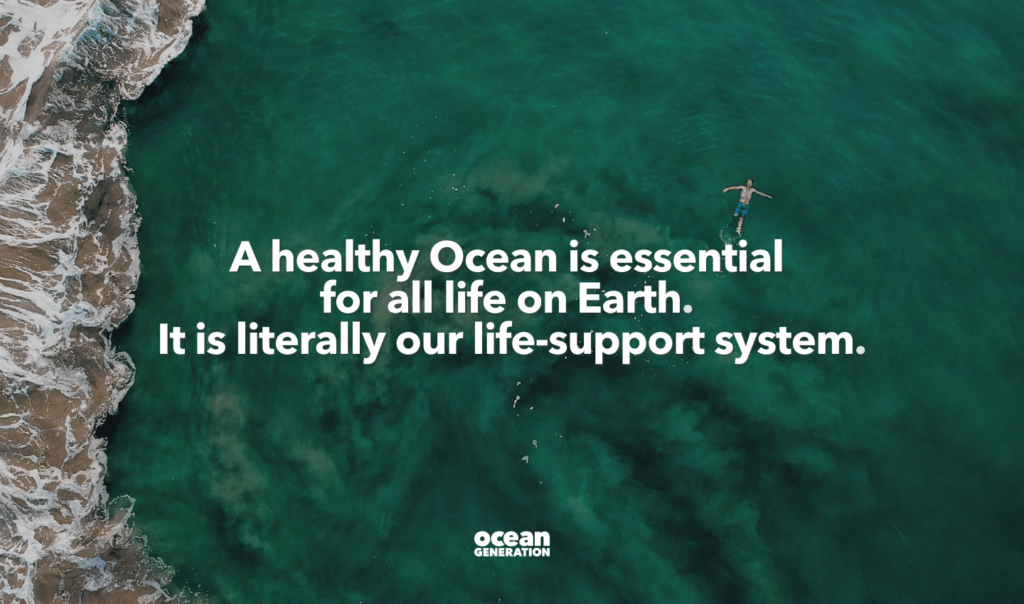
Ocean Generation shares why a healthy Ocean is essential for all life on Earth. Image of a man floating on his back in the Ocean.

The Hidden Price of Feeding Langkawi’s Eagles

Subscribe

Monthly: Impact in your inbox.

OceanGeneration-Join

15 Climate actions you can take to restore the Ocean’s health 

15 simple actions you can take to fight climate change and protect the Ocean, shared by Ocean Generation. Dark blue, foamy wave washing onto a beach.

What can I do about climate change?”

We’re regularly asked for practical climate actions. Thankfully, there’s a lot we can do to look after our blue planet.  

Every decision we make – from what we eat to how we move to the clothes we wear – has an environmental impact. But when faced with fear-mongering headlines and science-backed alarm bells that we’re reaching a climate tipping point, individual actions don’t feel like enough.  

Do individual climate actions actually make a difference?  

Yes. Think about it: Swapping out your plastic straw for a metal one may not feel like much, but if everyone in Europe did the same, 701 tonnes of plastic could be prevented from entering the environment every year.  

Collectively, individual actions are powerful propellers of positive change.  

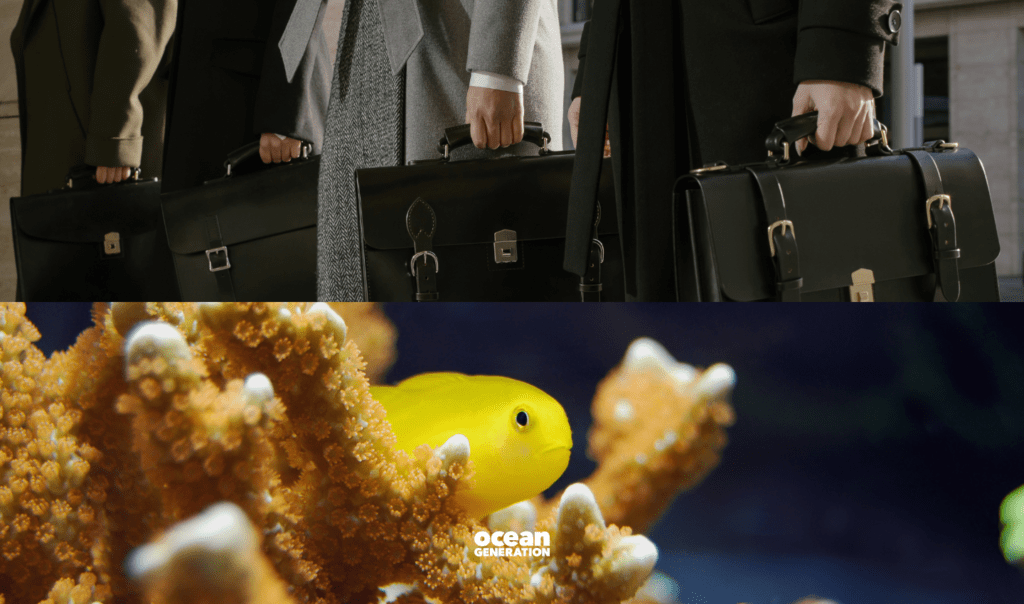
The image is cut horizontally down the middle. The top image is four men and woman dressed for work in suits and coats, holding briefcases. The bottom image is of a bright yellow fish in an organge coral in the sea. Shared by Ocean Generation.

Why should the Ocean have a seat at climate conversations?  

The Ocean is a powerful climate change mitigator.

Here’s 3 ways our Ocean mitigates the impacts of climate change: 

  • The Ocean absorbs 90% of excess heat from our climate system, making it an impressive heat sink. In fact, the Ocean is the largest heat sink on Earth. 
  • 30% of human-made carbon emissions are absorbed by our Ocean.  
  • The Ocean plays a major role in climate adaption. (Said differently: the Ocean supports our planet’s adjustment to the effects of climate change, for example, through blue carbon ecosystems).  

But as much as our Ocean tackles climate change, it is also directly affected by it. (Read: Ways climate change impacts Ocean health.)

When we take climate action, we are simultaneously taking Ocean action and vice versa.  

From reducing your use of single-use plastics to addressing your carbon footprint, there are many effective ways to make a positive difference.
Here are 15 climate actions you can take to restore the Ocean’s health: 

1) Skip single-use coffee cups

Many of us start our day with a cup of coffee on the go. It’s a comforting routine that sets the tone for the rest of the day. 

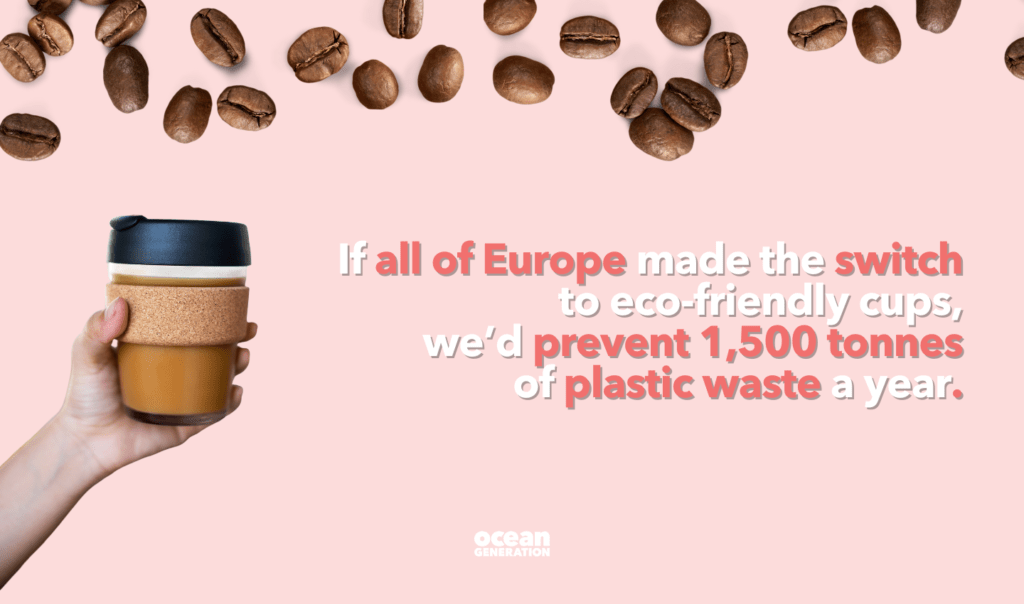
If all of Europe made the switch from single-use plastic cups to eco-friendly alternatives, we’d prevent 1,500 tonnes of plastic waste a year.

Hand holding a reusable coffee cup, shared by Ocean Generation. The accompanying text says 'if all of Europe made the switch to eco-friendly cups, we'd prevent 1,500 tonnes of plastic waste a year.'

2) Understand the main 5 human-made threats the Ocean faces 

We can’t restore the health of the Ocean if we don’t understand what threatens it.

The UN released a 2,000-page document breaking down the various threats our Ocean faces. Understandably, most people don’t have the time (or desire) to read it. So, we transformed it into 5 easy-to-follow articles about Ocean threats. 

3) “What is my climate footprint?” 

Your carbon footprint is the measure of greenhouse gases produced by your daily activities.  

This includes things like driving a car, using electricity, the emissions linked to what you wear, and even eating food.  

When we understand our carbon footprint, we can shift our behaviours for the better. Here’s an online carbon footprint calculator (we can’t endorse any resource as ‘the most accurate measure of your CO2 footprint’ but this will give you a rough idea of your environmental impact).  

It’s important to remember that carbon emission world averages distort the unequal emissions in developed and developing countries. So, it’s helpful to compare your carbon footprint to your national average to assess where you stand. 

4) The food on your plate makes an environmental impact  

One third of carbon emissions comes from food production.  

What you eat tends to matter more than whether it’s produced locally or not, when it comes to decreasing your carbon footprint.  Read: Is locally sourced food better for the environment? 

General tips: Reduce your consumption of high-emission foods like meat and dairy in favour of seasonal fruits and vegetables and snacks that have negative emissions. 

5) Put your money where your heart is: Divest from fossil fuels 

Are your monetary investments benefiting the planet? Divesting from fossil fuels means taking your money out of the hands of the fossil fuel industry, which contributes significantly to carbon emissions and climate change.  

You can start by checking your bank and investment accounts and moving your money to institutions that don’t invest in fossil fuels. Even small divestments make a difference. 
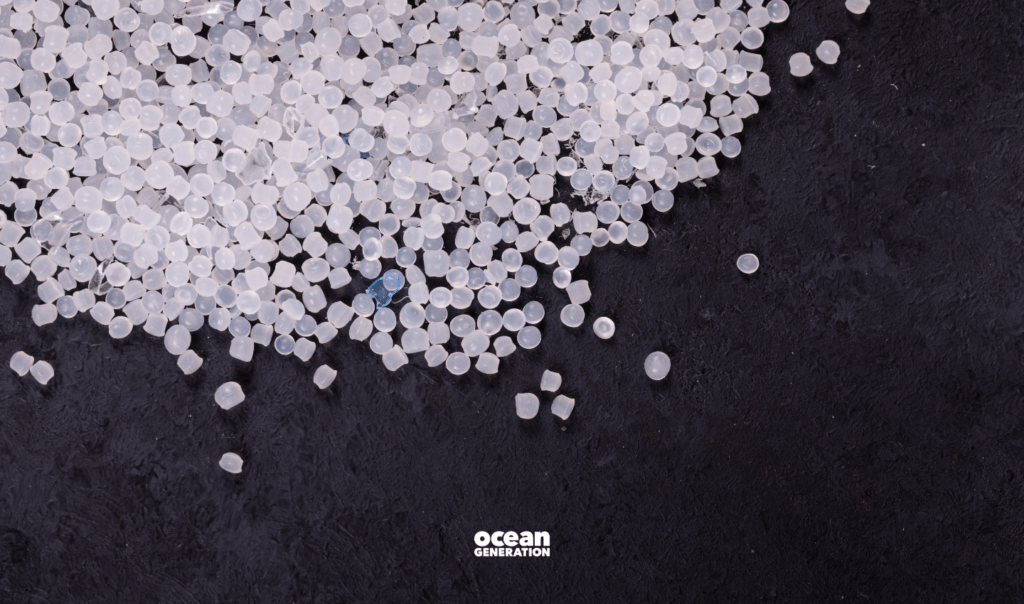
Microplastics on a black background. Ocean Generation is sharing climate actions we can all take.

6) Avoid products with microbeads 

Microbeads are small plastic beads often found in beauty and personal care products. These tiny pieces of plastic easily slip down our drains, through water treatment plants and into the Ocean. 

Most of us purchase products – facial scrubs, toothpaste, nail polish, and abrasive household cleaning products – without realising they contain microbeads.  

Quick solution to the microbead problem: Check ingredient lists and front labels. Microbeads and polyethylene are often listed on packaging, making them easy to avoid. 

7) Think before you toss your clothes into the laundry 

Every time we do an average laundry load of 6kg, 700,000 fibres can be released into our waterways. Before you put something in the washing basket, consider if it can first be worn again.  

Take this a step further by investing in a bag built to capture micro-fibres and choosing sustainable clothing materials when it’s time to purchasing something.  

8) Conserve water  

Only 0.5% of water on Earth is useable and available as freshwater. So, we’re not joking when we say water is liquid gold.  

It’s a key prerequisite for human development and, already, a quarter of all cities are water stressed. Little actions add up: Cringe when you see a character in a movie running water for ages; make sure you turn your tap off while brushing your teeth; install a waster-wise shower-head; fix those leaks.  

You may feel that your climate action is a drop in the Ocean – but the Ocean would be less without that drop.  

Every drop counts.

9) Understand the impact of fast fashion on the environment 

Fast fashion is responsible for 8 – 10% of global carbon emissions (which is more than all international flights and maritime shipping – combined).  

Outfit repeating, sustainable fabrics, shopping second-hand and only purchasing items you know you’ll re-wear over and over again are in fashion this season.  
Scroll: How to take the fast out of fast fashion

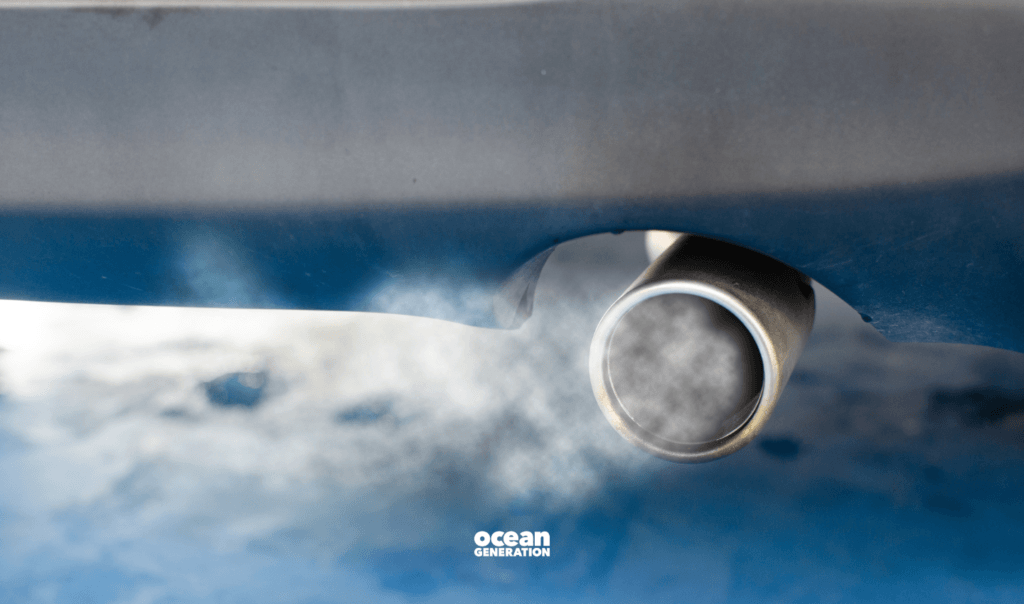
Car exhaust pipe with smoke coming out. Shared by Ocean Generation in a article about actions to reduce carbon emissions.

10) What’s the impact of how you travel

No one’s surprised to learn: Flying is one of the most carbon-intensive modes of transportation. But did you know that flying at night is actually worse for the planet than flying during the day? Now you do.

Walking and cycling are both climate-friendly and positively impact our health.  

Suggestions when it comes to catching flights:  

  • Where alternatives exist, don’t fly.  
  • When you need to fly, choose direct flights to maximise fuel efficiency and minimise emissions associated with take-offs.  

11) Plant a mangrove tree – with the click of a button – to take Ocean action 

Mangrove trees are incredible climate solutions.

We’ve written about their impressive carbon sequestering power extensively and have a Mangrove Mandate: A promise to plant a mangrove tree in Madagascar for every new follower on @OceanGeneration’s instagram.  

By planting a mangrove tree, you’re making a direct impact on the environment. Plant (follow).

12) Rethink your relationship with plastic 

You knew it was coming. It wouldn’t be a climate change actions list without mention of plastic.  

Plastic is everywhere – from the clothing you’re wearing to the spot you’re sitting right now and even in the food we eat. There’s no getting rid of a material designed to last forever, but reducing our consumption of single-use plastics is essential for a healthy Ocean and planet.  

Start by rethinking your relationship with plastic. Instead of leaning on recycling, start reusing, reducing, totally refusing plastic options where you can.  

Crashing Ocean wave, shared by Ocean Generation - experts in Ocean health since 2009.

13) Start saying ‘Ocean’ not oceans 

At school, we’re all taught about the Ocean having 5 regions, but our Ocean isn’t separated by borders. It’s one, connected system.  

What happens in one part of the Ocean impacts Ocean health as a whole. 

If we all understood this, we’d be more mindful of what we dump in the Ocean, what we take out of it, and how we use it daily. As you go about your life, start saying Ocean – big O, no s. Not only does it highlight the interconnectedness of the Ocean, but also how our daily actions impact it. 

14) Be a voice for our Ocean 

The Ocean is quite literally keeping us alive. It’s our planet’s life support system, but most people don’t realise that.  

By keeping yourself informed about the importance of the Ocean, the human-made threats it faces, and the various actions we can take to protect it – and then sharing that Ocean intelligence, you can propel a wave of positive change for our planet.

Sign up to our newsletter for monthly Ocean education. Submit a Wavemaker Story to let your voice for the Ocean be amplified on our channels. Share educational posts you come across. Be an Ocean advocate – not just on World Ocean Day but every day. 

15) Accept that you can’t do everything. Start where you are. 

It’s important to acknowledge that no one can do it all when it comes to tackling climate change and restoring the Ocean’s health.  

Striving to be a perfect environmentalist often leads to eco-anxiety and feelings of defeat about the amount of work to be done. The reality is: Imperfection is still helpful, and it’s a lot more inclusive than unrealistic demands for perfection. 

Our blue planet doesn’t need a handful of perfect environmentalists. Earth needs millions of imperfect people doing what they can to make a difference, and always trying to do better.  

Embrace imperfect environmentalism with us by starting where you are. Commit to one – or several – of these items right now. Collectively, we can make waves. 

The Hidden Price of Feeding Langkawi’s Eagles

Subscribe

Monthly: Impact in your inbox.

OceanGeneration-Join

Mangroves: Underrated Climate Change Heroes 

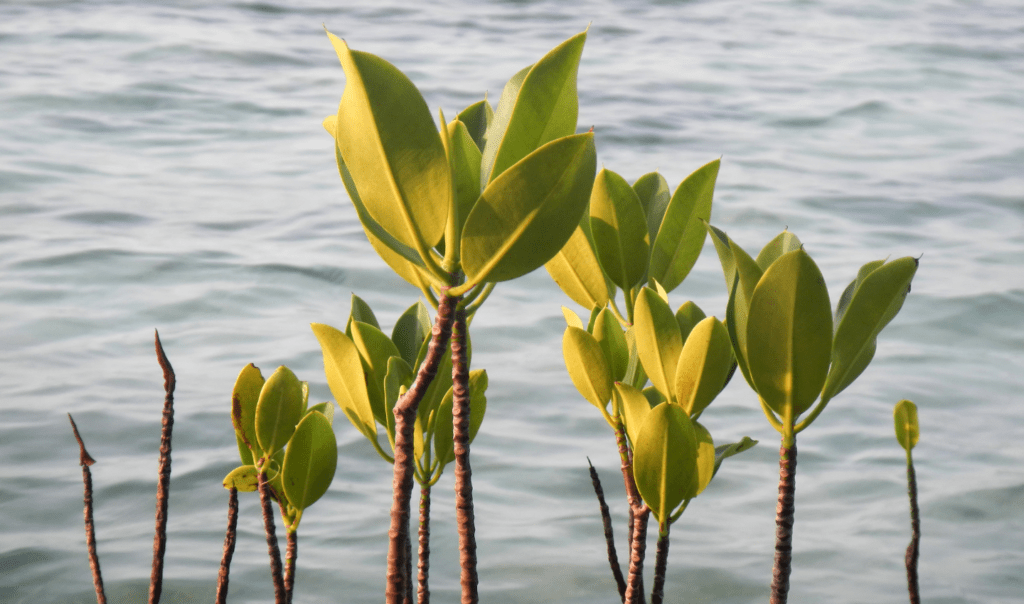
Mangrove tree growing out of water. Mangroves are climate change heroes thanks to their ability to sequester 3 - 5 times more carbon than normal forests.

Everything you need to know about mangrove trees:

Mangroves are the only forests situated at the confluence of land and sea in the world’s subtropics and tropics. They have been variously described as “coastal woodland”, “mangal”, “tidal forest” and “mangrove forest.”  

There are roughly 70 species of mangrove trees occupying a total estimated area of 147,000 km2 worldwide. This is equivalent to the size of Bangladesh! Roughly 43% of the world’s mangrove forests are situated in just four countries: Indonesia, Australia, Brazil, and Nigeria.  

These forests are home to an abundance of life, protecting people from floods whilst storing carbon at an impressive capacity. 

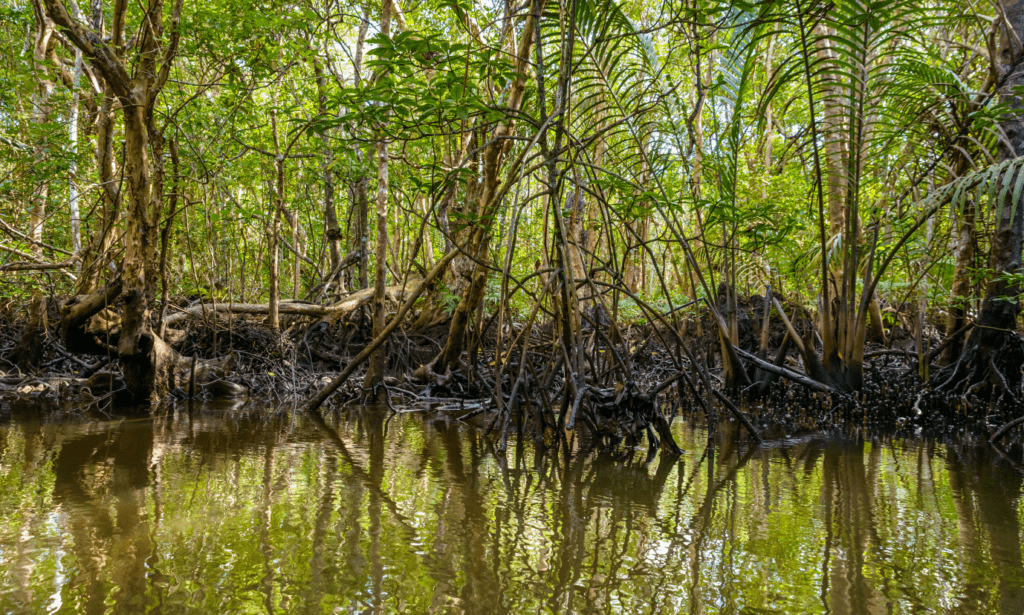
Mangrove trees in Indonesia. The mangroves - a coastal ecosystem - are vital climate change heroes. Here, they are near a body of water. Uniquely, mangroves can be found in coastal and fresh water environments.

Biodiversity in mangrove forests 

In the right conditions, mangroves form extensive and productive forests.

These forests support animal populations both within the forest and in offshore areas. Densities of crabs are especially likely to be highest on unvegetated mudbanks adjacent to mangroves, feeding on propagules (buds of plants). 

Juvenile shrimps are important organisms near mangroves too, and a sought-after food for many communities. These shrimps obtain carbon (food) from plankton and algae living amongst the mangroves. 

There are also a few endemic mammal species in mangroves. For example, crab-eating rats in Australia, the leaf monkey in Malaysia, and the proboscis monkey in Borneo. 

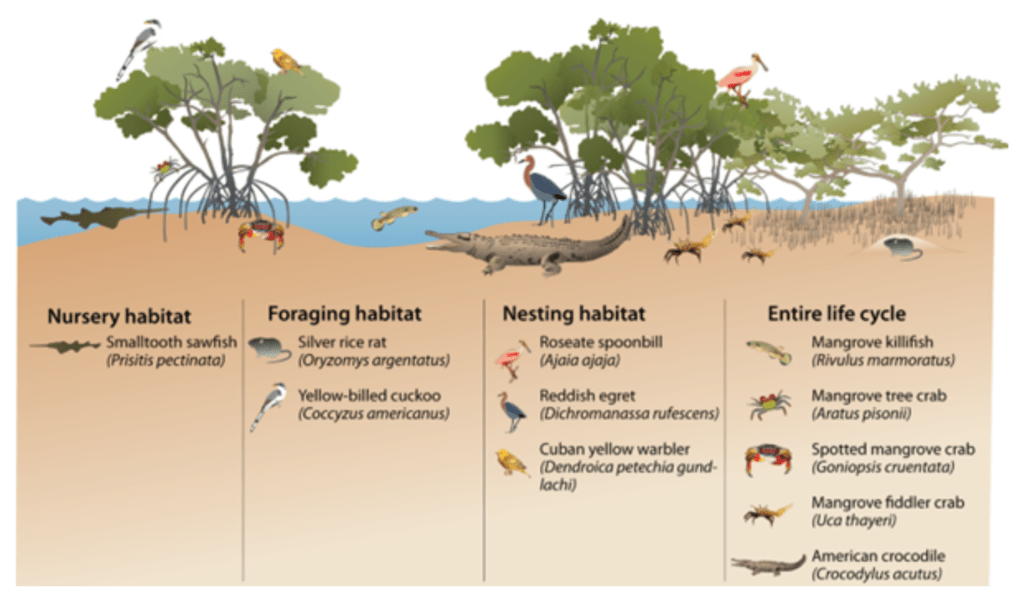
Here is a diagram further highlighting the importance of mangroves to so many species for different reasons – 

What species live in mangrove forests? Animals use mangroves as a nursery, foraging and nesting habitat. Some species like tree crabs, spotted mangrove crabs and crocodiles spend their whole lives in mangrove forests.

Figure 1 Conceptual diagram illustrating the critical habitat that mangroves provide for a variety of animals [Credit: Integration and Application Network, University of Maryland Center for Environmental Science] 

Why should we care about mangrove trees? 

– Mangrove forests are widely recognised as providing a wide variety of goods and services to people, including protection from floods, provision of a variety of plant and animal products, sediment trapping, and nutrient uptake and transformation.  

– Annually, mangroves are responsible for over $60 billion in avoided losses from coastal flooding, protecting more than 15 million people.  

– An impressive diversity of plant products is harvested from mangrove trees, including tannins, honey, medicinal products, and thatch. 

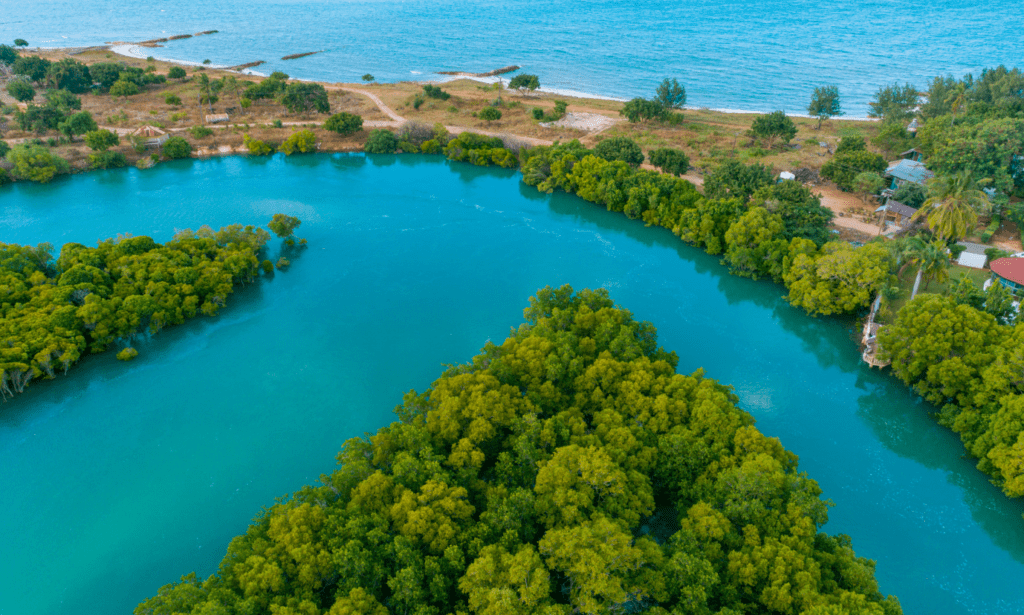
Aerial image of mangrove forests.

Mangroves are a blue carbon solution  

– Mangroves have gained a lot of attention in recent years over their ability to sequester carbon, storing between 3-5 times more carbon per hectare than terrestrial forests. 

– They have carbon-rich soil that’s been built-up for over hundreds or thousands of years. 

– 87% of carbon stocks in mangroves are just within the top meter of soil. According to one report, if this were released into the atmosphere, it would be equal to 7.5 years of emissions from the EU or burning 51 billion barrels of oil. 

What are the drivers of degradation and loss of mangroves?  

Up to 60% of mangrove tree losses are due to direct or indirect human impacts. These drivers are –

– Logging (for timber, charcoal) 
– Agriculture (oil palm cultivation)
– Aquaculture (ponds for shrimp and fish farming) 
– Pollution (from oil and gas extraction, and nutrient run-off) 
– Coastal infrastructure development  
– Climate change (sea level rise, hurricanes, drought) 

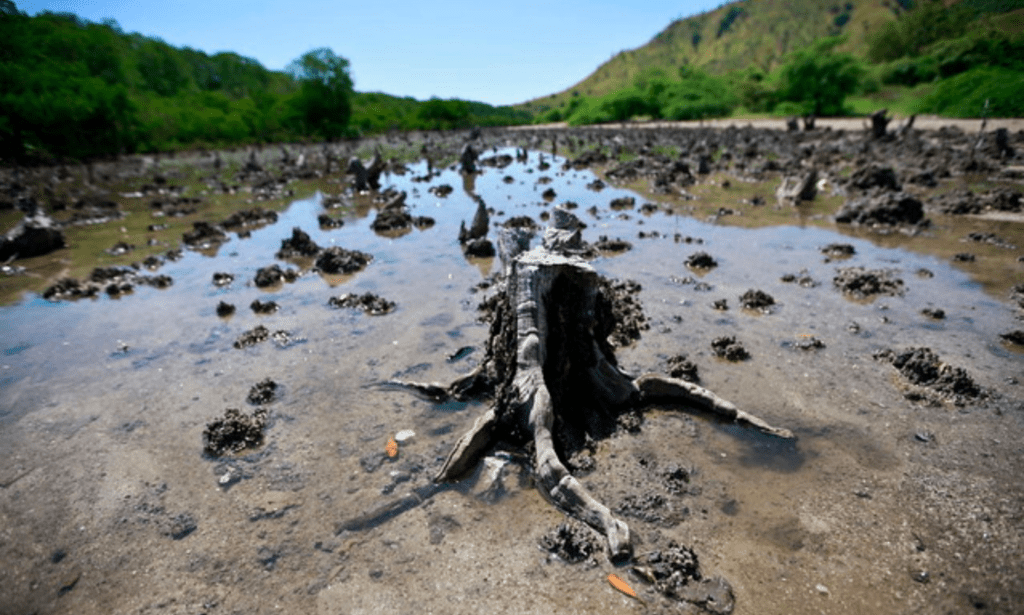
Mangroves Degradation in Timor-Leste shared by Ocean Generation.

Mangrove Restoration and Conservation Efforts 

Our knowledge of mangrove area dynamics at local to global scales has increased significantly since 2000 due to advances in remote sensing and data access.

Around 42% of remaining mangroves are now located in protected areas. But protected areas may not always provide strong protection. Many mangroves fall prey to erosion and storms, naturally occurring phenomena, while some don’t stand the test of time due to ineffective management.  

The front line of mangrove protection, management and sustainable use involves people—communities, indigenous groups, traditional users, and local governments.  

The Global Mangrove Alliance, is an important and ambitious initiative, seeking to halt loss caused by direct human impact, restore at least half of recent mangrove losses, and increase protection from over 40% to 80% by 2030. 

How coastal communities have helped mangrove forests thrive 

Around the world, there are countless examples of collaborations that have helped coastal communities and mangroves to thrive together.  

For example, in Pakistan, mangroves are concentrated mainly in the north along the Arabian Sea coastline where arid climate prevails. Under the Ten Billion Tree Tsunami Project, 43.50 million plants will be planted in one of the world’s largest endeavours to restore mangroves.  

This ambitious project will not only provide a natural barrier against erosion, climate disasters but will also restore breeding grounds for finfish and shrimps. It has the potential to improve the livelihoods of fishing and herding communities living in the many coastal villages dotting the country’s northern shores.   

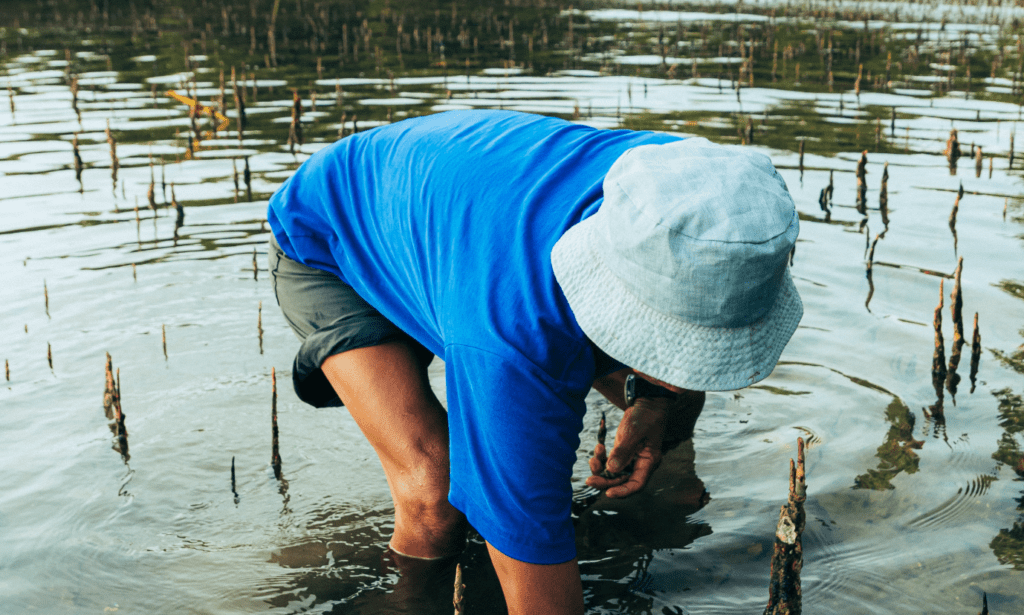
A man leaning into a body of water to plant a mangrove tree. Mangrove trees are incredible trees. They act as climate change heroes because of their incredible ability to sequester carbon.

Mangrove planting has been increasingly considered a Nature-based Solution (NbS)  

This enthusiasm, seen through national policy commitments and community-led initiatives, can now be assessed against a Global Standard for NbS, a criteria set by the International Union for Conservation of Nature (IUCN) to ensure that these projects are credible and well-designed to maximise their full potential.  

Mangroves provide many benefits and their ability to store carbon cannot be ignored. It is a useful nature-based solution to help reduce our emissions but it’s not the only one! 

What can I do to further mangrove conservation? 

  1. Show your support for mangroves in native areas –
    Find out if mangroves are native to your surroundings. If they are, vocalise your support for them and educate your community on the importance of mangroves.

    If your local mangroves are subject to degradation, rally support for preservation and speak to your local authorities. You can also keep track of mangrove restoration through the Mangrove Restoration Tracker tool.  
     
  1. Be a considerate tourist –
    Mangrove tourism exists across 93 countries, with boating being the most popular activity. So next time you travel, appreciate mangroves and the diverse wildlife they host but don’t leave anything behind!

    You can also participate in mangrove planting, for example, in the Philippines, through the Planeterra Project.  
     
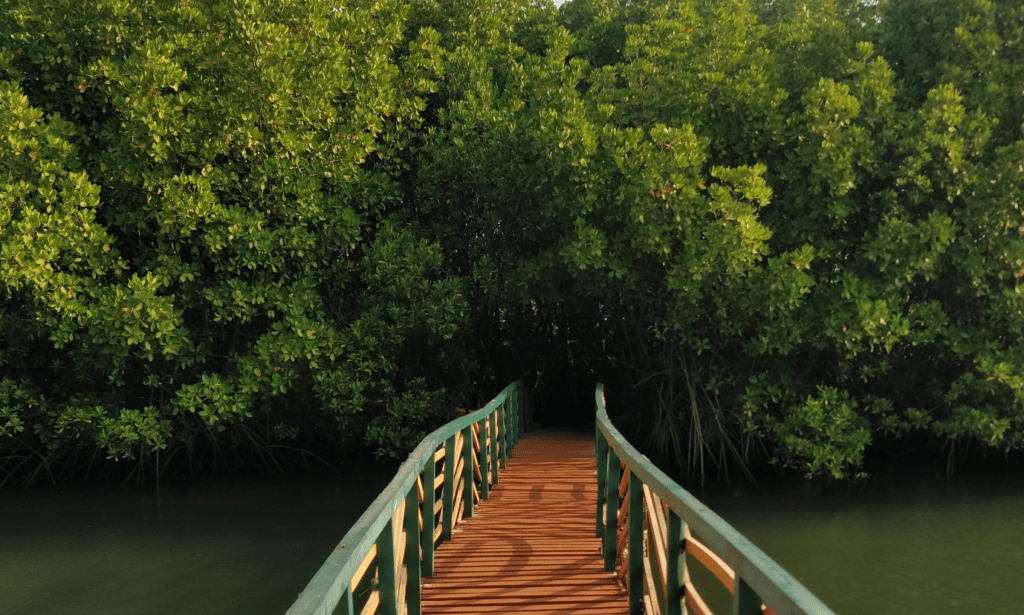
A bridge leading across water and into a mangrove forest.

The Hidden Price of Feeding Langkawi’s Eagles

Subscribe

Monthly: Impact in your inbox.

OceanGeneration-Join

How can I tackle a problem as complex as climate change?

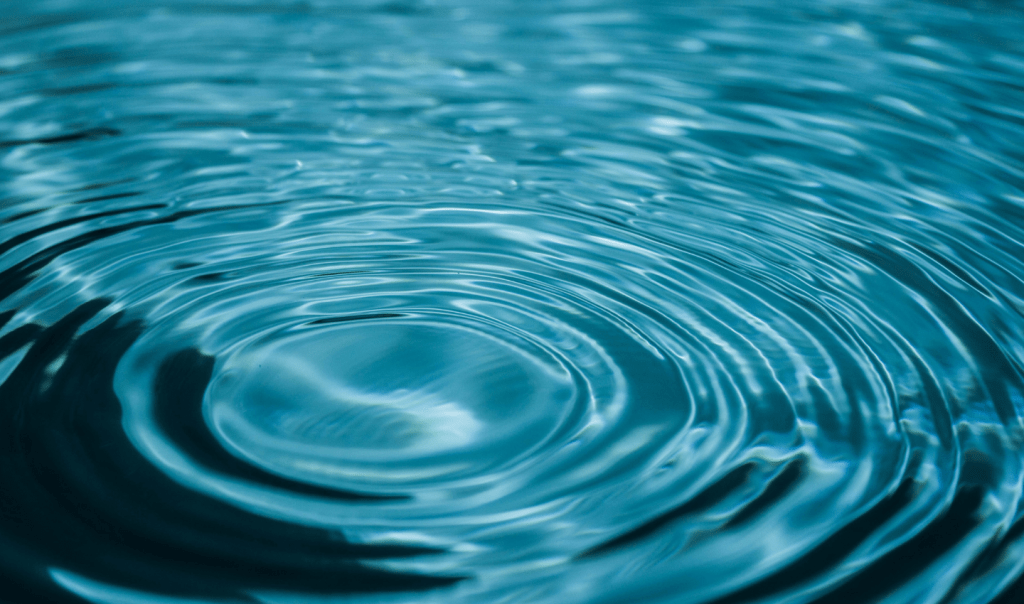
A ripple of water. Ocean Generation makes environmental science easy to understand and shares how each individual has a ripple effect on the environment and health of the Ocean.

The Ocean has never been this subjected to the level of intensity of climate change impacts caused by human activities. With every 0.1 degree C of warming, we make it more and more difficult for humans, flora, and fauna to adapt. 

A warming Ocean means that marine ecosystems like coral reefs and salt marshes are less able to host marine biodiversity and sustain many benefits for humans.

This also disrupts the Ocean’s ability to regulate the global climate system, water, and carbon cycle. 

It goes without saying that the climate crisis is now a defining issue of our lifetimes, and we have a slim window of opportunity to reduce our collective impact. 

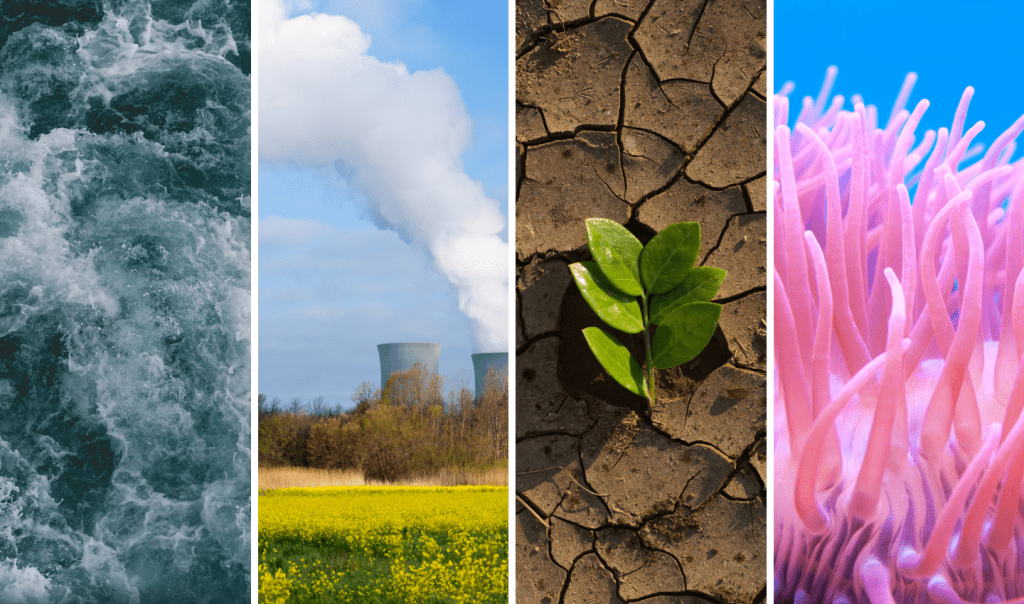
Four images side by side: Rough blue Ocean waves and foam, a factory releasing carbon emissions behind a field of yellow floowers, a single green lead on a crusty dry piece of Earth, a bright pink and healthy coral in the Ocean. Ocean Generation makes climate science simple to understand.

Is there a way out of the climate crisis? 

The Ocean stores 20-30% of greenhouse gas (GHG) emissions from human activities but this is unsustainable, resulting in an acidic, slow circulating, less oxygenated Ocean.

To put it simply, we need to rapidly reduce our emissions to give young people and future generations a chance to secure a sustainable future.  

According to the latest IPCC report, we need to cut global GHG emissions by nearly half by 2030. These emissions come from electricity production, food, agriculture, land use, industry, transportation etc. Cutting emissions requires global collaboration and cooperation – from governments to individuals.  

The challenge is immense, but the solutions could not be clearer.

A ripple of water. Ocean Generation makes environmental science easy to understand and shares how each individual has a ripple effect on the environment and health of the Ocean.

What do we need to do to limit global warming?  

Some of these solutions have already been set in motion: Reducing our reliance on fossil fuels, increasing uptake of clean energies, restoring carbon sinks, and much more. The slow pace of adoption and funding associated with these solutions have been repeatedly questioned, given the world is currently at 1.1C.  

The effects of climate change are already being felt in different corners of the world, albeit disproportionately.  

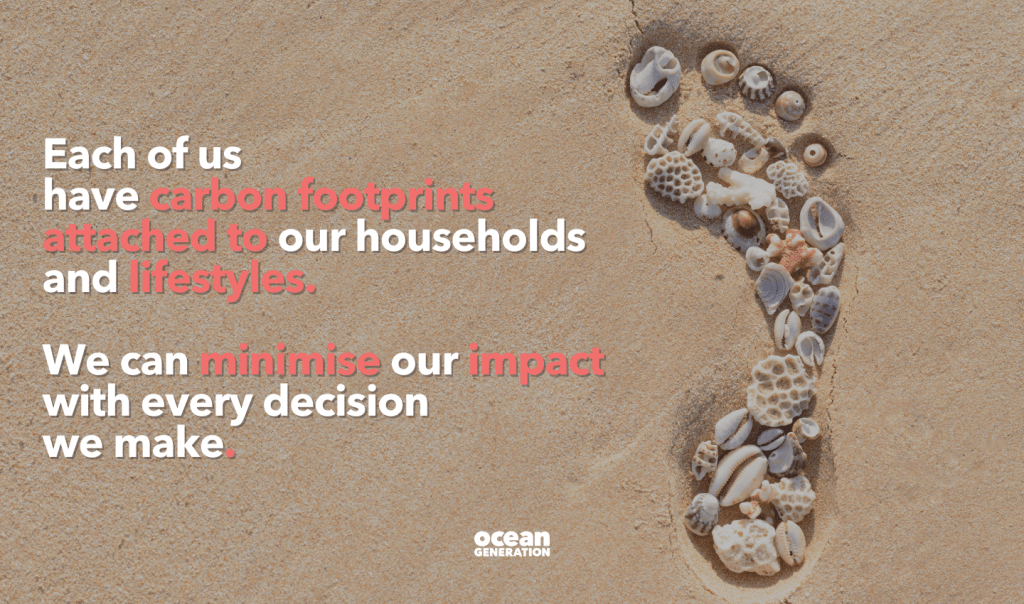
In order for us to stay within any warming limit, we need to make the necessary changes needed to sustain humanity as a whole. And as individuals, each and every one of us have carbon footprints attached to our households and lifestyles.  

We must address the fact that
we do not emit emissions equally 

Globally, there are huge disparities between those who over-consume and those who consume less due to socioeconomic and geographic factors.  

In fact, the top 10% of high-income households contribute 34–45% of consumption-based household GHG emissions and the bottom 50% contribute 13–15%.  

These stark differences mean that individuals in the top 50% are the in the best position to reduce their emissions, giving the opportunity to raise living standards for those in the bottom 50%.  

When considering our lifestyles, the conclusions are quite similar. 

What impact do our lifestyle choices have on carbon emissions?  

According to 2022 UNEP report, “the lifestyles of the wealthiest 10% of the world’s population (broadly speaking, most middleclass persons living in industrialised countries), are responsible for almost half of the global emissions, while the lifestyles of the wealthiest 1% are responsible for about twice as many GHG emissions as the poorest 50%”.  

Lifestyles are not just about the things we consume, but also addresses the communities we live in, the values we foster and the choices we make.

Individuals that are socio-economically well-off are in an instrumental position for enabling change. One paper suggests that individuals in this category could reduce emissions as role models, citizens, organisational participants, investors, and consumers.  

Ultimately, environmental, and societal well-being go hand-in-hand; it is in humanity’s best interests to fairly consume within our means.  

Footprint made of sea shells on the sand at a beach. Each of us has carbon footprints attached to our households and lifestyles. We can minimise our impact with every decision we make.

What can people to do to lower their carbon emissions 

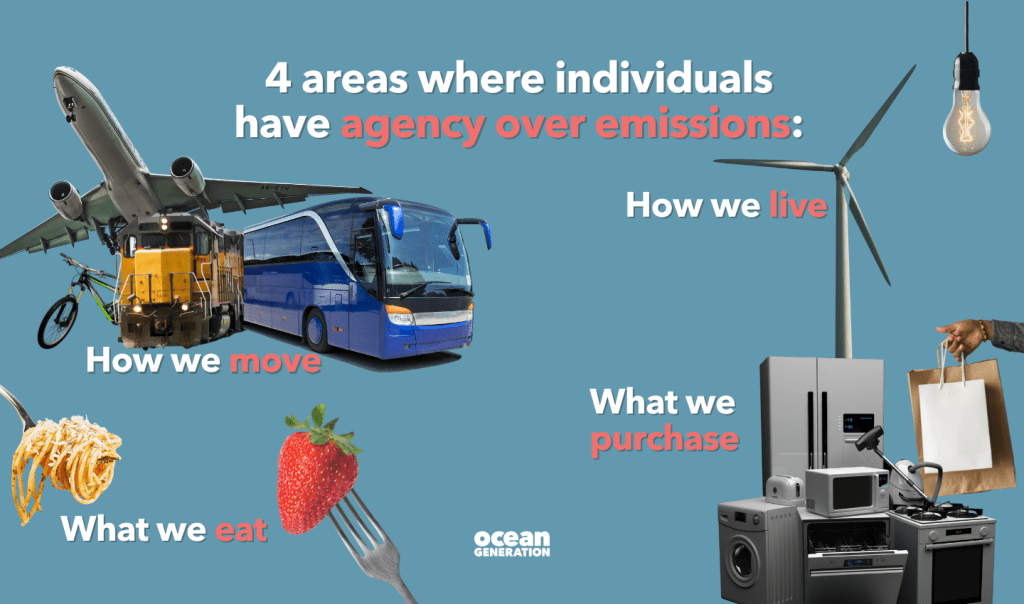
There are four key areas where individuals can have the most impact: Food, transport, housing, and the things we buy (like appliances, clothes etc).  

There is no denying that industry supply chains have a responsibility to reduce environmental impacts and provide sustainable choices. Small, and local businesses also tend to be more transparent, gaining consumer trust. Low-carbon alternatives exist in each of the aforementioned areas, and we can collectively vouch for further changes, whether that’s accessibility or affordability.  

At Ocean Generation, we will be covering climate change solutions under each of the above areas through 2023. Namely:

What we Eat food sources, diets, and food waste 
How we Move modes of mobility 
What we Purchase appliances, fashion 
How we Live energy sources and energy-saving behaviours 

Four areas where individuals have agency over their emissions: how we move, how we live, what we purchase and what we eat. Ocean Generation will be covering solutions related to climate change because climate solutions are Ocean solutions. We cannot have a healthy planet without a healthy Ocean.

Climate change solutions are Ocean solutions, and vice versa.

The finite resources on this planet need to be utilised efficiently and distributed equally while minimising our impact with each and every decision we make.  

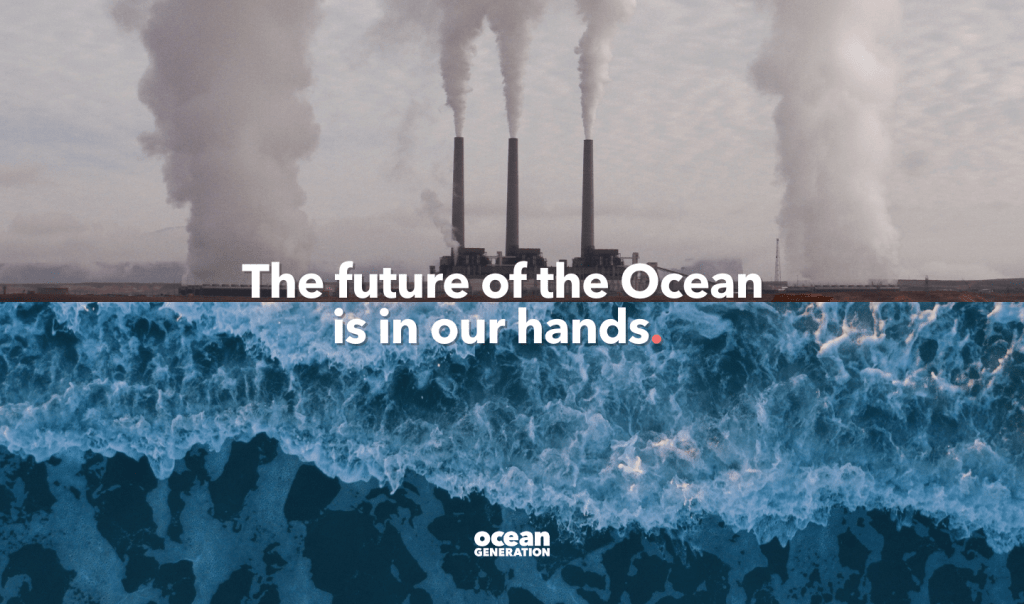
The future of the Ocean is very much in our own hands.  

With every 0.1C degree warming avoided, biodiversity and humans are given another chance. Let’s make every choice count!  

The future of the Ocean is in our hands. To have a healthy planet, we need a healthy Ocean. Ocean Generation shares climate change solutions and Ocean solutions to safeguard our planet.

The Hidden Price of Feeding Langkawi’s Eagles

Subscribe

Monthly: Impact in your inbox.

OceanGeneration-Join

Why protect blue carbon ecosystems?  

The Ocean stores a considerable amount of our carbon:

The Ocean is one of the largest natural carbon sinks on Earth, making it a crucial component of the carbon cycle. This means that the Ocean captures carbon dioxide from the atmosphere.

This carbon is stored in surface waters, eventually making its way into the deep Ocean. 

But there are other ways in which carbon is stored… 

The role of blue carbon  

All along our coastlines, we have unique ecosystems that capture and lock carbon away, mostly in the soil, for sometimes thousands of years.

These ecosystems are termed “blue carbon.”

This includes: 

Mangroves
Seagrass Meadows, and 
– Salt Marshes 

They can be potent carbon sinks, storing more carbon than forests on land, on a per-area basis, in the case of mangroves. Some of the other benefits include: 

– coastal protection (acting as a buffer between the Ocean and land) 
– increased biodiversity 
– reducing Ocean acidification  
– soil stabilisation 
– improved water flow and water quality  
– storm and flooding surge prevention, and  
– increased resilience to cyclones 

These ecosystems can be considered a nature-based solution in tackling the rise the carbon emissions.

But they are under threat. In fact, globally, between 20-50% of blue carbon ecosystems have already been converted or degraded.  

Drivers of blue carbon loss and degradation 

Our coastlines are often competed for – whether its daily Ocean activities or commercial purposes.

This invariably devalues existing blue carbon ecosystems. The main drivers of loss and degradation are: 

– salt ponds (for salt extraction) 
– agriculture  
excessive use of fertilisers (pollution)
intensive aquaculture
coastal infrastructure development  

The case for protection and restoration of blue carbon ecosystems 

If degraded or lost, blue carbon ecosystems have the potential to release the carbon back into the atmosphere.

This is not the best scenario, given carbon dioxide levels in the atmosphere are already reaching levels not experienced in at least 2 million years (!). 

Not only is protection and restoration good for the climate, but it also has the potential to create jobs and support economic growth.

Coastal ecosystems have the ability to mitigate around 0.5-2% of current global emissions. However, there is high uncertainty around its potential in the face of future climate scenarios, as well as loss of coastal land due to sea level rise.  

Many restoration efforts have failed in the past, mainly due to not addressing the root causes of degradation.

It is now understood that successful restoration efforts require local communities’ involvement at every stage, economic incentives, and robust frameworks for implementing and assessing these ecosystems.

Most importantly, reducing human activities in these areas can aid the recovery of these precious ecosystems.  

We need existing solutions to work together to reduce the adverse effects of the climate crisis.

We must protect what we have, restore what we have lost, and adapt to the circumstances we face.  

If the Ocean thrives, so do we. 

The Hidden Price of Feeding Langkawi’s Eagles

Subscribe

Monthly: Impact in your inbox.

OceanGeneration-Join

Seagrasses: More than a Blue Carbon Solution

Why are seagrass meadows so important?

Seagrasses are among the most widespread coastal ecosystems worldwide and range from the tropics to boreal margins of the Ocean.

They are flowering plants that live in shallow waters that can sometimes be seen from space.  

The name seagrass stems from the many species with long and narrow leaves, which grow by rhizome extension and often spread across large “meadows” resembling grassland; many species superficially resemble terrestrial grasses. 

These deep-rooted meadows cover over 300,000km2, roughly the size of Italy, spanning 159 countries and six continents. They do not exist in Antarctica.  

Sometimes referred to as ‘lungs of the sea’, seagrasses play a multi-functional role to both human well-being and marine life, while being a globally significant carbon sink. 

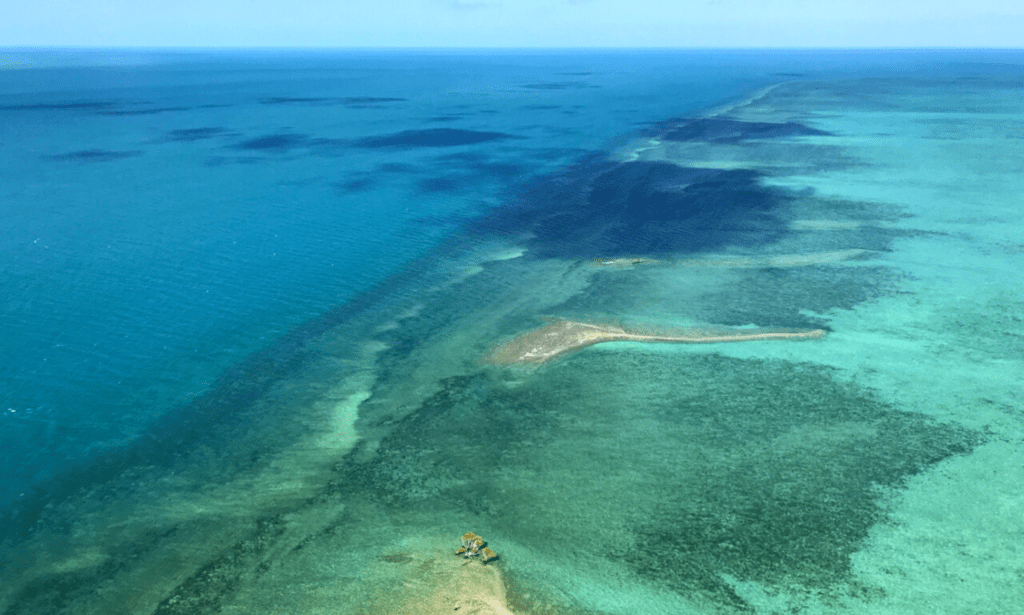
Seagrass Meadow in Clack Reef, Australia. Seagrasses are incredible climate change fighters - Ocean Generation is sharing what makes this unsung ecosystem so special.

Seagrasses are a climate change solution 

According to UNEP, despite occupying just 0.1% of the Ocean floor, seagrasses store up to 18% of the global Oceanic carbon, which is estimated to be 38,000 billion metric tons

What’s more:

– They can store twice the amount of carbon per hectare when compared to terrestrial forests. 

– The carbon is stored almost entirely in the soils, measuring up to four metres deep.

– They can act as a buffer for Ocean acidification, depending on environmental conditions, which benefits calcifying organisms like corals and shellfish. 

But that’s not all!  

How seagrasses support marine life 

Seagrasses are biologically rich and diverse habitats where species come together for many reasons. 

Some organisms – primarily large grazers like manatees, dugongs, green sea turtles and geese – eat the living leaves directly, and seagrass forms a major component of their diets.

For example, an adult dugong eats about 64 to 88 pounds (28 to 40 kg) of seagrass a day, while an adult green sea turtle can eat about 4.5 pounds (2 kg) per day. 

Apart from being a food source, seagrass meadows provide protection for burrowing anemones, bivalve molluscs and burrowing urchins that lie buried in the sand beneath. 

They also act as crucial nursery grounds for species like the European eel. It is estimated that 17 species of coral reef fish spend their entire juvenile life stage solely on seagrass flats. 

Four ways seagrass meadows benefit humans 

There are numerous ways in which seagrasses benefit us outside of their climate change mitigation potential. Benefits include: 

Food Security
They support global fisheries, acting as nursery habitats for commonly consumed species like crustaceans and molluscs.  

Coastal Protection
Seagrasses have an extensive root system that stabilises the sea bed, similar to terrestrial grasses preventing soil erosion. In this way, they protect coastlines from flooding and storm surges. 

Tourism
Whether its swimming with green turtles (Akumal, Mexico) or diving with dugongs (Marsa Alam, Egypt), seagrass meadows are a great place to positively interact with the diverse marine life it hosts.

They are also important for historical heritage, from shipwrecks to submerged ancient cities. 

Disease Control
Seagrasses can control diseases by reducing bacterial pathogens from harming humans, fish, and invertebrates. 

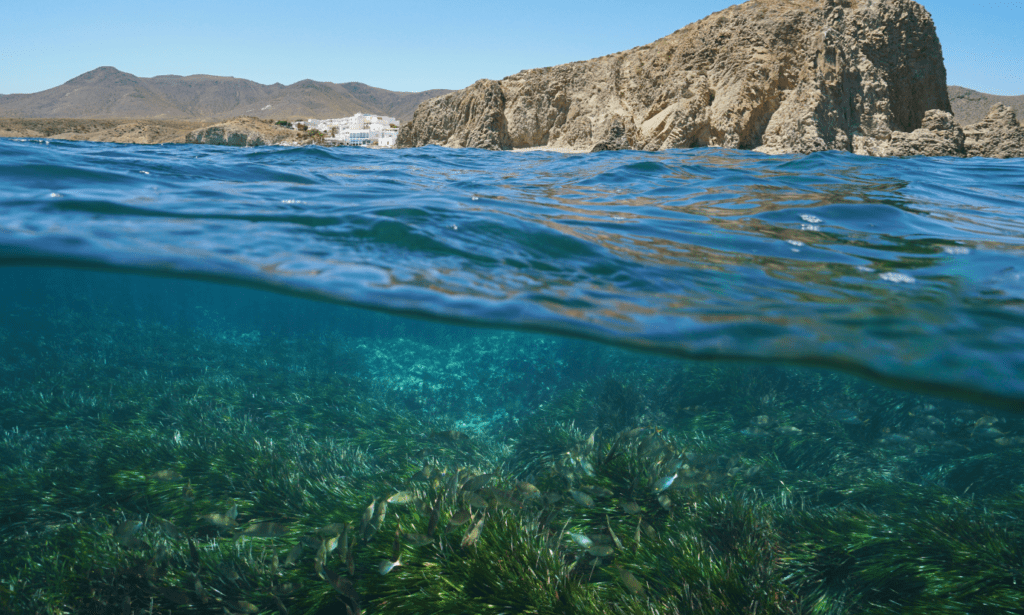
Seagrass along the coast of Spain.

Why are seagrasses threatened? 

According to one report, since 1990, there is a 7% decline in seagrass cover area globally per year, which is equivalent to a football field of seagrass every 30 minutes.  

The main threats to seagrasses are: 

– Climate Change (for example, heat stress through increases in temperature) 
– Pollution (urban, industrial, and agricultural run-off) 
– Coastal Infrastructure Development (incl. dredging) 
– Overfishing (incl. bottom trawling), and  
– Boating Activities 

…but all hope is not lost! 

The role of policy is a crucial top-down approach to restore and protect seagrasses at a broader scale.  

With the widely accepted Global Biodiversity Framework, 30% of coastal and marine ecosystems need to be protected, including blue carbon ecosystems like seagrasses. Although, at present, mangroves and coral reefs are better protected under MPA’s than seagrasses.  

The variety of ecosystem services that seagrasses provide has resulted in increasing knowledge of their value in recent years. However, there are still large knowledge gaps among the general public. 

The best way to protect seagrasses is to understand them within local environments and manage threats effectively.

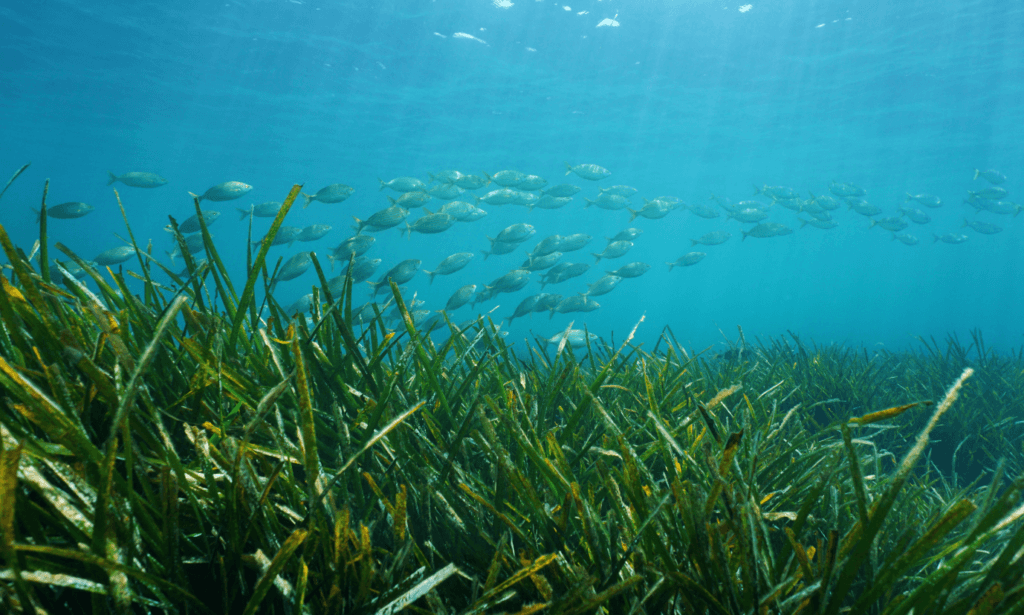
School of fish swimming near a seagrass meadow in the Ocean.

Restoration Spotlight: Seagrasses in the Eastern Shore of Virginia 

The Virginia Institute of Marine Science and The Nature Conservancy have been conducting an extensive seagrass meadow restoration for almost 20 years, creating 3,612 hectares of new seagrass beds.  

To achieve that, the team of researchers and volunteers had to actively plant more than 70 million seeds of eelgrass on a 200-hectare plot just off the southern end of Virginia’s Eastern Shore.

Within 10 years, the seagrasses covered an area that would naturally take over 100 years to grow. The scientists also noted increased water quality, nitrogen storage and carbon sequestration.  

This initiative offers a glimpse into the benefits of resilient seagrass meadows and its importance in addressing climate change.


Seagrasses can help us solve our biggest environmental challenges.

They purify water, they protect us from storms, they provide food to hundreds of millions of people, they support rich biodiversity, and they efficiently store carbon.

In light of everything seagrasses do for people and nature, protecting and restoring them is vital.”  


Ronald Jumeau 
Permanent Representative to the United Nations and Ambassador for Climate Change 
Republic of Seychelles 

What can I do to help protect seagrasses? 

  1. Be a considerate tourist –  

Exploring tourist-friendly seagrass meadows can be a great way to develop an appreciation for these wonderful plants and all that they hold. But please don’t pluck them or hurt any marine species when visiting.

  1. Become a citizen scientist –  

Furthering scientific knowledge is not a one-person effort and so, public participation in citizen science projects are a fantastic way to contribute. 

The SeagrassSpotter project has been created by Project Seagrass in association with Cardiff University and Swansea University. Using SeagrassSpotter, you can help locate seagrasses which will be used by scientists for research including the prediction of locations for restoration. 

The Hidden Price of Feeding Langkawi’s Eagles

Subscribe

Monthly: Impact in your inbox.

OceanGeneration-Join

Our Impact: Understanding the 5 Ocean Threats

The Ocean is a flourishing ecosystem that can maintain itself.

But our actions have been negatively impacting the Ocean for decades, at a rate our Ocean cannot keep up with. 

There was a time when we thought the Ocean was endless. So, we treated it that way: Taking what we wanted, when we wanted, in whatever quantity we liked.  

It took us far too long to realise the many ways we threaten our Ocean. But now we know better.

Our Ocean is one of our planet’s most valuable ecosystems.

The Ocean provides over 50% of the world’s oxygen, captures 30% of human-made carbon emissions, and mitigates the climate crisis. The bottom line: We need a healthy Ocean for a healthy planet. 

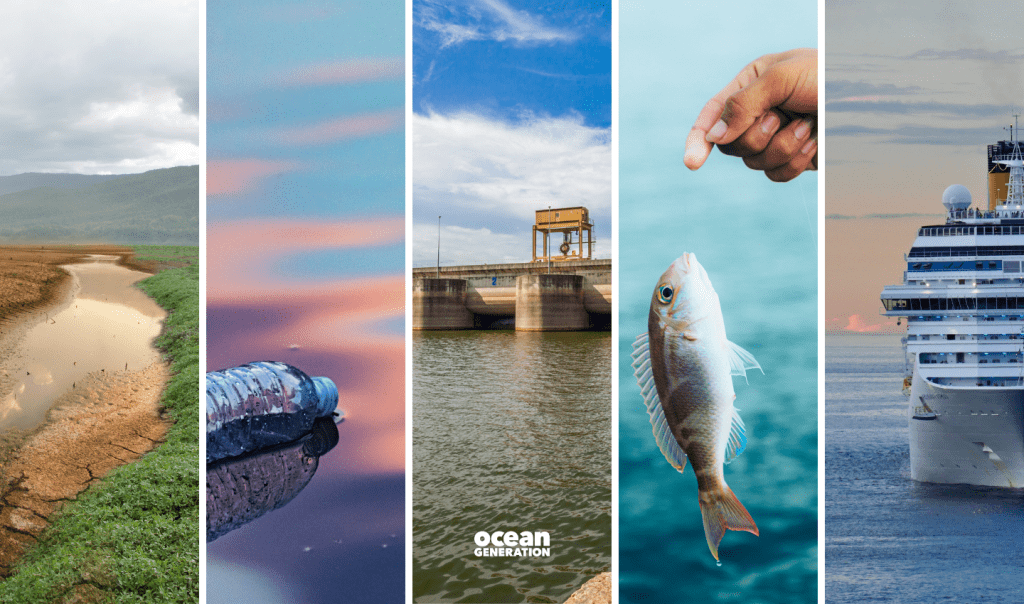
What are the 5 key ways human activity impacts the Ocean? Ocean Generation is sharing the human threats our Ocean faces. 5 images side by side represent the threats: a dry landscape for climate change; a plastic bottle in the Ocean for pollution; a dam wall for costal infrastructure; a caught fish for resource extraction; and a cruise ship for daily Ocean use.

How does human activity threaten the Ocean?

Our Impact work explores the 5 key ways human actions negatively impact the Ocean.

Many of the underlying actions causing these Ocean Threats have existed throughout the course of human history – but have become unsustainable more recently because of rapid population growth and the consequent scale of our impact on the marine environment.  

What human activity impacts the Ocean the worst?

There are no known, credible, scientific classification of the severity of these Ocean threats. What does that mean – simply? We can’t tell you which of the five threaten the Ocean the worst.

But there’s no doubt that all of these Ocean threats are inter-related and can combine to have vast negative impacts on Ocean health, marine habitats and marine life which, in turn, pose serious threats to human health.

What are the 5 human-made Ocean threats?

1. Climate change: We can’t talk about climate change without the Ocean

It’s widely accepted that human actions are the primary drivers of climate change. The biggest culprit? Burning fossil fuels (for example, coal, oil and gas) to produce energy is the main cause of climate change.

Signs of climate change are all around us – and impossible to ignore. But too few of us understand the important role our Ocean plays in mitigating the climate crisis.

How does the Ocean mitigate climate change?

Our Ocean plays a fundamental role in regulating global temperatures, storing massive amounts of carbon, and capturing heat from the atmosphere.

Although the Ocean drastically mitigates climate change, it’s also impacted by climate change. These changes (like increased Ocean heat), have negative consequences on Ocean health and thus, all of us.

2. Pollution: It’s not just plastic polluting our Ocean. 

Plastic is, by far, the most common and impacting pollutant in the Ocean.

80% of plastic in our Ocean comes from the land and most of that is made up of single-use plastic items; products we use once, then throw away. And that’s the biggest problem with plastic: there is no “away.”

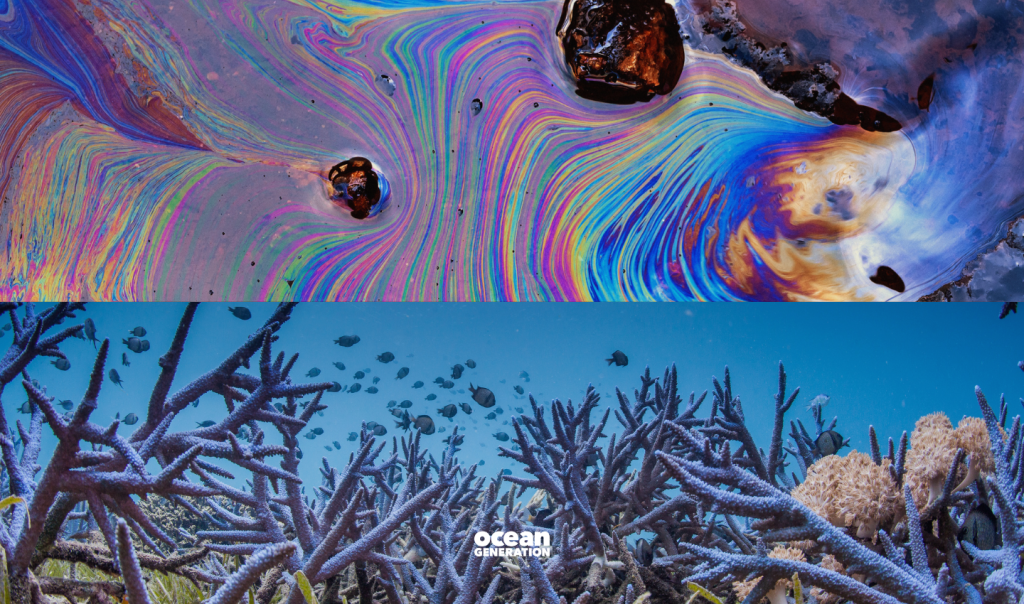
This Ocean Generation above and below image shows human impact on the Ocean in the top half of the image with an oil spill in the Ocean and in the bottom half, the flourishing Ocean. An array of fish are swimming among bright blue corals.

3. Coastal Infrastructure Development: Why do we need to protect our coastlines?


2.5 billion people live within 100km from our Ocean.

Coastal regions are densely populated areas with increasing rates of population growth (and who can blame them? Living near the Ocean has numerous benefits.)

But rapid urbanisation of our coastlines has negative impacts on the environment – many of which are linked to climate change.

With higher frequencies of natural weather events (like cyclones and hurricanes), erosion and land loss, and flooding, coastal regions have never been this vulnerable.

4. Resource Extraction: What resources do we extract from the Ocean? 

Around 3 billion people rely on the Ocean for their primary source of protein: Seafood.

Seafood is the most notable thing we extract from the Ocean but it’s not the only thing. We also extract minerals, fossil fuels, and plants from the Ocean.

Our Ocean – as incredible as it is – is not limitless.

We must recognise the limits of Ocean resources and control the quantity and frequency at which we extract resources from the Ocean; allowing it time to replenish and regenerate. Otherwise, we will reach a point of no return.

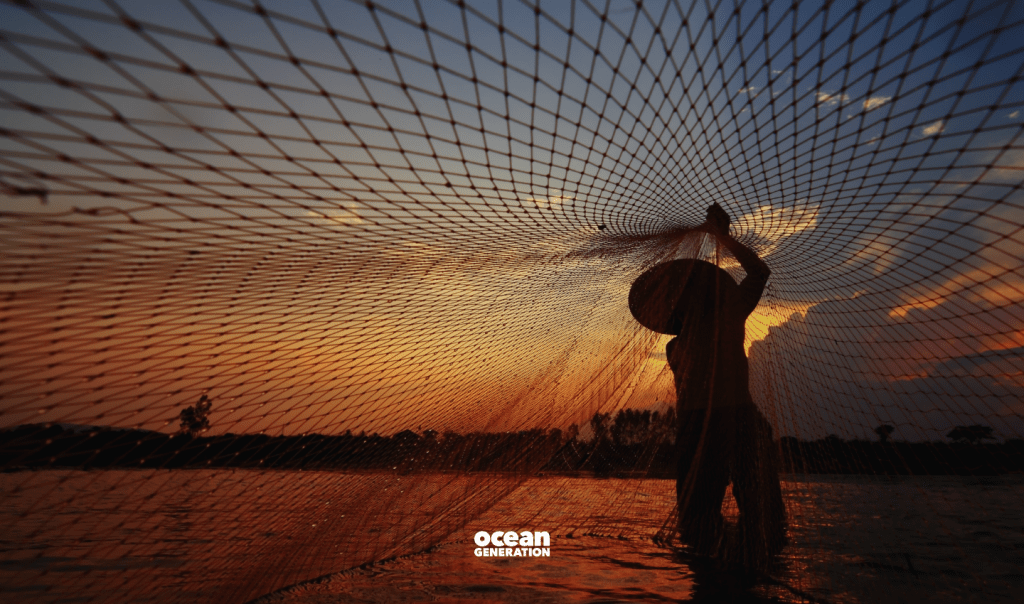
A fisherman, standing knee deep in the Ocean, is holding up a fishing net. It is sunset and only the outline of the fisherman and his hat can be seen against the yellow sky. In this blog, Ocean Generation is sharing the negative impact of resource extraction on the Ocean.

5. Daily Ocean Use: What’s the impact of daily human actions on the Ocean?

Humans work hard and always have something on the go. The Ocean is no different.

All around the world, our Ocean is in use every day. From cargo shipping for trade, passenger traffic for travel to commercial fishing and research – the Ocean is used widely. How we make use of the Ocean is what’s important.

We need to turn to using the Ocean sustainably to protect the awe-inspiring ecosystem that supports all life on Earth. 

What can I do to protect our blue planet?

Understanding the 5 main threats our Ocean faces is step one. Step two is doing something about them. Some of these Ocean Threats can feel overwhelming – but they don’t have to be.

Working together is humanity’s superpower. And it remains our best tool for solving the world’s biggest problems, and simultaneously, restoring our Ocean.

Three ways you can take environmental action – with a focus on the Ocean – right now:

  1. Subscribe to our newsletter to receive monthly impact in your inbox; explore our Science Hub; or visit our Instagram page for bite-size environmental education.

  2. Recognise that you don’t have to be perfect.

    Ask yourself: What can I do right now to decrease my carbon footprint? What can I do to be a voice for our Ocean and empower others to do the same?

  3. 20 actions to reduce and reuse plastic.

Subscribe for simple Ocean Science and pop-culture stories

* indicates required

View previous campaigns.

Ocean Generation will use the information provided here to be in touch with updates and marketing.

You can unsubscribe at any time.

The Hidden Price of Feeding Langkawi’s Eagles

Subscribe

Monthly: Impact in your inbox.

OceanGeneration-Join

Our Impact: How does climate change impact the Ocean?

This is part of our Four Pillars work that highlights the importance of the Ocean, the human-made threats it faces, and the solutions our Ocean provides.

Climate change impacts everything – including our Ocean

With rising temperatures and melting ice sheets, climate change has had a massive impact on the Ocean.

The changing composition of gases in the atmosphere is altering life as we know it. We must not allow this catastrophe to unravel any further.

But how did we get here?

The emerging issue of ‘climate change

Over the last century, many scientists have raised their concerns about global warming while the fossil fuel industry was booming.

Now, we know that these concerns have been validated many times over, through computer simulations and direct observations (tree rings, ice cores, etc).

According to the Intergovernmental Panel on Climate Change (IPCC) it is now widely accepted that humans are the primary drivers of climate change, owing to the advent of burning fossil fuels.

What role does the Ocean play in the climate change conversation?

Our beloved recreational activities would not be possible without the Ocean

The Ocean helps regulate land temperature and drives global weather patterns.

It absorbs the sun’s heat, transferring it to the atmosphere and distributing it around the world, warming in the winter and cooling in the summer. In fact, more than 90% of the heat from global warming is stored in the Ocean acting as one of the most important carbon sinks on Earth.

The excess of emissions in the atmosphere has tampered with the Ocean’s capacity of storing it while still being able to thrive.

How can we understand the impact of climate change on the Ocean?

There are many indicators that help us understand the effects of climate change on the Ocean:

The leading climate change indicator in the Ocean: Sea level rise.

The rise in temperatures cause water to expand and ice sheets to melt. This results in sea level rise. Globally, the changes in sea levels are a leading indicator of climate change.

People using boats in response to flooding.

During the 21st century, the global mean sea level is likely to rise at least 30 cm even assuming more moderate greenhouse gas emissions in the coming decades.

Even if adaptive measures are in place, global flood losses for coastal cities are predicted to increase from $6 billion in 2005 to $1 trillion by 2050.

Global warming of 4°C by 2100 would lead to a median sea-level rise of nearly 1 metre above the 1980 to 1999 levels. At today’s population distribution, that would threaten the lives and livelihoods of between 150 to 250 million people.

It goes without saying that the effects of sea level rise are already being felt in many parts of the world.

In Indonesia, 75% of the country’s cities are in coastal areas. With the country being prone to frequent natural disasters like flooding, tornadoes, and landslides, over 110 million people in the cities are exposed to the devastating impacts of climate change.

These impacts can often be felt alongside disruptions to agriculture (like rice fields), water resources (potential salinisation of ground water) and other resources.

Coral Bleaching

What is Ocean acidification?

As the Ocean gets warmer, we observe changes in the chemistry of the water. The reduced pH level of water has led to Ocean acidification, forming carbonic acid.

Global surface Ocean pH has declined on average by approximately 0.1 since the Industrial Revolution, with an increase in acidity of about 30%. 

This is making it harder for marine organisms (including larvae) to develop calcium carbonate shells and skeletons, increasing their vulnerability and harming their overall health. This invariably impacts food security due to the adverse effects on fisheries and aquaculture.

What’s the harm of Ocean deoxygenation?

Unfortunately, the warming Ocean also raises the oxygen demand of living organisms and as a result, there is less oxygen available for marine life.

Ocean oxygen levels have decreased by 2% in the past five decades and are expected to reduce a further 3–4% by 2100.

Oxygen depletion is one of the most serious threats to the coastal marine ecosystem including coral reefs and sea grass meadows, reducing biodiversity, limiting both the production of oxygen and sequestration of atmospheric CO2, and increasing the risk of coastal flooding.

A flooded coastal area.

The Ocean covers 70% of our planet – but it’s still impacted by climate change.

Here is a good introductory video outlining this topic:  

YouTube player
[Credit: Global Weirding with Katherine Hayhoe, YouTube]

Woah, is the fate of our Ocean already sealed?

Fortunately, not yet.

We are alive in a crucial period of time, with the window of action and opportunity closing in on us.

The IPCC’s modelling suggests that the only way to limit global warming to 1.5C is we take immediate action after 2020, which is, well, now.


In this scenario, emissions are projected to peak between 2020-2025. This means that we need to reduce emissions by 43% by 2030, and 84% by 2050.

Apart from phasing out fossil fuels, reducing global carbon and methane emissions is a key solution to slow down Ocean warming. Increasing Marine Protected Areas (MPA’s) is another way of protecting large areas of the Ocean from further exploitation. We must also safeguard and restore coastal ecosystems which will benefit biodiversity and humans alike.

A healthy Ocean is key to achieving our climate goals.

If the Ocean thrives, so do we.

The Hidden Price of Feeding Langkawi’s Eagles

Subscribe

Monthly: Impact in your inbox.

OceanGeneration-Join

Mangrove Trees: A climate change solution

Along the fringes of coastlines, where land and Ocean meet, grow the world’s mighty mangrove trees.

These resilient trees grow along shorelines, with their complex root networks stretching deep into the mud. These coastal ecosystems are found on every continent except Antartica.

Although mangroves may not look like much, they have unique adaptations that allow them to live in saltwater environments and provide crucial habitats for many marine species. 

Why are mangrove trees an Ocean solution 

Mangrove ecosystems are a potent, nature-based solution tackling Ocean threats like climate change and loss of biodiversity.

They are the only forests situated at the confluence of land and sea in the world’s subtropics and tropics and are often called “coastal woodlands”, “tidal forests” and “mangrove forests.”

So, what makes mangroves a climate solution? 

Here are 5 ways mangroves trees tackle climate change:

Mangroves are carbon sinks 

Mangrove trees are highly effective carbon sinks. They sequester (the process of removing carbon from the atmosphere) 3 – 5 times more carbon per hectare than rainforests and they store up to 5 times more carbon per equivalent area.  

Carbon stored in mangrove forests is considered blue carbon as it’s stored on the coast.

“The soil of mangrove forests alone can hold more than two years of global emissions – that’s 22 billion tons of carbon,” according to Project Drawdown. This is why they are a huge Climate Action solution!    

Mangrove forests are biodiversity hotspots 

There are up to 25 more species of fish and other wildlife in mangroves than in areas where they have been cut down.

Mangroves also provide nesting and breeding habitats for fish and shellfish, birds and sea turtles. 

How do mangrove trees improve food security

For people living in coastal regions, healthy mangrove forests provide a healthy ecosystem from which to fish – and healthy farmland from which to grow crops and other produce.   

Mangroves are storm protectors 

Mangroves act as natural protection for coastal communities as they protect them from increased storm surges, flooding and hurricanes.  

Your coastal water quality ensurer 

The heavy network of mangrove roots helps filter sediments, heavy metals and other pollutants. This prevents the contamination of waterways and preserves delicate habitats like coral reefs and seagrass beds.  

We’re losing mangrove forests at an alarming rate 

Mangroves are some of the world’s most valuable coastal ecosystems and yet we’ve lost around 50% of Earth’s mangroves in the past 50 years alone. 

If this trajectory continues, we could lose all mangroves within the next 100 years.

By destroying mangrove habitats we not only take away a source of carbon sequestration, we also release all the carbon stored back into the atmosphere.   

Take climate action: Plant a mangrove

At Ocean Generation, we recognise the that planting mangrove trees is a simple and effective step to take Ocean action – and it’s accessible to everyone.  

Introducing: The Mangrove Mandate

We’re partnering with local experts to restore mangrove forests in Madagascar. Not only does it give you a chance to take Ocean action at the click of a button but it embodies the way we see the Ocean: as part of the solution; not a victim to the world’s problems.

“How can I plant a mangrove tree?”

  • Follow Ocean Generation on Instagram 
  • For every follow, we’ll plant a Mangrove tree in your name.

We can regenerate a Madagascar Mangrove together!

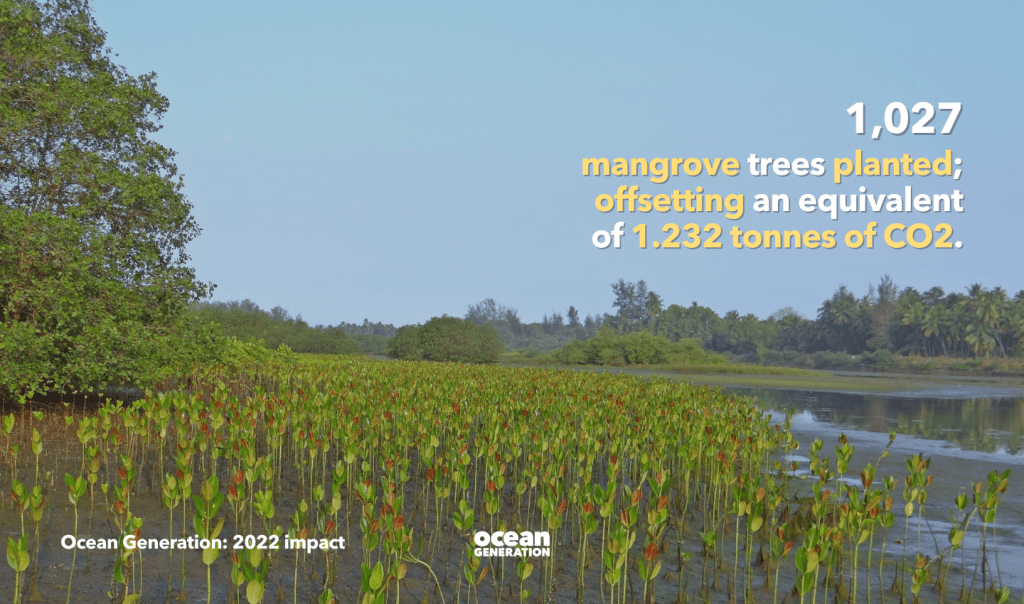
Ocean Generation is the Ocean charity that teaches people about the Ocean and helps them take action to mitigate the climate crisis. In 2022, Ocean Generation planted 1,027 mangrove trees to sequester carbon and protect the planet.

Terms and Conditions

Want to know more ways you can take Ocean action?

Join the Ocean Generation for monthly Ocean news, stories, and ways you can restore the Ocean – backed by science and driven by storytelling.

Subscribe for simple Ocean Science and pop-culture stories

* indicates required

View previous campaigns.

Ocean Generation will use the information provided here to be in touch with updates and marketing.

You can unsubscribe at any time.

The Hidden Price of Feeding Langkawi’s Eagles

Subscribe

Monthly: Impact in your inbox.

OceanGeneration-Join