What is Ocean circulation – and why does it matter?

What is Ocean circulation, and why does it mater? Explained by Ocean Generation

The Ocean is in constant motion.

Why does Ocean water move? Think about it. What do you need to move the Ocean? What is Ocean circulation, and why does it matter? 

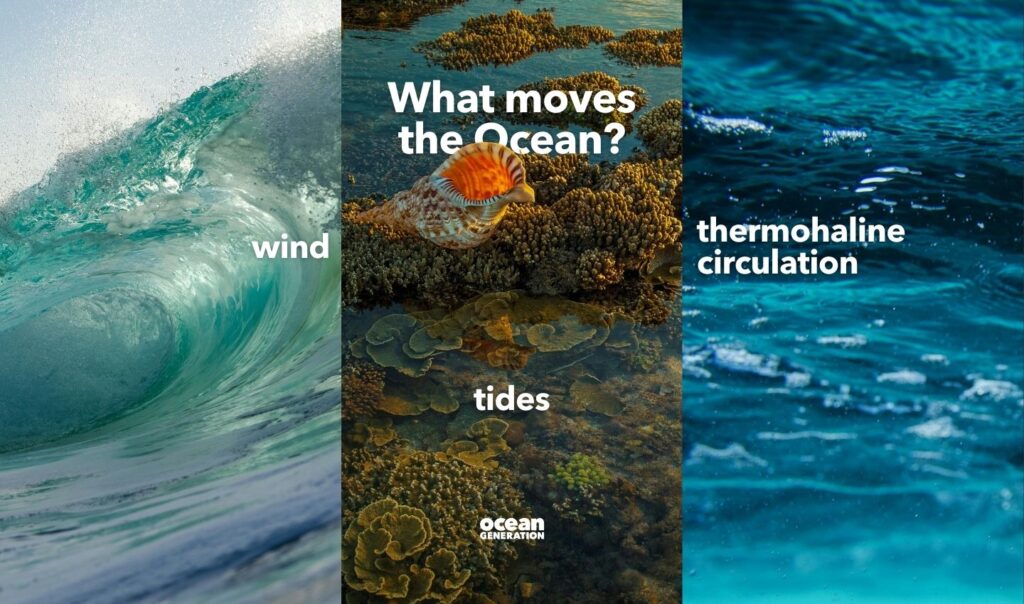
There are three drivers of Ocean currents. 

The most visible driver of Ocean circulation is the wind. Big storms can whip up the waves, send them crashing into the rocks or barrelling over surfers. Waves can seem like the Ocean is moving a lot, but the water itself is moving mostly in a circular motion. We explain more in our article on the motion of the Ocean.

Prevailing winds can push the waters below in a consistent direction, such as the Gulf Stream, which does drive larger scale circulation. But usually, the wind is only moving the surface, and the Ocean is a lot deeper than the surface.  

Next comes the tides. The moon, with a little help from the Sun, shifts the Ocean back and forth, changing sea level by metres in some places. The Bay of Fundy in Canada has the largest tidal range in the world, with almost 12m difference between high and low tide.  

However, the tides are always changing. If tides were the only thing responsible for moving the water, then the same water would just be moved in and out. Out in the middle of the Ocean, the water would travel in a big vertical circle, like a giant Ferris wheel. To move the Ocean properly, we need something else.  

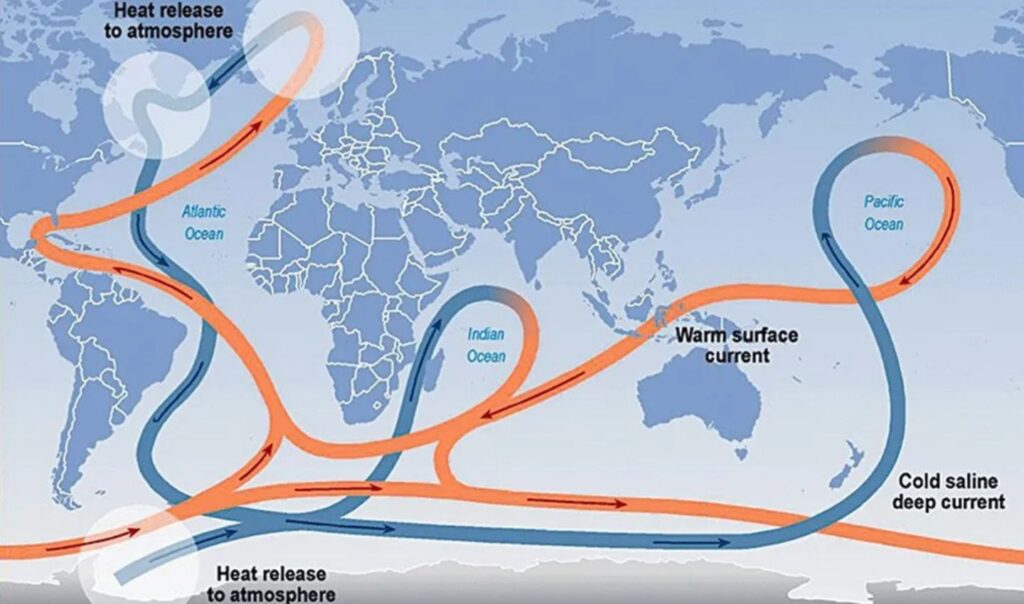
The third driver of global Oceanic currents is more understated than crashing waves or retreating seas. It takes thousands of years to move water through the deep Ocean, from pole to equator to pole. It’s known as the Ocean Conveyor, or Thermohaline Circulation, and the polar Ocean is a focal point for its activity.  

What moves the Ocean? Tides, wind and the thermohaline circulation explained.

Why is Ocean circulation important? 

This movement of water is the heartbeat of the Ocean. It carries oxygen-rich waters to the depths, and where it returns to the surface (known as upwelling), the nutrients it brings with it create the richest waters on the planet.  

The Ocean is also moving heat and carbon dioxide. It has absorbed approximately 25% of carbon dioxide emissions since the 1960s and over 90% of the excess heat trapped by greenhouse gases has been assimilated into our Ocean.  

The Ocean can circulate and ‘drop off’ heat and carbon dioxide in the deep. If the circulation of the Ocean slows, the surface Ocean will get hotter and more acidic. With less circulation, the Ocean’s ability to trap and store two major drivers of climate change suffers. 

Global Ocean Conveyor Belt
IPCC via Smithsonian

What is Thermohaline Circulation

Thermohaline circulation is the slow, powerful pump behind Ocean circulation, the main driver of water movement in the Ocean. The name sounds complicated, but it tells us exactly what we are talking about.  

Let’s break it down; Thermo-: we are talking about temperature; -haline about salinity, or saltiness. These two characteristics of seawater influence global climate and biological richness.  

Temperature and saltiness have influence because they change how dense Ocean water is. Cold water is more dense than warm water, and salty water is more dense than freshwater. If water is denser, it will sink below less dense water.  

These simple differences drive a slow, unseen conveyor belt from the poles to the equator and back again. It would take over 1,000 years for one drop of water to complete the whole Ocean circulation.  

What will the cold, salty water now disappearing into the depths in the North Atlantic see when it re-surfaces in the Pacific in 3026? 

Thermohaline circulation, explained by Ocean Generation.

Why are the Poles important for Ocean circulation? 

If the poles are known for one thing, it is that they are cold. So cold in fact, they can chill seawater to the point of freezing (which happens around –1.8 to -2 degrees C / 28.76- 28.4 °F, lower than normal water due to the salt content).  

When seawater freezes, it leaves its salt behind. As ice forms, the water left behind gets more salty, which lowers the temperature it will freeze at. More salt = lower freezing temperature. Very salty, very cold water is very dense, and will sink below other seawater.  

This downward movement is known as downwelling. Downwelling pushes water along the depths and pulls water across the surface. This is the pump that moves the Ocean. 

So begins the Ocean conveyor. 

When does cold water become deadly

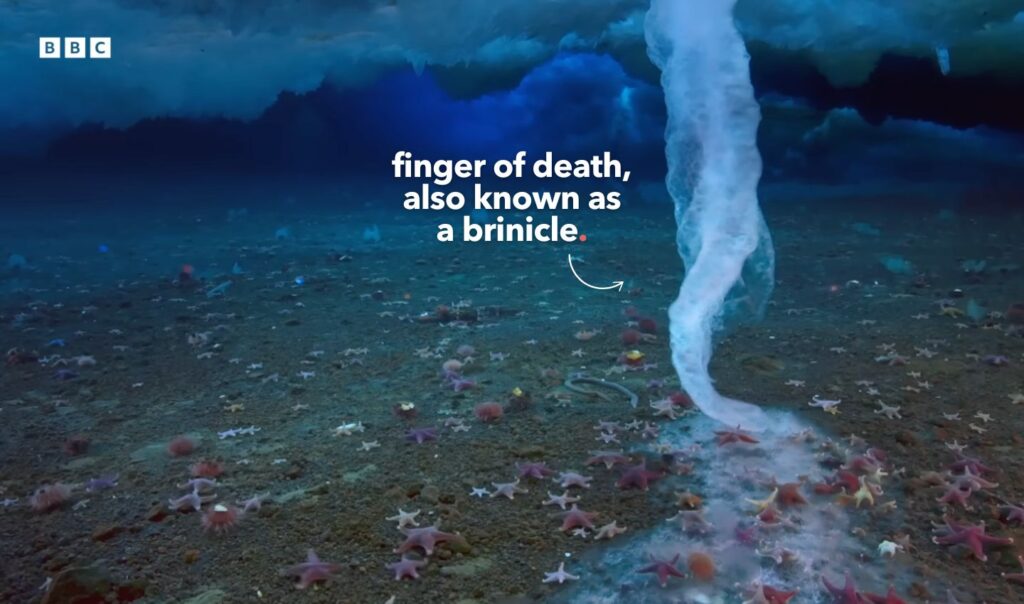
Maybe you didn’t think water movement could be exciting. Maybe you haven’t heard of the finger of death.  

We know as sea ice forms, it “spits out” salt, creating channels of brine (very salty water), which is colder than freezing. This brine travels down through channels in the ice, collects more salt and cools further.  

It reaches the bottom of the ice super salty and super cold. It is so cold it freezes the sea water it touches below the ice, creating beautiful brinicles.  

The brine is still too salty to freeze, so travels through the centre of the brinicle, growing it. If this is in a shallow area, the brine could reach the seabed before warming and diluting enough.  

This ethereal beauty then becomes a sinister threat. It is so cold it freezes anything it touches. The sea stars, brittle stars, sea cucumbers living below the ice are at the mercy of the finger of death.  

Most Ocean movement isn’t as dramatic as the finger of death, but it runs on the same mechanisms.  

Is Ocean circulation slowing down

Ocean circulation relies on the cooling and sinking of water at the poles. As the release of greenhouse gases raises the temperature of our planet, especially at our poles, the water is not getting as cold.  

We are seeing less sea ice form and the water has more fresh meltwater diluting it. The water is getting less cold, and less salty. Both mean the surface water is less dense, meaning it will sink less. Is the circulation of the Ocean slowing? 

One way to study if it is slowing is by looking at how old the water is – older water means slower circulation. 

How do you measure how old water is

At the surface, chemicals and elements are constantly being exchanged between the air and the Ocean. Scientists can look at the chemical composition of the water, looking for indicators for when the water was last in contact with the surface.  

Using Carbon-14 as a time marker 

Carbon-14 is the usual way, a radioactive isotope of carbon that is used in radiocarbon dating methods from geology to archaeology. It’s also called carbon dating.  

How does carbon dating work?  

Carbon-14 is an isotope (type of atom) that decays slowly. Half of it will decay every 5700 years or so, known as the half-life.  

Measuring the amounts of Carbon-14 can be like reading a timer. Carbon-14 is created naturally when cosmic rays hit our atmosphere, but in much larger amounts by nuclear weapons – levels doubled in the 1950s and 1960s.  

This molecular ‘shadow’ has been found in marine animals in the Mariana Trench, showing just how far human impacts reach. 

Track the amount of Carbon-14 and you can approximate when it was last in contact with the atmosphere, which gauges age.

Measuring human-made chemicals 

Industrial chemicals such as CFC-12 and sulphur hexafluoride are other chemical clues used to age water. Chlorofluorocarbons (CFCs) were widely used in refrigerants and spray cans until they were identified as depleting the ozone layer.  

Through global cooperation and effective science, the Montreal Protocol was introduced, preventing the use of CFCs and allowing the ozone layer to recover (learn more about international treaties here). The presence of CFCs can indicate exactly when that water is from.  

Using oxygen to estimate water’s age 

We can also look at the Apparent Oxygen Utilisation. The principle is that deep water can’t have oxygen added, so the older the water, the more oxygen will be used up from it, meaning older water has less oxygen.  

Despite fluctuations caused by other Ocean movers (e.g. the wind), the waters in the deep North Atlantic are getting older, implying the water is not being replenished as quickly, and therefore that the circulation is slowing. The same is happening at the other pole.  

The Ocean is made up of many different ‘bodies’ of water, with different characteristics and names. North Atlantic Deep Water is formed in the Arctic by cold, salty water sinking and flowing south. This water travels all the way to the Southern Ocean, where it meets another body of water.  

Antarctic Bottom Water is formed at the South Pole and is the coldest and the densest of them all, the real powerhouse of Ocean circulation. But it is warming and there is less of it. The frost-fuelled engine is slowing. 

What would a broken Ocean conveyor belt mean? Explained by Ocean Generation

What would a broken Ocean conveyor mean? 

The Ocean would suffer.  

Deep sea creatures relying on delivery of oxygen and nutrients would be left waiting, as deoxygenated areas grow. The same would happen for surface species that need the upwelling of nutrients from the deep.  

If Ocean circulation stopped, there would be dead zones without oxygen in the deep and starved surfaces with no nutrients to support phytoplankton.  

It would impact life on land too. If the circulation of the Ocean slows, global climates will shift. Increased storm intensity, more extreme weather patterns and changes to rainfall. Europe could face far cooler temperatures as the tropical water that brings warmth from the equator slows.  

That is quite a big if, and fortunately, the Ocean is resilient. New work has shown circulation has slowed in the 2010s and 2020s by less than in the 2000s. This has been attributed to natural variability pushing against the human-caused weakening.  

Every reduction in greenhouse gases, every degree of warming prevented, reduces the stress on our Poles and on our Ocean circulation. Keeping our poles cool keeps our Ocean moving.  

Keeping our poles cool keeps our Ocean moving. Explained by Ocean Generation.

Narwhals and Unicorns: How the magic of the Arctic has changed

Subscribe

Monthly: Impact in your inbox.

OceanGeneration-Join

Why krill matter: Krill fishing and conservation in the Southern Ocean

Why krill matter: fishing and conservation in the Southern Ocean.

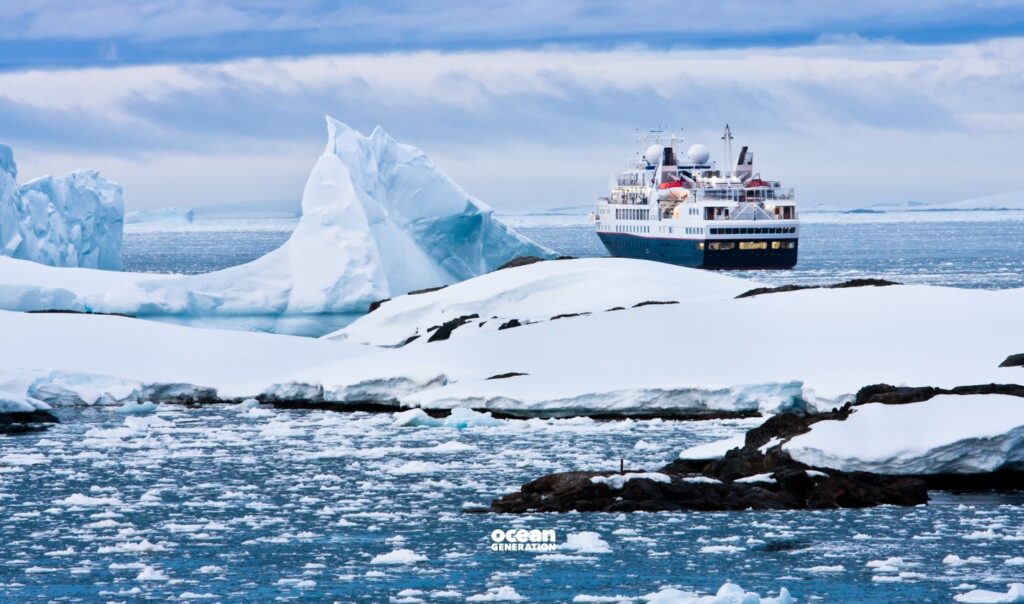
The Southern Ocean is one of the most remote places on the planet. 

It was only in 1911 that the first human, Roald Amundsen, reached the South Pole. For context, the first powered aircraft, the Wright Flyer, took to the air in 1903. Humanity conquered the skies before it managed the southern continent. The waters here are cold, barely above freezing, yet full of life. These are some of the richest waters in the world.  

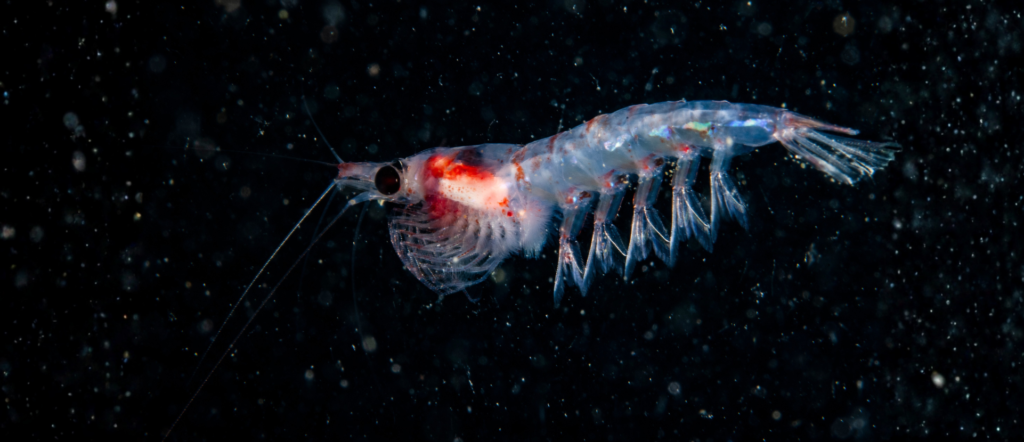
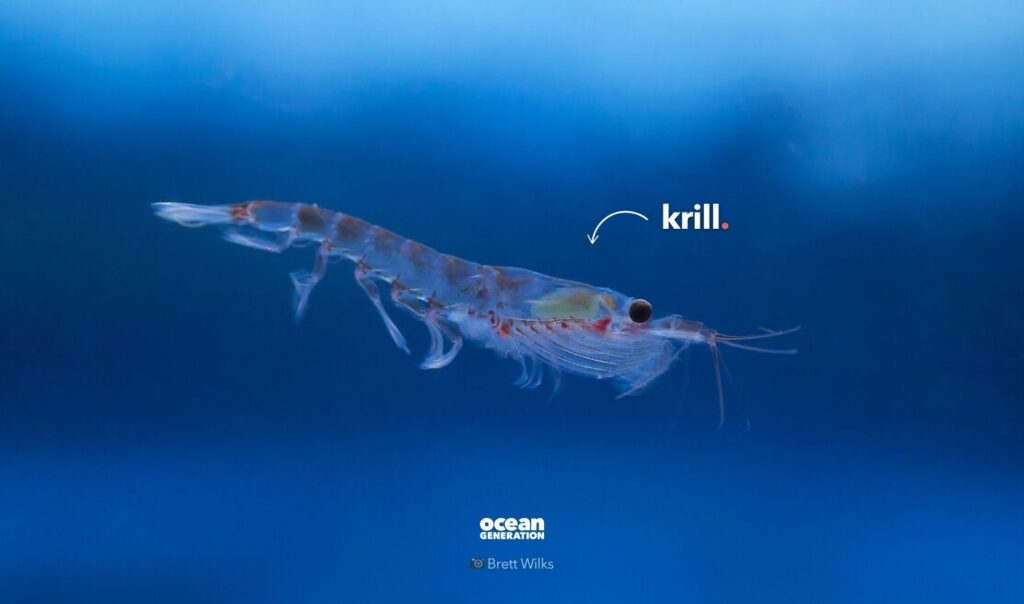
The main character is just 6cm long. Antarctic krill (Euphausia superba) are small, shrimp-like crustaceans. They snack on the phytoplankton that thrives in the long hours of summer sunlight, trapping and storing similar amounts of carbon to seagrass and mangroves.  

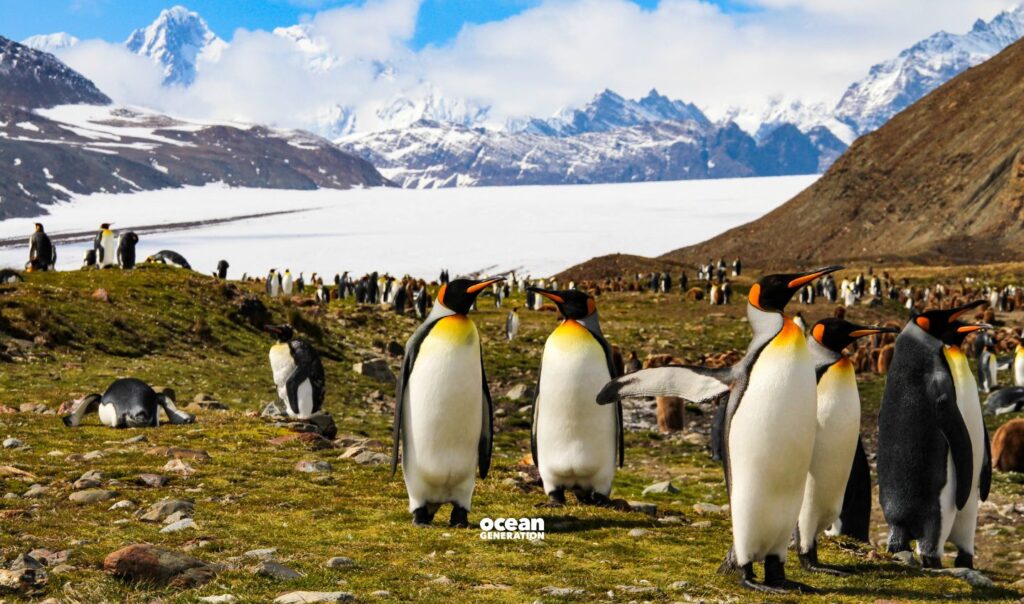
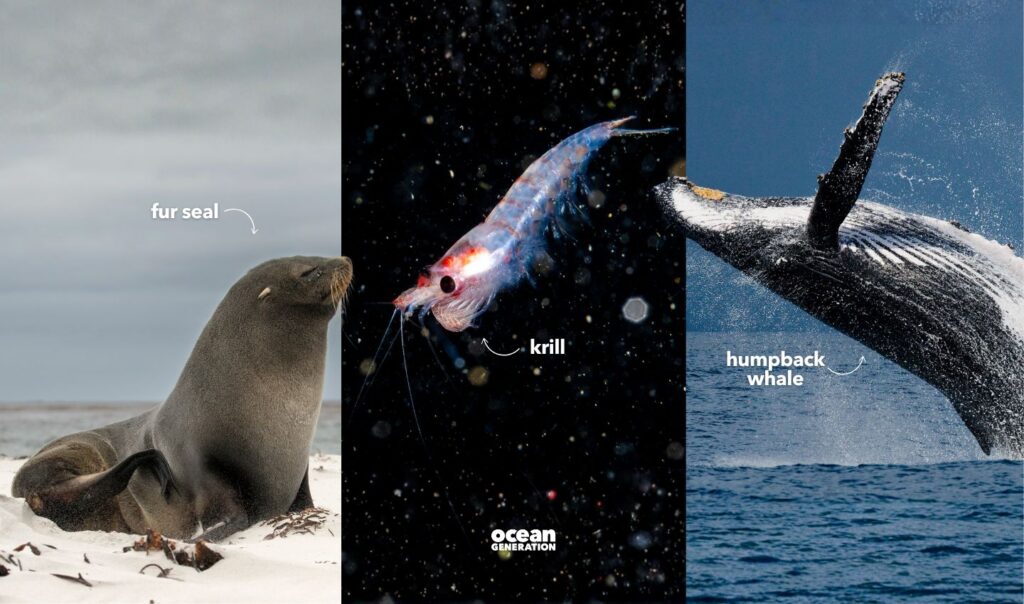
Their importance lies in their numbers: krill swarms are vast. The rust-coloured clouds are filled with billions of individuals and can be visible from space. They sustain most of the life around Antarctica. Penguins, seals, whales, fish and sharks all rely on this buffet: krill are a keystone species. More recently, people have joined the party.

Krill fishing has become a divisive topic, being featured in David Attenborough’s Ocean, calls to ban it being promoted at the United Nations Ocean Conference and some retailers withdrawing krill products from their shelves. Meanwhile, countries have applied to increase the catch limits and the amounts of krill being fished are higher than ever.   

To understand where we are going, first we can look at where we have been. Why are krill important? What is our history in the Southern Ocean? What is our future? 

Antarctic krill are small shrimp-like crustaceans. Posted by Ocean Generation.
Photo credit: Brett Wilks

How did we get here? 

In 1775, Captain James Cook returned to England from a voyage around the world, in which he had searched for new lands. He found there wasn’t a new continent in the Pacific Ocean (at least not where one was predicted to be) and hypothesised on the existence of Antarctic land behind the ice (which he was correct about).  

He had discovered some land on his travels: an island populated by seals and penguins, which was named ‘Isle of Georgia’ in honour of King George III of England. We know it now as South Georgia. 

Sealing and whaling in the Southern Ocean 

The element of Cook’s report that got attention was the abundance of fur seals on South Georgia and neighbouring islands. These pinnipeds were highly sought after, and between 1778 and 1822 an estimated 1.2 million fur seals were killed for their pelts. The species was almost completely wiped out on South Georgia and the islands.  

The rise of industrial whaling then turned focus on to the waters of the Southern Ocean around South Georgia. Factory ships and explosive harpoons reduced the great whales to 18% of their original population. 5% of blue whales were left, and just 3% of humpback whales survived. When the last two whaling stations closed on South Georgia in 1965, 175,250 whales had been killed in those waters.   

South Georgia, Antarctica. Posted by Ocean Generation.

When did krill fishing start? 

Industrial fishing had been largely unmanaged, and everyone raced to benefit from the natural resources the Southern Ocean had to offer. One by one the marine species of the south had been targeted to great effect, and populations crashed. The focus then shifted to krill.  

Industrial fishing for krill in the Southern Ocean increased through the 1960s and 1970s. As the species that formed the foundation of the ecosystem, the alarm bells rang, loud, at the prospect of the krill suffering the same fate as the seals and the whales.  

Why are krill important

Krill are a keystone species 

The loss of krill would be disastrous for many different species. Whales, seals, penguins and fish are all krill predators. Less krill means less food for these species.  

Southern Right whale mothers have shown a decrease in body condition over the past 40 years, suggesting ecological strain on an animal heavily reliant on Antarctic krill.  

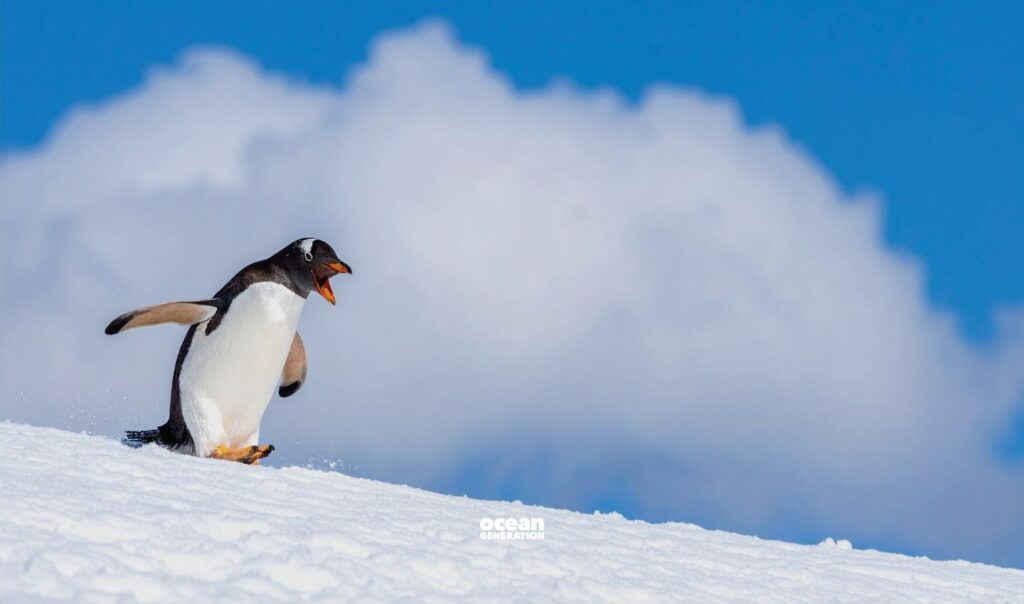
The population of krill has been linked with Adelie and chinstrap penguin numbers – when there is less krill, the penguin populations decrease.  And the fur seals, populations freshly rebounded from the hunting of the nineteenth century, are showing declines due to krill availability

Without krill, life in the Southern Ocean could collapse.   

To relay it in economic terms, krill are a vital piece of an ecosystem that provides, conservatively, $180 billion annually in ecosystem services – about 70% of New Zealands GDP in 2024.  

Krill are climate champions 

It isn’t just the animals in the Southern Ocean that depend on these. Krill are big players in the balancing of our atmosphere. They trap (sequester) a lot of carbon.  

As phytoplankton photosynthesise, they take in carbon dioxide. When they are eaten by krill, the krill take on that carbon, some of which is then… dropped off. Krill faecal pellets (poo) alone are estimated to sequester 20 million tonnes of carbon dioxide per year. Depending on the price of carbon, this is worth between $4 and $46 billion. 

Marshes, mangroves and sea grass are estimated to absorb 13, 24 and 44 million tonnes per year respectively, so when you add in the extras of krill moults (20 million tonnes) and migration (26 million tonnes), as the researchers say: “it is likely that Antarctic krill is amongst the world’s most important carbon-storing organisms.” 

How is krill fishing managed in the Southern Ocean? Explained by Ocean Generation, leaders in Ocean education.

How is krill fishing managed in the Southern Ocean? 

Those alarm bells over the fishing of krill led to the creation of the Commission for the Conservation of Antarctic Marine Living Resources (CCAMLR). It was formed in 1980 and entered force in 1982.  

The CCAMLR is made up of 27 member states (as of January 2026), with a further 10 ‘Acceding’ states – that support but don’t contribute to the budget or take part in decision making. 

The stated aim: to protect and conserve the ecosystem of the Southern Ocean. Article II of the convention states:  

  • The objective of this Convention is the conservation of Antarctic marine living resources. 
  • For the purposes of this Convention, the term ‘conservation’ includes rational use. 

This captures a crucial distinction: fishing is an element of conservation, rather than an adversary.  

How do you prevent overfishing

Catch Limits 

A general rule of thumb is that you can’t remove so much the population can’t sustain itself. That will vary with species – some animals reproduce a lot faster than others.  

Understanding how much of a resource there is, is fundamental to managing it. This is one of the biggest obstacles in the Ocean: the water means you can’t just see (sea). In a field you can see how many cows there are, not true of a shoal of fish.  

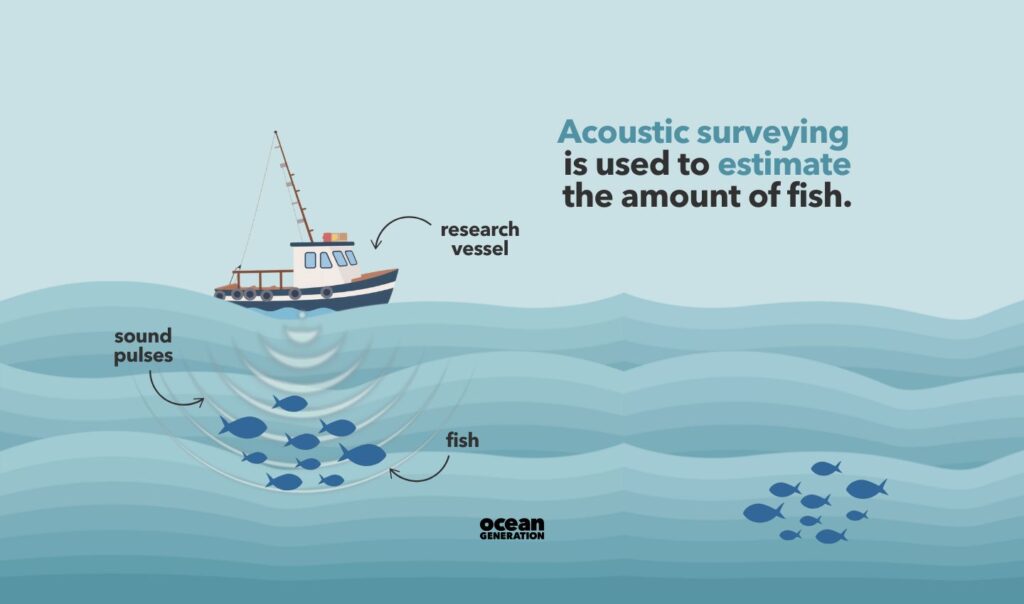
Acoustic surveying (using noise to find out what is there, like a bat) gives us estimates for the amount of krill. In short – a lot. We estimate there are over 300 million tonnes of Antarctic krill, roughly the same as the biomass of humans.  

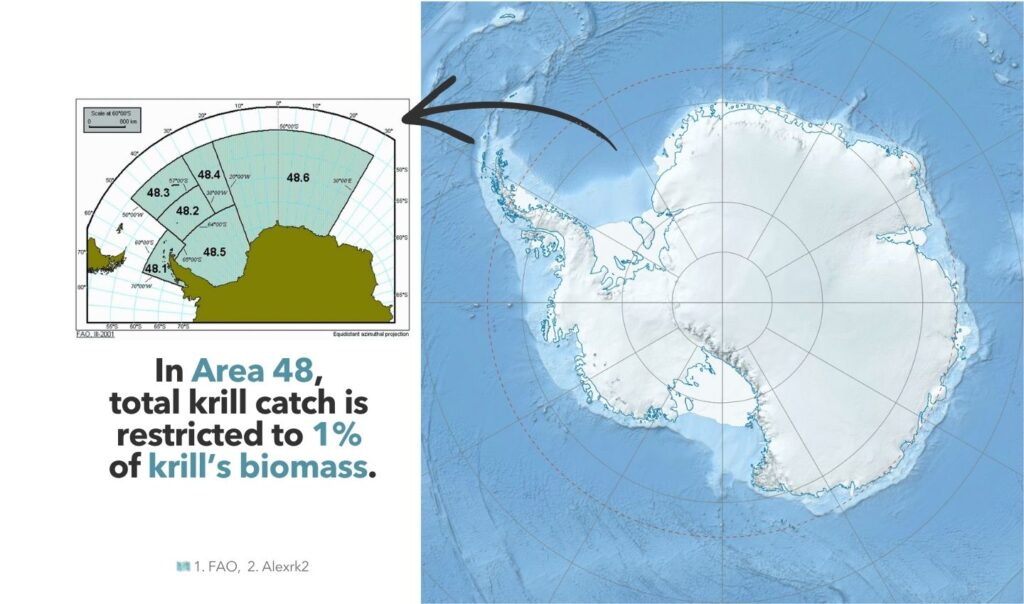
In the specific area targeted for krill fishing (known as Area 48), the biomass is estimated at 62 million tonnes (coincidentally, roughly the same mass as annual e-waste produced). So, CCAMLR adopted Conservation Measure 51-01. CM 51-01 set a trigger level at 1% of that biomass (620,000 tonnes) – when that is reached, all krill fishing stops, no questions asked. August 2025 was the first time this happened. 

How acoustic surveying works: Explained by Ocean Generation.
Marine Protected Areas 

Another tool in the toolbox is protected areas – designated places with specific rules. Choosing to avoid fishing in nursery areas, or places with high densities of predators, can ensure the health of the fishery.  

The Southern Ocean is home to the first MPA on the high-seas (outside of the jurisdiction of any one country) and the largest. The South Orkney Islands Southern Shelf MPA was created in 2009, and is a no-take zone protecting penguin foraging areas.  

The Ross Sea MPA was created in 2016 and is 2.09 million square kilometres, 72% of which is a no-take zone. The MPA has a controversial “sunset clause”, meaning the MPA will expire in 35 years unless renegotiated.  

There are four other MPAs that have been proposed, but not yet agreed on.  

Has the management of krill worked? 

The krill fishery is one of the most closely managed in the world. Every single ship has an independent scientific observer on board to ensure catch and bycatch amounts are accurately reported. There is zero illegal, unreported or unregulated (known as IUU) fishing putting additional pressure on stocks.  

Bycatch rates are very low. In 2004, after pressure to report bycatch, it was revealed 292 fur seals had been killed as bycatch. This prompted the fishery to adopt mitigation measures, and since 2010, 39 fur seals have been killed. This is alongside 7 humpback whales and 80 seabirds.  

In many senses, this is a great success. Krill populations are stable and there have been little ecological impact from fishing. No other large-scale fishery in the world is as well-monitored, as efficient (in avoiding by catch) or conservative with catch limits. The industry refers to these points as support for increasing the limits.  

What's next for the Southern Ocean? Posted by Ocean Generation.

It’s not just ‘how much’: Why location-specific catch limits matter 

The numbers look excellent. However, the risk lies in local depletion. Taking 1% isn’t much unless you take it all from one place.  

Penguins, seals and whales need the krill within reach. They can travel to find them, but the further they go, the more energy they spend to get there and the less far the meal will go.  

To make an analogy:  

It is like buying sweets. If you have £10 to spend on sweets, you could either buy lots of different types of sweets or spend all the money just on fudge. If you do the latter, Timmy from down the road might not get the fudge he wants because you bought it all. 

To avoid krill fisheries removing the entire quota from one area and leave the local penguins hungry, CCAMLR introduced Conservation Measure 51-07 (CM 51-07). CM 51-07 divided the catch limits in area 48 into Subarea 48.1 (25%, 155,000t), 48.2 (45%, 279,000t), 48.3 (45%, 279,000t) and 48.4 (15%, 93,000t). It added another layer of protection to CM 51-01, but was a temporary measure with an expiry date, to incentivise agreement on long term measures.  

In 2024, the CCAMLR failed to agree on new “move on” rules.  These would ensure fishing vessels leave an area once they have caught a certain amount, tackling the issues of local depletion. CM 51-07 expired without replacement at the end of the 2024 fishing season, leaving the krill fishery with only CM 51-01 (when  620,000 tonnes of krill is caught, fishing automatically stops) as guidance.  

The CCAMLR currently doesn’t have any special measures to prevent the full quota being taken from the same place.  

Area 48 krill fishery in Antarctica.

What is next in the Southern Ocean

The krill fishery isn’t just dealing with changing policies, but also a changing Ocean.  

The Southern Ocean is getting warmer.  

The areas of sea ice coverage are decreasing, and a record low in 2023 was 1.02 million square kilometres less than the 1979-2022 average daily minimum. That is the same size as Egypt. The previous four years have seen the minimum sea ice extent drop below 2 million square kilometres.  

Krill depend on sea ice. The changing amounts of ice impact the krill’s food – phytoplankton. As juveniles, they stay close for protection and graze off the algae that can grow on it. Less ice means less shelter and less food, which leads to a lot less krill before any fishing has happened. Maximum sea ice extents impact the following summer blooms of krill – more ice means more food and shelter for young krill, who then visibly blossom in the summer. 2025 had the third lowest sea ice maximum, behind only 2023 and 2024.  

Since the 1970s, we have been seeing a reduction in the density of krill adults, and in the occurrence of very dense swarms around the Antarctic peninsula. These environmental changes also mean the krill are moving south – staying closer to the pole, where it is colder. This means that the northern ecosystems are losing access to their main food supply. It also means the areas divided up for krill fishing may not capture where the krill are anymore. 

Conservation success: the return of the whales to Antarctica. Posted by Ocean Generation.

One of the biggest wins for nature and conservation is the return of the whales.  

After population depletion by industrial whaling, whale populations are increasing to their historic levels. As whales return, the amount of krill they eat increases.  

Acceptable krill catch limits from 20 year ago may no longer cater for the larger whale populations, which is why re-assessment is so important.  

Even if the amounts of krill taken are acceptable, the fishing vessels can still affect the whales. The vessels disturb the whales and can spread krill swarms out more. This means that whales can spend more energy getting the same amount of food, which decreases their body condition and reduces their capacity to reproduce.  

The situation gets more complicated when you combine the changes. Less krill is likely to disturb the recovery of whale populations.  

 Where do we stand on the future of krill

The warming world and returning whales need to be factored into our management of krill fishing. But recent progress has been slow. 

There is a lot of disagreement over the future of the krill fishery. In the meeting of the CCALMR in October 2025, Norway proposed a doubling of the catch limits for krill. At the same time, scientists are calling for a re-evaluation of the limits, as they are based on old data and assumptions. Meanwhile, concern about the exploitation of the Southern Ocean resulted in UK retailer Holland and Barrett withdrawing all krill products by April 2026

The challenge of consensus 

The CCAMLR operates on a consensus decision making model. Everyone has to agree before new measures can be introduced. New MPAs haven’t been agreed because one or two countries have blocked them on the grounds of a lack of scientific evidence and their right to fish for krill and other target species.  

What have we learned from exploitation in the Southern Ocean?  

There is a lot of hope to be found in the Southern Ocean. Fur seals were given protection in 1909, and their numbers have now recovered to over 3 million. Whaling stations on South Georgia are relics of the past, rusting microcosms of the industry they supported.  

The CCAMLR is different to any other fishery. It has learned from previous mistakes and has made decisions based in robust science. A well-managed fishery will always be called too conservative, too limiting, too safe, because it will never reach the point of collapse or decline. So far, krill populations have remained steady, unaffected by us.  

The Southern Ocean is changing, and so the fishery must change with it. Climate change, more whales and improved understanding of the ecosystem should all be considered in new fishery management.  There are three things to take from this:  

  • We are capable of facilitating the recovery of the Ocean.  
  • The Southern Ocean, and its krill, are facing new challenges. 
  • We all benefit from the Southern Ocean, and its krill, flourishing. 

Krill are small but mighty. They fuel giants and balance our climate. The continuing battle to protect them demonstrates how far we have come. We can understand better than ever the benefits this tiny crustacean imparts as a part of its ecosystem.  

We don’t have all the answers, but the progress is reassuring. A relationship with the Ocean that is based in our understanding of the impacts of our actions will be much more productive than one based on the potential profits.  

Krill are not the impressive, charismatic Ocean animals that whales and penguins are. But if we fail krill, we stand to lose the rest. Krill can be the species that marks a new chapter in our relationship with the Ocean – one in which we work with our Ocean rather than at the cost of it.  

What have we learned from exploitation in the Southern Ocean?

Narwhals and Unicorns: How the magic of the Arctic has changed

Subscribe

Monthly: Impact in your inbox.

OceanGeneration-Join

Narwhals and Unicorns: How the magic of the Arctic has changed

Narwhals and unicorns: how the magic of the Arctic has changed.

Are unicorns real? Look to the Arctic Ocean.

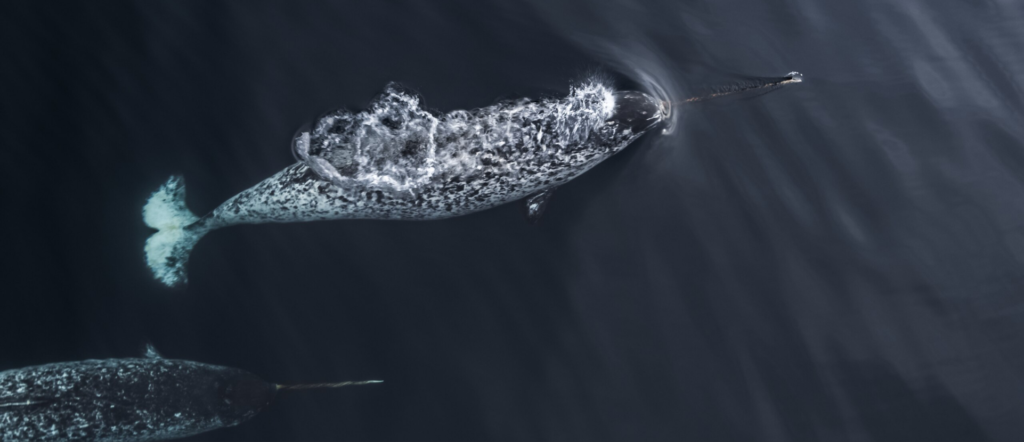
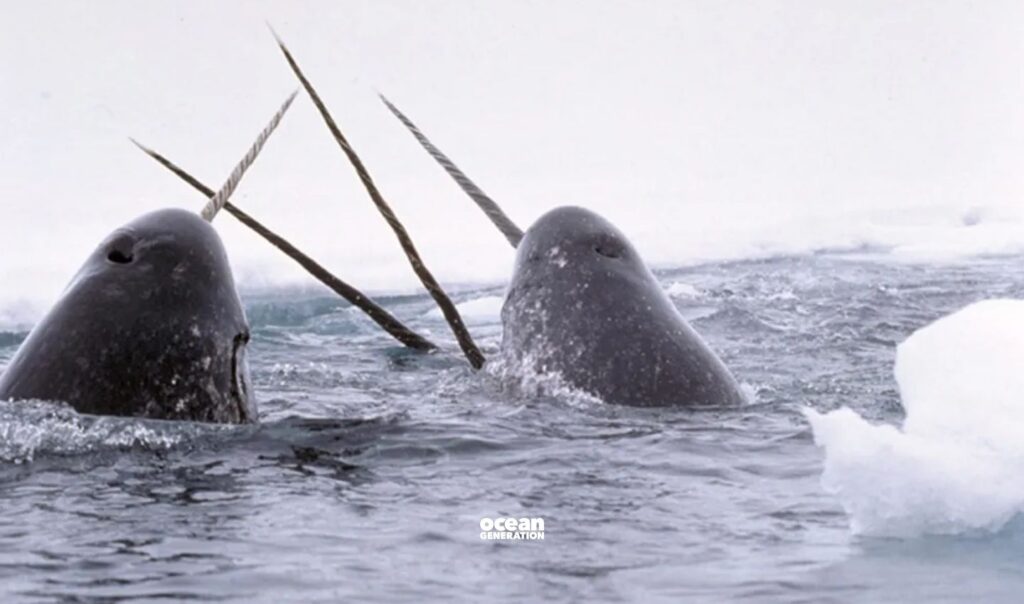
Under a clear blue sky, icebergs silently sparkle as they float in the Ocean, occasionally nudging each other. The water between them is a deep blue and still, undisturbed. Until a twisted ivory lance pierces the air, sliding out of the water inch by inch until two metres of tusk are followed by a mottled grey head. The head directs the tusk down again, exhales through the nostrils on top and takes a deep breath, slipping into the frigid waters.  

Maybe not quite how you would picture seeing your first unicorn. 

Except there’s some bad news. Unicorns aren’t real. We are as disappointed as you are; the closest we can come to a unicorn is a whale that lives in the Ocean: narwhals. 

But there was a time not so long ago that people believed the unicorn existed. 

Why did people believe unicorns existed

In the first half of fourth century BC the Greek physician Ctesias provided the first description of a unicorn. He outlined an Indian wild ass (a horse-like animal) with a crimson head and a tri-coloured horn about 28 inches long. He wrote that powdered unicorn horn acted as an antidote to deadly poisons. 

Aelian, a Roman writer in 200 AD fleshed out the description and noted that only noblemen could afford the horns, they were so expensive. 

Early Christianity adopted the unicorn as a symbol of Christ, with the horn as a symbol of the cross of Christ. Through the belief in protection for the self and the soul, the unicorn horn – known as alicorn – became a highly sought after asset.  

Unicorn horns were symbols of wealth and power, often displayed in positions of prominence on banquet tables. It was thought that the horn would bubble if dipped in a poisoned chalice, saving the wielder – a popular tool in the medieval banquet hall.  

At the peak of its popularity, a complete horn was worth  20 times its weight in gold*, and even powdered horn once cost ten times.  

Where did yhe unicorn myth come from? Explained by Ocean Generation, leaders in Ocean education.
Illustration from the book The history of four-footed beasts and serpents by Edward Topsell.

Unicorn horns were sought after by nobles, kings and religious leaders in Europe:  

For example, Lorenzo de Medici had one valued at 6,000 gold florins (around $1 million). Ivan the Terrible was reported to have paid 10,000 marks for one, and called for it to be brought to him on his deathbed. Martin Luther was said to have been saved from an assassination attempt by powdered unicorn horn, and had a spoon made from the magical substance.

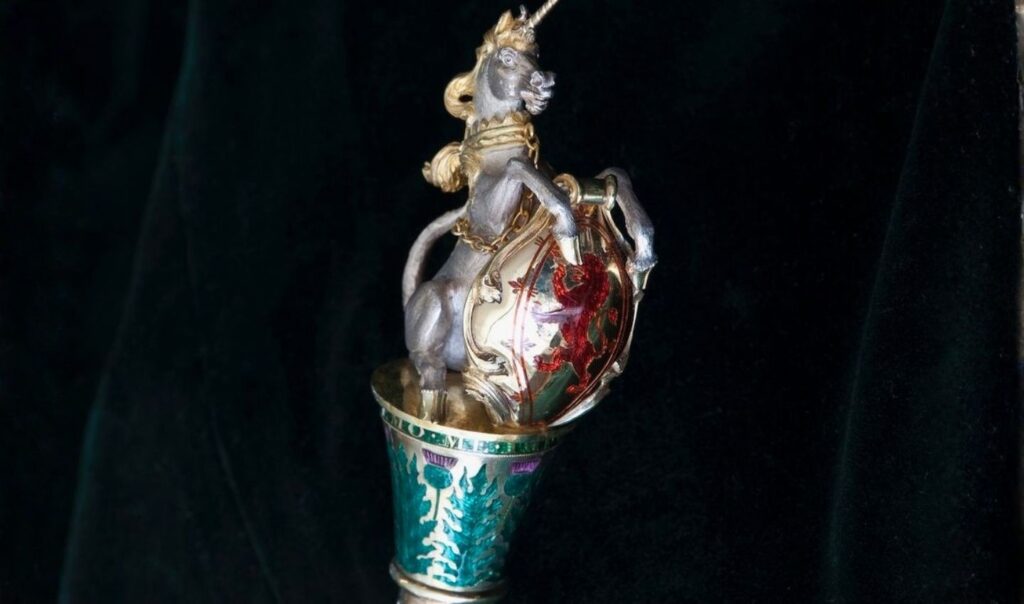
Such a powerful tool befits a queen, and on hearing that Mary Queen of Scots was using unicorn horn to test her food for poison, Elizabeth I offered a handsome reward for another. Privateer and Arctic explorer Martin Frobisher (or Humphrey Gilbert, both were on the expedition, but different sources credit them) found a narwhal washed ashore in Canada and gifted it to the queen. She was enamoured with it and covered it in jewels. It was said to be valued at £10,000*, approximately £3 million in modern terms. She also handed a gilted and bejewelled unicorn horn drinking vessel down to James I. 

Even the Pope, one of the main focal points of power and wealth at the time, was involved. Pope Clement VII gifted Francis I of France a unicorn horn on a silver stand.  

In the 1660s, King Frederick III ordered the building of a coronation chair. This chair was made using several unicorn horns and served as the centrepiece of Danish coronations until 1840. 

But as we know, unicorns aren’t real. Where are these horns coming from? 

Unicorn horns were sought after by European nobles. Posted by Ocean Generation.
The Trustees and Factor and Commissioner of the Walker Trust / National Museums Scotland

Where did tales of unicorn horns come from?  

Most of the Roman and Greek accounts of unicorns were likely based on stories from travellers coming across rhinoceros in India and Africa. But after these initial accounts describing the horn as straight, Christian art from about 1200 changed its view of the unicorn. 

Unicorns now had spiralled horns. There is only one animal that possesses a straight, spiralling ‘horn’ – the narwhal (Monodon monceros). And it isn’t a horn at all, but a tooth. 

Christian art from about 1200 depicted unicorns with spiralled horns.

What you need to know about narwhals: unicorns of the sea 

The name comes from the Old Norse nárhval, meaning corpse whale. Narwhals have mottled grey skin not dissimilar to rotting flesh and like to lounge at the surface – behaviour known as logging. Combine the two and you can understand why the Viking explorers named them. 

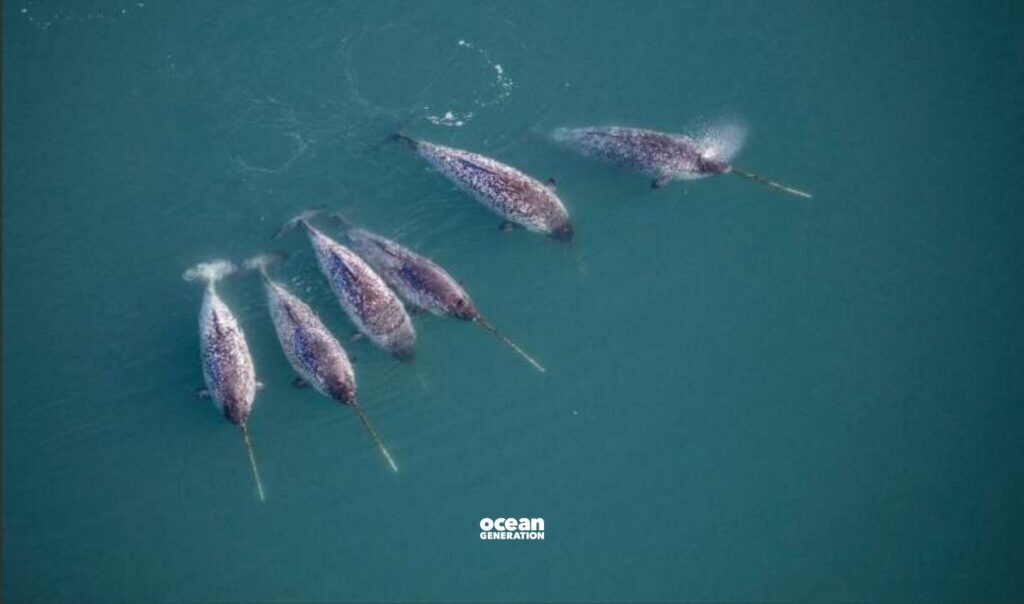
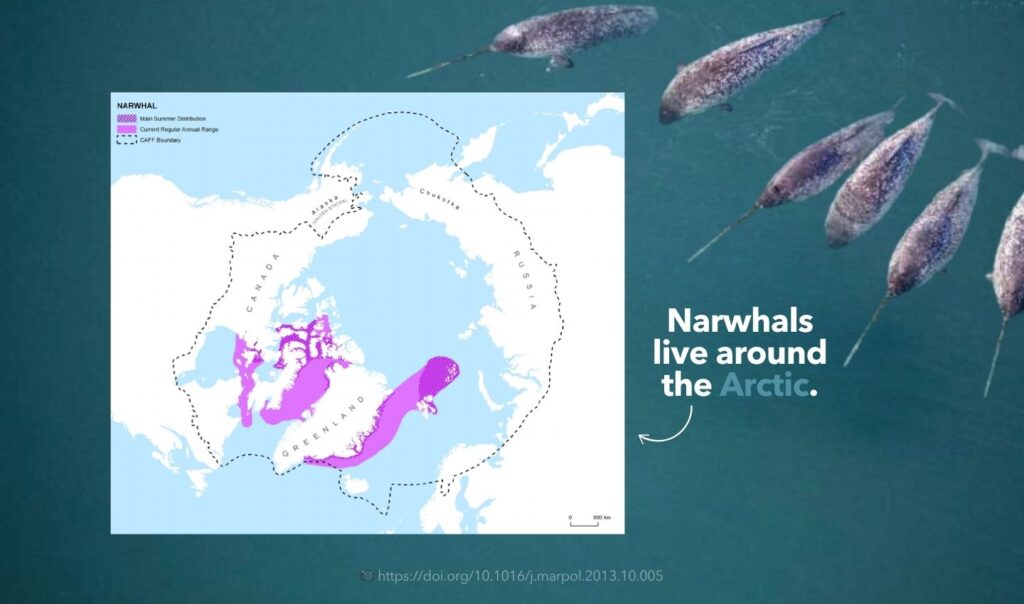
Narwhals are homebodies. They have ‘high site fidelity’ – meaning they stick to the places they like and will go back to their favourite spots. They can be found in the Canadian Arctic, through to East Greenland, Svalbard and the western Russian Arctic.  

What is a narwhal’s ‘horn’? 

The ‘horn’ of a narwhal is one (or in rare cases two) of the incisors, so is a tusk rather than a horn at all. All narwhals have two tusks embedded in their top lip.  

Most commonly, males in their 2nd or 3rd year will have the front left tusk erupt through their top lip, growing with age to reach 1.5-2.5m long.  Around 3% of narwhals are anomalies, with some females growing tusks, some males growing two or none at all. Double tusks in narwhals are about as common as an extra finger in humans.  

What do narwhals use their tusk for? 

The use of the tusk is still under debate.  

The first theories were that narwhal tusks were used for piercing prey or breaking up ice to make breathing holes. Observers supposed they could also function as a defensive mechanism or a cooling system. However, these theories are either discredited or unproven. The real uses are even more spectacular. 

What do narwhals use their tusks for? Explained by Ocean Generation.
NIST/Glenn Williams

Dental Displays 

Studies suggest that narwhal tusks are sexually selected. Male narwhals will use their tusk as a display feature in competition with each other, and bigger is better. The size of the tusk has been shown to positively correlate with teste size – so could be an easy indicator for the females to see which males are most fertile. Sometimes, size does matter.  

Where males with similar tusks meet, they may fight – male narwhals show far more scarring on their heads than juvenile and female narwhals and 40-60% have broken tusks, but this hasn’t ever been observed.  

What is sexual selection?
Sexual selection is a special type of natural selection, where traits that increase reproduction will be passed on. 

Fish Fencers 

But it isn’t just for showing or skirmishing. Using drones to study the narwhals’ behaviour, researchers saw the tusks in action. They could use the tusk to guide the fish, chasing it. They even saw the tusk being used, as a thresher shark uses its tail, to hit the fish, stunning it ready for eating. The scientists involved think there could even have been an element of play.  

Temperature Taster 

In 2014, we discovered that a narwhal tusk was full of holes and nerves. This could mean that it can operate as a water sensing tool for the narwhal, and they can ‘feel’ changes in water saltiness (salinity) and temperature. They show elevated heart rate when the horn is exposed to very salty water and fresh water, suggesting they can detect it.  

‘Feeling’ your surroundings can be very useful for navigation, when diving deep and moving between their favourite spots. It could also save their lives. Seawater freezing depends on the temperature and salinity of the water – saltier water needs to be colder before it freezes. By knowing the temperature and salinity of the water they are in, they are detecting when the water is likely to freeze, trapping them from the air to breathe.

This could also be used in hunting – those narwhals we’ve seen using their tusks to ‘chase’ fish? They could be using their swirly sensor to detect the fishes’ movements through pressure changes in the water, even faster than they can see them

Are narwhals magic

So, we have a tooth that helps guide them through the icy waters like Rudolph’s nose, zero in on prey like a laser guided missile and show off their suitability to be a parent. 

A narwhal’s tusk could enable them to tell when ice is going to form and find prey hiding in the dark as they can dive over a kilometre (3,281 ft) down, where no light can reach. 

Unicorns might not be real, but this all sounds like magic.  

Does something lose its magic just because we understand how it works? Whether it is magic or incredible biology, the enchantment of the narwhal is threatened by a changing world.  

How is the narwhals’ world changing

The opinions and doting of nobles across Europe and the world meant nothing to the narwhal. After years of hunting operations, narwhals are now enduring other changes, this time in their home. Climate change, caused primarily by the human burning of fossil fuels, is hitting the polar regions, where narwhals live, the hardest.  

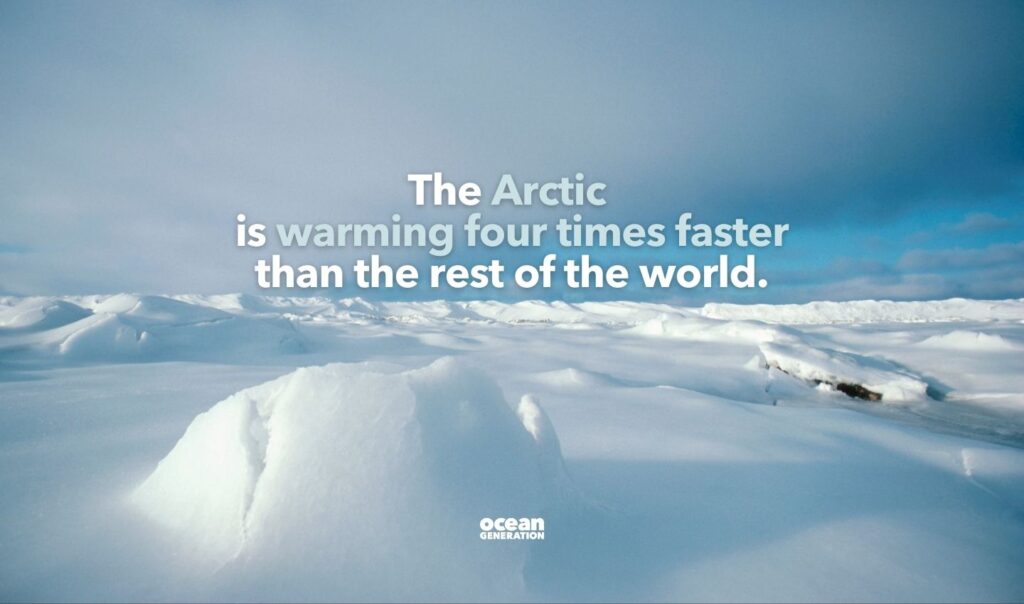
The Arctic is warming faster than the rest of the world. This is known as polar or Arctic  amplification (AA). AA has resulted in the Arctic warming by as much as four times the rest of the globe. Since 2006, the air temperature in autumn and winter has increased by more than twice the global average.   

Narwhals live around the Arctic Ocean. Posted by Ocean Generation.
https://doi.org/10.1016/j.marpol.2013.10.005

Why do narwhals live in the Arctic Ocean

Narwhals like it cold. Where the sea is warmer, there are less narwhals. Why? This could be to do with their prey – one of their favourites, cod, are known to grow better in water temperatures of less than 2 degrees

It could also be to do with their supreme adaptions for the coldest places on the planet – they may overheat at higher temperatures. No one wants to be wearing a thick winter coat on a hot summer’s day.  

How is climate change impacting narwhals? 

There is less ice. November 30 2025 saw the lowest area of Arctic ice on that date on record. The previous 20 years have given us the 20th lowest sea ice minimums on record, and there is 95% less old sea ice (over 4 years old) than the average from 1979-2004.  

Ice is an important part of the lives of every animal living in the polar seas. The loss of sea ice has been shown to change the diet of the narwhal as they can’t eat ice-based (known as sympagic) prey, so they eat more open-water (pelagic) species instead. 

Through burning coal and mining for gold, humans have increased the amount of mercury in the environment. Less ice means there is more bioavailable mercury. The result: the narwhals are exposed to more mercury. Increased mercury levels can impact the reproduction and immune systems of narwhals. How do we know this? Through analysing narwhal tusks, which give us an insight into their life history. The magic tusks are whispering to us.  

The reducing ice also means there is more human activity. We are a noisy bunch, and narwhals have shown to be sensitive to ship noise, reducing their deep dives for food (and given they are inefficient in their dive success, they need them).  

The Arctic Region is warming four times faster than the rest of the world.

How are we preserving the magic of the Arctic? 

Narwhal hunting is monitored and almost every whale caught is for the subsidence of the indigenous Inuit people. The population is difficult to track, especially without a reliable baseline. However, the International Union for the Conservation of Nature assessed the population in 2017 and shifted the status from Near Threatened to Least Concern. The narwhal is doing well so far.  

The isolation of the Arctic and the changing attitude towards cetaceans means the narwhal hasn’t had to deal with a multitude of human pressures. But more than ever, those pressures are finding them where they log.  

Research will continue to develop quieter boats, and policy will increase protected areas. The narwhal is one example of a bit of remote magic we are trying to keep. 

Climate change is being tackled head on, with an energy transition in full flow, electric vehicles going from strength to strength and global emission increases are slowing. We will be the generation to see the transition to human flourishing not coming at the cost of our natural world, for the first time.  

But within this, driving this, is being able to see the magic of the unicorn, not as a made-up money-making monopoly manufacture, but in the reality of the narwhal and its beautiful, magical tooth. See the magic, spread the magic – that is what will lead to us protecting the magic. 

*Wexler, P. (2017). Toxicology in the Middle Ages and Renaissance. Academic Press.
Cover image by Проектный офис Нарвал

Narwhals and Unicorns: How the magic of the Arctic has changed

Subscribe

Monthly: Impact in your inbox.

OceanGeneration-Join

Can we rebuild coral reefs? The promising (and weird) world of coral reef restoration 

Can we rebuild coral reefs? Posted by Ocean Generation.

Here’s what you need to know about coral reef restoration: 

Corals are cool. But the reefs face danger. A warming Ocean causes corals to bleach more regularly. Some estimates say we have already lost 50% of the world’s coral reefs.  

While we work to reduce the emissions of greenhouse gases, to keep our world from warming, we can also look to support the recovery and rebuilding of impacted coral reef systems. So today we ask: how can we restore our coral reefs (and how is a coral reef like a struggling orchestra)? 

Why should we care about coral reefs? 

Anyone that has had the privilege of diving on a coral reef will tell you how special these places are.  

Reefs cover less than 0.1% of our Ocean floor but support 20-30% of marine species. We have tried to estimate the economic value coral reefs bring, but it’s a difficult area, and economists can’t agree on the price tag.  

The range of $30 billion to over $300 billion puts coral reef value somewhere between “tremendously valuable” to “astronomically precious”. Include the goods and services provided by coral reefs and the estimated figure is $2.7 trillion. Trillion with a T.  

Coral reefs are excellent shields – healthy reefs can absorb 97% of wave energy. This protects our coasts, on which many of us live. Think of the most famous reef in the world – the Great (what?) Reef for example. 

So, we have to keep our corals around. The question is: how are we going to?  Let’s take a look at the three most common coral reef restoration methods. 

How can we help corals survive? Posted by Ocean Generation.
Image credits: Coral gardening photo by the BBC, Microfragmentation photo by Blue Corner Dive

What is coral gardening? 

The most used method of reef restoration is coral gardening.  

Fragments of healthy coral are taken from an existing coral reef and placed in a nursery. This nursery is set up for the baby coral to thrive. When the corals reach a big enough size, they are ‘planted’ back onto the reef.  

This is a very accessible, increasingly cheap way of tackling coral decline. Costs are estimated to drop from $150-$400 per coral to <$10 per coral with improving techniques. It doesn’t require expensive equipment, and is a very visible, practical way to engage communities.  

Does coral gardening work long-term?  

Not sure. Short-term results? Pretty promising. Two large projects (Coral Reef Foundation in Florida and CARMABI in Curaçao) claim over 80% survival after one and three years respectively.  

However, it isn’t all sunshine and coral roses. These figures aren’t peer-reviewed (cross-examined by other scientists) and likely reflect best-case scenarios for certain coral species.  

A more accurate long-term figure is likely 30-50%, and although it does increase coral cover, does not comprehensively improve reef health.  

A healthy coral reef is diverse.  

Gardening projects, however, tend to focus on fast-growing genus like Acropora, ignoring slower growing (but just as important) species.  This results in ‘restored’ reefs that are low in biodiversity.

Coral gardening projects tend to focus on fast-growing species. Explained by Ocean Generation.

It’s like trying to have an orchestra with only violins. It is technically music, and possible to even be good, but lacks the depth and the magic of the interplay between instruments that brings it to life.

(One of our marine scientists favourite orchestral pieces is the Planet Earth II Suite: the layering of the song as different instruments come in make your soul soar. What other piece can boast having sleigh bells?? Listen here.) 

This coral restoration method is also limited in scalability – can it be used to make a big difference?

Coral gardening is like trying to replant the Amazon by using window boxes. It’s cost effective, and great for fast-growing corals. BUT it produces reefs with low genetic diversity (making them vulnerable to disease) and low species diversity.  

Gardening alone isn’t going to save our coral reefs.  

Can cutting corals into tiny bits help? 

Microfragmentation is chopping up coral colonies into little pieces. The fragments are placed next to each other, and will grow out, to form larger colonies.

The key advantage here is in the species this method targets, such as star or brain coral. 

Where, with coral gardening, we are predominantly working with fast-growing corals, this is for the slow-growing corals that are key to reef building, and for whom other methods won’t be effective. These are the bass section in our orchestra: there are less of them, and they are slower, but still crucial to the symphony.  

Studies have suggested that this method of coral restoration can accelerate the growth of massive colonies by 10-15%.  

However, this is limited to massive species and carries the same dangers of limited genetic diversity as gardening, if few donor colonies are used.

As coral reproduction is strongly linked to size, smashing colonies into little bits certainly impacts their reproductive capacity in the short term. Currently, we don’t know how much or how long that effect lasts. 

While this method is an excellent boost for the big boys on the reef, it’s not a reef-wide solution. If it’s used with more conventional gardening, you can help specific species of corals grow more successfully. But how can we support the entire reef system, in all its complexity and diversity? 

Microfragmenttaion, a coral reef restoration method, can help slow growing corals. Posted by Ocean Generation.

How do corals reproduce? 

Coral reproduction is weird. A few nights of the year, all the corals on the reef will release their eggs and sperm to mix in the Ocean currents. These are called coral spawning events. 

The fertilised eggs will be Ocean floaters until they find a spot to settle. Most species settle within two weeks, but some can take as long as to 2 months.  

Can we increase the amount of coral larvae settling?  

There’s growing appreciation of the different ways coral larvae decides where to settle. We now know that the sounds produced by a healthy reef act as a draw for young corals (find out more about the sounds of a coral reef here). Similarly, we are now realising that young corals “smell” their way to their new home.  

What can we do with this information? We can advertise reefs in a way young corals can understand. Speakers playing the noises of healthy reefs, and a newly engineered gel releasing chemical cues replicating a healthy reef are some examples.  

These solutions increase coral settlement, helping the reef rebuild itself. This is like advertising for more players in the orchestra, looking to bring in new talent. But what if we take that further?  

Coral spawning is fascinating. Explained by Ocean Generation, leaders in Ocean education.

How do you help corals have more babies 

The Ocean is becoming a lot less of a love nest as it warms. The success rates of coral fertilisation drop with rising temperature and acidity.  

So, how can we help the corals? By collecting the eggs and sperm during spawning events and taking them back to the lab. There, they have the best chance at fertilisation, and the larvae can be reared until they are ready to settle. Then, they can be released back to the reef.  

We can protect the coral at their most vulnerable stage of life.  

In the wild, less than 1% of coral larvae will make it to settlement. Of those that do, up to 90% won’t survive the first few months. The proportion of larvae to survive to a juvenile coral is minute, somewhere between 0.001 – 0.1%.  

Through assisted reproduction, the success rates are still low, but much higher than the wild. Some studies have shown survival rates to a year to be 0.1-1%. That might seem small, but it’s at least ten times better than the chances for a wild coral larvae. Others show an increase in coral cover after nearly three years. Even more promising? Drop the young corals in, rather than manually fixing them to the reef (a seeding approach), survival rates after a year can reach a whopping 9.6% while the costs remain low.

Here’s the real magic: these methods keep the gene pool diverse and interesting.    

Coral reef restoration methods. Explained by Ocean Generation.

We’ve already discussed fragment-growing methods like coral gardening and micro-fragmentation. But unlike fragment growing (which is basically coral cloning), assisted reproduction gives us reefs with genetic variety – think coral cousins rather than identical twins. And that variety? It makes reefs more resilient long term.  

This would be the equivalent of sponsoring a musical training programme, nurturing the next generation to guarantee the success of our orchestra.  

Where’s the catch?  

All the data here comes from projects with scientists doting on every need of the corals. Basically: If we were to strip back the money and the monitoring, the survival rates of corals will probably take a hit.  

Assisted reproduction works with the natural reefs, which is its strength as it maintains diversity and avoids the risks of disrupting the ecosystem with new species. It’s also a weakness, as some reefs have lost too many sexually mature corals to rebuild themselves.  

While it may not be the most efficient way to resurrect a reef, assisted reproduction could make the difference on degraded reefs needing a boost.  

Are artificial reefs the answer? 

Like corals, people are great builders. Like us, corals need a good foundation to build on. Some of the most fun coral reef projects focus around providing those foundations, through concrete blocks and 3D printed units.  

These foundations can encourage our polyp pals (AKA: coral babies) to settle down and make their home. We can build a new concert hall for our orchestra.  

These structures provide habitat immediately for non-coral animals to use as well (little fishies can hide and sponges and algae can grow).  

We have also found that running electricity through a concrete foundation helps coral growth (now that’s current science).  

Artificial coral reefs are a good initial boost.  

Plus, it works quickly and can be scaled up easily. Like coral gardening, artificial reef building is accessible enough for local communities to get their hands wet. And there’s nothing like a concrete reef structure to make conservation visible *literally* and raise the profile of reef protection efforts. 

Artificial coral reefs are a reef restoration method. Posted by Ocean Generation.

But we don’t have a silver bullet here. There is concern that they could act as an ‘ecological trap’. They are fish magnets, not factories – they concentrate, not create.

Natural reefs and their residents settle and thrive not just because of a hard surface, but because there are good water conditions, plenty of food for their inhabitants and their populations are balanced.  

A reef in a poor location could end up negatively impacting the local fish. Imagine a new housing estate, but with no water and no shops. And acid rain. And bears. This is not a good housing estate.  

For artificial coral reefs to work they must be designed AND located with care and understanding. Don’t build a concert hall with terrible acoustics, no electricity and no public transport links. You need to know the area you are building in.  

Can we make super corals to survive climate change? 

None of the approaches so far tackle the root issue. The main threat to coral reefs is that the Ocean is changing faster than they can cope with.  

Could the answer then lie in us accelerating their adaption, selecting the more heat-resistant corals as evolution does, but faster?  

Our orchestra can experiment with new instruments and compositions to make a new sound.  

What is a super coral? 

Through selective breeding (choosing corals that can take the heat and breeding them) and microbial manipulation (like giving corals a probiotic yogurt, with beneficial bacteria and other tiny friends), we may be able to create ‘super corals’.  

When it works, it works brilliantly. Some lab studies showed that selectively bred corals could handle Ocean temperatures 1.5 degrees warmer than their non-selected colleagues.  

It’s an approach that directly addresses the main threat to corals, temperature rise, and could produce corals able to thrive in the predicted conditions of the Ocean in 2100

But temperature isn’t the only thing at work. These super corals have shown decreased resistance to Ocean acidification, the co-conspirator to Ocean warming. Think of a triathlete that can swim *like a fish* but also cycles like one. One-trick ponies aren’t what we’re going for when it comes to building healthy coral reefs.  

Our high performer corals also put a lot of energy into being super, so have less to put into growth and reproduction.  

What are super corals? Explained by Ocean Generation.

Another simple hesitation is the amount we don’t know. How could the super corals fit in? Will they outcompete naturally evolving corals? Disrupt ecological balances we don’t yet understand? Will our new music find an audience? 

Despite these challenges, assisted evolution remains a promising way for reef conservation in a rapidly warming world.  

As one researcher memorably put it: “We’re not playing God with corals; we’re simply giving evolution a helping hand when we’ve rather inconsiderately moved the finish line.”  

But if we are making new music, maybe we need a different orchestra set up. 

Is coral reef restoration the way to go to save reefs?  

New approaches and ways of thinking suggest that we should embrace our changing world.

We may not be able to ‘restore’ our reefs to the way they were, as our world is not the same as it was. Instead of spending time, money, and effort trying to build the reefs that used to exist, we could help build a reef that can thrive in the future conditions of the Ocean.  

To play to the tune of the future, maybe we need more woodwind and brass. Think more jazz improvisation than classical recital.  

This could offer a more pragmatic approach, acknowledging that full restoration is not feasible in the long term. It focuses on ecosystem function rather than maintaining the old reefs and could integrate the use of ‘super corals’.  

But this comes with the issues of the unknown.  

Ecosystems are notorious for their chain reactions. Tweak one thing, and something you thought completely unrelated is affected.  Bring wolves back to Yellowstone? Suddenly the rivers change course. Remove tiger sharks from an area? Watch the dugongs reduce the seagrass to mud flats since they don’t have to watch their backs. 

How would the new ecosystem function and effect the life around it? What if the new saxophonist doesn’t get on well with the trombone players? What if the audience don’t like it? 

Coral reefs support 25-30% of marine species.

So how are we doing with coral reef restoration? 

One estimate calculates that less than 0.1% of degraded reef area is under active restoration. Most projects are small-scale (100m2 or less) and short-term, with monitoring lasting less than 18 months.  

Restoring just 10% of degraded reefs could cost billions.  

The reality is most restoration projects are in convenient places, not where the corals will thrive. This renders most restoration projects vulnerable. Some can be completely lost after promising growth

But reef restoration is a stark reminder – humanity can act.  

Coral bleaching is among the most visual representations of our changing climate. But the time, effort and care that is devoted to restoring coral reefs around the world shows the desire to protect our natural world.  

For us to have healthy coral reefs, to have our orchestra really sing, we need to combine approaches. We can’t focus only on strings or on bringing in the young talent. We need to support the whole orchestra so we can enjoy the music.  

As corals have been a poster child for the degradation of our world, so too could they be the success story. Every young coral nurtured today could be the foundation of a healthy future reef, different to yesterday’s maybe, but no less important for our blue planet.  

Narwhals and Unicorns: How the magic of the Arctic has changed

Subscribe

Monthly: Impact in your inbox.

OceanGeneration-Join

What is coral bleaching?

What is coral bleaching?

What you need to know about coral bleaching:

White branches reaching out, stark against the blue. Where there was colour, now only ghostly white. This haunting transformation isn’t just a visual tragedy – it’s the silent SOS of some our Ocean’s most spectacular ecosystems. This is coral bleaching.

Coral reefs aren’t just beautiful — they’re nurseries for fish, protect coasts from storms, and feed millions of people. When coral reefs bleach, their whole ecosystem is at risk. But what is coral bleaching? What causes it, and why does it damage reefs? 

Are corals animals, plants or rocks?  

Corals are animals. Some may have stone skeletons and live with plants. But all corals are animals.

Corals are tiny animals called polyps. Each polyp has a soft body and a mouth surrounded by tentacles, like a little sea anemone or an upside-down jellyfish. All these animals are related – they are cnidarians (silent c), named after their cnidocytes – special cells that can sting.  

Where does coral’s colour come from? 

Corals are incredible animals. They build immense structures that provide homes for marine species, protect the coast and create oases in the ‘desert’ of tropical seas (there are very few nutrients in the waters of the tropical Ocean).  

To be able to do all this, they need some help. Corals have symbiotic algae called zooxanthellae living in their skin cells. Think of zooxanthellae as tiny solar-powered chefs living inside coral homes. 

Where does coral's colour come from? Explained by Ocean Generation.

They catch sunlight, cook up energy, and share over 80% of the meal with their coral landlords. The coral provides protection and prime real estate with an Ocean view. It’s a win-win (this is what symbiotic means) – until climate change cranks up the thermostat.  

It’s zooxanthellae that gives coral its colour. The magical, vivid world of coral reefs is painted by these little algae. Without them, corals are translucent, and the white of their calcium carbonate skeleton shines through.  

Why do corals bleach?  

The happy relationship between coral and zooxanthellae can be disrupted. When it is, this can lead to the expulsion of the algae from coral tissues, leaving the coral gleaming white (it is a spectrum, coral can partially bleach).  

The most common cause of coral bleaching is thermal stress AKA temperature. If conditions aren’t right, the systems that make photosynthesis (plants turning sunlight into food) can break.  

When these systems break, they can produce reactive oxygen species (ROS). ROS are produced in normal function, but too many ROS harm the coral. When the coral detects this build up, it acts in self-defence and throws the algae out

Usually, this is from it being too hot, but the system can be broken when it is too cold, or in too much sunlight, or exposed to harmful pollutants.

That’s a bit abstract. Let’s make an analogy.  

Imagine the coral as a battery, and the algae as a solar panel. Normally, the algae are providing energy to the battery from the sunlight. But if the solar panel gets too hot or is exposed to too much sunlight under a magnifying glass, it might start to malfunction. It starts to spark, so to protect itself the battery disconnects. Without its solar panels, our coral battery can only run on emergency power for so long before it’s completely drained. 

Why does coral bleaching happen? Explained by Ocean Generation.

History of coral bleaching – how long has bleaching been about? 

We’ve known about coral bleaching for nearly a century. In 1929, scientists first described it during extreme low tides. But it wasn’t until 1984 that a mass bleaching was documented, linked to unusually warm waters.  

Then came 1998 — the first global mass bleaching event, when around 16% of the world’s coral reefs were lost.  

Places like the Maldives, Seychelles, and reefs in the Indian Ocean lost nearly half their coral cover. 2023 saw the start of the fourth global coral bleaching event, that over the next two years saw an estimated 84% of the worlds coral reef areas bleached. 

Sounds bad, but this isn’t the end. 

Why do corals bleach?
Image credit: Great Barrier Reef Foundation

Does bleaching mean coral is dead? 

No. A bleached coral is still alive, it just doesn’t have its friend feeding it. This leaves the coral more vulnerable to disease, but also to starvation. Unless our battery reconnects to its solar panel, it will eventually run flat.  

Having repeated bleaching events reduces corals’ ability to recover. It’s like punching them while they are down.

When the coral eventually dies, it loses its white look and will begin to get covered with other algae and seaweed.

However, corals have shown us again and again they have an amazing ability to recover when given the chance.  

Different species of coral are more tolerant, and different species of zooxanthellae can take more heat too.  

Some species of coral bounce back faster than others; the marine equivalent of those friends who somehow recover from a night out while you’re still nursing a headache. The massive boulder corals? They’re the slow-but-steady marathon runners. The branching corals? More like sprinters – quick to bleach, but sometimes quicker to recover. 

After bleaching, it is possible that coral acquire more heat-tolerant photosynthesising friends, chefs that can take the heat in the kitchen. Corals aren’t going down without a fight.  

How can we help prevent coral bleaching? Explained by Ocean Generation, leaders of Ocean education.

How can we help the corals? 

There is a lot of work going into understanding corals, and reef restoration methods continue to be tested and implemented (read here for more.)

Corals are the poster child of Ocean health. They are impacted by all our Ocean threats, which means you can help wherever you are.

Every time you switch off an unnecessary light, choose a reef-safe sunscreen (free from oxybenzone, octocrylene or octinoxate), or select a sustainably caught fish dinner, you’re casting a vote for coral survival.

The future of coral reefs could be written in bleached white, or in vibrant technicolour. The pen, rather excitingly, is in your hands.  

Narwhals and Unicorns: How the magic of the Arctic has changed

Subscribe

Monthly: Impact in your inbox.

OceanGeneration-Join

What is the water cycle?

Why there is no water cycle without the Ocean.

Our planet is known as the blue planet, over 70% of it is covered in water, most of which is the Ocean.

This water shapes our landscapes, influences where life thrives, affects the health of our Ocean and the weather in our skies. 

The Ocean is always closer than you may think (not in a sinister, about-to-jump-out-at-you way. It’s more of a realising-it-is-Thursday-and-the-weekend-is-only-round-the-corner-kind-of-way). 

Take a moment, think: what is different from the water you drank this morning (if you haven’t had any, this is your reminder to drink some) and the water lapping up a warm tropical beach? Every drop of water, from what’s come out of your tap to the water five kilometres deep in the middle of the Pacific, is connected.   

It is all just at different points in the water cycle. 

How does the water cycle work? 

There are four processes that drive the water cycle: evaporation, transpiration, condensation and precipitation.  

How does the water cycle work? Explained by Ocean Generation.

Water is warmed and evaporates, becoming water vapour. Amongst the many good things plants do, they release water into the atmosphere through transpiration. These two processes are responsible for putting water vapour in our air, our atmosphere.  

Water vapour is invisible.  

The steam we see when we boil the kettle (or the clouds in the sky) is water becoming liquid again, on contact with the cooler air. That is condensation, the transition back from gas to liquid. When enough of this cloud cools and turns to water, it will clump together and fall as precipitation (snow, hail and rain).  

How is the Ocean connected to the water cycle? 

This water then starts its journey back to the centrepiece of the cycle: the Ocean. 

The Ocean holds 97% of the Earth’s water – approximately 1.34 billion cubic kilometres. 86% of evaporation is from the Ocean, and 78% of precipitation re-enters the Ocean, directly. You can’t have the water cycle without the Ocean. 

Ice holds 2% of global water and just 0.001% is in the atmosphere – that is all the clouds in the sky.  

But if we add all that up, there’s a little still on the table – or more accurately, on land. That is the groundwater, lakes, swamps and the rivers. Rivers make up only 0.0002% of the total water on Earth.

The Ocean holds 97 percent of water. Posted by Ocean Generation, leaders of Ocean education.

What does the water cycle do? Why is it important? 

There are five main points of importance for the water cycle: 

1. Regulating Climate:  
The water cycle helps distribute heat around the globe, influencing weather patterns and climate conditions. It absorbs and releases energy during evaporation and condensation, which affects temperature and weather. 

2. Sustaining Ecosystems:
The water cycle provides the water necessary for plant growth and supports all forms of life by delivering freshwater to ecosystems through precipitation.

3. Shaping Landscapes:  
The water cycle contributes to erosion and sedimentation, reshaping geological features over time. 

4. Circulating Minerals and Nutrients:
Water transports minerals across the globe, enriching sea and soil and supporting plant life. 

5. Maintaining Freshwater Supplies:
The cycle replenishes freshwater sources, such as rivers and lakes, which are essential for human consumption and agriculture. 

Imagine a world without a water cycle – what would it look like?  

Why is the water cycle important? Explained by Ocean Generation.

How is the water cycle changing 

Human activity is interfering with the hydraulic cycle at every stage.  

Deforestation means less trees to transpire and absorb rainfall. Urbanisation interrupts drainage and can increase surface runoff. When it rains, the water that would have been absorbed by the ground now hits tarmac and runs down the road. 

The single greatest threat to the water cycle, and therefore to all life on Earth, is climate change.  

How is climate change impacting the water cycle?  

Climate change is intensifying the hydraulic cycle. Higher temperatures lead to more evaporation, more water vapour in the atmosphere, which results in more intense storms and rainfall. At the same time, droughts are becoming harder to predict and more severe.

These changes directly threaten our lives. 

Water related events from 2024
2024 Summary Report – Global Water Monitor

Water is the life blood of our planet, and the water cycle is the pulse that keeps it alive. 

The hydraulic cycle regulates our climate, fertilises and maintains our ecosystems and shapes our world. We are changing it through our actions and activities.  

Understanding this cycle is the first step, but acting to protect it is the most important. The question is: what will we do to safeguard the blue heart of our planet? 

Narwhals and Unicorns: How the magic of the Arctic has changed

Subscribe

Monthly: Impact in your inbox.

OceanGeneration-Join

The History of Climate Change

A century of climate science history: Explained.

These days, you can’t go a week without the impacts of climate change making headlines – but that wasn’t always the case. When climate science first appeared in the media, it was batched with conspiracy theories and radical ideas.  

Now, we know better.

We’re hopping in a time machine to unpack the history of climate change, greenhouse gasses, global warming, and why climate skeptism existed for so long. 

When did climate science first make the news

Over a hundred years ago (hello, 1912), the Titanic set sail and sank, zippers were invented, Oreos were created. And Breaking News: Climate change entered the news for the first time.  

This caption appeared in the March 1912 publication of ‘Popular Mechanics’, directly linking burning coal and global temperature change: 

Snapshot of a caption that appeared in the March 1912 publication of ‘Popular Mechanics’, directly linking burning coal and global temperature change.

Several months later, on 14 August 1912, a paper in New Zealand re-shared the now-famous caption. They titled it: “Coal Consumption Affecting Climate.”

But before these publications, fundamental climate science was already understood.  

On 14 August 1912, a paper in New Zealand re-shared a now-famous caption titled: “Coal Consumption Affecting Climate.” 

Burning coal and climate change, for the first time, were linked in the media. Shared bY ocean Generation experts in Ocean health and inclusive environmental learning.

Scientists understood how greenhouse gasses contributed to rising temperatures in 1856.

What is the greenhouse gas effect and who discovered it? 

The greenhouse gas effect is how heat is trapped close to the Earth’s surface. Trapped by what? Greenhouse gas molecules like carbon dioxide, methane, and nitrous oxide.  

John Tyndall, an Irish physicist, is commonly miscredited with discovering the greenhouse effect.  

In 1856 (three years before Tyndall’s work was published), Eunice Foote, an American scientist, concluded certain gasses warm when exposed to sunlight. She concluded that rising carbon dioxide levels would lead to atmospheric changes, which could impact the climate.  

Human activity was suggested as the main driver of climate change in 1896.

Svante Arrhenius, a Swedish scientist, suggested that as humanity burned fossil fuels (non-renewable energy sources like coal, crude oil and petroleum), which added carbon dioxide to the atmosphere, we’d raise the planet’s average temperature. 

Over 100 years ago, the science was there. Why does it feel like we’re only waking up now? 

Climate science wasn’t accepted by the public.

We can point to these news articles and research pieces and say, “It’s been a century! Why was nothing done?” But climate change began on the fringe of society. The science – and these scientists – weren’t taken seriously.  

“Humans? Impacting the planet? No way!” – someone in 1912, probably.  

Turning our backs on fossil fuels, which were building the modern world, seemed outlandish. When the world went to war in 1914, the topic lost momentum and only picked up again in the 1930’s. 

Ocean Generation is sharing the history of climate change. In this image, which is horizontally split in two, two sets of hands hold symbols of the modern world: a light bulb and a globe of Earth. The bottom image is of smoke rising from a factory, symbolising the connection between burning fossil fuels and the modern world.

The origin of global warming.

In 1938, Guy Callendar caused a stir in the science world when he put together weather observations and concluded that global average temperatures had already increased. 

Callendar was the first person to clearly identify a warming trend and connect it to carbon dioxide in the atmosphere. He was shunned by the science community for his research which became known as “the Callendar Effect.”  

Today, we just call it global warming. 

How does climate change impact our Ocean? 

The Ocean absorbs much of the sun’s heat which helps regulate land temperature and drive global weather patterns. More than 90% of the heat from global warming is stored in our Ocean. That makes the Ocean one of the most important carbon sinks on Earth.  

But this continual heat absorption is changing the characteristics of the Ocean. (Spoiler: not in a good way). Those changes have massive impacts on all life on Earth. 

Scroll: The 7 climate change indicators we’re seeing in the Ocean. 

How does climate change impact the Ocean? Ocean Generation has the answers. In this horizontally split image half is made up by an orange sunset, in the bottom image a scene under the Ocean is captured: there are vibrant corals and clown fish.

Why was climate scepticism so strong for so long?  

Scientific coverage in the media that pointed to the reality we all know now – that human activity is a key driver of climate change – was often published alongside pieces that were sceptical of such facts. 

As recently as 2003, it was covered that global warming amplified death tolls in the 2003 European Heatwave. In the same year, at a speech given on the US Senate floor, a former Chair of the Environment and Public Works Committee called climate change, “The greatest hoax ever perpetrated on the American people.”  

With contradicting statements everywhere, people believed that the jury was out on climate change. We know better. 

The best time to take climate action was in 1912.

The second-best time is right now and every day from now. Because the history of climate change is just that: History.

Each decision we take, today, tomorrow, in three weeks or four years, sets up the future health of our blue planet.  

A hand reaching out above a body of water. The hand's reflection looms below. Shared by Ocean Generation.

Actions you can take to fight climate change.

Narwhals and Unicorns: How the magic of the Arctic has changed

Subscribe

Monthly: Impact in your inbox.

OceanGeneration-Join

The Ocean is turning green because of climate change

Breathtaking image of an Ocean wave breaking. The wave has a green hue. In this article, Ocean Generation explains why our Ocean is turning green because of climate change.

Over 56% of the Ocean is turning green.

More than half of our Ocean has changed colour in the last 20 years, turning more green than blue. (That’s more than Earth’s total land area.) The culprit? Climate change.

Nature published a study in July ’23 that analysed two decades of research which we’ve translated into a 5 minute read about why the Ocean is changing colour and why we should care.

More than half of the Ocean is turning green. It's changed colour in the last 20 years, becoming more green than blue. That's more than Earth's total land area. The culprit is climate change. Ocean Generation has translated the report into an easy read.

Why is the Ocean turning green?

Colour shifts in the Ocean happen for many reasons, like when light bounces off of particles (like plastic) and sediments in the water.

Phytoplankton (micro-algae) is the main reason the Ocean has a naturally green hue because it contains chlorophyll, like all terrestrial plants.

But phytoplankton is more than a just splash of colour. It’s the base of most Oceanic food chains, the main producer of our oxygen, and stores the bulk of our carbon.

So, shifts in Ocean colour aren’t really about the colour. We care about the colour shifts because they’re indicative of changes happening in important surface-level ecosystems.

How is the Ocean’s colour shift linked to climate change?

Good question. Tracking how changes in climate impact our Ocean can be challenging because of the sheer scale of our Ocean. So, often, time-series data is used to measure trends over long periods.

For this study, 20 years of observations from June 2002 to June 2022 by Nasa’s Modis-Aqua satellite were used.

By studying wavelengths of sunlight reflected off our Ocean’s surface, the scientists tracked the fluctuations in greenness (basically: How much phytoplankton is living near the Ocean’s surface, based on estimates of how much chlorophyll there is).

Satellite image of phytoplankton populations from space. Phytoplankton is a micro-algae but so important to all life on our planet. Ocean Generation shares the importance of this Ocean-surface ecosystem.

Of course, phytoplankton populations have natural fluctuations.
To assess the connection to climate change, researchers created a computer model.

The model measured how phytoplankton populations may respond to increases in greenhouse gases (without the natural variations).

The results (between reality and the only-climate-driven-changes model) matched almost exactly, prooving:

Oceanic plant populations (measured by the green they’re adding to the Oceans colour palette) can indicate climate health.

What’s the impact of a greener Ocean?

It all comes back to the phytoplankton.

If the health of phytoplankton is impacted, there are implications relating to:

  • Our Ocean ‘s ability to store carbon;
  • The entire Ocean food chain (and thus, ours);
  • Balance in the biogeochemical cycle (AKA: the water cycle, nitrogen cycle, etc).

We say it all the time. We mean it every time: A healthy Ocean is essential for all life on Earth.

Ocean Generation shares why a healthy Ocean is essential for all life on Earth. Image of a man floating on his back in the Ocean.

Narwhals and Unicorns: How the magic of the Arctic has changed

Subscribe

Monthly: Impact in your inbox.

OceanGeneration-Join

15 Climate actions you can take to restore the Ocean’s health 

15 simple actions you can take to fight climate change and protect the Ocean, shared by Ocean Generation. Dark blue, foamy wave washing onto a beach.

What can I do about climate change?”

We’re regularly asked for practical climate actions. Thankfully, there’s a lot we can do to look after our blue planet.  

Every decision we make – from what we eat to how we move to the clothes we wear – has an environmental impact. But when faced with fear-mongering headlines and science-backed alarm bells that we’re reaching a climate tipping point, individual actions don’t feel like enough.  

Do individual climate actions actually make a difference?  

Yes. Think about it: Swapping out your plastic straw for a metal one may not feel like much, but if everyone in Europe did the same, 701 tonnes of plastic could be prevented from entering the environment every year.  

Collectively, individual actions are powerful propellers of positive change.  

The image is cut horizontally down the middle. The top image is four men and woman dressed for work in suits and coats, holding briefcases. The bottom image is of a bright yellow fish in an organge coral in the sea. Shared by Ocean Generation.

Why should the Ocean have a seat at climate conversations?  

The Ocean is a powerful climate change mitigator.

Here’s 3 ways our Ocean mitigates the impacts of climate change: 

  • The Ocean absorbs 90% of excess heat from our climate system, making it an impressive heat sink. In fact, the Ocean is the largest heat sink on Earth. 
  • 30% of human-made carbon emissions are absorbed by our Ocean.  
  • The Ocean plays a major role in climate adaption. (Said differently: the Ocean supports our planet’s adjustment to the effects of climate change, for example, through blue carbon ecosystems).  

But as much as our Ocean tackles climate change, it is also directly affected by it. (Read: Ways climate change impacts Ocean health.)

When we take climate action, we are simultaneously taking Ocean action and vice versa.  

From reducing your use of single-use plastics to addressing your carbon footprint, there are many effective ways to make a positive difference.

Here are 15 climate actions you can take to restore the Ocean’s health: 

1) Skip single-use coffee cups

Many of us start our day with a cup of coffee on the go. It’s a comforting routine that sets the tone for the rest of the day. 

If all of Europe made the switch from single-use plastic cups to eco-friendly alternatives, we’d prevent 1,500 tonnes of plastic waste a year.

Hand holding a reusable coffee cup, shared by Ocean Generation. The accompanying text says 'if all of Europe made the switch to eco-friendly cups, we'd prevent 1,500 tonnes of plastic waste a year.'

2) Understand the main 5 human-made threats the Ocean faces 

We can’t restore the health of the Ocean if we don’t understand what threatens it.

The UN released a 2,000-page document breaking down the various threats our Ocean faces. Understandably, most people don’t have the time (or desire) to read it. So, we transformed it into 5 easy-to-follow articles about Ocean threats. 

3) “What is my climate footprint?” 

Your carbon footprint is the measure of greenhouse gases produced by your daily activities.  

This includes things like driving a car, using electricity, the emissions linked to what you wear, and even eating food.  

When we understand our carbon footprint, we can shift our behaviours for the better. Here’s an online carbon footprint calculator (we can’t endorse any resource as ‘the most accurate measure of your CO2 footprint’ but this will give you a rough idea of your environmental impact).  

It’s important to remember that carbon emission world averages distort the unequal emissions in developed and developing countries. So, it’s helpful to compare your carbon footprint to your national average to assess where you stand. 

4) The food on your plate makes an environmental impact  

One third of carbon emissions comes from food production.  

What you eat tends to matter more than whether it’s produced locally or not, when it comes to decreasing your carbon footprint.  Read: Is locally sourced food better for the environment? 

General tips: Reduce your consumption of high-emission foods like meat and dairy in favour of seasonal fruits and vegetables and snacks that have negative emissions. 

5) Put your money where your heart is: Divest from fossil fuels 

Are your monetary investments benefiting the planet? Divesting from fossil fuels means taking your money out of the hands of the fossil fuel industry, which contributes significantly to carbon emissions and climate change.  

You can start by checking your bank and investment accounts and moving your money to institutions that don’t invest in fossil fuels. Even small divestments make a difference. 

Microplastics on a black background. Ocean Generation is sharing climate actions we can all take.

6) Avoid products with microbeads 

Microbeads are small plastic beads often found in beauty and personal care products. These tiny pieces of plastic easily slip down our drains, through water treatment plants and into the Ocean. 

Most of us purchase products – facial scrubs, toothpaste, nail polish, and abrasive household cleaning products – without realising they contain microbeads.  

Quick solution to the microbead problem: Check ingredient lists and front labels. Microbeads and polyethylene are often listed on packaging, making them easy to avoid. 

7) Think before you toss your clothes into the laundry 

Every time we do an average laundry load of 6kg, 700,000 fibres can be released into our waterways. Before you put something in the washing basket, consider if it can first be worn again.  

Take this a step further by investing in a bag built to capture micro-fibres and choosing sustainable clothing materials when it’s time to purchasing something.  

8) Conserve water  

Only 0.5% of water on Earth is useable and available as freshwater. So, we’re not joking when we say water is liquid gold.  

It’s a key prerequisite for human development and, already, a quarter of all cities are water stressed. Little actions add up: Cringe when you see a character in a movie running water for ages; make sure you turn your tap off while brushing your teeth; install a waster-wise shower-head; fix those leaks.  

You may feel that your climate action is a drop in the Ocean – but the Ocean would be less without that drop.  

Every drop counts.

9) Understand the impact of fast fashion on the environment 

Fast fashion is responsible for 8 – 10% of global carbon emissions (which is more than all international flights and maritime shipping – combined).  

Outfit repeating, sustainable fabrics, shopping second-hand and only purchasing items you know you’ll re-wear over and over again are in fashion this season.  
Scroll: How to take the fast out of fast fashion

Car exhaust pipe with smoke coming out. Shared by Ocean Generation in a article about actions to reduce carbon emissions.

10) What’s the impact of how you travel

No one’s surprised to learn: Flying is one of the most carbon-intensive modes of transportation. But did you know that flying at night is actually worse for the planet than flying during the day? Now you do.

Walking and cycling are both climate-friendly and positively impact our health.  

Suggestions when it comes to catching flights:  

  • Where alternatives exist, don’t fly.  
  • When you need to fly, choose direct flights to maximise fuel efficiency and minimise emissions associated with take-offs.  

11) Plant a mangrove tree – with the click of a button – to take Ocean action 

Mangrove trees are incredible climate solutions.

We’ve written about their impressive carbon sequestering power extensively and have a Mangrove Mandate: A promise to plant a mangrove tree in Madagascar for every new follower on @OceanGeneration’s instagram.  

By planting a mangrove tree, you’re making a direct impact on the environment. Plant (follow).

12) Rethink your relationship with plastic 

You knew it was coming. It wouldn’t be a climate change actions list without mention of plastic.  

Plastic is everywhere – from the clothing you’re wearing to the spot you’re sitting right now and even in the food we eat. There’s no getting rid of a material designed to last forever, but reducing our consumption of single-use plastics is essential for a healthy Ocean and planet.  

Start by rethinking your relationship with plastic. Instead of leaning on recycling, start reusing, reducing, totally refusing plastic options where you can.  

Crashing Ocean wave, shared by Ocean Generation - experts in Ocean health since 2009.

13) Start saying ‘Ocean’ not oceans 

At school, we’re all taught about the Ocean having 5 regions, but our Ocean isn’t separated by borders. It’s one, connected system.  

What happens in one part of the Ocean impacts Ocean health as a whole. 

If we all understood this, we’d be more mindful of what we dump in the Ocean, what we take out of it, and how we use it daily. As you go about your life, start saying Ocean – big O, no s. Not only does it highlight the interconnectedness of the Ocean, but also how our daily actions impact it. 

14) Be a voice for our Ocean 

The Ocean is quite literally keeping us alive. It’s our planet’s life support system, but most people don’t realise that.  

By keeping yourself informed about the importance of the Ocean, the human-made threats it faces, and the various actions we can take to protect it – and then sharing that Ocean intelligence, you can propel a wave of positive change for our planet.

Sign up to our newsletter for monthly Ocean education. Submit a Wavemaker Story to let your voice for the Ocean be amplified on our channels. Share educational posts you come across. Be an Ocean advocate – not just on World Ocean Day but every day. 

15) Accept that you can’t do everything. Start where you are. 

It’s important to acknowledge that no one can do it all when it comes to tackling climate change and restoring the Ocean’s health.  

Striving to be a perfect environmentalist often leads to eco-anxiety and feelings of defeat about the amount of work to be done. The reality is: Imperfection is still helpful, and it’s a lot more inclusive than unrealistic demands for perfection. 

Our blue planet doesn’t need a handful of perfect environmentalists. Earth needs millions of imperfect people doing what they can to make a difference, and always trying to do better.  

Embrace imperfect environmentalism with us by starting where you are. Commit to one – or several – of these items right now. Collectively, we can make waves. 

Narwhals and Unicorns: How the magic of the Arctic has changed

Subscribe

Monthly: Impact in your inbox.

OceanGeneration-Join

Mangroves: Underrated Climate Change Heroes 

Mangrove tree growing out of water. Mangroves are climate change heroes thanks to their ability to sequester 3 - 5 times more carbon than normal forests.

Everything you need to know about mangrove trees:

Mangroves are the only forests situated at the confluence of land and sea in the world’s subtropics and tropics. They have been variously described as “coastal woodland”, “mangal”, “tidal forest” and “mangrove forest.”  

There are roughly 70 species of mangrove trees occupying a total estimated area of 147,000 km2 worldwide. This is equivalent to the size of Bangladesh! Roughly 43% of the world’s mangrove forests are situated in just four countries: Indonesia, Australia, Brazil, and Nigeria.  

These forests are home to an abundance of life, protecting people from floods whilst storing carbon at an impressive capacity. 

Mangrove trees in Indonesia. The mangroves - a coastal ecosystem - are vital climate change heroes. Here, they are near a body of water. Uniquely, mangroves can be found in coastal and fresh water environments.

Biodiversity in mangrove forests 

In the right conditions, mangroves form extensive and productive forests.

These forests support animal populations both within the forest and in offshore areas. Densities of crabs are especially likely to be highest on unvegetated mudbanks adjacent to mangroves, feeding on propagules (buds of plants). 

Juvenile shrimps are important organisms near mangroves too, and a sought-after food for many communities. These shrimps obtain carbon (food) from plankton and algae living amongst the mangroves. 

There are also a few endemic mammal species in mangroves. For example, crab-eating rats in Australia, the leaf monkey in Malaysia, and the proboscis monkey in Borneo. 

Here is a diagram further highlighting the importance of mangroves to so many species for different reasons – 

What species live in mangrove forests? Animals use mangroves as a nursery, foraging and nesting habitat. Some species like tree crabs, spotted mangrove crabs and crocodiles spend their whole lives in mangrove forests.

Figure 1 Conceptual diagram illustrating the critical habitat that mangroves provide for a variety of animals [Credit: Integration and Application Network, University of Maryland Center for Environmental Science] 

Why should we care about mangrove trees? 

– Mangrove forests are widely recognised as providing a wide variety of goods and services to people, including protection from floods, provision of a variety of plant and animal products, sediment trapping, and nutrient uptake and transformation.  

– Annually, mangroves are responsible for over $60 billion in avoided losses from coastal flooding, protecting more than 15 million people.  

– An impressive diversity of plant products is harvested from mangrove trees, including tannins, honey, medicinal products, and thatch. 

Aerial image of mangrove forests.

Mangroves are a blue carbon solution  

– Mangroves have gained a lot of attention in recent years over their ability to sequester carbon, storing between 3-5 times more carbon per hectare than terrestrial forests. 

– They have carbon-rich soil that’s been built-up for over hundreds or thousands of years. 

– 87% of carbon stocks in mangroves are just within the top meter of soil. According to one report, if this were released into the atmosphere, it would be equal to 7.5 years of emissions from the EU or burning 51 billion barrels of oil. 

What are the drivers of degradation and loss of mangroves?  

Up to 60% of mangrove tree losses are due to direct or indirect human impacts. These drivers are –

– Logging (for timber, charcoal) 
– Agriculture (oil palm cultivation)
– Aquaculture (ponds for shrimp and fish farming) 
– Pollution (from oil and gas extraction, and nutrient run-off) 
– Coastal infrastructure development  
– Climate change (sea level rise, hurricanes, drought) 

Mangroves Degradation in Timor-Leste shared by Ocean Generation.

Mangrove Restoration and Conservation Efforts 

Our knowledge of mangrove area dynamics at local to global scales has increased significantly since 2000 due to advances in remote sensing and data access.

Around 42% of remaining mangroves are now located in protected areas. But protected areas may not always provide strong protection. Many mangroves fall prey to erosion and storms, naturally occurring phenomena, while some don’t stand the test of time due to ineffective management.  

The front line of mangrove protection, management and sustainable use involves people—communities, indigenous groups, traditional users, and local governments.  

The Global Mangrove Alliance, is an important and ambitious initiative, seeking to halt loss caused by direct human impact, restore at least half of recent mangrove losses, and increase protection from over 40% to 80% by 2030. 

How coastal communities have helped mangrove forests thrive 

Around the world, there are countless examples of collaborations that have helped coastal communities and mangroves to thrive together.  

For example, in Pakistan, mangroves are concentrated mainly in the north along the Arabian Sea coastline where arid climate prevails. Under the Ten Billion Tree Tsunami Project, 43.50 million plants will be planted in one of the world’s largest endeavours to restore mangroves.  

This ambitious project will not only provide a natural barrier against erosion, climate disasters but will also restore breeding grounds for finfish and shrimps. It has the potential to improve the livelihoods of fishing and herding communities living in the many coastal villages dotting the country’s northern shores.   

A man leaning into a body of water to plant a mangrove tree. Mangrove trees are incredible trees. They act as climate change heroes because of their incredible ability to sequester carbon.

Mangrove planting has been increasingly considered a Nature-based Solution (NbS)  

This enthusiasm, seen through national policy commitments and community-led initiatives, can now be assessed against a Global Standard for NbS, a criteria set by the International Union for Conservation of Nature (IUCN) to ensure that these projects are credible and well-designed to maximise their full potential.  

Mangroves provide many benefits and their ability to store carbon cannot be ignored. It is a useful nature-based solution to help reduce our emissions but it’s not the only one! 

What can I do to further mangrove conservation? 

  1. Show your support for mangroves in native areas –
    Find out if mangroves are native to your surroundings. If they are, vocalise your support for them and educate your community on the importance of mangroves.

    If your local mangroves are subject to degradation, rally support for preservation and speak to your local authorities. You can also keep track of mangrove restoration through the Mangrove Restoration Tracker tool.  
     
  1. Be a considerate tourist –
    Mangrove tourism exists across 93 countries, with boating being the most popular activity. So next time you travel, appreciate mangroves and the diverse wildlife they host but don’t leave anything behind!

    You can also participate in mangrove planting, for example, in the Philippines, through the Planeterra Project.  
     
A bridge leading across water and into a mangrove forest.

Narwhals and Unicorns: How the magic of the Arctic has changed

Subscribe

Monthly: Impact in your inbox.

OceanGeneration-Join

How can I tackle a problem as complex as climate change?

A ripple of water. Ocean Generation makes environmental science easy to understand and shares how each individual has a ripple effect on the environment and health of the Ocean.

The Ocean has never been this subjected to the level of intensity of climate change impacts caused by human activities. With every 0.1 degree C of warming, we make it more and more difficult for humans, flora, and fauna to adapt. 

A warming Ocean means that marine ecosystems like coral reefs and salt marshes are less able to host marine biodiversity and sustain many benefits for humans.

This also disrupts the Ocean’s ability to regulate the global climate system, water, and carbon cycle. 

It goes without saying that the climate crisis is now a defining issue of our lifetimes, and we have a slim window of opportunity to reduce our collective impact. 

Four images side by side: Rough blue Ocean waves and foam, a factory releasing carbon emissions behind a field of yellow floowers, a single green lead on a crusty dry piece of Earth, a bright pink and healthy coral in the Ocean. Ocean Generation makes climate science simple to understand.

Is there a way out of the climate crisis? 

The Ocean stores 20-30% of greenhouse gas (GHG) emissions from human activities but this is unsustainable, resulting in an acidic, slow circulating, less oxygenated Ocean.

To put it simply, we need to rapidly reduce our emissions to give young people and future generations a chance to secure a sustainable future.  

According to the latest IPCC report, we need to cut global GHG emissions by nearly half by 2030. These emissions come from electricity production, food, agriculture, land use, industry, transportation etc. Cutting emissions requires global collaboration and cooperation – from governments to individuals.  

The challenge is immense, but the solutions could not be clearer.

A ripple of water. Ocean Generation makes environmental science easy to understand and shares how each individual has a ripple effect on the environment and health of the Ocean.

What do we need to do to limit global warming?  

Some of these solutions have already been set in motion: Reducing our reliance on fossil fuels, increasing uptake of clean energies, restoring carbon sinks, and much more. The slow pace of adoption and funding associated with these solutions have been repeatedly questioned, given the world is currently at 1.1C.  

The effects of climate change are already being felt in different corners of the world, albeit disproportionately.  

In order for us to stay within any warming limit, we need to make the necessary changes needed to sustain humanity as a whole. And as individuals, each and every one of us have carbon footprints attached to our households and lifestyles.  

We must address the fact that
we do not emit emissions equally 

Globally, there are huge disparities between those who over-consume and those who consume less due to socioeconomic and geographic factors.  

In fact, the top 10% of high-income households contribute 34–45% of consumption-based household GHG emissions and the bottom 50% contribute 13–15%.  

These stark differences mean that individuals in the top 50% are the in the best position to reduce their emissions, giving the opportunity to raise living standards for those in the bottom 50%.  

When considering our lifestyles, the conclusions are quite similar. 

What impact do our lifestyle choices have on carbon emissions?  

According to 2022 UNEP report, “the lifestyles of the wealthiest 10% of the world’s population (broadly speaking, most middleclass persons living in industrialised countries), are responsible for almost half of the global emissions, while the lifestyles of the wealthiest 1% are responsible for about twice as many GHG emissions as the poorest 50%”.  

Lifestyles are not just about the things we consume, but also addresses the communities we live in, the values we foster and the choices we make.

Individuals that are socio-economically well-off are in an instrumental position for enabling change. One paper suggests that individuals in this category could reduce emissions as role models, citizens, organisational participants, investors, and consumers.  

Ultimately, environmental, and societal well-being go hand-in-hand; it is in humanity’s best interests to fairly consume within our means.  

Footprint made of sea shells on the sand at a beach. Each of us has carbon footprints attached to our households and lifestyles. We can minimise our impact with every decision we make.

What can people to do to lower their carbon emissions 

There are four key areas where individuals can have the most impact: Food, transport, housing, and the things we buy (like appliances, clothes etc).  

There is no denying that industry supply chains have a responsibility to reduce environmental impacts and provide sustainable choices. Small, and local businesses also tend to be more transparent, gaining consumer trust. Low-carbon alternatives exist in each of the aforementioned areas, and we can collectively vouch for further changes, whether that’s accessibility or affordability.  

At Ocean Generation, we will be covering climate change solutions under each of the above areas through 2023. Namely:

What we Eat food sources, diets, and food waste 
How we Move modes of mobility 
What we Purchase appliances, fashion 
How we Live energy sources and energy-saving behaviours 

Four areas where individuals have agency over their emissions: how we move, how we live, what we purchase and what we eat. Ocean Generation will be covering solutions related to climate change because climate solutions are Ocean solutions. We cannot have a healthy planet without a healthy Ocean.

Climate change solutions are Ocean solutions, and vice versa.

The finite resources on this planet need to be utilised efficiently and distributed equally while minimising our impact with each and every decision we make.  

The future of the Ocean is very much in our own hands.  

With every 0.1C degree warming avoided, biodiversity and humans are given another chance. Let’s make every choice count!  

The future of the Ocean is in our hands. To have a healthy planet, we need a healthy Ocean. Ocean Generation shares climate change solutions and Ocean solutions to safeguard our planet.

Narwhals and Unicorns: How the magic of the Arctic has changed

Subscribe

Monthly: Impact in your inbox.

OceanGeneration-Join

Why protect blue carbon ecosystems?  

The Ocean stores a considerable amount of our carbon:

The Ocean is one of the largest natural carbon sinks on Earth, making it a crucial component of the carbon cycle. This means that the Ocean captures carbon dioxide from the atmosphere.

This carbon is stored in surface waters, eventually making its way into the deep Ocean. 

But there are other ways in which carbon is stored… 

The role of blue carbon  

All along our coastlines, we have unique ecosystems that capture and lock carbon away, mostly in the soil, for sometimes thousands of years.

These ecosystems are termed “blue carbon.”

This includes: 

Mangroves
Seagrass Meadows, and 
– Salt Marshes 

They can be potent carbon sinks, storing more carbon than forests on land, on a per-area basis, in the case of mangroves. Some of the other benefits include: 

– coastal protection (acting as a buffer between the Ocean and land) 
– increased biodiversity 
– reducing Ocean acidification  
– soil stabilisation 
– improved water flow and water quality  
– storm and flooding surge prevention, and  
– increased resilience to cyclones 

These ecosystems can be considered a nature-based solution in tackling the rise the carbon emissions.

But they are under threat. In fact, globally, between 20-50% of blue carbon ecosystems have already been converted or degraded.  

Drivers of blue carbon loss and degradation 

Our coastlines are often competed for – whether its daily Ocean activities or commercial purposes.

This invariably devalues existing blue carbon ecosystems. The main drivers of loss and degradation are: 

– salt ponds (for salt extraction) 
– agriculture  
excessive use of fertilisers (pollution)
intensive aquaculture
coastal infrastructure development  

The case for protection and restoration of blue carbon ecosystems 

If degraded or lost, blue carbon ecosystems have the potential to release the carbon back into the atmosphere.

This is not the best scenario, given carbon dioxide levels in the atmosphere are already reaching levels not experienced in at least 2 million years (!). 

Not only is protection and restoration good for the climate, but it also has the potential to create jobs and support economic growth.

Coastal ecosystems have the ability to mitigate around 0.5-2% of current global emissions. However, there is high uncertainty around its potential in the face of future climate scenarios, as well as loss of coastal land due to sea level rise.  

Many restoration efforts have failed in the past, mainly due to not addressing the root causes of degradation.

It is now understood that successful restoration efforts require local communities’ involvement at every stage, economic incentives, and robust frameworks for implementing and assessing these ecosystems.

Most importantly, reducing human activities in these areas can aid the recovery of these precious ecosystems.  

We need existing solutions to work together to reduce the adverse effects of the climate crisis.

We must protect what we have, restore what we have lost, and adapt to the circumstances we face.  

If the Ocean thrives, so do we. 

Narwhals and Unicorns: How the magic of the Arctic has changed

Subscribe

Monthly: Impact in your inbox.

OceanGeneration-Join