How do the Sounds of Kelp Forests Change?
How do the sounds of kelp forests change? Explained by Ocean Generation.

The age-old question goes “If kelp falls in a kelp forest and no one is around to hear it, does it make a sound?” … or something like that.

The study of kelp forest soundscapes is new, but it is essential to understanding the ecosystem. 

What are kelp forests

Kelp forests are incredibly diverse and important ecosystems of organisms living within dense areas of (surprise) kelp in coastal regions.  

Kelp forests, and more generally seaweed forests, act as major carbon storage for the planet and are, when compared to the woods, incredibly diverse, containing mammals, arthropods (shrimps), echinoids (sea urchins), brachiopods (a shelled animal that feeds via filter feeding) and much more.
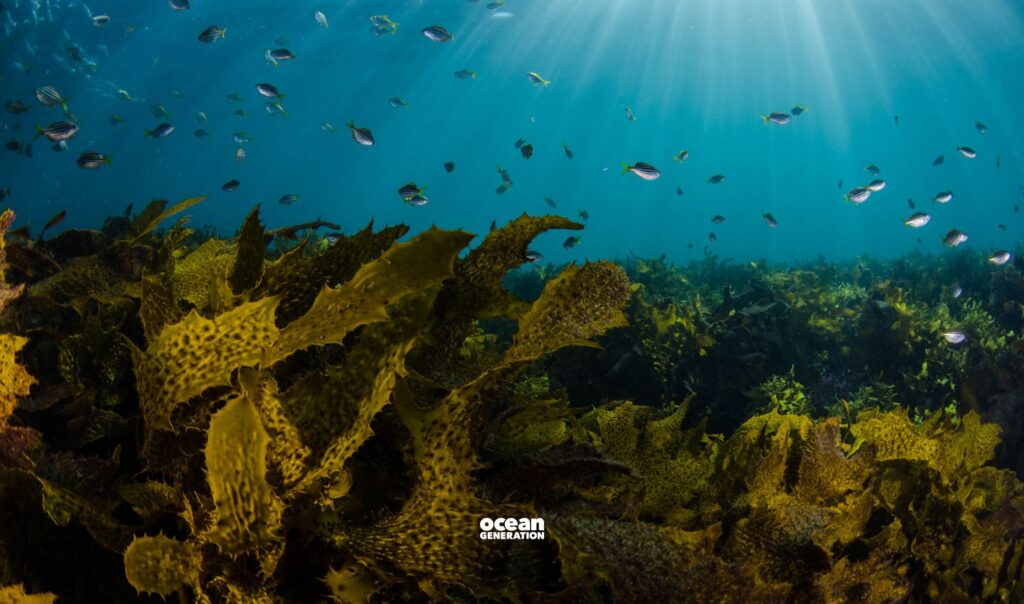
What are kelp forests? Explained by Ocean Generation, leaders in Ocean education.

What does the Ocean sound like? 

The Ocean is surprisingly noisy. Sound is used to convey information over long distances, and to neighbours on the reef or in the grass. In water, sound travels farther than either light or chemical cues and moves almost five times as fast as it does in air.  

Marine mammals like whales and dolphins are famously loud and use sound to communicate.  Sperm whales can reach volumes louder than jet engines. But a shocking truth is that other marine animals contribute to the Ocean soundscape too! For example, did you know that some fish make hums and purrs?  

Beyond marine animals, there are other sound sources in the Ocean. Geological sounds (earthquakes and landslides) and our own human activity (engines and drilling) have their own effects on the Ocean soundscape. 

What do kelp forests sound like? 

Kelp forests are an unfamiliar setting to most of us, so to assist on our adventure of the soundscape, we’ll venture through the woods at the same time. 

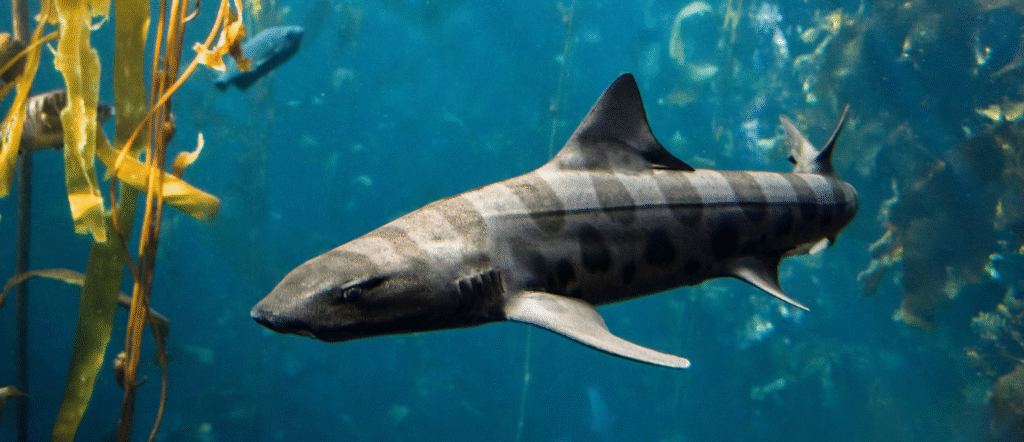
In the woods, we hear distinctive, familiar noises. The twitter of birds, the chattering of rabbits and the chirps of insects dominate the soundscape. In kelp forests, we can hear the different calls of fishes and the frequent snapping of shrimp.  

The noises of kelp forest can be separated by their pitches. Generally, lower tones contain the noises of marine mammals and fish. The higher tones we’d hear contain the clicks of snapping shrimp and the sound of echolocating dolphins (although this is higher than the human ear can hear so it’s silent to us). 

These soundscape features often change in both environments over time due to natural factors, like seasonal changes, or human activity. 
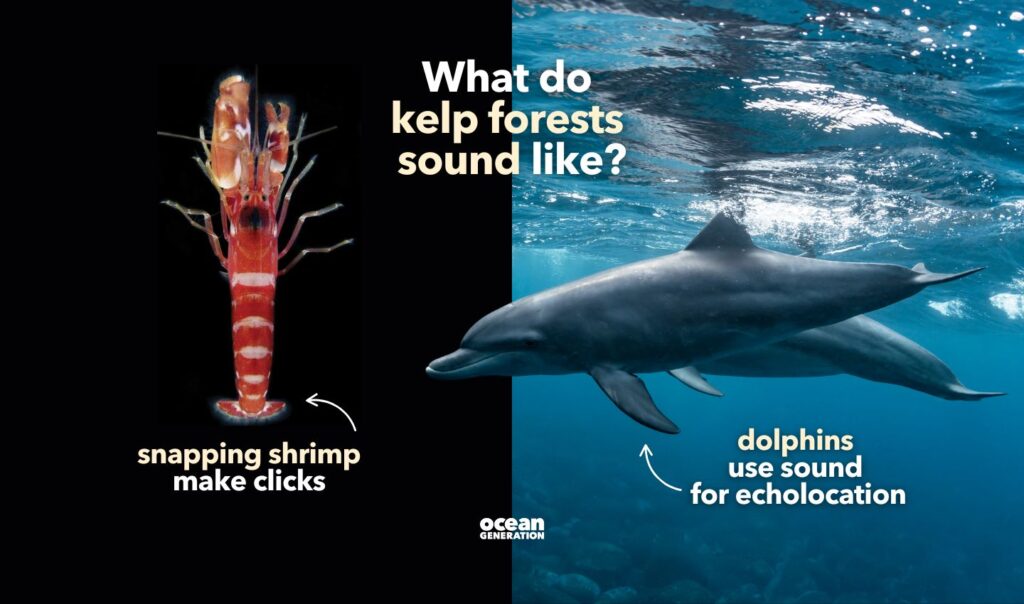
What do kelp forests sound like? Explained by Ocean Generation.
Snapping shrimp photo by Anker A Grave

Daily changes in the kelp forest soundscape 

As the night comes, the sounds of the daytime animals switch to the noise of nocturnal animals.  

In the woods, hooting owls and squeaking bats take over the soundscape along with the occasional chirp from foxes. This daily change is seen in kelp forests too, where the activity of animals and therefore the volume of their sounds shifts over the course of the day. 

For some species of fish, their noise peaks at sunset and dips at sunrise. As well as this, snapping shrimp are nocturnal, which shows in their activity, as they have peaks at sunset and sunrise but a decreased activity during the day. 

Seasonal changes in the kelp forest soundscape 

With the arrival of autumn and winter in the woods, some animals migrate or hibernate, removing their noises from the soundscape.  

A seasonal change also occurs in the kelp forest, where the time of year can affect the presence of animals.  

The Plainfin Midshipman fish makes nests near the coast and uses a humming noise to attract a mate. This humming is heard in the kelp forests during late spring and summer, consistent with their mating season. Contrasting this, the presence of snapping shrimps is maintained year-round. 
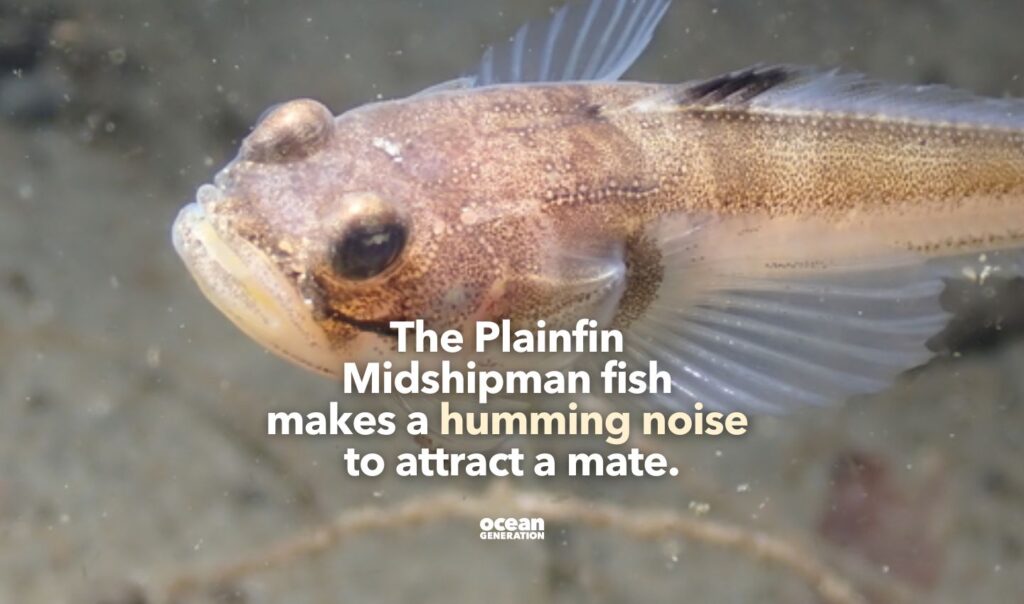
Plainfin Midshipman fish humm during spring and summer. Posted by Ocean Generation.
Photo by Sara Thiebaud

Human influence on kelp forest soundscapes 

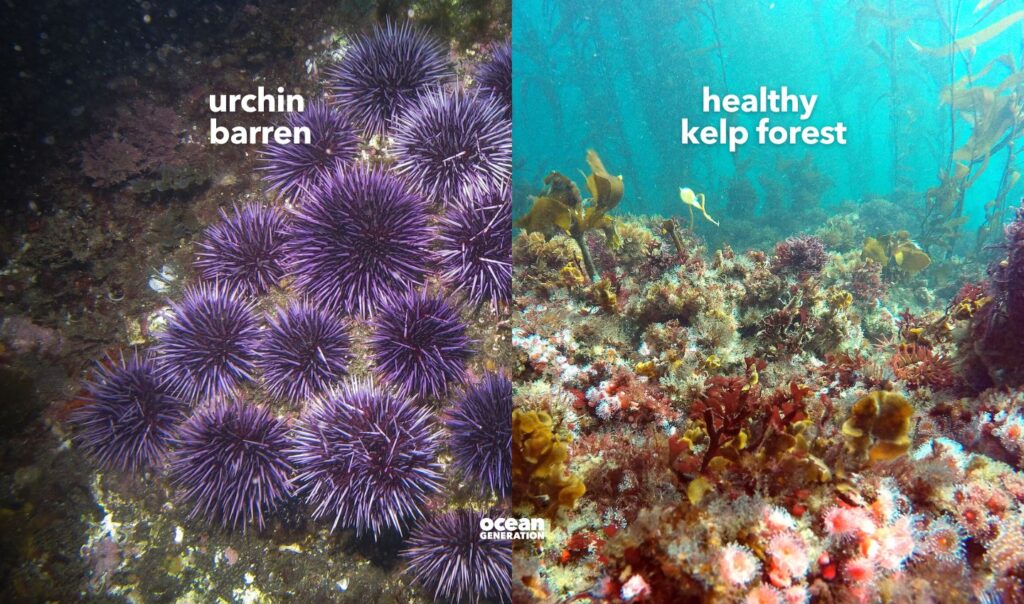
On our walk through the woods, we come across barren spots without trees, caused because of storms or fires. Similarly in the Ocean, an abundance of sea urchins and a lack of suitable food can cause them to feast on kelp clearing the area and leaving a space overrun with small, malnourished sea urchins, with the East Fish camp in California having an urchin density of 26.8 urchins per square metre

Although urchin barrens may seem like a natural environment, they are created by human activity, just as extreme weather can become more prominent because of global warming.  

Normally, sea otters and the occasional fish prey on urchins before the situation gets out of hand. But, due to hunting and overfishing, sea urchin predation is decreased, allowing their population to spike and kelp forests to be removed.  
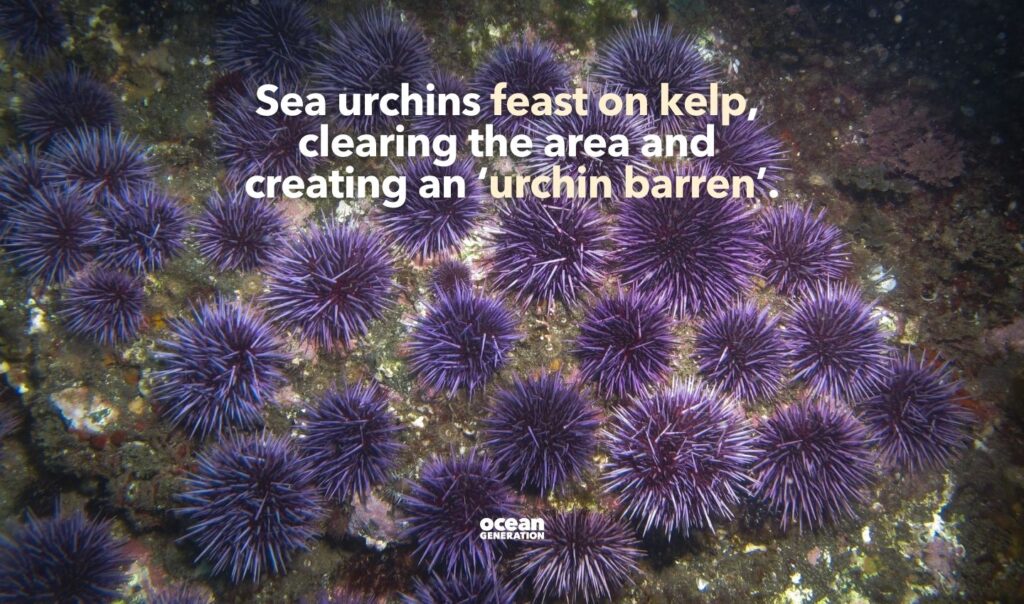
Urchin barrens influence the kelp forest soundscape. Posted by Ocean Generation.
Photo by Ed Bierman

Sea urchin barrens influence the kelp forest soundscape as the region becomes less suitable for some species and more suitable for others. When hundreds of sea urchins move in, they change biodiversity.  

A more direct human influence on woodland soundscapes is deforestation. The direct removal of trees by humans to clear space or for resources is easily a big issue, as it decreases habitat space, reducing biodiversity and harming ecosystems.  

A similar situation happens with kelp as it can be harvested, as it has uses like in food and beauty products. As a consequence, the amount of kelp is decreased, showing little to no recovery after two years, and biodiversity can change to be unlike before harvesting. 

Does human noise affect kelp forests? 

Listening in our woods, we don’t only hear animal noises but also human noises. Cars on roads which cut through the woods or heavy machinery operating can create loud persistent noises which can disturb the soundscape, affecting the distribution of the animals

The same is true for animals in the Ocean. Loud noises like drilling and seismic surveys are loud and the noise can be emitted for tens of kilometres, causing confusion and hearing damage in marine mammals and fish. 

Other sounds like engine noises from low flying planes and boats can act as background noises which decrease the distance that animals can hear and communicate.  

Sound disturbances can normally be mitigated in kelp forests by kelp’s ability to attenuate (absorb and decrease) sound. However, because of the removal of kelp forests, this mitigation can quickly be removed.  

The building of docks and other structures may seem like they could bring back attenuation, but they can also transfer noise from cars and docking boats into the Ocean, affecting microenvironments. 
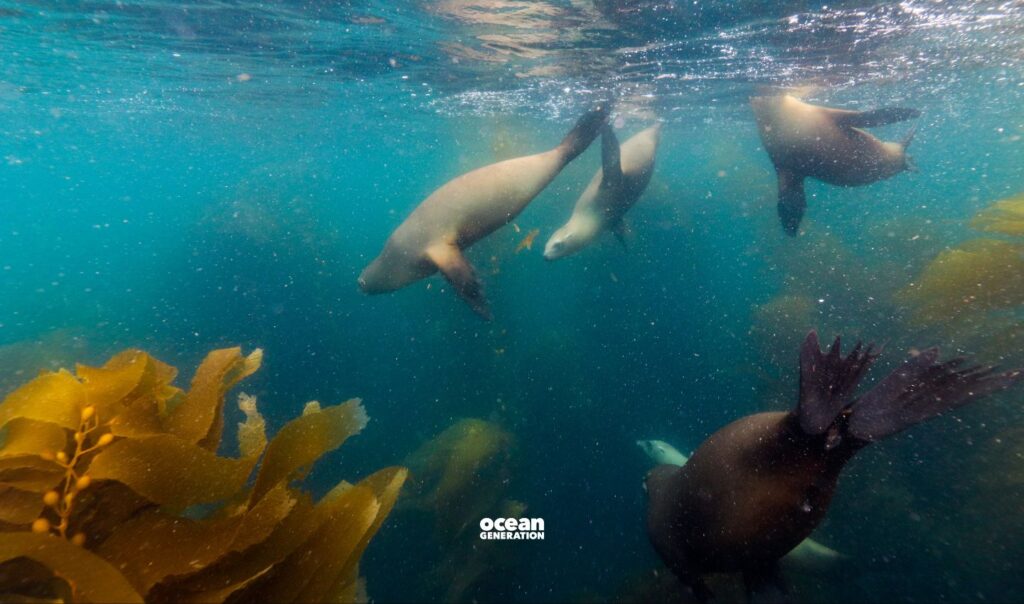
How does human noise affect kelp forests? Explained by Ocean Generation.

What can we do

It may seem daunting that humans can cause all of this damage, but not all change is bad. Just as forests can be replanted and wildlife protected, as can kelp forests.  

The growth of kelp can be stimulated, and areas can become marine protected areas, which can allow areas to be conserved. An example of this is in New Zealand, where an urchin barren has recovered back into a kelp forest within a marine protected area over the period of 20 years. 

Looking at how we live our lives, like where our fish comes from or our usage of boats can make a difference in helping this delicate ecosystem. 

Who are the orca outlaws sinking boats, and why are they?

Subscribe

Monthly: Impact in your inbox.

OceanGeneration-Join

What Happened to the Steller’s Sea Cow? Explained. 

What happened to the Steller's sea cow? Explained by Ocean Generation.

There are two theories about what happened to Steller’s sea cow. Let’s unpack them. 

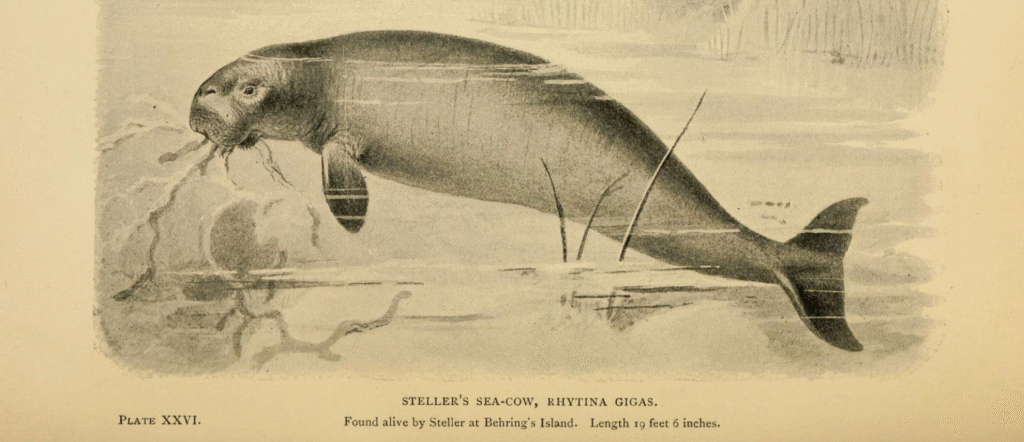
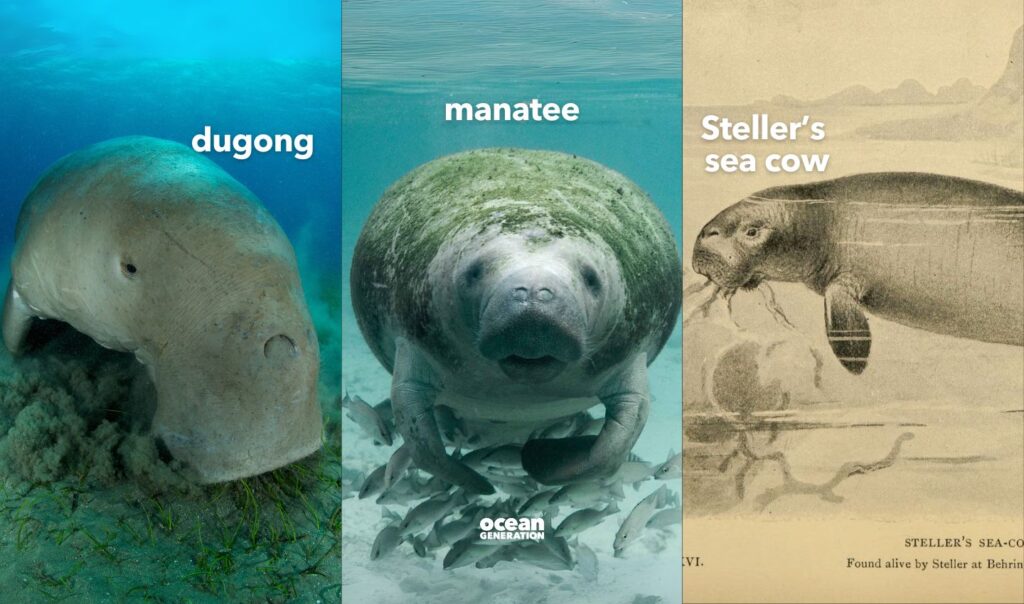
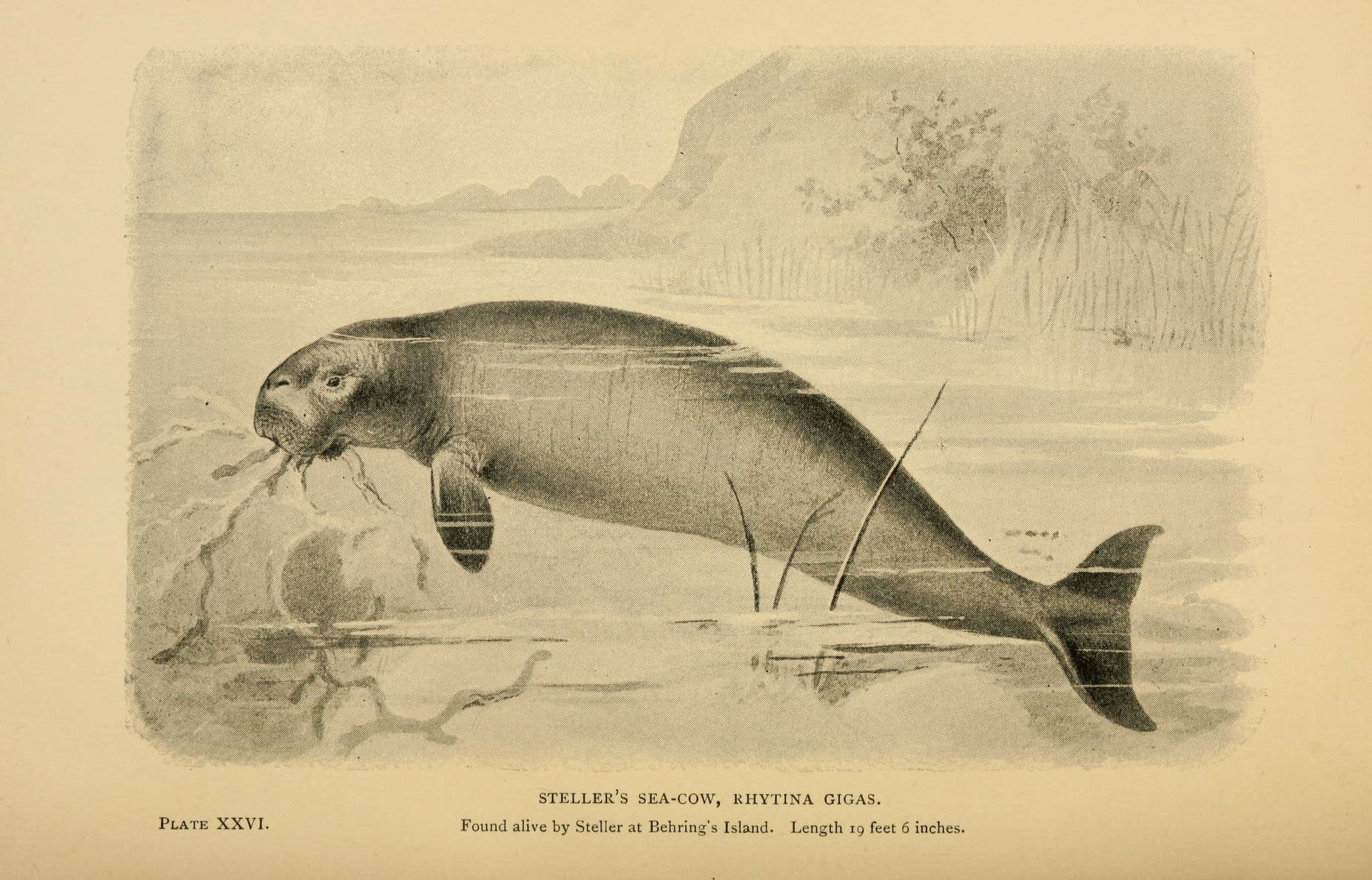
Steller’s sea cow was a 7-metre-long, 5-tonne cousin of the manatee; known to graze peacefully in kelp forests. But just 30 years after the sea cow’s discovery – it vanished from the Ocean forever.  

In this article we’re going to explore two theories for why this marine species disappeared. Both involve hunting, but one requires an understanding of the habitat that Steller’s sea cow called home: the kelp forest.  

By looking at this complicated history, we can begin to understand the complex interactions going on under the Ocean surface, and learn lessons about how we can best preserve these incredible ecosystems in the present. 

Steller's sea cow was a 7-metre-long, 5-tonne cousin of the manatee. Posted by Ocean Generation.
Steller’s sea cow sketch by Biodiversity Heritage Library

The story of Steller’s sea cow starts with a shipwreck. 

On the 6th November 1741, the Svyatoy Petr was shipwrecked on an isolated and uninhabited island, now known as a part of the Commander Islands chain. For several months, the crew of sailors, cartographers, geographers, and natural historians had been carrying out one of the first scientific explorations of the North Pacific.  

Stranded for nearly a year, the remaining crew salvaged materials from the wreckage, and built a ship that could cross the Ocean back to Russia.  

One of the most consequential outcomes of this failed expedition was the presence of a curious and observant  naturalist, George Wilhelm Steller. For almost a year, he made meticulous observations, sketches, and notes on the unfamiliar and captivating wildlife that surrounded him, which have been left to us as an invaluable historical and ecological artefact.  

From a massive population to extinct: 

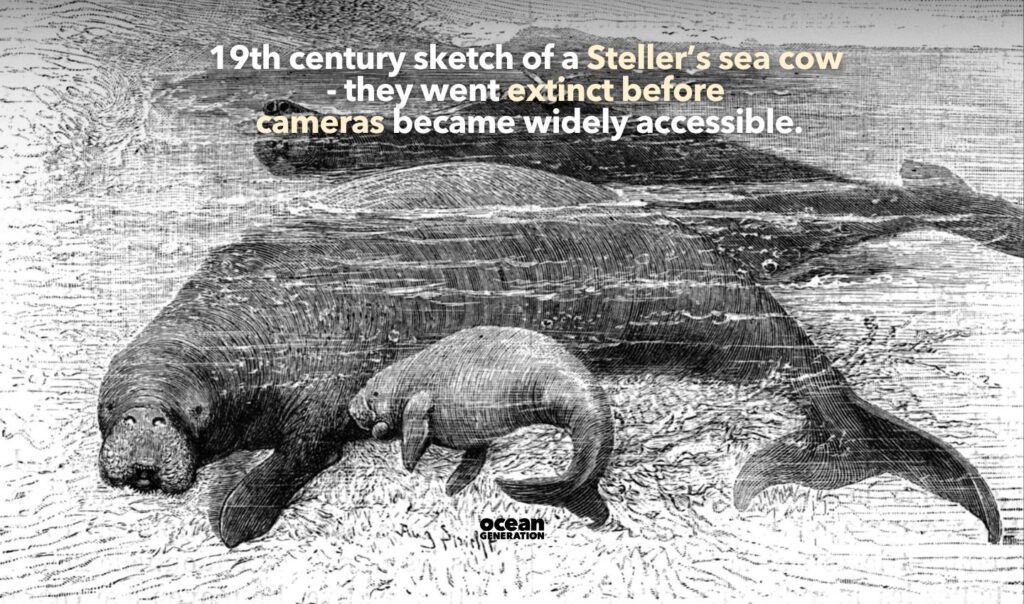
One creature left a particularly strong impression on George Steller. He wrote in his journal of ‘gigantic manatees grazing all about the island’s lagoons’. These cousins of the manatee would often exceed 5,000kg in weight. He observed that they were very sociable creatures, sticking in large herds and eating kelp floating at the Ocean surface as though it were grass, ‘in the same way as horses and cattle’.  

Although Steller wrote that they were so numerous that ‘that they would suffice to support all the inhabitants of Kamchatka’, a twist of fate left them extinct by the 1760s. To understand them, scientists have had to look at historical evidence and their closest living relatives, dugongs and manatees. 

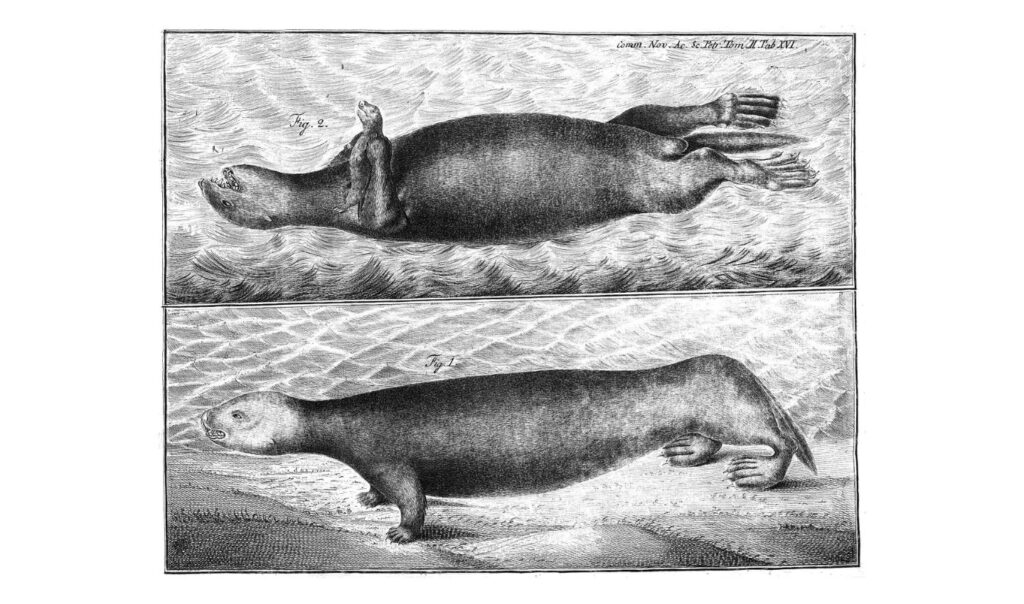
Sketch of a Stellers sea cow. Posted by Ocean Generation.

Story One: Hunting 

Steller’s crew hunted sea cows as a source of food whilst stranded on Bering Island. Steller recalled a story in his journal about the psychological stress this placed on them. Whilst hunting a female sea cow, a male aggressively followed and tried to ram their boat, following all the way to shore long after the female had died. They also hunted other creatures including otters and seals. 

This is the most common theory for the extinction of the sea cow: they were exploited for their meat, fat, and hides, the latter of which would be used in the construction of boats. This theory suggests that the hunting was so widespread and unsustainable that the population was put under great stress and collapsed within 30 years. 

Story Two: Loss of Keystone Species 

In the past few decades, a group of scientists have put forward an alternative theory.  

This theory pays attention to the complex dynamics of kelp forests, and the role that sea otters play as ‘keystone species’: species that play a disproportionate role in managing the ecosystems they call home. As we explained in a recent article, sea otters’ appetite for sea urchins prevents overgrazed ‘urchin barrens’ emerging – desolate stretches of rock with little to no vegetation – in the place of lush and biodiverse kelp forest. Do read this article if you want to learn more! 

Difference between an urchin barren and healthy seafloor. Posted by Ocean Generation.
Urchin barren photo by Ed Bierman, healthy seafloor photo by Zachary Randell

Whilst Steller’s sea cows were hunted on these expeditions, sea otters were the main pursuit. When the first groups returned with the fur pelts of sea otters, traders were so astonished at their thickness and quality that they sold for nearly 100 rubles a pelt – 25 times more than the equivalent pelt from land animals. It’s been said that they were, at some points, worth more than gold! In the wake of the euphoria that ensued, the sea otter population collapsed so quickly and dramatically that they were observed to be at the brink of extinction around the Commander Islands by 1753

Kelp forests create a complex habitat for a diversity of species, with one study in Norway suggesting that the average piece of kelp in their study site supported 8,000 individual organisms. If sea otters are lost to hunting, the kelp forests can be transformed into urchin barrens, as there are no otters to control sea urchin populations. As kelp is lost, the Steller’s sea cow loses their source of food, a change to their environment that might have ultimately resigned them to extinction.  

Sketch of a sea otter by Steller.
Sketch of a sea otter by Steller

Which theory about the extinction of Steller’s sea cow is it? 

Both theories are reasonable. Ecosystems are complex and difficult to understand completely, and it is probably a bit of both. As I have been reminded by one of the scientists who proposed the second theory, ‘the lack of good data from the extinction of sea cows means that we are unlikely to ever really know.’  

Sea cows may be extinct, but this story is not irrelevant, and shouldn’t be the cause of doom and gloom or eco-anxiety.  

As scientists have better understood the role of sea otters as a ‘keystone species’ that maintain kelp forests, we have become more capable of putting conservation programmes in place that work. The recovery of sea otter populations in the Pacific is arguably one of the greatest success stories of conservation, bringing back both populations of sea otters and the coastal ecosystems they engineer such as kelp forests. At the moment, we can look to innovative projects such as the Monterey Bay Aquarium’s surrogacy programme for hope, which raises orphaned pups so that they can be reintroduced back to the wild. (You can see them on the aquarium’s live stream here!)  

We may have lost Steller’s sea cow, but we can still restore kelp forests for the countless other species that call it home. 

Steller had a sense for the value of sea otters, though he may have primarily seen them as creatures to hunt. He even wanted to bring some home as pets. ‘The sea otter,’ he wrote, ‘deserves the greatest respect from us all’. Although he couldn’t have understood the complex work that they do as a ‘keystone species’ as we do today, we can all wholeheartedly agree with him. 

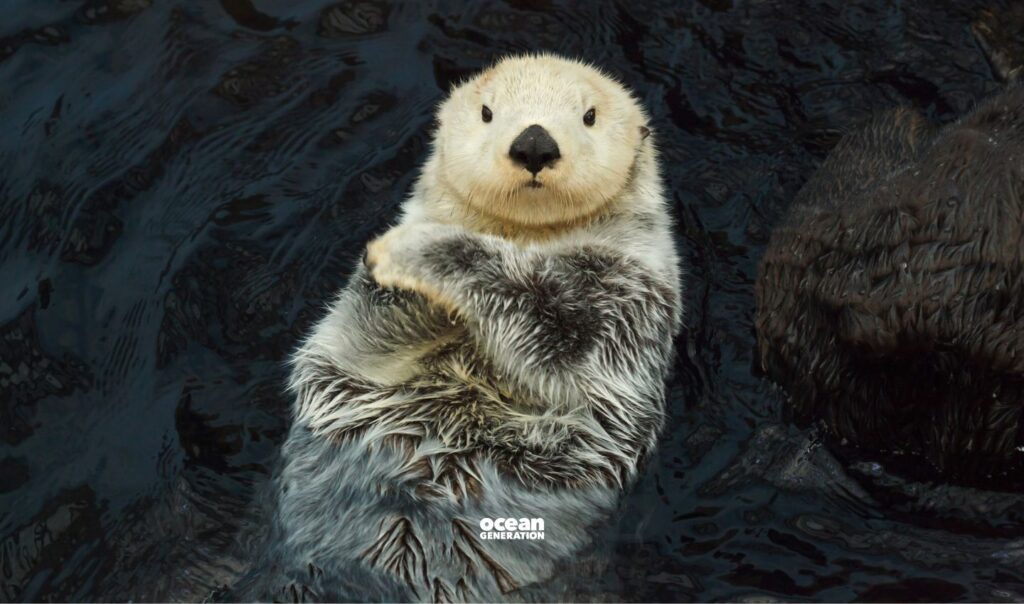
Sea otters are guardians of kelp forests. Posted by Ocean Generation.

Cover image via Biodiversity Heritage Library

Who are the orca outlaws sinking boats, and why are they?

Subscribe

Monthly: Impact in your inbox.

OceanGeneration-Join

How Do Sea Otters Make Themselves at Home in the Kelp Forest?

How do sea otters make themselves at home in the kelp forest?

What comes to mind when you think of sea otters?

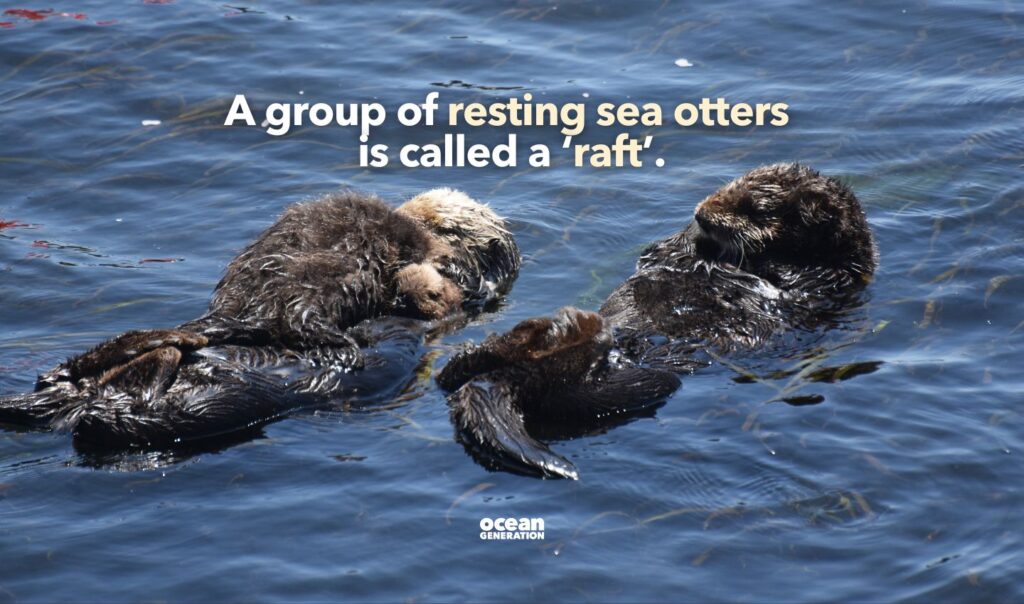
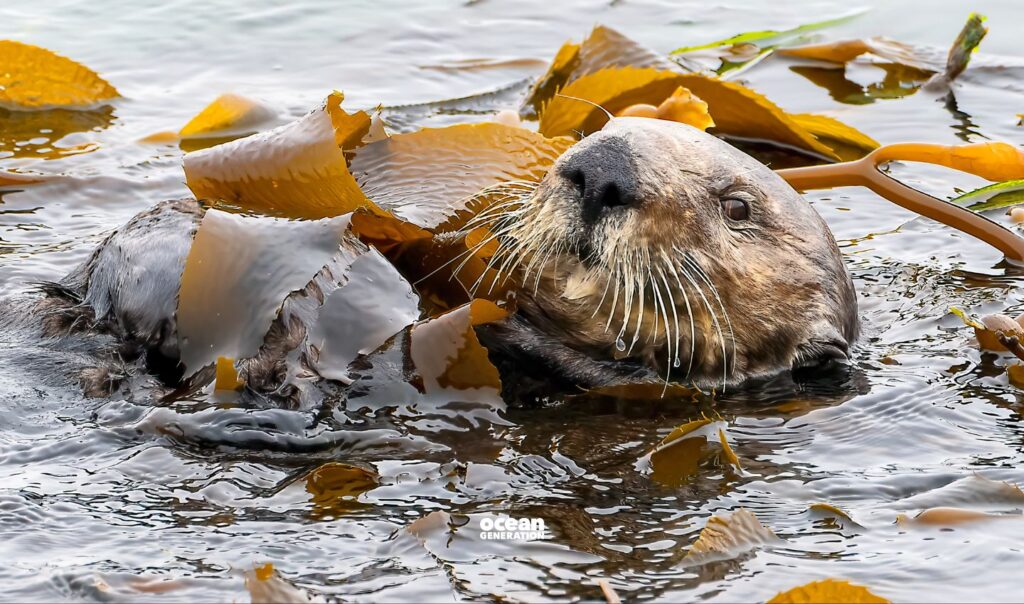
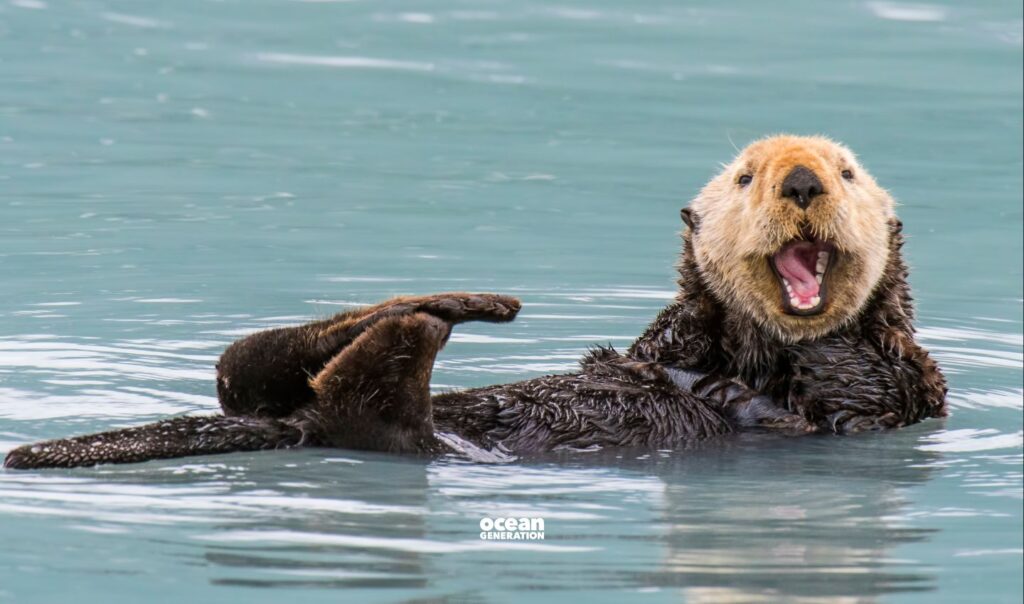
The internet is filled with videos of pups snuggled against their mother’s chest, ‘rafts’ of sea otters holding hands or wrapping themselves in kelp so they don’t drift apart as they nap, and cracking open shells or showing off the pouches in their armpits where they stash their favourite rocks and snacks. They are undoubtedly one of the Ocean’s most adorable and loved creatures.

But more complicated things are going on below the surface.

As well as capturing our hearts, they are ‘keystone species’: species whose everyday eating, resting, and playing has a disproportionately large role in maintaining the entire ecosystem around them. This article will explore how otters make themselves a home in the kelp forest, and how they’re otterly (sorry!) essential to maintaining one of our Ocean’s most vibrant ecosystems.

A group of resting sea otters is called a raft. Posted by Ocean Generation.

Where do sea otters live?

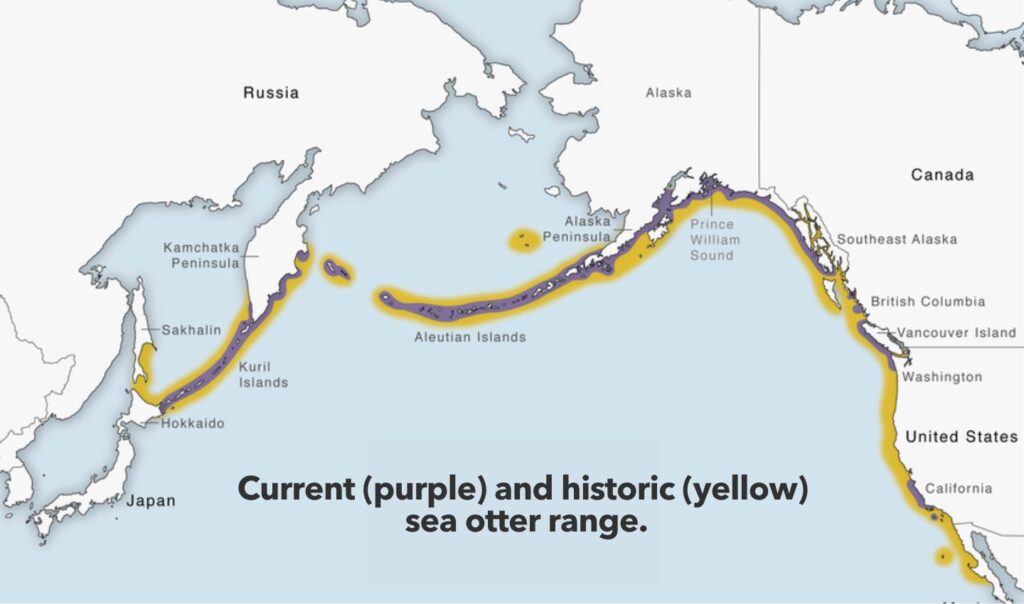
Sea otters (Enhydra lutris) have a range that covers the North Pacific, stretching around a coastline that extends between Japan, Russia, Alaska, and California.

Current and historic sea otter range, posted by Ocean Generation.
Map: Future Directions in Sea Otter Research and Management

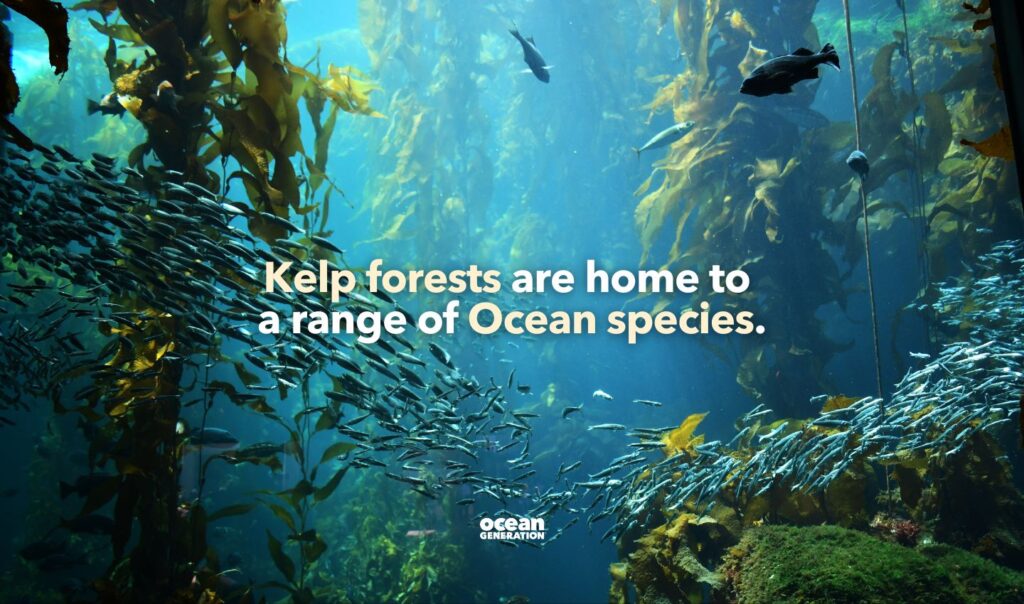
What connects all these places? Offshore – out of sight and below the surface – this whole stretch of coastline is a chain of ‘kelp forests’: magical ecosystems that are teeming with life. Whilst sea otters don’t only live in kelp forests, they are most at home in them as it provides them with food and shelter.

Kelps are a range of brown macroalgae (seaweed, to you and me) that grow up to 50m in length. The brown colour comes from a particular pigment that allows them to capture light below the Ocean’s surface. Like plants on land, they photosynthesise sunlight into organic material, which produces the energy for an entire complex food web around it.

This is the base for an incredibly rich and diverse habitat, and one study in Norway found that the average piece of kelp provides habitat for 8,000 individual organisms, with some even providing habitat for over 80,000!

Kelp forests are home to a range of Ocean species. Posted by Ocean Generation, leaders in Ocean education.

What do sea otters eat?

If there’s one thing sea otters can do, it’s eat. Studies have estimated that they need to eat between 19% and 39% of their body weight in food to meet their basic needs. To put this in perspective, this would be the equivalent of a person needing to eat about 20 pizzas every day!

As well as sea otters, kelp forests are home to a wide range of other species including fish, seals, and seabirds, and invertebrates such as molluscs, lobsters, and sea urchins. Many of these invertebrate species are found in sea otter diets, but at the top of the menu are sea urchins. 

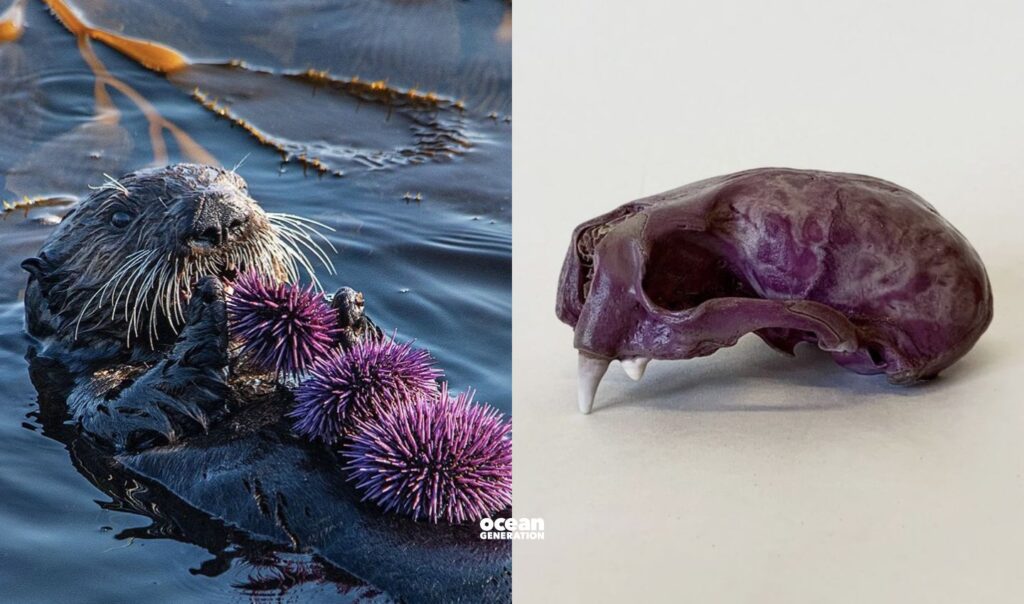
In fact, some sea otters crack open and eat so many purple sea urchins that their bones are dyed a pink to purple colour from the compounds they contain.

Sea otters love eating sea urchins. Posted by Ocean Generation.
Sea otter skull image by Peter Monteforte

How are sea otters ‘keystone species’?

A ‘keystone species’ is a species ‘whose impact on its community or ecosystem is large, and disproportionately large relative to its abundance’. This means that if they are lost from an ecosystem, it can disrupt everything else within it. In the case of the sea otter, losing them can even indirectly lead to the loss of kelp. We have explored a historical case where this happened in an explainer article here.

But how does this happen?

The greatest threat to many kelp forests – especially, but not only, in temperate parts of the Ocean – is overgrazing from sea urchins. When their numbers are left unchecked, sea urchins sweep their way across the seabed, devour all the kelp they come across, and leave nothing but a desolate rocky seafloor known as an ‘urchin barren’.

The varied heights of kelp creates a habitat with different levels that can be compared to the differences between the canopy and floor of forests on land, meaning a diversity of species can call it home. Once an urchin barren forms and kelp is taken out of the ecosystem, the many other species that rely on it for food and shelter can also be lost.

Kelp is a complex habitat that supports a range of small species, which makes it a healthy breeding ground and nursery for fish. This  attracts larger species such as seals and seabirds, who suffer knock on effects along with fish when kelp forest is lost.

Difference between an urchin barren and healthy seafloor. Posted by Ocean Generation.
Urchin barren photo by Ed Bierman, healthy seafloor photo by Zachary Randell

This is where our sea otter’s taste for urchins can come in handy. Sea otters can break through sea urchins’ tough, prickly exterior for food, and do so in such large numbers that they play a crucial role in managing populations. They’re accidental conservationists!

How are sea otters part of conservation efforts?

Sea otter populations had declined very significantly by the 20th century. At the time when much of the initial research was being done on the relationships between sea otters, sea urchins, and kelp, one marine scientist publicly shared his worries that the kelp forests of the Pacific had gone through ‘irreversible degradation’

However, we now know that just as marine ecosystems can be lost much faster than those on land, some can also be restored much faster. The abundance of sea urchins in overgrazed urchin barrens means that sea otters can quickly recolonise their former range.

Sea otters have a long history of being at the heart of conservation efforts. Hunting them in parts of Alaska and Russia was banned in 1911 in the first ever piece of wildlife conservation policy, and banned throughout the United States in the 1970s.

More recently, sea otter ‘translocations’ – where populations are moved to parts of their former range so they can recolonise it – have reintroduced sea otters to parts of the North Pacific such as Southeast Alaska, British Columbia, Washington, and San Nicolas Island in California. As the relationships between them and the kelp forests they live in has become better understood, reintroducing otters has become more than just about them, but the whole kelp forest ecosystem they can create too.

How are sea otters part of conservation efforts? Explained by Ocean Generation.

An exciting project has been taking place over the past few decades at the Monterey Bay Aquarium in California, where orphaned sea otter pups are rescued, rehabilitated, and released back into the wild. Between 2002 and 2016, they reared and reintroduced 37 individuals, with benefits not only for sea otter populations but the integrity of the ecosystem as a whole.

The North Pacific kelp forest: A place to call home

Marine scientists have carried out experiments where they observed the differences between how sea otters behave in parts of the Ocean which have kelp forest in comparison to those places without. As a result, it’s possible to see that the otters themselves benefit from their unwitting conservation work.

Firstly, sea otters love to be around kelp as it is a safe habitat for them. At low tide, kelp sits on the surface of the Ocean, and sea otters wrap up their pups in the strings of kelp so they don’t drift away while they nap or hunt. Their role in clearing the urchin barrens can be really kelpful – restoring the very kelp in which they live!

Secondly, the sea urchins that sea otters catch from urchin barrens are not as nice as the ones in kelp forests. They are small, bad quality, and have poor nutrition. Scientists have estimated that due to the difference in quality, sea otters living outside of kelp forests in the Aleutian Islands in Alaska would need to eat about 1,085 urchins every day to meet their basic needs, compared to just 484 in areas with healthy kelp forests. This means that by restoring kelp ecosystems, sea otters save time and get an extra hour and a half every day to nap or frolic around on the Ocean surface.

Kelp forests can also sustain a more biodiverse and complex food web than urchin barrens. Those otters with a taste for fine foods aren’t stuck with urchins for dinner every day. If you had to eat sea urchins every day, you’d probably be bored and want a change too, right? Kelp forests offer sea otters a more varied diet, from a much larger range of sea creatures including crabs, clams, sea snails, scallops, and mussels.

Why sea otters love kelp forests: Explained by Ocean Generation.

Just an-otter brick in the wall?

So, how do otters make themselves at home in the kelp forest? The answer is simple: just by being their adorable and authentic selves. If there is one take away from this article, it’s that the health of sea otters are entangled in that of the kelp forest ecosystem they call home. 

If you ever find yourself scrolling through cute videos of otters on the internet, just remember, they are not just cute and furry, but truly precious and wonderful engineers of the Ocean’s ecosystems.

Who are the orca outlaws sinking boats, and why are they?

Subscribe

Monthly: Impact in your inbox.

OceanGeneration-Join

Why is the sound of coral reefs important? Explained. 

Why is the sound of coral reefs important? Explained by Ocean Generation.

Take a deep breath. Immerse yourself. Imagine diving onto a coral reef. Multicoloured arms reach up from the seabed, fish fly by on their busy way, shrimps clean their clients, anemones wave in the water.

Energy and movement surround these bustling underwater cities. Let us explore the sounds of coral reefs (and let’s see how many synonyms for noise we can get in).  

Had we asked you to put yourself in the jungle, or on a busy city street, you would have probably filled your ears with the calls of unseen birds and insects, or the honking of a taxi and chatter of fellow bipeds. The sounds of bustling coral reefs are just as diverse and entrancing.  

What sounds can you hear on a coral reef? 

Whistles, pops and hums. This background noise often stays as exactly that: background, largely unnoticed. Yet through advancements in bioacoustic research, we have begun to dissect the noises coral reefs make and realise their importance. 

YouTube player
Video by Will Steen

If you take deliberate notice you will begin to hear the background crackle produced by the sharp pops of pistol shrimp. Pistol shrimp produce sounds exceeding 200 decibels at the source – a conversation is around 60 dB, city traffic 85dB and a jet engine 30m (100ft) away is approximately 150dB. Using their specially modified claws, they rip the water apart, creating cavitation bubbles that briefly reach temperatures comparable to the sun’s surface (up to 4,700°C).  

Then you hear the grunts of clownfish families talking to each other in their anemones. Gradually the other croaks, growls and even fish blowing raspberries come to your attention, and where there was only white noise is now a rich tapestry of sound. Coral reefs are bursting with sound and life. In fact, reefs support over a quarter of all marine life. 

Pistol shrimp and clownfish an coral reef. Posted by Ocean Generation.
Pistol shrimp: Arthur Anker/Flickr

Why is sound so important for coral reefs?  

The coral reef soundscape is crucial not only for the individuals communicating with each other, but for the survival of the reef itself. 

Residents of coral reefs use sound in different ways. The Ambon damselfish can be heard singing to attract a mate; saddleback clownfish grunt to other members of their colony, warning of potential predators. And predators use sound to co-ordinate their hunts.  

Each coral reef has its own acoustic signature, defined by the population it supports.  

We now understand that young animals will listen out from the open sea and select their future home by listening to it.  

This means that the health and resilience of coral reefs depends (at least in part) on their residents’ din. Recently, even coral larvae have been shown to move towards the sounds of a healthy reef, called home by the hubbub.  

Each whistle and whoop add to the cacophony of the reef: a healthy reef is a loud one.

Each coral reef has its own acoustic signature. Explained by Ocean Generation, leaders in Ocean education.

Why is listening to coral reefs important?  

Marine biologists are unpacking the cacophony for science. By listening in and identifying the various reef rumblings, we can identify who’s there.  

This is better than just looking at coral reefs, as we can find the species good at hiding and the nocturnal. We’re even putting AI to work to identify the sounds for us. 

How does human noise impact coral reefs? 

There are some new faces on the coral reef: us. Say what you will about people, but we are rarely subtle.

Our visitations to the marine world bring our own katzenjammer. Motorboats busy themselves buzzing around, whilst seismic surveyors searching for oil and gas fill the water with explosions, and construction work hammers the sea bed with steel piledrivers. 

Most of the noise on coral reefs comes from our boats – engines chugging and rattling, propellers producing bubbles through cavitation just as the pistol shrimp do – these bubbles bursting with a screech. We create an ‘acoustic fog’ – as described by bioacoustic researcher, Steve Simpson.

We are realising with more clarity the effect of our racket. When motorboat noise is present, fish are more vulnerable to predation, perhaps due to warning calls being drowned out, or confusion slowing reaction times.  

Fish show signs of stress and stop their usual activities, including parents fanning their eggs with oxygen-rich water. This can mean young fish don’t develop properly and less of them will survive.  

Human activities create acoustic fog.

As healthy reefs are noisy, the opposite is also true: damaged or dying reefs lose their song 

Coral reefs face many threats: from warming seas causing them to bleach and die, to increasing acidity making it harder for them to build their skeletons.  

In 2016, the most famous reef of them all, the Great Barrier Reef, cooked in hot seas and an estimated two-thirds of coral in the north of the reef died. With this we also lose its noise. In the north part of the reef, it’s 75% quieter than before.  

The reef lost its voice.  

As our fog of noise descends and reefs quieten under the stresses created by us, young crabs, coral and fish listening as they drift in the Ocean can’t hear their homes call to them. Less offspring to fill these underwater cities puts their future in further doubt. 

Why the sound of coral reefs matter? Explained by Ocean Generation.

What can we do to protect coral reef soundscapes? 

But hope isn’t lost! Whenever we give it a chance, nature exceeds our expectations to recover. 

The growing research in bioacoustics is pushing our understanding of the noisy world under the waves. As we learn more about our Ocean’s audio, the desire and ability to protect it grows too.  

“Sound is a pollutant we have the most control over, and we can really fix things” – Prof Steve Simpson 

Ongoing research is decreasing the noise of our engines, and protection of our marine areas is growing. We now know minimising our audio footprint will improve feeding and mating behaviours of the animals on the reef, allow parents to feed and nurture their young better, and give fish a better chance to avoid predators.  

We can now listen to a reef and learn how healthy it is. Phonic richness – the diversity of animal produced sounds – is greater on a healthy reef

Early experiments with acoustic enrichment show promise. When speakers play healthy reef sounds, they attract significantly more juvenile fish and some invertebrates than areas where no sound was played.   

While still experimental, this approach could potentially become one tool in the coral reef restoration toolkit. Read more about the other approaches to reef restoration here

Our Ocean is resilient and, as we deepen our understanding of it, we can more effectively protect it. 

Dunk your head again onto your imaginary coral reef, take a deep breath. Close your eyes. Just listen to the Ocean sing.  

(Final noise synonym count: 11) 

Who are the orca outlaws sinking boats, and why are they?

Subscribe

Monthly: Impact in your inbox.

OceanGeneration-Join

Why are rivers important?

Why are rivers important? Posted by Ocean Generation.

From the creek whispering through a forest, to the confusion of huge currents twisting against each other in the channel. These flowing waters connect ecosystems, cultures, and continents — and ultimately, they connect us to the sea. Join us to explore why rivers are important.  

Read about the wider water cycle and how rivers fit into it here

Why are rivers amazing? What is an estuary? And what are the threats to these wet wonders? 

What are rivers 

Let’s start with a quick definition. Rivers are large, natural flowing streams of water. They have banks on either side, they have a source and a mouth. They meander through every continent, from a few kilometres to thousands long.  

Which is the biggest river?  

What does ‘biggest’ mean? Let us start with length, and to answer that, let us start with another question: where do rivers start? Finding where a river begins is notoriously difficult.  

It’s tricky to work out where that first drop comes from. Some rivers begin from a lake or a melting glacier. Others, like the Danube in Europe, start from a spring (water bubbling out of the ground). 

River origin leads to debates over which the longest river is – the Nile or the Amazon 

The Guinness Book of World Records gives the award to the Nile but does concede “which is longer is more a matter of definition than simple measurement”.  

The Nile, in Africa, has been estimated as great as 7,088 km (4,404 miles) in length, and the same paper puts the Amazon, in South America, at 6,575km (4,085 miles). 

However, a quick search will reveal some debate. 6,650 km (4,132 miles) is more commonly quoted for the Nile, and 6,400 km (3,976 miles) for the Amazon. 

Explorers are always trying to prove otherwise, measuring in a different way, from a different point, to a different point. 
We are #TeamNile.

Next, there is the deepest river in the world: the river Congo.  

It reaches depths of 220m. That is about as deep as the world record for SCUBA diving. By that depth there is little light, and the pressure from the water above is equivalent to having three adult orcas lying on top of you.  

The Amazon stands alone in the amount of water it gathers.  

Once rivers start their journey, they gather in momentum on their mission back to the Ocean. More precipitation and groundwater help fuel their flow, and other streams, known as tributaries, join it along the way.   

Approximately 209,000m^3/s of water enters the Atlantic from the Amazon. Imagine 75 hot air balloons filled with water, every second. This is equivalent to almost 20% of the total global river discharge, the total volume of water rivers release into the Ocean.  

The Amazon is more than the Nile, the Mississippi, in the USA, and the Chang Jiang (Yangtze), in Asia, combined. The brown waters can be seen as far as 100km (62 miles) out to sea, which provided an important navigation tool for sailors hundreds of years ago.  

The biggest rivers on Earth, posted by Ocean Generation.

Where are estuaries? 

Where the river reaches the Ocean, the interface is an estuary. They usually have a mix of fresh and salty water, known as brackish (there are some examples of freshwater estuaries in the Great Lakes of North America). 

Estuaries are highly productive, unique ecosystems. For many different animals they provide food, places to breed, nursery grounds and hosting migratory species.  

But why do rivers matter? 

Rivers are important, as fresh water is key to all life. Rivers have influenced our world historically, geologically and culturally. They support life where it would otherwise be unviable, on land and in the Ocean. They are the ultimate connector. 

Approximately 40 trillion cubic metres of water enters the Ocean from rivers every year. But it doesn’t come alone.  

As water moves over the land, it picks up hitchhikers (such as ions, making the sea salty – see more here). Material dissolves into the river, or the water pulls it along. These can lend colour to the river waters (and often their names). 

There is the Rio Negro in Brazil, named due to the humic acid from decomposing vegetation colouring the water black. The Red Rivers in Peru and North America, from the small pieces of rock containing iron oxides. The Drina in central Europe is green due to the limestone it flows over and the Hwang Ho (Yellow River) in China is named so because of the loess (a type of soil or sediment) it carries. 

They do more than just look good; these multicoloured masses are changing the world. 

Freshwater is key to all life on Earth. Posted by Ocean Generation.

How do rivers change the world? 

Flowing over rocks, mud and sand, each particle that the waters pick up change the course of the river and the shape of the land. Look around where you live, you can usually find the fingerprints of water at work.  

Rivers can cut away land and form new land, depositing the sediment it has picked up on the bank or in deltas where they meet the Ocean.  

The Colorado River, in North America, has produced the most remarkable example, carving away the landscape to produce the Grand Canyon, while the Nile Delta shows us how rivers build land too.  

The waters are full of nutrients, iron, nitrates and other essential building blocks for life. When these enter the Ocean, life flourishes.  

How are rivers and estuaries important for us? 

Rivers are incredibly important for one species in particular: us.  

The first great civilisations all rose up on rivers. The Nile, the Indus, the Tigris and Euphrates and the Huang all supported some of the earliest great cities in human history. Think of a big city – if it isn’t on the coast, we bet it is on a river. 

Rivers provide food: the last two very long uninterrupted rivers in Southeast Asia, the Irrawaddy and Salween, provide 1.2 million tonnes of catch annually and support agriculture of over 30 million people. In the US, approximately 68% of the commercial fish caught were caught in estuaries. 

The water rivers carry is crucial for drinking, domestic use and agriculture. More recently, we use it for power and industry, and transport.  

Rivers have held a central place in culture as well, connecting us and our world metaphysically.  

The Whanganui river in New Zealand has been regarded as an ancestor by the Māori people for centuries, and the Ganges is upheld as a place of healing and purity, personified by the goddess Ganga. In Japan, Shinto beliefs hold that each river has its own divine guardian, the Kawa-no-Kami.  

Across many different cultures, rivers have been celebrated and protected.  

Why do rivers matter? Posted by Ocean Generation, leaders in Ocean education.

What are the threats to the rivers? 

As much as rivers have impacted human civilisation, we have had our impact on them.  

Changes to our water cycle due to climate change have reduced the resilience of our rivers as they experience larger variations in flow. Add that to pollution, developing on their banks, extracting their flora and fauna and even stopping their flow – rivers have had it tough. 

In order to harness the power of our rivers, we have been interrupting their flow. Just 23% of rivers over 1000km long flow uninterrupted into the Ocean, broken up by an estimated 2.8 million dams. 

The water rivers carry is crucial

How does pollution affect rivers? 

It is important to realise there are lots of different types of pollution. The first and most obvious is big pollution – plastic, waste, shopping trolleys – that kind of thing. This rubbish can damage the life in the river itself, spoil the water for use and clog and disrupt the water flow.

The other kind of pollution is the small stuff – chemicals, microplastics and pharmaceuticals. These can disrupt aquatic wildlife, make the water unsafe to drink and accumulate through the food chain.  

The Ganges, in India, is now a stark example of river pollution. In Hinduism, the river is personified as the goddess Ganga, the goddess of purity.   

Just 37% of sewage is treated before entering the river. The banks are lined with tanneries, slaughterhouses, textile mills, chemical plants and hospitals. The waste that fills the river has an estimated 66% occurrence of waterborne disease and contains super-bacteria resistant to antibiotics.  

How are estuaries under threat? 

Estuaries face many of the same threats as rivers. An estimated 55% of global wetland areas has been lost since 1900, due to developing coastal areas. These wetlands provide unique habitats for their inhabitants, who often are not suited to either the freshwater or marine environments.  

We also benefit from the carbon dioxide absorption, offsetting our emissions, and the reduction in the risks of flooding and coastal erosion. 

But we are poisoning them too. Chemicals – pesticides and fertilisers – used in agriculture, are washed into rivers and accumulate in estuaries. This leads to nutrient overloading, or eutrophication, with harmful algal blooms appearing. When these die, the decomposition uses up the oxygen in the water – impacting the animals living there.

Estuaries absorb carbon dioxide. Posted by Ocean Generation

How can we look after our rivers? 

Everything is connected, which means you can make a difference from anywhere. Simply being aware of the connection you have with the Ocean is an important step. You can look after it, wherever you are.

Rivers connect us directly to the Ocean. A hot take? All life is essentially marine – everything is connected to and dependent on the Ocean. 

Along with estuaries, they provide important habitats, give us the water we need to survive and bring us closer together through transport and culture. But they are threatened in our new world. As ever, being aware is such a crucial first step to solving any issue.  

Educate others:  

  • Share information about river conservation and encourage others to take action. 
  • Engage in local initiatives that promote sustainable water management practices. 

Join community and advocacy events:

  • Participate in local river clean-up events to help maintain waterways and raise awareness 

Advocate for sustainable practices:

  • Support policies that protect rivers from pollution and over-abstraction 
  • Promote low-impact renewable energy to preserve free-flowing rivers 
  • Be aware of what you use. Harsh chemicals for cleaning and gardening will eventually enter our Ocean. Check your shampoo for harmful chemicals and microplastics. 

Next time you are by a river, take a moment. That is a direct line to the Ocean. See if you can understand the connection humans have felt with rivers throughout our history. Wonder at the power and beauty. Appreciate the importance of our rivers.  

You can make a difference from anywhere.

Who are the orca outlaws sinking boats, and why are they?

Subscribe

Monthly: Impact in your inbox.

OceanGeneration-Join

What is the UN Ocean Decade: Everything you need to know

We’re halfway through the UN’s Decade of Ocean Science

2025 is the year NASAs Artemis III mission hopes to land the first people on the moon since 1972, we’ll welcome the year of the Snake in the Chinese New Year, there will be a total eclipse visible across some of North America, Greenland and Europe – and 2025 marks the halfway point in the Ocean Decade.  

What is the Ocean Decade? 

In 2017 the UN General Assembly announced something exciting. 2021- 2030 would be the UN Decade of Ocean Science for Sustainable Development, or (much catchier) the Ocean Decade.  

Its vision is encapsulated in the phrase, ‘the science we need for the Ocean we want’. 

The science we need for the Ocean we want encapsulates the vision of the UN Ocean decade.

The aims of the Ocean Decade are;  

  • Stimulating Ocean science and knowledge generation 
  • Creating new opportunities for sustainable ecosystem development 
  • Accelerating the implementation of Sustainable Development Goal (SDG) 14: Life Below Water which is all about conservation and sustainable use of the Ocean
  • Fostering international cooperation in Ocean science. 

That is a lot of long words to say, the goal of the Ocean Decade is to put the Ocean front and centre.

How is the Ocean Decade helping the Ocean? 

The UN has identified key Ocean Decade challenges and set targets to address them. 10 Ocean Challenges, aiming for 7 Outcomes of collective impact.  

The 10 key UN Ocean Decade Challenges, posted by Ocean Generation.

Here’s a simplified breakdown of the challenges (in reverse order just to keep you on your toes).  

Challenge 10: Restore society’s relationship with the Ocean
Challenge 9: Skills, knowledge, technology and participation for all 
As the great Jacques Cousteau said, “people protect what they love”. Restoring a link between people and the Ocean, instilling stewardship through education, is key to improving its health.  

Challenge 8: Create a digital representation of the Ocean 
Challenge 7: Sustainably develop the Global Ocean Observing System  
7 and 8 offer how to deepen that knowledge of the Ocean and use technology to further it and share it. Making models, exploring further and don’t forget to tell everyone about it. 

Challenge 6: Increase coastal resilience to Ocean and coastal risks
Challenge 5: Unlock Ocean-based solutions on climate change 
We can enlist the Ocean as an ally. It already absorbs up to 89% of our excess heat and has taken up 40% of carbon dioxide emitted. However, intensification of storms and rising sea levels threaten communities closest to the sea. Challenges 5 and 6 look at the practicalities of our relationship with the Ocean. 

The goal of the UN Ocean Decade is to put the Ocean front and centre.

Challenge 4: Develop a sustainable, resilient and equitable Ocean economy
Challenge 3: Sustainably nourish the global population 
Beyond that, our Ocean can be a cornucopia, providing food and resources. To ensure it is, these two aim to tackle the management and guidance needed to avoid a harmful relationship with the Ocean and benefit everyone. 

Challenge 2: Protect and restore ecosystems and biodiversity
Challenge 1: Understand and beat marine pollution 
Finally, Ocean Decade challenges 1 and 2 aim to protect and restore. Undo the harm that has been done to our Ocean, and tackle how it is still being damaged.  

For a healthy planet, we need a healthy Ocean. 

These challenges cover the full range, from prompting a sense of responsibility in people to tackling the specific threats.  

The goal is simple – nurture an Ocean that is healthy, resilient, clean, productive and safe, but also predictable, accessible and inspiring. These are the outcomes the Ocean Decade targets. (Read: Why is the Ocean so important?

For a healthy planet, we need a healthy Ocean. Posted by Ocean Generation.

We are all part of the Ocean Decade 

Ocean Generation’s mission is to bring the Ocean to everyone, everywhere.  

We translate complex Ocean science into engaging content and run three youth engagement programmes for 3 – 25-year-olds. Our Ocean Intelligence approach is endorsed by UNESCO as an Ocean Decade Project; making us part of Ocean Decades solutions.  (Which challenge are we meeting?).

Look through the challenges, see if you can engage with any.

UN Ocean Decade: First look complete 

Over the coming year, we’ll check in with the Ocean Decade. We will explore the plans it has, discover how it ties in with the different elements of the work we do, and summarise the progress it has made in a final check up at the end of the year.  

We are all part of the UN Ocean Decade.

Who are the orca outlaws sinking boats, and why are they?

Subscribe

Monthly: Impact in your inbox.

OceanGeneration-Join

Balancing conservation and community in polar wildlife conflicts 

Balancing community and conservation in polar wildlife conflicts

Addressing human-wildlife conflict is essential for both wildlife conservation and human well-being. 

As human populations expand into natural habitats, finding solutions that promote coexistence between people and wildlife becomes increasingly important. By fostering harmony, we can support thriving species, healthy ecosystems, and positive relationships between local communities and conservation efforts.

Reducing conflicts benefits wildlife and eases financial losses for local communities. It also aligns with the UN’s Sustainable Development Goals by enhancing livelihoods, building community resilience, and creating economic opportunities for local populations. 

Mitigating human-wildlife conflict on land 

Climate change intensifies human-wildlife conflict by changing the historical range and behaviour of wild species, increasing the frequency of interactions between humans and wildlife.

Climate change intensifies human-wildlife conflict. Posted by Ocean Generation, leaders in Ocean education.

While addressing climate change is key to reducing these conflicts, communities can adopt strategies to minimise interactions with conflicting species. Some of these approaches are listed below: 

  • Fencing key resources, such as livestock, and securing protected areas. Planting buffer crops could also reduce wildlife consuming important resources.  
  • Implementing animal-safe food storage facilities and improving waste management systems can prevent wildlife from being attracted to human food sources. 
  • Integrating guarding measures, such as specialised livestock-guarding dogs or patrol officers, into resource protection could provide early warning signs to alert residents to potential conflicting wildlife. 
  • The use of non-lethal deterrents, such as visual, chemical, and acoustic repellents, can further discourage wildlife from approaching human settlements and resources.  
  • Economic costs of conflicts could also be reduced through compensation schemes, alternative income generation, or increasing wildlife-related tourism. 

A better understanding of animal movement can help predict high-risk areas and times, allowing for more targeted mitigation efforts. For example, researchers studying moose found that the risk of vehicle collisions increases in winter when snow depth is below 120 cm and nighttime traffic is higher due to longer nights.

This highlights the need for seasonally adaptive strategies to mitigate such risks.  

Mitigating human-wildlife conflict in the Ocean

Fishers have several options to minimise encounters with marine mammals.

Ocean mammals often become entangled in fishing lines

Mammals often collide with or become entangled in vertical lines attached to buoys, which mark where nets have been set. To prevent wildlife harm and gear damage, fishers could reduce the number of vertical lines in the water column or use ropes in colours more visible to mammals.

Common rope colors like yellow, green, or blue may be difficult for whales to detect. Switching to colours such as white, black, or striped patterns could make the ropes more visible to whales, potentially helping them avoid entanglement.

Another approach involves weakening lines so that entangled animals can break free more easily. However, this solution can result in financial losses due to reduced catch and replacing lost gear. 

Technological innovations, such as acoustic buoy releases that surface only when triggered, could eliminate the need for vertical lines. Another potential solution is the use of pingers, which are devices placed on lines that emit noises at specific frequencies to warn whales and other marine mammals away from boats and fishing gear.

Fisheries-have-several-options-to-minimise-encounters-with-marine-animals

While these strategies could help reduce human-wildlife conflict in fisheries, more testing is needed to see how effective they are. Supportive initiatives, like financial compensation programs to cover losses from wildlife, can ease the economic strain on fishers and encourage the use of non-lethal deterrents. 

Collaboration between scientists and communities is key to solving these challenges. For example, the Alaska Longline Fishermen’s Association partnered with biologists and bioacoustic experts in 2003 to study whale behaviour and minimise interactions with longline boats. This led to the creation of the Southeast Alaska Whale Avoidance Project (SEASWAP), a successful project improving our understanding of depredation.  

Balancing conservation and community needs 

The key to addressing human-wildlife conflict involves recognising and valuing the diverse attitudes towards conservation that influence both the conflict and resolution.

By appreciating the different perspectives of stakeholders, conservation plans can be designed to address the needs and interests of everyone involved. Engaging meaningfully with communities is key to developing policies that are not only effective but also widely supported. 

Balancing conservation and community to mitigate polar wildlife conflicts, posted by Ocean generation

Who are the orca outlaws sinking boats, and why are they?

Subscribe

Monthly: Impact in your inbox.

OceanGeneration-Join

Bearly coexisting: Human-wildlife conflict in the polar regions 

Human-wildlife conflict in the polar regions: Explained by Ocean Generation

As human populations grow, we’re getting closer to natural habitats, leading to increased interactions with wildlife.

Conflict arises when wildlife presence poses real or perceived costs to human interests or needs, like loss of livestock, crop raiding or attacks on humans. 

Human-wildlife conflict can have negative impacts on wildlife and can also affect community dynamics, commodity production, and sustainable development.

Conservation biologists are increasingly concerned about human-wildlife conflict in the polar regions – the Arctic in the Northern Hemisphere and Antarctic in the Southern Hemisphere.  

Why is human-wildlife conflict increasing in the polar regions

The polar regions are characterised by low temperatures, extreme seasonality, and the seasonal advance and retreat of sea ice. Both polar regions are home to numerous endemic species, but their survival is threatened by climate change, fishing, tourism, invasive species, and pollution.

Experts are concerned about human-wildlife conflict in the polar regions. Posted by Ocean Generation.

These pressures often lead to more frequent encounters between people and wildlife, especially in the Arctic where around 4 million people live.  

A recent study on protecting Antarctic biodiversity found that current conservation efforts are insufficient. It’s predicted that around 65% of land animals and land-associated seabirds could decline by 2100 if global greenhouse gas emissions continue on their >2°C trajectory.  The study suggests several ways to boost conservation efforts, such as: 

  • Improving the quality of land that has been polluted or negatively impacted by human use 
  • Managing infrastructure
  • Protecting areas 
  • Controlling non-native species and diseases 

How does human-wildlife conflict appear in the polar regions? 

Encounters between people and polar bears

Polar bears are an iconic Arctic species, distributed across 19 subpopulations within five countries: the United States, Canada, Greenland, Norway, and Russia. They rely on sea ice for hunting (primarily seals), breeding, and resting. 

With climate change accelerating and sea ice diminishing, polar bears are forced to spend more time on land. Here finding natural food sources becomes challenging, so they often seek out human settlements for a predictable source of nutrition.

The town of Churchill, Manitoba, Canada, is famously known as the ‘polar bear capital of the world’ due to the Western Hudson Bay population that pass through the town each summer and autumn. 

Polar bears often seek out human settlements for food

Between the 1940s and 1980s, these bears regularly visited a waste disposal site, feeding on scraps that caused property damage, human injuries, and malnutrition for the bears. The food waste was often insufficient in fat and contaminated with plastics, metals, and wood. 

Efforts to manage the problem included better waste management, relocating bears, temporarily housing them at a holding facility until Hudson Bay froze, or, in some cases, lethal removal. 

The Government of Manitoba has since closed the dump site and established the Polar Bear Alert Program to minimise the need for lethal measures and reduce conflicts with bears.

As polar bear encounters become more frequent, the significance of this program is expected to grow.

How orcas and Arctic foxes hunting impact communities

Sometimes predators feed on animals of economic and ecological importance to people. These are depredation events (events that cause damage or destruction). 

Depredation events often happen in the polar regions. Posted by Ocean Generation

Mammals in the Arctic Ocean are increasingly observed preying on fish caught by commercial and recreational fishing boats. Longline fishing, which involves the use of baited hooks on a long line, is currently the most severely affected by depredation across both hemispheres, primarily by toothed whales, such as orcas and sperm whales.

These depredation events can result in financial losses for fishers who face difficulties due to reduced catch and often face costs for repairing damaged fishing gear. These interactions can also harm wildlife through injuries or fatalities caused by entanglement with fishing gear and responses from fishers.

Orcas, otherwise known as killer whales, are frequently involved in depredation events in polar regions. It’s been suggested that their group hunting behaviour enables orcas to effectively remove fish from longlines.  

These animals are highly social and live in tightly knit family groups, known as pods. Research suggests that pods which overlap geographically can communicate and share information. It’s thought that this cultural transmission is causing depredation behaviour to spread throughout western Alaska.  

Depredation on land is also a concern, particularly with Arctic foxes preying on reindeer calves 

In the Yamal Peninsula, traditional reindeer herding practices are central to the lives of the indigenous Nenet people of Arctic Russia. However, reindeer mortality has increased due to factors such as pasture icing (explained later), disease outbreaks, and predation by Arctic foxes.

Arctic foxes prey on reindeer calves in Arctic Russia

The population growth of arctic foxes has been fueled by the collapse of the fur trade in the 1990s, which reduced hunting pressure. Industrial expansion also provided waste for foxes to feed on, further supporting their population increase. 

Climate change worsens the issue by causing abnormal weather conditions, such as freezing rain and rapid temperature fluctuations, which lead to pasture icing. This occurs when a thick layer of ice forms over grazing land, trapping vegetation and making it inaccessible to livestock and wildlife. As a result, weakened reindeer become easier prey for foxes, while more carcasses are left for scavenging.

Finding solutions for people and wildlife 

Human-wildlife conflict in the polar regions presents challenges, especially with the added pressures of climate change and other stressors.

However, finding solutions that harmonise conservation goals with community needs can lead to positive outcomes for both people and wildlife. Check out our article on Balancing Conservation and Community in Polar Wildlife Conflicts for strategies to effectively manage and resolve human-wildlife conflict. 

Who are the orca outlaws sinking boats, and why are they?

Subscribe

Monthly: Impact in your inbox.

OceanGeneration-Join

Why does the climate change?

Why does the climate change? Explained by Ocean Generation.

The Earth’s climate has changed naturally for billions of years, but human emissions are rewriting the story.  

Scientists know that the Earth’s climate has always changed by itself, even before humans existed.  

The climate changed in a pattern for the past 800,000 years. Every 100,000 years, the Earth entered a warm period, called an “interglacial”, lasting 15,000-20,000 years. Between these periods, ice ages called “glacials” dominated.  

Changes to the climate that caused these glacials and interglacials in the past can be explained by natural forcings. These are forces that act upon Earth’s climate, causing a change in how energy flows through it e.g., greenhouse gases.  

What are some natural forcings? 

1. Milankovitch Cycles 

Milutin Milankovitch, a mathematician, discovered three “Milankovitch” cycles.  

Over the past 800,000 years, these were the dominant causes of climate variability because they affect the amount of solar heat that can reach the Earth’s surface.

Eccentricity occurs every 100,000 years, corresponding with interglacials. Sometimes Earth’s elliptical orbit is more circular, which keeps the Earth at an equal distance from the Sun. When the orbit is more elliptical, Earth’s distance from the Sun changes. When Earth is closer, the climate is warmer. 

Obliquity, Earth’s axial tilt, changes between 22.1° to 24.5° every 41,000 years. Larger angles cause warmer summers and colder winters.   

Every 19,000 – 24,000 years, Precession impacts seasonal contrasts between the hemispheres and the timing of seasons. The Earth wobbles on its axis due to the gravitational pull of the Sun and moon, changing where the North Pole points.  

Milankovitch cycles are long term changes that affect the climate
Design by Grace Cardwell

2. Sunspots  

Every 11 years, the Sun gets spots when its magnetic field increases. The temperature is lowered in this area, influencing the amount of solar radiation warming Earth.

3. Changes in Ocean currents

Ocean currents carry heat around the Earth. When the Ocean absorbs more heat from the atmosphere, sea surface temperatures increase, and Ocean circulation patterns change. Different areas become colder or warmer. 

Because the Ocean stores a lot of heat, small changes can have massive effects on the global climate. A warmer Ocean can’t absorb as much carbon dioxide (CO2) and will evaporate more water vapour. Both contribute to the greenhouse effect and global warming.  

4. Volcanic eruptions

Volcanoes spew out sulphur dioxide and ash, which blocks solar radiation and cools the atmosphere. CO2 released in the eruption eventually overpowers this to increase temperatures, but this is only equivalent to 1% of human emissions.  

5. Meteorite and Asteroid impacts

66 million years ago, an asteroid hit the Earth on Mexico’s Yucatán Peninsula. Scientists call this the Chicxulub Impact, and it drove the extinction that killed 60% of all species, including all non-flying dinosaurs.

Lots of sulphur, soot and dust entered the atmosphere, blocking out the Sun. Temperatures plummeted 15°C, causing a 15-year winter.   

Natural forcings explained by Ocean Generation.

Some climate change and emissions are unavoidable

But natural forcings are too gradual or irregular to cause current climate change.  

The Intergovernmental Panel on Climate Change (IPCC) states “the observed widespread warming of the atmosphere and Ocean, together with ice mass loss, support the conclusion that it is extremely unlikely that global climate change of the past fifty years can be explained without external forcing, and very likely that it is not due to known natural causes alone”.   

Just right or too hot? 

Greenhouse gases are natural, to an extent.  

Some solar radiation passes through the atmosphere, hitting the Earth. Most of this is reflected into space, but some is absorbed by greenhouse gases and re-directed back to Earth.

This keeps Earth just right (Earth is called the “Goldilocks” planet!).

People are emitting too many greenhouse gases, too quickly. Therefore, more heat is trapped in the atmosphere, leading to global warming.  

Greenhouse effect explained: normal and rampant CO2
Credit: National Park Service

How are people causing climate change? 

External forcings” are things we’re doing that release extra greenhouse gases.

1. Power  

We burn fossil fuels like coal, oil and gas to make electricity and heat. This releases carbon dioxide and nitrous oxide to the atmosphere. Half of this electricity powers our buildings.

Globally, only about ¼ of our electricity comes from wind, solar and other renewable sources.  

Some people use more power than others: the richest 1% of the global population combined account for more greenhouse gases than the poorest 50%.

2. Food and Manufacturing  

To make goods like steel and plastic, fossil fuels are burnt to power factory machines and many other processes. Manufacturing is one of the largest contributors to greenhouse gas emissions worldwide.

Food production emits greenhouse gases at various stages. Livestock and rice farming releases methane, fertilisers release nitrous oxides, and carbon dioxide is released to make packaging and transport the food.  

How are people causing climate change: Explained by Ocean Generation.

3. Deforestation

In places like the Amazon Rainforest, trees are cut down to make space for farming and houses. From 2003 – 2023, 54.2 million hectares of rainforest was lost there.

When trees are cut down, they release locked up carbon. With fewer trees, less CO2 absorption can take place. Land use changes make up ¼ of greenhouse gas emissions.

4. Transport  

Cars, ships and planes all burn fossil fuels such as petrol. This makes up ¼ of global energy-related CO2 emissions. This graph shows our impact on the atmosphere: 

This graph shows our impact on the atmosphere.

Don’t put the blame on natural forcings 

Now we know current climate change is down to us; everyone has a responsibility to reduce their emissions. Have a look and see what you can do!  

Who are the orca outlaws sinking boats, and why are they?

Subscribe

Monthly: Impact in your inbox.

OceanGeneration-Join

What can Antarctic ice cores tell us about the history of our climate? 

What can Antarctic ice cores tell about the history of climate

Ice cores are the key to the ancient climate and can help us unlock the mysteries of the future 

Scientists can drill into ice sheets to obtain a cylinder of ice, called an ice core.

Ice cores are “time capsules” of the climate. Over time, annual and seasonal snow with different chemical compositions, particulates (like dust), and bubbles of air are compressed into ice.  

What-can-Antarctic-ice-cores-tell-about-the-climate
Credit: Bradley R. Markle via Eos

Scientists are asking the core questions 

One of Antarctica’s ice cores, Dome Concordia, shows the climate record for the past 800,000 years through the Quaternary period (2.58 million years ago – present).  

Annual temperatures are estimated using oxygen’s heavy (O18) and light (O16) varieties, called isotopes. When atmospheric temperatures increase, more energy is available to evaporate water containing more O18 from the Ocean. This water is precipitated in Antarctica and turns to ice. Scientists can relate the isotopic ratio in an ice layer to the temperature.

Trapped air is analysed for which/how much atmospheric greenhouse gases were present annually. Scientists can estimate carbon dioxide (CO2) and methane (CH4) to determine the degree of global warming. 

Using this data and more, scientists can piece together past climates.  

Ice cores are key to ancient climate: Explained by Ocean Generation.

What’s the story, ice cores?

Ice cores tell us that the climate swings between stable bounds of warm interglacials happening every 100,000 years which last 15,000 – 20,000 years, and cold glacials (ice ages).

Ice cores show these key events:   

1. 800,000 years ago in the Pleistocene, ice cores show an interglacial Earth. The glacial-interglacial pattern continued from here… 

2. 430,000 years ago, the Mid-Brunhes Event marked the sudden increase in the temperature range of climate cycles.

3. The penultimate deglaciation event, seen in Antarctic ice cores extends from 132,000 -117,000 years ago.

4. From 24,000 – 17,000 years ago, the Earth was glacial, with temperatures 20°C below pre-industrial levels.

5. Deglaciation began 16,900 years ago, punctuated with tiny ice ages, called the “Bøllering-Allerød” and “Younger Dryas”, thanks to the “bi-polar seesaw” (the Northern Hemisphere cools whilst the Southern Hemisphere warms and vice versa).  

6. 15,000 years ago, ice sheets began to shrink. This heating continued into the Holocene (the official period of geological time which we currently live in)  

7. This interglacial’s temperature peaked between 14,500 and 14,000 years ago

What ice cores tell us about ancient climate.

8. From 13,800 – 12,500 years ago, Antarctica experienced a Cold Reversal, where temperatures plummeted.  

9. The Holocene interglacial began 11,000 years ago, with temperatures fluctuating between warm and cold again.  

10. 1,000 years ago, the Medieval Warm Period allowed crops to flourish, cities to rise, and populations to more than double. 

11. The Little Ice Age, from the 14th-19th centuries, caused Viking colonies in Greenland to fail.  

12. 1750 – the Industrial Revolution began. Ignorant to environmental consequences, humans started emitting greenhouse gases.  

13. Scientists mark 1800 as initiating the Anthropocene, an unofficial epoch where humans effect the climate more than natural forcings.

14. Humans have continued global warming at an unprecedented rate. Summer 2024 was the world’s warmest on record. August was the 13th in a 14-month period where global average temperatures exceeded 1.5°C above pre-industrial levels.

Is the past a mirror of the future? 

Levels of greenhouse gases are higher than in the past 800,000 years, with average CO2 at 419.3ppm as of 2023.  

Paleoclimatology records like ice cores and marine sediments help scientists to understand past climates and estimate future climates. They can compare different emission scenarios with the past to see how future climates may respond. 

The Intergovernmental Panel on Climate Change (IPCC) have estimated several trajectories.

The aggressive mitigation scenario expects CO2 concentrations to remain at Pliocene-like concentrations (>350ppm) until 2350. It will still take 100s -1000s of years for concentrations to return to pre-industrial levels.

Under a middle-of-the-road scenario, CO2 peaks at 550ppm, remaining above Pliocene levels for 30,000 years.  

If CO2 reaches 1000ppm, the worst-case scenario suggests concentrations will remain at Mid-Cretaceous levels for 5000 years, Eocene levels for 10,000 years, and Pliocene levels for 300,000 years. It will take 40,000 human generations for CO2 to return to pre-industrial levels.  

Are past climates mirror of future events?
Credit: International Geographical Union

Scientists and governments can then prepare for the extreme consequences of climate change and make net-zero emission targets.

Although the Earth has recovered in the past, the future is uncertain. What will happen to our Ocean and our species? We all have opportunities to ensure a “best-case scenario”.

Antarctic ice cores unlock the past, our actions will unlock the future.  

Who are the orca outlaws sinking boats, and why are they?

Subscribe

Monthly: Impact in your inbox.

OceanGeneration-Join

Why the Arctic is the fastest warming region on the planet

The changing Ocean climate: Why the Arctic is the fastest warming region

A polar biome brimming with glaciers, permafrost, and sea ice. Home to countless species, but for how much longer?  

The Arctic is extremely sensitive to environmental changes. The increase in global mean air temperature is linked to the excessive melting of Arctic sea ice: one of the most unambiguous indicators of climate change. Since 1978, the yearly minimum Arctic sea ice extent has decreased by ~40%.

Global warming is rapidly taking place due to our greenhouse gas (like carbon dioxide (CO2)) emissions. Our current emission rates of ~40 Gt CO2/year could leave the Arctic ice-free by 2050.  

Our Ocean also plays a role in climate change.  

Barents Sea is the hotspot of global warming: Explained by Ocean Generation

“The hotspot of global warming” – not the nickname you want! 

Unfortunately, this is the nickname the Arctic’s Barents Sea is bestowed. Atlantification (the process by which the warming climate alters the marine ecosystem towards a more temperate (milder) state) is to blame.  

Scientists (though they’re still not 100% sure of all processes involved) have noticed drastic changes in our Ocean where Arctic and Atlantic conditions collide.

Arctic water is colder and less salty than Atlantic water. Thawing ice releases freezing freshwater into the Ocean, keeping Arctic water buoyant. Atlantic water, being warmer and more saline, should sink beneath Arctic water, creating a salinity gradient called a halocline.  

The halocline protects ice from thawing by blocking warm water from rising.

However, because atmospheric temperatures are increasing and melting the ice, and less ice is imported into the Barents Sea, freshwater supplies are dwindling. This disrupts the halocline. Surface winds stir up the Ocean, drawing Atlantic heat upwards to melt the ice.

Atlantification 
and the Arctic halocline explained by Ocean Generation.
Design by Grace Cardwell

Throughout the 2000s, the Barents Sea experienced a 1.5°C warming of the upper 60m of its water column, with sea ice thickness decreasing by 0.62m/decade.  

Plenty of fish in the sea – but are they the right ones?  

Birds are indicators of a changing marine ecosystem.  

After hot winters in Kongfsjord (Norway), Black Legged Kittiwake diets shifted in 2007 from Arctic cod to Atlantic capelin and, as of 2013, herring as their main meal. Whilst Kittiwakes seem to have adapted to their new diet, some species aren’t so lucky…  

The most abundant sea bird in the North Atlantic, the Little Auk, should eat Arctic zooplankton.  

The Little Auks decreased in fitness (the ability to survive and reproduce in a competitive environment) due to Atlantic water inflow. Chick growth rate decreased from six to five grams per day when Atlantic water inflow increased between 5-25% in Horsund (Norway).  

Atlantic zooplankton are a suboptimal food source for the Little Auk because they provide less energy than Arctic zooplankton. Because there is less Arctic prey, chick parents spend time and energy foraging for it and might favour their own maintenance over their chicks.  

Birds are indicators of a changing marine ecosystem
Credit: Black Legged Kittiwake by Yathin S Krishnappa, Little Auk by RSPB

Scientists anticipate the Arctic will have the largest species turnover globally, predicting a northward marine fish species migration of 40km/decade. Atlantic species are already outcompeting Arctic species, which could lead to extinction and changes in the food web. 

Could the killer whale overthrow the polar bear, which has reigned as the top Arctic predator for over 200,000 years?  

Feedback. But not the helpful kind…

In 1896, scientist Svante Arrhenius noticed that Arctic temperature changes were higher relative to lower latitudes. This is known as Arctic Amplification and has occurred for over three million years.  

The main driver of this is the albedo effect. This effect is a positive feedback mechanism, where the result of the mechanism causes the mechanism to repeat itself – in a loop. 

Dark objects absorb 93% of the sun’s energy. When the Arctic receives solar radiation in the spring, melting ice, darker areas are exposed amongst the ice which absorb more solar radiation. This reveals the even darker Ocean, repeating the loop.  

Melt seasons are becoming longer as a warming climate leads to an earlier spring melt and exposes darker areas for longer. The Barents Sea’s ice-free season increases by 40 days per decade.  

Where ice has melted, vegetation replaces tundra. Plants are darker than ice, so this furthers the albedo effect. Permafrost also melts, releasing CO2 and methane (which has 84x the warming effect of CO2 in the first 20 years after its release), contributing to the greenhouse effect and exposing darker ground.  

Since 1979, the Arctic has warmed 
nearly four times faster 
than the rest of the globe. Posted by Ocean Generation, leaders in Ocean education.

We are amplifying these positive feedbacks with greenhouse gas emissions. Since 1979, the Arctic has warmed nearly four times faster than the rest of the globe, with the most Arctic Amplification observed in autumn and winter.

Positive feedbacks are taking place very quickly, perhaps too quickly for negative feedbacks (like cloud cover) to balance them. Scientists are uncertain about future trajectories. 

In the past, the Palaeocene-Eocene thermal maximum saw an ice-free Arctic. Is this a mirror of the future?  

What can be done to slow down Arctic warming

Local knowledge aids global governance and monitoring of organisms and landscapes.  

Regional plans like Alaska’s 2017 “Climate Action for Alaska” set targets for reducing emissions.  

Canada’s ArcticNet scheme distributes knowledge for policy development and adaptation strategies, helping Canadians face the challenges and opportunities of socio-economic and climate change.  

The Arctic Council involves international cooperation towards marine and science research. Arctic and non-Arctic states, indigenous representatives and NGOs engage in binding agreements, for example: committing to enhance international Arctic scientific cooperation.  

On a smaller scale, the Arctic Ice Project wants to spread silica beads across the ice to increase reflectivity.  

But it’s clear: further global cooperation is needed. In 2015, The Paris Agreement stated that temperatures shouldn’t rise 2°C above pre-industrial levels, yet global warming is continuing. 

What can we do?  

Every tonne of CO2 we emit melts three m2 of Arctic sea ice in the summer.  

To reduce emissions, hold yourself, your country, and the businesses who produce the goods you consume accountable. Walk instead of drive. Switch off lights. Support others fighting for the Arctic.

Don’t just leave it to the scientists. The Arctic isn’t a disappearing, far-away land. Your help, regardless of scale, is necessary for our Ocean to thrive.

Who are the orca outlaws sinking boats, and why are they?

Subscribe

Monthly: Impact in your inbox.

OceanGeneration-Join

Re-thinking the shark stereotype

Rethinking the shark stereotype. Posted by Ocean Generation

With torpedo-shaped bodies, forked tails, and dorsal fins, sharks belong to a group known as cartilaginous fishes (meaning their skeleton is made from cartilage, not bone).

As one of the oldest evolutionary groups, the earliest fossil evidence for sharks or their ancestors’ dates to 400 – 450 million years ago. 

This means that the earliest sharks may have been around before trees even existed (trees evolved around 360 million years ago).  

What makes sharks unique?  

Sharks are one of the most diverse groups of predators in the animal kingdom. They come in all shapes and sizes. Sharks can have huge, gaping mouths (like the basking shark), long whip-like tails (like the thresher shark) or flattened, club-like heads (like the hammerhead shark).  

Sharks are one of the most diverse groups of predators

The largest species is the whale shark, reaching lengths of 20m. The smallest is the dwarf lanternshark which grows to just 20cm long. 

It’s this diversity in shape, size, feeding mechanism and habitat that has enabled sharks to persist throughout all parts of the Ocean over millions of years.  They even live in some freshwater environments.

Sharks come in many shapes and forms

Why are sharks important?  

Sharks can play many roles in ecosystem functioning: from predators to prey, competitors, and nutrient transporters.  

Some species of shark are apex predators, meaning that they’re at the top of their food chain and exert a top-down control on food webs. Others can sit further down the food chain, yet still play an important role as food for other predators and transporting energy through ecosystems. 

Large scale movements and migrations of sharks also connect even the most widely spaced food webs, transporting nutrients across the open Ocean system.  

Unfortunately, sharks are heavily misunderstood. 

Media and popular culture often demonise sharks, portraying them as senseless killers through sensationalistic headlines and striking imagery. This is designed to incite fear, leading us to believe that the threat posed by sharks is greater than it really is.   

Did you know? Our fear of sharks originates from the ‘Jaws Effect’. It’s the powerful influence of the famous 1975 Hollywood thriller on our human perception of risk from sharks. 

Put simply: Few animals are feared more than the shark.

Some sharks are at the top of the food chain

But in reality, sharks have much more to fear from us than we do them.  

The probability of a shark biting a human is very low compared to many other risks that people face in their everyday lives. According to the International Shark Attack File, there were 69 unprovoked shark bites, including 10 unprovoked shark-related deaths globally in 2023.

To put this into perspective, on average, 500 people are killed by elephants each year.  

Sharks don’t actively hunt humans. The most common shark incident is known as a ‘test bite’. It means sharks swim away after a single bite once they realise it’s not their preferred prey. Surfers and other board sports make up 42% of reported incidents, as the shape of their boards can bear a resemblance to seals and other prey from below.  

When we do encounter sharks, it’s often because their natural behaviour clashes with our activities, from fishing to recreation.

In contrast, the global population of sharks and rays have plummeted by over 70% over the past 50 years. 

The pressure on shark populations continues to rise. At least 80 million sharks are killed each year and over 1/3 of all shark and ray species now threatened with extinction. 

The population of sharks has plummeted

To put that into perspective, there are only 19 countries in the world whose population is greater than 80 million. As of 2024, the number of sharks killed each year exceeds the total population of Thailand (71.8 million), the UK (68.3 million), and France (68.1 million).  

Sharks are particularly vulnerable to overexploitation 

They grow slowly and take a long time to reach sexual maturity.

Shark mothers put a significant amount of energy and time into the development and care of their offspring. They also take extensive rest periods between pregnancies.  

This makes sharks far less resilient and slower to recover from disturbance and overexploitation than other fish species.

Overfishing is the greatest threat to shark populations worldwide.  

The 70% decline in shark and ray populations is largely attributed to an 18-fold increase in fishing pressure over the past 50 years.

A key incentive for shark fishing is the Shark Fin Trade. This is the practice of removing the fins from a captured shark and discarding the rest back into the Ocean. Shark fins have become one of the most valuable seafood products worldwide, and this globalised market exists largely to meet the demand for the traditional dish: shark fin soup.

However, despite widespread legislation designed to prevent shark finning in recent years, fishing pressure and shark mortality continues to rise.  

Sharks are vulnerable to overfishing. Posted by Ocean Generation: We're rethinking the shark stereotype

Restrictions surrounding the practice of shark finning has driven up the appetite for shark meat. It’s because it’s often only illegal to land fins with the shark removed, not the whole animal. As a result, largely unregulated fisheries in the high seas continue to put pressure on global shark species. 

These markets are muddied by misidentification (often of protected or endangered species). For example, in Brazil, the meat is labelled “cação”: an umbrella term under which both shark and ray meat are sold. 

This lack of transparency leads to consumers being poorly informed, and they often aren’t aware that the animals on their dinner plate are at risk of extinction.

Scientists used satellite tracking to discover that about 24% of the area sharks use each month overlap with large-scale industrial fishing zones. This means that many shark species in the open Ocean spend almost ¼ of their time under the looming shadow of large-scale fishing fleets. 

Climate change compounds these threats.

The Ocean’s oxygen minimum zones (naturally occurring areas of open Ocean low in oxygen) have expanded horizontally and vertically. This is due to higher temperatures and changing circulation patterns associated with climate change.  

The expansion of these oxygen minimum zones has caused the habitat of oceanic sharks to be compressed towards the surface, since they can’t survive in low oxygen conditions.  

Species like the blue shark are being pushed closer towards intense surface fisheries as a result, making them more vulnerable to being caught as bycatch.

Sharks diversity has enabled them to persist through millions of years. Posted by Ocean Generation: We're rethinking the shark stereotype

Despite the alarming statistics, it’s not all bad news for sharks. 


In the northwest Atlantic, the white shark appears to be recovering after a 70% decline over the past 50 years, and hammerhead shark populations are also rebuilding here. This success is owed to strictly enforced fishing bans and quotas throughout their range.

This gives us hope that the successful implementation and enforcement of science-backed management across a species range can reverse shark population declines. 

To protect sharks, we need to change the way we think about them.  


Our irrational fear of sharks is limiting support for their conservation. 

When we portray sharks in a negative light, our sense of risk becomes heightened. This leads people to believe that extreme mitigation measures such as culling are not only appropriate, but necessary.  

This fear also diverts our attention away from the species which are at the highest risk of extinction and ignores the ongoing threats to sharks and their habitats.  

Sharks have survived all five previous mass extinction events. For them to survive the sixth, we must re-evaluate our perceptions of them and show our support for the conservation of these magnificent creatures.  

We need to protect sharks

Who are the orca outlaws sinking boats, and why are they?

Subscribe

Monthly: Impact in your inbox.

OceanGeneration-Join