Say Ocean, not oceans: Why there is only one Ocean

There is only one Ocean.  

At school, we may learn that the Ocean has five separate regions, namely, the Pacific, Atlantic, Indian, Artic and Southern. 

But our Ocean has no borders. It’s connected as one and it works as a whole to help make all life on Earth possible.  

Connection with our Ocean

Talking about ‘our Ocean’ as one, unified system reinforces the notion of its interconnectedness. 

What happens in one part of the Ocean can affect the entire system.

Here’s proof: When 29,000 rubber ducks were washed into the North Pacific, they began showing up thousands of miles away in Alaska, Washington just 10 months later.

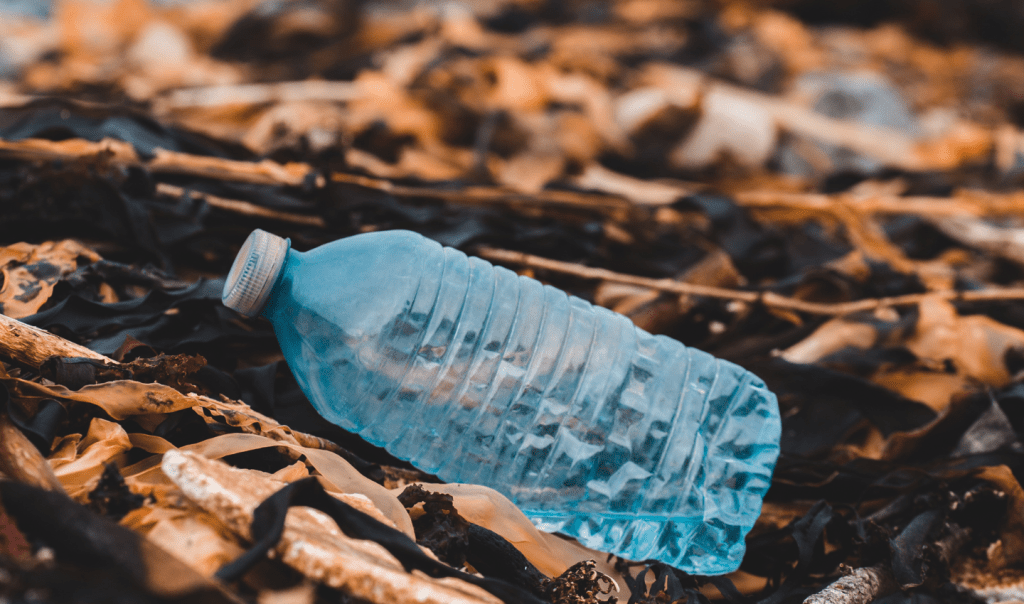
This became known as “the quack heard around the world” and proved that a rubber duck (or a plastic bottle or other object) thrown or coastal waterway into a river can travel across the Ocean and end up on the other side of the world. 
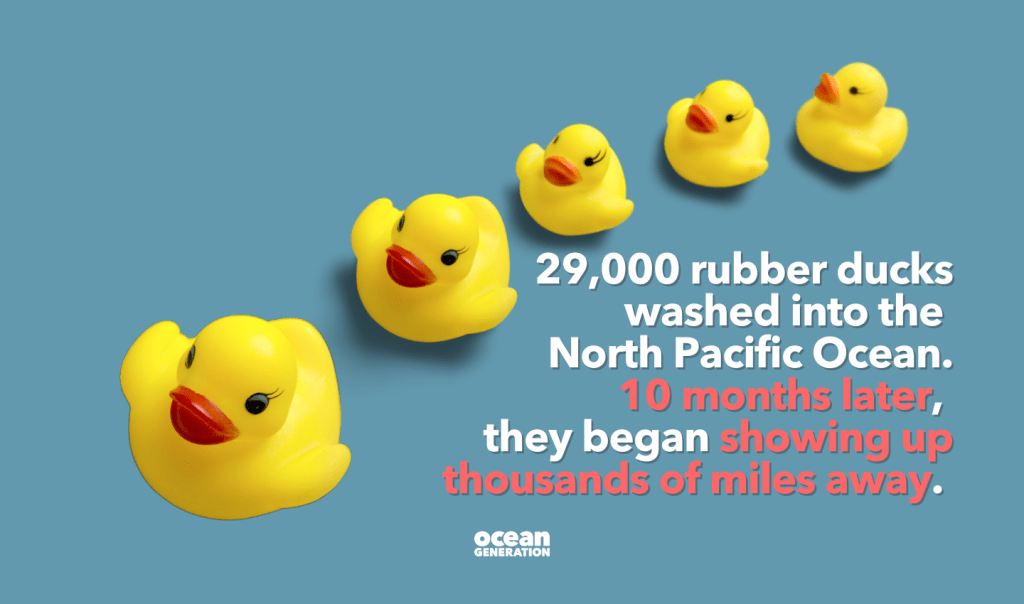
29,000 toy rubber ducks washed into the Ocean. 10 months later, they were showing up all around the world. It proved that our Ocean is one, connected system.

A similar story unfolded, when almost five million pieces of Lego spilled into the Ocean from a cargo ship, off the coast of Cornwall, UK. Today, over 25 years later, the tiny, plastic toys are still washing up on the beaches of Cornwall

These stories don’t just show how connected our Ocean is. They show how human actions can have long-lasting, global impacts on marine environments.

What is your relationship with the Ocean?

We are all connected to the Ocean through weather, climate, and the very air we breathe. But each of us also has our own personal experience with the Ocean.

Maybe you swim, sail, or relax by the sea. Maybe you enjoy sushi, or listen to Ocean sounds on Spotify to help you sleep. You likely use products every day that are imported, by boat, from other parts of the world.

Biologist Wallace J Nichols, the author of Blue Mind, says, “We are beginning to learn that our brains are hardwired to react positively to water and that being near it can calm and connect us, increase innovation and insight, and even heal what’s broken.”

But the ways the Ocean keeps us all alive – like how the sea supplies over 50% of the oxygen we breathe, regulates the climate, nourishes the crops we eat and feeds billions of people – are often less understood.

This is where we come in.

At Ocean Generation, we’re rebuilding the connection between people and the Ocean. We’re an Ocean education charity that uses science, storytelling and pop-culture to make marine science interesting and relevant to your daily life.

When we understand why the Ocean is important, we feel connected to it. When we feel connected, protecting it is simply the next obvious step. A healthy Ocean is essential for a healthy planet.
A diver in the Ocean, representing our connection with the Ocean. The Ocean supports all life on Earth and Ocean Generation wants to rebuild this human, Ocean connection so we can understand its importance.

Every drop of water is connected.

We don’t usually think of the water that comes from our taps as Ocean water. But to quote a little fish…

All drains lead back to the Ocean.

Finding Nemo

Every waterway (rivers, drains, the water in your coffee) eventually flows into the Ocean. Even the 60% of water that makes up your body has passed through the Ocean at one point.

The Ocean breathes air into our lungs, it nourishes our food, it controls our weather. We depend on our Ocean in more ways than we realise.

That means all our choices all ripple back, and impact, our blue planet. Everyday actions, even when they feel small, make a difference.

Want to feel more connected to our blue planet?

Join the Ocean Generation

  • We share bite-sized environmental education through science, storytelling and popular culture.
  • Translate complex Ocean science into engaging content on social media.
  • Run Youth Engagement programmes for people 3 – 25 years old (online and in-person).
  • Host talks for companies and corporates in the UK.

    Subscribe to receive the Ocean in your inbox (and get links to any of the above) or add the Ocean to your daily scroll on Instagram.

Who are the orca outlaws sinking boats, and why are they?

Subscribe

Monthly: Impact in your inbox.

OceanGeneration-Join

The History of Plastic Pollution

Understanding the plastic problem

Worldwide, up to five trillion plastic bags are used every year and up to 422 million tonnes of plastic are being produced annually.

As if that isn’t bad enough, half of all plastic produced is for single-use purposes, meaning it’s used once and then thrown away. In reality, there is no ‘away’ for a material designed to be indestructible.

For decades, our Ocean has been a dumping ground for plastic, sewage, industrial and chemical waste. While the Ocean is vast, it’s not bottomless and it’s certainly not a landfill site.

Single-use plastics are the biggest contributors to marine litter and pose severe threats to marine life, human health, and the planet. But how did we get here? When was plastic created? What can we do to take action and reduce the plastic polluting our blue planet?

YouTube player

What is the history of Ocean pollution?

We’re used to having our rubbish collected, sorted, recycled or put into landfill – but for millennia, people didn’t dispose of their waste as we would today.

Instead, waterways were used as a means of waste disposal or rubbish would be burned. As a result, pollution would end up in our Ocean or in the atmosphere.

Before the advent of plastics, and with a relatively small population, the amount of waste in the Ocean was rather small. 

The invention of plastic: The dawn of pollution

In 1862, Alexander Parkes developed the first man-made plastic. The product, called ‘Parkesine’, wasn’t a commercial success, but it was an important step in the development of man-made plastic.

A staggering number of plastic innovations emerged in the period surrounding World War II, from 1933 – 1945. Plastic technology came to the forefront because copper, aluminium, steel and zinc became highly sought-after metals used only for the war effort.

In the 1960s, it became clearer how polluted our Ocean was getting.

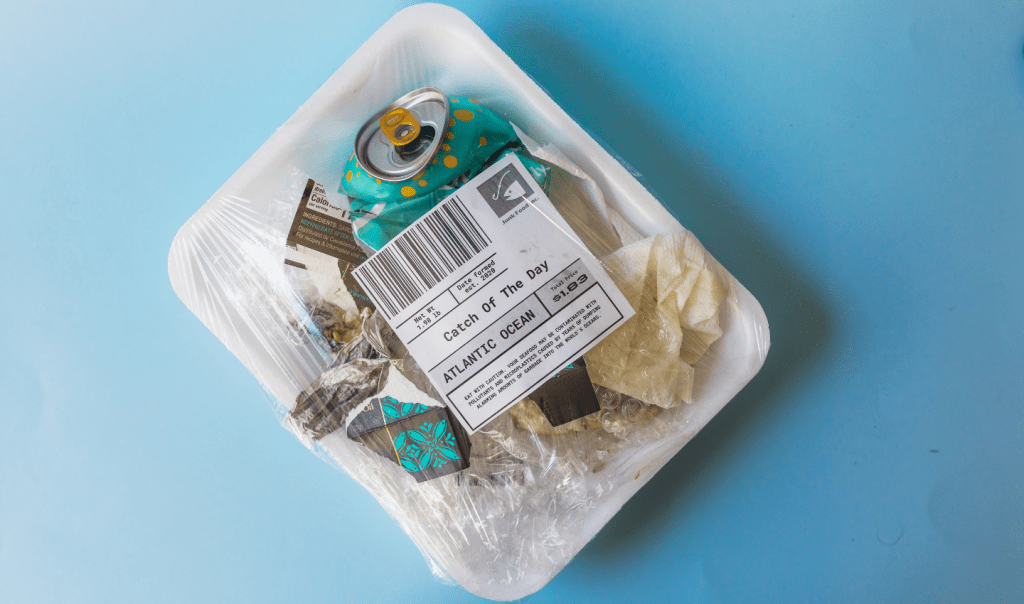
A styrofoam food pack from a grocery store, which usually contains meat or fish, is filled with plastic pollution found in the Ocean: a discarded can of soda snack wrappers, tissues, and plastic packaging. A label on the front reads: Catch of the Day. Atlantic Ocean. In this article, Ocean Generation shares the history of plastic pollution.

Hold on: What is marine pollution?

Marine pollution refers to waste ending up in the Ocean and causing adverse effects. Specifically, marine pollution is a result of human impacts. A combination of chemicals and trash – most of which comes from land – is tossed, washed, or blown into the Ocean.

When was Ocean pollution – specifically, Ocean dumping – first reported?

We can assume that Ocean dumping has been in practice before anyone investigated it, partly because scientists didn’t attempt to research this issue before the 1960s. Many organisations used to dump their chemical by-products into waterways to remove their waste. 

In the 1960s, scientists from the National Academy of Sciences discovered some alarming news: More than 100 million tonnes of waste had been dumped in our Ocean.

This report discounted plastic pollution, which we now know is one of the major pollutants in our Ocean, because it had just recently become a mainstream material. Instead, the Ocean pollution that these scientists reported largely relates to chemical, industrial and sewage waste. 

How have plastics developed into a major Ocean polluter?

Between the 1970’s and 1990’s,
plastic waste generation more than tripled.

Realisation hit in the 1970’s: Plastic doesn’t ‘go away’ and it doesn’t break down; it breaks up into smaller and smaller pieces, called microplastics. 

During this period, there was a significant rise in plastic production too, which resulted in more and more pollution. Scientists also discovered that seabirds were ingesting plastic materials and seals were getting trapped in plastic netting.

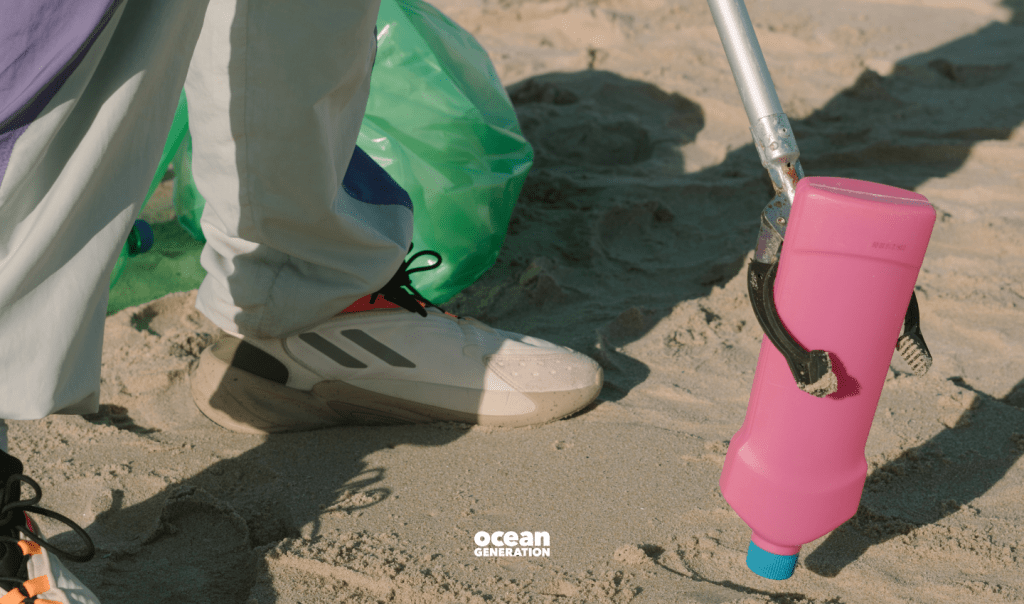
Scene from a beach clean. White tennis shoes of a litter picker are visible. The beach cleaner is picking up a pink plastic bottle off the beach. In the background, a plastic trash bag can be seen. Ocean Generation shares the history of plastic pollution in this blog.

How have we tried to de-pollute the Ocean?

There have been legislative attempts to de-pollute the Ocean and remove plastic from our waterways. 

Four years after the National Academy of Sciences scientists discovered how much waste had really been dumped into the Ocean, the U.S Congress passed the Marine Protection, Research and Sanctuaries act.

By the 1980s, the Society of the Plastics Industry developed the plastic resin identification code, to make recycling and disposing of plastics easier. But our reliance on plastic had already taken hold. 

In the early 2000s, the amount of plastic waste we generated rose more in a single decade than it had in the previous 40 years.

Plastic pollution has negative consequences for all life on Earth.

Even though we know plastic pollution is bad for our blue planet, we continue to produce millions of tonnes of plastic from plastic bottles and plastic forks to plastic shopper bags to giant plastic commercial containers.

A key reason plastic continues to contribute to marine pollution is lack of awareness.

From individuals to businesses to governments – if we don’t understand the problems associated with plastic pollution and the importance of having a healthy Ocean, we won’t do anything to change our ways.

As of 2022, there are 8 billion people on Earth. We need millions of those people understanding that a healthy Ocean is essential to a healthy future for all life.

Necessary legislation to reduce plastic production and pollution will only be implemented when the masses understand how necessary that legislation is.

Up to 422 million tonnes of plastic is being produced annually.

What does the future of our Ocean look like?

We make decisions about what to purchase and what to wear daily. Choices made about how we live right now will impact the Ocean for decades to come.

So, the future health of our Ocean isn’t set. We have the ability to decide the magnitude of the plastic pollution problem. We can start making choices today to turn the tide.

Seagulls in flight. With the Ocean int the background, four seagulls are in various stages of taking flight; their wings flapping as they set off. Ocean Generation - experts in Ocean health since 2009 - shares the history of plastic pollution in this article.


We can right the wrongs of our plastic pollution history, and embrace the Ocean as the life supporting ecosystem that it is, rather than use it as a dumping ground. 

We are the first generation to deeply understand Ocean issues, and the last generation who can stop them. We are all the Ocean Generation.

How can I start taking Ocean and climate action?

Get informed. Our monthly newsletter provides Ocean positive news, easy to understand Ocean science, and engaging pop-culture pieces to help you understand the human-made threats our Ocean faces and what you can do to make a difference. 

Who are the orca outlaws sinking boats, and why are they?

Subscribe

Monthly: Impact in your inbox.

OceanGeneration-Join

15 Plastic Pollution Facts You Should Know

15 science-backed plastic pollution facts, shared by Ocean Generation: experts in Ocean health since 2009. Read to learn about marine pollution, microplastics, and how plastic impacts human health.

We’ve become dependent on single-use plastic products.

And the reason why isn’t hard to find. Plastic is cheap, convenient and was made to last forever – but as plastic pollution has severe environmental and health consequences for our blue planet.

Understanding key facts about plastic pollution is the first step to rethinking our relationship with it, and ensuring a healthier, more sustainable future all life on Earth.

We’re breaking down 15 facts about plastic pollution – backed by science and our expertise as experts in Ocean health since 2009. Find out how plastic enters the environment, its impact on wildlife, what microplastics are, and how it effects our health below. 

15 Plastic pollution facts you need to know:

1. Up to 422 million tonnes of plastic are being produced each year.


The amount of plastic produced every year weighs more than all of humanity (estimated at 316 million tonnes in 2013).

2. Up to 12.7 million tonnes of plastic enter the Ocean every year.


If waste management practices don’t improve, scientists predict this amount could increase tenfold by 2025.

Single-use plastic items are the biggest contributors to marine litter (it is estimated that 1 – 5 trillion plastic bags are consumed worldwide each year).

3. Plastics make up to around 75% of marine litter, although this can be up to 100% at some sites. 


Plastic in the Ocean breaks up into smaller fragments called microplastics, which have been identified in commercial fish and thus, consumed by humans.

4. Plastic in the Ocean breaks up into smaller fragments called microplastics.


Plastic will never go away. These microplastics have been identified in commercial fish consumed by humans.

What are microplastics?

Microplastics are small plastic pieces measuring less than 5 millimetres.

While some microplastics are intentionally made small (like microbeads in facial scrubs and industrial abrasives used in sandbags), others have been formed by breaking away from larger plastic products.

Due to large amounts of plastic pollution, microplastics can now be found everywhere on Earth – from Mount Everest to the Mariana Trench; the deepest part of our Ocean.

Explained: What are microplastics, where do they come from and what can we do about them?
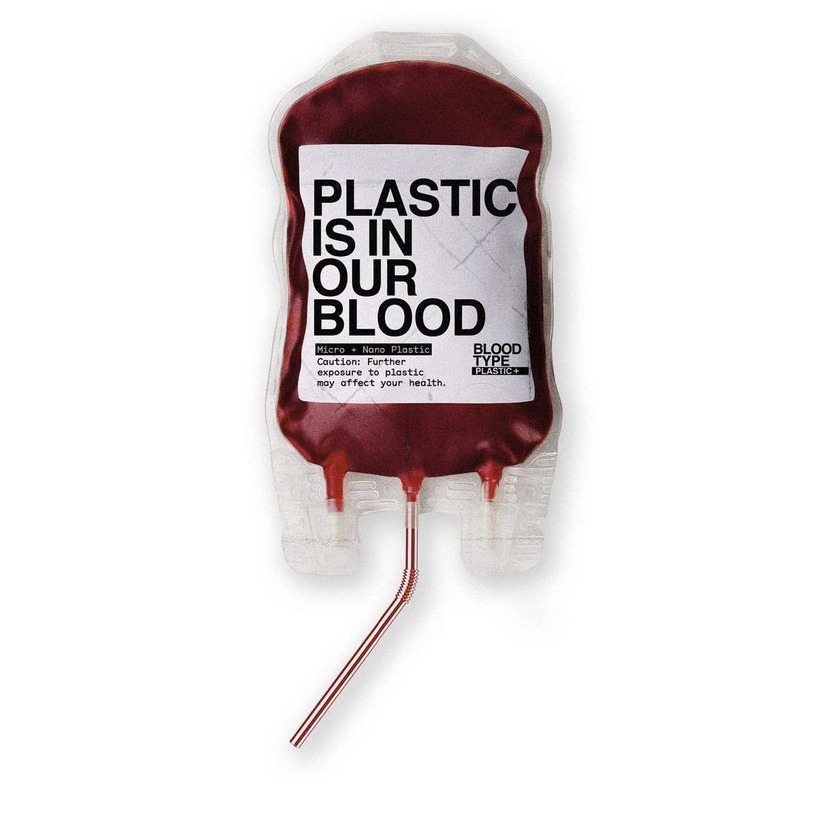
Read: For the first time, in March 2022, plastic was found in human blood.

5. Half of all plastics are single-use applications, meaning they’re used just once and disposed of.


We are all guilty of using single-use plastic items. From shampoo bottles to make-up products, plastic forks, and straws – single-use plastic is part of our daily lives.

Small behaviour changes can make a massive impact in reducing the flow of plastic pollution to the Ocean.

The next time you’re at the store, reaching for a single-use plastic item, stop and consider: Is there a more sustainable product I can use? If not, think of ways you can reuse your plastic items instead of discarding of them once you’re done.

6. Plastic was invented 150 years ago.


When we see the stat, ‘Plastic takes 450 years to decompose’ we reply, ‘How is that known?’ Plastic hasn’t been around long enough for us to confirm that.

Instead of breaking down, it’s more accurate to say plastic breaks up.

Plastic is indestructible; it was designed to defy nature, and designed not to decompose. Plastic just gets smaller, making it harder to remove from the Ocean.

7. Birds are highly susceptible to plastic ingestion.


It is estimated that over 90% of all seabirds have ingested plastic.

8. There is no giant floating island of plastic at the centre of the Pacific or any other parts of the Ocean.


The so-called Great Pacific Garbage Patch is invisible from the surface.

Plankton nets, however, reveal the true nature of the plastic problem: An accumulation of microplastics that fill up each net in concentrations that increase towards the Ocean’s centre.

9. Plastic acts as a sink for chemicals in the environment, and transports them.


When plastic is mistakenly consumed by marine life, plastic chemicals are released and stored in the fatty tissue of the animal. 

Those chemicals travel up the marine food chain, magnifying in concentration on their way up. Eventually, the plastic in fish reaches and gets consumed by people.

10. Chemicals are added to plastic during its production.


Chemicals are added to plastics to give the products certain properties. Some of the chemicals, known endocrine disruptors, have been linked to critical diseases including birth defects, cancer, autoimmune disease, infertility and cognitive and behavioural disorders.

So, plastic isn’t just polluting our Ocean – it’s polluting our bodies.

11. Crustaceans tested at the deepest point of our Ocean have ingested plastic.


Animals from the deepest places on our blue planet have been found with plastic in their stomachs, confirming fears that man-made fibres have contaminated the most remote places on Earth.

12. People living along rivers and coastlines are the most impacted by plastic pollution.


It’s been reported that China, Indonesia, the Philippines, Thailand, and Vietnam are the most impacted by plastic pollution.

13. Low-income communities face more health impacts near plastic production sites.


Communities with low incomes have greater exposure to toxins and plastic waste, and bear the brunt of the impacts of improper plastic disposal and incineration.

14. Annual plastic production has skyrocketed since the early 1950s, reaching 322 million tonnes in 2015.


These numbers do not include synthetic fibres used in clothing, rope and other products which accounted for 61 million tonnes in 2016.

The World Economic Forum (WEF) predicts a 3.5 – 3.8% growth in plastic production per year through 2050. As of 2019, we’re seeing proof of this – with production of single-use plastics increasing despite our growing awareness of their negative impacts.

15. Bioplastics are not not as green as they seem. Approach with caution.


Though companies often market bioplastics under the same umbrella as biodegradable products, they are not necessarily biodegradable.

Most bioplastics require very specific conditions to break down effectively. They also do not solve the litter or throwaway culture problem.

What is plastic – really?

YouTube player

To ensure a healthy future for our Ocean and planet we must decrease our plastic dependency.

Subscribe for simple Ocean Science and pop-culture stories

* indicates required

View previous campaigns.

Ocean Generation will use the information provided here to be in touch with updates and marketing.

You can unsubscribe at any time.

Who are the orca outlaws sinking boats, and why are they?

Subscribe

Monthly: Impact in your inbox.

OceanGeneration-Join

How many Oceans are there?

How many Oceans are there?

Mos of us are taught about five Oceans at school: the Pacific, Atlantic, Southern, Indian and Arctic Ocean. But here’s the thing: There is only one Ocean.

Our Ocean isn’t separated by borders. The Ocean is one, interconnected ecosystem.

The five Ocean regions have evolved for a variety of cultural, historical, geographical, and scientific reasons. But what happens in one part of the Ocean impacts the whole. Energy and nutrients cycle across the whole Ocean system, keeping everything in balance.

At Ocean Generation, we say Ocean — not ocean or oceans. We capitalise the O and drop the s, to reinforce the importance and connection of the ecosystem keeping us all alive.

The Ocean is a vital life-support system to all life on Earth

Everything that we rely on in our day to day lives – from our water, food, and every second breath – leads back to the Ocean.

Somewhere along the way, we’ve become disconnected from our blue planet.

YouTube player

Why is our Ocean so important?

If we were in space and looked down at Earth, we would mostly see the colour blue.

Our Ocean covers over 70% of the planet, which is why we call it our Blue Planet. It produces over 50% of the oxygen we breathe; meaning that every second breathe we take comes from the Ocean. 

Our Ocean helps regulate the temperature on land and is responsible for global weather patterns like storms and heatwaves (which we’ve been seeing more of in the recent years).

It absorbs the sun’s heat, transferring it to the atmosphere and distributing it around the world – warming in the winter and cooling in the summer. Our Ocean is a key driver of how our world functions and yet it’s usually low down on governments agendas. 

How many of these Ocean facts do you know?

Containing roughly 97% of the world’s water, our Ocean supports all life on Earth.

It is home to thousands of plants and organisms. And yet, scientists estimate that 91% of species are waiting to be discovered. Should we stop looking for aliens on Mars and start looking for our own E.T in the Ocean?

From the oldest species in the entire world to the largest living animal in the world – the blue whale – the Ocean’s biodiversity is astonishing. 

With only roughly 5% of the Ocean explored until now, we are only just beginning to scratch the surface of the mystical world that exists below the surface of our deep blue sea.

For all of our reliance on the Ocean, a majority of it is a vast, underwater realm that remains unmapped, unobserved, and unexplored. It’s time to unlock more of the Ocean’s secrets. 

How the Ocean supports all life

We have a non-exhaustive article about 17 ways the Ocean keeps us alive. In summary, Our Ocean provides us with over half of all oxygen on Earth, provides us with food, facilitates travel, as well as livelihoods for millions, if not billions of people.

But it’s not just a commodity. The Ocean is restorative. It calms and connects us. The positive impact it can have on our wellbeing is incredible.

As humans, we depend on the Ocean for a huge part of the oxygen, water and food we need to survive.

5 ways the Ocean helps our wellbeing:

  1. The movement of gentle Ocean waves and fish in an aquarium is known as Heraclitean Motion. These peaceful, repetitive movements are psychologically calming.
  2. Studies have shown that people perceive nature as a positive, and spending time amongst it is known to improve mood.
  3. Various studies have shown improved mental and physical health in those who spend time near the coast.
  4. When swimming, breathing patterns affect the brain and increase positive hormones.
  5. The sounds of waves support meditation techniques.

So, why are so many of us so disconnected from the Ocean?  

Do you think of the Ocean as something you only see while on holiday? Or perhaps you live in a city or town, so you feel it’s too far away for you to feel connected to it?

You may be shocked to know, 1 out of every 2 people in the world live near coastal areas. 

And because the Ocean provides every second breath, the Ocean has an impact on our lives no matter where we live. Our actions have an impact on the Ocean too. 

Did you know that there is now new water made on Earth? The same water cycles around. This water cycle is a closed loop that has existed for billions of years. 

We are deeply connected to this global water body, influencing our everyday lives in so many ways, like every single thing we eat, breathe and drink.

Without a healthy Ocean, we will not have a healthy future.

We all need to understand how important the Ocean is to our daily lives to be continually motivated to protect it. 

Want to learn about the Ocean? Join the Ocean Generation.

Subscribe for simple Ocean Science and pop-culture stories

* indicates required

View previous campaigns.

Ocean Generation will use the information provided here to be in touch with updates and marketing.

You can unsubscribe at any time.

Who are the orca outlaws sinking boats, and why are they?

Subscribe

Monthly: Impact in your inbox.

OceanGeneration-Join