Marine discoveries and Ocean wins in 2025

Marine discoveries and Ocean wins in 2025, posted by Ocean Generation.

What were the Ocean wins in 2025? 

The past year has seen some amazing developments in our understanding of and our relationship with the Ocean. Weโ€™re unpacking: what Ocean discoveries have we made, what Ocean protection have we brought in and what Ocean recovery have we seen in 2025? 

Jump to:

What Ocean discoveries happened in 2025? 

New clownfish related discoveries  

Over the course of 2025, there have been a series of discoveries centred around the clownfish, made famous by Nemo and Marlin in Finding Nemo (see our scientific analysis of the film here).  

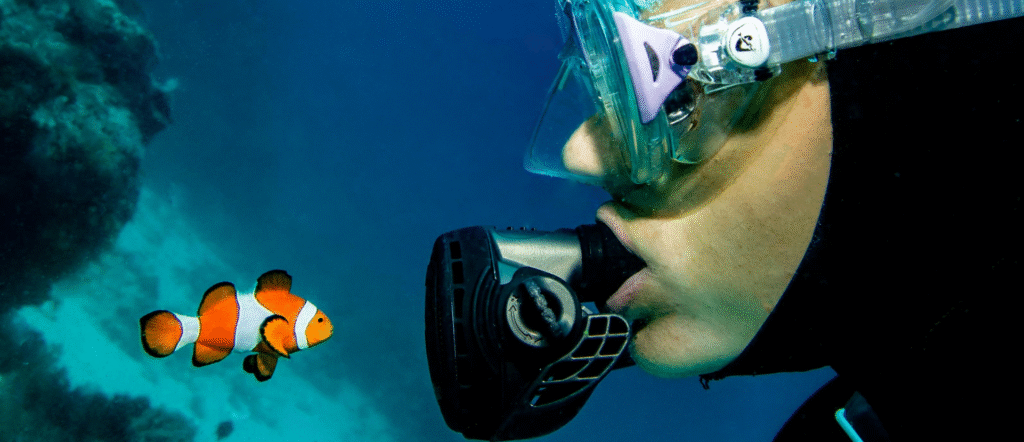
How does the clownfish avoid being stung by the anemone? 

By having lower levels of sialic acid on their skin, clownfish avoid being stung by anemones. Sialic acid can be found on the outer surface of most animals โ€“ it is important in cell-to cell communication and immune response. The nematocysts (stinging cells) of the anemone have a special trigger, to avoid the anemone constantly stinging itself. Researchers found the fish that can live in an anemone have low levels of sialic acid, to โ€˜hideโ€™ from the anemone, and avoid triggering its stings.  

How does the clownfish avoid being stung by the anemone? Explained by Ocean Generation.

We discovered that the relationship between clownfish and anemone isnโ€™t as one-sided as it may seem. 

Anemonefish have been observed feeding their anemones large food they canโ€™t eat, or extra food after they have eaten their fill. This has also been shown to increase how fast anemones grow.  

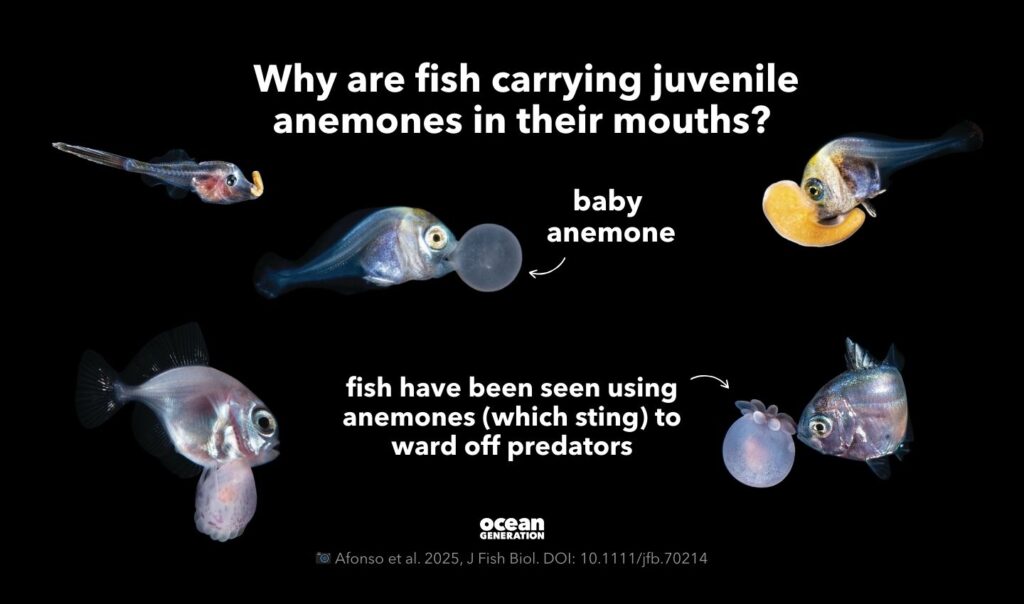
Why do fish carry anemones around in their mouths? 

Clownfish arenโ€™t the only ones buddying up with anemones. Several species of fish have been photographed holding larval (baby/ juvenile) anemones in their mouths.

The assumption is that they are effectively arming themselves with marine (live) pepper spray. Predators can be warded off with a nasty sting. The anemones also benefit, as the young fish can swim and be swept much further than the anemone would normally reach.  

The young fish have a predator deterrent, and the anemone gets a lift to a new neighbourhood.  

Why do fish carry anemones in their mouths? Posted by Ocean Generation, leaders in Ocean education.
Picture credit: Afonso et al. 2025, J Fish Biol. DOI: 10.1111/jfb.70214

What new Ocean species were discovered in 2025? 

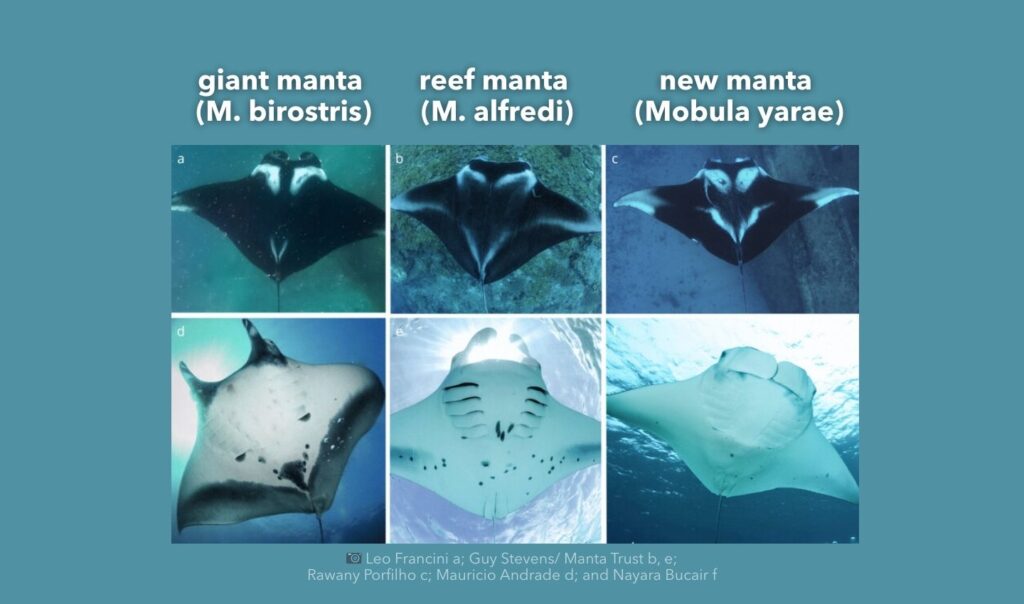
A new species of manta ray was distinguished in 2025, adding a third species to the manta ray family.  

Until 2009, there was only one species of manta ray.  In a study focussed on morphological characterisation, analysis of colour, teeth and other traits differentiated the reef and Oceanic manta rays

In 2025, after years of speculation, it was confirmed that there was a third species of manta.  

Lead author of the study identifying the Oceanic and reef manta species, Dr. Andrea Marshall, had theorised a third species after diving in the Atlantic Ocean with manta rays she didnโ€™t recognise. Years of study, including the description of a type specimen and genetic analysis, have confirmed her hypothesis: a third species of manta ray exists. 

New species of manta ray was described in 2025.
Picture credit: Leo Francini a; Guy Stevens/ Manta Trust b, e; Rawany Porfilho c; Mauricio Andrade d; and Nayara Bucair f

Facts about the newly discovered manta ray: 

Mobula yarae, more commonly known as the Atlantic manta ray, are named after Yara, the โ€˜mother of watersโ€™ from Indigenous Brazilian mythology.

Telling them apart from other manta rays starts with size: they reach an approximate size of 6m across, sitting between the Oceanic and reef manta in size. A โ€˜Vโ€™ shaped white shoulder patch, lighter colouration around the mouth and eyes and dark spots confined to the belly rather than between gill slits are the key identifying features.  

The Ocean Census announced that it has facilitated the discovery of 909 new Ocean species.  

The program, in its second year of running, hopes to fast-track Ocean discovery, and so far has increased the annual speed of species discovery by 38%.

A new kind of shark discovered 

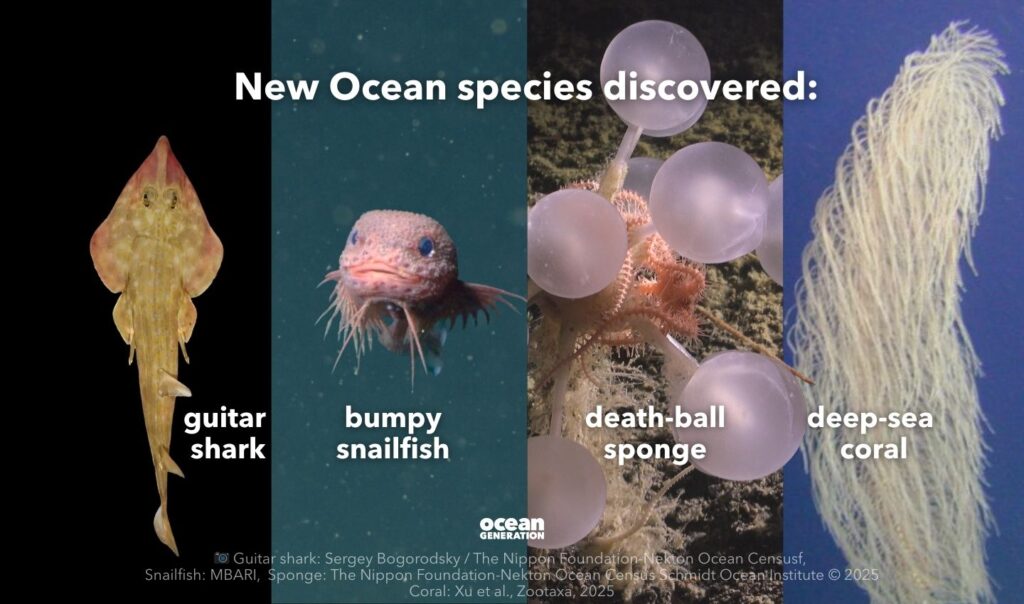
Sticking with our elasmobranchs (cartilaginous fish that include sharks, skates, and rays), a new kind of guitar shark was discovered off the coasts of Mozambique and Tanzania. It joins 37 other guitar sharks in one of the most threatened vertebrate families, with two thirds of them threatened.

New species of snailfish in the deep-sea 

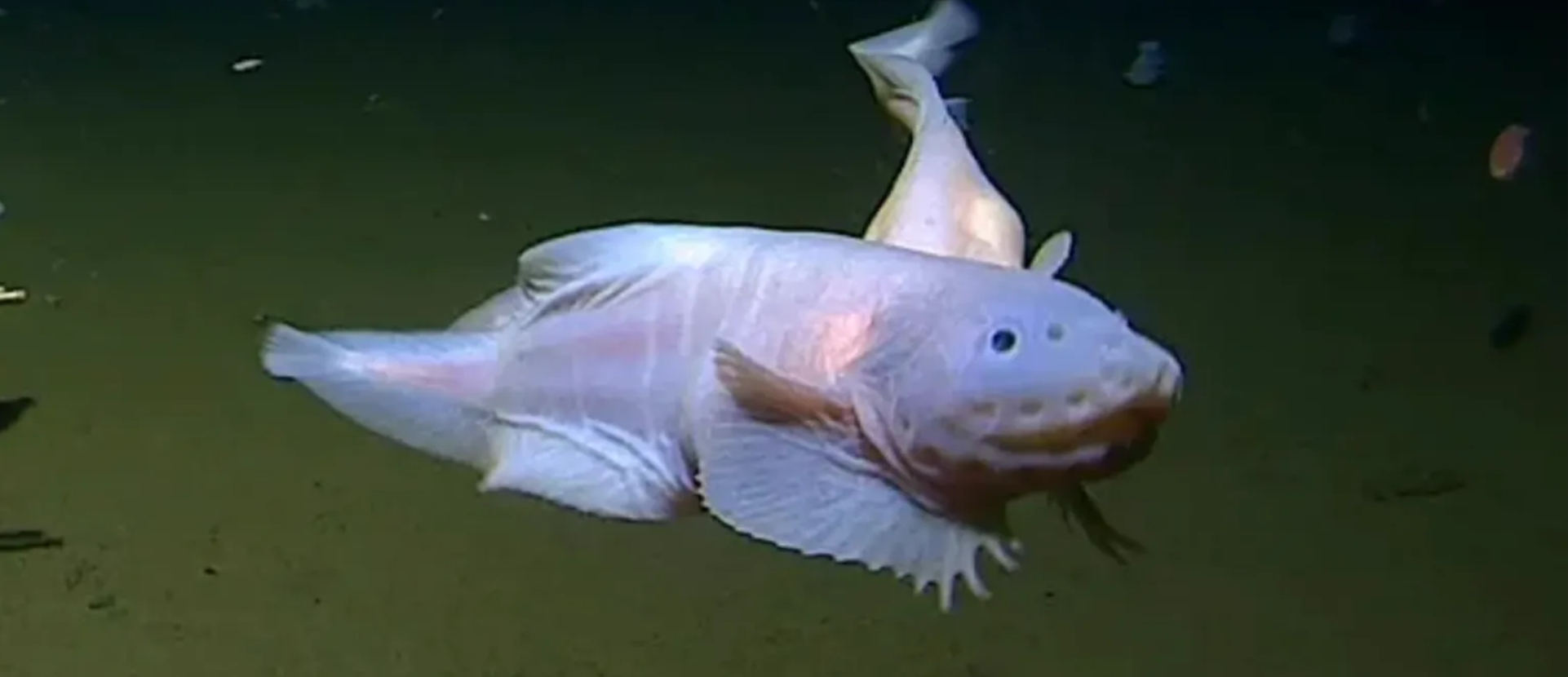
Looking deeper in the Ocean, a new species of snailfish was discovered 3,263m deep.

The suitably named โ€˜bumpy snailfishโ€™ is only two to three inches long and was one of three new snailfish species found on the expedition led by the Monterey Bay Aquarium Research Institute.  

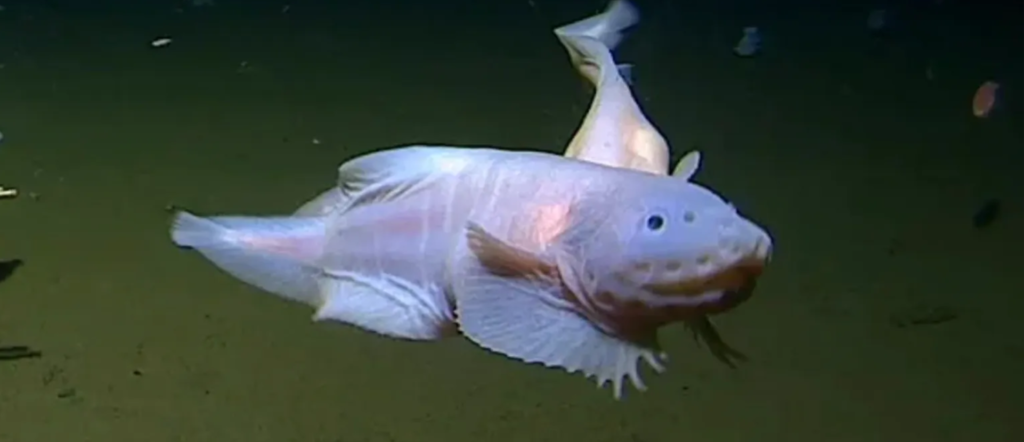
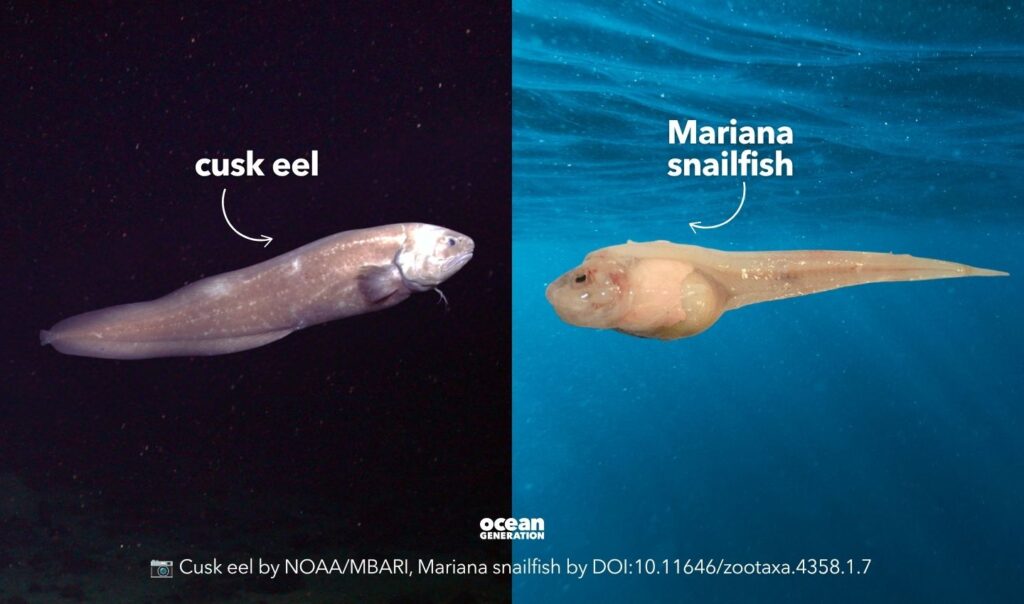
There are over 400 species of snailfish, and the family holds the record for the deepest dwelling fish, with one found 8,338m deep.  

New Ocean species discovered in 2025. Posted by Ocean Generation.
Picture credit: Guitar shark: Sergey Bogorodsky / The Nippon Foundation-Nekton Ocean Census, Snailfish: MBARI, Sponge: The Nippon Foundation-Nekton Ocean Census Schmidt Ocean Institute ยฉ 2025 Coral: Xu et al., Zootaxa, 2025

Meet a newly discovered sea sponge: the Death-ball sponge 

As one of the more notably named, the death-ball sponge (Chondrocladia sp. nov.) received a lot of press.  
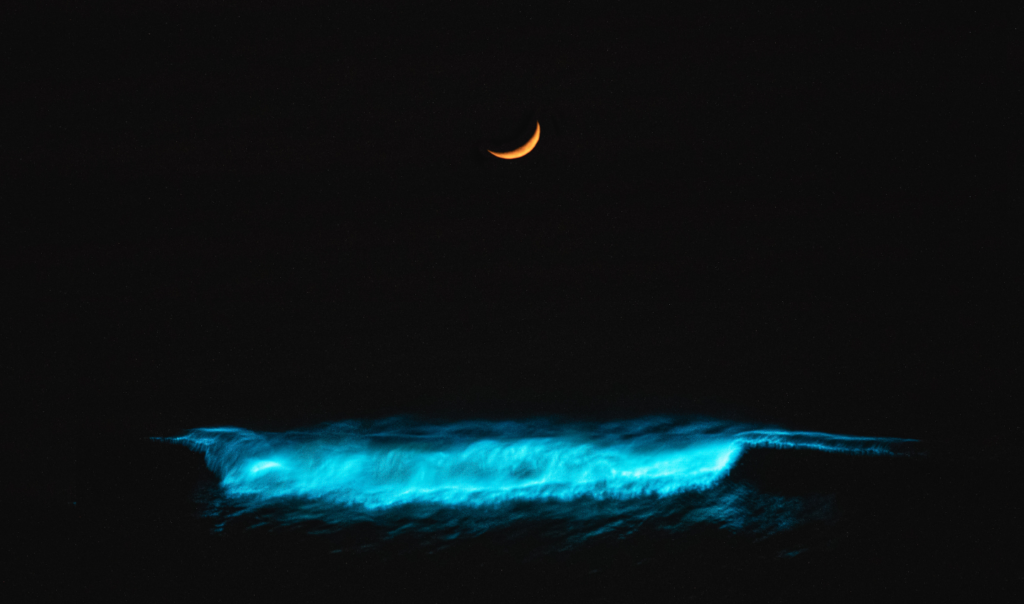
Where most sponges unobtrusively filter the water for food (ensuring highly efficient nutrient circulation where there isnโ€™t much to go round), this new species has a number of โ€˜ballsโ€™ covered in tiny hooks to trap their prey.  

New deep-sea discoveries with celebrity nicknames 

There were a couple of famous characters whose semblances were discovered in the deep Ocean.  

  • A deep-sea coral first spotted in 2006, but formally described this year, was given the name Iridogorgia chewbacca, due to its long hairy branches.  
  • An iridescent scale worm found in the freezing waters of Antarctica was given the nickname โ€˜Elvis-wormโ€™, its sparkling scales shimmering in the deep like the sequins of the King of Rock and Rollsโ€™ jackets in Las Vegas
  • And a bonus one (not a new species): the colossal squid was caught on camera in its natural habitat for the very first time. This one wasnโ€™t all that colossal: it was a juvenile just 30cm long. 

What Ocean protection happened in 2025? 

60 countries ratified The High Seas Treaty in 2025 

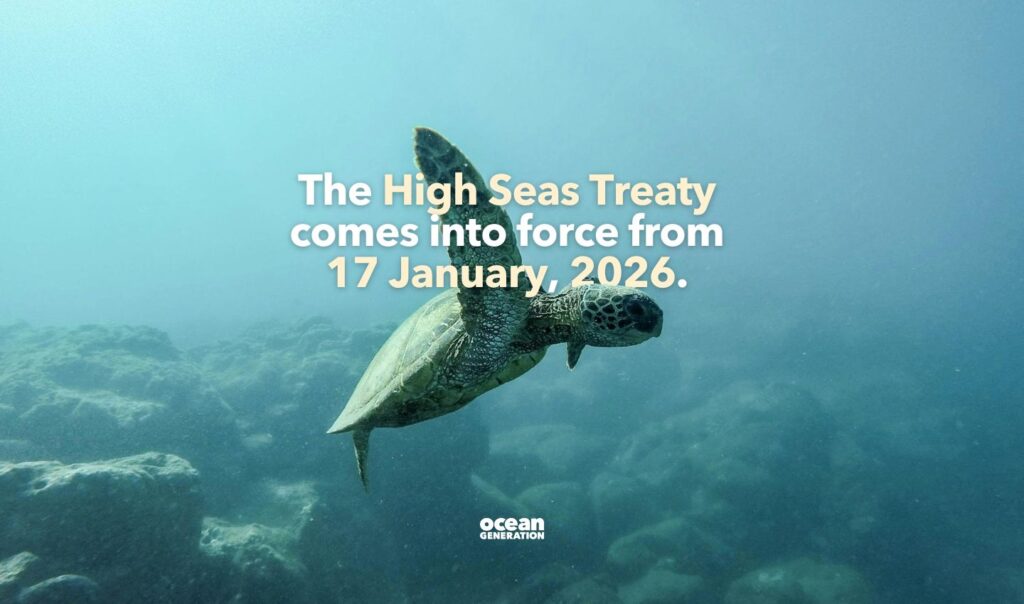
In September, the Agreement on the Conservation and Sustainable Use of Marine Biological Diversity of Areas beyond National Jurisdiction reached 60 ratifications, the milestone required to start the countdown to it becoming legally binding. From 17January 2026 the agreement, also known as the biodiversity beyond national jurisdiction (BBNJ) or High Seas Treaty, will enter force.  

Read more about the High Seas Treaty here. 

The High Seas Treaty will come into force in January 2026. Posted by Ocean Generation.

Many countries have been protecting the Ocean off their coastlines in 2025. 

Countries havenโ€™t been hanging about, waiting for the High Seas Treaty, they have been getting on with Ocean protection in their own patches.

Marine Protected Area, or MPA, is a general term for an area of Ocean in which human activities are managed or limited to protect the marine world. Depending on what they are aiming to protect, they can have different rules. Some will allow sustainable fishing and recreation; others may be no-take zones where no fishing is allowed. 

What is the largest marine protected area in the world? 

French Polynesia announced the creation of the worldโ€™s largest marine protected area in 2025. The protection of their entire exclusive economic zone, an area of 4.8 million square kilometres, now includes 1.1 million square kilometres of highly protected waters. 

An exclusive economic zone is the area of Ocean extending up to 200 miles from the coast of each country, in which they have the rights to explore and utilise any marine resources.  

A huge no-fishing zone has been expanded in the South Atlantic Ocean: 

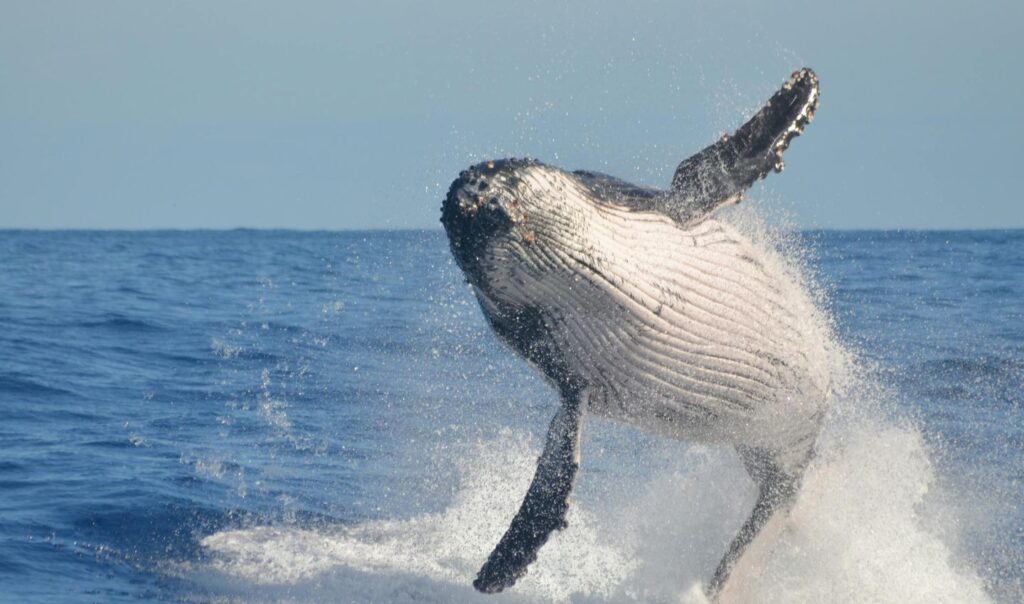
For Marine Protected Areas (MPAs) around South Georgia and the South Sandwich Islands (not where sandwiches were invented), the โ€˜no take zonesโ€™ where no fishing can occur have been expanded to over 470,000km2, 38% of the MPA. This is to help protect the migration routes of humpback whales. 

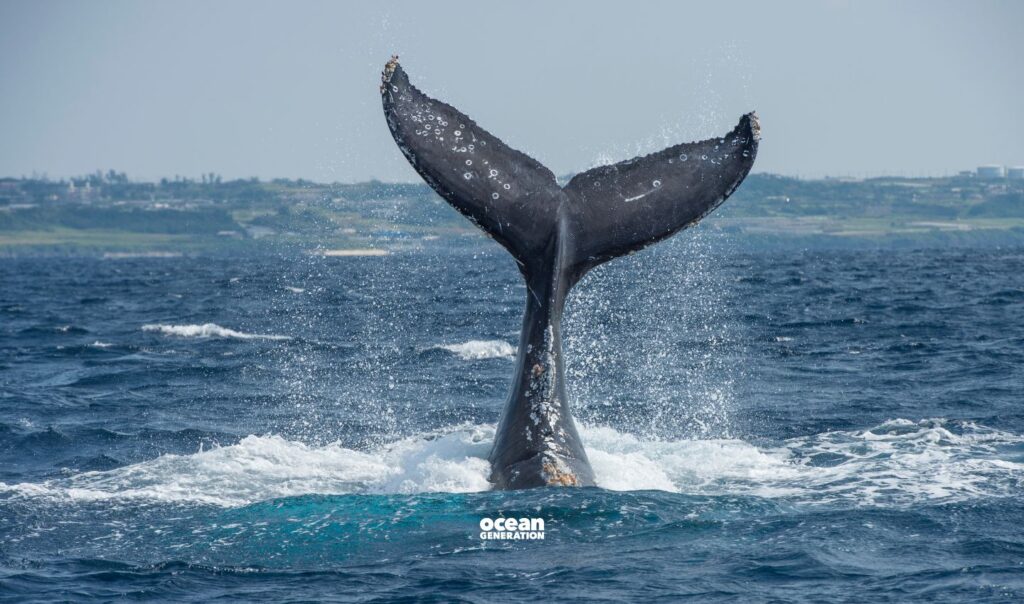
How whales are being protected in marine sanctuaries? Explained by Ocean Generation.

How whales are being protected in marine sanctuaries:  

That isnโ€™t the only help weโ€™ve given our whale friends. In October, a proposal for a huge marine sanctuary in the North Atlantic was approved. Macaronesia is an area including the Azores, Madeira, the Canary Islands and the Cabo Verde islands. Itโ€™s rich in marine biodiversity, hosting 32 different species of cetacean. (Cetaceans include whales, dolphins and porpoises.)

The new marine sanctuary will hope to protect the Ocean from increasing pressures of boat traffic, underwater noise, industrial fishing and future threats such as deep-sea mining. 

Do marine protected areas really help protect the Ocean? 

In a little win of its own, a research paper was published this year that showed that fully and highly protected marine areas do work.  

There have been concerns that enforcement around MPAs isnโ€™t feasible, any fishing vessels can just โ€˜go darkโ€™ – turn off their identification systems and continue poaching.  

But analysis using artificial intelligence and satellite imagery has shown very little industrial fishing activity in highly protected MPAs. Conversely, there was substantial activity in MPAs with low protection.  

Weโ€™re protecting more of the Ocean, and it is working.  

What is the EU Ocean Pact

On money, the European Commission launched a unified framework for EU Ocean policy in 2025, backed by a โ‚ฌ1โ€ฏbillion investment in the Ocean, with six priority areas including: habitat restoration, decarbonisation of maritime sectors, blue economy competitiveness, coastal/island community support, Ocean diplomacy and innovation.

Progress on cutting shipping emissions

Member States of the International Maritime Organisation agreed a global standard for decarbonising shipping: fuelโ€‘intensity reductions, global emissions pricing for ships, and a fund for low/zeroโ€‘emission marine fuels. 

The agreement was agreed but not formally signed, as in a meeting in October 2025 delegations from Saudi Arabia and the United States lobbied for a delay.

This is half a win this year and will hopefully be a full win for our Ocean in 2026, in a sector that accounts for around 11% of global emissions in transport.  

2025 saw progress cutting emissions from the shipping industry

What Ocean recovery have we seen in 2025? 

Are whale populations bouncing back? 

In a paper published towards the end of 2024 that examined historic databases on whales, it was suggested that we underestimate the longevity of whales by some distance.  

How old do whales get?  

Our estimates for the average age of whales were first shaken in 1979, when Japanese whalers found individual blue and fin whales that were 110 and 114 years old respectively. Prior to this, we understood these animals to live to 70 years.

This 2024 paper attributed the lower perceived longevity to our success in whaling. Whales werenโ€™t living as long because we were hunting them.  

But the world is changing. Whaling was made illegal in 1987, and populations have shown promising signs of recovery. Over the course of 2025 there were several markers of a better world for whales, and hints of the future we are creating for them. 

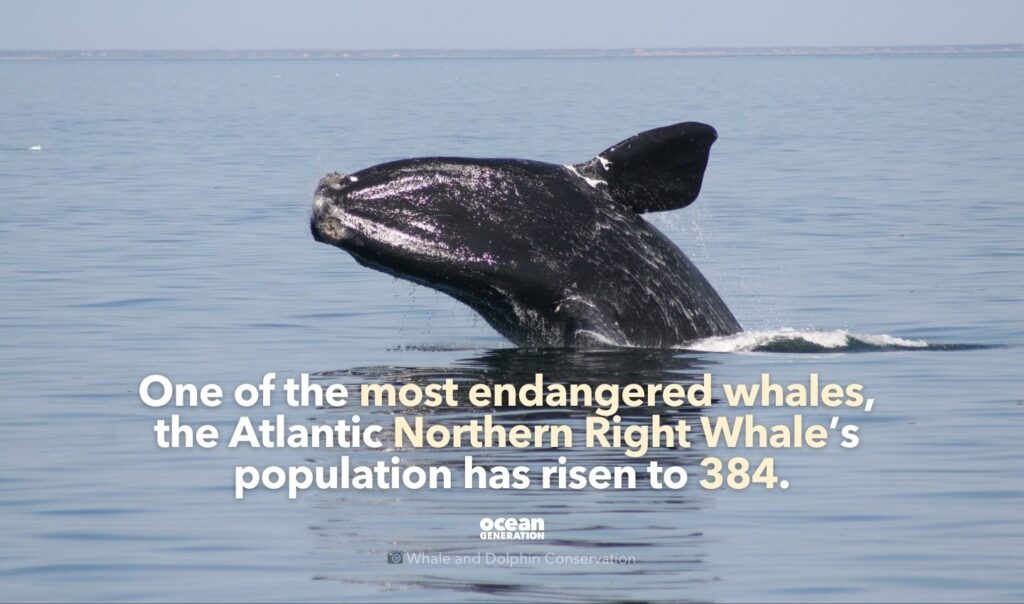
The Atlantic Northern Right Whale, one of the most endangered whales, has enjoyed an increase in population, up 8 individuals to 384 whales. This is off the back of a decade in which the population declined by 25% between 2010 and 2020 due to ship strikes and entanglement.

2025 saw the cancellation of the Icelandic fin whale season, meaning once again no fin whales were killed due to an unfavourable market, marked by diminishing demand for whale products and rising costs. 

Atlantic Northern Right Whale population is bouncing back.
Picture credit: Whale and Dolphin Conservation

Who is โ€˜crushโ€™ing it? Green turtles are no longer endangered

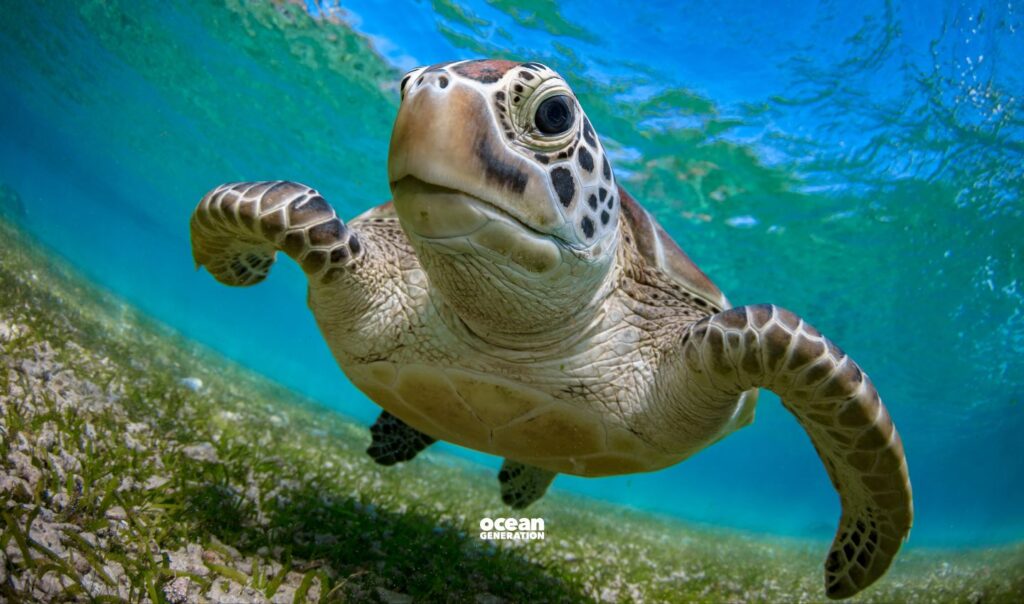
Itโ€™s a good time to be a green turtle (Chelonia mydas). The species, made famous by Crush and Squirt in Finding Nemo, has been upgraded on the International Union for the Conservation of Nature (IUCN) Red List, from Endangered to Least Concern.  

To best help them, we had to understand what was hurting them. Green turtles (and other sea turtle species) have long been hunted for their meat and their eggs, so legally protecting them was a good first step.  

When did we start protecting sea turtles? 

Legal protections started coming in in the second half of the 20th century, with bans such as that on Aldabra Atoll in 1968 safeguarding turtle mothers and their eggs. Since that ban, green turtle egg clutches have increased 410โˆ’665%.  

Even without the pressures of hunting, turtles still faced a struggle, becoming the poster of plastic pollution and entanglement in fishing gear, and facing the realities of a changing Ocean.  

But conservation efforts have continued. Excluder devices (devices designed to prevent bycatch) have been implemented on fishing gear to avoid entanglement. Nesting beaches have been protected from light pollution that could lead hatchlings away from the Ocean, or plastic pollution that could tangle or choke them. Turtle hatchlings have been released at sea to give the population a boost.  

Green turtle numbers are now up 28% compared to the 1970s.  

Some sub-populations are still struggling and need help, but it shows us, again, that the Ocean has a great capacity to recover when we allow it.  

โ€œThe ongoing global recovery of the green turtle is a powerful example of what coordinated global conservation over decades can achieve to stabilise and even restore populations of long-lived marine species,โ€ – Roderic Mast, co-chair of IUCNโ€™s Species Survival Commission Marine Turtle Specialist Group. 

Green sea turtles are no longer endangered. Posted by Ocean Generation.

Dam Good News for salmon 

In 1878, a lamp turned on. In itself, not a remarkable event, but this lamp was special. It was powered by water.  

Cragside House in Northumberland, England, saw the birth of hydroelectric power. Within ten years, hundreds of hydropower stations were running around the world. It remains the third largest source of electricity globally, behind coal and gas. Until 2004, it represented over 90% of the worldโ€™s electricity generated by renewables and is still over 50%.*

Benefits of hydropower 

Our World in Data compiles the data to examine its benefits. Hydropower is incredibly safe, with the 1.3 deaths per terawatt hour of electricity produced far lower than coalโ€™s 24.6, and almost all from a single event: the Banqiao Dam Failure in China in 1975, which killed 171,000.  

Hydropower is very clean, producing an average of 24 tonnes of CO2 equivalent per gigawatt hour, compared to coal which produces 970 tonnes. A world without hydropower would likely be a world that had burned more fossil fuels.  

Disadvantages of hydropower 

However, hydropower isnโ€™t all turbines and waterfalls – it comes with its limitations. Itโ€™s expensive, especially in upfront cost. It also has an environmental impact beyond carbon emissions.  

Huge dams create reservoirs, flooding land and cutting off rivers. Cutting off the rivers can lead to drought or famine downstream. Reservoirs can emit greenhouse gases by creating large areas of stagnant water full of decomposing material. As solar and wind have become far cheaper and more accessible, there is less need for the large projects.  

Salmon, returning home after 100 years: 

In 2023, the worldโ€™s biggest dam removal project re-opened the Klamath river in California and Oregon.

The project was initiated by local populations after 30-70,000 salmon died below the dams in 2002 due to low flow, the costs of maintenance and repair coupled with environmental costs and the reservoirโ€™s proclivity to harmful algal blooms.  

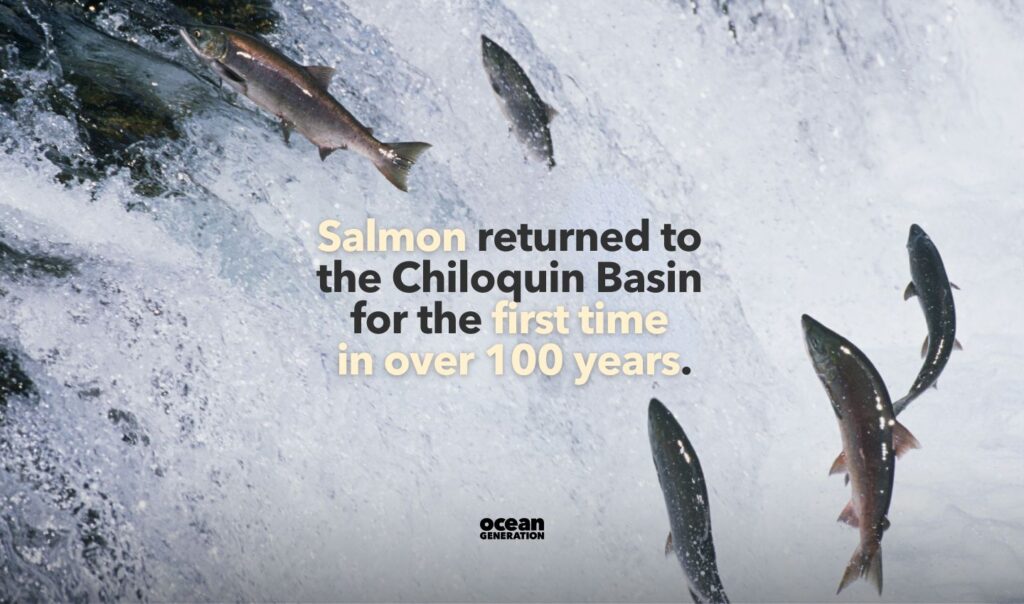
This year, the salmon returned to the Chiloquin Basin for the first time in over 100 years.  

โ€œA hundred and fifteen years that they havenโ€™t been here, and they still have that GPS unit inside of them. Itโ€™s truly an awesome feat if you think about the gauntlet they had to go through.โ€ said the visibly giddy Klamath Tribal Chair William Ray, Jr.

Salmon returned to a river in California after the removal of a dam.

This is a story mirrored elsewhere in the world too โ€“ salmon returned to the river Don in England for the first time in two centuries this year.

As we explored in some articles earlier in 2025, rivers and residents like salmon are vital in connecting different ecosystems.  

Hydropower can prevent the salmon migrating and breeding in their ancestral waters and poison the rivers they grow up in. Losing that connection impacts the people and life all along the river.  

We need energy to reinforce our high quality of life. That used to come at the cost of our natural environment. However, we are more aware of that impact, and we are getting far better at diminishing it. Stories like this are sprinkled with glimpses of a bright future, in which humans can flourish with nature. 


This pattern – discovery igniting protection, protection enabling recovery – reflects how our relationship with nature has evolved over decades, not just this year.  

The Ocean wins of 2025 demonstrate a shift in our relationship: we are learning to value and safeguard our seas, and in return, the Ocean is proving its remarkable capacity to heal.  

In ten years, we hope stories of recovery and flourishing will dominate the narrative, as the need for more protection fades.  

Discovery is good too; it will always be fun to hear about new death-ball sponges and bumpy snailfish. 

* Energy Institute – Statistical Review of World Energy (2025) 

Who are the orca outlaws sinking boats, and why are they?

Subscribe

Monthly: Impact in your inbox.

OceanGeneration-Join

What deep-sea creature is the best Halloween costume?

Five deep sea creatures that make perfect Halloween costumes. Posted by Ocean Generation.

Trying to avoid spending money on a new Halloween costume youโ€™ll only wear once?

Trying to be environmentally friendly? Just got a last-minute invite to an Ocean-themed costume party? Just love the deep sea? We got you. These deep-sea creature costumes should help you bring the Ocean to the Halloween party. 

For the main event: dress up as an anglerfish 

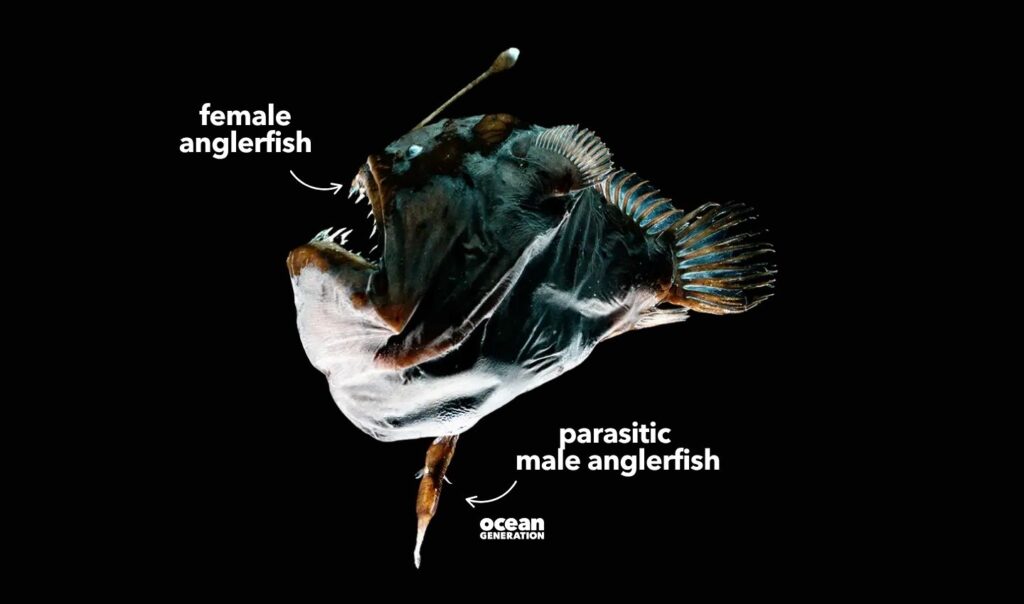
Anglerfish female and parasitic male. Posted by Ocean Generation.
Photo by Edith A. Widder

A classic. Anglerfish are the posterchild for the deep sea. Who hasnโ€™t dreamt of these creatures lurking in the depths, with huge teeth and a glowing orb of light to draw you in until it is too late to escape.  

Finding Nemo put this fish on the map for many of us (but it wasnโ€™t completely accurate โ€“ see here).  

We are using anglerfish liberally here:  there are many different animals that could be referred to as anglerfish, but we are talking about deep-sea species from the Ceratioidei family.

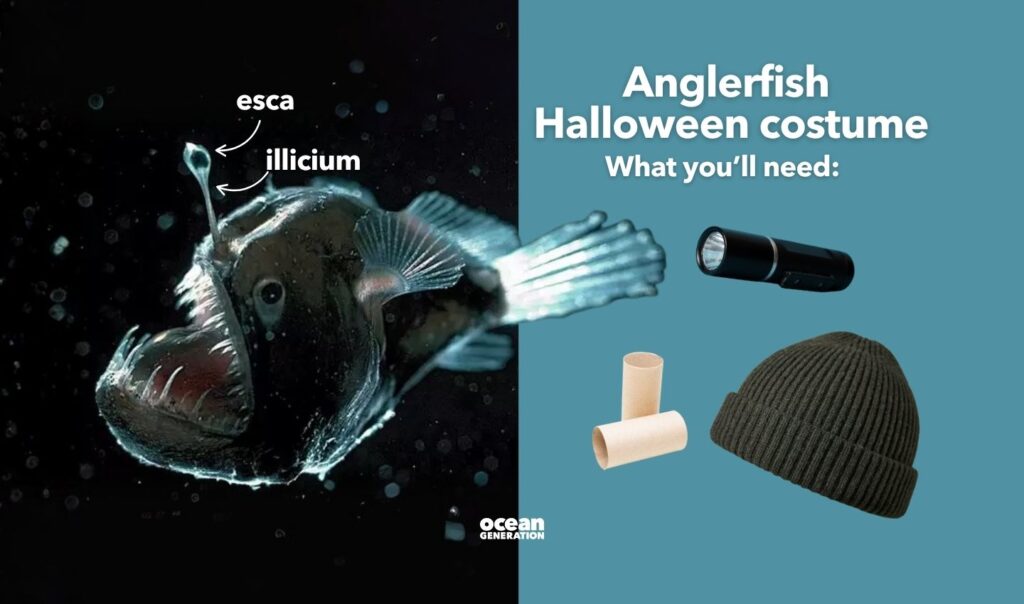
The name means horn bearers, referring to the modified dorsal spine that for many species has a lit up lure at the end.   Anglerfish host bacteria in their lure to generate light. This attracts fish, shrimp or squid close enough for the anglerfish to suck into its mouth, which is very big for their body.

Eyes too big for their stomach? Not likely for the anglerfish. They have extendable stomachs that can hold fish twice their size (useful if you arenโ€™t sure when your next meal will swim along).  

The main point to hit in your costume is the lure โ€“ the esca. Face paint for some big teeth would certainly add to the look.  

What you need for the anglerfish Halloween costume

  • Light source (headtorch, LED lights etc.) 
  • Something to hang it off 
  • Hat 
  • Black clothes 

I have done this outfit before on very little notice, using toilet rolls as the illicium (the modified dorsal spine tipped by the esca). Other good options are repurposed clothes hangers or just a good-sized stick from outside. Attach your esca to your illicium (some glue, blue tac or tape), attach your illicium to your hat and away you go!  

A battery pack on the back of the hat can act as a good counterweight to your lure.  

Now just watch your work entrance everyone around you, tempting them closer. Too close, and they risk your teeth.  

Optional extra: Add a parasitic male!  

We arenโ€™t telling you to invite your ex. But Anglerfish live in the deep Ocean, so when they get the chance for romance, they donโ€™t let it pass.  

The female anglerfish is far bigger than the male, who is little more than a sperm donor with a good sense of smell.  

This size difference is most on show in Kroyerโ€™s deep-sea anglerfish, Ceratias holboelli. Males can reach up to 1.3cm (while free-swimming), while the females are on average 77cm long.  

When he finds a female, he bites her and doesnโ€™t let go. Over time, he fuses with her, receiving nourishment in exchange for sperm. One female can have multiple males attached, and she can lay her eggs at her own leisure.  

To add your parasitic male, just stick an empty loo roll in a sock and staple/attach it to yourself. The more the merrier! 

For the witty one-liner: the cookiecutter shark 

This is a true Halloween shark, with the old nickname โ€œdemon whale-biters”.  

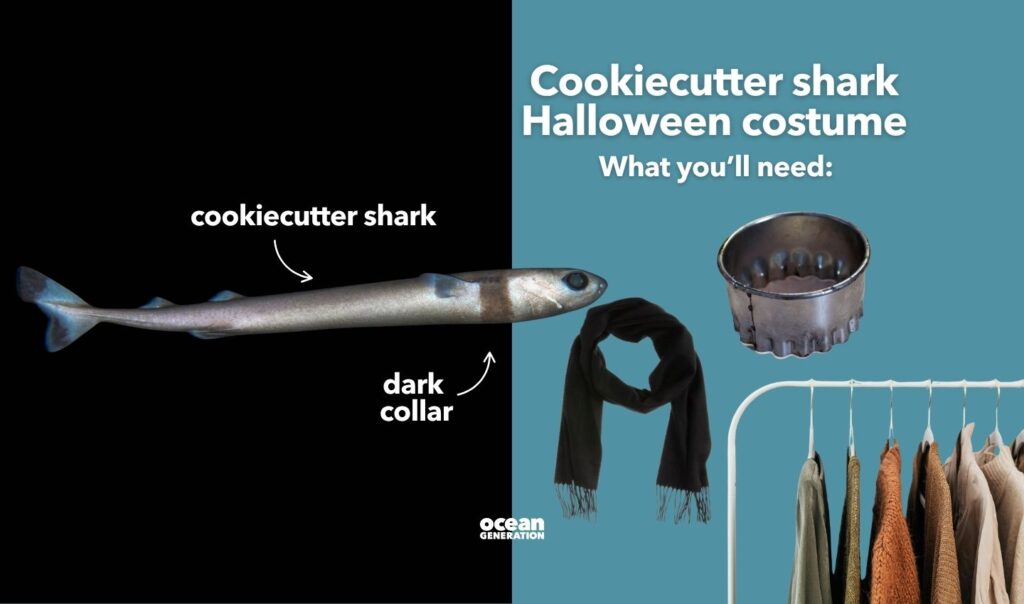
These little sharks gouge a circle of flesh out of animals, leaving bite marks as if cut out by a cookie cutter.  

Whales and dolphins are often spotted with the strange circular wounds, multiple if they were unfortunate enough to come across a group of cookiecutters. One sei whale was found with 138 โ€œcookiesโ€ cut out. Fortunately, these bitey biscuit bois are only half a metre long, so the damage they cause is limited.  

The cookiecutter doesnโ€™t need the dentist โ€“ rather than brushing their teeth, they lose the entire bottom row and usually swallow it with whatever meal they are enjoying (recycle some of the calcium).  

What you need for the shark costume 

What you need for a cookiecutter shark Halloween costume. Posted by Ocean Generation.
Cookiecutter shark photo by Blue Planet Archive/Alamy
  • A cookie cutter 
  • Cardboard/card 
  • A black scarf 
  • Brown clothes 
  • Optional: Chef hat 

Sometimes simplicity is the way. Wear brown clothes, hang a cookiecutter around your neck and fashion a shark fin to attach somewhere, with the cardboard.  

Add the black scarf around the neck, for the cookiecutters dark collar (this is one of the reasons they are also known as โ€˜cigar sharksโ€™). If you want to make it a couple’s costume, dress your partner as a whale with some bloody circles on them!  

Optional extra: glowing belly

Cookie cutters have photophores on their belly, to camouflage them from predators and prey by matching the little light that penetrates the depths.  

Why not add some flair to the costume? Add some glitter to the belly, or even better some glow in the dark stickers/paint or some fairy lights.  

N.B. Cookie cutters do not have a classic shark’s dorsal fin, only a small one towards the tail. The recommendation is for costume purposes only. Also, donโ€™t take any flesh out of your partner for this costume.  

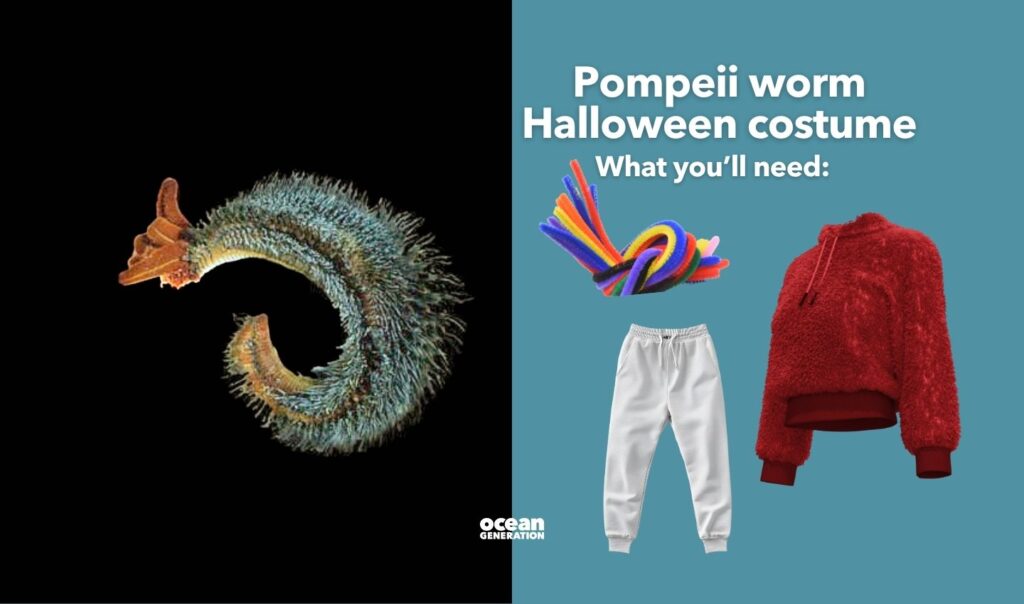
For the flamboyant and fiery: the Pompeii worm 

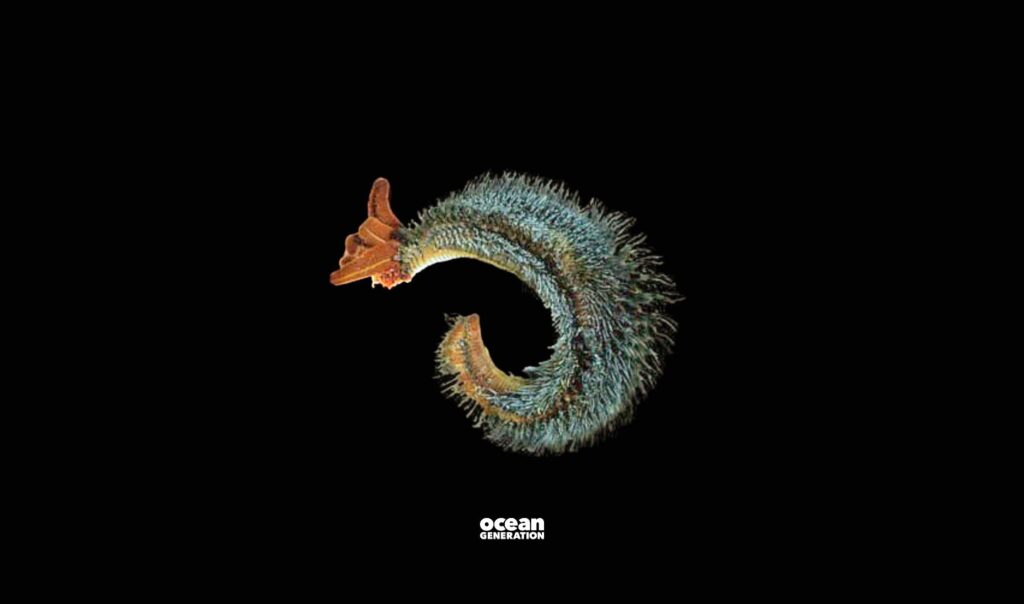
Pompei worms live around hydrothermal vents in the Ocean. Posted by Ocean Generation.
Photo by National Science Foundation (University of Delaware College of Marine Studies)

In the depths of the Ocean, there are huge chimneys belching out black and white smoke. Hydrothermal vents are where the Ocean meets the hot inside of our planet. Think of thermal spas with the heat turned way up. Combine the extreme heat with the crushing pressures and cold of the deep sea, it doesnโ€™t sound like an appealing neighbourhood.  

But they host rich ecosystems, full of incredible creatures adapted to these extremes. Hydrothermal vents may have been the origin of life on our planet

The Pompeii worm shows a flamboyant distain for the usual limitations for life. Bright red, building a tube for itself to live in, it dances in water that would kill most. It can take the heat up to 55 degrees Celsius (131 Fahrenheit). But a woolly jumper of bacteria helps it stay cool, despite living in waters that can be over 100 degrees C (212 F). This is no normal jacket, as the worm has to keep it well fed with mucus in a symbiotic relationship*.  

Four long, red-orange tentacles crown its head, used for breathing. Pompeii worms have the highest specific gill surface area of any marine worm and have acidic blood to encourage the oxygen to dissociate from their blood cells in their extreme environment. What other animal can work a feather boa with acid blood? 

What you need for the costume 

Pompeii worm Halloween costume, inspired by deep sea animals. Posted by Ocean Generation.
  • Grey/white/black trousers or skirt 
  • Red/white long sleeve top โ€“ preferably fuzzy 
  • Red/pink/orange pipe cleaners/paper/feather boa 

Be bold. Channel your inner Pompeii worm and dance in and out of your sulfur-and-protein based tube. A fluffy or fuzzy top will show off your bacterial biofilm and use some pipe cleaners or paper to make some tentacles around your head. Smaller feeding tentacles to add a bit extra. 

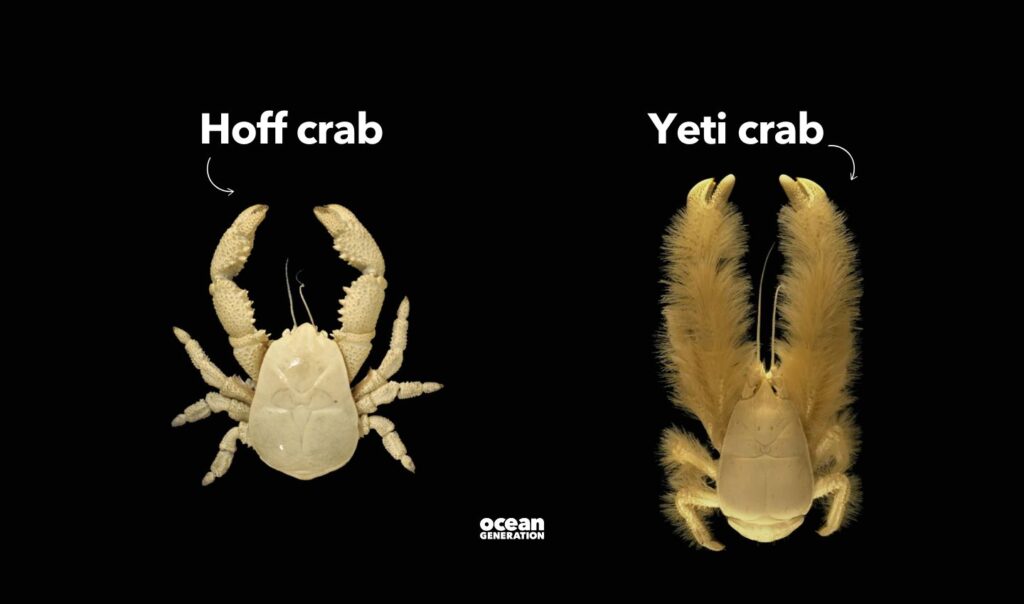
For the dancers: Hoff or yeti crab Halloween costume 

Hoff and yeti crabs grow their own food in the deep sea. Posted by Ocean Generation, leaders in Ocean education.
Hoff crab: University of Portsmouth / Yeti crab: A. Fifis, Ifremer/ChEss, Census of Marine Life

Another resident of the hydrothermal vents are crabs. There are two we want to spotlight. The Hoff and Yeti crabs.  

Both are named after their appearance. One has a hairy chest and so bears the name of Baywatch legend David Hasslehoff. The yeti crab is the more general term for the Kiwa genus, of which the Hoff crab is a member. 

These downy decapods are covered hairs. What is the other key to their success in the deep? Dancing. 

The crabs wiggle and wave, which moves water over the hairs, feeding the colonies of bacteria that live there. These crabs grow their own food in their fur, so the fuzzier the better.  

What you need for the crab costume 

Hoff and yeti crab
Halloween costume
  • Fuzz โ€“ for the Hoff, a hairy chest, and for a Yeti crab, get your arms fuzzy 
  • Creative claws  
  • Snacks in a pocket 

The key for the crabs is owning your hair and rewarding your dancing. Every wiggle is a snack earner. Get fuzzy, and for added authenticity get some snacks in the fuzz for easy snacking.  

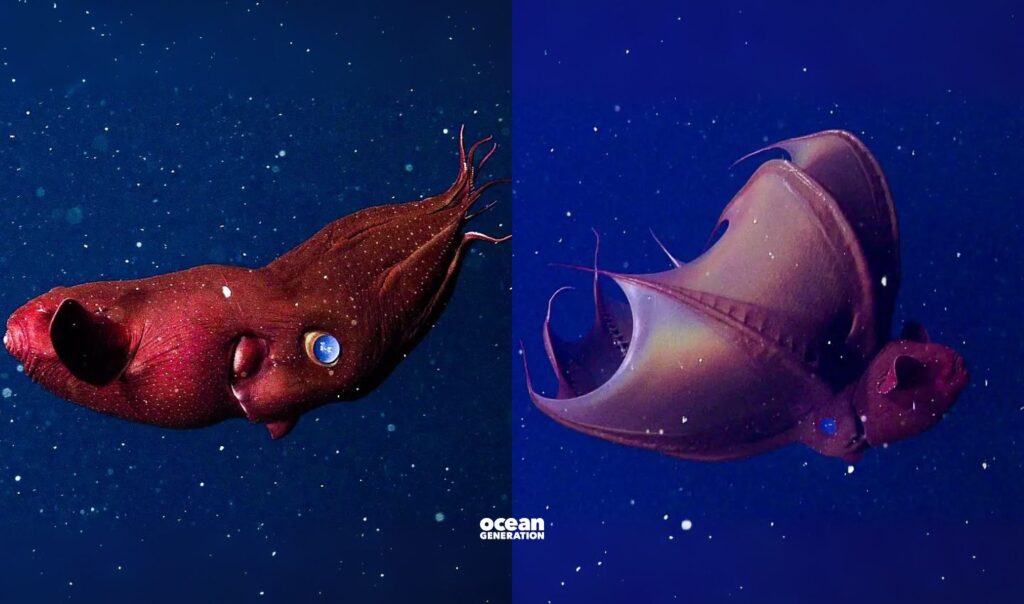
For the dramatic introvert: the vampire squid 

As another unfairly named creature, the Latin name of the vampire squid, Vampyroteuthis infernalis, literally means vampire squid from hell.  

Red eyes, black or red colouration, and spikes lining their arms (incorrectly known as tentacles), living in the abyssal depths of the Ocean. You can see what they were going for.  

Truly a survivor, these cephalopods live between 600m and 900m and can thrive where others canโ€™t – oxygen minimum zones. These parts of the Ocean donโ€™t have enough oxygen for most organisms to breathe. The vampire squid can survive where oxygen saturation is as low as 3% (the usual oxygen saturation in air is 21%).  

If something does dare to get in their personal space, the vampire squid has a lesson for all of us: when stressed, be a pineapple.  

The vampire squid will โ€˜invertโ€™ itself, pulling its arms over its head, covering its photophores and revealing the spiny projections (known as cirri) underneath.  

The glowing tips of its arms are held far above the head to draw attacks away from where they could do serious damage. The arm tips can grow back, so can be a handy (if youโ€™ll pardon the pun) distraction.  

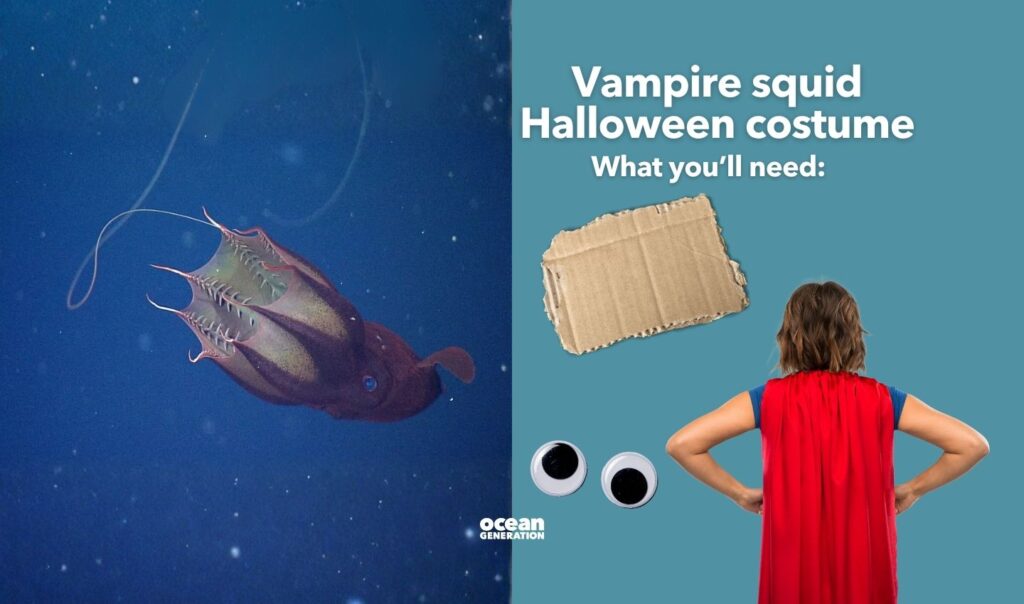
What you need for the squid costume 

What you need for the vampire squid Halloween costume. Posted by Ocean Generation.
Vampire squid photo by Monterey Bay Aquarium
  • Loose black or red clothing, ideally a cape 
  • Cardboard to make some spines 
  • Lights/sparkles 
  • Fins on the side of the head 
  • Red eyes 

To embody the vampire squid, you need your own space. Space to let your cloak free. Line the inside with your cirri (the spines), in case of encroachment by unwanted parties. Coloured contacts or red eye makeup to give that squid from hell look. 

Have fun with your lights on this one โ€“ vampire squid can control their own light show. Lights over the cloak and in your hands can make an entrancing look, ready to be muffled and switched to a spiny dark outer should the mood change.  

Optional extra: Glitter juice 

If the pineapple pose doesnโ€™t work, a vampire squid has a secret weapon. A sticky cloud of bioluminescent mucus, which they can squirt at offending parties. This glowing goo can dazzle while the vampire squid escapes or stick to the transgressor and light them up for up to 10 minutes. Ten minutes is a long time to wait to see what else can see you in the dark Ocean.  

A spray bottle, with some (eco-friendly) glitter mixed with water will give you your last line of defence.  

*Grime, J. P., & Pierce, S. (2012). The evolutionary strategies that shape ecosystems. Wiley-Blackwell.

Who are the orca outlaws sinking boats, and why are they?

Subscribe

Monthly: Impact in your inbox.

OceanGeneration-Join

Are hydrothermal vents the origin of life on Earth?ย 

Hydrothermal vents explained by Ocean generation.

Thousands of metres down in the Galรกpagos Rift valley, a deep-sea camera is towed along the seafloor, capturing our first glimpse of an extraordinary and alien world

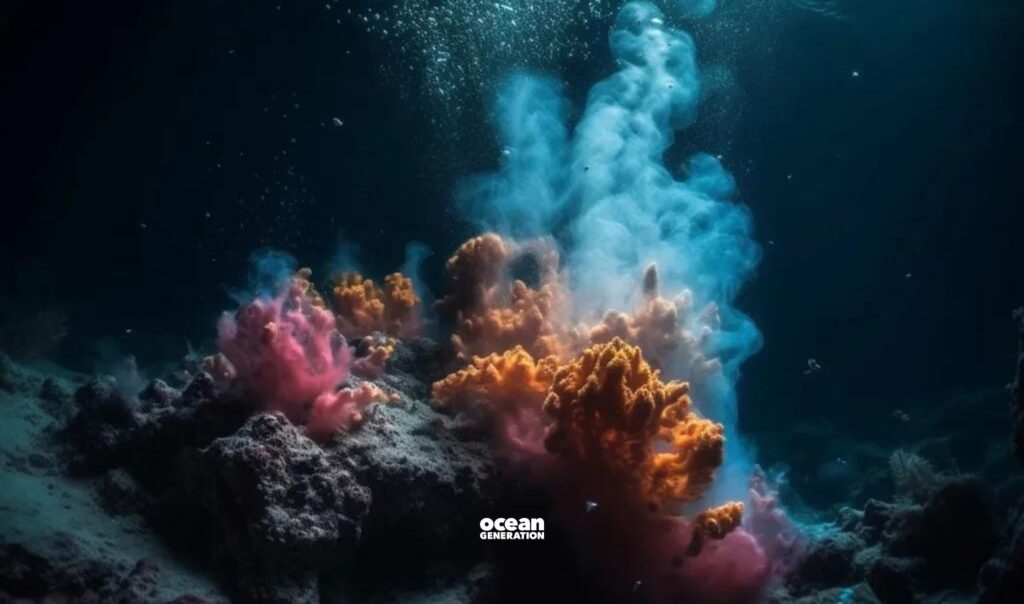
Towering chimneys pumping out plumes of black smoke cover the seabed; these are hydrothermal vents.

Despite low oxygen levels, high toxicity and fluid temperatures of up to 350ยฐC, hydrothermal vents host a remarkably diverse array of Ocean life.

These Ocean creatures are specially adapted to these extreme conditions: Giant tubeworms, beds of mussels and clams, fluffy crabs, pink vent fish and more.

The discovery of hydrothermal vents in 1976/ 1977 prompted a new branch of deep-sea biology. Since then more and more species have been discovered. 

Hydrothermal vents may hold the secret to the origin of life on Earth.
Image credit: Meteored

Where are hydrothermal vents found?

Hydrothermal vents were one of the first environments to have existed on Earth and have been bubbling away for over 4 billion years. 

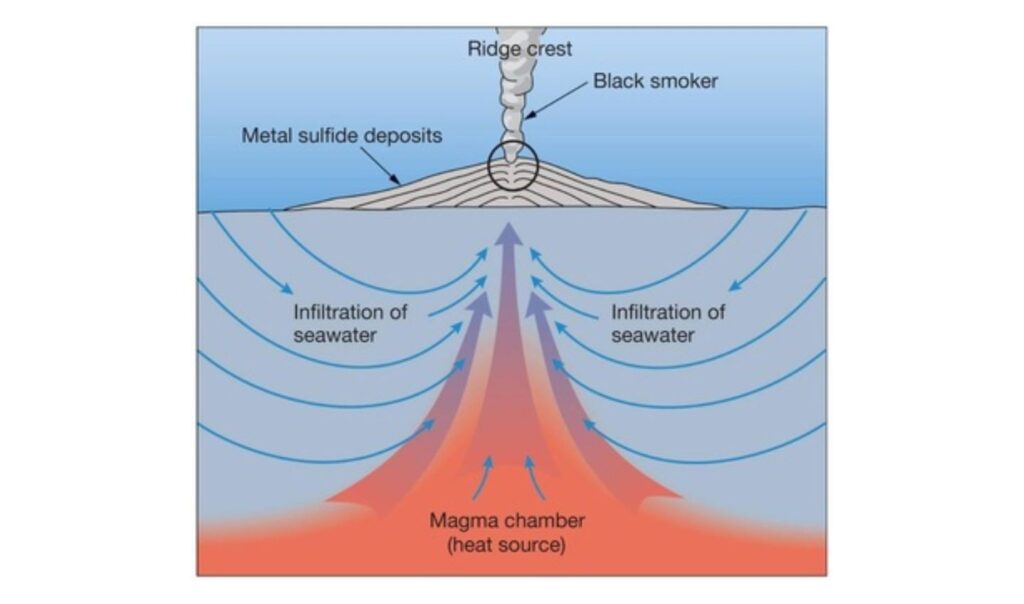
Hydrothermal vents can form anywhere a heat source meets a fluid system. They often occur on the seafloor at tectonic plate boundaries. The hot, upwelling magma heats up seawater which is ejected as mineral-rich plumes. 

They are mostly found in the abyssal zone of the Ocean (3,000 โ€“ 6,000m). While the majority (65%) of the hydrothermal vents are located close to the tectonic plate boundaries, they are also common (12%) along chains of underwater volcanoes, called volcanic arcs.  

In 2000, a new type of vent was discovered, located several kilometres from a divergent plate boundary (tectonic plates that are moving apart) called Lost City vents. They resemble the spires of an underwater metropolis like Atlantis. 

Hydrothermal vents are found at tectonic plate boundaries. Posted by Ocean Generation.
Image credit: Pearson Education

Take a look at some of the weird and wonderful Ocean life found in the deep-sea: 

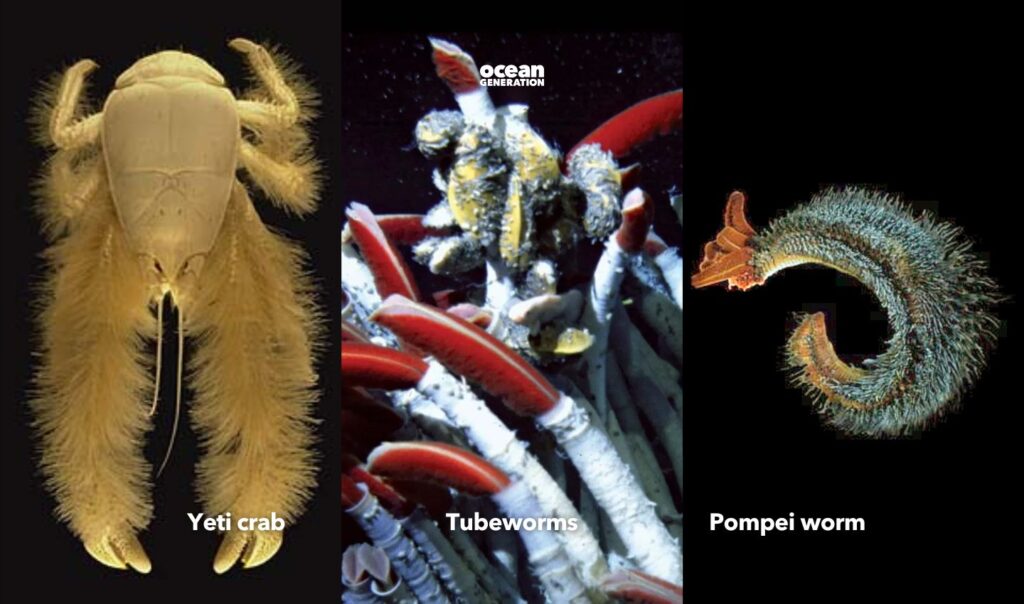
Annelid tubeworms (Riftia pachyptila) 

Also called โ€˜giant tubewormsโ€™, these are extremophiles, meaning theyโ€™re able to live in extreme environments, and can reach over 1.8 metres (six feet) tall.

They have a unique body plan with no mouth or anus and their lifestyle is unique, too as they rely entirely on symbiotic bacteria as a food source.  

The Yeti Crab (Kiwa hirsuta) 

This new family of crab was discovered in 2005 and has claws covered in dense setae (stiff bristles). They get almost all their food from the chemoautotrophic bacteria (bacteria that can turn inorganic chemicals into energy) that live in these bristly structures.

These furry crabs have been seen to wave their claws to help provide a flow of oxygen and minerals to their symbiotic bacteria.  

Pompeii worm (Alvinella pompejana)  

Named after the explosive eruption of Mount Vesuvius in Pompeii, the Pompeii worm is the most heat tolerant animal we know of. They can survive temperatures at high as 80ยฐC. One physiological adaptation Pompeii worms have evolved to survive these extreme temperatures are heat shock proteins. These’re specific proteins which provide cells with thermal stability.  

Some Ocean creatures specifically adapted to these conditions.
Image credit: 1. Yeti crab: MBARI 2. Tubeworms: Britannica, 3. Pompei worm: Wikipedia

So how are these marine animals living in such extreme conditions? 

Photosynthesis often gets all the credit for providing the energy that flows through food webs by converting light energy into food.

However, there is another lesser-known reaction. Chemosynthesis does the same thing but draws from chemical energy instead. This reaction is what supports the diverse communities we see at hydrothermal vents.

Could hydrothermal vents have sparked the origin of life on Earth?ย ย 

Chemosynthetic bacteria found in these communities use the toxic hydrogen sulphide released by hydrothermal vents to convert carbon dioxide into organic carbon molecules.

These form the building blocks to all life on Earth.  

Itโ€™s this nifty reaction thatโ€™s enabled deep-sea organisms to adapt and survive at hydrothermal vents.  

Could hydrothermal vents have sparked the origin of life on Earth?

Animals living here have formed symbiotic relationships with these bacteria which can be incorporated into tissues (endosymbiosis) or on the animal surfaces (ectosymbiosis).

These chemosynthetic bacteria provide energy from the environment for their host. This can be so efficient that some creatures (such as the annelid tubeworm) donโ€™t need to feed at all. 

The discovery of these self-sufficient ecosystems cast new light on the origins of life on Earth. It was here that the unique conditions were suitable for a spontaneous metabolism (the spontaneous formation of molecules that are essential for all life) to occur. 

This discovery gave rise to the question: Does the Ocean hold secret to the origin of life on Earth? 

Theories on the origin of life range from lighting speeding up reactions to comets delivering organic molecules from outer space.

The ancient process of chemosynthesis precedes photosynthesis, and likely sustained the earliest life on Earth. 

Bacteria were some of the first life forms to emerge. The most striking piece of evidence are the parallels between the chemistry spontaneously occurring at these vents and the core metabolic reactions found in these single-celled organisms. 

Thesel vents may hold the secret to the origin of life on Earth.
Image credit: Meteored

Cyanobacteria are an ancient group of photosynthetic microbes which represent one of the earliest forms of life on Earth. With fossils dating back to 2000 โ€“ 3500 million years ago, these single-celled organisms evolved photosynthesis, allowing life to rise up from the darkness below.  

The rest is history. 

Since their discovery, hydrothermal vents have become the most popular theory among scientists for explaining the origins of life on Earth. Yet much remains to be discovered. Secrets still held within these mysterious ecosystems have the potential to revise our life-on-Earth theories once again. 


Cover image via Research Feature.

Who are the orca outlaws sinking boats, and why are they?

Subscribe

Monthly: Impact in your inbox.

OceanGeneration-Join

Interesting animals that use bioluminescence in the deep Ocean.ย ย 

Interesting animals that use bioluminescence in the Ocean.

Bioluminescence: Lighting up a lightless world. 

While bioluminescence is everywhere throughout our Ocean, itโ€™s the only source of light in the deep-sea

A staggering 76% of all Oceanic marine animals are capable of bioluminescence, which means that they can produce their own light through chemical reactions inside their body.  

How does bioluminescence work in the deep Ocean 

Bioluminescence is a chemical reaction that occurs when the light-emitting molecule called luciferin reacts with a luciferase enzyme, releasing energy in the form of light. 

Bioluminescence is the only source of light in the deep Ocean.

Itโ€™s an active process, meaning it can be turned on/off, as opposed to the passive traits of fluorescence and phosphorescence. 

Some bioluminescent organisms generate their own light. Others take up bioluminescent bacteria from the water column and house it in their light organs in a symbiotic relationship. 

Marine bioluminescence is commonly expressed as blue/green light. This is most likely because these wavelengths travel further distances through the water. They’re more also easily visible in the deep Ocean.   

@oceangeneration

This is how colour gets absorbed as Ocean depth increases. ???? Demonstrated by a sea urchin skeleton. ???? Did you know: Colour is absorbed in ???? rainbow colour order. Red ???? โ€˜vanishesโ€™ first (as shallow as 5m / 15ft), then orange ????, yellow ????, green ????, blue ???? and violet ???? last (around 60m / 200ft). How incredible! ???? Follow along for Ocean positive stories and science. ???? ????: j.kowitz #OceanGeneration #Ocean #OceanEducation #OneOcean #OceanDecade #OceanLover #OceanConservation #SeaUrchin #Art #OceanScience #Diver #rainbow #nature #science #sea #underwaterphotography

โ™ฌ Royalty – Egzod & Maestro Chives & Neoni

In rarer cases, red and yellow bioluminescence have also been observed in marine creatures.  

Why do marine animals emit light at all?   

In the lightless world of the deep Ocean, marine creatures have adapted to use bioluminescence to their advantage:  

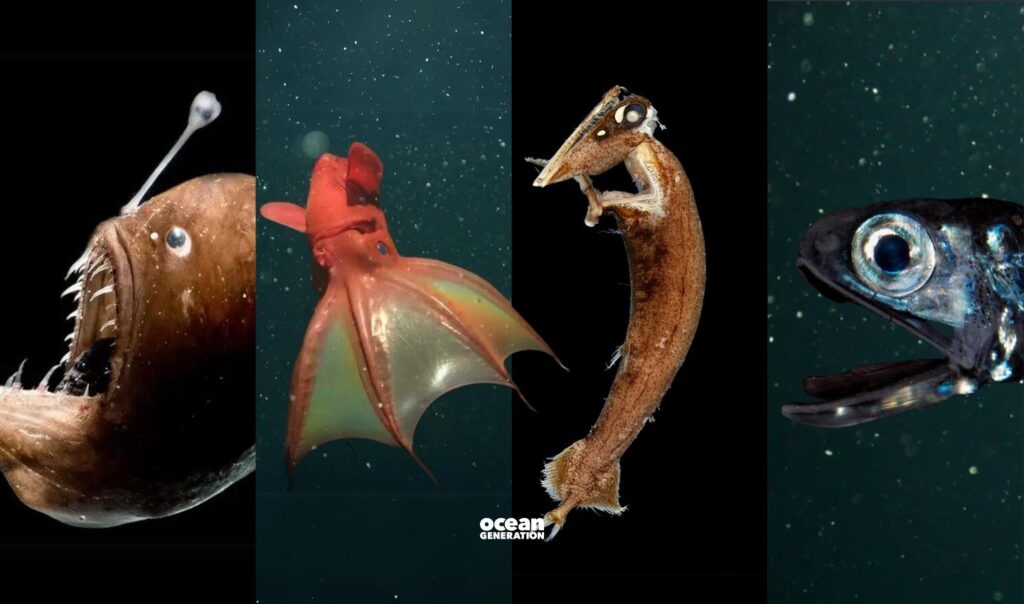
1. Deep-sea anglerfish have a specialised lure to attract prey.ย 

Perhaps the most famous bioluminescent predator is the deep-sea anglerfish.

This ferocious hunter has a large head, incredibly sharp teeth and a long, fishing-rod-like structure that extends out from the top of its head. At the end of this rod is a ball (called the esca) which contains glowing bacteria called Photobacterium. Ringing any bells? You may recognise her from Finding Nemo.

This lure is used to attract curious prey and is also useful for finding a mate in the vast, dark expanse of the deep Ocean. 

2. Vampire squid expel bioluminescent mucus to deter predators.ย 

When threatened, the vampire squid inverts its body, raising its arms over its head to expose rows of spikes to deter attackers.

And if thatโ€™s not deterrent enough, they also eject a sticky, bioluminescent mucus which can startle, disorient, and confuse predators.

This defensive tactic can buy the squid enough time to escape, while also covering its predator in brightly lit fluid, leaving them vulnerable to attack.  

Why do marine animals emit light in the Ocean?
Image credit: 1. Angler fish: Dante Fenolio/Science Photo Library, 2. Vampire Squid: MBARI, 3. Stoplight Loosejaw: Oceana, 4. Lanternfish: Ocean Twilight Zone

3. Stoplight loosejaw dragonfish have red flashlights to see in the dark.ย 

Stoplight loosejaw dragonfish have special red-emitting light organs beneath their eyes that can be activated to look for prey.

The stoplight loosejaw is the only known animal to use chlorophyll pigments (usually found in plants) inside its eyes, which allows it to see red wavelengths of light. 

They use these red beams as a flashlight to search for prey. Since most deep-sea fish can only see blue light, these predators have a huge advantage. They can see their prey, but their prey canโ€™t see them.

4. Lanternfish use light to blend in.ย 

Lanternfish have adapted an ingenious ability to camouflage themselves using light. 

These masters of disguise have rows of photophores (light-emitting organs) on their underside. They emit a faint glow which allows them to blend in with any remaining light that filters down from the surface.

This process is known as counter-illumination and renders them almost invisible to attackers hunting from below.  

Light from bioluminescence 
has the potential to reveal creatures 
that hide in the darkness.  Posted by Ocean Generation.

Some marine animals use counter measures against bioluminescence in the deep Ocean.   

Light from bioluminescence has the potential to reveal the whereabouts of creatures that hide in the darkness of the deep Ocean. 

To counter this, many take measures to disguise themselves or break up their outline. 

Many deep-sea creatures are dark red in colour. Red wavelengths of light are the first to be absorbed in the Ocean, and very few deep-sea creatures can see red light (the stoplight loosejaw being a notable exception). Red-coloured creatures therefore appear black and blend in against the near-lightless backdrop.  

Others have ultra-black skin that can absorb light from bioluminescence. For example, pelican eels are found in the midnight zone (where thereโ€™s no sunlight, and life exists in complete, constant darkness). Their skin can absorb up to 99.7% of light, rendering them virtually undetectable, even when exposed to bioluminescence. 

Transparency is another technique used for camouflage in the deep Ocean. The glass squid has been observed as deep as 2,000m, and is almost completely transparent. The only organ visible through the tissue of this small-tentacled, swollen-bodied squid is the red-coloured digestive gland. This makes it difficult to be spotted by even the most astute predator. 

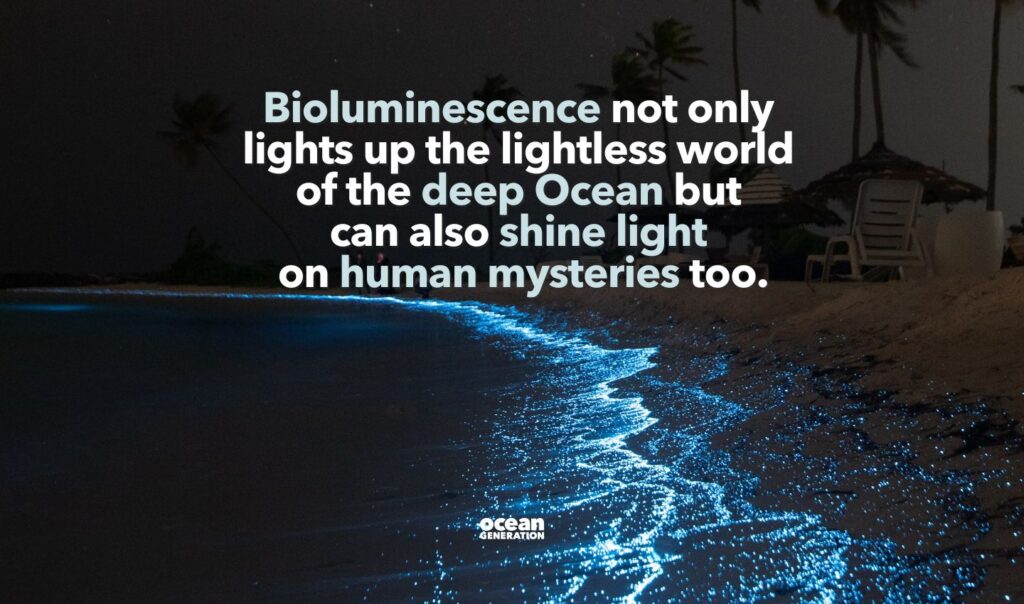
Bioluminescence shines a light on our human mysteries. Posted by Ocean Generation.

Human ingenuity often takes inspiration from nature, and bioluminescence is no exception. 

Due to its unique ability to produce light without the need for an external light source, bioluminescence has been utilised in the field of medical research.

Particularly in imaging and probe techniques for cancer detection and cell culture research, bioluminescence has helped us to detect and respond to disease more effectively.  

With so much of the deep Ocean left to discover, each unique finding may lead to new and exciting medical applications.  

Bioluminescence, therefore, not only lights up the lightless world of the deep Ocean but can also shine a light on our human mysteries too.  

Who are the orca outlaws sinking boats, and why are they?

Subscribe

Monthly: Impact in your inbox.

OceanGeneration-Join

What happens after a whale dies? Life after death in the deep-sea

A whale's death is called a whale fall. Posted by Ocean Generation.

A dead whale descends into the darkness of the deep-sea abyss.

In life, these majestic creatures travel vast distances playing an important role in surface ecology. But even in death, their decaying remains become a haven of life on the black Ocean floor.

Here in the deep Ocean the environment is sparse, offering fewer resources to sustain life. What falls from above, marine snow, is the steady trickle of dead organic material and supports an array of life on the seabed. 

A dead whale is a 30-tonne avalanche of fat and organic carbon, equivalent to more than 1000 yearsโ€™ worth of marine snow across 100 square meters. 

A whale's death becomes an island of biodiversity in the deep Ocean.

Eventually, a whale fall (a whale’s death) becomes an island of biodiversity in the deep-Ocean.

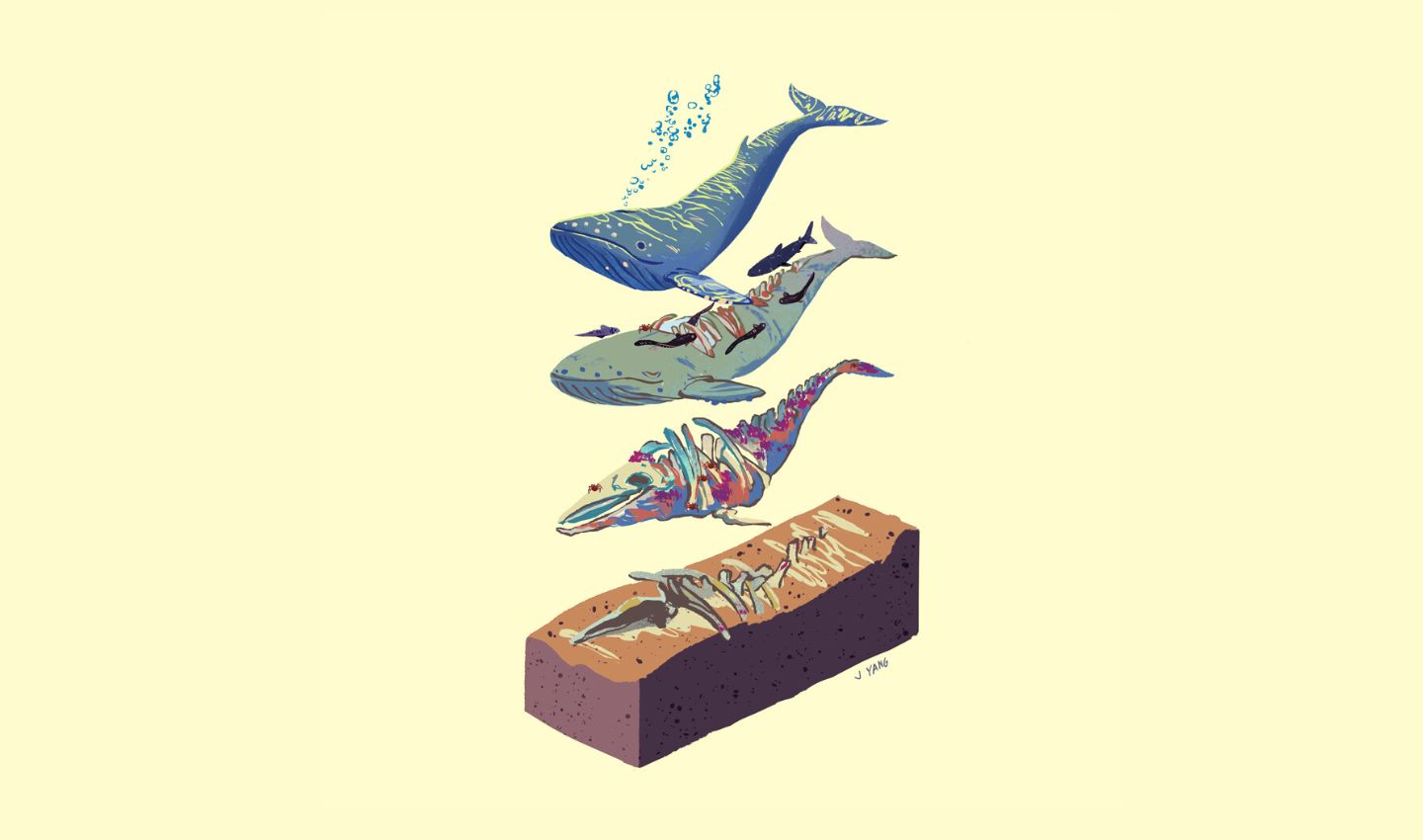
1. It all starts with a feeding frenzy.ย 

Soon after the whale falls, a variety of species descend upon it and the dinner party begins.

The first to arrive are the large Ocean wanderers such as hagfish (eel-shaped jawless fish) or gigantic sleeper sharks. These mobile scavengers remove soft tissue by rasping or tearing at the flesh exposing the energy-rich skeleton, giving the name of this phase the mobile-scavenger stage.

2. As the pieces get smaller so do the scavengers.ย 

It can take up to two years for the mobile-scavengers to finish feeding on the whale, where the next wave of guests arrives in a second phase known as the enrichment-opportunist stage.

Animals like polychaetes (a class of marine worms) and crustaceans including amphipods (shrimp-like crustacea) will move in to feed on remaining blubber and burrow into the nutrient enriched sediments surrounding the whale.ย ย 

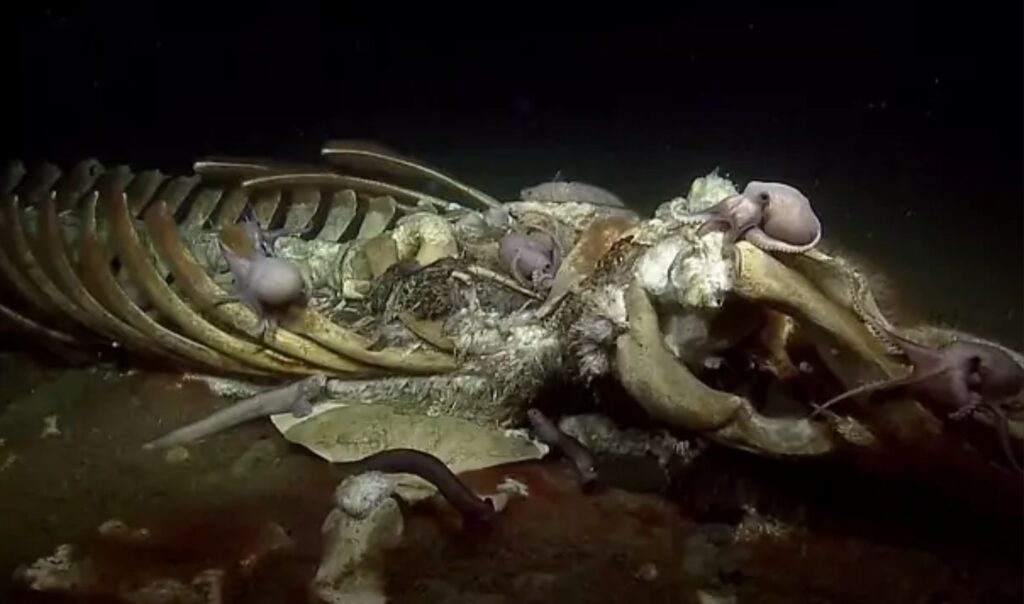
The remains of a whale mean life to many deep-sea animals.
Image credit: National Marine Sanctuary. Photo: OET/NOAA

3. Finally, only the bones of the whale remain.

These would seemingly have no further use. However, ecological diversity is about to flourish in the sulfophilic stage of the whale fall. The whaleโ€™s bones provide a large reservoir of energy-rich lipids, a shining prize to deep-sea organisms.ย 

Bacteria break down fatty lipids in the bones, releasing sulphides. The sulphides can be used to generate energy, in a process called chemosynthesis (producing food using chemicals as an energy source instead of sunlight).

These chemosynthetic bacteria have become resistant to sulphidesโ€™ toxicity and can establish bacterial mats which act as a foundational food source, supporting a huge array of marine biodiversity: sponges, mussels, limpets, sea spiders and snails.

The breakdown of bone-lipids can take 50-100 years and these mini-ecosystems are highly significant for seabed ecology. Even then, after the complete extraction of nutrients, it isnโ€™t over.ย ย 

Decades after a whale dies, it's still essential to marine ecosystems.

Decades after a whale dies, the whale-fall is still essential to marine ecosystems: ย 

Some scientists believe thereโ€™s a further stage of succession: the reef stage. Even after the feeding frenzy, the whales’ bones can remain for more than 100 years, acting as hard surface for suspension feeders to settle.

These โ€˜habitat islandsโ€™ act as evolutionary stepping stones between other seafloor ecosystems like hydrothermal vents. This may have allowed sulphide-specialised organisms to spread across the seafloor and diverge into new species. 

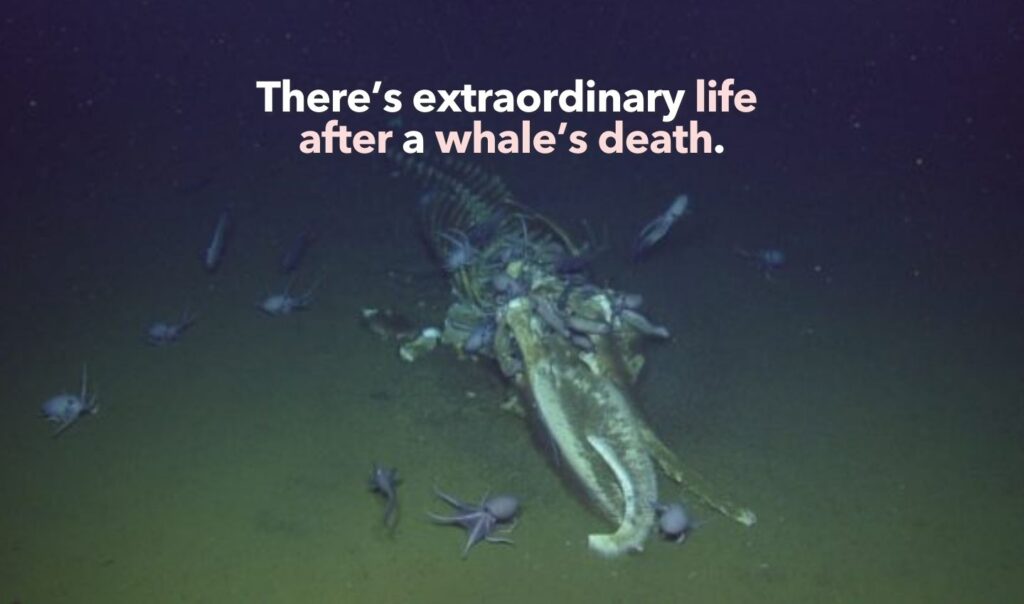
What happens after a whale dies? There's extraordinary life.
The remains of a whale fall near the Davidson Seamount in Monterey Bay National Marine Sanctuary. Photo: OET/NOAA

Despite whale-fall ecosystems being poorly sampled, 407 species have been found living off the carcasses globally, which is high for the bottom of the sea. Of these, 21 species can only be found on whale-fall, known as whale-fall specialists.

Whale-fall specialists are species that require a whale carcass to complete their lifecycle and maintain their populations. These marine organisms will jump from habitat island to island to survive.

For example, Osedax, Latin for โ€œbone-eaterโ€, are a genus of polychaetes (marine worms) found worldwide.  They are important ecosystem engineers by eroding whale bones and allowing rarer species to colonise the whale skeleton.  

How whale populations impact the global Ocean?ย 

Whale-falls also contribute to the conversion of inorganic carbon (CO2) into organic carbon (marine life), a set of processes known as the Biological Carbon Pump (BCP). This carbon is sequestered (stored) in the deep Ocean.ย ย 

What happens after a whale dies? Posted by Ocean Generation.
Illustration by J Yang

Whales deliver huge amounts of carbon in their biomass to the seafloor, which is then locked-away for centuries within deep-sea sediments.

Any threat to whale populations will threaten entire ecosystems and disrupt the process of carbon sequestration.

Commercial whaling, for example, has been depleting whale populations for around 1000 years, beginning in 1000CE. Experts agree that tens of millions of whales were likely killed during this period, pushing many whale species to extinction and causing the extinction of whale-fall specialist species, who rely on whale falls for survival.

A single whale-fall can provide everything a whale-fall specialist needs for 50-100 years, meaning there is a lag-time of at least 30-40 years before the decline in whale populations is felt. Which is to say, if whale populations can recover, we may be able to mitigate the impacts on deep-sea ecosystems

Whales make an incredible contribution to our Ocean.

As we follow the timeline of a whaleโ€™s life, we can see the incredible contribution whales make to the Ocean.

From enhancing surface ecology in life, to supporting entire ecosystems in death.ย 

Who are the orca outlaws sinking boats, and why are they?

Subscribe

Monthly: Impact in your inbox.

OceanGeneration-Join

How deep is the Ocean? Explore fascinating creatures of the deep.

Explore how deep actually is our Ocean, and what fascinating creatures live in it.

Long regarded as an empty, desert-like environment with conditions too extreme for life to survive, the deep sea was historically considered insignificant.

However, our outlook on the deep-sea shifted when the HMS Challenger set off to circumnavigate the globe in 1872. It uncovered a diversity of deep-sea life previously thought impossible, and weโ€™ve been making new and exciting discoveries ever since.  

And weโ€™re not finished yet.

According to Ocean Census, weโ€™ve only discovered 10% of Ocean life. Itโ€™s estimated that 1-2 million marine species remain undiscovered.

Whatโ€™s more, a staggering 50% of the Earthโ€™s surface is deep-seafloor below 3,000m. 

The deep sea was historically considered insignificant, until we discovered a diversity of life.

Weโ€™re constantly finding pieces of the puzzle to improve our understanding of this vast and complex world. From new underwater mountain ranges to previously undescribed species of deep-sea octopus, almost every deep-sea exploration mission yields mind-blowing new discoveries.  

When we consider the scale of the deep sea, we realise that itโ€™s not an unusual habitat at all. In fact, itโ€™s the norm for much of our blue planet, and itโ€™s our land-based habitats that are comparatively rare.

So, how deep is the Ocean?

Letโ€™s dive into the deep Ocean and explore this weird and wonderful world. 

Sunlight zone

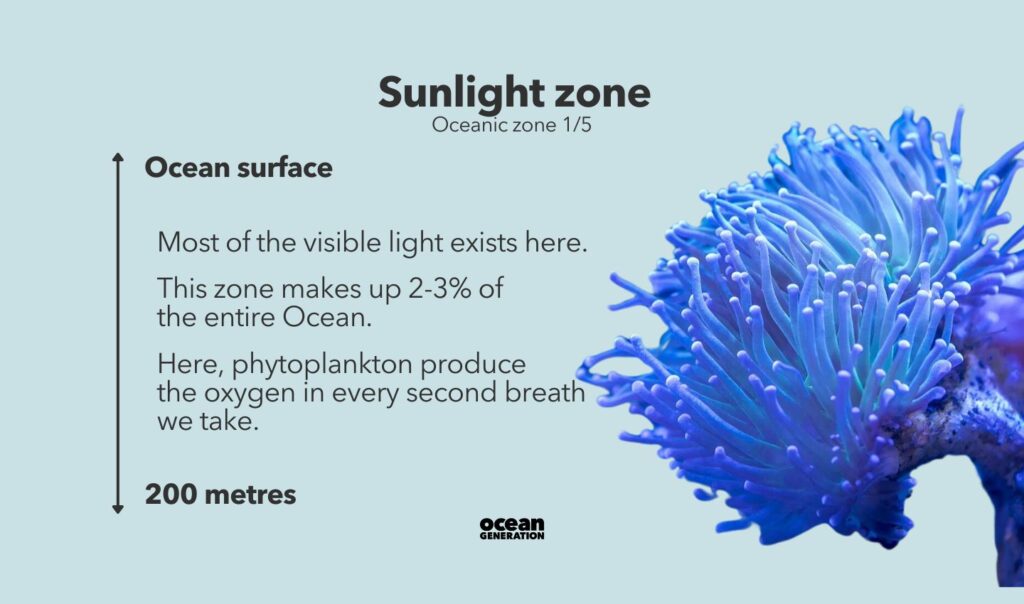
We begin our voyage at the surface, in the sunlight zone. This Ocean surface layer extends from 0 – 200m (656 feet) and is where most of the visible light exists.

Thereโ€™s enough sunlight here for photosynthesis, which forms the basis of the food chain. 

Despite only making up 2-3% of the entire Ocean, the oxygen in every other breath we take is produced in the sunlight zone by photosynthetic plankton (phytoplankton).   

The sunlight zone has the most-visible light in our Ocean. Posted by Ocean Generation, leaders of Ocean education.

Twilight (Mesopelagic) zone

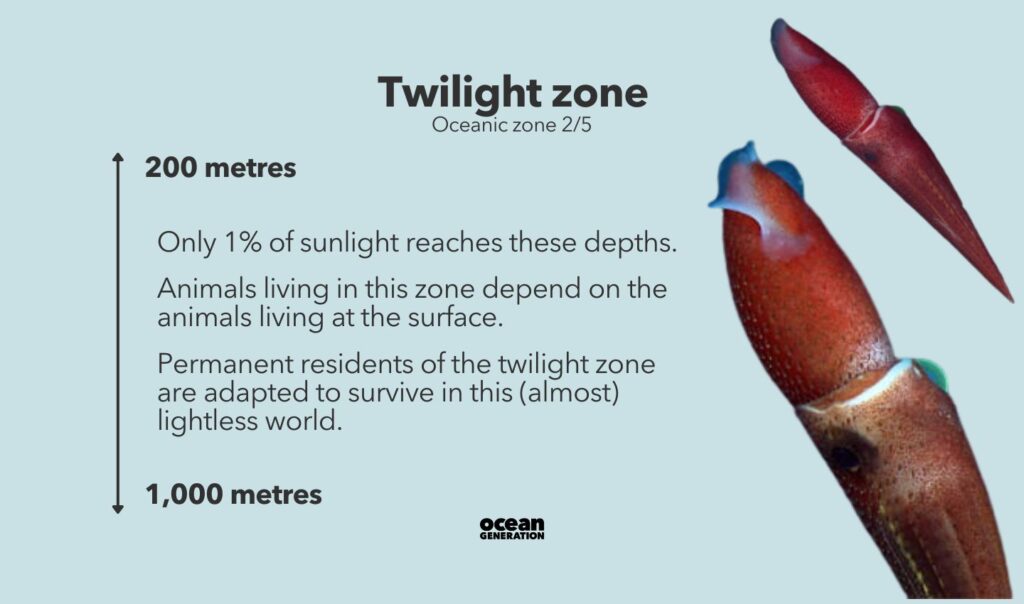
As we descend below 200m, we enter the twilight zone. Only 1% of sunlight reaches these depths, so light is very faint.

Want to see how light disappears as you dive into the Ocean? Watch this. 

Due to the lack of sunlight, there are no primary producers (organisms that get their energy from sunlight or other non-living sources). Animals that inhabit this zone depend entirely on those living at the surface.

Some scavenge on organic waste material that rains down from above, providing a vital source of nutrition. This โ€œmarine snowโ€ largely consists of decaying matter from dead organisms, faecal matter, detritus and other inorganic particles. 

Only 1 percent of sunlight reaches the Twilight zone in the deep Ocean.
Image credit: Monterey Bay Aquarium Research Institute

Other marine life undertake a daily mass-migration to and from the deep known as diel vertical migration.

Like commuters making their way into the city, trillions of tiny deep-sea creatures ascend to more abundant waters during the night to feed. They then descend back to the deep Ocean during daylight hours to avoid predators and UV radiation.

This daily surface-to-deep commute is the largest daily migration of life on Earth, and is mostly carried out by zooplankton, krill, and other small amphipods (crustaceans). 

Permanent residents of the twilight zone are adapted to survive in this (almost) lightless world. One of the most notable features are their eyes.  

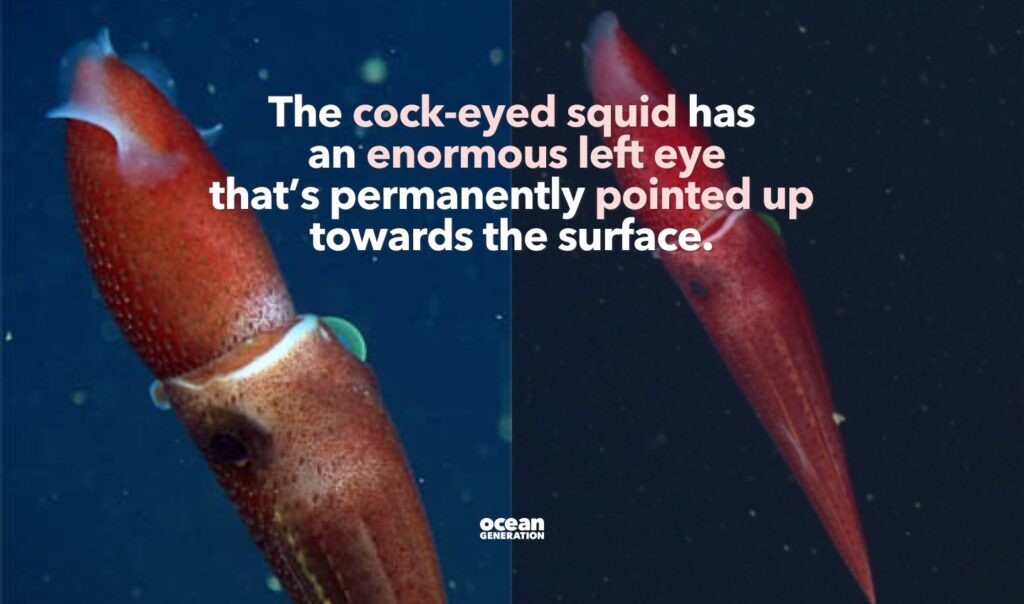
For example, the cock-eyed squid live between 200-1,000m. These lobsided creatures have an enormous left eye thatโ€™s permanently pointed up towards the surface, allowing them to spot the silhouettes of prey against the light from above. 

The cock-eyed squid have an enormous eye that's permanently pointed towards the surface.
Image credit: Monterey Bay Aquarium Research Institute

Midnight (Bathypelagic) zone

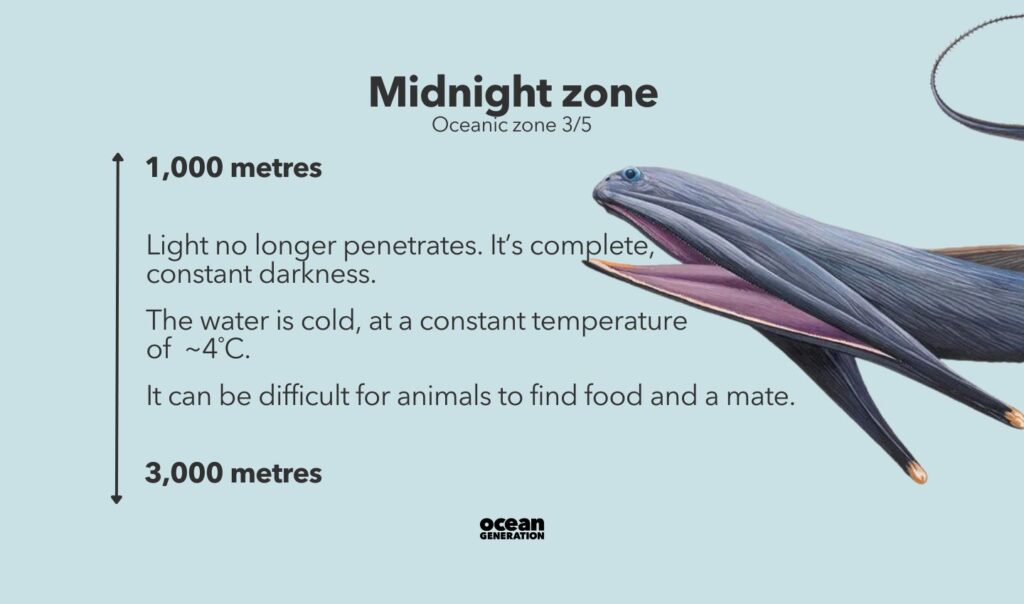
At 1000m (3,280 feet), light no longer penetrates, and weโ€™re left in complete, constant darkness.

We have now entered the Oceanโ€™s midnight zone.

Itโ€™s cold down here, at a constant temperature of around 4หšC, and the only light comes from the bioluminescence of animals themselves.

In this vast, lightless world, it can be difficult for animals to find food and a mate.

Light no longer penetrates the Midnight zone.
Image credit: BBC Science Focus

Some extraordinary species have adapted to overcome these challenges in astonishing ways.   

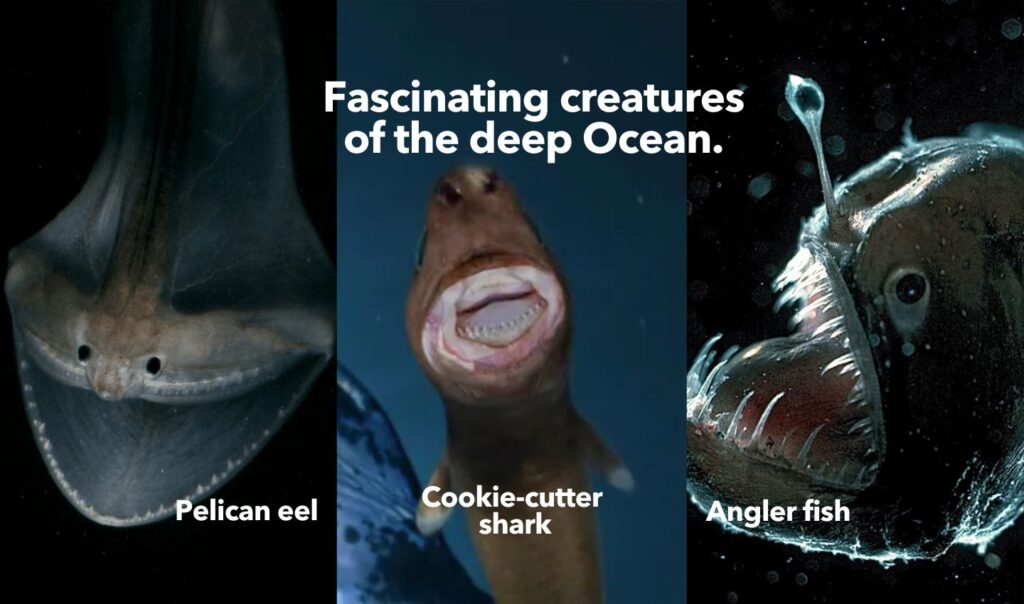
1. Pelican eels have an enormous jaw relative to their body size.  

This can unfold to engulf prey much larger than the eel itself, allowing them to bypass the size-based food web structure (individuals generally only consuming food smaller than their own body size) that usually exists in surface waters. 

2. Cookie-cutter sharks have special suction-cup-like lips and bandsaw-like teeth.  

Their specialised jaw allows this parasitic attacker to attach to much larger animals and gouge out a round chunk of flesh (yes, like a cookie-cutter).  

3. Finding a mate can be equally as challenging: This is how angler fish have adapted. 

Female deep-sea angler fish are famous for their bioluminescent fishing-rod-like lure which extends out from the top of their heads (think *Finding Nemo*). Male variants, however, are much smaller in comparison.

These โ€œdwarf malesโ€ spend their lives scouring the darkness in search of a female counterpart. When he finds her, the male latches on to the female with sharp teeth.

This attachment is followed by fusion of the epidermal (skin) tissues, and eventually his circulatory system fuses with hers. He becomes a permanent appendage to her body, in a process known as sexual parasitism.  

A female angler fish can have multiple males attached to her at any one time. 

Meet fascinating creatures of the deep Ocean: pelican eel, cookie-cutter-shark and angler fish.
Image credit: Pelican eel: Breathing Planet, Cookie cutter shark: Pally/Alamy Stock Photo, Angler fish: Monterey Bay Aquarium

Abyssal (Abyssopelagic) zone

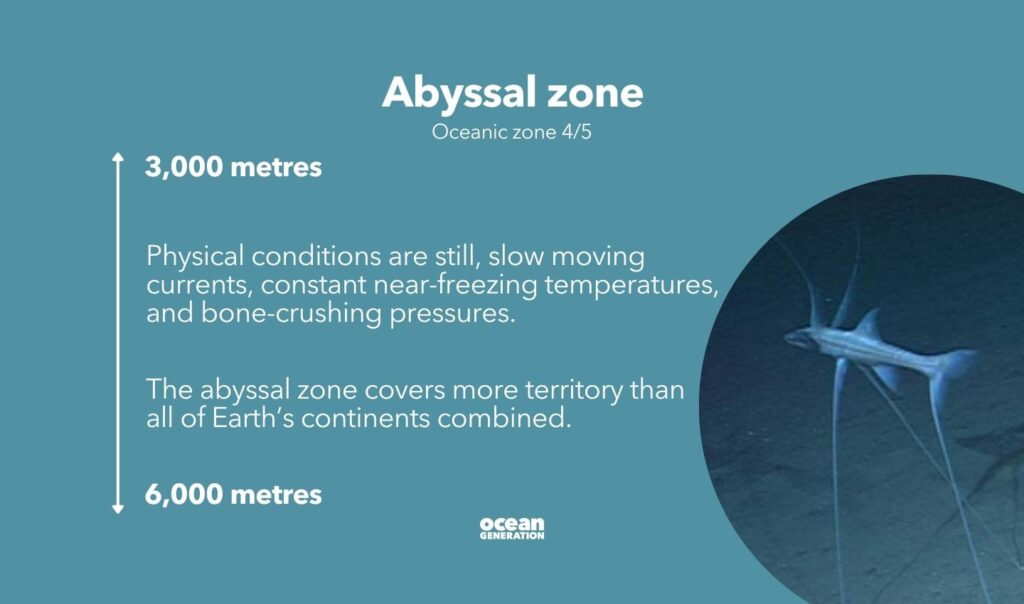
As we descend below 3,000m (9,843 feet) in the Ocean, we reach the pitch-black bottom layer known as the Abyssal zone. Physical conditions down here are still, with slow moving currents, constant near-freezing temperatures, and bone-crushing pressures. 

Time seems to stand still. Thereโ€™s no primary production and most organisms depend almost entirely on the marine snow that slowly rains down from above. 

Physical conditions are still in the abyssal zone.
Image credit: Monterey Bay Aquarium Research Institute

But itโ€™s far from being a lifeless desert: The abyssal zone stretches across wide plains, towering seamounts and hydrothermal vent systems, covering more territory than all of Earthโ€™s continents combined. 

Inhabitants of the abyss move and grow very slowly to minimise energy needs. 

Some individuals have specific adaptations to maximise their chances of survival. Tripod fish have modified pelvic and lower caudal fins which can extend up to a metre.  

This allows the fish to stand on stilts above the seafloor, so that itโ€™s perfectly positioned to eat any small fish or crustacean that come travelling along the currents.  

The slow-growing nature of these abyssal ecosystems means that they take a long-time to recover from any disturbance events (if ever). Consequences of overfishing and proposed deep-sea mining of the abyssal zone will therefore cause devastating, irreversible losses to habitats and biodiversity. 

The slow-growing nature 
of the abyssal ecosystems means that they take 
a long-time to recover

The Trenches (Hadalpelagic zone)

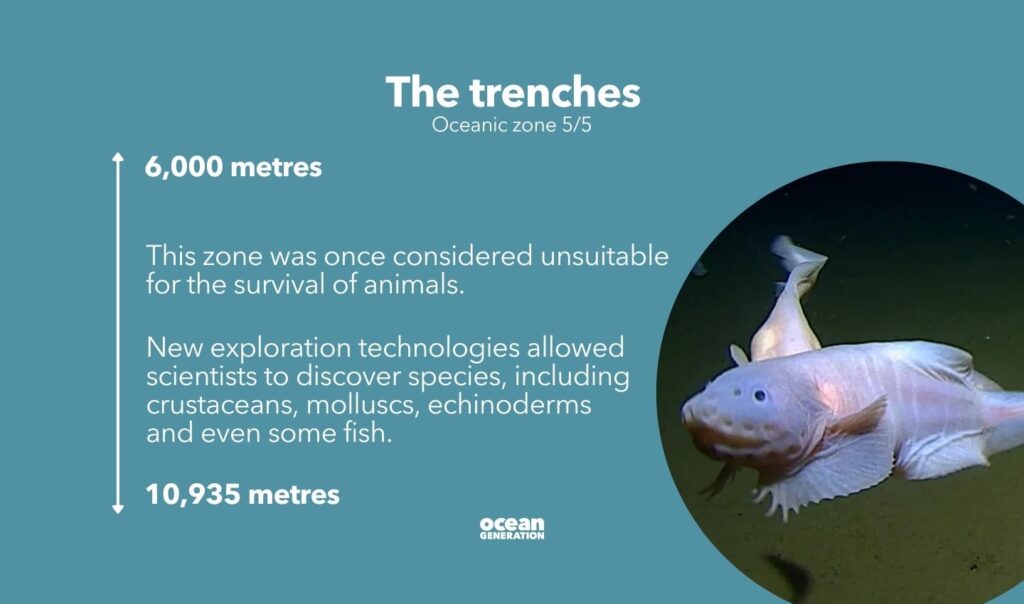
We continue our journey below 6,000m (19,685 feet) to enter the trenches (hadal zone): The deepest part of the Ocean.  

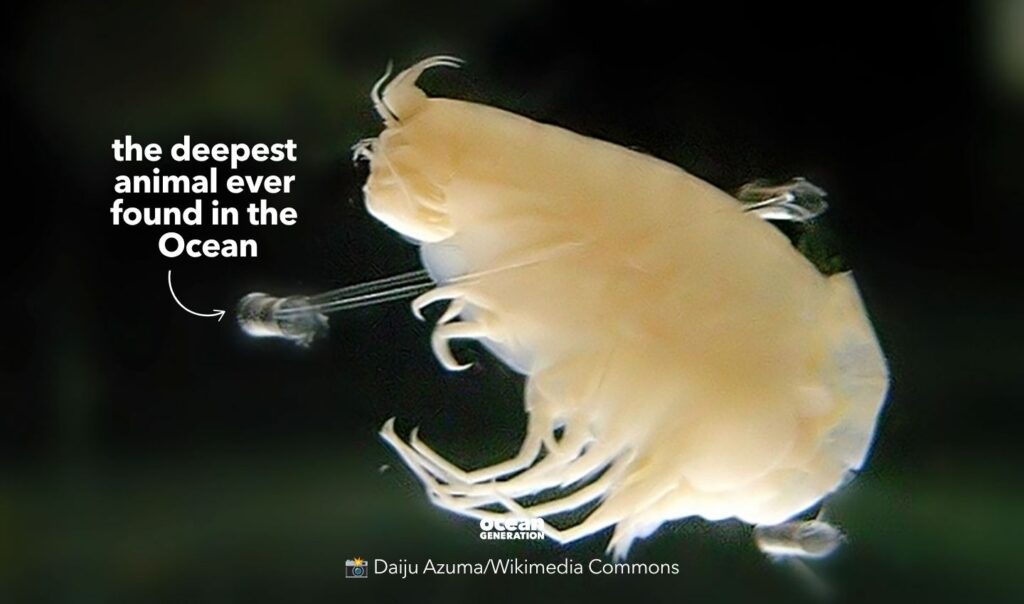
The hadal zone was once considered unsuitable for the survival of animals. However, the rapid development of exploration technologies has allowed scientists to discover species belonging to many of different taxonomic groups at these depths, including crustaceans, molluscs, and echinoderms. 

The Pseudoliparis snailfish is the deepest known fish. It was discovered close to the very limit of survival for all fish in August 2022 at 8,336m (27,349 feet).  

Its adaptations include a flexible skeleton to tolerate extreme pressure, a gelatinous coating to improve energy efficiency, and a large stomach for opportunistic feeding.  

The hadal zone was once considered unsuitable for the survival of animals. Posted by Ocean Generation, leaders in Ocean education.
Image credit: The Guardian

We continue down to surpass the inverted height of Mount Everest at 8,849m. A further two kilometres on, we reach the bottom of the Mariana Trench and the deepest known point in the Ocean (and Earth):  

The Challenger Deep โ€“ 10,935m (35,876 feet)

The weight of all the water overhead here is over 8,000 kg per square inch. Thatโ€™s roughly 1,000 times the pressure at the surface, and equivalent to 1,800 elephants on top of you! 

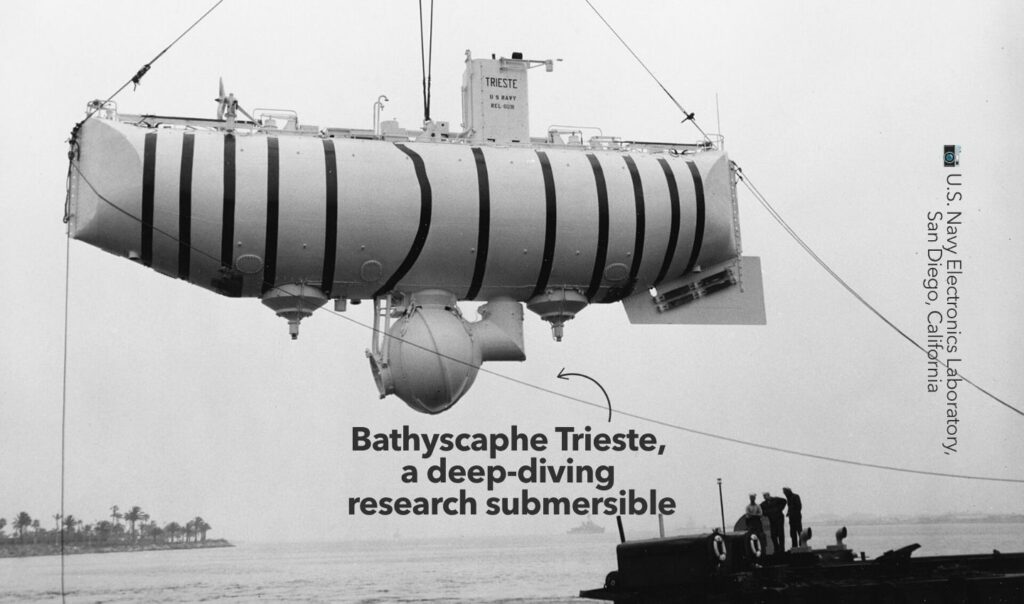
In 1960, Don Walsh and Jacques Piccard made history by becoming the first people to reach the bottom of the Challenger Deep in the manned submersible Trieste. This record was broken on 26th March 2012 when James Cameron made the first ever solo dive to the Challenger Deep in the Deepsea Challenger.

To this day, reaching the deepest known part of the Ocean remains a challenge for any explorer, and every expedition yields new discoveries as well as other, more ominous findings. 

During the Fendouzhe deep-sea expedition in 2020, researchers discovered plastic bags, electric wire, a beer can and fibre-optic tethers among other forms of plastic pollution in the Challenger Deep.  

This shows that even the most remote, hard-to-reach place on Earth is still not safe from human impacts. 

We canโ€™t treat the deep-sea as out of sight and out of mind. More work needs to be done to safeguard these precious ecosystems and ensure that life in the deep doesnโ€™t disappear before we even have the chance to understand it.  

Every expedition to the deepest part of the Ocean yields new discoveries.

Who are the orca outlaws sinking boats, and why are they?

Subscribe

Monthly: Impact in your inbox.

OceanGeneration-Join