What is Ocean circulation โ€“ and why does it matter?

What is Ocean circulation, and why does it mater? Explained by Ocean Generation

The Ocean is in constant motion.

Why does Ocean water move? Think about it. What do you need to move the Ocean? What is Ocean circulation, and why does it matter? 

There are three drivers ofย Ocean currents.ย 

The most visible driver of Ocean circulation is the wind. Big storms can whip up the waves, send them crashing into the rocks or barrelling over surfers. Waves can seem like the Ocean is moving a lot, but the water itself is moving mostly in a circular motion. We explain more in our article on the motion of the Ocean.

Prevailing winds can push the waters below in a consistent direction, such as the Gulf Stream, which does drive larger scale circulation. But usually, the wind is only moving the surface, and the Ocean is a lot deeper than the surface.  

Next comes the tides. The moon, with a little help from the Sun, shifts the Ocean back and forth, changing sea level by metres in some places. The Bay of Fundy in Canada has the largest tidal range in the world, with almost 12m difference between high and low tide.  

However, the tides are always changing. If tides were the only thing responsible for moving the water, then the same water would just be moved in and out. Out in the middle of the Ocean, the water would travel in a big vertical circle, like a giant Ferris wheel. To move the Ocean properly, we need something else.  

The third driver of global Oceanic currents is more understated than crashing waves or retreating seas. It takes thousands of years to move water through the deep Ocean, from pole to equator to pole. Itโ€™s known as the Ocean Conveyor, or Thermohaline Circulation, and the polar Ocean is a focal point for its activity.  
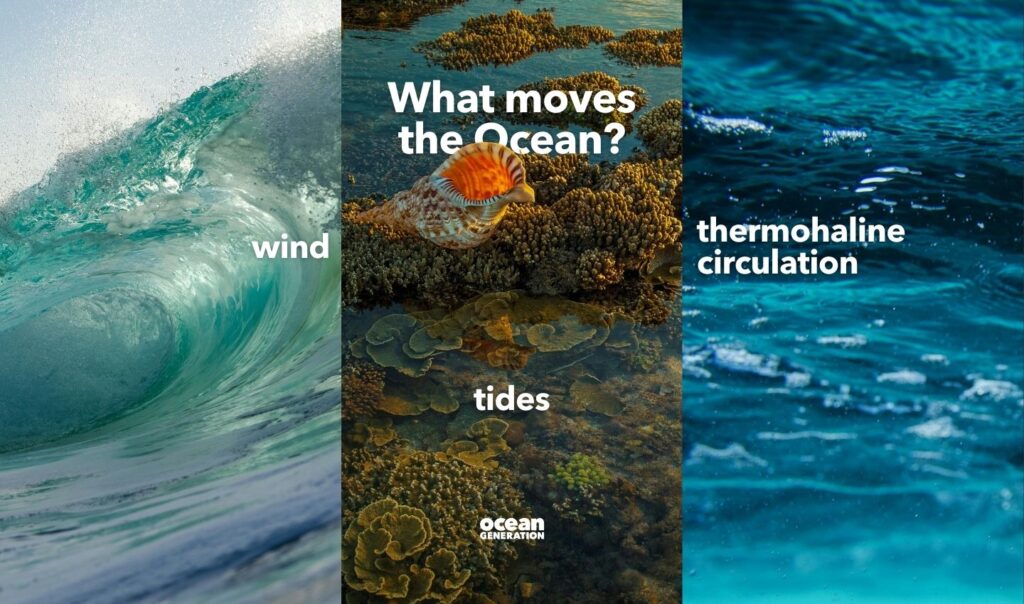
What moves the Ocean? Tides, wind and the thermohaline circulation explained.

Why is Ocean circulation important?ย 

This movement of water is the heartbeat of the Ocean. It carries oxygen-rich waters to the depths, and where it returns to the surface (known as upwelling), the nutrients it brings with it create the richest waters on the planet.  

The Ocean is also moving heat and carbon dioxide. It has absorbed approximately 25% of carbon dioxide emissions since the 1960s and over 90% of the excess heat trapped by greenhouse gases has been assimilated into our Ocean.  

The Ocean can circulate and โ€˜drop offโ€™ heat and carbon dioxide in the deep. If the circulation of the Ocean slows, the surface Ocean will get hotter and more acidic. With less circulation, the Oceanโ€™s ability to trap and store two major drivers of climate change suffers. 
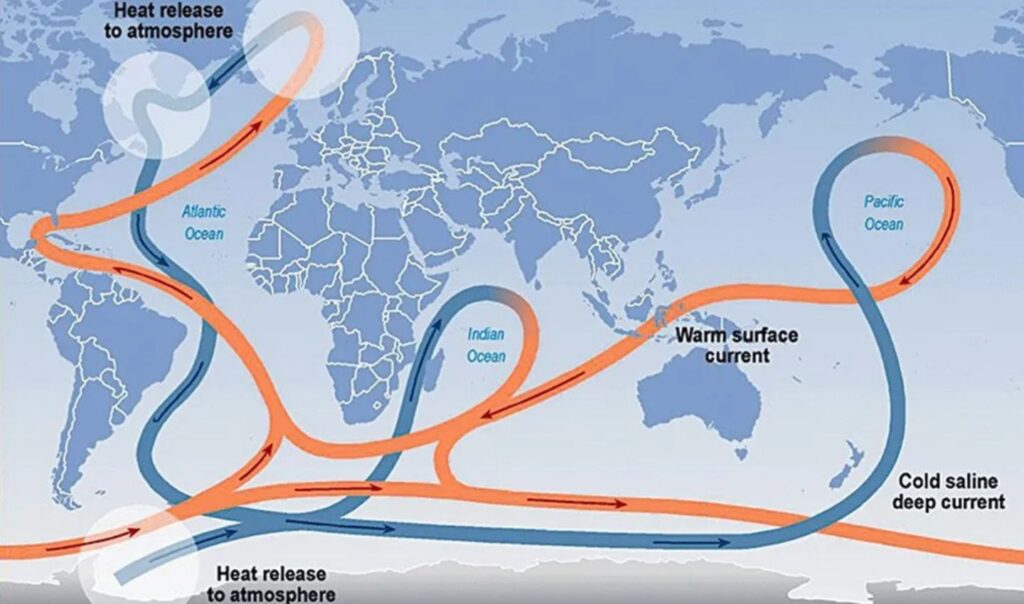
Global Ocean Conveyor Belt
IPCC via Smithsonian

What is Thermohaline Circulation?ย 

Thermohaline circulation is the slow, powerful pump behind Ocean circulation, the main driver of water movement in the Ocean. The name sounds complicated, but it tells us exactly what we are talking about.  

Letโ€™s break it down; Thermo-: we are talking about temperature; -haline about salinity, or saltiness. These two characteristics of seawater influence global climate and biological richness.  

Temperature and saltiness have influence because they change how dense Ocean water is. Cold water is more dense than warm water, and salty water is more dense than freshwater. If water is denser, it will sink below less dense water.  

These simple differences drive a slow, unseen conveyor belt from the poles to the equator and back again. It would take over 1,000 years for one drop of water to complete the whole Ocean circulation.  

What will the cold, salty water now disappearing into the depths in the North Atlantic see when it re-surfaces in the Pacific in 3026? 
Thermohaline circulation, explained by Ocean Generation.

Why are the Poles importantย for Ocean circulation?ย 

If the poles are known for one thing, it is that they are cold. So cold in fact, they can chill seawater to the point of freezing (which happens around โ€“1.8 to -2 degrees C / 28.76- 28.4 ยฐF, lower than normal water due to the salt content).  

When seawater freezes, it leaves its salt behind. As ice forms, the water left behind gets more salty, which lowers the temperature it will freeze at. More salt = lower freezing temperature. Very salty, very cold water is very dense, and will sink below other seawater.  

This downward movement is known as downwelling. Downwelling pushes water along the depths and pulls water across the surface. This is the pump that moves the Ocean. 

So begins the Ocean conveyor. 

When doesย cold waterย becomeย deadly?ย 

Maybe you didnโ€™t think water movement could be exciting. Maybe you havenโ€™t heard of the finger of death.  

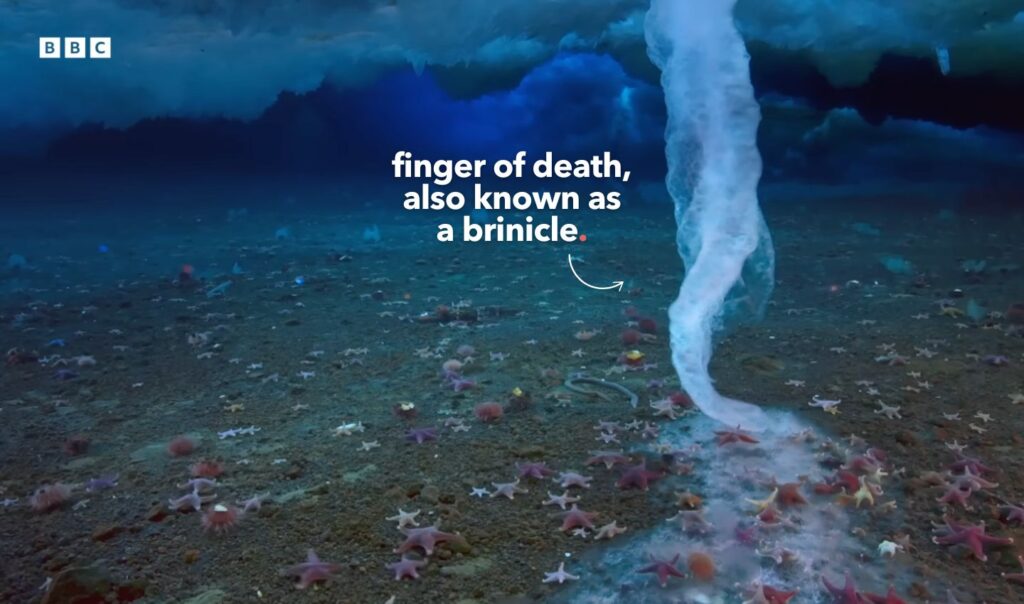
We know as sea ice forms, it โ€œspits outโ€ salt, creating channels of brine (very salty water), which is colder than freezing. This brine travels down through channels in the ice, collects more salt and cools further.  

It reaches the bottom of the ice super salty and super cold. It is so cold it freezes the sea water it touches below the ice, creating beautiful brinicles.  

The brine is still too salty to freeze, so travels through the centre of the brinicle, growing it. If this is in a shallow area, the brine could reach the seabed before warming and diluting enough.  

This ethereal beauty then becomes a sinister threat. It is so cold it freezes anything it touches. The sea stars, brittle stars, sea cucumbers living below the ice are at the mercy of the finger of death.  

Most Ocean movement isnโ€™t as dramatic as the finger of death, but it runs on the same mechanisms.  
Is Ocean circulation slowing down?ย 

Ocean circulation relies on the cooling and sinking of water at the poles. As the release of greenhouse gases raises the temperature of our planet, especially at our poles, the water is not getting as cold.  

We are seeing less sea ice form and the water has more fresh meltwater diluting it. The water is getting less cold, and less salty. Both mean the surface water is less dense, meaning it will sink less. Is the circulation of the Ocean slowing? 

One way to study if it is slowing is by looking at how old the water is โ€“ older water means slower circulation. 

How do you measure how oldย waterย is?ย 

At the surface, chemicals and elements are constantly being exchanged between the air and the Ocean. Scientists can look at the chemical composition of the water, looking for indicators for when the water was last in contact with the surface.  

Using Carbon-14 as a time markerย 

Carbon-14 is the usual way, a radioactive isotope of carbon that is used in radiocarbon dating methods from geology to archaeology. Itโ€™s also called carbon dating.  

How does carbon dating work?  

Carbon-14 is an isotope (type of atom) that decays slowly. Half of it will decay every 5700 years or so, known as the half-life.  

Measuring the amounts of Carbon-14 can be like reading a timer. Carbon-14 is created naturally when cosmic rays hit our atmosphere, but in much larger amounts by nuclear weapons – levels doubled in the 1950s and 1960s.  

This molecular โ€˜shadowโ€™ has been found in marine animals in the Mariana Trench, showing just how far human impacts reach. 

Track the amount of Carbon-14 and you can approximate when it was last in contact with the atmosphere, which gauges age.

Measuring human-made chemicalsย 

Industrial chemicals such as CFC-12 and sulphur hexafluoride are other chemical clues used to age water. Chlorofluorocarbons (CFCs) were widely used in refrigerants and spray cans until they were identified as depleting the ozone layer.  

Through global cooperation and effective science, the Montreal Protocol was introduced, preventing the use of CFCs and allowing the ozone layer to recover (learn more about international treaties here). The presence of CFCs can indicate exactly when that water is from.  

Using oxygen to estimate waterโ€™s ageย 

We can also look at the Apparent Oxygen Utilisation. The principle is that deep water canโ€™t have oxygen added, so the older the water, the more oxygen will be used up from it, meaning older water has less oxygen.  

Despite fluctuations caused by other Ocean movers (e.g. the wind), the waters in the deep North Atlantic are getting older, implying the water is not being replenished as quickly, and therefore that the circulation is slowing. The same is happening at the other pole.  

The Ocean is made up of many different โ€˜bodiesโ€™ of water, with different characteristics and names. North Atlantic Deep Water is formed in the Arctic by cold, salty water sinking and flowing south. This water travels all the way to the Southern Ocean, where it meets another body of water.  

Antarctic Bottom Water is formed at the South Pole and is the coldest and the densest of them all, the real powerhouse of Ocean circulation. But it is warming and there is less of it. The frost-fuelled engine is slowing. 
What would a broken Ocean conveyor belt mean? Explained by Ocean Generation

Whatย wouldย a broken Ocean conveyor mean?ย 

The Ocean would suffer.  

Deep sea creatures relying on delivery of oxygen and nutrients would be left waiting, as deoxygenated areas grow. The same would happen for surface species that need the upwelling of nutrients from the deep.  

If Ocean circulation stopped, there would be dead zones without oxygen in the deep and starved surfaces with no nutrients to support phytoplankton.  

It would impact life on land too. If the circulation of the Ocean slows, global climates will shift. Increased storm intensity, more extreme weather patterns and changes to rainfall. Europe could face far cooler temperatures as the tropical water that brings warmth from the equator slows.  

That is quite a big if, and fortunately, the Ocean is resilient. New work has shown circulation has slowed in the 2010s and 2020s by less than in the 2000s. This has been attributed to natural variability pushing against the human-caused weakening.  

Every reduction in greenhouse gases, every degree of warming prevented, reduces the stress on our Poles and on our Ocean circulation. Keeping our poles cool keeps our Ocean moving.  
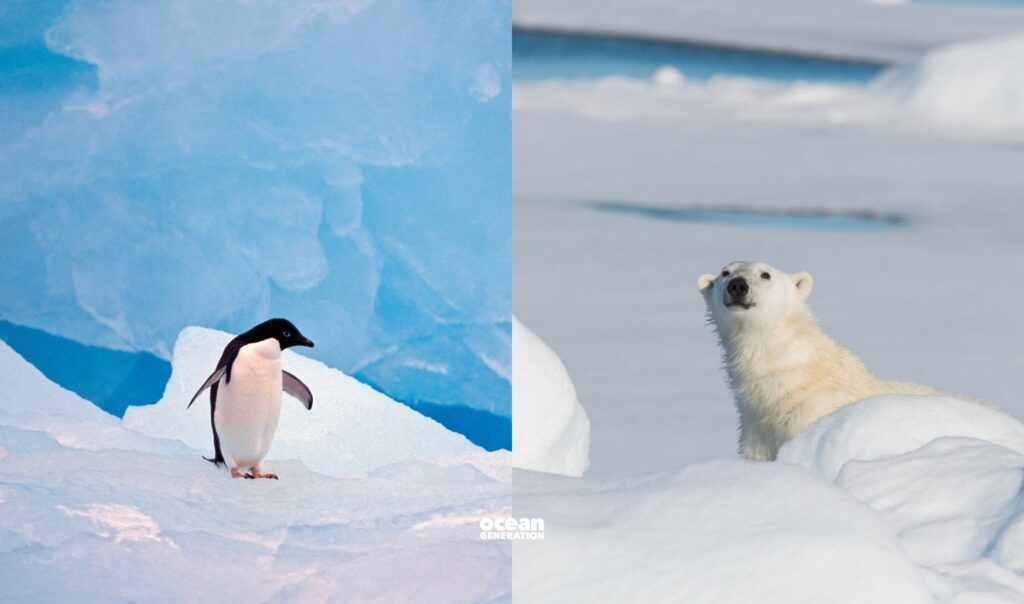
Keeping our poles cool keeps our Ocean moving. Explained by Ocean Generation.

Narwhals and Unicorns: How the magic of the Arctic has changed

Subscribe

Monthly: Impact in your inbox.

OceanGeneration-Join

Why krill matter: Krill fishing and conservation in the Southern Ocean

Why krill matter: fishing and conservation in the Southern Ocean.

The Southern Ocean is one of the most remote places on the planet.ย 

Itย was only in 1911 that the first human, Roald Amundsen, reached the South Pole.ย For context, the first poweredย aircraft, theย Wright Flyer, took to the air in 1903.ย Humanity conquered the skies before it managed the southern continent.ย The waters here areย cold, barely above freezing, yet full of life. These are some of the richest waters in the world.ย ย 

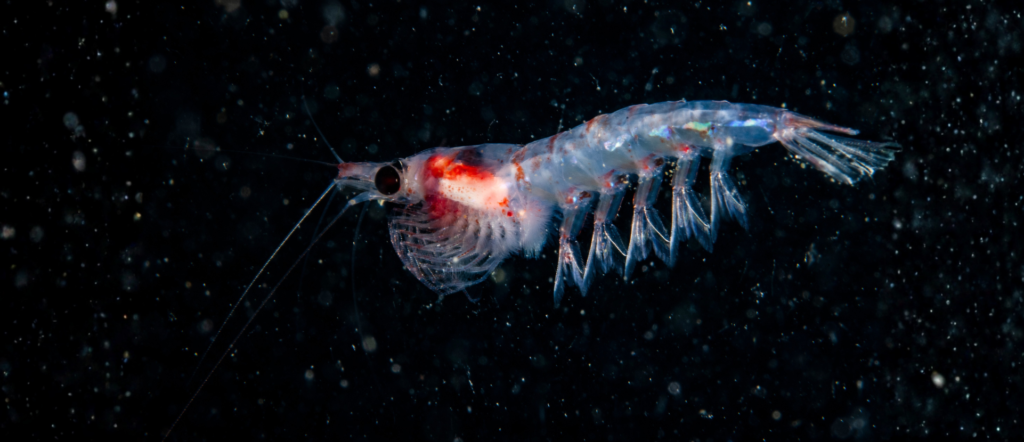
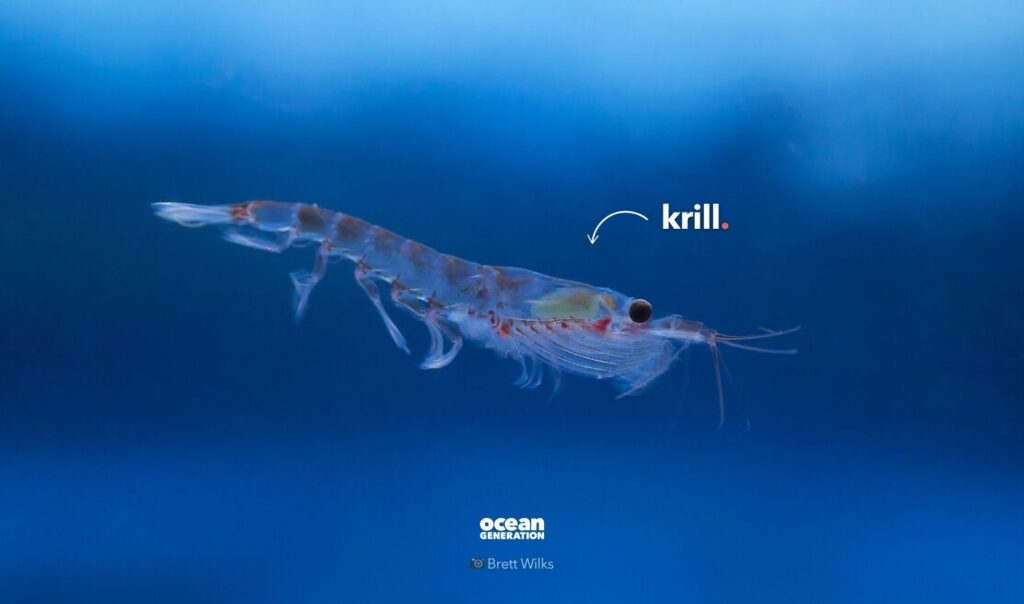
Theย main character is just 6cm long.ย Antarctic krillย (Euphausiaย superba)ย are small, shrimp-like crustaceans. Theyย snack on the phytoplankton that thrives in theย long hours ofย summerย sunlight,ย trapping and storingย similar amounts of carbon to seagrass and mangroves.ย ย 

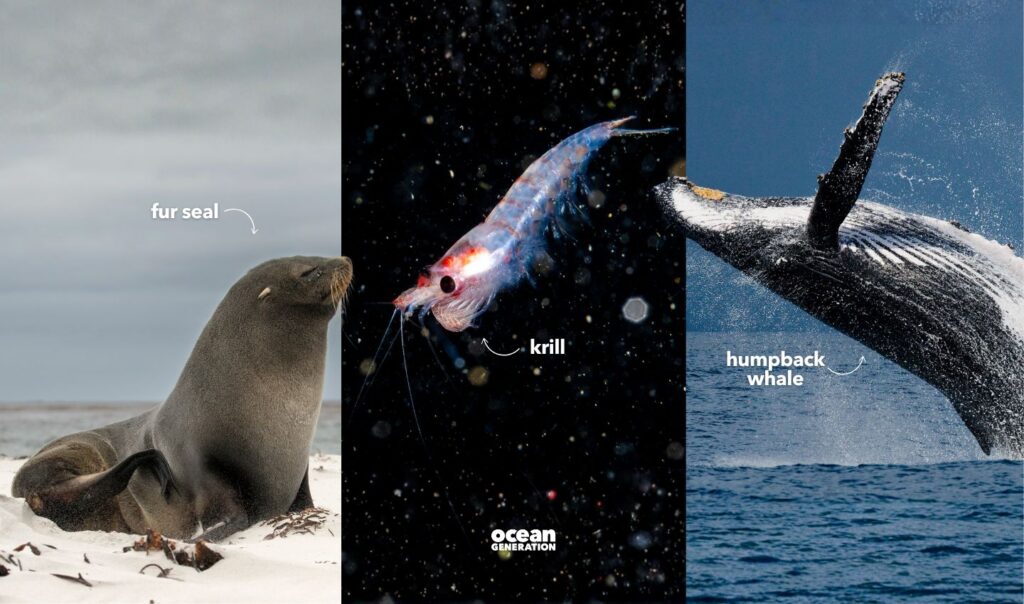
Their importance lies in their numbers: krillย swarmsย are vast.ย The rust-coloured cloudsย areย filled with billions of individualsย andย can beย visibleย fromย space. Theyย sustain most of the life around Antarctica. Penguins, seals, whales,ย fishย and sharks allย rely onย this buffet: krill are a keystone species. More recently,ย peopleย have joined the party.

Krill fishing has become aย divisive topic, being featured in David Attenboroughโ€™s Ocean,ย calls to ban it being promoted at the United Nations Ocean Conferenceย and someย retailers withdrawing krill products from their shelves.ย Meanwhile, countries have appliedย to increase the catch limits andย the amounts of krill being fished are higher than ever.ย ย ย 

To understand where we are going, first we can look at where we have been.ย Whyย areย krill important?ย What is our history in the Southern Ocean?ย What is our future?ย 

Antarctic krill are small shrimp-like crustaceans. Posted by Ocean Generation.
Photo credit: Brett Wilks

How did we get here?ย 

In 1775, Captain James Cook returned to England from a voyage around the world, in which he had searched forย new lands.ย Heย foundย thereย wasnโ€™tย a new continent in the Pacific Oceanย (at least not where one was predicted to be)ย and hypothesised on the existence of Antarcticย land behind the iceย (which he was correct about).ย ย 

Heย hadย discovered some land on his travels: an island populated by seals and penguins, which was named โ€˜Isle of Georgiaโ€™ inย honour of King George III of England.ย We know it now as South Georgia.ย 

Sealing and whaling in the Southern Oceanย 

The element of Cookโ€™s report that got attention was the abundance of fur seals on South Georgia and neighbouring islands.ย These pinnipeds were highly sought after, and between 1778 and 1822 an estimatedย 1.2 million fur seals were killedย for their pelts. The speciesย wasย almost completelyย wiped out on South Georgia and the islands.ย ย 

The rise of industrial whaling then turned focus on to the waters of the Southern Ocean around Southย Georgia. Factory ships and explosive harpoons reduced the great whales toย 18% of their original population.ย 5% of blue whales were left, and just 3% of humpback whales survived. When the last two whaling stations closed on South Georgiaย in 1965,ย 175,250 whales had been killedย in those waters.ย ย ย 

South Georgia, Antarctica. Posted by Ocean Generation.

When did krill fishing start?ย 

Industrial fishing had beenย largely unmanaged, and everyone raced toย benefitย from the natural resources the Southern Ocean had to offer. One by one theย marineย species of the south had been targeted toย great effect, and populations crashed. The focus then shifted to krill.ย ย 

Industrial fishing for krill in the Southern Ocean increased through the 1960s and 1970s. As the species that formed the foundation of the ecosystem, theย alarm bells rang, loud,ย at the prospect of theย krill suffering the same fate as the seals and the whales.ย ย 

Why are krill important?ย 

Krill areย a keystone speciesย 

The loss of krill would beย disastrous for many different species.ย Whales, seals,ย penguinsย and fish are all krill predators.ย Less krill means less food for these species.ย ย 

Southern Right whale mothers have shown aย decrease in body condition over the past 40 years,ย suggesting ecological strainย on an animal heavily reliant on Antarctic krill.ย ย 

Theย population of krill has been linked with Adelie and chinstrap penguin numbersย โ€“ when there is less krill, the penguin populations decrease.ย ย And the fur seals, populations freshly rebounded from the hunting of the nineteenth century,ย areย showing declines due to krill availability.ย 

Withoutย krill, lifeย in the Southern Ocean could collapse.ย  ย 

To relay it in economic terms, krill are a vital piece of an ecosystem that provides, conservatively,ย $180 billion annually in ecosystem servicesย โ€“ aboutย 70% of Newย Zealandsย GDP in 2024.ย ย 

Krill are climate championsย 

Itย isnโ€™tย just the animals in the Southern Ocean that depend on these.ย Krill are big players in the balancing of our atmosphere. They trap (sequester) a lot of carbon.ย ย 

As phytoplankton photosynthesise, they take in carbon dioxide. When they are eaten by krill, the krill take on that carbon, some of which is then… dropped off. Krill faecal pellets (poo) alone areย estimated to sequester 20 million tonnes of carbon dioxide per year. Depending on the price of carbon, this is worth between $4 and $46 billion.ย 

Marshes,ย mangrovesย and sea grass are estimated to absorb 13, 24 and 44 million tonnes per year respectively, so when you add in the extras of krill moults (20 million tonnes) and migration (26 million tonnes), as the researchers say: โ€œit is likely that Antarctic krill is amongst the worldโ€™s most important carbon-storing organisms.โ€ย 

How is krill fishing managed in the Southern Ocean? Explained by Ocean Generation, leaders in Ocean education.

How is krill fishing managedย in the Southern Ocean?ย 

Those alarm bellsย over the fishing of krillย led to the creation ofย the Commission for the Conservation of Antarctic Marine Living Resources (CCAMLR). It was formed in 1980 and entered force in 1982.ย ย 

The CCAMLR isย made up of 27ย member statesย (as of January 2026), with a further 10 โ€˜Accedingโ€™ states โ€“ that support butย donโ€™tย contribute to the budget or take part in decision making.ย 

Theย stated aim:ย to protect and conserve the ecosystem of the Southern Ocean. Article II of the convention states:ย ย 

  • Theย objectiveย of this Convention is the conservation of Antarctic marine living resources.ย 
  • For the purposes of this Convention, the term โ€˜conservationโ€™ includes rational use.ย 

This captures a crucial distinction: fishing is an element of conservation, ratherย than an adversary.ย ย 

Howย doย youย preventย overfishing?ย 

Catch Limitsย 

A general rule of thumb is that youย canโ€™tย remove so much the populationย canโ€™tย sustain itself. That will vary with species โ€“ some animals reproduce a lot faster than others.ย ย 

Understanding how much of a resource there is, isย fundamental to managing it. This is one of the biggest obstaclesย in the Ocean:ย the water means youย canโ€™tย just seeย (sea). In a field you can see how many cows there are, not true of a shoal of fish.ย ย 

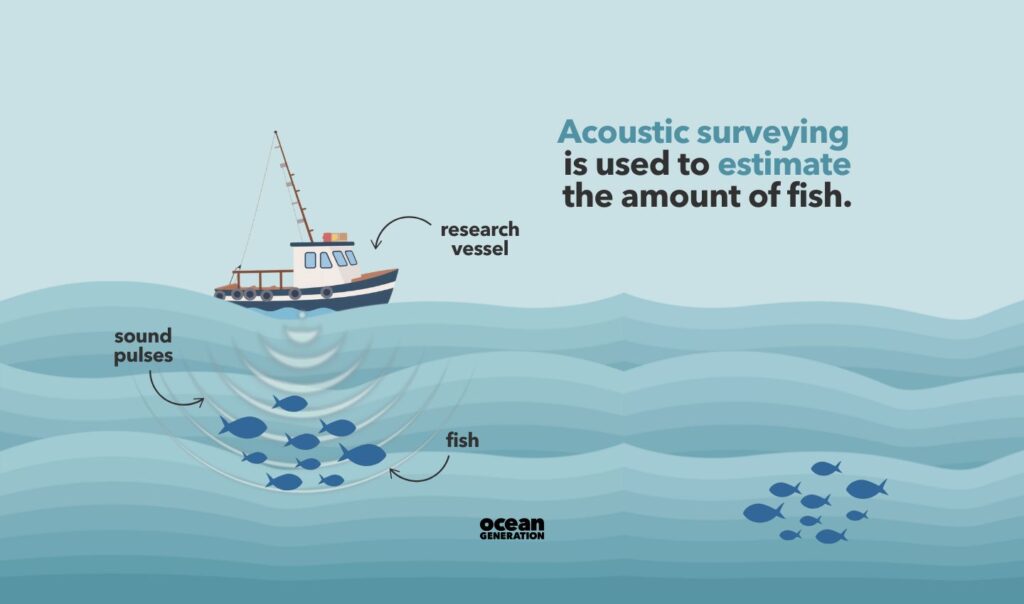
Acoustic surveying (using noise to find out what is there,ย like a bat) gives us estimates for theย amountย of krill. In short โ€“ a lot. We estimate there are over 300 million tonnes of Antarctic krill,ย roughly theย same as the biomass of humans.ย ย 

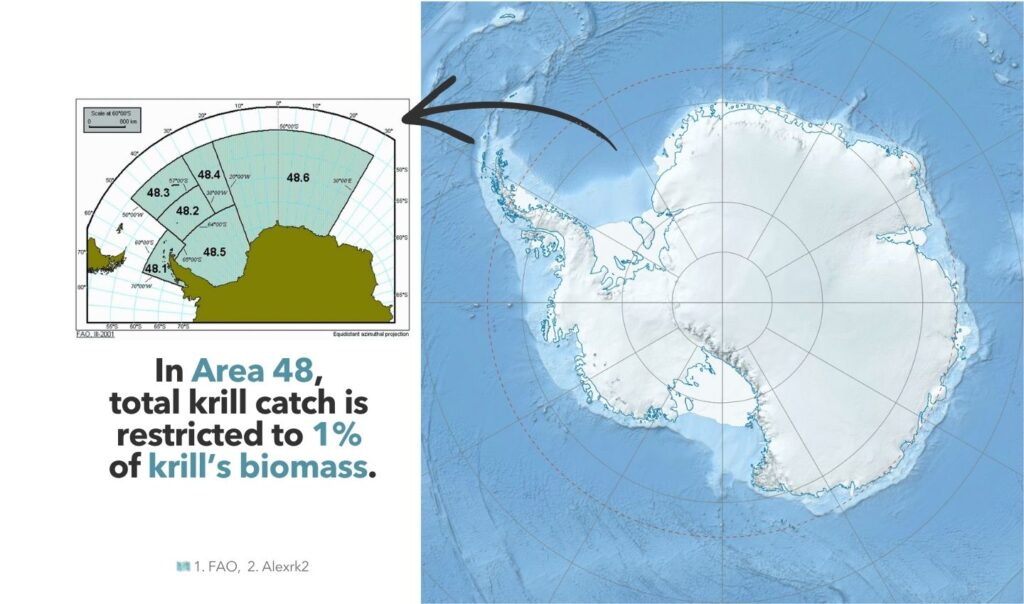
In the specific area targeted for krill fishing (known as Area 48), the biomass is estimated atย 62 million tonnesย (coincidentally,ย roughly theย same mass asย annual e-waste produced). So,ย CCAMLR adoptedย Conservation Measure 51-01. CM 51-01ย set a trigger level at 1% of thatย biomass (620,000 tonnes)ย โ€“ when that is reached,ย all krill fishing stops, no questions asked. August 2025 was the first time this happened.ย 

How acoustic surveying works: Explained by Ocean Generation.
Marine Protected Areasย 

Another tool in the toolbox is protected areas โ€“ designated places with specific rules. Choosing to avoid fishing inย nursery areas, or places with high densities of predators, can ensure the health of theย fishery.ย ย 

The Southern Ocean is home to the first MPA on the high-seas (outside of theย jurisdictionย of any one country) and the largest. Theย South Orkneyย Islands Southern Shelfย MPAย was created inย 2009, andย is a no-take zone protecting penguin foraging areas.ย ย 

Theย Ross Sea MPAย wasย created in 2016 and is 2.09 million square kilometres,ย 72% ofย which is a no-take zone.ย The MPA has a controversial โ€œsunset clauseโ€,ย meaning the MPAย willย expire inย 35 yearsย unlessย renegotiated.ย ย 

There areย four other MPAs that have been proposed,ย but not yet agreed on.ย ย 

Hasย theย managementย of krillย worked?ย 

The krill fishery is one of the mostย closely managedย in the world.ย Every single shipย has an independent scientific observer on boardย to ensure catch and bycatch amounts are accurately reported.ย There is zero illegal,ย unreportedย orย unregulated (known as IUU) fishing puttingย additionalย pressure on stocks.ย ย 

Bycatch rates areย very low. In 2004,ย after pressure to report bycatch, it was revealed 292 fur seals had been killed as bycatch. This prompted the fishery to adopt mitigation measures, andย since 2010,ย 39 fur seals have been killed.ย This is alongside 7 humpback whales and 80 seabirds.ย ย 

In many senses, this isย a great success. Krill populations are stable and thereย haveย been little ecological impact from fishing.ย No other large-scale fishery in the world is as well-monitored, as efficient (in avoiding byย catch)ย or conservative with catch limits. The industry refers to theseย points as support for increasing the limits.ย ย 

What's next for the Southern Ocean? Posted by Ocean Generation.

Itโ€™sย not just โ€˜how muchโ€™:ย Why location-specific catch limitsย matterย 

The numbers look excellent. However, the risk lies in local depletion. Taking 1%ย isnโ€™tย much unless you take it all from one place.ย ย 

Penguins,ย sealsย and whales need the krill withinย reach.ย They can travel to find them, but the further they go,ย the more energy they spend to get there and the less far the meal will go.ย ย 

To make an analogy:ย ย 

It is like buying sweets. If you have ยฃ10 to spend onย sweets,ย you could either buy lots ofย different typesย of sweets or spend all the moneyย just on fudge. If you do the latter, Timmy from down the road might not get the fudge he wants because you bought it all.ย 

To avoid krill fisheries removing the entire quota from one area and leave the local penguins hungry, CCAMLRย introducedย Conservation Measure 51-07ย (CM 51-07). CM 51-07ย dividedย the catch limits inย area 48 intoย Subarea 48.1ย (25%, 155,000t), 48.2 (45%, 279,000t), 48.3 (45%,ย 279,000t) and 48.4 (15%, 93,000t).ย Itย added another layer of protection to CM 51-01, but was a temporary measureย with an expiry date, to incentiviseย agreementย on long term measures.ย ย 

In 2024, theย CCAMLR failed to agreeย onย new โ€œmove onโ€ rules.ย ย These would ensure fishing vessels leave an area once they have caught a certain amount, tackling the issues of local depletion.ย CM 51-07 expiredย without replacementย at the end of the 2024 fishing season,ย leaving theย krill fishery with onlyย CM 51-01ย (whenย ย 620,000ย tonnesย of krill is caught, fishing automatically stops)ย asย guidance.ย ย 

The CCAMLR currentlyย doesnโ€™tย have anyย special measuresย to prevent the full quota being taken from the same place.ย ย 

Area 48 krill fishery in Antarctica.

What is next in the Southern Ocean?ย 

The krill fisheryย isnโ€™tย just dealing with changing policies, but also a changing Ocean.ย ย 

The Southern Ocean isย getting warmer.ย ย 

The areas of sea ice coverage are decreasing, and aย record low in 2023ย was 1.02 million square kilometres less than the 1979-2022 average daily minimum.ย That is the same size as Egypt.ย The previous four years have seen the minimum sea ice extent dropย below 2 million square kilometres.ย ย 

Krillย dependย on sea ice.ย Theย changing amounts of ice impact theย krill’sย foodย โ€“ phytoplankton.ย As juveniles, they stay close for protection and graze off the algae that can grow on it.ย Less ice means less shelter and less food, which leadsย to a lot less krill before any fishing has happened.ย Maximum sea ice extentsย impactย the following summer blooms of krill โ€“ more ice means more food and shelter for young krill, who then visibly blossom in the summer. 2025 had theย third lowest sea ice maximum, behind only 2023 and 2024.ย ย 

Since the 1970s, we have been seeing aย reduction in the density of krill adults, and in the occurrence of very dense swarms around the Antarctic peninsula.ย These environmental changes also meanย the krill are moving southย โ€“ staying closer to the pole, where it is colder.ย This means that the northern ecosystems are losing access to their main food supply.ย It also means the areas divided up for krill fishing may not capture where the krill are anymore.ย 

Conservation success: the return of the whales to Antarctica. Posted by Ocean Generation.

One of the biggest wins for nature and conservation is the return of the whales.ย ย 

Afterย populationย depletionย by industrial whaling, whale populations are increasingย to their historic levels.ย As whalesย return,ย theย amountย of krill they eat increases.ย ย 

Acceptableย krillย catch limits from 20 year ago may no longer cater for the larger whale populations, which is why re-assessment is so important.ย ย 

Even if the amounts of krill taken are acceptable, the fishing vessels can still affect the whales. The vesselsย disturb theย whales andย can spread krill swarms out more. This means that whales can spend more energy getting the same amount of food, which decreases their body condition and reducesย their capacity to reproduce.ย ย 

The situation gets more complicated when you combine the changes.ย Less krill is likely to disturb the recovery of whale populations.ย ย 

ย Where do we standย on the future of krill?ย 

The warming world and returning whales need to be factored into our management of krill fishing. But recent progress has been slow.ย 

There is a lot of disagreement over the future of the krill fishery. In the meeting of the CCALMR in October 2025,ย Norway proposed a doubling of the catch limits for krill. At the same time,ย scientists are calling for a re-evaluation of the limits, as they are based on old data and assumptions. Meanwhile, concernย about the exploitation of the Southern Ocean resulted inย UK retailerย Holland and Barrett withdrawingย all krill productsย by April 2026.ย 

The challenge of consensusย 

The CCAMLR operates on a consensus decision making model. Everyoneย has toย agree before new measures can be introduced.ย New MPAsย havenโ€™tย been agreed becauseย oneย or two countriesย have blocked themย on the grounds of a lack of scientific evidence and their right to fish for krill and other target species.ย ย 

What have we learned from exploitation in the Southern Ocean?ย ย 

There is a lot of hope to be found in the Southern Ocean. Fur seals were given protection in 1909, and their numbers have nowย recovered toย over 3 million.ย Whaling stations on South Georgia are relics of the past, rusting microcosms ofย the industry they supported.ย ย 

The CCAMLR is different to any other fishery. It has learned fromย previousย mistakes andย has madeย decisions based in robust science.ย A well-managed fishery will always beย called too conservative, too limiting, too safe, because it will never reach the point of collapse or decline.ย So far, krill populations haveย remainedย steady, unaffected by us.ย ย 

The Southern Ocean is changing, and so the fishery must change with it.ย Climate change, moreย whalesย andย improvedย understanding of the ecosystem should all be considered in new fishery management.ย ย There are three things to take from this:ย ย 

  • Weย are capable of facilitatingย the recovery of the Ocean.ย ย 
  • The Southern Ocean, and its krill,ย areย facing new challenges.ย 
  • We allย benefitย from the Southern Ocean, and its krill,ย flourishing.ย 

Krill are small but mighty. They fuel giantsย and balance our climate. The continuing battle to protect themย demonstratesย how far we have come. We can understandย better than everย the benefits this tiny crustacean impartsย as a part of its ecosystem.ย ย 

Weย donโ€™tย have all the answers, but the progress is reassuring.ย A relationship with the Ocean that is based in our understanding of the impacts of our actions will be much more productive than one based on theย potentialย profits.ย ย 

Krill areย not theย impressive,ย charismaticย Ocean animals that whales and penguins are.ย But if we fail krill, we stand to lose the rest.ย Krill can be the species that marks a new chapter in our relationship with the Oceanย โ€“ one in which we work with our Ocean rather than at the cost of it.ย ย 

What have we learned from exploitation in the Southern Ocean?

Narwhals and Unicorns: How the magic of the Arctic has changed

Subscribe

Monthly: Impact in your inbox.

OceanGeneration-Join

Narwhals and Unicorns: How the magic of the Arctic has changed

Narwhals and unicorns: how the magic of the Arctic has changed.

Are unicorns real? Look to the Arcticย Ocean.

Under a clear blue sky, icebergsย silentlyย sparkleย as they floatย in the Ocean,ย occasionallyย nudging each other. The water between them is a deep blue and still, undisturbed.ย Until aย twistedย ivory lance pierces the air, sliding out of the water inch by inch until two metres of tusk are followed by a mottled grey head. The head directs theย tuskย down again,ย exhalesย through the nostrils on top and takes a deep breath, slipping into the frigid waters.ย ย 

Maybeย not quite howย you would picture seeing your first unicorn.ย 

Exceptย thereโ€™sย someย bad news. Unicornsย arenโ€™tย real. We are as disappointed as you are;ย the closest we can come to a unicorn is a whale that lives in theย Ocean:ย narwhals.ย 

But there was a timeย not so long ago that people believed theย unicorn existed.ย 

Why did people believeย unicorns existed?ย 

In the first half of fourth century BC the Greek physician Ctesiasย provided the first description of a unicorn.ย Heย outlinedย an Indian wild assย (a horse-like animal)ย with a crimson head and a tri-coloured horn about 28 inches long. Heย wrote that powdered unicorn horn acted as an antidote to deadly poisons.ย 

Aelian, a Roman writer in 200ย ADย fleshed out the description andย notedย that onlyย noblemenย could afford the horns, they were so expensive.ย 

Early Christianity adopted the unicorn as a symbol of Christ, with the horn as a symbol of the cross of Christ.ย Through the belief in protection for the self and the soul, the unicorn hornย โ€“ known as alicorn –ย became a highly sought after asset.ย ย 

Unicorn horns wereย symbols of wealth and power, oftenย displayed in positions of prominence on banquet tables. It was thought that the horn would bubble if dipped in a poisoned chalice,ย saving the wielder –ย a popular tool in the medieval banquet hall.ย ย 

At the peak of its popularity, a complete horn was worthย  20 times its weight in gold*, and even powdered horn once cost ten times.ย ย 

Where did yhe unicorn myth come from? Explained by Ocean Generation, leaders in Ocean education.
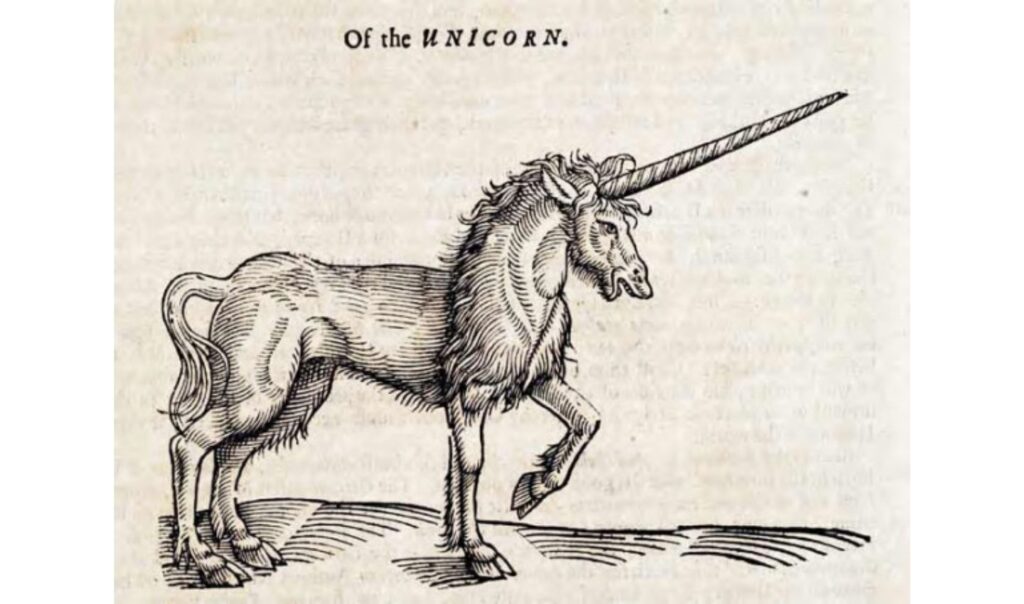
Illustration from the book The history of four-footed beasts and serpents by Edward Topsell.

Unicorn hornsย were sought after byย nobles,ย kingsย and religious leaders in Europe:ย ย 

For example,ย Lorenzo de Mediciย had one valued at 6,000 gold florinsย (around $1 million). Ivan the Terribleย was reported to have paidย 10,000 marks forย one, andย called for it to be brought to him on his deathbed.ย Martin Luther was said to have beenย saved from an assassination attemptย by powdered unicorn horn, and had a spoon made from the magical substance.

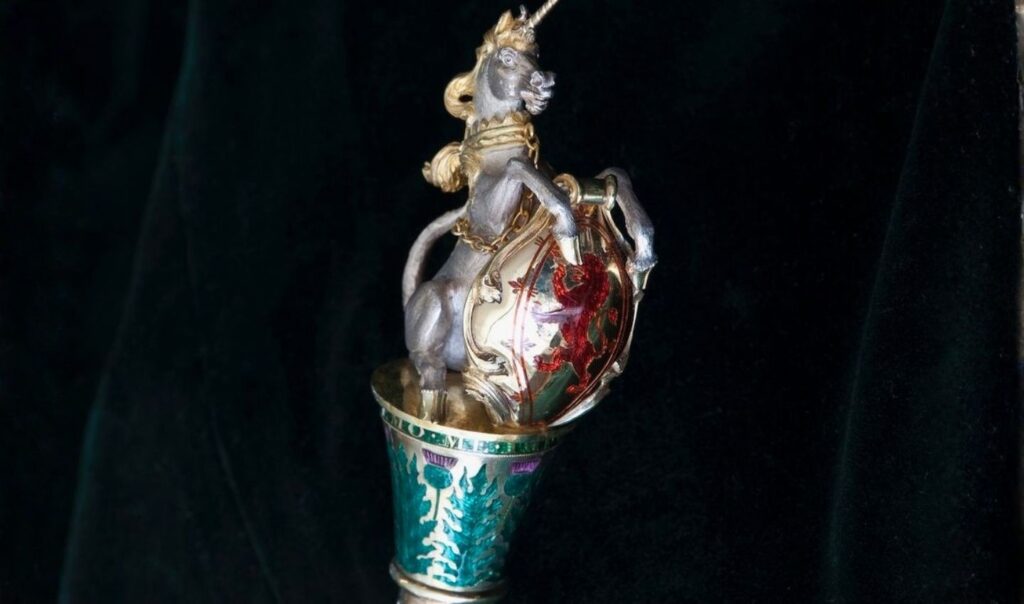
Such a powerful tool befits a queen, and onย hearing that Mary Queen of Scotsย was using unicorn horn to test her food for poison,ย Elizabeth Iย offered a handsome reward for another.ย Privateer and Arctic explorerย Martinย Frobisherย (orย Humphrey Gilbert,ย both wereย on the expedition, butย different sourcesย credit them)ย found a narwhal washed ashoreย inย Canadaย andย gifted it to the queen.ย She was enamoured with it andย coveredย it in jewels.ย Itย was said to be valued atย ยฃ10,000*, approximately ยฃ3 millionย in modern terms. She alsoย handed aย gilted and bejewelled unicorn horn drinking vesselย down to James I.ย 

Even the Pope, one of the main focal points of power and wealth at the time, was involved.ย Pope Clement VII gifted Francis I of France a unicorn hornย onย aย silver stand.ย ย 

In the 1660s, King Frederick III ordered the building of a coronation chair. This chairย was made using severalย unicornย horns andย served as the centrepiece of Danish coronations until 1840.ย 

But as we know, unicornsย arenโ€™tย real.ย Where are these horns coming from?ย 

Unicorn horns were sought after by European nobles. Posted by Ocean Generation.
The Trustees and Factor and Commissioner of the Walker Trust / National Museums Scotland

Where didย tales ofย unicorn horns come from?ย ย 

Most of the Roman and Greek accountsย of unicornsย wereย likely basedย on stories from travellers coming acrossย rhinocerosย in India and Africa.ย But after theseย initialย accounts describing the horn as straight,ย Christian art from about 1200 changed its view of the unicorn.ย 

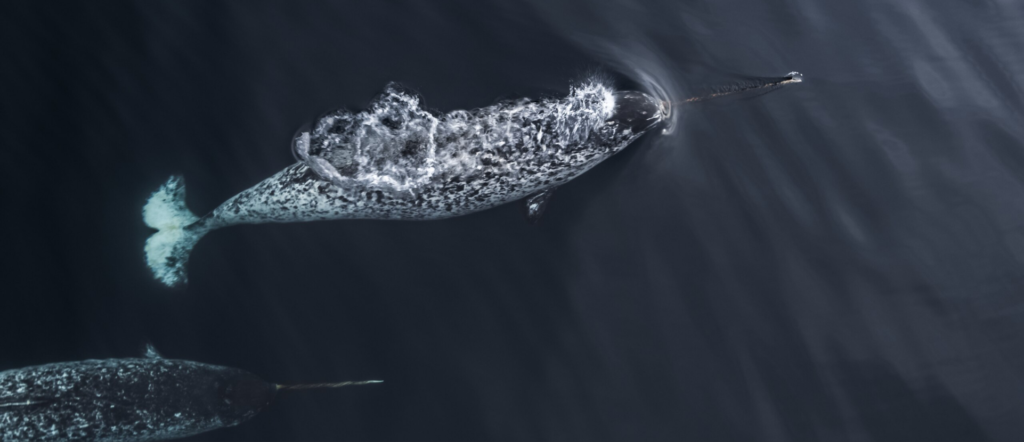
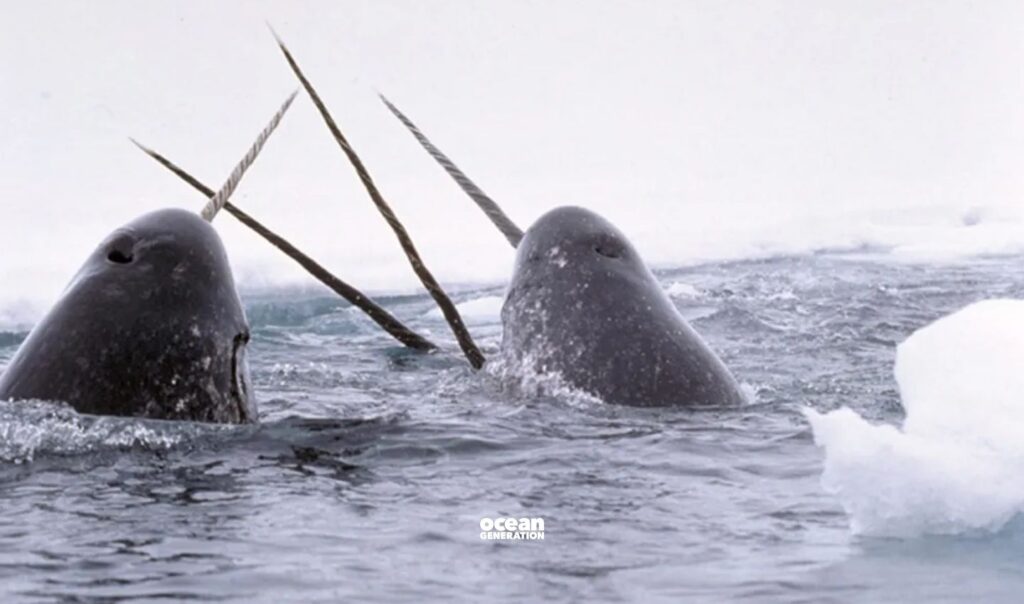
Unicornsย nowย had spiralled horns.ย There is only one animal thatย possessesย aย straight,ย spirallingย โ€˜hornโ€™ย โ€“ the narwhal (Monodonย monceros).ย Andย itย isnโ€™tย a horn at all, butย aย tooth.ย 

Christian art from about 1200 depicted unicorns with spiralled horns.

What you need to know about narwhals: unicorns of the seaย 

The name comes from the Old Norseย nรกrhval, meaning corpse whale.ย Narwhalsย haveย mottled grey skin not dissimilar to rottingย flesh andย likeย toย lounge at the surface โ€“ behaviour known as logging. Combineย the two and you canย understand why the Viking explorers named them.ย 

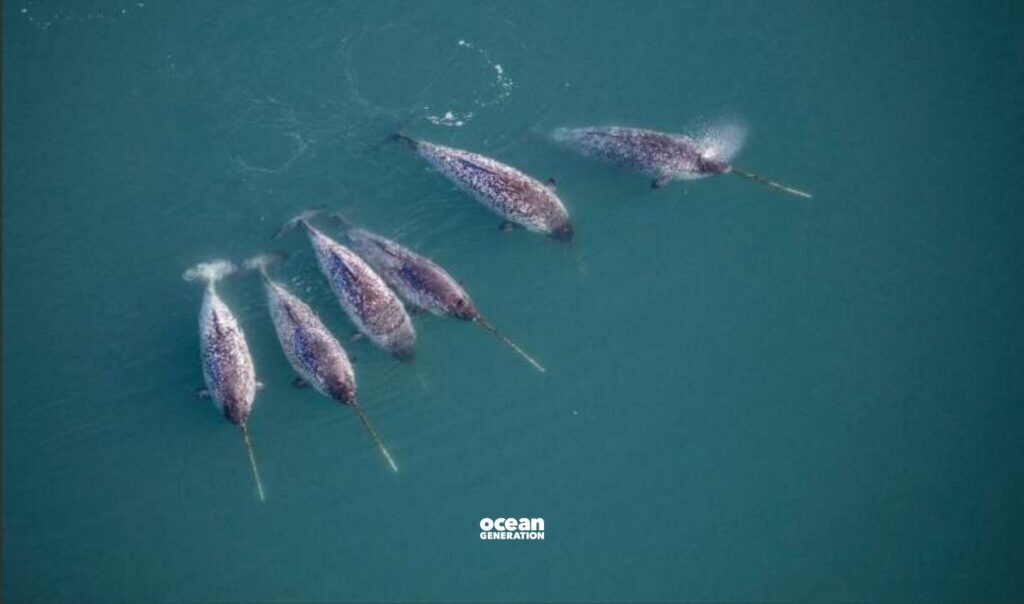
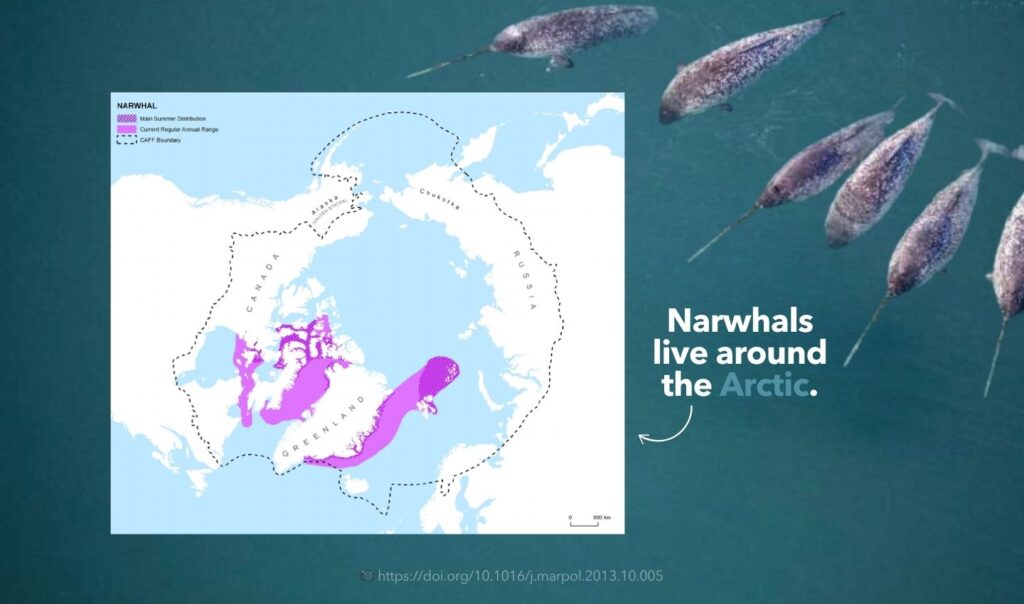
Narwhals areย homebodies. They have โ€˜high site fidelityโ€™ –ย meaningย theyย stick toย the places theyย like andย will go back to theirย favourite spots.ย They can be found in the Canadian Arctic, through to East Greenland,ย Svalbardย and the western Russianย Arctic.ย ย 

Whatย isย aย narwhalโ€™sย โ€˜hornโ€™?ย 

The โ€˜hornโ€™ย of a narwhalย isย oneย (or in rare cases two) of the incisors,ย so isย aย tusk rather than a horn at all.ย All narwhals have two tusks embedded in their top lip.ย ย 

Most commonly, males in their 2ndย orย 3rdย yearย will have the front left tusk erupt through theirย top lip, growing with age to reachย 1.5-2.5m long.ย ย Aroundย 3%ย of narwhals areย anomalies, with some females growing tusks, some males growing two orย none at all.ย Double tusks in narwhals are about as common as an extra finger in humans.ย ย 

What doย narwhalsย use their tuskย for?ย 

The use of theย tuskย is still under debate.ย ย 

The first theories were thatย narwhalย tusksย wereย used for piercing preyย orย breaking up ice to make breathing holes.ย Observers supposed they couldย also function as aย defensive mechanismย orย a cooling system. However, these theories are either discredited or unproven. The real uses are even more spectacular.ย 

What do narwhals use their tusks for? Explained by Ocean Generation.
NIST/Glenn Williams

Dental Displaysย 

Studies suggestย that narwhalย tusks areย sexually selected.ย Male narwhals will use their tusk as a display feature in competition with each other, and bigger is better.ย The size of theย tuskย has been shown toย positivelyย correlate with teste sizeย โ€“ so could be an easy indicator for the females to see which males are most fertile.ย Sometimes, size does matter.ย ย 

Whereย males withย similarย tusksย meet, they may fight โ€“ย male narwhals show far more scarring on their headsย than juvenile and female narwhalsย and 40-60% have broken tusks, but thisย hasnโ€™tย ever beenย observed.ย ย 

What is sexual selection?
Sexual selection is a special type of natural selection, where traits that increase reproduction will be passed on.ย 

Fish Fencersย 

But itย isnโ€™tย just forย showing or skirmishing. Using drones to study theย narwhalsโ€™ย behaviour,ย researchers saw the tusks in action. Theyย could use the tusk to guide the fish, chasing it. They even saw the tusk being used, as a thresher shark uses its tail, to hit the fish, stunning it ready for eating. Theย scientists involved think there could even have been an element of play.ย ย 

Temperature Tasterย 

In 2014, we discovered that aย narwhalย tuskย was full of holes and nerves. Thisย couldย mean that it canย operateย as a water sensing tool for the narwhal, and they can โ€˜feelโ€™ changes in water saltiness (salinity) and temperature.ย They show elevated heart rate when the horn is exposed to very salty water and fresh water, suggesting they can detect it.ย ย 

โ€˜Feelingโ€™ your surroundings can beย very usefulย for navigation, when diving deep and moving between their favourite spots. It could also save their lives. Seawater freezingย depends on the temperature and salinity of the water โ€“ saltier water needs to be colder before it freezes. By knowing the temperature and salinity of the water they are in, they areย detecting when the water is likely to freeze, trappingย themย from the air to breathe.

This could also be used in hunting โ€“ those narwhalsย weโ€™veย seen using their tusks to โ€˜chaseโ€™ fish? They could be using their swirly sensor to detect theย fishes’ย movementsย through pressure changes in the water,ย even faster than they can see them

Are narwhals magic?ย 

So,ย we have a toothย thatย helpsย guide them through the icy waters like Rudolph’s nose,ย zero in on prey like a laser guided missileย andย show offย theirย suitabilityย to be a parent.ย 

Aย narwhal’sย tuskย could enable them to tell when ice is going to formย and find prey hiding in the darkย asย theyย canย diveย overย a kilometreย (3,281ย ft) down, where no light can reach.ย 

Unicorns might not be real, but this all sounds like magic.ย ย 

Does something lose its magic just because we understand how itย works?ย Whetherย it is magic or incredible biology, theย enchantment of the narwhal is threatened by a changing world.ย ย 

How is theย narwhalsโ€™ย world changing?ย 

The opinionsย andย dotingย ofย nobles across Europeย and the worldย meant nothing to theย narwhal.ย After yearsย ofย hunting operations,ย narwhalsย areย now enduringย other changes, this time in their home.ย Climate change,ย caused primarily by the human burning of fossil fuels,ย is hitting the polar regions, where narwhals live,ย the hardest.ย ย 

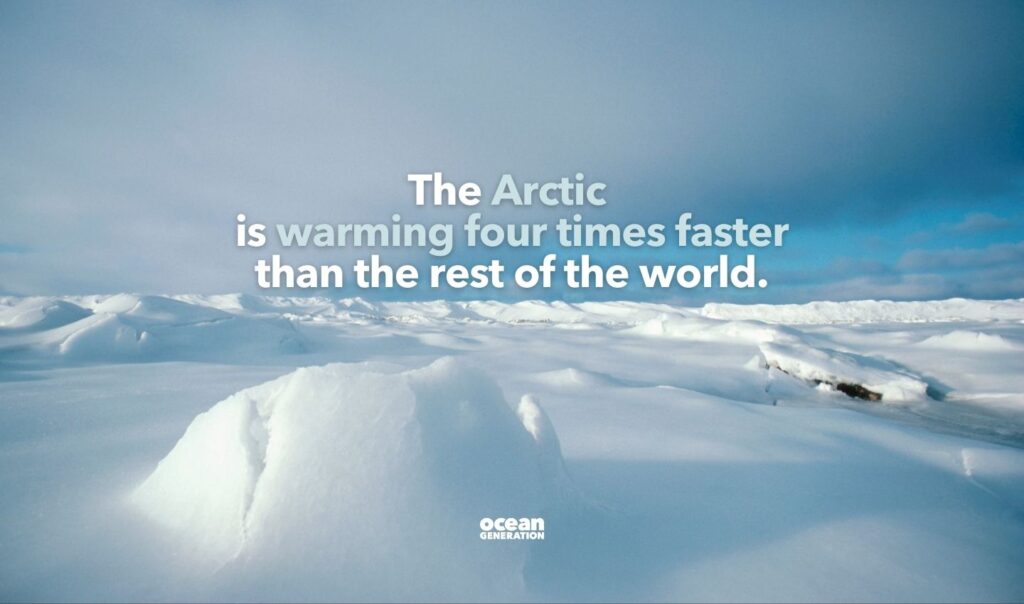
Theย Arctic is warming faster than the rest of the world. This is known as polar orย Arcticย  amplificationย (AA). AAย has resulted inย the Arctic warming by as muchย asย four times the rest of theย globe.ย Since 2006, the air temperature inย autumn and winterย hasย increasedย by more than twice the global average.ย ย ย 

Narwhals live around the Arctic Ocean. Posted by Ocean Generation.
https://doi.org/10.1016/j.marpol.2013.10.005

Why doย narwhals live in the Arctic Ocean?ย 

Narwhals like it cold.ย Where the sea is warmer, there are less narwhals.ย Why? This could be to do with their prey โ€“ one of their favourites, cod, are known toย grow better in water temperatures of less than 2 degrees.ย 

It could also be to do with their supreme adaptions for the coldest places on the planet โ€“ they may overheat at higher temperatures. No one wants to beย wearingย a thick winter coatย on a hotย summer’sย day.ย ย 

Howย is climate changeย impactingย narwhals?ย 

There is less ice.ย November 30ย 2025ย saw theย lowest area ofย Arcticย ice on that date on record.ย The previous 20 years have given us theย 20thย lowest sea ice minimums on record,ย and there isย 95% less old sea iceย (over 4 years old) than the average from 1979-2004.ย ย 

Ice is an important part of the lives of every animal living in the polar seas.ย Theย loss of sea ice has been shown toย change the diet of theย narwhalย as theyย canโ€™tย eat ice-based (known asย sympagic)ย prey, soย theyย eat more open-water (pelagic) species instead.ย 

Through burning coal and mining for gold, humans have increased the amount of mercury in the environment.ย Lessย ice means there is more bioavailable mercury. The result:ย theย narwhalsย areย exposedย toย moreย mercury.ย Increased mercury levels canย impactย the reproduction and immune systems of narwhals.ย How do we know this? Through analysing narwhal tusks, which give us an insight into their life history.ย The magic tusks are whispering to us.ย ย 

The reducingย iceย alsoย means thereย is more human activity. We are a noisy bunch, and narwhalsย have shown to beย sensitive to ship noise, reducing their deep dives for foodย (and givenย they are inefficient in their dive success, they need them).ย ย 

The Arctic Region is warming four times faster than the rest of the world.

Howย areย we preservingย the magic of the Arctic?ย 

Narwhal hunting isย monitoredย andย almostย everyย whale caught isย for the subsidence of the indigenousย Inuit people.ย The populationย is difficult to track, especially without a reliable baseline. However, the International Union for the Conservation of Natureย assessed the population in 2017 andย shifted the status from Near Threatened to Least Concern.ย The narwhal is doing wellย so far.ย ย 

The isolation of the Arctic and the changing attitude towards cetaceans means the narwhalย hasnโ€™tย had to deal withย a multitude of human pressures.ย But more than ever, those pressures are finding themย where they log.ย ย 

Research will continue to develop quieterย boats,ย andย policy will increase protected areas.ย The narwhal is one example of a bit of remote magic we are trying to keep.ย 

Climate change is being tackled head on, with an energy transition in full flow, electric vehicles going from strength to strength andย global emissionย increases are slowing. We will be the generation to see the transition to human flourishing not coming at the cost of our natural world, for the first time.ย ย 

But within this, driving this, is beingย able to see the magic of the unicorn, not as a made-up money-makingย monopoly manufacture, but in the reality of the narwhal and its beautiful, magicalย tooth.ย See the magic, spread the magic โ€“ that is what will lead to us protecting the magic.ย 

*Wexler, P. (2017). Toxicology in the Middle Ages and Renaissance. Academic Press.
Cover image by ะŸั€ะพะตะบั‚ะฝั‹ะน ะพั„ะธั ะะฐั€ะฒะฐะป

Narwhals and Unicorns: How the magic of the Arctic has changed

Subscribe

Monthly: Impact in your inbox.

OceanGeneration-Join

From classroom to COP30: Questions from children to climate leaders about Ocean protection

From classroom to COP30: Questions from children to climate leaders about Ocean protection

If a group of 7โ€“11-year-olds could interview delegates at COP30, what would they ask? 

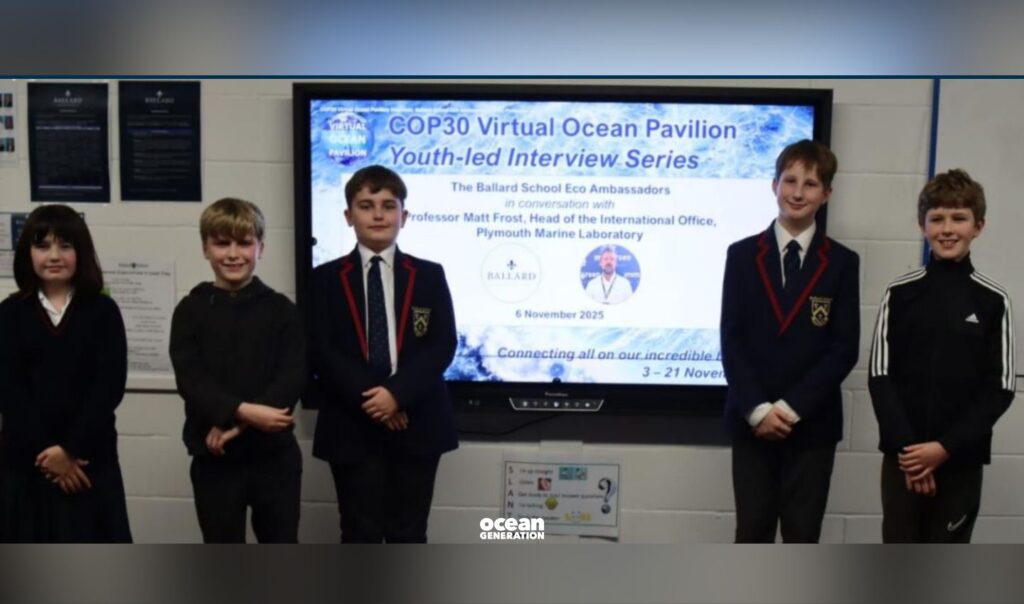
Well in November 2025, Ocean Generation made this happen. We worked with 5 young Eco Ambassadors at Ballard School in New Milton, UK as they interviewed Professor Matt Frost, Head of International Office at Plymouth Marine Laboratory as part of the COP30โ€™s Virtual Ocean Pavilionโ€™s series of youth-led interviews.  

What is COP?
COP (Conference of the Parties) is the UNโ€™s annual climate summit. During the conference, parties negotiate climate action and review progress. COP is also a platform for scientific studies and activism. Read more about COP here. 

Ocean Generationโ€™s Youth Engagement Lead, Dr Gemma Connell, mentored the young people through the process and was so proud when they wrote their own (very difficult!) questions for Matt, giving him a bit of a grilling!  

It was heartwarming to witness Mattโ€™s honesty in his responses to the young people. He discussed where the problems are in the COP space, and most importantly โ€“ what we can all do to protect our Ocean.  

Join the Eco-Ambassadors as they ask Professor Matt Frost the important questions around COP30, the importance of the Ocean and what his favourite sea creature is.  

YouTube player

So, you wake up at COP30, what are you doing? What does you day look like? (Freddieโ€™s question) 

Mattโ€™s answer: 

Wake up, check the times on everything. You donโ€™t want the changing time zones to lead to you missing events and meetings.  

Planning where to be that day, making a list of places and times I need to be somewhere.  

The first day and the start of every day includes a lot of security. Making sure everyone has identification and the right badges to get through the security measures that are in place protecting some of the world’s most important people. 

COP can involve hundreds of thousands of people, so just working out where everything and everyone is, is a challenge. Got to make sure you know where the good coffee shops are.  

โ€œThe fun bit is that you walk around, and you meet all sorts of people.โ€  

Not just meetings or speaking events, but you might find yourself doing some media as well. 

โ€œRecently I was at a COP when I bumped into Tom Heap, who is one of the presenters on Countryfile. He said, โ€˜do you mind doing an interview while youโ€™re here that we can put on Sky News?โ€™โ€ 

Every evening there will be a reception, meeting all sorts of people from government ministers to scientists.

What are your expectations coming to the COP30 and what would you consider a successful result for the Ocean? (Tobyโ€™s question) 

Mattโ€™s answer: 

โ€œFor many years, when people came to these meetings, they were all worried about what was going on on the land.โ€ Matt noted how the conversations would focus more on forests, trees and farming, โ€œbut nobody really thought about the Ocean.โ€ 

โ€œSo, over the years, weโ€™ve had to explain to people that our planet โ€“ and Iโ€™m sure you know this, being Eco Champions โ€“ is mostly water. The Ocean is most of our planet. So, one of the main things that is a success every time we go to these meetings is to make sure that everybody is talking about the Ocean.โ€

Every leader talking about the Ocean is a success. The next step is encouraging action.

The people at these meetings donโ€™t have the power, they can go back to their governments to convince them to act. 

For example, the UK government going home and taking direct action to address the issues in the Ocean through laws and funding would be a real success from COP30.   

The Ocean has gradually grown in prominence on the global stage.

The Ocean has gradually grown in prominence on the global stage.  

Ocean Generation’s note:

Six years ago, COP25 recognised the connection between Ocean and climate, COP26 called for Ocean action to be integrated in work programs and COP27 encouraged countries to include the Ocean in their national climate goals.  

At COP30, the Ocean was formally included in the COP30 Action Agenda. It was the first time a COP decision included a specific Ocean angle, with goals and commitments. This included investing in marine conservation and renewable energy, reducing the environmental and ecological impacts of shipping, supporting aquatic food solutions and reducing the impact of coastal tourism.  

Practical tools were launched at COP30 to help achieve the goals. An Ocean Breakthrough Implementation Dashboard was launched to monitor country progress across those five areas (nature conservation, renewable energy, shipping, marine food and tourism). The Marine Biodiversity and Ocean Health Breakthrough and Roadmap gives the standards and methods to tackle Ocean assessment and actions.  

While COP30 included the Ocean more deeply than previous COPs, there was a lack of financing and binding agreements to ensure countries take action. It is now over to them to build on the outcomes of COP30 and take Ocean action.  

How can governments encourage private companies to not use single use plastic? (Leoโ€™s question) 

Mattโ€™s answer: 

If I could get a brilliant answer to that it would solve one of the world’s biggest problems. So, I will do my best and honestly, Leo, if you and your friends have got ideas… we need some help with this.โ€ 

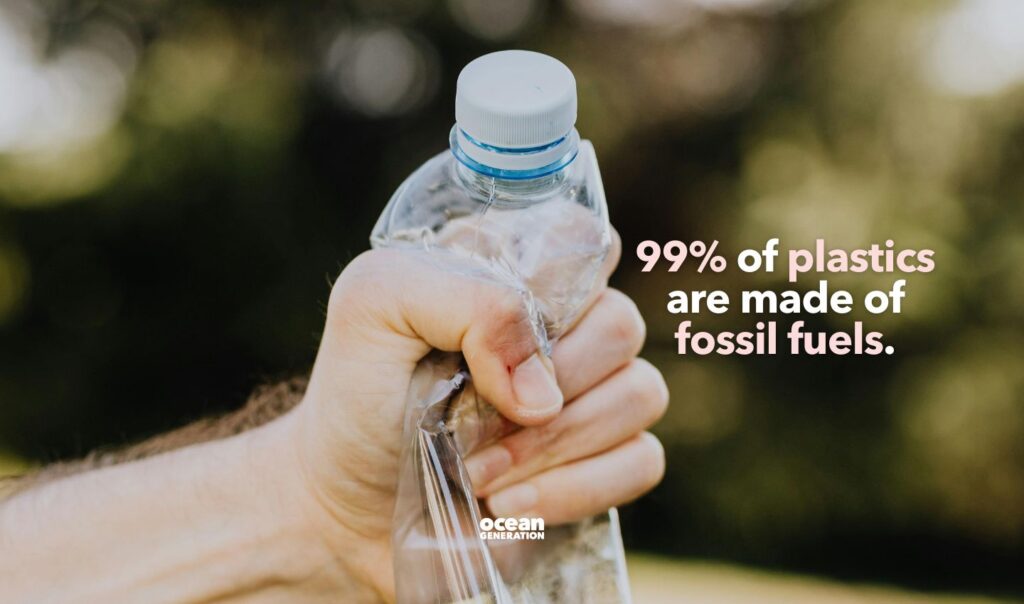
As well as a pollution problem, plastic is also a climate problem, as 99% of plastics are made from fossil fuels. 

Governments like the UK have been banning things like plastic straws, microbeads in cosmetics and charging for plastic bags. 

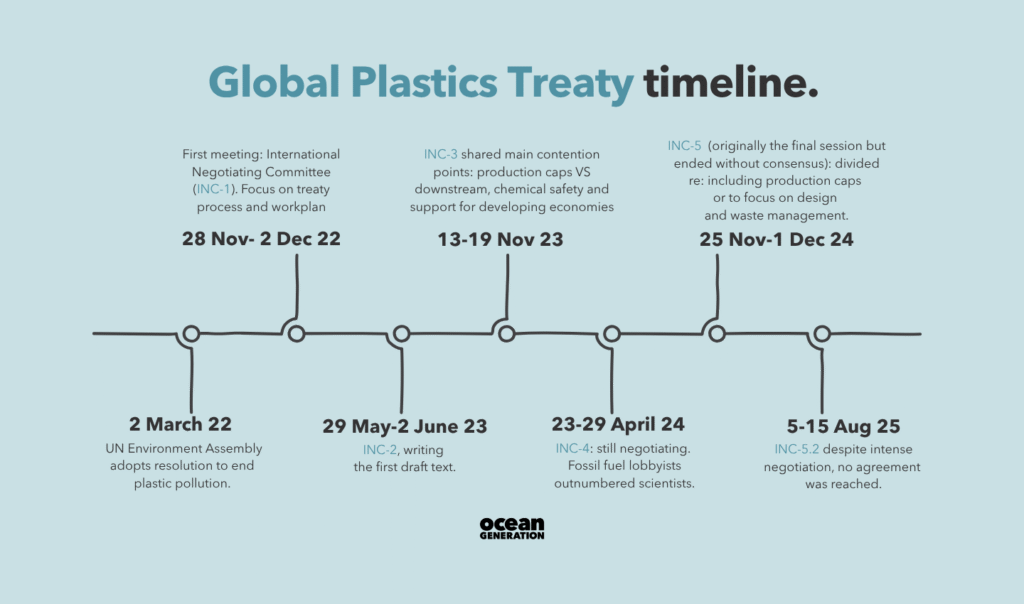
Should we ban everything? โ€œI donโ€™t think that will help ultimately…โ€. It is a global problem and needs to be addressed globally. The Global Plastics Treaty is an opportunity for governments to make a real difference. Read more about the treaty here.  

Companies are willing to cut down on plastic but need incentives to do so. Encourage is a great word in the question. 

โ€œThey [world leaders] can make it difficult by putting taxes [on plastic] and making it more expensive to use single use plastic. But ultimately… governments will only do so much.โ€  

Government action can be encouraged by what we buy and say.  

99% of plastics  are made of  fossil fuels. Posted by Ocean Generation, leaders in Ocean education.

Ocean Generation’s note:

The difficulty in banning all plastics, is where we havenโ€™t yet found an affordable alternative which does the same thing as plastic but doesnโ€™t have the impact on the environment.  

This is particularly difficult in industries such as healthcare, where single use plastic is often used to keep patients, doctors and nurses safe. We canโ€™t ban all plastics without looking at the other consequences that might have โ€“ context is very important! Read more about if plastic is good or bad here

Are there plans to introduce whale friendly cruise routes to reduce noise pollution in the seas? (Lilyโ€™s question)  

Mattโ€™s answer: 

Yes there are plans for whale friendly shipping, but we really need the shipping companies to start doing this now.โ€ 

Ships are big contributors to climate change, producing air pollution as they burn fossil fuels to power their engines.  

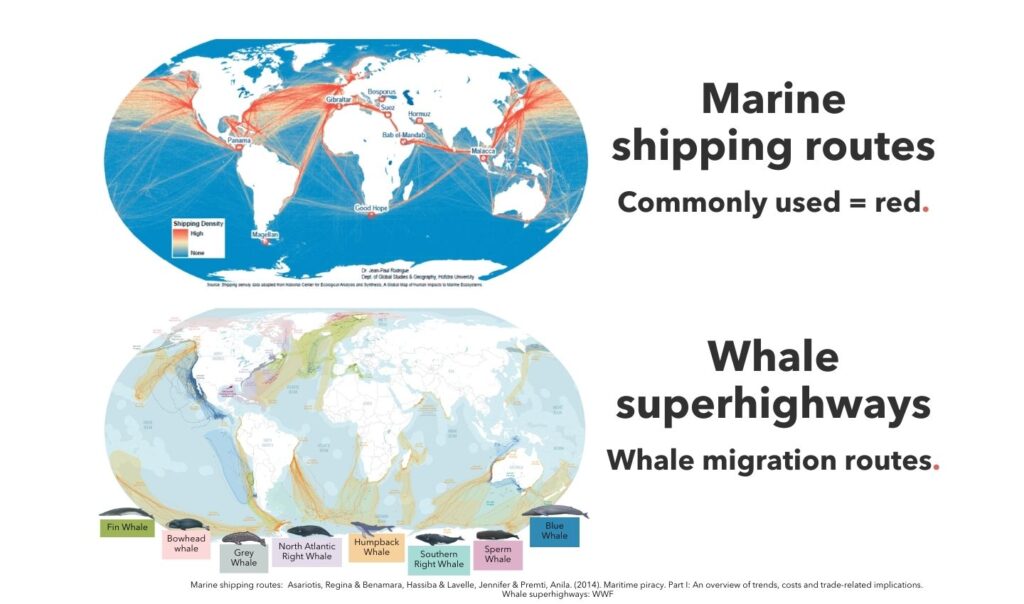
There are much more ships on the Ocean at any one point โ€“ over 70,000. There are two main ways they cause issues for marine life such as whales โ€“ noise pollution and ship strikes. 

Whale friendly cruise routes hope to minimise the impact of both of those things. The International Maritime Organisation and the International Whaling Commission are trying to implement rules on shipping. These include go slow zones where whales are known to feed and live, and special routes that avoid whale โ€œhotspotsโ€.  

It is down to the individual ships, shipping companies and cruise companies to act on the advice of the IWC and IMO.  

How marine shipping routes and whale's migration routes overlap. Explained by Ocean Generation.

Ocean Generation’s note:

Exact numbers of whales killed by ship strike are difficult to quantify, as data suffers from underreporting.  But recent work has shown that global shipping traffic overlaps with about 92% of whale speciesโ€™ ranges. Of that, only 7% of the areas that are high-risk for whale-ship collisions have any protective measures. Protecting just 2.6% more of the Ocean would eliminate many high-risk areas with minimal impact to shipping times.  

As Matt says, there are two main solutions. Slower ships give all marine life more time to dive or swim away, avoiding collision. Slowing ships to 10 knots can reduce the the number of whale deaths by 30%.  

The other approach is by re-routing ships from collision hotspots. In the Mediterranean, rerouting ships away from the Hellenic Trench has reduced the risk of collision by an estimated 27%.  

95% of hotspots fall within the exclusive economic zones of a country, so, each country can implement protective measures in coordination with the IMO recommendations. Whale safe routes are in reach.  

Does creating the infrastructure in order to host COP30 and transporting leaders there outweigh the positive outcomes of the conference? โ€ฏDo you assess the carbon footprint and is there a plan to offset this? (Seanโ€™s question) 

Mattโ€™s answer: 

The concern is that we might not have these conversations if we werenโ€™t all in the same room. Yes, we carbon offset but there is going to be some environmental impact. We think the positives outweigh the negatives.  

โ€œAt the moment we feel that if we didnโ€™t go, whoโ€™s going to be there to speak up for good science, to speak up for the Ocean, to speak up to actually look after things? And the danger is that, if all the people who feel very strongly about carbon decide not to go to the COP for the reasons youโ€™ve said, then it could be left with the people that donโ€™t really care much about it.โ€  

Ocean Generation’s note:

One of the intentions of hosts Brazil was to deliver a carbon-neutral COP30. They delivered this by offsetting their calculated emissions. They calculated that COP30 produced 130,000 tonnes of carbon dioxide or equivalent greenhouse gases. To counter this, they purchased 130,000 UN-certified carbon credits. The money for these credits goes towards carbon-negative projects, so COP30 is carbon-neutral in principle.  

However, this calculation only considers the emissions generated by hosting. The bulk of emissions are likely generated by the travel of attendees. There is no comprehensive calculation of these emissions. A large part of that relies on the attendees doing what they can to reduce environmental impact.  

โ€œYou can ask me again next year and maybe Iโ€™ll answer differently, but this year the positives outweigh the negatives.โ€  

Was COP30 carbon neutral? Explained by Ocean Generation.
Photo by Fernando Llano/AP

Is COP30 going to be used for fossil fuel deals like the last one? (Seanโ€™s question) 

Mattโ€™s answer: 

โ€œI canโ€™t promise that that will never happen at any COP.โ€   

Some people will want to see things stay as they are, but there are enough people with good intentions there to know that good things will come out of it. Multilateralism (global cooperation), connecting climate change messages to individuals and accelerating implementation are all main aims of this COP.  

Iโ€™m hoping the good things will outweigh the others.  

Ocean Generation’s note:

At COP29, there was backlash against the hosts, Azerbaijan, as one of their senior officials was found to be conducting meetings to coordinate fossil fuel deals. Find out more of what happened at COP29 in our article here.  

What is the extent of the impact of pumping carbon back into the Ocean underneath the seabed? (Lilyโ€™s question) 

Mattโ€™s answer: 

Itโ€™s possibly helpful, capturing carbon dioxide from the atmosphere and tapping it. However, there are risks โ€“ if it leaks it can cause harm to marine life and return the carbon to the atmosphere. 

Weโ€™re asking that we [humans] donโ€™t do it until we know more about the effects of it.  

โ€œIf you went to the doctor and said, โ€˜I feel really poorly,โ€ and the doctor said โ€˜well, Iโ€™ve got some medicine for you… I donโ€™t know if it works very well, and it might make you really ill, but I donโ€™t actually know that we havenโ€™t tried it.โ€™ Would you take that medicine?  

Impact of pumping carbon back into the Ocean: explained by Ocean Generation.

What key messages would you like us to share with our school community in order to look after the Ocean better? (Freddyโ€™s question) 

Mattโ€™s answer: 

There is an ongoing problem that people donโ€™t really understand the Ocean. They donโ€™t know what is in it, they donโ€™t really understand it, and they donโ€™t know that we rely on it.  

We need to remind people that most of our planet is Ocean. When the Ocean is healthy, we are healthy.  

We rely on the Ocean for our food, our breathing air and our mental health.  

If we look after the Ocean, it will look after us.  

Read more about how the Ocean keeps us alive here

Tobyโ€™s surprise question: What is your favourite marine animal

Mattโ€™s answer: 

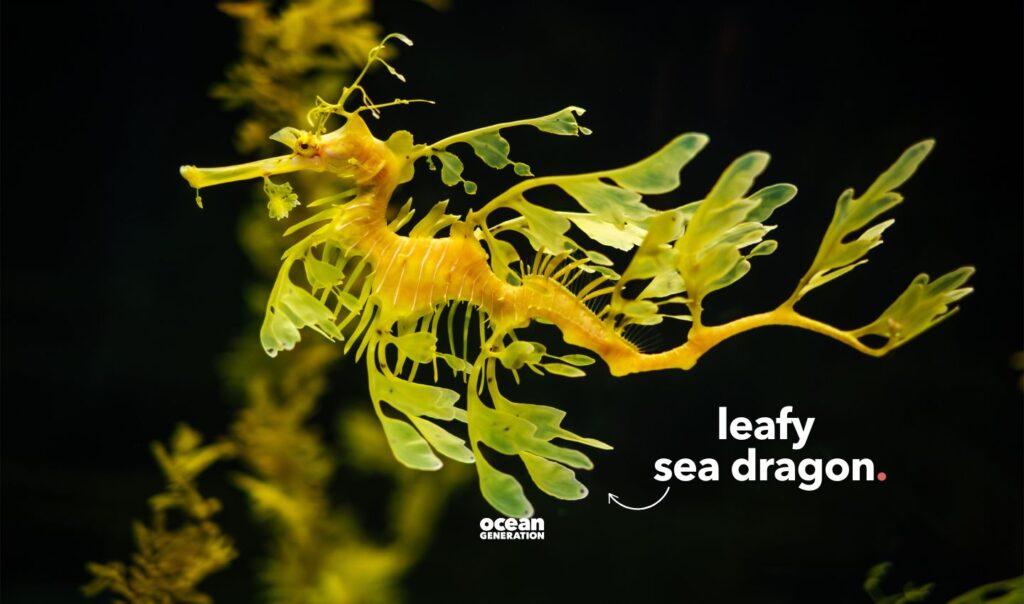
Mattโ€™s answer: the leafy sea dragon!  

Ocean Generation’s note:

The leafy sea dragon is a fish closely related to seahorses and pipefish. The name of its genus, Phycodurus, comes from the Greek words for seaweed (phรปkos) and skin (derma), encapsulating its amazing camouflage. It can change the colour of its skin to match the seaweed around it and moves through the water like a drifting frond. 

Leafy seadragons typically swim solo, but will court each other through dance, mirroring each other’s movements. Males carry the eggs for 6-8 weeks on a specialised patch under their tail, before โ€˜giving birthโ€™ to 100-250 20mm baby leafy sea dragons (about the size of a peanut).  

The leafy sea dragon is a fish closely related to seahorses. Posted by Ocean Generation.

Matt asked the students: what would the Eco Ambassadorsโ€™ message be for him to take to COP30?  

Toby answered, โ€œPlant more trees!โ€  

A week later, the Eco Ambassadors planted 30 saplings after school, doing their bit to live up to Tobyโ€™s โ€œplant more trees!โ€ answer.  

Alex Bellars, teacher at Ballard School said: 

โ€œOur Eco-Ambassadors absolutely loved taking part in the Virtual Ocean Pavilion interview with Professor Matt Frost on 6th November, 2025. It was inspiring to know that their voices and ideas formed even a tiny part of the global conversation at COP30!  

It was especially cool to know that our pupils were the youngest participants in the Virtual Ocean Pavilion – and therefore possibly at the whole of COP30 itself. And it was wonderful to see Toby grab the chance to put Matt on the spot with an unplanned bonus question!โ€  

Narwhals and Unicorns: How the magic of the Arctic has changed

Subscribe

Monthly: Impact in your inbox.

OceanGeneration-Join

Marine discoveries and Ocean wins in 2025

Marine discoveries and Ocean wins in 2025, posted by Ocean Generation.

What were the Ocean wins in 2025? 

The past year has seen some amazing developments in our understanding of and our relationship with the Ocean. Weโ€™re unpacking: what Ocean discoveries have we made, what Ocean protection have we brought in and what Ocean recovery have we seen in 2025? 

Jump to:

What Ocean discoveries happened in 2025? 

New clownfish related discoveries  

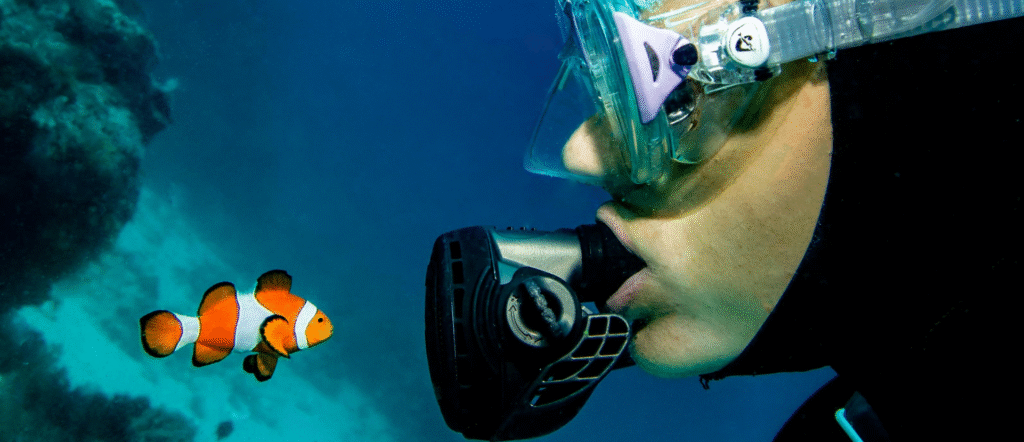
Over the course of 2025, there have been a series of discoveries centred around the clownfish, made famous by Nemo and Marlin in Finding Nemo (see our scientific analysis of the film here).  

How does the clownfish avoid being stung by the anemone? 

By having lower levels of sialic acid on their skin, clownfish avoid being stung by anemones. Sialic acid can be found on the outer surface of most animals โ€“ it is important in cell-to cell communication and immune response. The nematocysts (stinging cells) of the anemone have a special trigger, to avoid the anemone constantly stinging itself. Researchers found the fish that can live in an anemone have low levels of sialic acid, to โ€˜hideโ€™ from the anemone, and avoid triggering its stings.  

How does the clownfish avoid being stung by the anemone? Explained by Ocean Generation.

We discovered that the relationship between clownfish and anemone isnโ€™t as one-sided as it may seem. 

Anemonefish have been observed feeding their anemones large food they canโ€™t eat, or extra food after they have eaten their fill. This has also been shown to increase how fast anemones grow.  

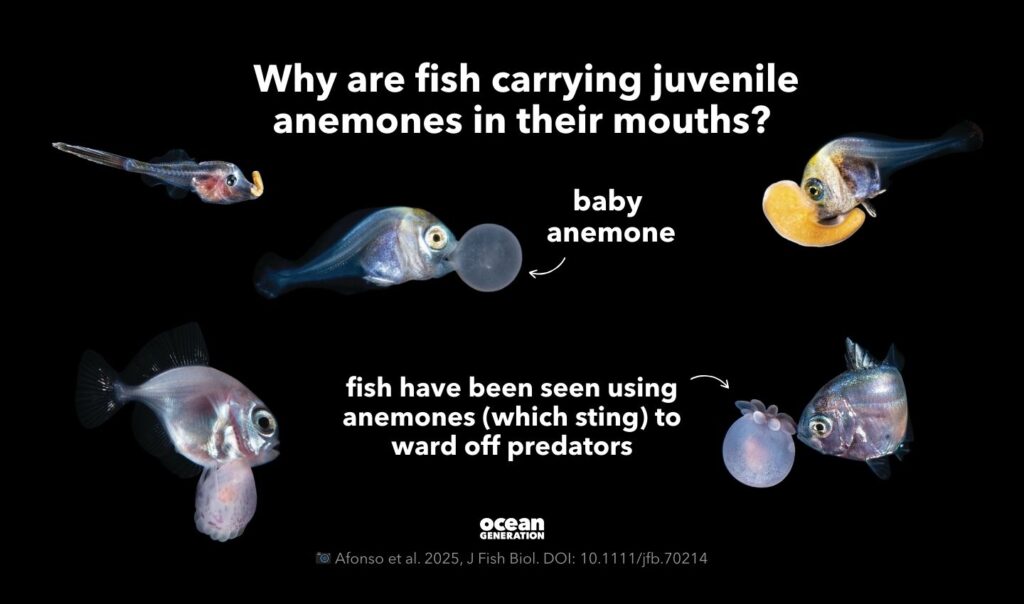
Why do fish carry anemones around in their mouths? 

Clownfish arenโ€™t the only ones buddying up with anemones. Several species of fish have been photographed holding larval (baby/ juvenile) anemones in their mouths.

The assumption is that they are effectively arming themselves with marine (live) pepper spray. Predators can be warded off with a nasty sting. The anemones also benefit, as the young fish can swim and be swept much further than the anemone would normally reach.  

The young fish have a predator deterrent, and the anemone gets a lift to a new neighbourhood.  

Why do fish carry anemones in their mouths? Posted by Ocean Generation, leaders in Ocean education.
Picture credit: Afonso et al. 2025, J Fish Biol. DOI: 10.1111/jfb.70214

What new Ocean species were discovered in 2025? 

A new species of manta ray was distinguished in 2025, adding a third species to the manta ray family.  

Until 2009, there was only one species of manta ray.  In a study focussed on morphological characterisation, analysis of colour, teeth and other traits differentiated the reef and Oceanic manta rays

In 2025, after years of speculation, it was confirmed that there was a third species of manta.  

Lead author of the study identifying the Oceanic and reef manta species, Dr. Andrea Marshall, had theorised a third species after diving in the Atlantic Ocean with manta rays she didnโ€™t recognise. Years of study, including the description of a type specimen and genetic analysis, have confirmed her hypothesis: a third species of manta ray exists. 

New species of manta ray was described in 2025.
Picture credit: Leo Francini a; Guy Stevens/ Manta Trust b, e; Rawany Porfilho c; Mauricio Andrade d; and Nayara Bucair f

Facts about the newly discovered manta ray: 

Mobula yarae, more commonly known as the Atlantic manta ray, are named after Yara, the โ€˜mother of watersโ€™ from Indigenous Brazilian mythology.

Telling them apart from other manta rays starts with size: they reach an approximate size of 6m across, sitting between the Oceanic and reef manta in size. A โ€˜Vโ€™ shaped white shoulder patch, lighter colouration around the mouth and eyes and dark spots confined to the belly rather than between gill slits are the key identifying features.  

The Ocean Census announced that it has facilitated the discovery of 909 new Ocean species.  

The program, in its second year of running, hopes to fast-track Ocean discovery, and so far has increased the annual speed of species discovery by 38%.

A new kind of shark discovered 

Sticking with our elasmobranchs (cartilaginous fish that include sharks, skates, and rays), a new kind of guitar shark was discovered off the coasts of Mozambique and Tanzania. It joins 37 other guitar sharks in one of the most threatened vertebrate families, with two thirds of them threatened.

New species of snailfish in the deep-sea 

Looking deeper in the Ocean, a new species of snailfish was discovered 3,263m deep.

The suitably named โ€˜bumpy snailfishโ€™ is only two to three inches long and was one of three new snailfish species found on the expedition led by the Monterey Bay Aquarium Research Institute.  

There are over 400 species of snailfish, and the family holds the record for the deepest dwelling fish, with one found 8,338m deep.  

New Ocean species discovered in 2025. Posted by Ocean Generation.
Picture credit: Guitar shark: Sergey Bogorodsky / The Nippon Foundation-Nekton Ocean Census, Snailfish: MBARI, Sponge: The Nippon Foundation-Nekton Ocean Census Schmidt Ocean Institute ยฉ 2025 Coral: Xu et al., Zootaxa, 2025

Meet a newly discovered sea sponge: the Death-ball sponge 

As one of the more notably named, the death-ball sponge (Chondrocladia sp. nov.) received a lot of press.  

Where most sponges unobtrusively filter the water for food (ensuring highly efficient nutrient circulation where there isnโ€™t much to go round), this new species has a number of โ€˜ballsโ€™ covered in tiny hooks to trap their prey.  

New deep-sea discoveries with celebrity nicknames 

There were a couple of famous characters whose semblances were discovered in the deep Ocean.  

  • A deep-sea coral first spotted in 2006, but formally described this year, was given the name Iridogorgia chewbacca, due to its long hairy branches.  
  • An iridescent scale worm found in the freezing waters of Antarctica was given the nickname โ€˜Elvis-wormโ€™, its sparkling scales shimmering in the deep like the sequins of the King of Rock and Rollsโ€™ jackets in Las Vegas
  • And a bonus one (not a new species): the colossal squid was caught on camera in its natural habitat for the very first time. This one wasnโ€™t all that colossal: it was a juvenile just 30cm long. 

What Ocean protection happened in 2025? 

60 countries ratified The High Seas Treaty in 2025 

In September, the Agreement on the Conservation and Sustainable Use of Marine Biological Diversity of Areas beyond National Jurisdiction reached 60 ratifications, the milestone required to start the countdown to it becoming legally binding. From 17January 2026 the agreement, also known as the biodiversity beyond national jurisdiction (BBNJ) or High Seas Treaty, will enter force.  

Read more about the High Seas Treaty here. 

The High Seas Treaty will come into force in January 2026. Posted by Ocean Generation.

Many countries have been protecting the Ocean off their coastlines in 2025. 

Countries havenโ€™t been hanging about, waiting for the High Seas Treaty, they have been getting on with Ocean protection in their own patches.

Marine Protected Area, or MPA, is a general term for an area of Ocean in which human activities are managed or limited to protect the marine world. Depending on what they are aiming to protect, they can have different rules. Some will allow sustainable fishing and recreation; others may be no-take zones where no fishing is allowed. 

What is the largest marine protected area in the world? 

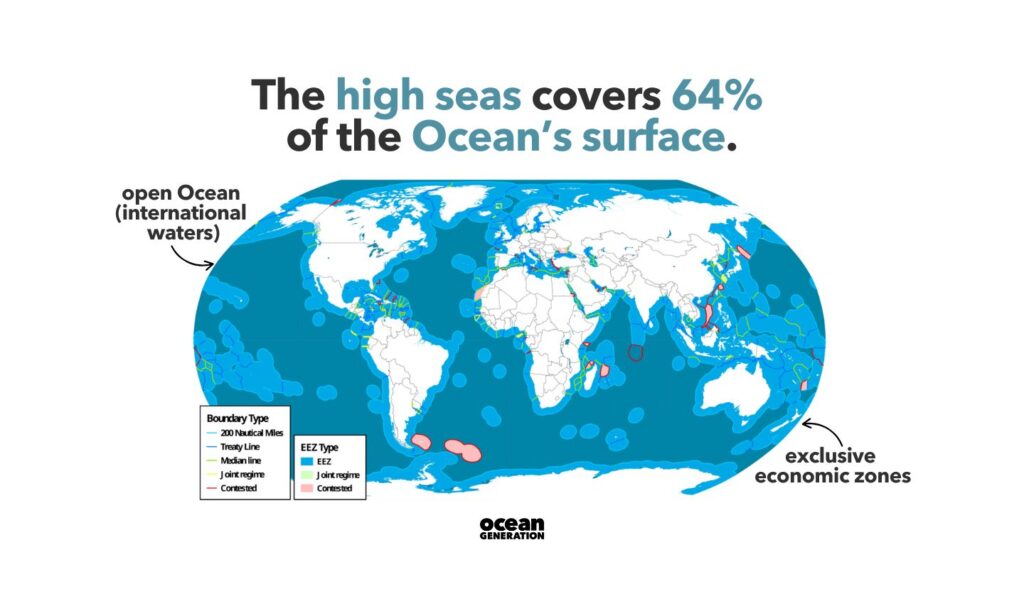
French Polynesia announced the creation of the worldโ€™s largest marine protected area in 2025. The protection of their entire exclusive economic zone, an area of 4.8 million square kilometres, now includes 1.1 million square kilometres of highly protected waters. 

An exclusive economic zone is the area of Ocean extending up to 200 miles from the coast of each country, in which they have the rights to explore and utilise any marine resources.  

A huge no-fishing zone has been expanded in the South Atlantic Ocean: 

For Marine Protected Areas (MPAs) around South Georgia and the South Sandwich Islands (not where sandwiches were invented), the โ€˜no take zonesโ€™ where no fishing can occur have been expanded to over 470,000km2, 38% of the MPA. This is to help protect the migration routes of humpback whales. 

How whales are being protected in marine sanctuaries? Explained by Ocean Generation.

How whales are being protected in marine sanctuaries:  

That isnโ€™t the only help weโ€™ve given our whale friends. In October, a proposal for a huge marine sanctuary in the North Atlantic was approved. Macaronesia is an area including the Azores, Madeira, the Canary Islands and the Cabo Verde islands. Itโ€™s rich in marine biodiversity, hosting 32 different species of cetacean. (Cetaceans include whales, dolphins and porpoises.)

The new marine sanctuary will hope to protect the Ocean from increasing pressures of boat traffic, underwater noise, industrial fishing and future threats such as deep-sea mining. 

Do marine protected areas really help protect the Ocean? 

In a little win of its own, a research paper was published this year that showed that fully and highly protected marine areas do work.  

There have been concerns that enforcement around MPAs isnโ€™t feasible, any fishing vessels can just โ€˜go darkโ€™ – turn off their identification systems and continue poaching.  

But analysis using artificial intelligence and satellite imagery has shown very little industrial fishing activity in highly protected MPAs. Conversely, there was substantial activity in MPAs with low protection.  

Weโ€™re protecting more of the Ocean, and it is working.  

What is the EU Ocean Pact

On money, the European Commission launched a unified framework for EU Ocean policy in 2025, backed by a โ‚ฌ1โ€ฏbillion investment in the Ocean, with six priority areas including: habitat restoration, decarbonisation of maritime sectors, blue economy competitiveness, coastal/island community support, Ocean diplomacy and innovation.

Progress on cutting shipping emissions

Member States of the International Maritime Organisation agreed a global standard for decarbonising shipping: fuelโ€‘intensity reductions, global emissions pricing for ships, and a fund for low/zeroโ€‘emission marine fuels. 

The agreement was agreed but not formally signed, as in a meeting in October 2025 delegations from Saudi Arabia and the United States lobbied for a delay.

This is half a win this year and will hopefully be a full win for our Ocean in 2026, in a sector that accounts for around 11% of global emissions in transport.  

2025 saw progress cutting emissions from the shipping industry

What Ocean recovery have we seen in 2025? 

Are whale populations bouncing back? 

In a paper published towards the end of 2024 that examined historic databases on whales, it was suggested that we underestimate the longevity of whales by some distance.  

How old do whales get?  

Our estimates for the average age of whales were first shaken in 1979, when Japanese whalers found individual blue and fin whales that were 110 and 114 years old respectively. Prior to this, we understood these animals to live to 70 years.

This 2024 paper attributed the lower perceived longevity to our success in whaling. Whales werenโ€™t living as long because we were hunting them.  

But the world is changing. Whaling was made illegal in 1987, and populations have shown promising signs of recovery. Over the course of 2025 there were several markers of a better world for whales, and hints of the future we are creating for them. 

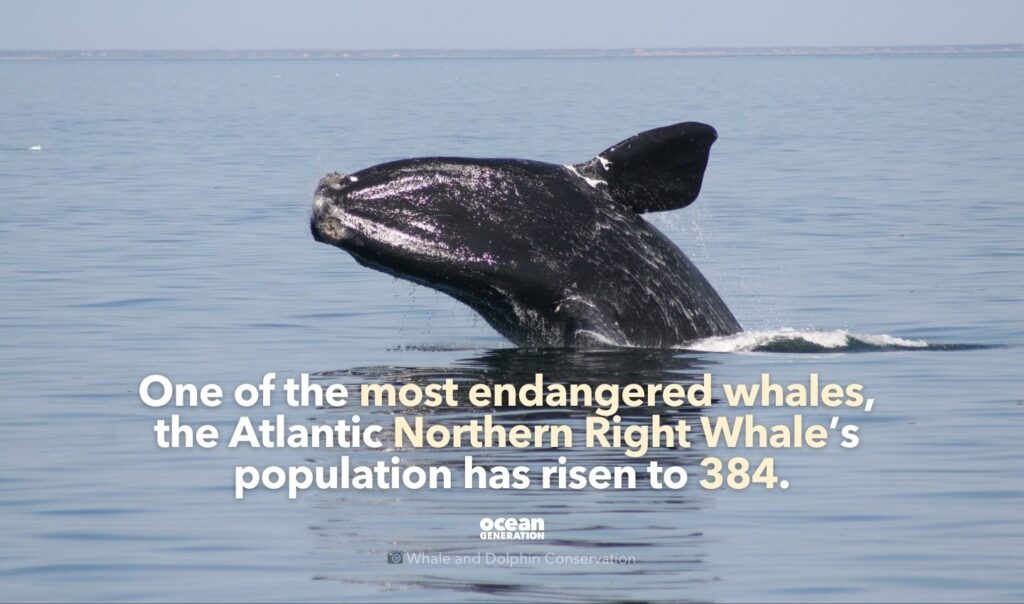
The Atlantic Northern Right Whale, one of the most endangered whales, has enjoyed an increase in population, up 8 individuals to 384 whales. This is off the back of a decade in which the population declined by 25% between 2010 and 2020 due to ship strikes and entanglement.

2025 saw the cancellation of the Icelandic fin whale season, meaning once again no fin whales were killed due to an unfavourable market, marked by diminishing demand for whale products and rising costs. 

Atlantic Northern Right Whale population is bouncing back.
Picture credit: Whale and Dolphin Conservation

Who is โ€˜crushโ€™ing it? Green turtles are no longer endangered

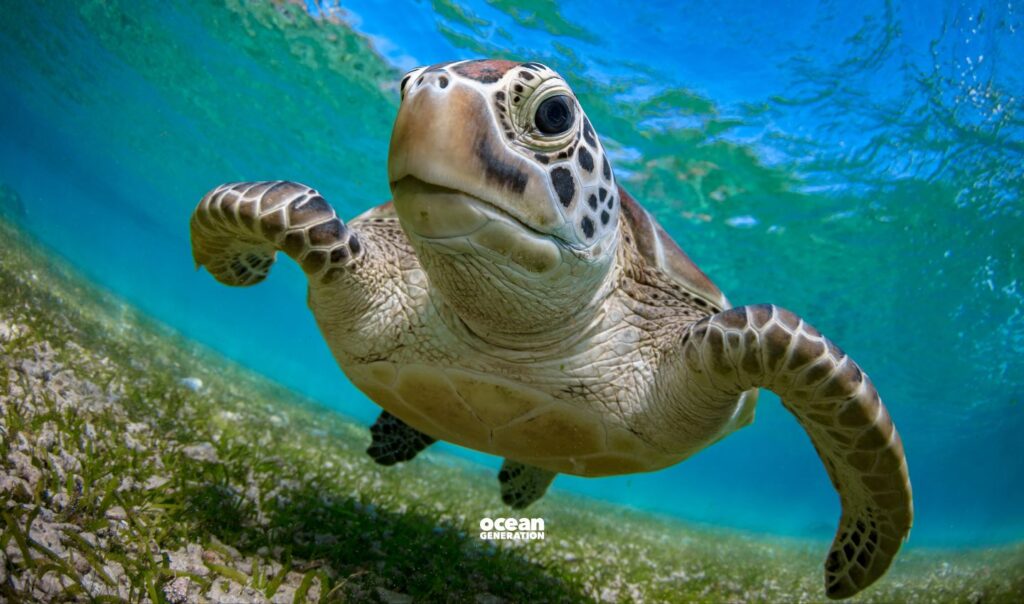
Itโ€™s a good time to be a green turtle (Chelonia mydas). The species, made famous by Crush and Squirt in Finding Nemo, has been upgraded on the International Union for the Conservation of Nature (IUCN) Red List, from Endangered to Least Concern.  

To best help them, we had to understand what was hurting them. Green turtles (and other sea turtle species) have long been hunted for their meat and their eggs, so legally protecting them was a good first step.  

When did we start protecting sea turtles? 

Legal protections started coming in in the second half of the 20th century, with bans such as that on Aldabra Atoll in 1968 safeguarding turtle mothers and their eggs. Since that ban, green turtle egg clutches have increased 410โˆ’665%.  

Even without the pressures of hunting, turtles still faced a struggle, becoming the poster of plastic pollution and entanglement in fishing gear, and facing the realities of a changing Ocean.  

But conservation efforts have continued. Excluder devices (devices designed to prevent bycatch) have been implemented on fishing gear to avoid entanglement. Nesting beaches have been protected from light pollution that could lead hatchlings away from the Ocean, or plastic pollution that could tangle or choke them. Turtle hatchlings have been released at sea to give the population a boost.  

Green turtle numbers are now up 28% compared to the 1970s.  

Some sub-populations are still struggling and need help, but it shows us, again, that the Ocean has a great capacity to recover when we allow it.  

โ€œThe ongoing global recovery of the green turtle is a powerful example of what coordinated global conservation over decades can achieve to stabilise and even restore populations of long-lived marine species,โ€ – Roderic Mast, co-chair of IUCNโ€™s Species Survival Commission Marine Turtle Specialist Group. 

Green sea turtles are no longer endangered. Posted by Ocean Generation.

Dam Good News for salmon 

In 1878, a lamp turned on. In itself, not a remarkable event, but this lamp was special. It was powered by water.  

Cragside House in Northumberland, England, saw the birth of hydroelectric power. Within ten years, hundreds of hydropower stations were running around the world. It remains the third largest source of electricity globally, behind coal and gas. Until 2004, it represented over 90% of the worldโ€™s electricity generated by renewables and is still over 50%.*

Benefits of hydropower 

Our World in Data compiles the data to examine its benefits. Hydropower is incredibly safe, with the 1.3 deaths per terawatt hour of electricity produced far lower than coalโ€™s 24.6, and almost all from a single event: the Banqiao Dam Failure in China in 1975, which killed 171,000.  

Hydropower is very clean, producing an average of 24 tonnes of CO2 equivalent per gigawatt hour, compared to coal which produces 970 tonnes. A world without hydropower would likely be a world that had burned more fossil fuels.  

Disadvantages of hydropower 

However, hydropower isnโ€™t all turbines and waterfalls – it comes with its limitations. Itโ€™s expensive, especially in upfront cost. It also has an environmental impact beyond carbon emissions.  

Huge dams create reservoirs, flooding land and cutting off rivers. Cutting off the rivers can lead to drought or famine downstream. Reservoirs can emit greenhouse gases by creating large areas of stagnant water full of decomposing material. As solar and wind have become far cheaper and more accessible, there is less need for the large projects.  

Salmon, returning home after 100 years: 

In 2023, the worldโ€™s biggest dam removal project re-opened the Klamath river in California and Oregon.

The project was initiated by local populations after 30-70,000 salmon died below the dams in 2002 due to low flow, the costs of maintenance and repair coupled with environmental costs and the reservoirโ€™s proclivity to harmful algal blooms.  

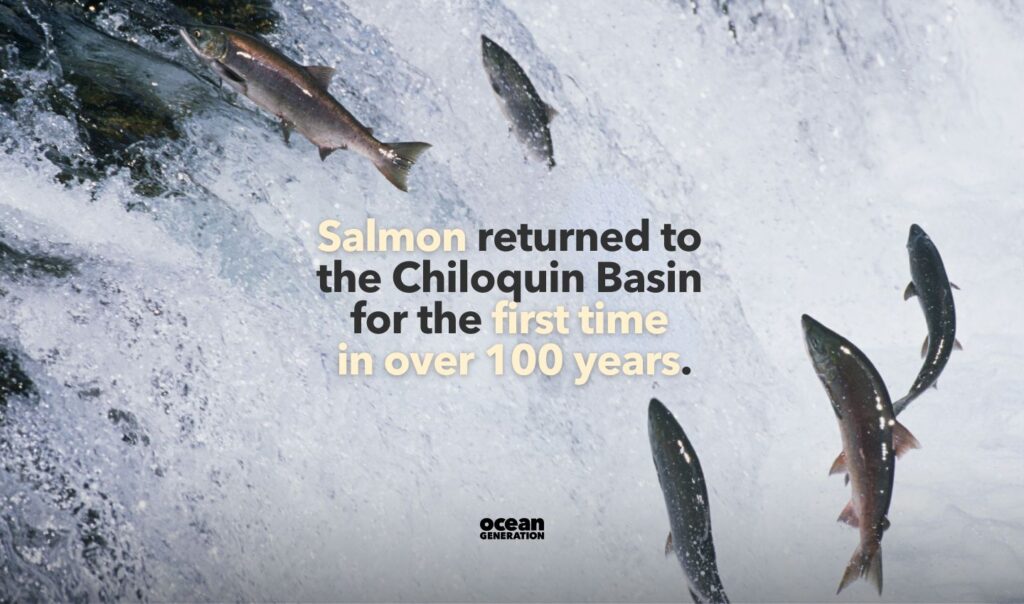
This year, the salmon returned to the Chiloquin Basin for the first time in over 100 years.  

โ€œA hundred and fifteen years that they havenโ€™t been here, and they still have that GPS unit inside of them. Itโ€™s truly an awesome feat if you think about the gauntlet they had to go through.โ€ said the visibly giddy Klamath Tribal Chair William Ray, Jr.

Salmon returned to a river in California after the removal of a dam.

This is a story mirrored elsewhere in the world too โ€“ salmon returned to the river Don in England for the first time in two centuries this year.

As we explored in some articles earlier in 2025, rivers and residents like salmon are vital in connecting different ecosystems.  

Hydropower can prevent the salmon migrating and breeding in their ancestral waters and poison the rivers they grow up in. Losing that connection impacts the people and life all along the river.  

We need energy to reinforce our high quality of life. That used to come at the cost of our natural environment. However, we are more aware of that impact, and we are getting far better at diminishing it. Stories like this are sprinkled with glimpses of a bright future, in which humans can flourish with nature. 


This pattern – discovery igniting protection, protection enabling recovery – reflects how our relationship with nature has evolved over decades, not just this year.  

The Ocean wins of 2025 demonstrate a shift in our relationship: we are learning to value and safeguard our seas, and in return, the Ocean is proving its remarkable capacity to heal.  

In ten years, we hope stories of recovery and flourishing will dominate the narrative, as the need for more protection fades.  

Discovery is good too; it will always be fun to hear about new death-ball sponges and bumpy snailfish. 

* Energy Institute – Statistical Review of World Energy (2025) 

Narwhals and Unicorns: How the magic of the Arctic has changed

Subscribe

Monthly: Impact in your inbox.

OceanGeneration-Join

What deep-sea creature is the best Halloween costume?

Five deep sea creatures that make perfect Halloween costumes. Posted by Ocean Generation.

Trying to avoid spending money on a new Halloween costume youโ€™ll only wear once?

Trying to be environmentally friendly? Just got a last-minute invite to an Ocean-themed costume party? Just love the deep sea? We got you. These deep-sea creature costumes should help you bring the Ocean to the Halloween party. 

For the main event: dress up as an anglerfish 

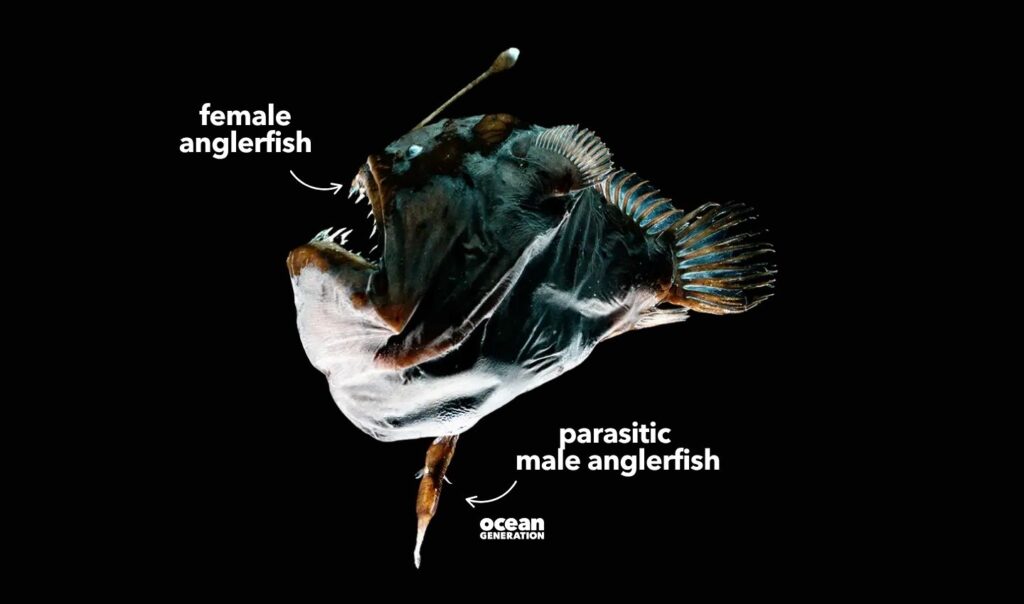
Anglerfish female and parasitic male. Posted by Ocean Generation.
Photo by Edith A. Widder

A classic. Anglerfish are the posterchild for the deep sea. Who hasnโ€™t dreamt of these creatures lurking in the depths, with huge teeth and a glowing orb of light to draw you in until it is too late to escape.  

Finding Nemo put this fish on the map for many of us (but it wasnโ€™t completely accurate โ€“ see here).  

We are using anglerfish liberally here:  there are many different animals that could be referred to as anglerfish, but we are talking about deep-sea species from the Ceratioidei family.

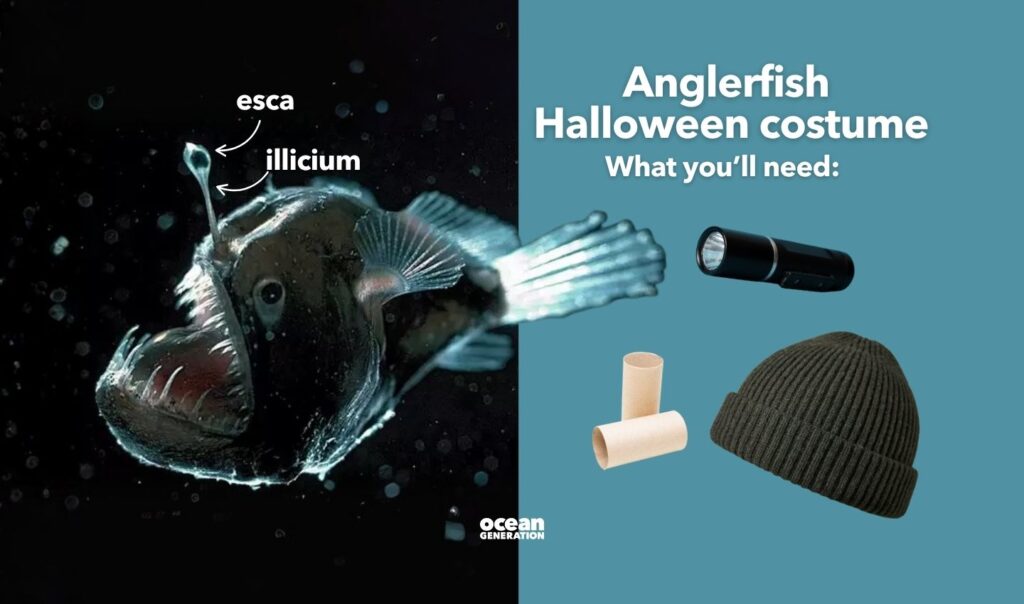
The name means horn bearers, referring to the modified dorsal spine that for many species has a lit up lure at the end.   Anglerfish host bacteria in their lure to generate light. This attracts fish, shrimp or squid close enough for the anglerfish to suck into its mouth, which is very big for their body.

Eyes too big for their stomach? Not likely for the anglerfish. They have extendable stomachs that can hold fish twice their size (useful if you arenโ€™t sure when your next meal will swim along).  

The main point to hit in your costume is the lure โ€“ the esca. Face paint for some big teeth would certainly add to the look.  

What you need for the anglerfish Halloween costume

  • Light source (headtorch, LED lights etc.) 
  • Something to hang it off 
  • Hat 
  • Black clothes 

I have done this outfit before on very little notice, using toilet rolls as the illicium (the modified dorsal spine tipped by the esca). Other good options are repurposed clothes hangers or just a good-sized stick from outside. Attach your esca to your illicium (some glue, blue tac or tape), attach your illicium to your hat and away you go!  

A battery pack on the back of the hat can act as a good counterweight to your lure.  

Now just watch your work entrance everyone around you, tempting them closer. Too close, and they risk your teeth.  

Optional extra: Add a parasitic male!  

We arenโ€™t telling you to invite your ex. But Anglerfish live in the deep Ocean, so when they get the chance for romance, they donโ€™t let it pass.  

The female anglerfish is far bigger than the male, who is little more than a sperm donor with a good sense of smell.  

This size difference is most on show in Kroyerโ€™s deep-sea anglerfish, Ceratias holboelli. Males can reach up to 1.3cm (while free-swimming), while the females are on average 77cm long.  

When he finds a female, he bites her and doesnโ€™t let go. Over time, he fuses with her, receiving nourishment in exchange for sperm. One female can have multiple males attached, and she can lay her eggs at her own leisure.  

To add your parasitic male, just stick an empty loo roll in a sock and staple/attach it to yourself. The more the merrier! 

For the witty one-liner: the cookiecutter shark 

This is a true Halloween shark, with the old nickname โ€œdemon whale-biters”.  

These little sharks gouge a circle of flesh out of animals, leaving bite marks as if cut out by a cookie cutter.  

Whales and dolphins are often spotted with the strange circular wounds, multiple if they were unfortunate enough to come across a group of cookiecutters. One sei whale was found with 138 โ€œcookiesโ€ cut out. Fortunately, these bitey biscuit bois are only half a metre long, so the damage they cause is limited.  

The cookiecutter doesnโ€™t need the dentist โ€“ rather than brushing their teeth, they lose the entire bottom row and usually swallow it with whatever meal they are enjoying (recycle some of the calcium).  

What you need for the shark costume 

What you need for a cookiecutter shark Halloween costume. Posted by Ocean Generation.
Cookiecutter shark photo by Blue Planet Archive/Alamy
  • A cookie cutter 
  • Cardboard/card 
  • A black scarf 
  • Brown clothes 
  • Optional: Chef hat 

Sometimes simplicity is the way. Wear brown clothes, hang a cookiecutter around your neck and fashion a shark fin to attach somewhere, with the cardboard.  

Add the black scarf around the neck, for the cookiecutters dark collar (this is one of the reasons they are also known as โ€˜cigar sharksโ€™). If you want to make it a couple’s costume, dress your partner as a whale with some bloody circles on them!  

Optional extra: glowing belly

Cookie cutters have photophores on their belly, to camouflage them from predators and prey by matching the little light that penetrates the depths.  

Why not add some flair to the costume? Add some glitter to the belly, or even better some glow in the dark stickers/paint or some fairy lights.  

N.B. Cookie cutters do not have a classic shark’s dorsal fin, only a small one towards the tail. The recommendation is for costume purposes only. Also, donโ€™t take any flesh out of your partner for this costume.  

For the flamboyant and fiery: the Pompeii worm 

Pompei worms live around hydrothermal vents in the Ocean. Posted by Ocean Generation.
Photo by National Science Foundation (University of Delaware College of Marine Studies)

In the depths of the Ocean, there are huge chimneys belching out black and white smoke. Hydrothermal vents are where the Ocean meets the hot inside of our planet. Think of thermal spas with the heat turned way up. Combine the extreme heat with the crushing pressures and cold of the deep sea, it doesnโ€™t sound like an appealing neighbourhood.  

But they host rich ecosystems, full of incredible creatures adapted to these extremes. Hydrothermal vents may have been the origin of life on our planet

The Pompeii worm shows a flamboyant distain for the usual limitations for life. Bright red, building a tube for itself to live in, it dances in water that would kill most. It can take the heat up to 55 degrees Celsius (131 Fahrenheit). But a woolly jumper of bacteria helps it stay cool, despite living in waters that can be over 100 degrees C (212 F). This is no normal jacket, as the worm has to keep it well fed with mucus in a symbiotic relationship*.  

Four long, red-orange tentacles crown its head, used for breathing. Pompeii worms have the highest specific gill surface area of any marine worm and have acidic blood to encourage the oxygen to dissociate from their blood cells in their extreme environment. What other animal can work a feather boa with acid blood? 

What you need for the costume 

Pompeii worm Halloween costume, inspired by deep sea animals. Posted by Ocean Generation.
  • Grey/white/black trousers or skirt 
  • Red/white long sleeve top โ€“ preferably fuzzy 
  • Red/pink/orange pipe cleaners/paper/feather boa 

Be bold. Channel your inner Pompeii worm and dance in and out of your sulfur-and-protein based tube. A fluffy or fuzzy top will show off your bacterial biofilm and use some pipe cleaners or paper to make some tentacles around your head. Smaller feeding tentacles to add a bit extra. 

For the dancers: Hoff or yeti crab Halloween costume 

Hoff and yeti crabs grow their own food in the deep sea. Posted by Ocean Generation, leaders in Ocean education.
Hoff crab: University of Portsmouth / Yeti crab: A. Fifis, Ifremer/ChEss, Census of Marine Life

Another resident of the hydrothermal vents are crabs. There are two we want to spotlight. The Hoff and Yeti crabs.  

Both are named after their appearance. One has a hairy chest and so bears the name of Baywatch legend David Hasslehoff. The yeti crab is the more general term for the Kiwa genus, of which the Hoff crab is a member. 

These downy decapods are covered hairs. What is the other key to their success in the deep? Dancing. 

The crabs wiggle and wave, which moves water over the hairs, feeding the colonies of bacteria that live there. These crabs grow their own food in their fur, so the fuzzier the better.  

What you need for the crab costume 

Hoff and yeti crab
Halloween costume
  • Fuzz โ€“ for the Hoff, a hairy chest, and for a Yeti crab, get your arms fuzzy 
  • Creative claws  
  • Snacks in a pocket 

The key for the crabs is owning your hair and rewarding your dancing. Every wiggle is a snack earner. Get fuzzy, and for added authenticity get some snacks in the fuzz for easy snacking.  

For the dramatic introvert: the vampire squid 

As another unfairly named creature, the Latin name of the vampire squid, Vampyroteuthis infernalis, literally means vampire squid from hell.  

Red eyes, black or red colouration, and spikes lining their arms (incorrectly known as tentacles), living in the abyssal depths of the Ocean. You can see what they were going for.  

Truly a survivor, these cephalopods live between 600m and 900m and can thrive where others canโ€™t – oxygen minimum zones. These parts of the Ocean donโ€™t have enough oxygen for most organisms to breathe. The vampire squid can survive where oxygen saturation is as low as 3% (the usual oxygen saturation in air is 21%).  

If something does dare to get in their personal space, the vampire squid has a lesson for all of us: when stressed, be a pineapple.  

The vampire squid will โ€˜invertโ€™ itself, pulling its arms over its head, covering its photophores and revealing the spiny projections (known as cirri) underneath.  

The glowing tips of its arms are held far above the head to draw attacks away from where they could do serious damage. The arm tips can grow back, so can be a handy (if youโ€™ll pardon the pun) distraction.  

What you need for the squid costume 

What you need for the vampire squid Halloween costume. Posted by Ocean Generation.
Vampire squid photo by Monterey Bay Aquarium
  • Loose black or red clothing, ideally a cape 
  • Cardboard to make some spines 
  • Lights/sparkles 
  • Fins on the side of the head 
  • Red eyes 

To embody the vampire squid, you need your own space. Space to let your cloak free. Line the inside with your cirri (the spines), in case of encroachment by unwanted parties. Coloured contacts or red eye makeup to give that squid from hell look. 

Have fun with your lights on this one โ€“ vampire squid can control their own light show. Lights over the cloak and in your hands can make an entrancing look, ready to be muffled and switched to a spiny dark outer should the mood change.  

Optional extra: Glitter juice 

If the pineapple pose doesnโ€™t work, a vampire squid has a secret weapon. A sticky cloud of bioluminescent mucus, which they can squirt at offending parties. This glowing goo can dazzle while the vampire squid escapes or stick to the transgressor and light them up for up to 10 minutes. Ten minutes is a long time to wait to see what else can see you in the dark Ocean.  

A spray bottle, with some (eco-friendly) glitter mixed with water will give you your last line of defence.  

*Grime, J. P., & Pierce, S. (2012). The evolutionary strategies that shape ecosystems. Wiley-Blackwell.

Narwhals and Unicorns: How the magic of the Arctic has changed

Subscribe

Monthly: Impact in your inbox.

OceanGeneration-Join

How do international treaties get created?

How international treaties get created? Explained by Ocean Generation, leaders in Ocean education.

Here are international treaties: explained.  

There have been a few international treaties, like the High Seas Treaty or the Global Plastic Treaty, that impact the Ocean, but in a world of complex language and changing timelines, we wanted to make the process make sense.  

The start of any treaty: Agreeing there is an issue 

The first thing to understand is that the process of international negotiation is rarely a quick one. One of the fastest processes was the Montreal Protocol, the treaty to protect the ozone layer, which moved from initial scientific discovery (1973) to being signed (1987) in just 14 years.  

The process of an international treaty is kicked off by proposal โ€“ a member state, or more commonly a group or coalition of states, can introduce a resolution to a governing body (such as the UN General Assembly, the UN Environment Programme etc.).  

This step is about agreeing there is a problem that needs solving.
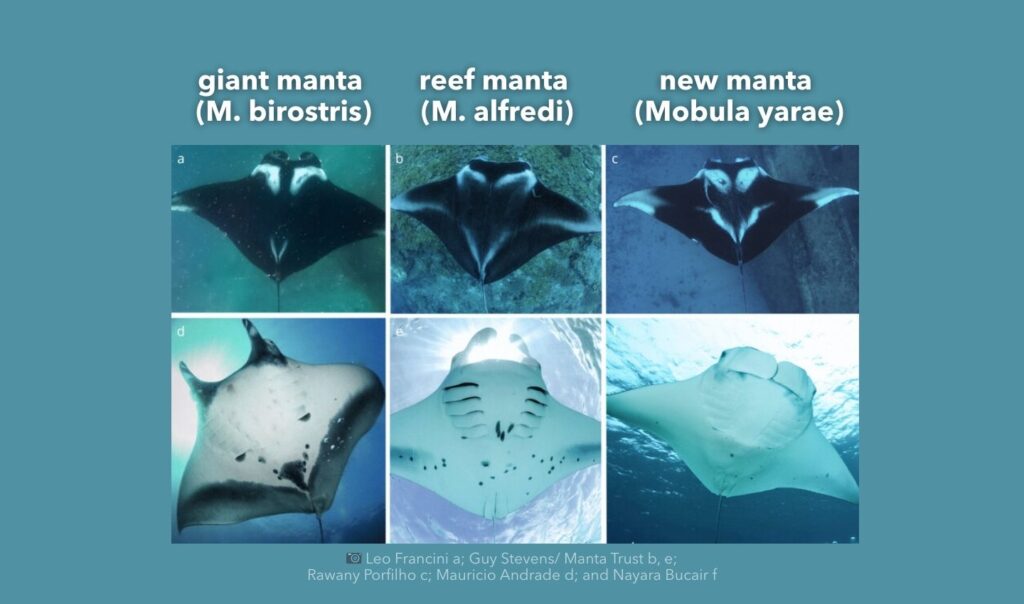
How do international treaties work? Explained by Ocean Generation.

The mandate: Permission to negotiate 

So, weโ€™ve agreed โ€“ we have a problem that needs solving. The UN governing body adopts (votes on and approves) the resolution, which is a statement of intent.
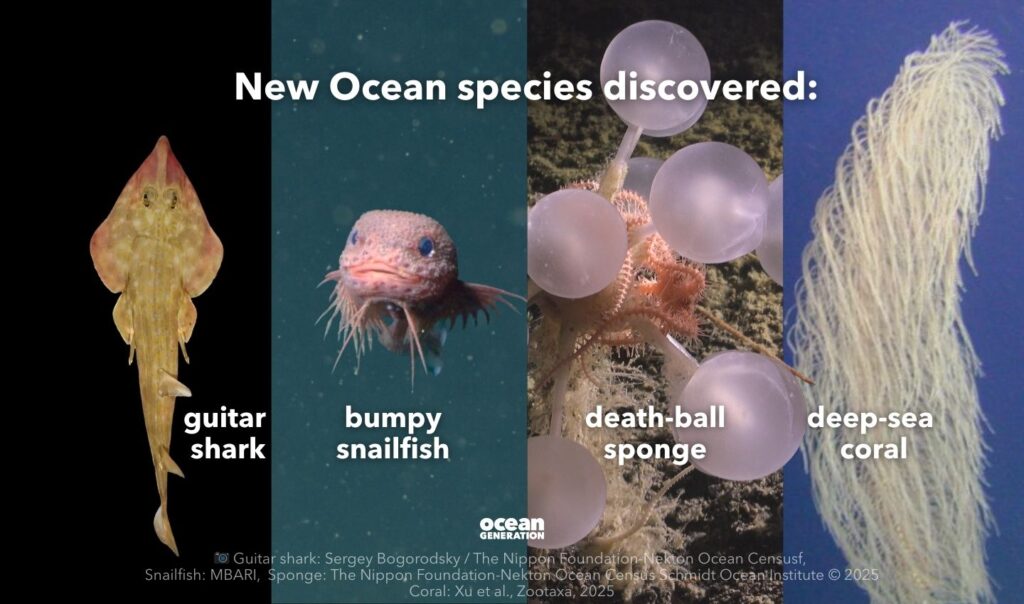
The mandate will decide the scope of the agreement โ€“ is it going to make a legally binding agreement or a voluntary one, a regional or international?  

This gives the mandate to begin negotiations.  This usually means creating a committee for international negotiation โ€“ an International Negotiating Committee (INC) if you will.  

Then the fun begins.  

The hard part: Reaching consensus with negotiations 

The INC will have a series of meetings, attended by states and โ€œobserverโ€ parties โ€“ non-governmental organisations, industry groups and scientists amongst others.  

In these meetings, they will negotiate the text of the agreement. Wording is crucial, especially for a legally binding agreement, so agreeing a draft text is usually the longest stage.  

This stage is ended when consensus is reached: the vast majority of parties are happy with the contents and phrasing of the text. The text would then be adopted (voted on and agreed, in treaty language) and is open for signatures and ratifications.  

What signing or ratyifying a treaty means? Explained by Ocean Generation.

What does it mean to sign or ratify a treaty

States can sign an agreement or ratify it. Signing it is an announcement of intent, it isnโ€™t binding but it shows that a state intends to ratify. They will often sign as a placeholder while the relevant domestic processes are taken.  

Ratifying is the full involvement (legal obligation) to the agreement, whatever it may say.  

Most agreements will have a minimum number of ratifications before it comes into effect. Once enough states have ratified, the treaty will become reality. States can ratify after the treaty is in effect โ€“ latecomers are always welcome.  

Implementation: From agreement to action 

Once the treaty exists, a Conference of the Parties (COP) or Meeting of Parties (MOP) will take place to oversee progress, amendments and compliance. The regularity of meetings varies.  

How collective decision-making works: A practical example 

Imagine you live in a house with a number of other people and the heating breaks.  

First, one (or more) of you could raise this in the house group chat. You present evidence of the issue (the heating doesnโ€™t come on, and the house is cold). Some housemates may have a warm room, and donโ€™t agree initially. More evidence may be required โ€“ bring in a GP to talk about increased risk of illness or put some thermometers around the house. 

When the housemates agree the heating is broken, and they would be better off if it was fixed, they agree to have a house meeting (or five) to discuss how to go about fixing it.  

Is it a plumbing issue or an electrical one? Who should pay for it? If one housemate uses the heating all the time while others use less, should they pay more? To avoid future heating problems, what should the temperature be set at? This happens at the pub so, it takes a while.

Then, the plan is all sorted, but to get the ball rolling everyone needs to give a go-ahead. Five out of seven thumbs up in the group chat is the green light.  

It may take a couple months while people save from their pay checks, but finally there are five thumbs up and the heating can get fixed.  

The last two were grumbling about the hot water use but gave the thumbs up later on so they can use the heating.  
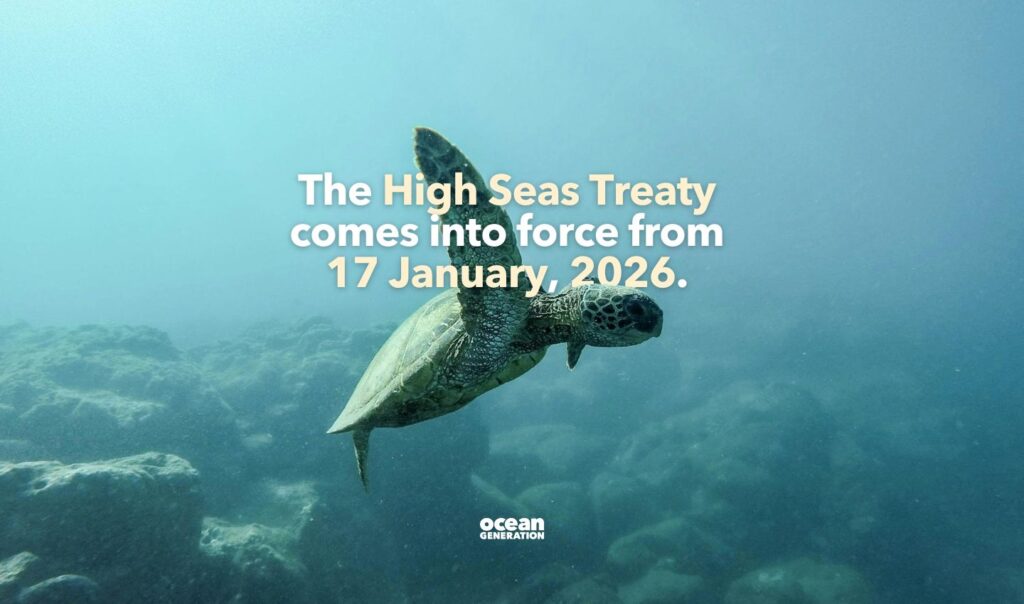
Success Story: How the Montreal Protocol was created to protect the ozone layer 

The Montreal Protocol is one of the biggest wins in international cooperation. In the 1970s, scientists Frank Sherwood Rowland and Mario Molina started to hypothesise that chlorofluorocarbons (CFCs) were depleting the ozone layer.  

CFCs were a replacement for toxic refrigerants used in the 1920s, developed in the lab. They were used in aerosol sprays and any units needing refrigerant โ€“ refrigerators, air conditioners, cars, water chillers, for example.  

The depletion of the ozone layer was shown to result in an increase in UV-B radiation, leading to higher rates of skin cancer and damage to crops and marine phytoplankton (the little guys producing over 50% of our oxygen).  

Aerosol and halocarbon industries lobbied against regulation. A board member of a company with 25% market share in CFCs, was quoted as calling the hypothesis, โ€œa science fiction tale…a load of rubbish…utter nonsenseโ€.  

The treaty text was agreed on 16 September 1987, with the condition that it would come into force if 11 parties had ratified by 1 January 1989. 

It met this condition and has since been ratified by all 198 parties in the UN, becoming the first treaty to do so.  

Since the treaty, the ozone layer has been recovering and is projected to reach 1980s levels between 2040 for most of the world and 2066 for Antarctica.  

Success story of the Montreal Protocol.

Narwhals and Unicorns: How the magic of the Arctic has changed

Subscribe

Monthly: Impact in your inbox.

OceanGeneration-Join

What is the Global Plastics Treaty?

What is the Global Plastics Treaty? Explained by Ocean Generation.

The Global Plastics Treaty refers to the (currently undefined) international agreement by which the countries of the world hope to reduce plastic pollution. 

How far have we got? Progress in the Global Plastic Treaty talks

In 2022, 175 countries of the world signed an agreement that declared: plastic pollution needed to be addressed. Stronger than that, plastic pollution should be ended.  

To meet this goal, countries agreed on a series of meetings across the globe to discuss and negotiate how to end plastic pollution and write it into international law (a treaty). 

Five meetings were planned, with the treaty aimed to be finalised by the end of 2024.  

This agreement created the International Negotiating Committee (INC) which first met in Punta del Este in Uruguay. Subsequent meetings happened in Paris, France; Nairobi, Kenya; Ottawa, Canada; and Busan, Korea. 

By the end of the fifth meeting, no agreement had been reached for the Global Plastics Treaty, so another (INC5.2) was scheduled for August 2025 in Geneva. However, this meeting also ended with no treaty. 

Timeline of the Global Plastics Treaty. Posted by Ocean Generation.
Timeline by Will Steen

What is stopping a treaty being agreed? 

For the treaty to come to life, all countries must agree on the terms, so while some disagree there will be no treaty.  

The main point of disagreement is whether making new plastic (plastic production) should be limited within the treaty. Countries are split largely into two groups, the High Ambition Coalition and the Global Coalition for Plastics Sustainability. 

What is the High Ambition Coalition?  

There is a large group of countries (around 100) in a group, called the High Ambition Coalition (HAC).  

The HAC has been pushing for the plastics treaty to include plastic production limits โ€“ reducing the amount of new plastic made. Before INC5.2 the HAC published a โ€œwake-up callโ€ at the United Nations Ocean Conference at Nice in June 2025, outlining a โ€˜wishlistโ€™ of five points: 

  • Limits on plastic production (to be regularly adjusted), and reporting on production, import and export of primary plastic polymers 
  • Phase out most harmful plastic products and chemicals of concern 
  • Improve the design of plastic products to minimise environmental and human impacts 
  • Financial support to support less developed countries in the transition 
  • A treaty responsive to changes in evidence and knowledge 

What is the Global Coalition for Plastics Sustainability

Another group of countries formed the Global Coalition for Plastics Sustainability (also known as the Like-Minded Group of Countries).  

A statement from a member country outlined the focus: 

โ€œThe [Global Plastics Treaty] should pave the way for improving the waste management systems in general, and to promote environmentally safe and sound management of hazardous plastic wastes, and to reduce uncontrolled hazardous plastic pollution.โ€ 

They want a bottom-up approach, prioritising dealing with plastic waste.  

What's next for the Global Plastics Treaty? Explained by Ocean Generation.

What do major businesses think of the plastics treaty? 

Businesses that produce and use plastic are key to tackling the plastic pollution problem. 

The UK hosted a roundtable with major business in June 2025 and produced a statement. It called for the plastics treaty to address the whole lifecycle of plastics, amongst other things. 

โ€œAs businesses and financial institutions, we stand ready to mobilise significant investments, and engage with the companies we invest in, towards achieving the objectives of the legally binding instrument, including towards innovation and infrastructure.โ€ 

Other businesses, such as fossil fuel companies (99% plastics are made from fossil fuels) take a different view:  

โ€œWhile there have been calls for production caps or bans, itโ€™s been reassuring to hear leaders share their belief that such measures could deprive the world โ€“ particularly the developing world โ€“ of the untold benefits plastics deliver in terms of health, food safety, the environment, the energy transition and more.โ€ – Exxon Mobil President  

Whatโ€™s next for the Global Plastics Treaty? 

The division has been entrenched from early in the process, with little movement on either side. It has led to questions about the process, and where to go next. Here are some options: 

  1. The process is changed to being decided by vote rather than by consensus, to make progress despite the disagreement of a small minority 
  2. The process continues via other means. For the Ottawa convention on landmines, a number of countries compiled texts outside of the process, that were then agreed upon. We could see this happening, for example, with the High Ambition Coalition.
  3. Another round: INC5.3 to try again! A (currently unnamed) country has offered to host, but has said they will not fund it. 

While the gears of global negotiation can feel like they turn slowly, they are turning. Read more about how international treaties work here. 
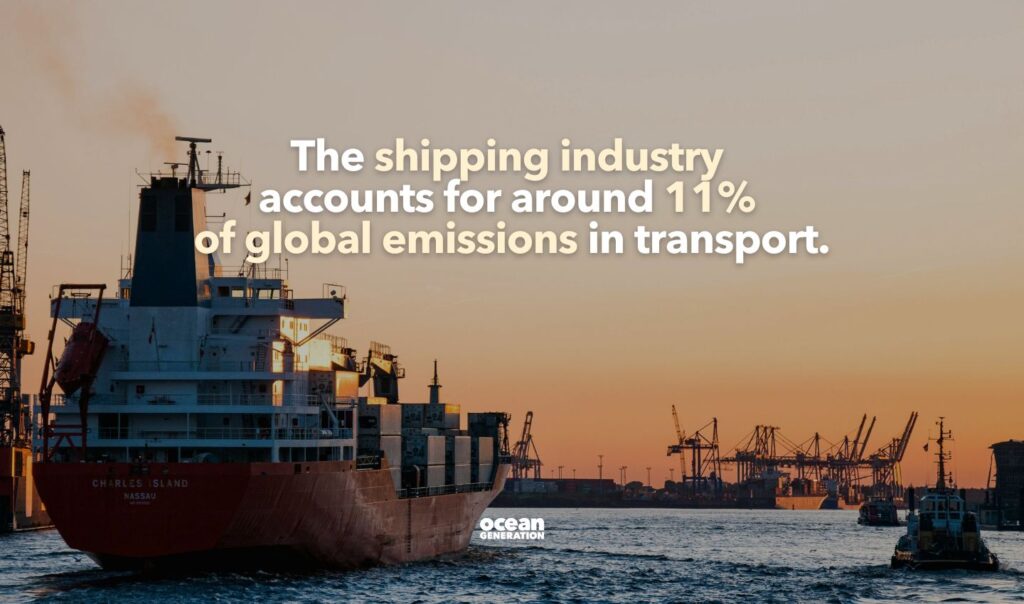
These countries have agreed that ending plastic pollution is an important issue. We want a world without the damage of plastic pollution.  

The Global Plastics Treaty is the representation of international intent. If it does produce legal guides to end plastic pollution, it will speed up progress. That it hasnโ€™t yet is not going to stall momentum.  

Plastic pollution is an international target.  

The Global Plastics Treaty aims to end plastic pollution. Posted by Ocean Generation, leaders in Ocean education.

Narwhals and Unicorns: How the magic of the Arctic has changed

Subscribe

Monthly: Impact in your inbox.

OceanGeneration-Join

What is the High Seas Treaty?

What is the High Seas Treaty? Explained by Ocean Generation, leaders in Ocean education.

Everything you need to know about the High Seas Treaty 

Officially, it is the Agreement on the Conservation and Sustainable Use of Marine Biological Diversity of Areas beyond National Jurisdiction. It is known colloquially as the High Seas Treaty. Or, BBNJ (biodiversity beyond national jurisdiction) Agreement.  

It entered force on 17 January 2026, 120 days after receiving the necessary 60 ratifications on the 19 September 2025.

What are the high seas

The high seas refer to around 64% of our Oceanโ€™s surface.  

In 1958, 63 countries signed the Convention on the High Seas, defining the โ€œhigh seasโ€ as the Ocean not within territorial waters.  

In 1982, the United Nations Convention on the Law of the Sea (UNCLOS) was signed, establishing exclusive economic zones (EEZs) reaching 200 miles out to seaโ€“ each country has sovereign rights (โ€˜ownershipโ€™) to the Ocean and seabed within 200 miles of its coast.  

The rest of the Ocean, including the water column and โ€œthe Areaโ€ (the seabed outside these EEZs), are the high seas. 

What does the treaty do?  

What does the High Seas Treaty do? Posted by Ocean Generation.

What is the process

The agreement can be traced back to December 2017, when the United Nations General Assembly voted to start creating the High Seas Treaty.

The agreed-upon five meetings (with a gap due to COVID-19) failed to produce an agreement.  

In March 2023, at the sixth meeting, the text of the agreement was finalised. The treaty was open for signatures for two years, from 20th September 2023, until 20th September 2025.  

68 countries immediately signed the agreement, and another 13 signed in the two days after. 

Palau was the first country to ratify, in January 2024.

At the United Nations Ocean Conference in June 2025, there were 20 signatories and 19 countries ratified, bringing the total number to 51. 

Whatโ€™s the difference between signing and ratifying

Signing the agreement and ratifying are not the same. Signing is announcing the attention to ratify. Ratifying the agreement means committing to the agreement officially.  

There is no deadline on ratification after signing; Parties can ratify at any point. Only Parties that have ratified the treaty are legally bound by it, and able to enjoy the benefits.  

The High Seas Treaty will come into force January 2026. Posted by Ocean Generation.

When did the High Seas Treaty come into force

On 19 September 2025, Morocco became the 60th country to ratify. This initiated a 120 day countdown, which ended on January 17th 2026. From then, it is legally binding (for those who have ratified).  

A year on, the first Conference of the Parties (COP) will meet to discuss high seas conservation, such as identifying the areas to protect. Belgium and Chile have submitted bids to host the Secretariat, and Chile has included a suggestion for the first high seas MPA.

Why protecting the high seas is so important 

The high seas used to be out of our reach. Untouchable and unaffected by human activities. But in just the last sixty years or so, our technology has improved, this vast wilderness has become far less wild.

This has enabled us to benefit from the Ocean beyond our national borders. Fishing flotillas can travel the world and cargo ships cris-cross the Ocean. This global reach โ€“ impossible to our grandparents โ€“ has changed our relationship with the Ocean.  

Without responsibility or ownership over the high seas, everyone has an incentive to extract as much as they can before anyone else. In just six decades, this free-for-all has led fishing stocks being depleted, marine animals being exposed to large amounts of noise from marine traffic and pollution accumulating out at sea.  

The High Seas Treaty aims to solve this and enables the protection of important marine areas that donโ€™t belong to any single nation. It enables the world to take responsibility for the wild Ocean. 

A common misconception is that the end goal of conservationists and the marine industry (such as fishing and tourism) are incompatible. But healthy fish stocks are all a fisherman asks for, flourishing ecosystems pull in tourists and rich biodiversity offers untold discoveries and advances in pharmaceuticals and engineering to name but two.

Protecting the Ocean means letting it thrive, and we all enjoy the boon of a thriving Ocean.  

The High Seas Treaty creates an opportunity. An opportunity to nurture our Ocean and share the benefits from it.  

Ocean Generationโ€™s Statement on the High Seas Treaty:  

โ€œWe are delighted to hear that the UN High Seas Treaty has finally become a reality. 

A healthy Ocean is vital for the survival of all living things, and this is the message we continue to deliver through our work at Ocean Generation. Protecting 30% by 2030 must, however, be seen as a minimum requirement. 

We view this agreement as a starting point. The Ocean is our ally in the fight against climate change and we must stop underestimating its role in our survival.โ€ 

Jo Ruxton MBE  
Founder of Ocean Generation 

Protecting the Ocean means letting it thrive. Posted by Ocean Generation.

Narwhals and Unicorns: How the magic of the Arctic has changed

Subscribe

Monthly: Impact in your inbox.

OceanGeneration-Join

How can we clean up plastic pollution in the Ocean?ย 

How can we clean up plastic pollution in the Ocean? Posted by Ocean Generation.

Why do beach cleans actually work: Explained. 

An army of passionate people take to the beach, litter pickers in hand. Sea spray in their hair and sand under their nails, they comb the beach. Their bags fill with cigarette butts, plastic bottles and crisp wrappers. Spirits are high, notable pieces of rubbish are held up with announcement.  

As the sun sets, the beach seems lighter, relieved of the weight of rubbish. The cleaners look over the coast with proud eyes at a job well done.  

But as the night draws in, so does the tide. When the sun rises again, it unveils a plastic-laden beach once more. The Ocean has coughed up some of its burdens.  

What is the point in beach cleans? Are we rearranging deck chairs on the Titanic or do they actually help combat Ocean pollution? 

How bad is the Ocean plastic problem?ย 

Ocean plastic is increasing. Many scientists have done deep dives into the science of knowing how much. While itโ€™s challenging to measure exactly how much plastic is in the Ocean, we know that as plastic production increases, so does plastic pollution in the Ocean.  

The Great Pacific Garbage Patch is a myth. Explained by Ocean Generation.

There arenโ€™t great islands of plastic floating in the Ocean (even the Great Pacific Garbage Patch is a myth). But we are creating a plastic soup. Microplastics fill the Ocean, with some โ€˜croutonsโ€™ of bigger floating plastic.  

This plastic can kill wildlife, carry toxins and enter the food chain โ€” all the way up to us. 

Itโ€™s obvious: we all want less plastic in the Ocean. The question is how to achieve that.  

What impact do beach cleans actually have?ย ย 

A beach clean is more than just a fun day out. They do a whole load of good. 

Firstly, they are good for us. Beach cleans (and most coastal activities) have been associated with positive mood and improving our understanding of the Ocean.  Combine a beach cleanup with some rock pooling and thatโ€™s a brilliant afternoon. Imagine all the things you can find! We feel better cleaning our beaches.  

Beach cleans are a chance for people to come together and make a tangible contribution. They act as displays, raising awareness for our pollution problem and encouraging more engagement. A snowball effect. 

Beach cleans provide immediate benefit to the natural world too. Removing plastic from the beach takes away its threats straight away, and removes the future threats as well.  

Plastic on the beach is exposed to the stresses and strains of the Ocean. Waves breaking, rubbing against the sand and rocks, the sun beating down. All these break up the plastic into smaller micro- and nano-plastics. Removing it before that stage is a lot easier. 

Our understanding of the journey of plastic waste is evolving. Recent studies suggest that the vast majority (88% is the quoted figure) of plastic in the Ocean remains floating close to shore. This means our beaches take the brunt of the plastic problem. But that also means itโ€™s accessible: We can remove the majority of the problem with ease and stop it getting worse.  

Beach cleans have a great impact. Posted by Ocean Generation.

Beach cleans treat the symptoms without addressing the illness.ย 

Beach cleans are not the whole answer. You canโ€™t keep bailing a sinking boat out and expect to float, until you bung the hole. A beach clean treats the symptoms without addressing the illness.  

We need more than litter-pickers.  

What are the other allies in the battle against Ocean plastic?ย 

The closer to source of plastic pollution we can get, the better. Try filling a glass from someone pouring three stories above you โ€“ a lot more water gets spilled compared to just filling from the tap.  

Single use plastic bans have shown to be effective in reducing litter. Increasing the responsibility of plastic producers for the end of their products lives would motivate innovation and stop plastic becoming litter at all. A circular economy would prevent the demand for oil to produce more and reduce the amount of plastic that becomes rubbish.  

As consumers, we also need to rethink how we use plastic.  

How can we change our relationship with plastic? ย 

Moving away from a single-use plastic world is, honestly, going to be tricky. We live in a world where convenience is king. Single-use plastic is very convenient. But there are solutions already working. 

Deposit return schemes have proved to be highly effective in increasing the collection rates of plastic bottles. When you buy a drink in a plastic bottle, for example, a small extra fee is paid, which is returned when the bottle is returned. For one scheme, 94% of bottles were returned compared to 47% without a scheme.  

Moving away from single-use plastic is tricky. Posted by Ocean Generation, leaders in Ocean education.

Nearly every major manufacturer (98%) now has commitments to reduce plastic packaging. Whether this represents genuine change or sophisticated greenwashing remains to be seen, but consumer pressure and regulatory requirements are making plastic reduction a business imperative rather than a nice-to-have. 

The challenge lies in balancing reduction with practicality. Sometimes plastic packaging actually reduces overall environmental impact compared to heavier alternatives – it’s the end-of-life management that needs sorting. 

The uncomfortable reality of waste management

Here’s the uncomfortable truth: much of Ocean plastic pollution originates from countries with limited waste management systems. Sub-Saharan Africa, for example, averages 44% waste collection rates compared to 98% in high-income countries. It’s rather difficult to recycle rubbish that’s never collected in the first place. 

We canโ€™t simply take Western waste management systems and apply them exactly as they are in other countries. Locally managed, decentralised circular economy models – using local resources and creating local markets for recycled materials – show more promise than imposing one-size-fits-all solutions. 

Is making plastic expensive a solution to pollution?ย 

Governments wield powerful economic tools: taxes on single-use plastics, subsidies for recycling infrastructure, and extended producer responsibility schemes that make manufacturers pay for their products’ end-of-life management.  

When virgin plastic (new plastic) becomes expensive and alternatives become cheap, behaviour changes remarkably quickly. But it has to be done without disadvantaging those that donโ€™t have access to a cheap alternative.  

So, back to the original question: Do beach cleans work?ย 

Yes. But they wonโ€™t stop the problem long term. Beach cleans deliver value beyond plastic removal. They’re powerful data collection exercises, providing crucial information about debris types and sources that inform policy decisions.  

Beach cleanups are also remarkably effective educational tools – nothing quite drives home the scale of plastic pollution like spending a Saturday morning filling bin bags with bottle caps. 

Removing larger plastic items helps reduce microplastics. Posted by Ocean Generation.

Perhaps most importantly, recent research from Norway found that removing larger plastic items from coastlines led to a 99.5% reduction in microplastics both on land and in water within a year. That’s a genuinely impressive result that suggests beach cleans have more direct environmental impact than critics assumed. 

โ€œRemoving plastic from the environment before it enters an active degradation phase, into microplastics, will reduce the formation of microplastics in the environment. The decrease of microplastic was over 99% in the water volumes we found on land. When we looked at seawater, the microplastics leaking into the sea was reduced by 99.9%,โ€ – Gunhild Bรธdtker, senior researcher at Norce 

Whatโ€™s the most effective strategy to deal with plastic pollution?ย 

The most effective strategy combines both approaches: upstream prevention (stopping plastic from becoming waste) and downstream management (dealing with what’s already out there). Think of it as both turning off the tap and mopping up the flood. 

Beach cleans work best when they inspire participants to tackle root causes – supporting deposit return schemes, choosing refillable alternatives, and pressuring companies to reduce packaging.  

The real measure of a successful beach clean isn’t just the bags of rubbish collected, but the number of people who leave determined to prevent that rubbish from appearing in the first place. 

Do a beach clean, but don't just stop there. Posted by Ocean Generation.

What should you do next to help tackle plastic pollution?ย ย 

So beach cleans wonโ€™t solve the problem. The good news is that effective solutions exist. The challenge is implementation at the scale and speed the problem demands. 

Join a beach clean, but don’t stop there. Support businesses with genuine circular economy commitments, lobby for deposit return schemes, and remember that every purchase is a vote for the kind of world you want to live in. 

The Ocean doesn’t care about our good intentions. It needs systemic change, and that requires all of us to think beyond the beach. All our jobs can be beach. 

Narwhals and Unicorns: How the magic of the Arctic has changed

Subscribe

Monthly: Impact in your inbox.

OceanGeneration-Join

Is plastic good or bad? What it means for you and the planetย 

Is plastic good or bad? posted by Ocean Generation.

A great scholar once said โ€“ life in plastic, itโ€™s fantastic. As one of the greatest revolutions in material engineering, plastic has undeniably changed the world.

But were we too successful? Did we end up with a committed friend who is always here for you โ€“ but really ALWAYS here, and we canโ€™t get them to leave?  

Letโ€™s look at our magic material, where plastic has done good and how we need to change our relationship with it.  

What is plastic 

Plastic can mean a lot of things.

We should be careful to define what we mean. Here, plastic is concerning synthetic or semi-synthetic materials composed primarily of polymers, that can mould, press or extrude into different forms. This feature, their plasticity, is key to their importance.  

Hereโ€™s a table summarising some of the most used plastics. Have a look around, I would guess, from wherever you are, you could see at least five of these. 

Polymer Abbreviation Examples of use 
Polypropylene PP Food packaging, automotive parts 
Low-density polyethylene LDPE Reusable bags, food packaging film 
High-density polyethylene HDPE Toys, shampoo bottles, pipes 
Polyvinylchloride PVC Window frames, floor covering, pipes, cable insulation 
Polystyrene PS Food packaging, insulation, electronic equipment 
Polyethylene terephthalate PET Beverage bottles 
Polyurethane PUR Insulation, mattresses 
ABS, elastomers, biobased plastics, PBT, PC, PMMA, PTFE, โ€ฆ Other Tyres, packaging, electronics, automotive, โ€ฆ
Fibres made of different polymers Fibres Textile applications but also in many other sectors 

Plastic is everywhere, from our food packaging to our computers, to our furniture. Our clothes, the paint on our walls, the tyres on our car; all have plastic in. So, letโ€™s look at why plastic has become so engrained in our lives.  

How does plastic save lives? 

Plastic has pioneered a revolution in medicine. Through its versatility, sterility, durability and low cost, plastic has made modern medicine more safe, accessible and effective. Plastic IS fantastic.  

Plastic has pioneered a revolution in medicine

Disposable plastic items such as syringes, IV bags and gloves prevent cross-contamination. Plastic has enabled minimally invasive surgeries, reducing recovery time and infection risks.  

Plastic prosthetics and implants can be printed or moulded to individual needs. Medical packaging made from plastic keeps drugs and equipment sterile (more on packaging later).  

A surgeon or trainee doctor can examine a 3D-printed organ to better understand the patient. Complex procedures can now be done through a single incision using flexible plastic implements. Medical imagery has advanced as machines made from plastic donโ€™t have the interference of metal. Due to the low price of plastic, everyone can benefit from better healthcare.  

Itโ€™s impossible to know how many lives have been saved by plastic.  

How has plastic helped our food systems? 

Food waste is a big environmental problem. 19% of food available to consumers is wasted, added to the 13% lost in supply chain.  

By the last attempt to calculate it, food waste made up 8-10% of annual global greenhouse gas emissions. In 2017, greenhouse gas emissions from food waste were estimated to be roughly the same as the emissions from the US and Europe combined

The UK and Japan are among the only countries to collect consistent food waste data. They have shown reductions of 18% and 31% respectively. Awareness, for consumers, is a powerful driver of behaviour change.  

Plastic can reduce food waste. Explained by Ocean Generation.

Plastic is a key ally in reducing food waste. 

Packaging reduces food waste and increases the shelf life of our food. Plastic packaging does this by stopping the aeration of food and providing thermal insulation. 

Of course, making plastic packaging produces emissions, but the food inside has a much bigger carbon footprint.  

Think of it this way: if plastic packaging stops your tomatoes going mouldy, you’ve saved all the emissions from growing, transporting, and processing those tomatoes – plus you’ve avoided the methane released when the tomato rots in landfill. The plastic wrapper can be the environmental hero, not the villain. 

One study found packaging innovations increased shelf life by 50% and cut food waste by 40%. Whilst they weren’t testing plastic specifically, it shows how crucial good packaging is. 

Take pork as an example. Yes, plastic foam trays create more emissions than butcher paper when they’re made. But only 5% of plastic-wrapped pork goes off, compared to 7-10% wrapped in paper. That means 35% less climate impact overall – the packaging emissions are nothing compared to a whole pig going to waste. 

This food preservation revolution has shrunk our world. A mango can now travel from Peru to Manchester and still be perfectly ripe when you bite into it. More food, travelling further, feeding more people – all thanks to a bit of clever plastic.  

The flipside of this is โ€“ do we need food travelling further? While food miles are a small part of food-related emissions, eating local is an easy way to reduce environmental impact.  

Plastic saves marine life. Posted by Ocean Generation, leaders in Ocean education

How is lightweight plastic doing its bit environmentally?  

Plastic is light, and strong. It has taken on roles previously performed by much heavier metals.  

A car fuel tank, for example, used to be made from steel, much heavier than plastics. A 10% reduction in vehicle weight can result in a 6-8% improvement in fuel economy. Plastics reduce the weight of a vehicle by up to 50%. This results in approximately 14 times lower greenhouse gas emissions than using a steel tank.  

In construction, the durability of plastic can be utilised. Due to the lighter weight, PVC pipes have much lower climate impact than concrete (45% less) and ductile iron (35% less). Every truck carrying plastic to the building site uses less fuel carrying PVC pipes. In water pipes, copper is recyclable but loses more heat than a cross-linked polyethylene (PEX) pipe. 

How is plastic saving marine life? 

There are many examples of plastic replacing consumer demand for natural products; saving marine life.

Tortoiseshell glasses are now made out of plastic, saving the hawksbill turtles who were harvested for their beautiful shells. How many trees are still standing because we have plastic furniture?  

Why do we call sponges sponges? Because they were originally the sea sponge, Spongia officialis, that we collected and used as a bath sponge. Replacing the sponges of the sea with plastic ones has alleviated another stress on our Ocean.

 Ivory’s another classic case. Before plastic, piano keys, billiard balls, and ornamental trinkets meant elephant tusks. Now, we get the same aesthetic from synthetic alternatives – and elephants get to keep their tusks. 

Plastic can replace natural products. Posted by Ocean Generation

What are the problems with plastic? 

Before we get too carried away with plastic’s positive impact on our planet, let’s address the elephant (with tusks) in the room – or rather, the gaps in our argument. 

Did plastic actually save those lives?  

Medicine improved dramatically alongside plastic adoption, but so did antibiotics, surgical techniques, and our understanding of infection control. We simply don’t know how many lives plastic specifically saved versus other medical advances happening simultaneously.  

We’ve built our entire food system around plastic packaging, then use that system to prove plastic’s necessity. It’s flawed logic. Considering the carbon emissions alone is one dimensional – what if we’d spent 70 years perfecting non-plastic preservation methods instead? We’ll never know – but it would be foolish to think plastic is the only solution.  

We’ve wrapped modern life around plastic like cling film around a sandwich – so tightly that peeling it away seems impossible. 

There are two key problems with plastic: 

Plastic has two big issues โ€“ its fossil fuel foundations and its longevity. The two mean that plastic can have a two-pronged impact environmentally.  

The perks of plastic havenโ€™t been lost on us, as a society. We canโ€™t get enough. Weโ€™ve gone from making 2 million tonnes of plastic in 1950 to over 400 million tonnes annually.  

Steel and cement are the only materials we produce more than plastic. Between 1950 and 2017, we are estimated to have produced over 9 billion tonnes of plastic. Half of that total was produced after 2004.

Hereโ€™s one of the issues – all the plastic weโ€™ve produced is still around in some form or another. Approximately 7 billion tonnes of it is waste. 

Medical masks were a signature of the COVID-19 pandemic. They blocked the spread of the virus, saved lives and helped get us back to normality. But, once used we threw them โ€˜awayโ€™. A back-of-the-napkin calculation estimates that in 2020, 1.56 billion face masks would enter the Ocean. That isnโ€™t a trade-off we (or our friendly neighbourhood Ocean creatures) should have to make.  

The vast majority of plastic is made from oil. It has a large carbon footprint, representing around 3.4% of global emissions through their lifecycle. A fossil fuel-free future isnโ€™t plastic wrapped.  

There are two key problems with plastic. Posted by Ocean Generation.

Are plastic alternatives the answer? 

It isnโ€™t that simple. Some alternatives are more emissions-intensive to produce, so if we maintain a single-use approach there will be greater environmental impact.    

The classic example is plastic bags to paper bags. Paper bags are approximately six times heavier than HDPE (plastic) bags, so have three times higher production emissions. Paper requires deforestation and lots of water use. Glass is energy intensive and heavy. There are no easy answers.  

Solutions, and their effectiveness, varies by region โ€“ in the US, PET bottles have the lowest impact by way of emissions, but in Europe it is aluminium, due to cleaner energy used to produce it and higher recycling rates. This also means the impact of a material can be lessened through wider changes (cleaner energy and higher recycling rates).  

Food packaging is an area of growing competition for plastic. Glass, metals and paper are long-standing packaging materials. Natural fibres and biopolymers are other possibilities, but they can be more energy intensive, more expensive and donโ€™t provide the same level of protection for the food. 

In medicine, alternatives require more time and energy to achieve the same levels of sterility, and often lack the advantages offered by the lightweight, malleable, cheap plastic.  

This material saves marine life. Posted by Ocean Generation, leaders in Ocean education

What is the answer: is plastic good or bad? 

Plastic is brilliant and has advanced modern society in a multitude of ways. Unfortunately, there were more skeletons in the closet than we realised. We have more information now than ever before, and more advanced technology is allowing us to come up with solutions to address plastic problems.  

There are no silver bullets here. But we need to change our relationship with plastic. One key attitude shift that should definitely change: single-use doesnโ€™t work at large scale. Regardless of material.  

Have a look at our article on how we can tackle the issue of plastic pollution and assess the effectiveness of beach cleanups.  

Ask yourself – if we started from scratch, with the knowledge we have now โ€“ how would we use plastic?  

Narwhals and Unicorns: How the magic of the Arctic has changed

Subscribe

Monthly: Impact in your inbox.

OceanGeneration-Join

How much plastic is in the Ocean? Depends who you ask.ย 

Plastic is at the heart of Ocean Generation; it is OGโ€™s OG.

Our founder Jo Ruxton MBE produced the award-winning documentary, A Plastic Ocean, and put plastic in the spotlight like never before. But it wasnโ€™t just showing people that plastic was an issue, it was showing that we didnโ€™t really understand the issue. 

Nine years on, weโ€™re taking a look at what we know (or donโ€™t) about plastic now.

How much plastic is in the Ocean? 

Somewhere between 0.13 million and 23 million tonnes of plastic enters our Ocean each year.  

Thatโ€™s quite a big range. Imagine your satnav saying your journey will take between 12 minutes and 2 weeks. Technically true, but not very helpful.  

So, why is this question so complex to answer? 

What are the estimates of plastic entering the Ocean? 

Here’s what the scientific heavy hitters reckon: 

*riverine emissions only 
โ€  all aquatic environments 

And then there’s OECD (2022): they predict that by 2060, 44 million tonnes of plastic will enter the Ocean each year. 

That’s a 30-fold difference between lowest and highest estimates.  

How much plastic is entering the Ocean? Explained by Ocean Generation.

Why are the plastic in the Ocean numbers so different? 

Letโ€™s visualise this better. Instead of trying to calculate the amount of plastic entering the Ocean, imagine that weโ€™re trying to calculate the amount of popcorn falling on cinema floors.ย 

Picture scientists trying to measure how much popcorn hits cinema floors for each film watched. Sounds simple? How would you tackle that?ย 

To compare this with our plastics range, our estimates could be 50kg to 1,500kg of popcorn annually.

Here’s how different research teams tackle the popcorn problem:ย 

The Jambeck Method: Cinema-Goer Profilingย ย 
Jambeck starts with the approximate number of people that go to the cinema. Then, she would factor in roughly how much popcorn each person would have and the โ€œmessy eaterโ€ rates, to get an estimate for how much popcorn ends up on the floor. ย 

The Lebreton/Meijer Method: Aisle Monitoringย ย 
These researchers use data from observation. Actually going to cinema aisles and collecting the popcorn.

They look at how much popcorn a group of people drop during a movie. Then, they predict how much would be dropped by all moviegoers. Meijer took the method further by visiting more cinemas.ย ย 

The Borrelle Method: Cinema Stocktakeย ย 
This method looks at the number of kernels purchased by cinemas. Using this as a base, they can predict how much gets sold to customers and predict how much will be spilled or dropped during handling and eating. ย 

This gives the amount present in cup holders, the floor of the lobby and hallway, as well as the cinema screen floor, so the numbers will be a bit higher.

The Zhang Method: Simulated Screeningsย ย 
Create a computer model predicting how much popcorn is dropped throughout the cinema. Go and check down the back of specific seats and compare the amount of popcorn found with the amount the model predicted would be there. Adjust and validate the model in line with the findings.

The OECD Method: Future Spill Forecaster ย 
It predicts how messy cinemas will be in 2060 based on rising ticket sales and supersized buckets.ย 

Why is it so challenging to estimate the amount of plastic in the Ocean?

What do the studies about assessing how much plastic is in the Ocean do differently? 

Each method tackles different bits of the popcorn (plastic) pipeline (the stages where popcorn (plastic) might be spilled on the floor). No wonder their estimates vary wildly. 

Bottom-up studies (like Jambeck and Borrelle) start with waste on land and model Ocean inputs. Top-down studies (like Lebreton, Meijer, or Zhang) start with plastic actually observed in seawater and work backwards to estimate how much is entering the Ocean. Like comparing cinema managers’ spillage predictions with cleaners’ floor surveys.

Interestingly, the bottom-up studies predict consistently higher plastic in the Ocean than studies using observed data. To use our analogy again: these studies might be overestimating how messy cinema goers are and so end up predicting too much popcorn on the floor. 

Plus, these studies use different years for their data. Jambeck is using data from 2010, while Borelle is using 2016 data. The data at the basis of their work is quite different.  

Are we counting all plastic that enters the Ocean?  

To show how much we donโ€™t know, a new study (July 2025) has highlighted nano-plastics. Nano-plastics are smaller than 1 ยตm, which is tiny. It is 1/75th of the width of your hair. Or โ€“ if you scaled a metre up to the size of a football pitch, a micrometre would be the width of your hair. Their size means they are very difficult to study.  

There has been debate that they can even exist, as it requires a lot of energy to break plastics up to that extent.  

This new paper from ten Hietbrink et al (2025) found nano-plastics from PET, PS and PVC (look at this table for the plastic acronyms) everywhere they studied across the north Atlantic.

The amount of nano-plastics they found are comparable to macro and micro-plastic, meaning we are missing a big piece of the plastic puzzle. If this study is accurate, it suggests nano-plastics make up 90% of the plastics in the Ocean by weight, compared to macro- and microplastic estimates. Turns out, our popcorn is shedding a lot of salt on the floor that we havenโ€™t been thinking about. 

Interestingly, the paper also highlighted the lack of nano-plastics from PE or PP sources. This could suggest a removal pathway or breakdown process we arenโ€™t aware of yet (which is really interesting). It serves as a reminder that we donโ€™t have the whole picture here. Who knows, maybe there are some ants eating some of the popcorn crumbs? 

How much plastic is produces each year? Posted by Ocean generation, leaders in Ocean education.

How much plastic is produced each year? 

For context, let’s look at the changes in plastic production over this time:  

Year Estimated Production Source & Notes 
2010~270 million tonnes PlasticsEurope (2011 report); includes thermoplastics, polyurethanes, thermosets, adhesives, coatings, sealants, and PP-fibres
2016~335 million tonnes PlasticsEurope (2017); reflects continued growth in Asia, especially China. 
2024~460 million tonnes  Based on extrapolation from OECD and UNEP trends; global plastic production is increasing at ~4% annually.  

Plastic production has increased by approximately 200 million tonnes over the past 15 years. This we can say with more confidence โ€“ we know how much we produce.  

What do we know about the amount of plastic in the Ocean?  

The Knowns:  

  • Plastic is accumulating in the Ocean  
  • The problem is growing โ€“ plastic production has doubled since 2000  
  • Rivers are major transport pathways of plastic 
  • Areas with poor waste management and high consumption of single use plastic have higher leakage to the environment
  • Fishing gear (as pollution) dominates remote Ocean areas, much land-based plastic remains close to shore 
  • Most plastic never reaches the Ocean  
  • We want to avoid more plastic entering the Ocean 

The Unknowns:  

  • Exactly how much plastic enters the Ocean 
  • Exact source breakdowns by region  
  • How much plastic is already out there in the natural environment 

Do the unknowns stop the need for action? 

Changes in plastic production. Posted by Ocean Generation.

What can we do about plastic pollution?  

Recent studies are showing that plastic pollution tends to stay in our coastal areas. Currents, winds and tides push plastic back against the coast. Why is this good? Because it makes it easy to clear up! It means that beach cleans are in fact a really useful tool to fight plastic pollution.  

Going back to our analogy: When the popcorn stays close to our seat, itโ€™s easy to get it off the floor again. And if everyone picks some up before it gets stamped into popcorn dust, it is much easier. 

We donโ€™t know exactly how much plastic is in the Ocean. However… 

Science isn’t about having all answers immediately โ€“ it’s about getting better answers over time. Does it really matter if 0.13 million or 12 million tonnes of plastic enter the Ocean annually?  

The scale of the problem might be debated, but the need to act isnโ€™t. Plastic in any amount is detrimental to the world we inhabit.  

While scientists debate over the amount of zeros, solutions remain largely the same: better waste management, smarter materials, improved recycling, reduced single-use plastics, and better fishing gear recovery.  

The uncertainty isn’t paralysing โ€“ it’s liberating. We don’t need perfect numbers to start fixing the problem. We just need to start. 

Each of us can reduce the amount of popcorn on the floor. By consciously buying less plastic you not only reduce plastic waste production but also signal to companies that less plastic is a customer preference.  

Picking up plastic from the beach will stop it being broken up by the waves, producing microplastics and nano-plastics, making the problem harder to solve.  

The little things matter. The big numbers donโ€™t change the picture.  

We don't know exactly how much plastic is in the Ocean. Explained by Ocean Generation.

Narwhals and Unicorns: How the magic of the Arctic has changed

Subscribe

Monthly: Impact in your inbox.

OceanGeneration-Join