What is the High Seas Treaty?

What is the High Seas Treaty? Explained by Ocean Generation, leaders in Ocean education.

Everything you need to know about the High Seas Treaty 

Officially, it is the Agreement on the Conservation and Sustainable Use of Marine Biological Diversity of Areas beyond National Jurisdiction. It is known colloquially as the High Seas Treaty. Or, BBNJ (biodiversity beyond national jurisdiction) Agreement.  

Last week, it reached 60 ratifications, the milestone required in order for it to become legally binding. It will enter force on 17 January 2026.  

What are the high seas

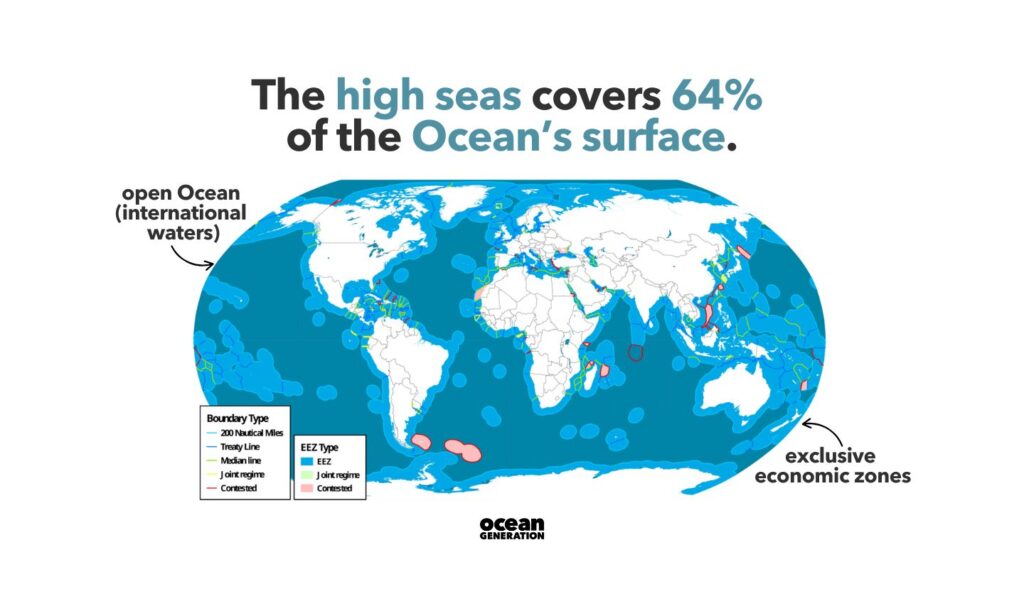
The high seas refer to around 64% of our Oceanโ€™s surface.  

Back in 1958, 63 countries signed the Convention on the High Seas, defining the โ€œhigh seasโ€ as the Ocean not within territorial waters.  

In 1982, the United Nations Convention on the Law of the Sea (UNCLOS) was signed, establishing exclusive economic zones (EEZs) reaching 200 miles out to seaโ€“ each country has sovereign rights (โ€˜ownershipโ€™) to the Ocean and seabed within 200 miles of its coast.  

The rest of the Ocean, including the water column and โ€œthe Areaโ€ (the seabed outside these EEZs), are the high seas. 

What does the treaty do?  

What does the High Seas Treaty do? Posted by Ocean Generation.

What is the process

The agreement can be traced back to December 2017, when the United Nations General Assembly voted to start creating the High Seas Treaty.

The agreed-upon five meetings (with a gap due to COVID-19) failed to produce an agreement.  

In March 2023, at the sixth meeting, the text of the agreement was finalised. The treaty was open for signatures for two years, from 20th September 2023, until 20th September 2025.  

68 countries immediately signed the agreement, and another 13 signed in the two days after. 

Palau was the first country to ratify, in January 2024.

At the United Nations Ocean Conference in June 2025, there were 20 signatories and 19 countries ratified, bringing the total number to 51. 

Whatโ€™s the difference between signing and ratifying

Signing the agreement and ratifying are not the same. Signing is announcing the attention to ratify. Ratifying the agreement means committing to the agreement officially.  

There is no deadline on ratification after signing; Parties can ratify at any point. Only Parties that have ratified the treaty are legally bound by it, and able to enjoy the benefits.  

The High Seas Treaty will come into force January 2026. Posted by Ocean Generation.

What comes next for the High Seas Treaty? 

On 19 September 2025, Morocco became the 60th country to ratify. This initiated a 120 day countdown, culminating on January 17th 2026. From then, any country that has ratified is legally bound by the contents.  

A year on, the first Conference of the Parties (COP) will meet to discuss high seas conservation, such as identifying the areas to protect. Belgium and Chile have submitted bids to host the Secretariat, and Chile has included a suggestion for the first high seas MPA.

As of 22 September 2025, 145 countries have signed the agreement, and 60 have ratified.  

Why protecting the high seas is so important 

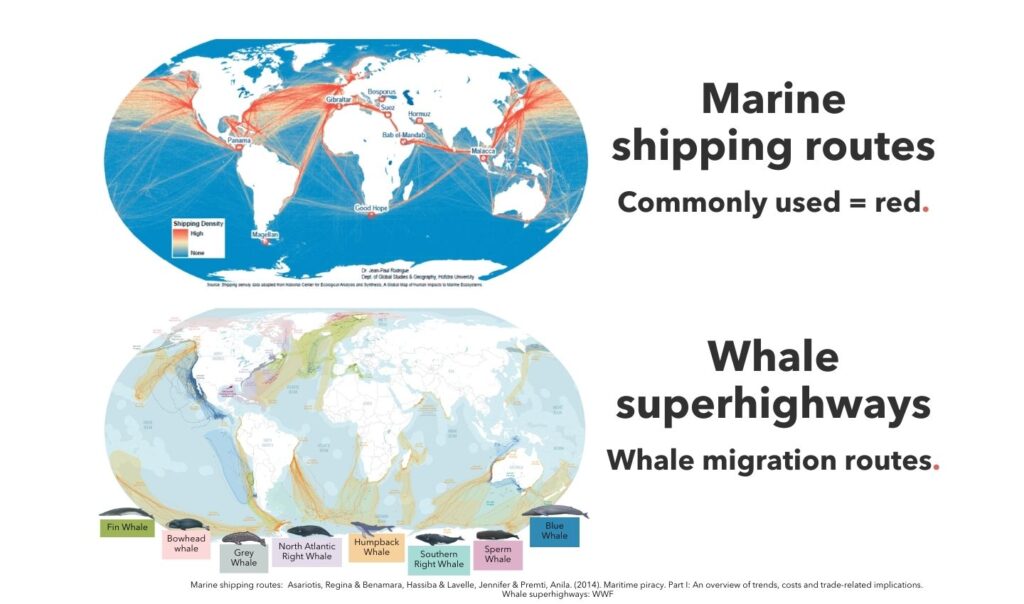
The high seas used to be out of our reach. Untouchable and unaffected by human activities. But in just the last sixty years or so, our technology has improved, this vast wilderness has become far less wild.

This has enabled us to benefit from the Ocean beyond our national borders. Fishing flotillas can travel the world and cargo ships cris-cross the Ocean. This global reach โ€“ impossible to our grandparents โ€“ has changed our relationship with the Ocean. ย 

Without responsibility or ownership over the high seas, everyone has an incentive to extract as much as they can before anyone else. In just six decades, this free-for-all has led fishing stocks being depleted, marine animals being exposed to large amounts of noise from marine traffic and pollution accumulating out at sea. ย 

The High Seas Treaty aims to solve this and enables the protection of important marine areas that donโ€™t belong to any single nation. It enables the world to take responsibility for the wild Ocean.ย 

A common misconception is that the end goal of conservationists and the marine industry (such as fishing and tourism) are incompatible. But healthy fish stocks are all a fisherman asks for, flourishing ecosystems pull in tourists and rich biodiversity offers untold discoveries and advances in pharmaceuticals and engineering to name but two.

Protecting the Ocean means letting it thrive, and we all enjoy the boon of a thriving Ocean.  

The High Seas Treaty creates an opportunity. An opportunity to nurture our Ocean and share the benefits from it.  

Protecting the Ocean means letting it thrive. Posted by Ocean Generation.

How do international treaties get created?

Subscribe

Monthly: Impact in your inbox.

OceanGeneration-Join

Is Seaweed the Secret to Ditching Plastic? Explained.

Is seaweed the secret to ditching plastic? Explained by Ocean Generation, leaders in Ocean education.

Plastics play an essential role in modern human civilisation. They are incredibly versatile, providing function in almost all aspects of our lives. 

Why plastic is a problem for us and the Ocean

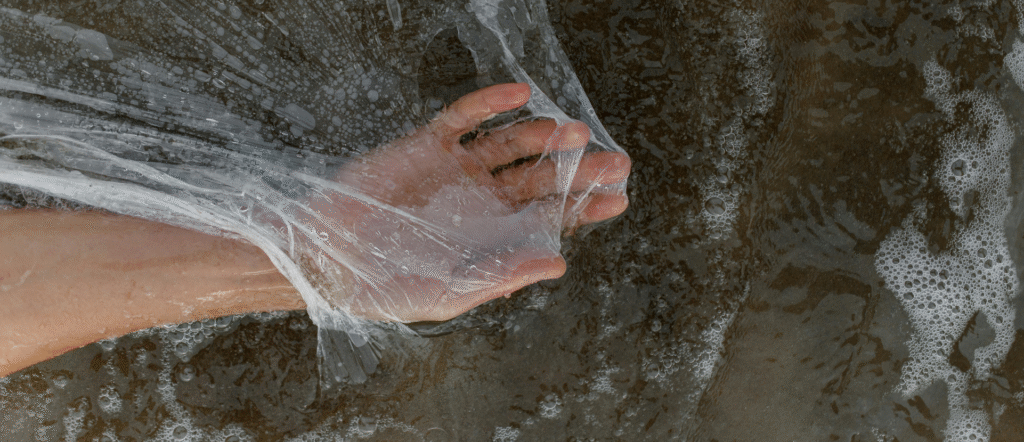
Fossil-based plastics are infamous for their long-lasting impact on the environment, taking up to hundreds or thousands of years to fully break up. Along the way, they harm wildlife and people both as large plastic items and microplastics. 

The impact of this is demonstrated perfectly in the Ocean, where wildlife can unknowingly eat or interact with plastics. It has been observed that every species of sea turtle has been affected by entanglement in plastic. 

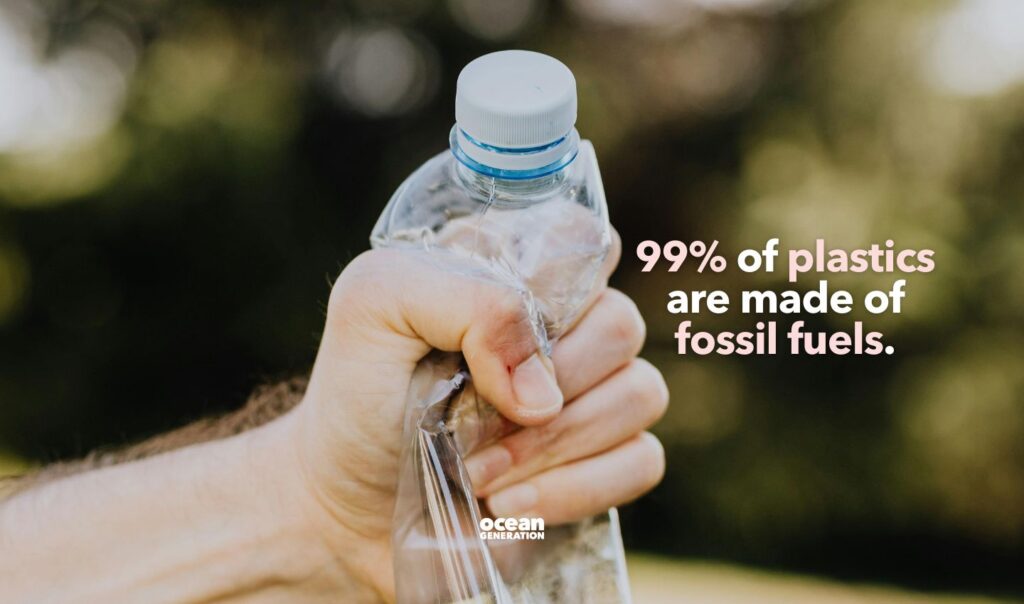
Plastics have another big problem. Theyโ€™re sourced from oil, which contributes to their damage to the environment. 3.4% of global emissions were contributed by the plastic lifecycle in 2019, with 90% of that being emissions from production and converting fossil fuels into plastic making materials. 

What's wrong with plastic - for us and the Ocean? Explained by Ocean Generation.

What are microplastics

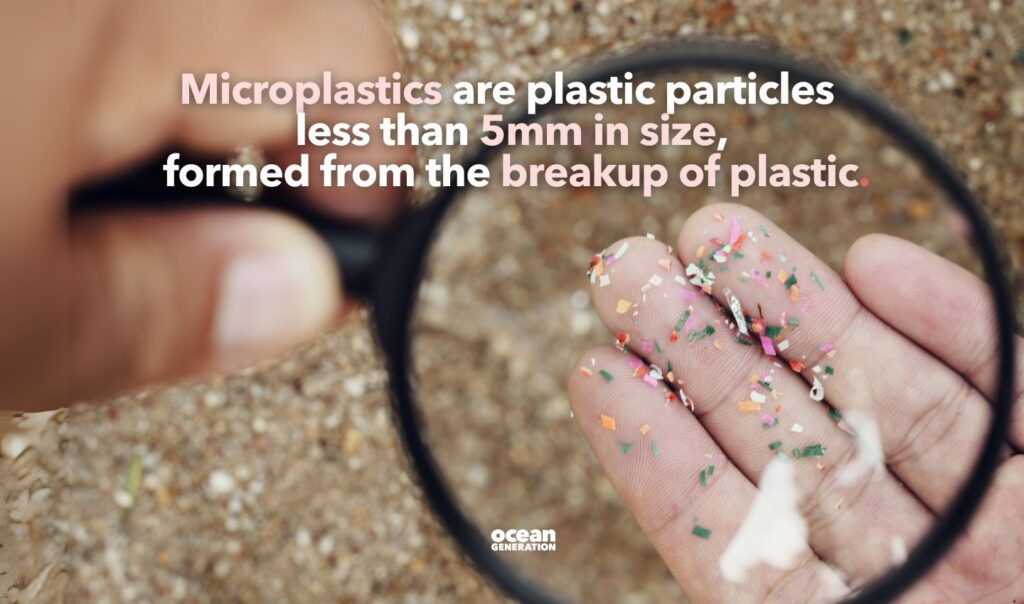
Microplastics are plastic particles less than 5mm in size formed from the breakup of plastic. Theyโ€™re found across the planet, from deep in the Ocean to the snow high in the mountains. Theyโ€™ve even been found in the human body.ย  We donโ€™t fully know yet what that means for our health, but we do know they harm marine life and can travel up the food chain. ย 

Single use plastics, like plastic bags and straws, are big contributors to plastic waste, making up approximately half of all plastic waste.ย  We only use them once and then throw them out, which means more and more plastic needs to be made to maintain supply.ย 

What are microplastics?

What is the solution to our plastic usage problem? 

Recycling is one solution to this problem, but in 2019, the OECD estimated that only 9% of plastics are recycled.The rest is disposed of in landfill sites (50%), incinerated (19%), or goes unregulated into uncontrolled landfills, fires or the environment, including our Ocean (22%). On top of this, not all plastics are recyclable. Is there another solution? 

What are bioplastics

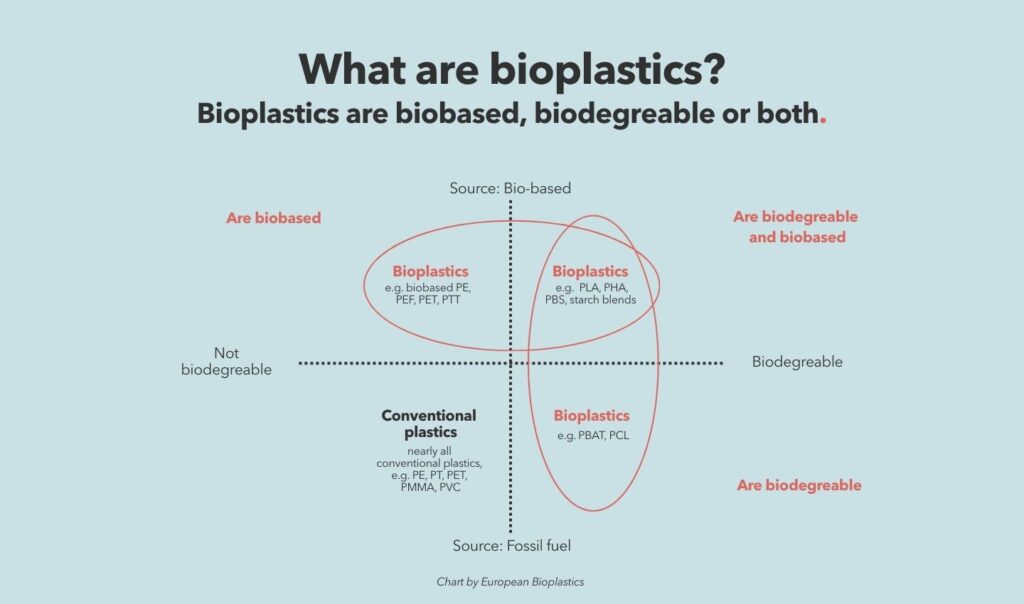
According to European Bioplastics,  โ€œbioplasticsโ€  are either bio-based, biodegradable, or both. Bio-based plastics are plastic alternatives which, rather than using fossil fuels to source the plastic, use biological feedstock (materials) like starch or cellulose.

Bio-based plastics are not necessarily biodegradable. Biodegradability has no clear definition or criteria, but in general, a product is biodegradable if a substance can be broken down into water, biomass and gasses. As a result of this definition, biodegradable fossil-based plastics can be considered as bioplastics.

What are the different types of bioplastics

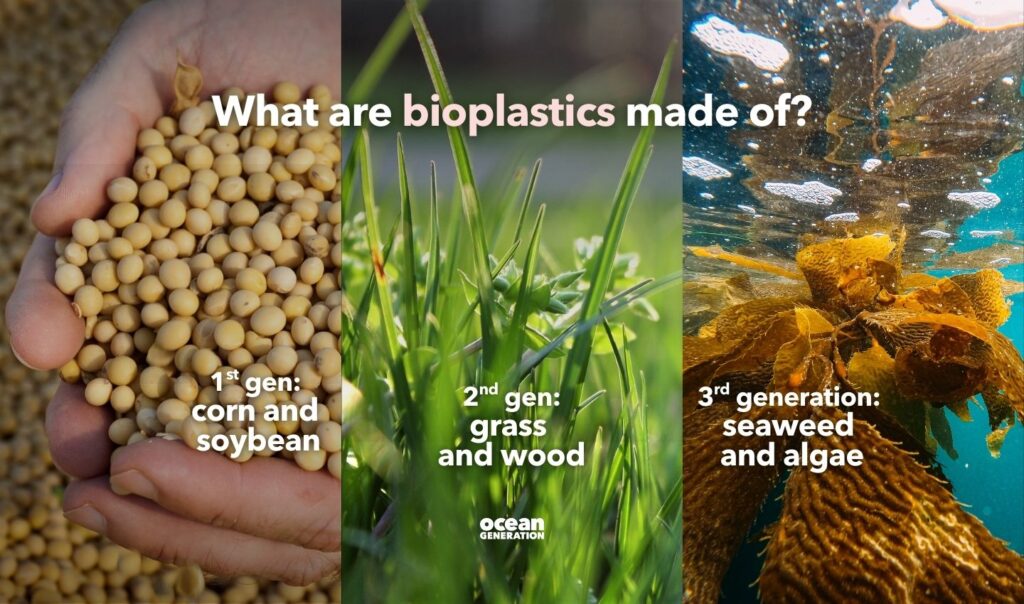
There are 3 distinct generations of bioplastics, all defined by what theyโ€™re made of:  

  • 1st generation bioplastics use food crops like corn or soybeans. 
  • 2nd generation bioplastics use non-food crops like grass and wood. 
  • 3rd generation bioplastics use seaweed and algae. 
What are bioplastics made of? Posted by ocean Generation.

Whatโ€™s the major difference between using seaweed and crops

The major difference between crop-based and seaweed-based bioplastics is where they are planted.ย 

The first two generations of bioplastics use fertile land which could be used for growing other crops.ย ย 

Seaweed bioplastics are bio-based plastics and derived from seaweed. Seaweed bioplastics donโ€™t have the same problems as the other generations as seaweed grows in the Ocean (which there is much more of than fertile land on Earth), and require only sunlight, atmospheric CO2 and the naturally nutritious waters of the Ocean.ย ย 

They are a relatively new discovery; the first seaweed bioplastics company was established in 2010. Lady Gagaโ€™s music career began before bioplastics were commercial.ย ย 

How are seaweed bioplastics made? 

The first step is letting the seaweed spores grow before they are put into a seaweed farm. They are then harvested a few months later. 

The seaweed contains molecules that can be extracted via chemical processes. These have gelling and film-making (like plastic wrap, not movies) properties which make them useful in bioplastic production.

The extraction process leaves behind residuals. These leftovers can be turned into seaweed pellets which can feed back into the bioplastic making process, reducing waste. They can also be converted into methane which comes with the disadvantage of being a greenhouse gas. However, if captured and stored, it can be a carbon effective source of methane, which can be used in the chemical industry, or as a cleaner fuel than fossil fuels.  

Our molecules can be mixed with other substances like nanoclays or silver nanoparticles to improve strength or change properties like making them antimicrobial. 

Seaweed bioplastics are already used commercially in places like food packaging โ€“ thatโ€™s pretty kelp-ful! 

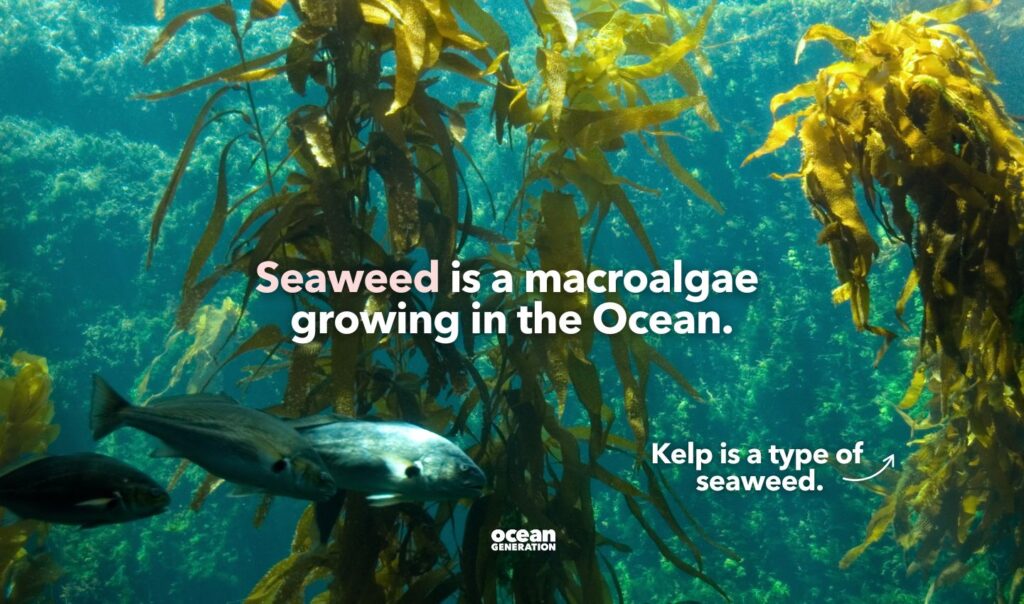
Seaweed is a macroalgae growing in the Ocean.

What is the environmental impact of seaweed bioplastics? 

The life cycle assessment of seaweed bioplastics looks at its carbon footprint from harvesting it from farms in the Ocean to its disposal in bins. Pilot scale assessments (these represent full production at a smaller scale) show that their production released more carbon than plastic, however, models show that scaling up production to full scale makes their carbon output less than plastics. 

What are the downsides of seaweed bioplastics? 

Making seaweed bioplastics relies heavily on farming and harvesting seaweed. This may present a problem when scaling up seaweed farms, especially to the size of being able to match plastic production, if this is even possible.ย  Seaweed farms take up space in the Ocean, and they affect organisms that are living in areas where farms are viable, like seagrasses and corals by blocking light or choking them.ย 

This problem can be mitigated by moving seaweed farms into the open Ocean and optimising growth by growing two different species in the same space. This can be done by growing buoyant kelp and non-buoyant seaweed next to each other to best use space.ย 

Seaweed can also wash onto the coast from farms and decay, releasing pollutants that were absorbed over the life of the seaweed, affecting the local environment and limiting biodiversity.ย 

There is also the problem that not all bioplastics are biodegradable. While it may be entirely possible that seaweed bioplastics specifically are biodegradable, there isnโ€™t yet enough literature to suggest that this is the case.ย 

On top of this, the definition of biodegradability has no specific time frame in which a material should be broken down in, meaning this vagueness could be taken advantage of.ย 

This reintroduces a problem that we were trying to solve, simply sourcing the plastics from elsewhere. ย 

Which plastic or alternative is the bets to choose?

Which plastic (or alternative) is the best to choose? 

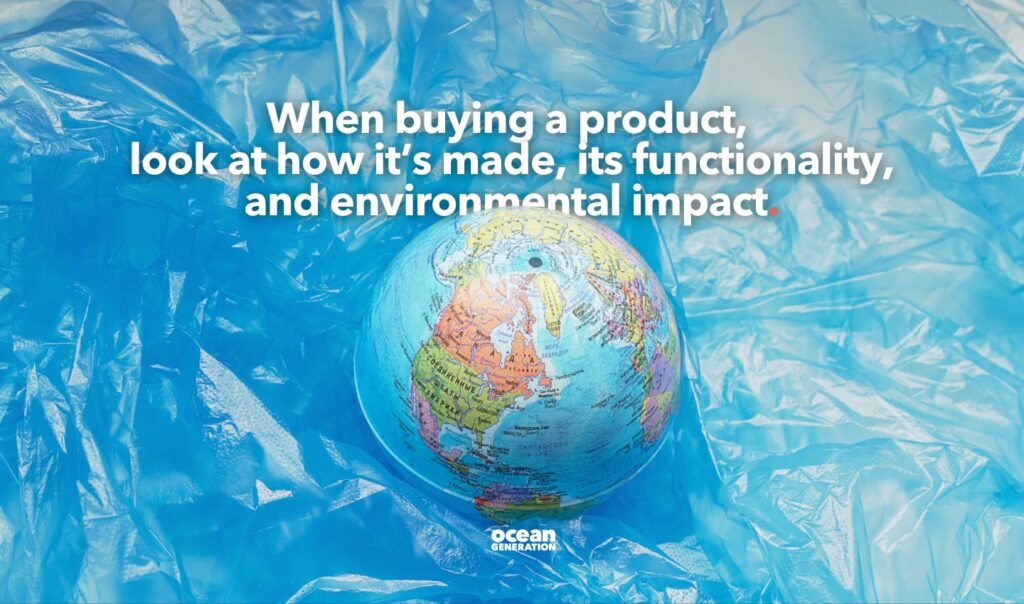
There are many factors that go into considering a product: the production, the functionality (how good it is at what itโ€™s supposed to do) and the environmental cost. ย 

However, it can be difficult to remove bias. Take single use paper bags for example. At first glance, they seem much more environmental than single use plastic bags as theyโ€™re biodegradable, but when put into practice, they have a higher carbon footprint in production than plastic bags and arenโ€™t as strong. So, itโ€™s difficult to tell which of these is better.ย 

As more research goes into seaweed bioplastics, we may find solutions to the problems associated with them and have a more accurate understanding of their impact as they are produced on a larger scale. For now, it is better to avoid single use items altogether, and to use seaweed bioplastics where available.ย ย 

How do international treaties get created?

Subscribe

Monthly: Impact in your inbox.

OceanGeneration-Join

11 of the best Ocean books

Man reading a book on a rocky coast with waves crashing nearby.

The best Ocean books: recommended by the Ocean Generation team

The Ocean is simply magnificent. In celebration of its importance and the wonder the sea invokes, weโ€™re sharing 10 of our favourite Ocean books. 

Our Ocean has been inspiring authors for centuries. Whether youโ€™re an avid bookworm, just want to learn more about the Ocean or dipping your toes into Ocean literacy, these reads are sure to educate, empower and connect you more deeply to the Ocean.

1) How to Read Water by Tristan Gooley

Suggested by: Lucy, Fundraising and Partnerships team 

About the book:ย 

An accessible guide that teaches you to decode the signs of rivers, lakes, puddles, and the Ocean (from ripple patterns to the colour of water). ย 

In Lucyโ€™s words: โ€œI enjoy this book because anyone can read it. Tristan Gooley encourages his readers to get to know your local landscapes better by reading its signs and patterns. He’s an advocate for connecting with nature from a deeper perspective โ€“ in ways our ancestors did.โ€ย 

Cover of "How to Read Water" by Tristan Gooley โ€“ a guide to reading water signs in nature.

Why Lucy chose it:ย 

โ€œIt gives you the power to be more present when in nature.โ€

2) Blue Mind by Wallace J. Nichols

Suggested by: Nadia (Fundraising and Partnerships) and Gemma (Youth Engagement) and…pretty much everyone else. We love this book!ย 

About the book

Blue Mind explores the science behind how being near, in, on, or under water can improve our mood, performance, and overall wellbeing. This Ocean book is a powerful blend of neuroscience, psychology, and personal stories.

Cover of "Blue Mind" by Wallace J. Nichols โ€“ a book about the mental health benefits of being near water.

Why Nadia chose it:ย 

โ€œI read it when I first joined Ocean Generation. It’s a compelling exploration of our mental health and how it is impacted by our connection to the water and nature.โ€ย 

Why Gemma chose it:ย 

โ€œIt really shows just how important water and the Ocean are to all of us, particularly to our mental health.โ€

3) What A Fish Knows by Jonathan Balcombe

Suggested by: Will, Science teamย 

About the book

This Ocean book challenges what we think we know about fish. Balcombe uses scientific research to prove that fish are not just swimming creatures โ€“ they feel pain, communicate, play, and have personalities. This is a must-read for anyone who wants to dive deeper into marine life.ย 

Cover of "What A Fish Knows" โ€“ a science book revealing surprising facts about fish behaviour. Shared by Ocean Generation in an article of Ocean books.

Why Will chose it:ย 

โ€œConsistently one of my favourite fishy books!โ€

4) The Sea Around Us by Rachel Carson

Suggested by: Jo Ruxton, founderย 

About the book

Written in the 1950s, this award-winning book is lyrical and scientific. It paints a picture of the Ocean before plastic pollution and climate breakdown. It offers a historical baseline to help us understand how much has changed โ€” and how much we still have to protect. ย 

Cover of "The Sea Around Us" โ€“ Rachel Carsonโ€™s classic Ocean science book.

Why Jo chose it:ย 

โ€œThis book is a snapshot of how the Ocean used to be, all in balance, before human destruction.โ€

5) The Brilliant Abyss by Helen Scales

Suggested by: Storm, Comms teamย 

About the book

In this book, Helen Scales dives into the darkest parts of the Ocean to show how life thrives in extremes. And how these little-known deep-sea regions are vital to the health of our entire planet.

Cover of "The Brilliant Abyss" by Helen Scales โ€“ a book about the deep Ocean's mysteries.

Why Storm chose it:ย 

โ€œI love this book because it lifts the veil on the deep sea, a place most of us will never visit. The deep Ocean holds some of the greatest mysteries of our planet and I find it fascinating! This book balances scientific discovery with Ocean wonder really well, too.โ€  

6) The Salt Path by Raynor Winn

Suggested by: Kavina, Youth Engagement teamย 

About the book

A memoir of loss, resilience, and wild places. The Salt Path follows a couple who trek 1013km/ 630 miles along the Ocean-swept South West Coast Path of England. Itโ€™s about their journey and the healing power of nature (particularly the Ocean).ย ย 

Cover of "The Salt Path" โ€“ a coastal memoir about healing and walking the South West Coast.

Why Kavina chose it:ย 

โ€œIt weaves together the incredibly challenging and healing relationship we have with water as a couple take on the South West Coast Path whilst coming to terms with loss.โ€

7) White Caps by Jacques Cousteau

Suggested by: Victoria, CEO of Ocean Generationย 

About the book

White Caps is a classic! It was written by legendary explorer, Jacques Cousteau. Readers get a first-hand view of the Oceanโ€™s mystery and magnificence, from his perspective. Itโ€™s part adventure, part love letter to our Ocean, and full of curiosity.ย 

Cover of "White Caps" by Jacques Cousteau โ€“ a legendary Ocean explorerโ€™s memoir.

Why Victoria chose it:ย 

โ€œIt was the first book I was given about the Ocean. I wanted to be him when I grew up. It’s taken me 50 years since then to finally reach the Ocean in my career, so I guess the moral of that story is โ€˜Never Give Up!โ€™โ€

8) What The Wild Sea Can Be by Helen Scales

Suggested by: Will, Science teamย 

About the book

Marine biologist, Helen Scales, takes us on a journey across marine ecosystems: seagrass meadows, deep-sea trenches, and coral reefs. The book shares stories of resilience, adaptation, and hope. Itโ€™s a beautifully written call to action, urging us to protect the wild heart of our blue planet. ย ย 

Cover of "What The Wild Sea Can Be" โ€“ Helen Scalesโ€™ book about Ocean resilience.

Why Will chose it:ย 

โ€œIt is an honest representation of the state of our Ocean, with an Ocean Generation flavour of optimism looking forward.โ€

9) The Blue Machine: How the Ocean Works by Helen Czerski

Suggested by: Storm, Comms teamย 

About the book:ย 

Oceanpgrapher and physicist, Helen Czerski, connects the Ocean’s complex systems to climate and biodiversity impacts. This book makes Oceanography accessible and highlights the Ocean’s role in Earth’s climate and ecosystems. 

Cover of "The Blue Machine" by Helen Czerski โ€“ explaining how the Ocean system works.

Why Storm chose it:ย 

โ€œThe Ocean is more than a body of water. This book shows us just that: how the Ocean is a powerful, living system that shapes our whole planet. Itโ€™s a beautiful example of science meets rich, textured storytelling.โ€ 

10) Whale Fall by Elizabeth Oโ€™Connor

Suggested by: Agnes, Comms teamย 

About the book

Set in a remote coastal village, in the UK, this novel follows a woman grappling with her past while surrounded by the wild, untamed Ocean. Itโ€™s atmospheric, almost poetic, and perfect for readers who love storytelling where the natural world is deeply felt.

Cover of "Whale Fall" by Elizabeth Oโ€™Connor โ€“ a literary novel set in a coastal Ocean village.

Why Agnes chose it:ย 

โ€œI enjoyed the book because it shows the connection between the Ocean and the inhabitants of a remote island, but without romanticising it. This sort of lifestyle rarely exists today so it was really interesting to learn about it through the story of a young Welsh woman, a whale, and some English researchers.โ€

11) Life of Pi by Yann Martel

About the book

While this isnโ€™t a science book, weโ€™ve added it to the list for our fiction lovers. Life of Pi is an award-winning novel about survival at sea. It explores faith and the majesty (and brutality) of the Ocean. ย 

Piโ€™s deep respect for the Ocean and its creatures makes this quite a philosophical read for Ocean lovers.ย 

Cover of "Life of Pi" โ€“ a fiction novel about survival at sea and Ocean reverence.

What are your favourite Ocean books?

When we understand the Ocean, we care for it. And when we care, we take action. 

In their own ways, each of these books reminds us why take action to protect the Ocean.  

If weโ€™ve missed one of your favourites, share it with us on social media. Weโ€™re @OceanGeneration everywhere.  

How do international treaties get created?

Subscribe

Monthly: Impact in your inbox.

OceanGeneration-Join

What is the UN Ocean Decade: Everything you need to know

We’re halfway through the UN’s Decade of Ocean Science

2025 is the year NASAs Artemis III mission hopes to land the first people on the moon since 1972, we’ll welcome the year of the Snake in the Chinese New Year, there will be a total eclipse visible across some of North America, Greenland and Europe โ€“ and 2025 marks the halfway point in the Ocean Decade.  

What is the Ocean Decade? 

In 2017 the UN General Assembly announced something exciting. 2021- 2030 would be the UN Decade of Ocean Science for Sustainable Development, or (much catchier) the Ocean Decade.  

Its vision is encapsulated in the phrase, โ€˜the science we need for the Ocean we wantโ€™. 

The science we need for the Ocean we want encapsulates the vision of the UN Ocean decade.

The aims of the Ocean Decade are;  

  • Stimulating Ocean science and knowledge generation 
  • Creating new opportunities for sustainable ecosystem development 
  • Accelerating the implementation of Sustainable Development Goal (SDG) 14: Life Below Water which is all about conservation and sustainable use of the Ocean
  • Fostering international cooperation in Ocean science. 

That is a lot of long words to say, the goal of the Ocean Decade is to put the Ocean front and centre.

How is the Ocean Decade helping the Ocean? 

The UN has identified key Ocean Decade challenges and set targets to address them. 10 Ocean Challenges, aiming for 7 Outcomes of collective impact.  

The 10 key UN Ocean Decade Challenges, posted by Ocean Generation.

Hereโ€™s a simplified breakdown of the challenges (in reverse order just to keep you on your toes).  

Challenge 10: Restore societyโ€™s relationship with the Ocean
Challenge 9: Skills, knowledge, technology and participation for all 
As the great Jacques Cousteau said, โ€œpeople protect what they loveโ€. Restoring a link between people and the Ocean, instilling stewardship through education, is key to improving its health.  

Challenge 8: Create a digital representation of the Ocean 
Challenge 7: Sustainably develop the Global Ocean Observing System  
7 and 8 offer how to deepen that knowledge of the Ocean and use technology to further it and share it. Making models, exploring further and donโ€™t forget to tell everyone about it. 

Challenge 6: Increase coastal resilience to Ocean and coastal risks
Challenge 5: Unlock Ocean-based solutions on climate change 
We can enlist the Ocean as an ally. It already absorbs up to 89% of our excess heat and has taken up 40% of carbon dioxide emitted. However, intensification of storms and rising sea levels threaten communities closest to the sea. Challenges 5 and 6 look at the practicalities of our relationship with the Ocean. 

The goal of the UN Ocean Decade is to put the Ocean front and centre.

Challenge 4: Develop a sustainable, resilient and equitable Ocean economy
Challenge 3: Sustainably nourish the global population 
Beyond that, our Ocean can be a cornucopia, providing food and resources. To ensure it is, these two aim to tackle the management and guidance needed to avoid a harmful relationship with the Ocean and benefit everyone. 

Challenge 2: Protect and restore ecosystems and biodiversity
Challenge 1: Understand and beat marine pollution 
Finally, Ocean Decade challenges 1 and 2 aim to protect and restore. Undo the harm that has been done to our Ocean, and tackle how it is still being damaged.  

For a healthy planet, we need a healthy Ocean. 

These challenges cover the full range, from prompting a sense of responsibility in people to tackling the specific threats.  

The goal is simple โ€“ nurture an Ocean that is healthy, resilient, clean, productive and safe, but also predictable, accessible and inspiring. These are the outcomes the Ocean Decade targets. (Read: Why is the Ocean so important?

For a healthy planet, we need a healthy Ocean. Posted by Ocean Generation.

We are all part of the Ocean Decade 

Ocean Generationโ€™s mission is to bring the Ocean to everyone, everywhere.  

We translate complex Ocean science into engaging content and run three youth engagement programmes for 3 โ€“ 25-year-olds. Our Ocean Intelligence approach is endorsed by UNESCO as an Ocean Decade Project; making us part of Ocean Decades solutions.  (Which challenge are we meeting?).

Look through the challenges, see if you can engage with any.

UN Ocean Decade: First look complete 

Over the coming year, weโ€™ll check in with the Ocean Decade. We will explore the plans it has, discover how it ties in with the different elements of the work we do, and summarise the progress it has made in a final check up at the end of the year.  

We are all part of the UN Ocean Decade.

How do international treaties get created?

Subscribe

Monthly: Impact in your inbox.

OceanGeneration-Join

COP29 outcomes: Wins and disappointments

COP29 outcomes, wins and disappointments, explained by Ocean Generation

COP29 finished on the 24th November 2024, after two weeks of tough, technical negotiations.

It was full of colouring books, expensive sandwiches and drama! Letโ€™s break down the COP29 outcomes: the wins and disappointments โ€“ and have a look across to COP16 (the biodiversity one) too. 

What is COP16? Why are there multiple? What are all the acronyms? Read our explainer here

Money, money, money.

COP29 was held in Baku, Azerbaijan and was painted as the โ€˜finance COPโ€™ with the hopes of a climate finance deal being agreed.  

Hold up โ€“ what is climate finance? Broadly speaking, climate finance refers to any money โ€œthat seeks to support mitigation or adaption actions that will address climate changeโ€ – UNFCCC (remember what it stands for? Spoiler: United Nations Framework Convention on Climate Change) 

Richer countries โ€“ often referred to as the Global North (that also includes Australia, Israel and New Zealand) – have emitted the vast majority of the CO2 that is responsible for climate change. As of 2019, the Global North have emitted 2.5 times their fair share of the emissions allowed for 1.5 degrees of warming.  

The focus of COP29 was climate finance.

Countries in the Global North industrialised much earlier than the Global South, making a lot of money at the cost of carbon dioxide emissions. It has been called for, and agreed, that the richer countries should provide money to the developing countries, to allow them to develop without emitting so much CO2.  

Furthermore, thereโ€™s a loss and damage fund to help countries most affected by climate change. Many of the countries most vulnerable to the effects of climate change (sea level rise, droughts, heatwaves, floods, intense storms etc.) are poorer countries.  

What were the themes of COP29?

So, what actually happened this year? Letโ€™s explore a few of the themes that came from the COP29 summit this year.  

Presents and petrol stations.

Countries have their own stands – as an opportunity for cultural sharing and integration. Many gave out gifts: Georgia handed out some wine tasters, the UK provided coffee.

Go to the Russian stand and you could pick up an ecological colouring book, full of tips for environmental sustainability. Some were slightly cynical, as it was produced by a major fossil fuel company.

What were the themes of COP29? Explained by Ocean Generation.
Photos by Dharna Noor/ The Guardian

Fossil fuels have been present throughout COP29. Azerbaijan, the host country, is a country with 90% of its exports comprised of fossil fuels. The capital, Baku (save that for the pub quiz) houses the very first industrial oil well and was the world’s first oil town (dating back to the 1840s).ย 

For the second year running, COP was attended by more fossil fuel lobbyists than the ten most climate change vulnerable countries‘ delegations combined.ย The host nation Azerbaijan, next yearโ€™s host Brazil and one of the countries competing for COP31 presidency, Turkey, were the only countries with more attending.ย 

Although the 1,773 attendees from fossil fuel companies made up only 1.5% –ย there were only three countries with more. ย 

Should discussions around climate change happen in the house of the industry most responsible for the damage?  

Or does it represent an opportunity to engage and include those most capable of changing our world? 

Al Gore said, “It’s unfortunate that the fossil fuel industry and the petrostates have seized control of the COP process to an unhealthy degree.”  

Or, as Oil Change International member David Tong said: โ€œIt’s like tobacco lobbyists at a conference on lung cancer.โ€  

The president of Azerbaijan made headlines this year describing oil and gas as โ€œa gift from Godโ€. This was denounced by a multitude of faith groups. And the Brazilian environment minister Marina Silva said: โ€œWe should take care in moderation of the gifts we are given – if we eat too much sugar, we get diabetes.โ€ 

A report published during COP highlighted that eight fossil fuel companies had paid at least $17.6 million to Meta (which owns Facebook and Instagram) alone for pushing their posts โ€“ 700 million impressions, all within the last year.  

Al Gore quote about fossil fuel lobbyists at COP29. Posted by Ocean Generation.

Activism has always been a big part of COP.  

It presents an opportunity to make voices heard by the decisionmakers and gives a platform to send big messages.  

Attendees of the COP29 summit were welcomed by a realistic, full-sized model of a dead sperm whale on the waterside in Baku. Created by Belgian art collective Captain Boomer, the piece hopes to highlight โ€œthe disruption of our ecological systemโ€. 

In the run-up to COP29, the cop29.com website was acquired by Global Witness, which called for fossil fuel CEOs to pay for the damage they have done to the climate.

There was a protest outside BP headquarters in London, and a number of demonstrations in Baku, including a large snake, with the message โ€œweed out the snakesโ€ – aimed at the fossil fuel attendees.  

Activism at COP29 presents an opportunity to make our voices heard.

COP29: Agreements and outcomes.

After two weeks, and running over by 34 hours, COP29 closed with a number of agreements. What did all the sleepless nights in smelly conference halls produce? (at one point the plumbing failed, filling the corridors with the smell of you-know-what).

There were finally some numbers for climate finance – $1.3 trillion per year, needed by 2035. This number is based in the recommendations of the Independent Expert Group on Climate Finance (IHLEG). โ€œAt leastโ€ $300 billion of this is to come from developed countries. The rest could come from a range of sources including private finance and taxes on cryptocurrency, airplane tickets and the super-rich โ€“ known as solidarity levies.  

There was no agreement reached on how to take the Global Stocktake from COP28 forward, so it was pushed back to COP30 next year.  

Article 6 of the Paris Agreement, describing โ€˜carbon marketsโ€™, was finalised, marking the last element of the Paris Agreement to be completed, although it was not agreed on. This just means that the text has been written, but countries have not yet signed on the dotted line. 

The reaction to COP29 has been, optimistically, mixed 

The focus, following on from the expectations coming into COP29 (finance COP), has been on climate finance. The amount pledged by the Global North has come under fire: โ€œA paltry sumโ€ and โ€œa jokeโ€ by delegates from India and Nigeria respectively.  

However, some took a more positive view. Marshall Islands climate envoy Tina Stege said, โ€œit isnโ€™t nearly enough, but it is a startโ€. An observer was quoted by the Carbon Brief as saying, โ€œmomentum was neither lost nor gained, just maintainedโ€ so overall, it achieves โ€œa passing gradeโ€.  

UNFCCC (remember what that stands for?) Executive Secretary Simon Steill said

โ€œThis new finance goal is an insurance policy for humanity, amid worsening climate impacts hitting every country. But like any insurance policy โ€“ it only works โ€“ if premiums are paid in full, and on time. Promises must be kept, to protect billions of lives.โ€ 

$300 billion per year, it has been widely agreed, is not enough. But the creation of a deal is a good step and could be enough to spur on the further investment required from private finance and new sources, such as carbon markets and new taxes.  

What happened at COP29 and COP16: Explained by Ocean Generation.

Outside the negotiating rooms.

Beyond the walls of formal negotiations, there were some big developments. 

  • Indonesia, the 8th biggest emitter of CO2, unexpectedly pledged a complete phase out.  
  • Mexico was the last G20 country to not commit to net zero, but did during COP29.  
  • UK and the EU joined 30 nations in an agreement to slash emissions further, specifically targeting methane emissions.  
  • Chinaโ€™s influence grew in the absence of strong US leadership. It announced the opening of the largest wind farm in the world. 
  • Some NDCs (Nationally Determined Contributions) announced: UK pledged a reduction of 81% against 1990 levels by 2035. Brazil announced a 59-67% reduction against 2005 levels.
  • At COP29, over 70 events were hosted in the dedicated Ocean Pavilion over the two weeks.  

What happened at COP16 (the biodiversity summit)? 

Just 10 days before the first delegates landed in Baku, COP16 wrapped up in Cali, Columbia. This followed very similar themes. It was focused on money. Specifically, where to find the money required to tackle biodiversity loss and restoration.  

The Cali Fund was established and though limited in being entirely voluntary with debated scope, can be a positive step.  

Another main objective for COP16 was the updating National Biodiversity Strategies and Action Plans, and unfortunately only 44 countries out of 196 had done so by the end of the conference.  

119 countries submitted national biodiversity targets, building on the work of the Global Biodiversity Framework agreed on at COP15.  

COP16 formally recognised the importance of indigenous peoples and local communities (IPLCs) to conservation efforts, creating a body to amplify their voices in the CBD.  

The Ocean took centre stage at COP16.

At COP16, the Ocean was prominent in a way not previously seen.  

The Small Island Developing States (SIDS) pushed for progress. The Maldives announced14% protection of their coral reefs with more protection pencilled in. The Azores announced the largest MPA network in the North Atlantic, protecting 30% of its waters.  

Parties approved a new process to identify ecologically or biologically significant marine areas (EBSAs) (bet you thought we were done with new acronyms).  

This doesnโ€™t guarantee protection but can guide the creation of marine protected areas (MPAs) in areas that will be most effective, including the high seas.  

Generally, the progress made for the Ocean was received very positively.   

COP29 and COP16:  the transition from negotiation to actions.  

Awareness, knowledge and respect for the natural world is growing. Frustration at pace of progress is evident throughout the process, from those in the room to those hearing the news. We need to appreciate how far we have come, while also maintaining the push onwards.  

What was top of the COPs? 

TopsNots
Agreement to triple climate finance to $300 billion Amount falls far short of that hoped by developing countries 
Carbon markets approved after a decade of trying Fears of carbon markets being misused in bad offsetting and fraud 
Cali Fund established No mandatory contributions โ€“ entirely voluntary, no guarantees 
Loss and Damage Fund should be operational in 2025, and has $730 million pledged No further progress on last year’s Global Stocktake โ€“ phasing out fossil fuels  
Mexico and Indonesia surprise with net zero and emission cutting announcements  Some countries and parties obstructing progress  
China announces more voluntary contributions to climate finance  
COP29 ment a transition from negotiations to actions. Posted by Ocean Generation.

Brazil has made it clear it intends to make COP30 a โ€œNature COPโ€. If it can maintain momentum, COP29 has given foundation for the transition into tangible action. 

These big global treaties can feel very far away, and it can seem that there is nothing you or I could do. But we are the key parts of this puzzle. Appreciate every small action you take.  

Turn down your heating by one degree this winter โ€“ barely enough to notice but saving a lot of emissions.  

Be conscious of what you eat โ€“ choosing local, seasonal food can be your difference.

Get talking. You are already doing something important โ€“ staying informed. Having conversations with other people, making people more aware, is a crucial part of the process. Engage with us! We love to hear the actions you are taking, and we will answer every question sent our way.

How do international treaties get created?

Subscribe

Monthly: Impact in your inbox.

OceanGeneration-Join

Everything you need to know about COP: COP29, COP16s and the things between

Everything you need to know about COP: Explained by Ocean Generation.

Heard a lot about the COP conferences but not sure whatโ€™s going on? Acronyms got you all in a twist?

Welcome to a white-knuckle ride into climate-summit world, where we explain everything you need to know about COP.

What is COP?

COP is our first acronym (can be written as Cop or all in caps). It stands for Conference Of the Parties, the name given to the group of countries (Parties) all coming together to make big decisions.

It consists of negotiations between representatives, presided over by the host country. Theyโ€™re also used as a platform for scientific developments and activism: talks are held, and papers are released aiming to maximise impact.ย ย 

Why are there multiple COPs?

COP is most used to refer to the COP of the United Nations Framework Convention on Climate Change (UNFCCC) – the big annual summit on climate change. The 2024 edition was the 29th summit, so it is known as COP29 โ€“ easy!  

But COP can be used to describe the meetings held for other conventions too.  

2024 also had the COP for the United Nations Convention on Biological Diversity (UNCBD) in October and the COP for the UN Convention to Combat Desertification (UNCCD) in December. Both of these are biennial (one every two years) and meeting for the 16th time, so both are known as COP16 โ€“ useful (not).

Three conventions of the Rio Trio aim to tackle threats to humanity. Posted by Ocean Generation

The three COPs were all created at the UN Earth summit in 1992 in Rio de Janeiro, so are known as the โ€˜Rio Conventionsโ€™ or more informally the Rio Trio. They aim to tackle three major threats to humanity โ€“ climate change, biodiversity loss and desertification. 

The most famous COP outcome was the Paris Agreement.

The Paris Agreement was negotiated at COP21 in 2015. Youโ€™ll never guess where. It’s a legally binding (means enforceable by law) agreement with the primary goal of keeping global average temperature well below 2 degrees above pre-industrial levels.  

The basic plan? Every country gradually ramps up their climate actions, detailed in Nationally Determined Contributions (NDCs). NDCs are refreshed every five years, and the next round are coming in 2025 โ€“ watch this space.  

The Agreement also provides a framework of support between countries. Financial, technological and capacity building support is guide lined to enable and encourage cooperation.  

Countries also established an enhanced transparency framework (ETF) for gathering relevant data, which will then feed into the Global Stocktake, the progress report for our climate. The Global Stocktake will be published every five years, with the first released last year at COP28. 

Everything you need to know about COP: The Ocean is our biggest ally against climate change.

What does COP mean for the Ocean?

This depends which COP you are talking about.  

Climate change is a global threat, against which the Ocean has acted as our shield for years. The Ocean absorbs excess heat and carbon dioxide, maintaining our biosphereโ€™s balance. Ocean acidification, marine heat waves and intensifying weather patterns are just some symptoms of a stressed system.  

The Ocean is our biggest ally against climate change and the actions at COPs can safeguard our Ocean. While they are not specific to the Ocean, the decisions made at COP can decide the health of our Ocean ecosystems. 

The CBD COP (the biodiversity one) is more directly linked to the Ocean: at COP15 the Kunming-Montreal Global Biodiversity Framework officially set the target to protect 30% of countries land and seas by 2030, known as the 30×30 agreement.  

Read more about the agreements made at COP29 and learn more about the outcomes of COP16 here. 

How do international treaties get created?

Subscribe

Monthly: Impact in your inbox.

OceanGeneration-Join

The power of water and the science of passive coolingย 

The science of passive cooling: A Wavemaker Story posted by Ocean Generation

When interests collide: My love of water and fascination with ancient architecture.ย 

I have always been fascinated by, and attracted to, water.

My parents would vouch for the fact that I immediately seek out the nearest body of water whenever we have the opportunity to travel… whether that be the warm Caribbean Sea, the stunning beaches of the Hamptons, or the cold glacial lake water in the Adirondacks in Upstate New York. And as a child, they could never get me out of the bathtub!

My natural curiosity and desire to learn has led me to study various subjects of interest in STEM disciplines, and through my university studies I have discovered a genuine passion for ancient architecture and the associated technology and building techniques.ย 

Iโ€™m a huge fan of interdisciplinary research (i.e. combining strategies and information from across disciplines), which leads me to introduce an unlikely connection to our Ocean, or more correctly water, that I discovered while researching the “Scirocco rooms” of Sicily, Italy.

Scirocco Room, where the passive cooling force of water was used.

How water was used to cool scirocco rooms hundreds of years ago.ย 

The “scirocco rooms” are not rooms in the commonly understood sense, but rather man-made, underground caves. From the art historical perspective, they are important social gathering spaces.

Scirocco rooms were mainly constructed and used in the city of Palermo and rely on ancient technology to facilitate passive cooling.ย 

During the summer, the dry and sandy Scirocco Winds from the Sahara Desert in Africa blow across to Sicily and send temperatures skyrocketing … to upwards of 40ยฐC! Hence the need for a naturally cooled space, especially before the invention of air conditioning. These “rooms” were lavishly decorated in the 16-19th centuries and used as an escape from the sweltering heat of the summer months.

What is passive cooling anyway?

It is the process of naturally cooling the air flowing through a space without the use of external power or energy. So, the natural cooling properties of convection currents, properties that are hugely amplified in the presence of water, created a comfortably cooled space.ย 

View leading to the scirocco rooms, where passive cooling was used
Views of the tunnel leading to the scirocco room. On the left is the base of the โ€œwind-towerโ€ and on the right is the qanat (Arabic for โ€˜canalโ€™), covered today.
Image credit: Saeli, Manfredi and Enrico, 2022. “La Camera Dello Scirocco Di Villa Naselli di Gela A
Palermo.” La Camera Dello Scirocco – Periodico di Arte Cultura e Societร .

How passive cooling works in a scirocco room:ย 

  • Water flows from a natural spring across the terrain of Palermo to the scirocco room. Amazingly, the clay terrain naturally filters the water, and when it arrives in homes, farms or scirocco rooms it is sparkling clean!ย 
  • The natural course of the water (flowing entirely due to gravity) is diverted into scirocco rooms through man-made canals designed after the Ancient Persian structure called qanat (process explained later in diagram). ย 
  • The flow of convection currents is enhanced by the evaporation of the water in the canals, cooling the air more and at a faster rate. Itโ€™s like when you hop out of the pool in cool weather, you are instantly shivering.ย 
  • The water is also directed to fountains, pools, and artificial waterfalls. This not only created a pleasant atmosphere aesthetically in scirocco rooms but also made it comfortably cooler for guests.ย 

So, we can see that the power of water, found everywhere around us and flowing naturally through all sorts of terrain, can be used as a sustainable cooling mechanism, thanks to the natural principles of physics.ย ย 

The Ancient Persian technology used to cool scirocco rooms includes qanat (the Arabic word for ‘canal’), to divert water, and “wind-towers”. The “wind-towers” act as the main point of hot air expulsion. These two features are still widespread and regularly used in the Middle East, such as in the city of Yazd in Iran.ย 

Take a look at the diagrams below to see how these “wind-towers” work and how they amplify the convection currents.ย 

Hereโ€™s what I would like you, dear reader, to take away from my exploration:ย 

By sharing my research through various formats, including now through this Wavemaker Story, I would like to encourage all readers to uncover any and all of the  wonderful and exciting connections to our Ocean… however unlikely and niche they may seem… and share this with those around you, because you never know how, or who you may inspire.  

I discovered the amazing power of water in a completely un-STEM-related context. I was able to dive deep into the history and science of the use of water in architecture and find that water tied generations of Sicilians together through this architecture.  

Our Ocean, and water specifically, hold great potential for ecological and sustainable solutions to current pressing issues as in the case of passive cooling. Our ancestors knew this quite well and I believe there is much to learn from pre-industrial societies. 

Passive cooling is cooling the air without external power. A Wavemaker Story posted by Ocean Generation

Thank you for raising your voice for the Ocean, Sana!

Learn about how to submit your own Wavemaker Story here.

How do international treaties get created?

Subscribe

Monthly: Impact in your inbox.

OceanGeneration-Join

Green tourism and Thailand’s unexpected wildlife revival

Green tourism and wildlife revival in Thailand. A Wavemaker Story by Ferra, posted by Ocean Generation

Being well into summer, tourism in Thailand is at its very peak again.

It may not be obvious but the beaches that you see today have undergone a significant recovery during the pandemic. Many called it a miracle in disguise. It was a turning point that allowed for a more sustainable path forward to emerge.  

To understand why, let’s go back in time.  

During the pandemic, I took part in a beach clean-up as a high school community service project. When I arrived, I could see that all the beaches were empty, and it was unusual to see them without people as I have always linked the two together.

However, it was peaceful.

There was a lot less litter than I remember from my visit a few years ago, where there was trash every 5 meters along the coast and floating in the sea. I felt relieved for the Ocean and its community โ€“ this was probably the first break it had in a long time. 

Ferra, a Wavemaker took part in a beach clean in Thailand
Photo by Ferra, a Wavemaker

In the south of Thailand, numerous sea creatures such as fish, sharks, turtles and dugongs made unexpected appearances.

There were multiple news reports of localsโ€™ observations of sea life, indicating that there has been a promising recovery of the marine ecosystem. I even saw my first shark in the Ocean at Maya Bay in 2023, a clear and unforgettable sign I witnessed firsthand. 

But it wasn’t always like this.  

As often happens, many of the following problems occur because of us, and our impact.ย 

Pollution can arise from littering, air emissions, noise, or oil and chemicals. The most prominent is litter, ingested by marine animals or accumulating in Ocean gyres. Microplastics are another significant threat which cause toxic chemicals and disrupt food chains.ย ย ย 

In the Mediterranean Sea, marine litter accumulates 4.7 x faster during the high tourist season.ย This mostly happens due to too much waste, from lack of resources, food waste and unfamiliarity with waste systems.ย 

Anchoring and other marine activities damage corals and other marine environments such as seagrass beds. Anchors can impact 7.11% of the coral at popular sites every year. This has severe repercussions as corals are one of the slowest growing creatures โ€“ massive ones grow merely 0.3 to 2 cm per year. ย 

Green tourism in Thailand is the responsible way of travelling
Photo by Ferra, a Wavemaker

How did this crisis turn into opportunity?

With the absence of tourists during the lockdown, conservationists seized the opportunity by repairing 30,000 fragments of coral in Maya Bay, Ko Phi Phi Lee; collecting rubbish and cleaning the beach.  

Moving forward, there will be rules such as limiting the number of tourists per day at popular tourist sites such as Maya Bay, Similan islands and Koh Tachai. Additionally, closing off the island at certain points of the year and increasing the strictness of regulations to move towards a sustainable future. 

Sea creatures such as sharks have made reappearances in Thailand.
Photo by Ferra, a Wavemaker

What is green tourism?

Green tourism is a more responsible way of travelling. It means being mindful of the destinationโ€™s natural resources and the local community to minimise our environmental impact.

Nowadays, hotels are being more sustainable by eliminating single use amenities and promoting the re-use of products. When travelling, itโ€™s up to us, too, to make a positive impact.

Here are a few tips to be more sustainable when travelling: 

  • Support local businesses & communities 
  • Bring your own refillable water bottle (if there are no refillable stations, I often ask nearby stores/restaurants which may have large containers of water) 
  • Consider traveling during off-peak season 
  • Take public transport, walk or cycle 
  • Stay on path and avoid interacting with wildlife 
  • Avoid collecting seashells and sand 
  • Do your own research on how you can minimise your impact at the destination you plan on visiting 

After seeing the Ocean come back to life, I felt hopeful that we can indeed restore its health

With green tourism, we can reduce our ecological footprint and make sure that the breathtaking destinations will be there for us and future generations to cherish. I believe that the Ocean and people can thrive together, but for that to last, we must appreciate and take care of it.

After seeing the Ocean come back to life in Thailand, Ferra felt hopeful.

Cover photo by Prinn Vajrabhaya


Thank you for raising your voice for the Ocean, Ferra!

Connect with Ferra via LinkedIn. Learn about how to submit your own Wavemaker Story here.

How do international treaties get created?

Subscribe

Monthly: Impact in your inbox.

OceanGeneration-Join

How can we protect and restore our coastlines?

Protecting and restoring coastlines starts with us.

Coastlines are the gateway to the Ocean.

Vital ecosystems like mangrove forests, seagrass meadows, coral reefs and tidal marshes exist almost exclusively in coastal regions.  

They support a high biodiversity of life and provide key nursery and breeding areas for migratory species.

Theyโ€™re also essential to the livelihoods of coastal populations, and we all rely on the important services they provide, such as carbon sequestration and protecting the coast from erosion.

Our coastlines are under threat. 

If youโ€™re wondering which of the five key Ocean threats impact our coastlines, the answer is all of them.

Because coastlines are the boundary between land and sea, our impacts are often amplified in coastal regions due to their proximity to the cause…us.  

With more than one third (2.75 billion) of the worldโ€™s population living within 100km of the coast, itโ€™s no surprise that coastal regions are heavily concentrated.

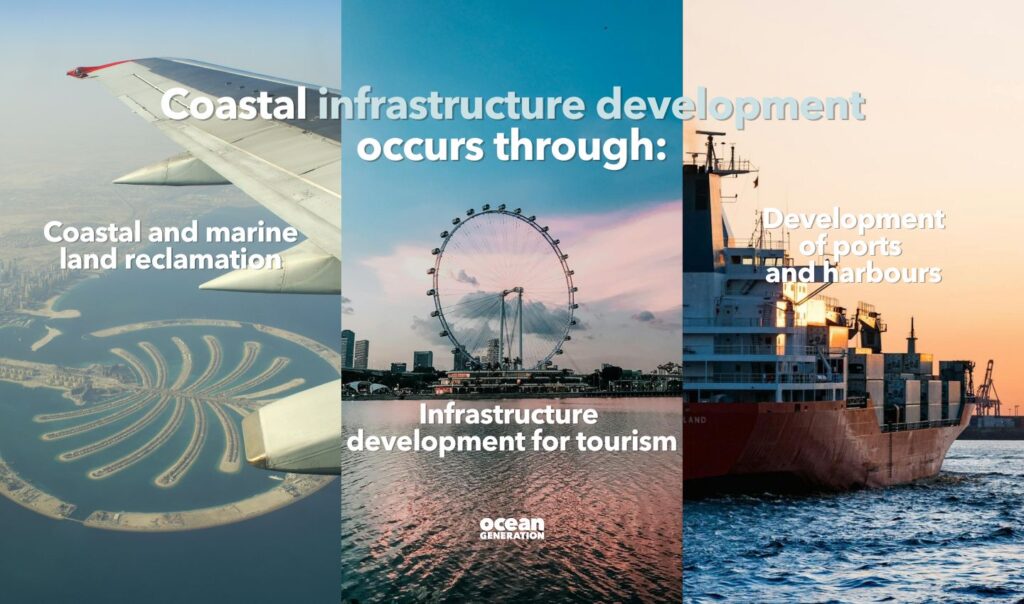
To supply the needs of this ever-growing population, coastal infrastructure development happens through:

  1. Coastal and marine land reclamation, the process by which parts of the Ocean are formed into land. 
  1. Infrastructure development for tourism, such as resorts and recreational facilities.  
  1. Development of ports, harbours, and their management.
Coastal infrastructure development, posted by Ocean Generation.

This is a key driver for habitat destruction (when a natural habitat can no longer support the species present) and biodiversity loss. It also increases the vulnerability of coastal communities to climate change impacts.

With higher frequencies of natural events like cyclones and hurricanes, risk of erosion, saltwater intrusion, flooding and other cascading climate change impacts, coastal regions have never been this vulnerable.

How can we protect and restore our coastlines? 

Enter: Nature Based Solutions (NBS). These are described by the IUCN as:

โ€˜Actions to protect, sustainably use, manage and restore natural or modified ecosystems, which address societal challenges (such as climate change, food and water security) effectively and adaptively, while simultaneously providing human-wellbeing and biodiversity benefits.โ€™ย 

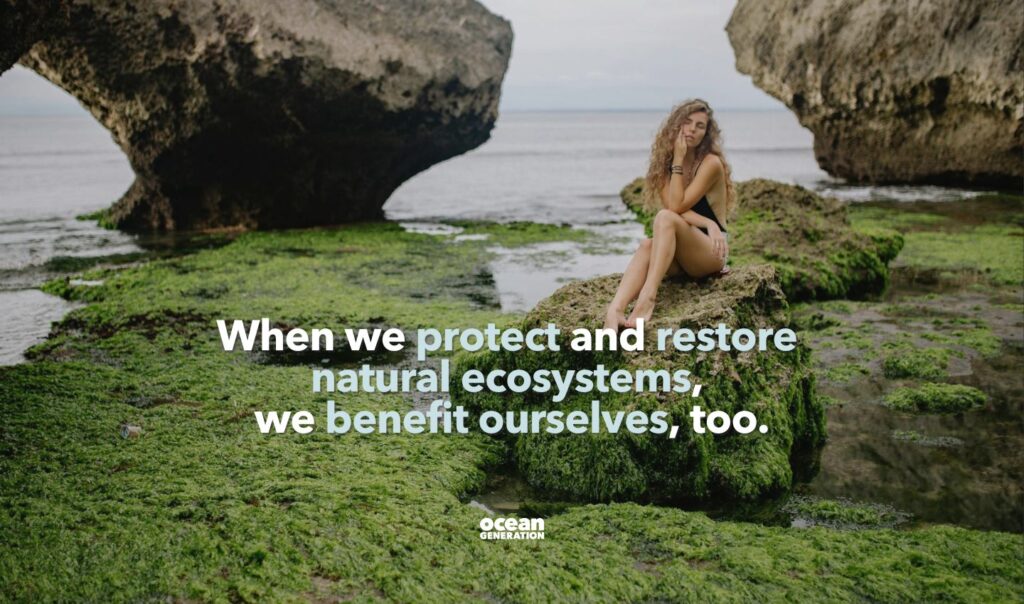
In other words, when we protect and restore natural ecosystems, we provide a whole host of benefits to ourselves, too.ย ย 

This can be done by restoring degraded ecosystems to their former glory and halting further loss of existing ecosystems.

When we restore natural habitats we protect ourselves too.

Ocean Solution: Habitat restoration.

Habitat restoration is the process of actively repairing and regenerating damaged ecosystems.

Restoring coastal ecosystems such as mangrove forests, coral reefs, oyster beds and seagrass meadows allow us to address environmental challenges (such as biodiversity loss). It reduces risks to vulnerable communities (like flooding, erosion, and freshwater supply). It also contributes to sustainable livelihoods by providing job opportunities.

Thatโ€™s why at Ocean Generation, we support a mangrove restoration project in Madagascar, led by Eden Reforestation.

In 2022 alone, this project contributed to:ย 

  • Carbon sequestration and habitat restoration by planting over 4.3 million young mangrove trees.  
  • Creating sustainable livelihoods by employing around 70 people per month at the Maroalika site, with a total of 1,468 working days generated over the year.  

PSA: We plant a mangrove for every new follower on Instagram and newsletter subscriber. Sign up to our newsletter or follow us on our socials to be part of the change today. 

Interest in nature based solutions have surged lately. Posted by Ocean Generation, leaders in Ocean education.

Ocean solution: Marine Protected Areas. 

To halt ecosystem destruction and prevent further habitat loss, we must take measures to protect remaining coastal ecosystems.

One mechanism to achieve this is by implementing Marine Protected Areas (MPAs). These are designated areas of the Ocean established with strict regulations to protect habitats, species and essential processes within them.

If implemented and monitored effectively, Marine Protected Areas can provide a range of benefits across biodiversity conservation, food provisioning and carbon storage

What is the 30 by 30 target? 

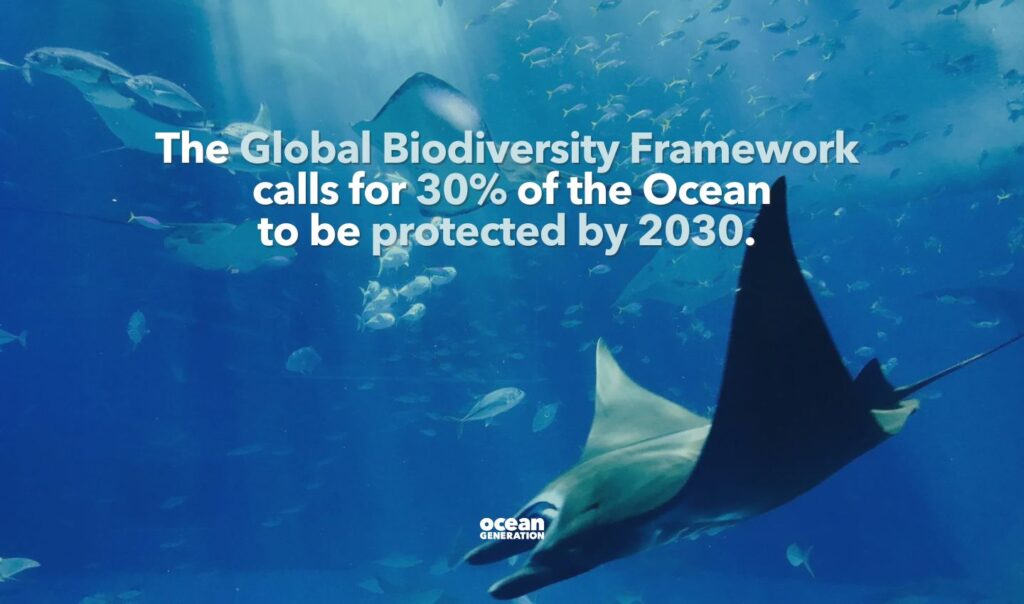
In recognition of the importance of healthy and thriving ecosystems, the Global Biodiversity Framework have established a โ€œ30×30โ€ target. This calls for the conservation of 30% of the earthโ€™s land and sea through the establishment of protected areas by 2030.

The Global Biodiversity Framework calls for 30 percent of the sea to be protected.

Spoiler alert: Weโ€™re not on track to meet this goal.

According to the Marine Protection Atlas (2024), only around 8% of the global Ocean area has been designated or proposed for MPAs, and only 2.9% of the Ocean is in fully or highly protected zones.  

Research also shows that 90% of the top 10% priority areas for biodiversity conservation are contained within coastal zones (within 200-miles of the shore). We must ramp up our efforts to preserve these vital coastal ecosystems and ensure that MPAs continue to benefit both people and planet.

What are the main challenges to implementation? 

Over the past 10 years, interest in the potential of Nature Based Solutions to help meet global climate change and biodiversity goals has surged, as we have begun to truly appreciate the importance of natural ecosystems.  

Despite this knowledge and an abundance of opportunities for implementation worldwide, marine and coastal regions still lack uptake.  

We must address the barriers to implementation to accelerate the rate of success of coastal protection worldwide, including (but not limited to):

  • Conflict of interest between stakeholders i.e. blocking of protective legislation by fishing and other extractive industries.  
  • Marine and coastal ecosystems are โ€˜out-of-sight, out-of-mind’. This results in a lack of public and policy awareness of their value. As a result, Nature Based Solutions are often overlooked in favour of grey infrastructure such as seawalls.ย ย 

Increasing our understanding of the vital services provided by coastal ecosystems is critical to overcoming these barriers. 

The more we appreciate what these incredible ecosystems do for us, the more likely we are to succeed in protecting and restoring our coastlines.  

Restoring coastal ecosystems help address environmental challenges

How do international treaties get created?

Subscribe

Monthly: Impact in your inbox.

OceanGeneration-Join

The history of Earth Day and practical actions you can takeย 

The history of Earth Day explained, with practical actions we can all take

Everything you need to know about the history of Earth Day

Earth Day is celebrated annually on 22 April. It sparks environmental action and reminds us there is no planet B โ€“ but how and when did Earth Day start? Weโ€™re hopping in a time machine to break it down. 

Can you imagine a time when factories polluting our waterways and spitting thick, toxic smoke into the atmosphere came with no consequences? Before 1970, that was the reality.  

53 years ago, there were no legal or regulatory mechanisms in existence to protect our environment โ€“ even though climate change had started making the news in 1912.  

Unofficial Earth Flag created by John McConnell includes The Blue Marble photograph taken by the crew of Apollo 17.
Unofficial Earth Flag created by John McConnell includes The Blue Marble photograph taken by the crew of Apollo 17. Via Wikipedia.

A ripple in time: The birth of Earth Day 

In 1970, amidst a growing environmental movement in the United States, Earth Day was created by the junior senator from Wisconsin: Senator Gaylord Nelson.

Public concern about pollution, deforestation and the deterioration of natural habitats was growing but environmental action and protection wasnโ€™t yet on the US national agenda… 

To force the issue, the Senator, along with activist Denis Hayes, envisioned a day dedicated to raising awareness about environmental issues and mobilising communities to take environmental action.

Although originally called the โ€˜Environmental Teach-In’ and aimed university students, the duo quickly realised their concept could inspire a wider audience. They renamed it Earth Day and pencilled it in on the calendar. 

On 22 April 1970, the first Earth Day was celebrated. 

What did the first Earth Day look like?

Looking back at the History of Earth Day: An image of demonstrators in Philadelphia, 1970. It's believed 20 million Americans raised awareness about environmentalism on the first Earth Day. Image shared via Ocean Generation

Itโ€™s reported that 20 million Americans took part in the first Earth Day (around 10% of the total population of the United States at the time).  

They took to the streets, parks and auditoriums to demonstrate against the impacts of 150 years of industrial development.

From coast to coast, US citizens from all walks of life made it clear: They understood and were concerned about the impact we were having on the planet.  

Their voices were heard.  

In July of the same year, President Nixon called for establishment of the EPA: The Environmental Protection Agency. And in the 10 years that followed the first Earth Day, dozens of regulations to protect the environment were put in place in the US.  

President Richard Nixon and First Lady Pat Nixon plant a tree on the White House South Lawn to recognise the world's first Earth Day. Shared by ocean Generation.
President Richard Nixon and First Lady Pat Nixon plant a tree on the White House South Lawn to recognise the world’s first Earth Day.

The origin of Earth Day reminds us that we have immense power to influence political decision making.  

When we care, and make it known we want political action, we let the leaders of our countries know they better want it, too.   

Why Earth Day matters: A call to climate action

By 1990, Earth Day was celebrated by over 140 countries around the globe. Now, Earth Day is the largest civic observance in the world.  

No matter where we live or how old we are, thereโ€™s no denying that looking after our planet is in our best interest.  

The Ocean deserves a VIP invitation to Earth Day celebrations 

If we look down at Earth from space, most of what we see is blue. Over 70% of our planet is Ocean, but more than just big and blue, the Ocean is the beating heart and lungs of our planet.  

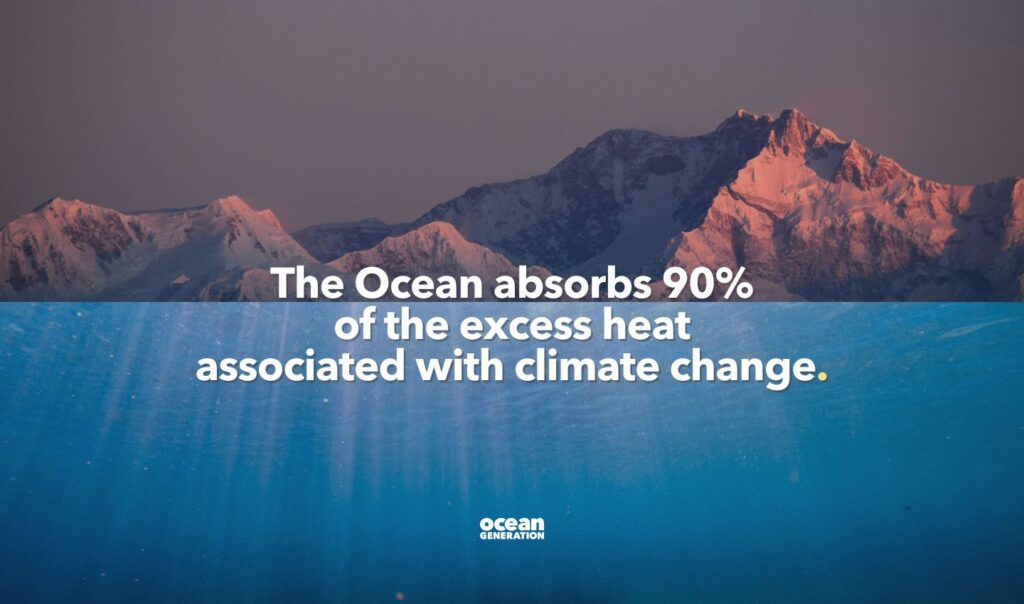
The Ocean absorbs 90%
of the excess heat 
associated with climate change.

5 reasons to look after the Ocean this Earth Day  

  • The Ocean is keeping us all alive. It provides over 50% of all oxygen on Earth. Simply put: If the Oceanโ€™s ability to produce oxygen was compromised, weโ€™d be in trouble. 
  • Around 30% of the CO2 we produce is absorbed by the Ocean. 
  • The Ocean helps regulate land temperature and drive global weather patterns. 
  • Coastal โ€œblue carbonโ€ ecosystems, like mangrove forests and seagrass meadows, can sequester (store) more carbon in their soils than terrestrial forests. 
  • The Ocean is the main protein source for over 3 billion people. 

We depend on a healthy Ocean for a healthy planet. In the words of Dr. Sylvia Earle, โ€œNo water, no life. No blue, no green.โ€ 

Whatโ€™s the theme for Earth Day 2024?  

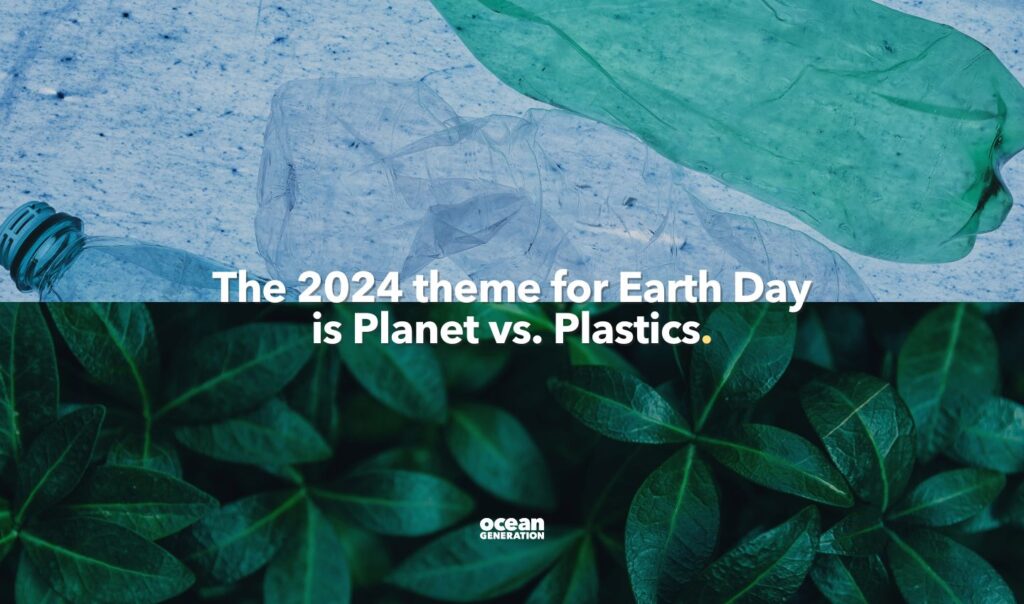
In 2024, the theme for Earth Day is Planet vs. Plastics. 422 million tonnes of plastic are produced annually โ€“ half of which is for single-use purposes.

Plastic is everywhere. It’s in what we wear, the items we use daily, and itโ€™s even in the food we eat. 

We know plastic was designed to be indestructible (so, itโ€™s not going anywhere, anytime soon). We know it has numerous negative impacts on human health. We know single-use plastics are the biggest contributors to marine litter. And we use it anyway.  

Itโ€™s safe to say: We have a problematic relationship with plastic. 

This Earth Day, rethink your relationship with plastic. 

The 2024 theme for Earth Day 
is Planet vs. Plastics.

What action can I take this Earth Day? 

Riding the Wave of Change 

As we commemorate Earth Day, itโ€™s important to reflect on how far weโ€™ve come and re-commit ourselves to leaving our blue planet better than we found it. 

We only have one planet and itโ€™s up to all of us to look after it.  

We only have one planet so we have to look after it.

How do international treaties get created?

Subscribe

Monthly: Impact in your inbox.

OceanGeneration-Join

Citizen science: Monitoring the turtles of the Red Sea

Sea turtle monitoring at the Red Sea, a Wavemaker Story by Serag Heiba. Posted by Ocean Generation, leaders in Ocean education.

The Red Sea is a storied body of water that many have heard of, but few are familiar with.

Its history will bring up names like Hatshepsut and Moses, and its present is fraught with tales of piracy and political unrest.

But thereโ€™s another side to the Red Sea. As the most northern tropical sea, it boasts an incredible biodiversity that makes it both stunningly beautiful and ecologically vital. 

I had the pleasure of spending two weeks with TurtleWatch Egypt 2.0, an organisation dedicated to monitoring the endangered sea turtle populations of Egyptโ€™s Red Sea coast.  

They launched as an initiative in 2011, and registered as an NGO in 2022. I was curious to learn more about marine conservation in my home country. To my luck, TurtleWatch was the perfect place to start. 

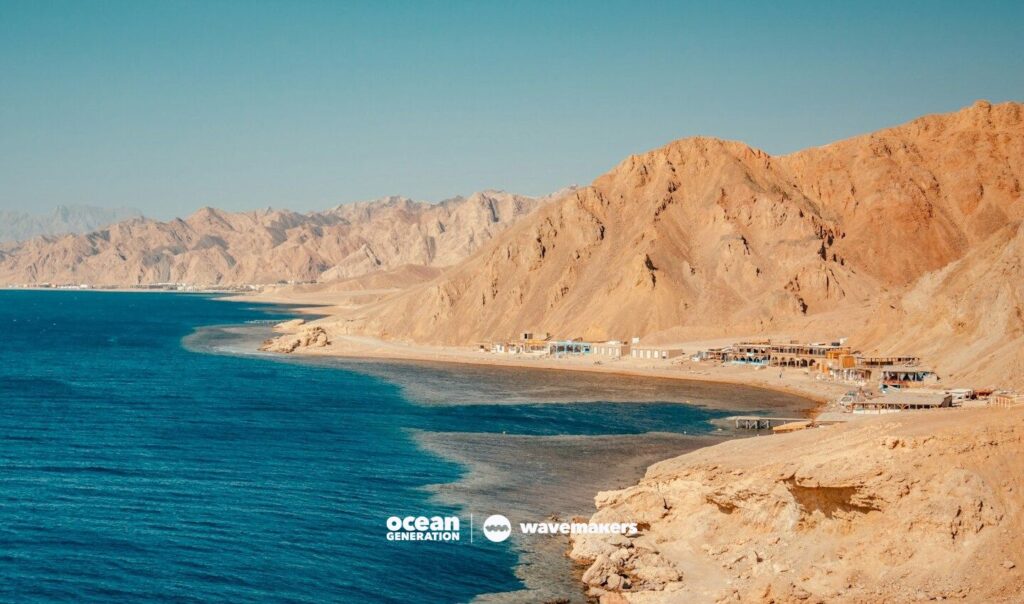
Red Sea coast is a world-renowned spot for diving.
Photo by Raimond Clavins

Based in the small town of Marsa Alam, their day-to-day work may be a dream for many thalassophiles.

Mornings are spent diving in bays rich with seagrass and corals, snapping photos of sea turtles and measuring data like shell length and water temperature.

Of course, their work has less idyllic parts too. Never-ending paperwork, grant applications, and database updates are just as important to the organisationโ€™s functioning.  

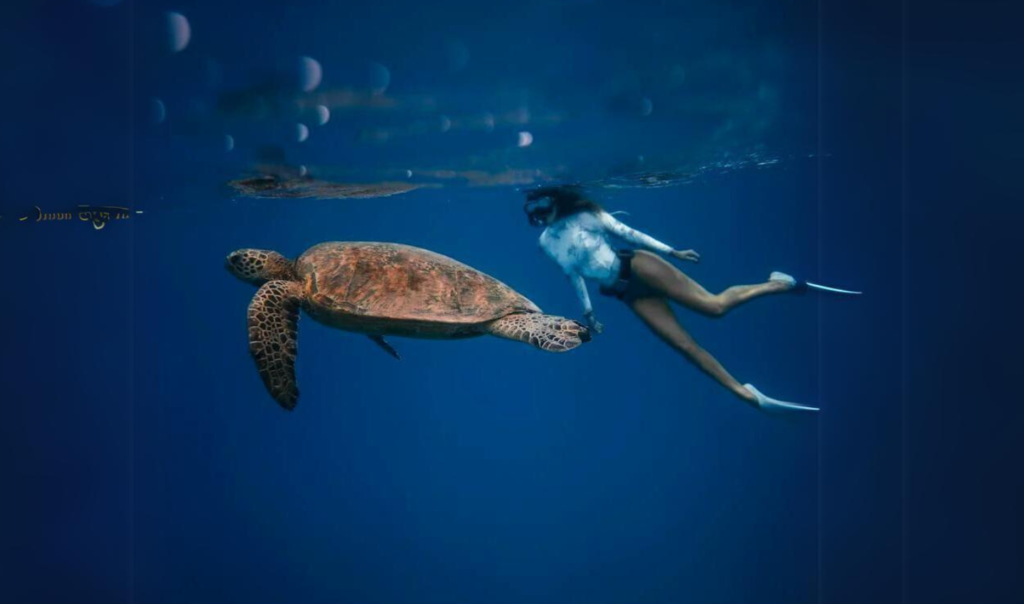
A member of the TurtleWatch team photographing a green sea turtle. The photo will later be used to identify the turtle and update their database.
Photo by Micol Montagna

Thereโ€™s one other thing that makes TurtleWatch especially unique: citizen science.  

They were the first initiative in Egypt aimed at involving divers and snorkelers in marine conservation research.

How? By allowing visitors to the Red Sea to upload their own sightings and pictures of sea turtles, TurtleWatch taps into the potential of everyday people to contribute as citizen scientists.  

These contributions help TurtleWatch identify important feeding and gathering sites for sea turtles, and better understand their movements and short-term migrations. It also helps them assess the impacts people have on these endangered animals.

They use this information to not only improve conservation and protection efforts, but to organise training sessions for dive centres and deliver โ€œturtle talksโ€ to young children, students, and tourists. 

TurtleWatch delivering a turtle talk at a local kindergarten, as explained in a Wavemaker Story published by Ocean Generation, leaders in Ocean education.
Photo by Micol Montagna

Citizen science is not a new concept.

It has been used around the world to classify galaxies and track illegal fishing. But in a place like the Red Sea, which is understudied and where data is insufficient, TurtleWatch has managed to greatly extend their eyes and ears beyond their local vicinity.

Sightings come from all over the coast, and in 2023 they received over 1000 sightings.

It makes perfect sense: Egyptโ€™s Red Sea coast is filled with towns and resorts buzzing with snorkelers and divers, so why not involve them in the effort to protect the very marine life theyโ€™ve come here to enjoy? 

Snorllekers help safeguarding sea turtles with the help of citizen science.

As with everywhere else, the Red Sea hasnโ€™t escaped the destructive impacts of people on the natural world.

Coastal development and tourism are polluting the marine environment and leaving physical scars, while warming waters and acidification are harming the Red Seaโ€™s ability to withstand changes.

The good news is that corals in the Red Sea are some of the most resilient on the planet and could help us protect other corals reefs in the future. 

Coastal development and tourism are polluting marine life in Egypt. Wavemaker Story posted by Ocean Generation.

But before thatโ€™s possible, we will need better regulations and more marine protected areas to safeguard the Red Sea.

Organisations like TurtleWatchโ€”with the aid of citizen scienceโ€”are doing their part to provide much-needed data and help protect this beautiful sea for future generations.  


Thank you for raising your voice for the Ocean, Serag!

Connect with Serag Heiba via LinkedIn. Learn about how to submit your own Wavemaker Story here.

Disclaimer:ย Ocean Generation has no official affiliation with TurtleWatch. Mention of or reference to TurtleWatch is not an endorsement or sponsorship by Ocean Generation. The views, opinions, and activities of TurtleWatch are independent of Ocean Generation.

How do international treaties get created?

Subscribe

Monthly: Impact in your inbox.

OceanGeneration-Join

The art of not drifting apart: life lessons from sea ottersย 

Sea otters hold hands to not drift apart, a Wavemaker Story by Katie.

I took pride in my stubbornness as a young child.  My family can attest to this.

For many years I used to make a point of objecting whenever museums or art exhibitions were suggested as โ€œfunโ€ family activities.

Wandering around such places for hours on end did not exactly line up with my vision of crafting mud pies in the garden to serve to my siblings. 

My exception to this rule was the Seattle Aquarium. Seattle Waterfrontโ€™s Pier 59 is home to habitats with names like Life on the Edge, Crashing Waves, and Window on Washington Waters, showcasing the vast diversity of life in the Ocean.

To this day this aquarium remains an established part of the itinerary whenever Iโ€™m in Seattle.  

The Seattle Aquarium showcases the vast diversity of life in our Ocean. A Wavemaker Story by Katie, posted by Ocean Generation, leaders in Ocean education.

Two current aquarium inhabitants are particularly special to me. Mishka and Sekiu are sea otters who I could watch for hours as they effortlessly glide through the water and playfully twist and turn and bump into each other.

I have a soft spot for this species because it was a sea otter poster that first persuaded me to break my previously steadfast no โ€œfunโ€ family activities rule and step foot in the aquarium.  

โ€œWe hold hands in our sleep, so we never drift apartโ€ 

These were the words written on that poster. I learnt that this phrase describes the way some sea otters have been observed to hold each otherโ€™s paws while resting in a group (called a โ€˜raftโ€™).  

Since that first aquarium visit, I have gone on to pursue a degree in biology. My days are now filled with learning about the pressing challenges of global biodiversity loss and climate change, alongside uplifting stories of conservation success and awesome cutting-edge research.  

Otters hold hands in their sleep so they never drift apart.

One of my friends asked me recently if I had to choose one takeaway from my degree to share with others, what would it be? Given the breadth of the field of biology I took some time to think about it.  

โ€œWe hold hands in our sleep, so we never drift apartโ€ 

I read these words again, this time printed on a Seattle Aquarium magnet, and now have an answer for her.    

Our actions, big or small, impact our blue planet.

As a species, humans have picked up a habit of drifting apart from nature.

Societies across the world have grown, developed, and flourished. But societal complexity has historically come at the cost of increased disconnect from the wild.

Take a moment to consider where the food that you consume comes from. The journey the coffee beans took to give you that morning brew. The origin of the materials in the clothes that you wear. 

Nature provides these resources that fuel our lives.

Yet for many products, disconnect from nature is a goal. After all, meat encased in neat plastic packaging is more comfortable to consume than the reminder of its origin in nature.

Humans have picked up a habit of drifting apart from nature.

Humans benefit from the natural biological, chemical, and physical processes, such as nutrient cycles and food webs, that occur within ecosystems. Examples of these benefits, known as โ€˜ecosystem servicesโ€™, include resource provision, crop pollination, clean water, and climate regulation.

Recognising ecosystem services is crucial because harm inflicted upon nature diminishes its ability to provide these essential services.  

It can be easy to forget that humans are a species too. Our scientific name is Homo sapiens. Humans are an inherent part of nature, and yet we often detach ourselves from it. Itโ€™s as if when we walk out of that aquarium we are no longer connected to the Ocean.  

This could not be further from the truth.  

All our actions, big and small, impact the planet. As is characteristic of human nature, we have the potential for good, bad, and everything in between. For instance, while overconsumption puts pressure on ecosystems and the services that they provide, conservation programs act to preserve and protect the environment.  

It is up to us โ€“ as imperfect human beings โ€“ to try our best, maximise our positive impacts and minimise the negatives.  

So, how can we avoid drifting apart from nature? 

  • Reconnect with nature by spending more time outside  
  • Be a conscious and mindful consumer 
  • Actively educate yourself about the Ocean and the environment 
  • Engage with conservation initiatives 

The connection between people and planet must be acknowledged. We cannot afford to drift apart from the natural world.ย 

As if we walk out of the Aquarium, we're no longer connected to the Ocean.

Thank you for raising your voice for the Ocean, Katie!

Connect with Katie Curtis-Smith via LinkedIn or her Instagram page. Learn about how to submit your own Wavemaker Story here.

How do international treaties get created?

Subscribe

Monthly: Impact in your inbox.

OceanGeneration-Join