Seagrasses: More than a Blue Carbon Solution
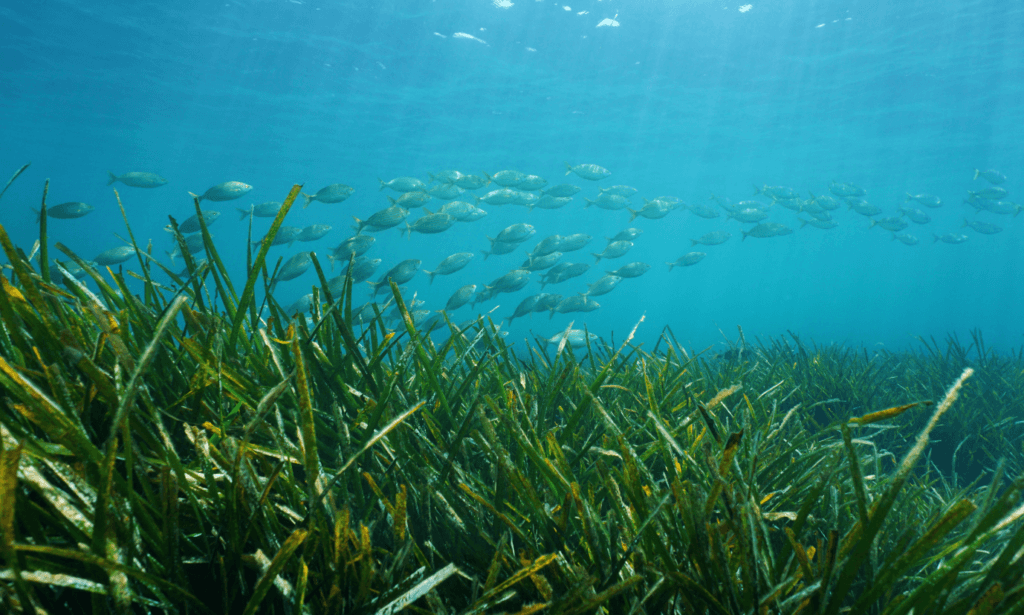
Why are seagrass meadows so important?

Seagrasses are among the most widespread coastal ecosystems worldwide and range from the tropics to boreal margins of the Ocean.

They are flowering plants that live in shallow waters that can sometimes be seen from space.  

The name seagrass stems from the many species with long and narrow leaves, which grow by rhizome extension and often spread across large “meadows” resembling grassland; many species superficially resemble terrestrial grasses. 

These deep-rooted meadows cover over 300,000km2, roughly the size of Italy, spanning 159 countries and six continents. They do not exist in Antarctica.  

Sometimes referred to as ‘lungs of the sea’, seagrasses play a multi-functional role to both human well-being and marine life, while being a globally significant carbon sink. 
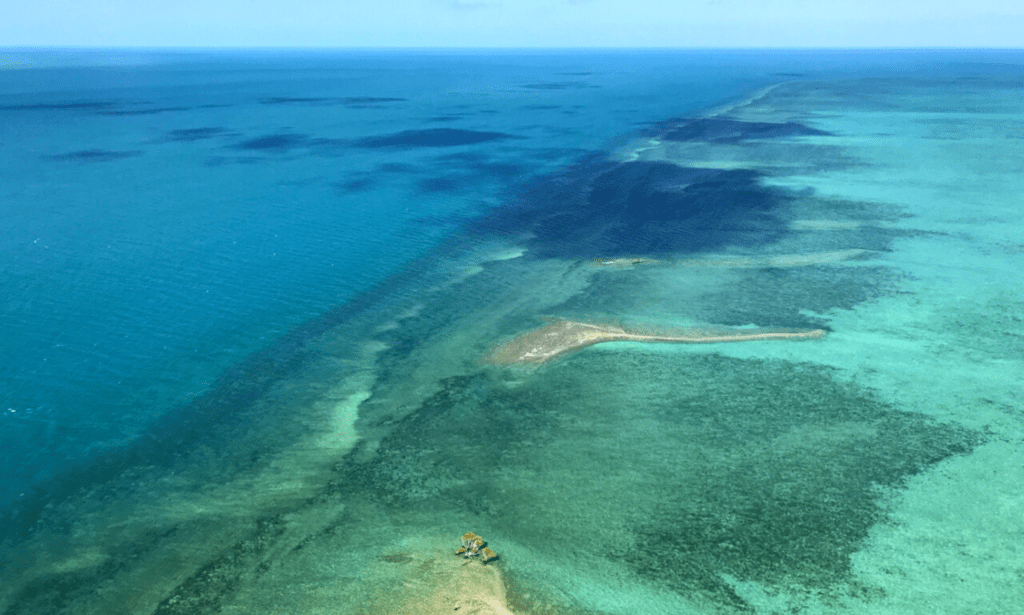
Seagrass Meadow in Clack Reef, Australia. Seagrasses are incredible climate change fighters - Ocean Generation is sharing what makes this unsung ecosystem so special.

Seagrasses are a climate change solution 

According to UNEP, despite occupying just 0.1% of the Ocean floor, seagrasses store up to 18% of the global Oceanic carbon, which is estimated to be 38,000 billion metric tons

What’s more:

– They can store twice the amount of carbon per hectare when compared to terrestrial forests. 

– The carbon is stored almost entirely in the soils, measuring up to four metres deep.

– They can act as a buffer for Ocean acidification, depending on environmental conditions, which benefits calcifying organisms like corals and shellfish. 

But that’s not all!  

How seagrasses support marine life 

Seagrasses are biologically rich and diverse habitats where species come together for many reasons. 

Some organisms – primarily large grazers like manatees, dugongs, green sea turtles and geese – eat the living leaves directly, and seagrass forms a major component of their diets.

For example, an adult dugong eats about 64 to 88 pounds (28 to 40 kg) of seagrass a day, while an adult green sea turtle can eat about 4.5 pounds (2 kg) per day. 

Apart from being a food source, seagrass meadows provide protection for burrowing anemones, bivalve molluscs and burrowing urchins that lie buried in the sand beneath. 

They also act as crucial nursery grounds for species like the European eel. It is estimated that 17 species of coral reef fish spend their entire juvenile life stage solely on seagrass flats. 

Four ways seagrass meadows benefit humans 

There are numerous ways in which seagrasses benefit us outside of their climate change mitigation potential. Benefits include: 

Food Security
They support global fisheries, acting as nursery habitats for commonly consumed species like crustaceans and molluscs.  

Coastal Protection
Seagrasses have an extensive root system that stabilises the sea bed, similar to terrestrial grasses preventing soil erosion. In this way, they protect coastlines from flooding and storm surges. 

Tourism
Whether its swimming with green turtles (Akumal, Mexico) or diving with dugongs (Marsa Alam, Egypt), seagrass meadows are a great place to positively interact with the diverse marine life it hosts.

They are also important for historical heritage, from shipwrecks to submerged ancient cities. 

Disease Control
Seagrasses can control diseases by reducing bacterial pathogens from harming humans, fish, and invertebrates. 
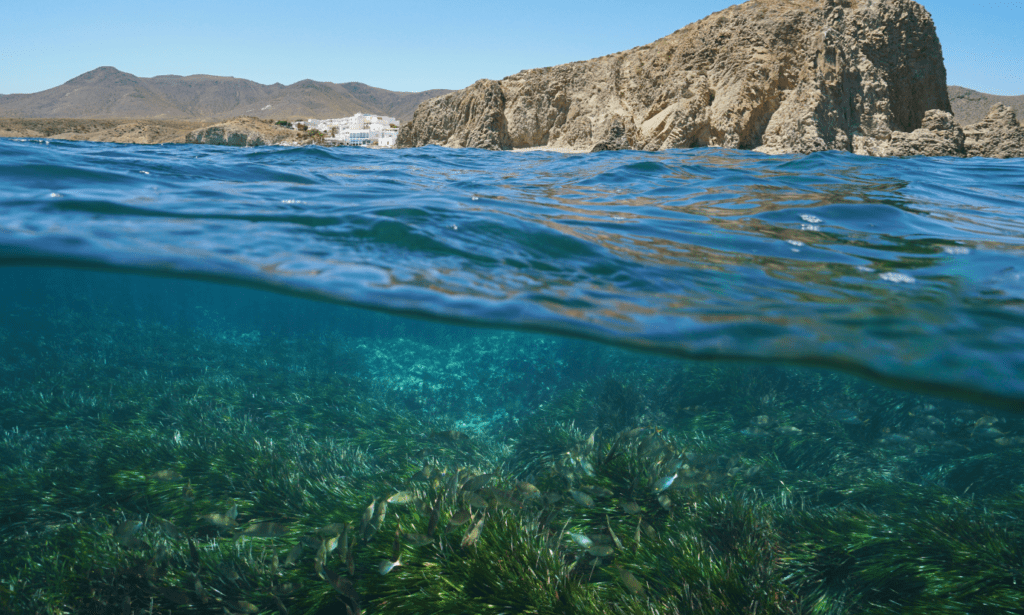
Seagrass along the coast of Spain.

Why are seagrasses threatened? 

According to one report, since 1990, there is a 7% decline in seagrass cover area globally per year, which is equivalent to a football field of seagrass every 30 minutes.  

The main threats to seagrasses are: 

– Climate Change (for example, heat stress through increases in temperature) 
– Pollution (urban, industrial, and agricultural run-off) 
– Coastal Infrastructure Development (incl. dredging) 
– Overfishing (incl. bottom trawling), and  
– Boating Activities 

…but all hope is not lost! 

The role of policy is a crucial top-down approach to restore and protect seagrasses at a broader scale.  

With the widely accepted Global Biodiversity Framework, 30% of coastal and marine ecosystems need to be protected, including blue carbon ecosystems like seagrasses. Although, at present, mangroves and coral reefs are better protected under MPA’s than seagrasses.  

The variety of ecosystem services that seagrasses provide has resulted in increasing knowledge of their value in recent years. However, there are still large knowledge gaps among the general public. 

The best way to protect seagrasses is to understand them within local environments and manage threats effectively.

School of fish swimming near a seagrass meadow in the Ocean.

Restoration Spotlight: Seagrasses in the Eastern Shore of Virginia 

The Virginia Institute of Marine Science and The Nature Conservancy have been conducting an extensive seagrass meadow restoration for almost 20 years, creating 3,612 hectares of new seagrass beds.  

To achieve that, the team of researchers and volunteers had to actively plant more than 70 million seeds of eelgrass on a 200-hectare plot just off the southern end of Virginia’s Eastern Shore.

Within 10 years, the seagrasses covered an area that would naturally take over 100 years to grow. The scientists also noted increased water quality, nitrogen storage and carbon sequestration.  

This initiative offers a glimpse into the benefits of resilient seagrass meadows and its importance in addressing climate change.


Seagrasses can help us solve our biggest environmental challenges.

They purify water, they protect us from storms, they provide food to hundreds of millions of people, they support rich biodiversity, and they efficiently store carbon.

In light of everything seagrasses do for people and nature, protecting and restoring them is vital.”  


Ronald Jumeau 
Permanent Representative to the United Nations and Ambassador for Climate Change 
Republic of Seychelles 

What can I do to help protect seagrasses? 

  1. Be a considerate tourist –  

Exploring tourist-friendly seagrass meadows can be a great way to develop an appreciation for these wonderful plants and all that they hold. But please don’t pluck them or hurt any marine species when visiting.

  1. Become a citizen scientist –  

Furthering scientific knowledge is not a one-person effort and so, public participation in citizen science projects are a fantastic way to contribute. 

The SeagrassSpotter project has been created by Project Seagrass in association with Cardiff University and Swansea University. Using SeagrassSpotter, you can help locate seagrasses which will be used by scientists for research including the prediction of locations for restoration. 

Narwhals and Unicorns: How the magic of the Arctic has changed

Subscribe

Monthly: Impact in your inbox.

OceanGeneration-Join

Say Ocean, not oceans: Why there is only one Ocean

There is only one Ocean.  

At school, we may learn that the Ocean has five separate regions, namely, the Pacific, Atlantic, Indian, Artic and Southern. 

But our Ocean has no borders. It’s connected as one and it works as a whole to help make all life on Earth possible.  

Connection with our Ocean

Talking about ‘our Ocean’ as one, unified system reinforces the notion of its interconnectedness. 

What happens in one part of the Ocean can affect the entire system.

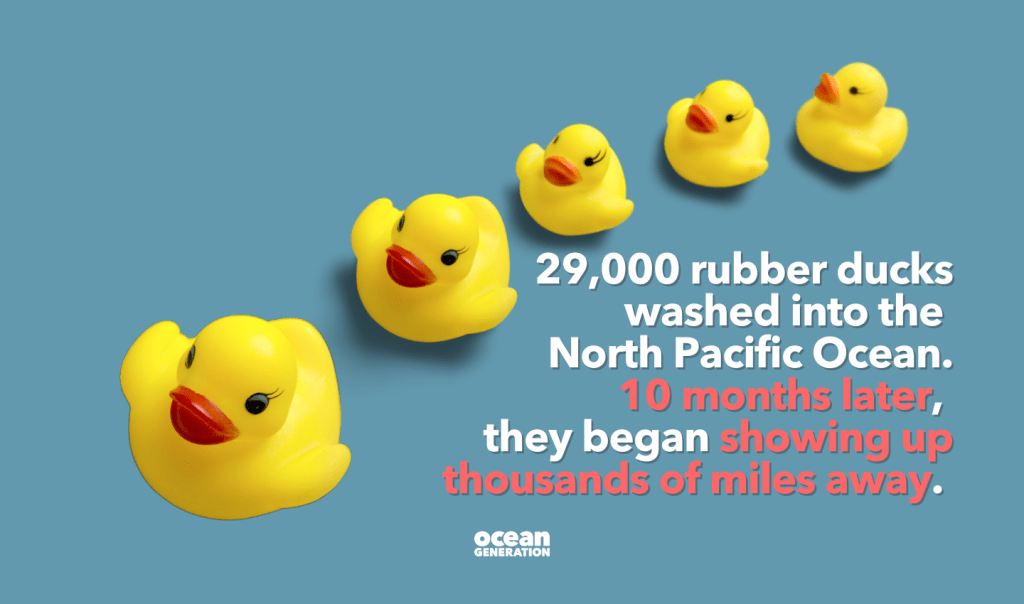
Here’s proof: When 29,000 rubber ducks were washed into the North Pacific, they began showing up thousands of miles away in Alaska, Washington just 10 months later.

This became known as “the quack heard around the world” and proved that a rubber duck (or a plastic bottle or other object) thrown or coastal waterway into a river can travel across the Ocean and end up on the other side of the world. 

29,000 toy rubber ducks washed into the Ocean. 10 months later, they were showing up all around the world. It proved that our Ocean is one, connected system.

A similar story unfolded, when almost five million pieces of Lego spilled into the Ocean from a cargo ship, off the coast of Cornwall, UK. Today, over 25 years later, the tiny, plastic toys are still washing up on the beaches of Cornwall

These stories don’t just show how connected our Ocean is. They show how human actions can have long-lasting, global impacts on marine environments.

What is your relationship with the Ocean?

We are all connected to the Ocean through weather, climate, and the very air we breathe. But each of us also has our own personal experience with the Ocean.

Maybe you swim, sail, or relax by the sea. Maybe you enjoy sushi, or listen to Ocean sounds on Spotify to help you sleep. You likely use products every day that are imported, by boat, from other parts of the world.

Biologist Wallace J Nichols, the author of Blue Mind, says, “We are beginning to learn that our brains are hardwired to react positively to water and that being near it can calm and connect us, increase innovation and insight, and even heal what’s broken.”

But the ways the Ocean keeps us all alive – like how the sea supplies over 50% of the oxygen we breathe, regulates the climate, nourishes the crops we eat and feeds billions of people – are often less understood.

This is where we come in.

At Ocean Generation, we’re rebuilding the connection between people and the Ocean. We’re an Ocean education charity that uses science, storytelling and pop-culture to make marine science interesting and relevant to your daily life.

When we understand why the Ocean is important, we feel connected to it. When we feel connected, protecting it is simply the next obvious step. A healthy Ocean is essential for a healthy planet.

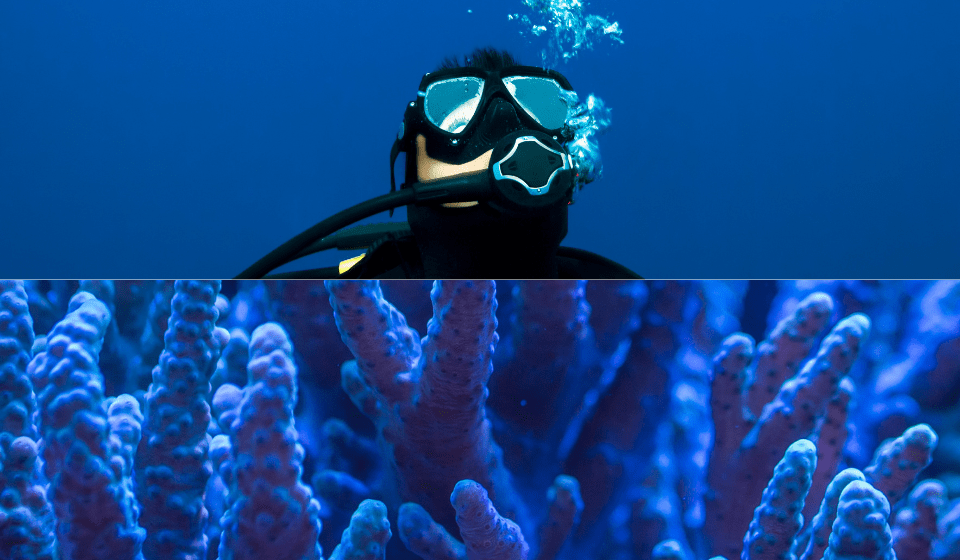
A diver in the Ocean, representing our connection with the Ocean. The Ocean supports all life on Earth and Ocean Generation wants to rebuild this human, Ocean connection so we can understand its importance.

Every drop of water is connected.

We don’t usually think of the water that comes from our taps as Ocean water. But to quote a little fish…

All drains lead back to the Ocean.

Finding Nemo

Every waterway (rivers, drains, the water in your coffee) eventually flows into the Ocean. Even the 60% of water that makes up your body has passed through the Ocean at one point.

The Ocean breathes air into our lungs, it nourishes our food, it controls our weather. We depend on our Ocean in more ways than we realise.

That means all our choices all ripple back, and impact, our blue planet. Everyday actions, even when they feel small, make a difference.

Want to feel more connected to our blue planet?

Join the Ocean Generation

  • We share bite-sized environmental education through science, storytelling and popular culture.
  • Translate complex Ocean science into engaging content on social media.
  • Run Youth Engagement programmes for people 3 – 25 years old (online and in-person).
  • Host talks for companies and corporates in the UK.

    Subscribe to receive the Ocean in your inbox (and get links to any of the above) or add the Ocean to your daily scroll on Instagram.

Narwhals and Unicorns: How the magic of the Arctic has changed

Subscribe

Monthly: Impact in your inbox.

OceanGeneration-Join

Our Impact: Understanding the 5 Ocean Threats

The Ocean is a flourishing ecosystem that can maintain itself.

But our actions have been negatively impacting the Ocean for decades, at a rate our Ocean cannot keep up with. 

There was a time when we thought the Ocean was endless. So, we treated it that way: Taking what we wanted, when we wanted, in whatever quantity we liked.  

It took us far too long to realise the many ways we threaten our Ocean. But now we know better.

Our Ocean is one of our planet’s most valuable ecosystems.

The Ocean provides over 50% of the world’s oxygen, captures 30% of human-made carbon emissions, and mitigates the climate crisis. The bottom line: We need a healthy Ocean for a healthy planet. 

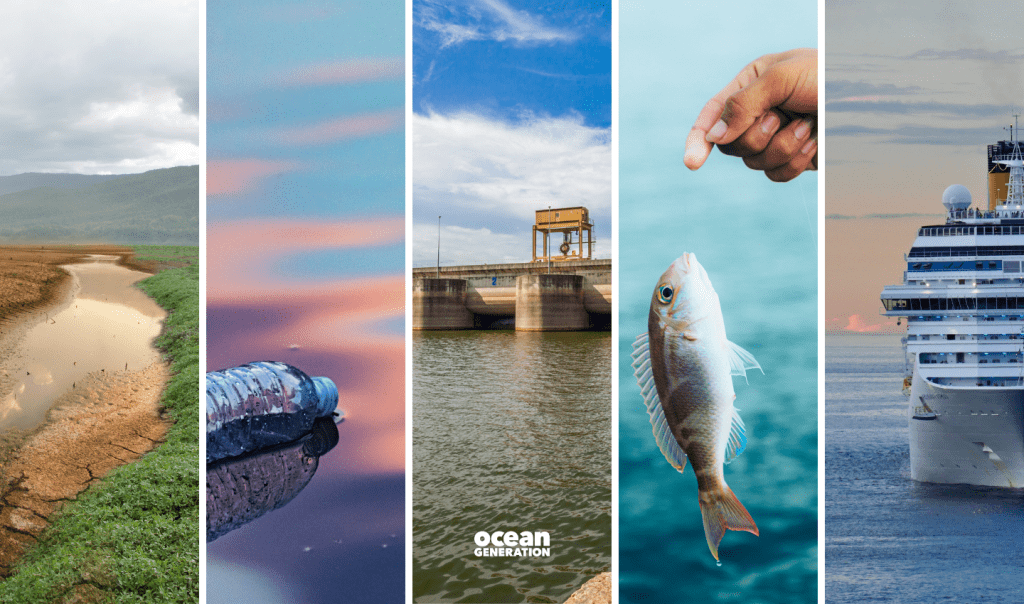
What are the 5 key ways human activity impacts the Ocean? Ocean Generation is sharing the human threats our Ocean faces. 5 images side by side represent the threats: a dry landscape for climate change; a plastic bottle in the Ocean for pollution; a dam wall for costal infrastructure; a caught fish for resource extraction; and a cruise ship for daily Ocean use.

How does human activity threaten the Ocean?

Our Impact work explores the 5 key ways human actions negatively impact the Ocean.

Many of the underlying actions causing these Ocean Threats have existed throughout the course of human history – but have become unsustainable more recently because of rapid population growth and the consequent scale of our impact on the marine environment.  

What human activity impacts the Ocean the worst?

There are no known, credible, scientific classification of the severity of these Ocean threats. What does that mean – simply? We can’t tell you which of the five threaten the Ocean the worst.

But there’s no doubt that all of these Ocean threats are inter-related and can combine to have vast negative impacts on Ocean health, marine habitats and marine life which, in turn, pose serious threats to human health.

What are the 5 human-made Ocean threats?

1. Climate change: We can’t talk about climate change without the Ocean

It’s widely accepted that human actions are the primary drivers of climate change. The biggest culprit? Burning fossil fuels (for example, coal, oil and gas) to produce energy is the main cause of climate change.

Signs of climate change are all around us – and impossible to ignore. But too few of us understand the important role our Ocean plays in mitigating the climate crisis.

How does the Ocean mitigate climate change?

Our Ocean plays a fundamental role in regulating global temperatures, storing massive amounts of carbon, and capturing heat from the atmosphere.

Although the Ocean drastically mitigates climate change, it’s also impacted by climate change. These changes (like increased Ocean heat), have negative consequences on Ocean health and thus, all of us.

2. Pollution: It’s not just plastic polluting our Ocean. 

Plastic is, by far, the most common and impacting pollutant in the Ocean.

80% of plastic in our Ocean comes from the land and most of that is made up of single-use plastic items; products we use once, then throw away. And that’s the biggest problem with plastic: there is no “away.”

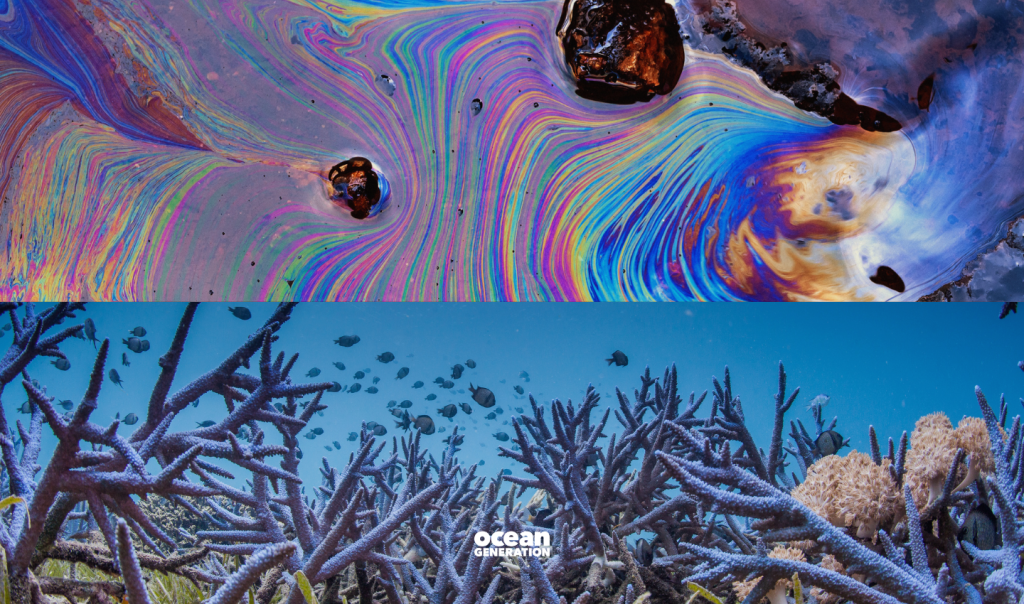
This Ocean Generation above and below image shows human impact on the Ocean in the top half of the image with an oil spill in the Ocean and in the bottom half, the flourishing Ocean. An array of fish are swimming among bright blue corals.

3. Coastal Infrastructure Development: Why do we need to protect our coastlines?


2.5 billion people live within 100km from our Ocean.

Coastal regions are densely populated areas with increasing rates of population growth (and who can blame them? Living near the Ocean has numerous benefits.)

But rapid urbanisation of our coastlines has negative impacts on the environment – many of which are linked to climate change.

With higher frequencies of natural weather events (like cyclones and hurricanes), erosion and land loss, and flooding, coastal regions have never been this vulnerable.

4. Resource Extraction: What resources do we extract from the Ocean? 

Around 3 billion people rely on the Ocean for their primary source of protein: Seafood.

Seafood is the most notable thing we extract from the Ocean but it’s not the only thing. We also extract minerals, fossil fuels, and plants from the Ocean.

Our Ocean – as incredible as it is – is not limitless.

We must recognise the limits of Ocean resources and control the quantity and frequency at which we extract resources from the Ocean; allowing it time to replenish and regenerate. Otherwise, we will reach a point of no return.

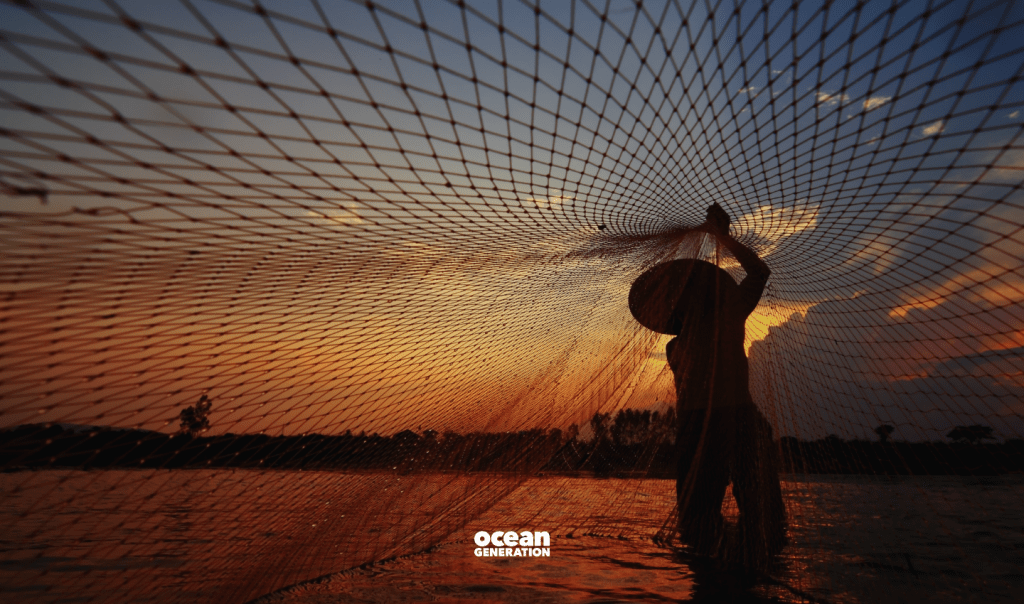
A fisherman, standing knee deep in the Ocean, is holding up a fishing net. It is sunset and only the outline of the fisherman and his hat can be seen against the yellow sky. In this blog, Ocean Generation is sharing the negative impact of resource extraction on the Ocean.

5. Daily Ocean Use: What’s the impact of daily human actions on the Ocean?

Humans work hard and always have something on the go. The Ocean is no different.

All around the world, our Ocean is in use every day. From cargo shipping for trade, passenger traffic for travel to commercial fishing and research – the Ocean is used widely. How we make use of the Ocean is what’s important.

We need to turn to using the Ocean sustainably to protect the awe-inspiring ecosystem that supports all life on Earth. 

What can I do to protect our blue planet?

Understanding the 5 main threats our Ocean faces is step one. Step two is doing something about them. Some of these Ocean Threats can feel overwhelming – but they don’t have to be.

Working together is humanity’s superpower. And it remains our best tool for solving the world’s biggest problems, and simultaneously, restoring our Ocean.

Three ways you can take environmental action – with a focus on the Ocean – right now:

  1. Subscribe to our newsletter to receive monthly impact in your inbox; explore our Science Hub; or visit our Instagram page for bite-size environmental education.

  2. Recognise that you don’t have to be perfect.

    Ask yourself: What can I do right now to decrease my carbon footprint? What can I do to be a voice for our Ocean and empower others to do the same?

  3. 20 actions to reduce and reuse plastic.

Subscribe for simple Ocean Science and pop-culture stories

* indicates required

View previous campaigns.

Ocean Generation will use the information provided here to be in touch with updates and marketing.

You can unsubscribe at any time.

Narwhals and Unicorns: How the magic of the Arctic has changed

Subscribe

Monthly: Impact in your inbox.

OceanGeneration-Join

How to turn eco-anxiety into eco-agency

To protect Earth’s most precious ecosystem – our Ocean – we must first understand its importance. Our Wavemaker Programme empowers young people between 16 – 25 to use their voice and talents to make a positive impact on our blue planet. This piece was written by one of our Wavemakers. Submit your own story.

Ocean threats don’t just impact the environment and non-human creatures, but our own health and wellbeing too. One key way the environment’s degradation can impact us is through eco-anxiety. 

Shrinking ice caps, disappearing biodiversity, fiercer bushfires, heat waves , and flash floods. The effects of climate change are difficult to ignore.

These disasters not only cause immense physical destruction – a growing body of evidence shows they’re also taking a toll on our mental health. 

What is eco-anxiety anyway? 

Eco-anxiety is extreme worry about current and future harm to the environment caused by human activity and climate change. 

Eco-anxiety can be caused by the stressful and frightening experience of “watching the slow and seemingly irrevocable impacts of climate change unfold, and worrying about the future for oneself, children and later generations“, according to a 2018 report.

What is eco anxiety and how can it be turned into eco agency? Ocean Generation explains.

How do I know if I have eco-anxiety? 

Eco-anxiety can feel like feelings of loss, helplessness, frustration, and guilt, as the sufferers feel they are unable to stop climate change.

Feeling this anxiety is an emotionally mature state to be in, which shows that you are aware of the crisis that we are all facing. 

So, whilst it can be unpleasant, it can show a willingness to face painful truths and facts, and that should be acknowledged and almost (though not quite as simple as this) be celebrated. But how? 

When facing eco-anxiety, remember you’re not alone. 

First of all, try to recognise your feelings as completely reasonable and necessary, rather than push them away.

Taking time to acknowledge my feelings helps me maintain a healthy relationship with them, and often motivates my work and activism.  

Finding your place in a community can also be a huge help with feelings of despair and anxiety. There are a lot of support and activist groups you can join (read on to the tips section to see some example groups). 

Shared belonging and concern can be a great support and working towards tangible solutions can give a much greater sense of control in overwhelming circumstances. 

Know when to seek professional help: 

If your eco-anxiety is so severe that it causes you to be unable to function, or feels unbearable, you could consider seeking professional help. Try to bring empathetic understanding and connection to, ideally, find meaning in this experience. 

It is often the loss of meaning that causes people the most suffering.

Understanding that these feelings have meaning can be comforting. The ideal is to find balance between feeling these emotions, and then using them in different ways to create meaningful change, better relationships with your family and friends, maybe even more meaningful work and activism of some kind.

At least know that you are not alone with your fears. 

Eco-Agency: Steps to tackle eco-anxiety  

Since 2017, and especially since autumn 2018, there has been increasing coverage about eco-anxiety and climate anxiety in various media.  

One focal point in this discussion has been the young climate activist Greta Thunberg, who has openly spoken of her climate change anxiety.

Climate anxiety became perhaps the most discussed form of eco-anxiety, and it was often discussed in relation to the children, youth, and young adults who participated in climate action.  

Greta Thunberg on why we all need to make daily changes to protect our planet, shared by Ocean Generation

More studies on the mental health impacts of climate change have been published. In 2020, books for the general public began to appear, providing suggestions for self-help and social action in order to alleviate eco-anxiety and especially climate anxiety.

Book recommendations to learn more about eco-anxiety and how to deal with it:

A guide to eco-anxiety: How to protect the planet and your mental health.
A field guide to climate anxiety: How to keep your cool on a warming planet. 
Turn the tide on climate anxiety: sustainable action for your mental health and the planet.
Why has nobody told me this before?

Book recommendations about eco anxiety, shared by Ocean Generation and Mia Celment

Acknowledging that there are many people feeling this anxiety and looking at options of how you could help yourself and others, helps you move from an eco-anxious mindset to an eco-agent perspective.  

Eco-agency is being proactive in looking after yourself and your wellness within your environmental actions.

It means ensuring you are mindful of your mental health and keeping fit and healthy. The next couple of tips are ways I found have helped me move from eco-anxiety to eco-agency. 

Tips to deal with eco-anxiety 

Here are five steps I find have helped me live, cope with and overcome eco-anxiety. 

1. Try and live in alignment with your values 

The impact of individual actions can be very small, but psychotherapist Mary-Jayne Rust suggests that changing your lifestyle to be more compatible with your values can help with eco-anxiety.

Researchers from Imperial College London’s Grantham Institute offered several ways to do this: eat less meat and dairy, drive less and stop buying and disposing of so many items. 

2. Don’t feel ashamed about feeling anxious

For example, environment writer and activist Emma Marris noted that billions of people fly.

“My individual actions are not actually capable of solving climate change,” she said.

While changing how you live and travel may help you by letting you live more closely in accordance with your values, you shouldn’t feel ashamed for not being fully able to comply with these.

“The systems in which we are all enmeshed essentially force us to harm the planet, and yet we put all that shame on our own shoulders,” said Marris. “The shame is not helping anybody.” 

3. Focus your efforts on changing systems, not yourself 

Marris argues that we can’t get where we want to be through individual action, and that accepting this has therapeutic benefits.

“I don’t think a complete narcissistic focus on the self is healthy,” she points out. Instead, Marris suggests you can have a much more meaningful impact by working with others to lobby governments.

The Grantham Institute advises letting your MP, local councillors and mayor know that you think action on climate change is important and writing to your bank or pension provider to ask if you can opt out of funds that invest in fossil fuels. 

4. Find like-minded people 

Finding a community of like-minded individuals can help you express and share your feelings of eco-anxiety. You can’t solve climate change on your own. Joining a group of some kind will enable you to make friends. 

I’m not an expert on mental health but I feel like making friends is helpful – giving you a space to share your thoughts and feelings.  

Organisations that address eco-anxiety: 

Eco-anxiety support group with Waterspirit
Force of Nature community
Take Climate Action
Climate Psychologists
Climate & Mind
The Climate Dreams Project
Climate Journal Project
EcoAnxious Stories
The Mental Health and Climate Change Alliance

– Talk about the changes you make 

The importance of talking about your experiences – the challenges as well as the positives – and bringing other people along with you. 

Talking about the practical things you can do in their day-to-day lives can give you some sense of control back and empowers you to take ownership of your choices and agency. 

I’d be lying if I said that there wasn’t a lot of time when you think, ‘Why do we bother?’ But, when you sit down, chat to other activists or advocates and have a bit of a think about it, you realise that there’s a huge amount that we can still do.

Yes, our planet and Ocean are in trouble. But it’s in our power to protect what’s left and make a meaningful difference.
And that’s why we do this.
That’s why we carry on. 

If you’d like a chance to meet others, learn more about our Wavemaker Programme. And if you’d like to submit your own Wavemaker Story, do so here.

Narwhals and Unicorns: How the magic of the Arctic has changed

Subscribe

Monthly: Impact in your inbox.

OceanGeneration-Join

Dear Ocean, sorry we didn’t write back

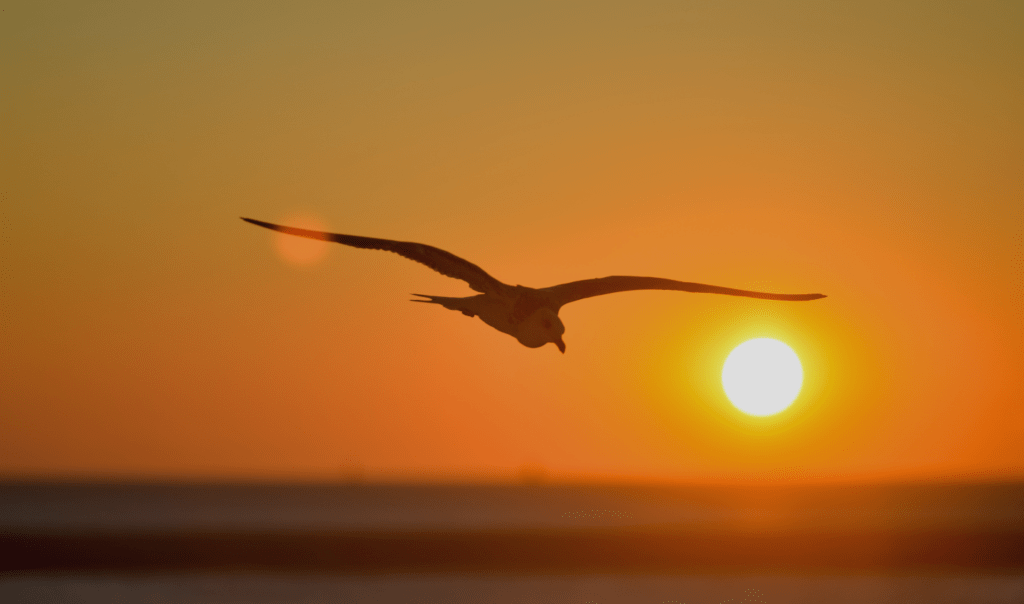
Seagull flying over the Ocean against the backdrop of an orange sunset shared by ocean Generation: experts in Ocean health since 2009.

To protect Earth’s most precious ecosystem – our Ocean – we must first understand its importance. Our Wavemaker Programme empowers young people between 16 – 25 to use their voice and talents to make a positive impact on our blue planet. This piece was written by one of our Wavemakers. Submit your own story.

The Ocean is the world’s most shared resource.

Social, economic and environmental sharing is caring

The Ocean is the world’s most shared resource. The vitality of the Ocean is necessary to support and sustain Earth and here’s why.

Covering over 70% of the planet, our Ocean takes responsibility for regulating our climate and weather from the poles to the equator.

As if her generosity wasn’t enough, the Ocean’s environmental benefits have continued to protect and conserve biodiversity and create global sources of natural carbon sinks. It does this by providing services to ecosystems, including coastal wetlands, mangroves and coral reefs.

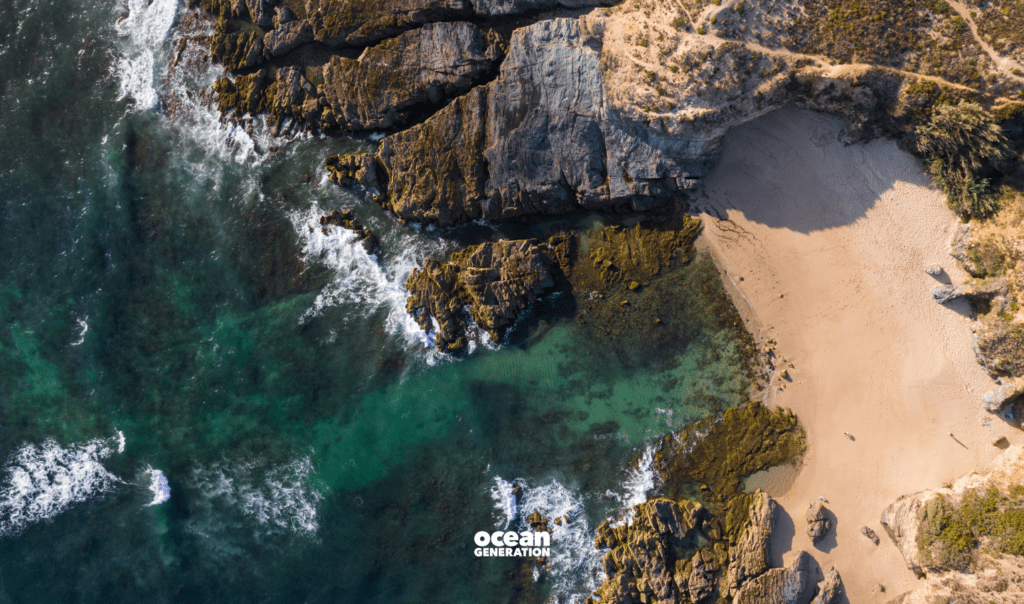
Aerial view of a beach and the Ocean shared by Ocean Generation - experts in Ocean health since 2009.

Human health and Ocean health are connected

The health of our Ocean is intimately tied to our health. No, really…with every breath we take, with every drop we drink, we’re connected to her.

Not just physically, but emotionally. When we take a step back to enjoy the magnificent view of our Ocean (whilst adding her to our IG stories #SoGrateful), it welcomes a sense of calmness, for how life can be so gentle and beautiful.

But to take this mentality forward with how we care for her every day is the next essential step.

Why?

Well for one, the Ocean provides us with over 50% of the world’s oxygen.

No matter her physical forms, whether stormy and rough, warm and clear or frigid and cold, she, the Ocean, has always helped us breathe during our time on Earth and should never be gone unnoticed.

What resources does our Ocean provides us with?

The Ocean continues to provide a vast number of economic and social benefits, including: jobs, food, medicine, recreation and wonderment – to name a few.

Our Ocean boosts sustainable economic growth in some of the world’s poorest countries, which supports the well-being of coastal communities.

“[A healthy Ocean is] critical for combatting rural poverty, ensuring food security, improving nutrition and achieving zero hunger.”

José Graziano da Silva

Economically, about 38 million people rely on the fishing and fish-farming industry, 95% of whom live in Asia, Africa and Latin America.

The economic benefits the Ocean provides has sparked several positive domino effects for many communities, including: food security, job security, sustainable trade in Ocean -based goods and services, sustainable shipping, and an attraction to sustainable tourism.

In addition, OECD confirmed that over 90% of the world’s trade uses sea routes thereby making the Ocean a heavily reliant agent to access essential resources and necessities, including food, medical supplies and drugs, and fuel.

It is important that we not only take notice but also speak about how many communities around the world have learnt to grapple and adapt to the Ocean’s gifts – as opposed to altering the Ocean to fit their needs, they learnt to navigate their lifestyles with the Ocean.

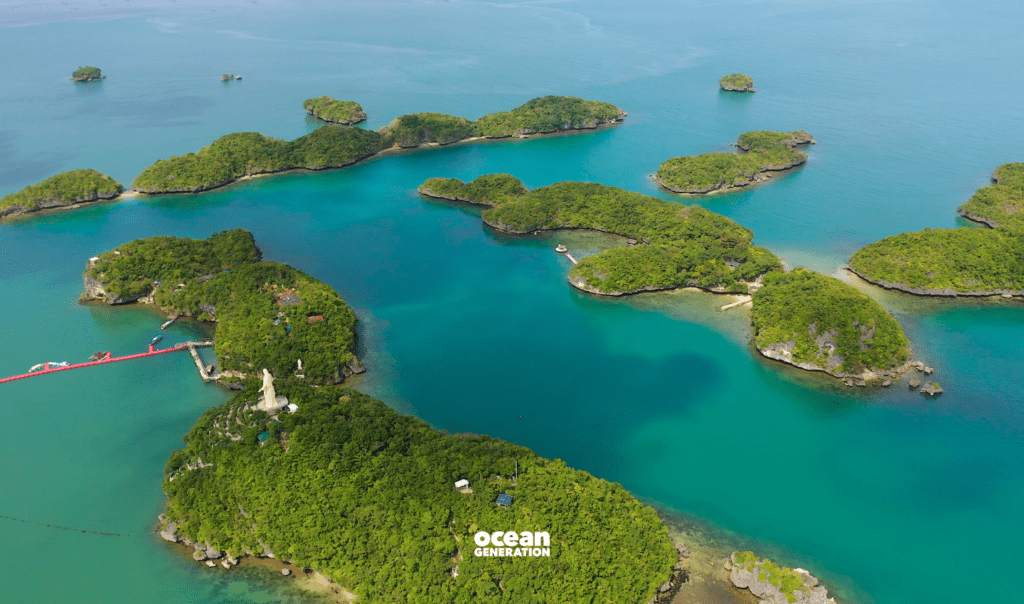
Island communities depend on the Ocean for their livelihoods. Image shows a scattering of islands in the Ocean with lush green trees and blue water/

The impact of our Ocean on communities:

Sri Lanka’s Ocean wealth

The island we know today as Sri Lanka has thrived on the Ocean’s economic resources as it has made remarkable contributions to the country’s economy.

Sri Lanka’s coastal zone hosts 1/3 of the country’s population, accommodates over 2/3 of all industrial facilities, and over 80% of tourism infrastructure.

As the Ocean provides social benefits for many communities, the wellbeing dependency on the Ocean is clear. These communities have been able to cultivate a sense of stability and economic growth, through fishing and aquatic agriculture. Moreover, the little island is well known for its touristic cities, from mountain tops to the clear, blue Ocean with its golden sand.

The tropical country’s sandy coast lines continue to attract many tourists to the Ocean, to soak in the sunsets and fresh air – reflecting again on the wonder and wellness the Ocean provides us.

Economic exploitation: The new high school bad boy

Unfortunately, utilising the Ocean‘s resources and services have come at a cost – exploitation and economic dominance.

The Blue Economy was a concept initiated with the goal of sustainably sourcing the Ocean’s resources for economic growth, improved livelihoods, and healthy ecosystems.

However, this goal became somewhat of a fever dream when humans started to deteriorate marine ecosystems, resulting in widespread biodiversity loss and habitat damage – sort of like when we were content with the High School Musical trilogy, but Disney thought we needed another version which ended up disappointing us…

Although the exploitation of marine resources was apparent in the 17th-19th century – where the Caribbean coral reefs, faced a massive loss of fish and sharks – the consequences are more distinct now.

How is our Ocean’s health today?

Today, overfishing, destructive fishing practices, and pollution are some of the major enemies facing the long-term nature of our Ocean. To add to the chaos, deep-sea mining is having a detrimental impact on her physical nature, and hindering on the Ocean’s health and societal benefits.

The power of our Ocean only continues to weaken as it loses its harness over the Earth’s environmental and climate systems due to climate change.

A spike in unprecedented environmental conditions, such as acidification, deoxygenation, more frequent marine heat-waves, and El Niño, and La Niña events are predicted to have severe negative impacts on marine ecosystems and species – and we thought the Kardashians carried all the drama.

While these major shifts in Ocean health may appear to feel ‘far off’ and ‘manageable’, our reliability on the Ocean is having greater deep-rooted effects on different demographics and societies than we know.

With over 3 billion livelihoods depending on the Ocean for jobs, 680 million living in low-lying coastal zones, and food security at risk (noticeably after COVID-19 hit), we need to emphasise, now more than ever, that without our Ocean’s wellbeing looked after, our survival is at stake.

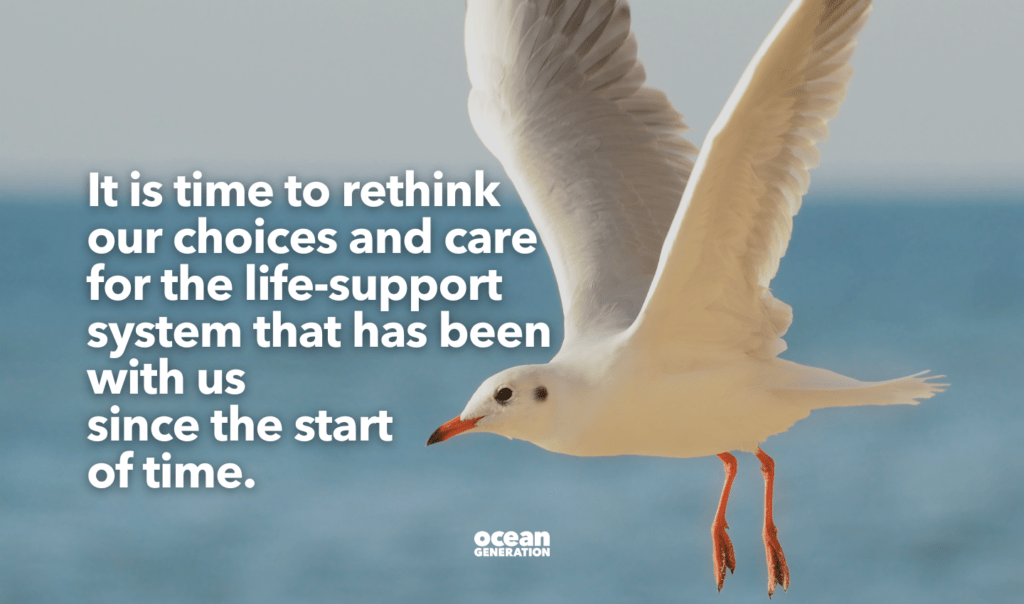
Quote shared by Zayna - an Ocean generation Wavemaker. It says: It is time to rethink our choices and care for the life-support system that has been with us since the start of time.
Zayna is talking about the Ocean. On the image is a seagull against the backdrop of the Ocean.

Our apology to her will not be enough this time. It is time we take accountability and action to restore our Ocean.

Narwhals and Unicorns: How the magic of the Arctic has changed

Subscribe

Monthly: Impact in your inbox.

OceanGeneration-Join

How to take the fast out of fast fashion

Fast fashion: The pursuit of more

The fashion industry pushes the idea that more is better — more trends, more products, more shopping; but who benefits from this? Certainly not consumers who feel the pressure to constantly stay on trend, or the environment struggling to keep up with the growing landfills and increased plastic count in our Ocean.

So, how do we break free from this craze? We slow down. 

A mindful approach to fashion

What is “slow fashion”?

Slow fashion is a mindful look at clothing from environmental factors to health implications and ethical working conditions for those that make the clothing. It is bringing fashion in harmony with our world.

Five simple ways to transition from fast fashion to a slow fashion wardrobe

1. Check the labels

Credit: Clothing label by Lydia Dupree.

Opt for natural, plant-based fibers

When selecting new pieces of clothing, look for products made out of fibers such as cotton or linen .

Many times, brands will claim their items are natural, but in fact are mostly synthetic with only a small percentage of natural fibers.

The tag on the inside of the item is the place to go to confirm what the fabric is made of — think of it as the garment’s ingredient label. Choose pieces that are a majority natural — the closer to 100% the better!

Which fabrics should we be wearing? Here’s a list.

2. Support certified brands

In addition to fabric type, look for GOTS (Global Organic Textile Standard), OEKOTEX®, and bluesign® certifications to be sure that the all-natural clothing is truly organic and not processed with toxic chemicals and dyes. 

How to choose clothing created in ethical working environments:

Beyond fabric composition, there are certifications indicative of a sustainable brand. 

Fairtrade certified brands follow criteria that create ethical working environments for farmers and garment workers, support eco-friendly practices and prioritise fair pay.

B Corporations adhere to levels of transparency, ensure ethical employee treatment and charitable giving, and demonstrate positive environmental impacts. Look for these when shopping to support brands that support their workers and the environment. 

3. Build a capsule wardrobe

Clothing line with sustainable fashion and capsule wardrobe pieces
Credit: Photo by piotr szulawski on Unsplash

Building a sustainable wardrobe starts with investing in quality pieces for everyday wear based on your style, known as a capsule wardrobe.

Think of the 3–5 items that you wear most often and feel the best in. Then, invest in all-natural items that will complement the staples you already own.

The goal is to have a closet that can be paired countless ways without having to own a lot of clothing. 

4. Buy less, wear more

This brings us to the mantra, buy less, wear more. When you need to shop for something new, ask yourself these questions:

  1. Will this pair well with what I already own?
  2. Will I wear this for more than just one occasion? 

Sometimes an outfit is specific to an event, such as a party, graduation, or a wedding. But, if more often than not you are making the most of your wardrobe, then you are participating in this more mindful approach to fashion.

Be a proud outfit repeater, Lizzie McGuire!

5. Re-love clothing

Woman in a second-hand clothing store looking at sustainable fashion pieces.
Credit: Photo by Cam Morin on Unsplash

When you feel that an item no longer fits in your wardrobe but is still in good shape, donating to a shelter is a great option.

Many brands offer buy-back programs where you can send back your pre-loved item from their brand, and they will recycle it properly for you.

Try thrifting or renting wardrobe items

Thrifting and renting clothing have become popular options, thrifting for its lower cost point and unique finds, and renting for when you need an outfit for a specific occasion.

Do your friends also have clothes they are bored with? Hold a clothes swap where you each bring a few pieces and trade off. 

There are endless ways to extend the lifetime of clothing and bring mindfulness into fashion – which all contribute to better caring for our Ocean and planet. Have fun with it!

Connect with Lydia via her website or Instagram page.

Narwhals and Unicorns: How the magic of the Arctic has changed

Subscribe

Monthly: Impact in your inbox.

OceanGeneration-Join

Our Impact: It’s not just plastic polluting our Ocean

This is part of our Four Pillars work that highlights the importance of the Ocean, the human-made threats it faces, and the solutions our Ocean provides.

It’s not just plastic polluting our Ocean

With plastic encroaching so many parts of our lives since the 1950’s, it would be hard to find a person today who hasn’t heard of this life-changing material. Despite all its uses, it is undeniable that plastic is choking our Ocean. 

But it’s not just plastic.

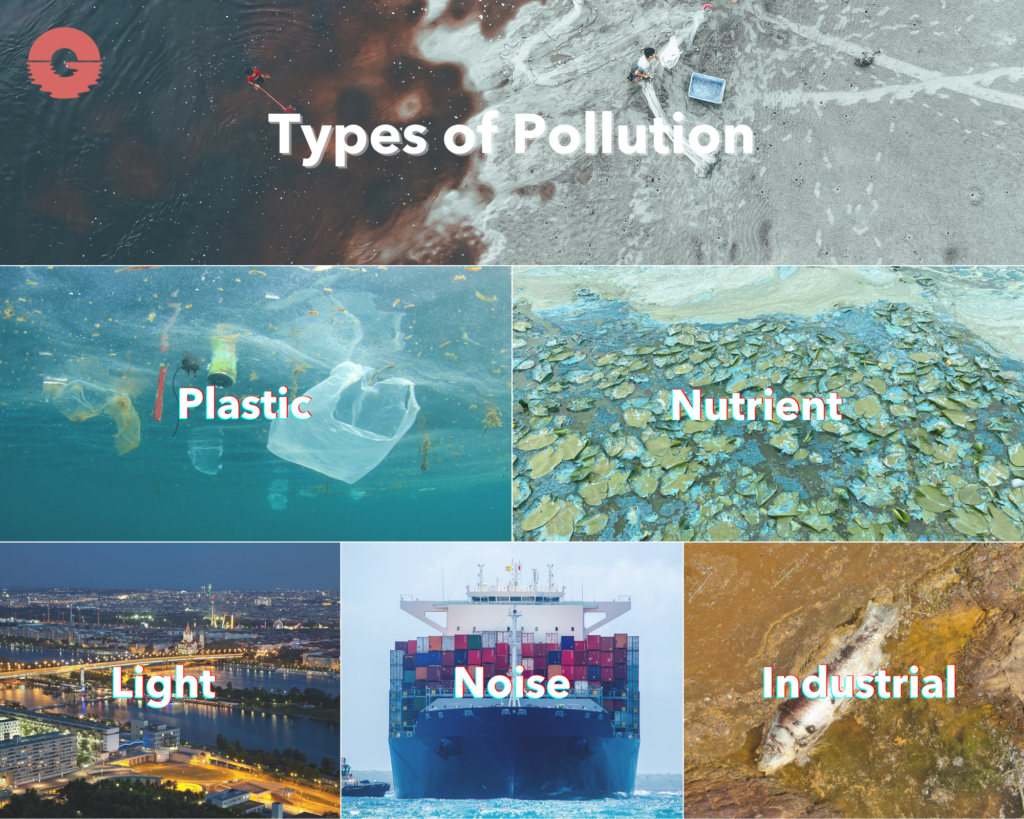
Marine pollution can be observed in many different forms (see figure below).

From chemical waste to noise, let’s explore the alarming ways in which we pollute the Ocean.

Types of Ocean pollution: Plastic pollution, nutrient pollution, light, noise and industrial pollution. Ocean Generation is breaking down the kinds of pollution that impact our Ocean.

We are drowning in plastic  

Plastic is the greatest concern of all the marine litter in the Ocean.  

With 80% of plastic originating from land, it is clear that our mismanagement of plastic is threatening marine life. In fact, marine debris from waste streams on land and at sea into the Ocean from rivers are estimated at 1.15–2.41 million metric tons annually.  

Plastic also reaches the Ocean as a result of extreme events and natural disasters like floods, hurricanes, and tsunamis.

One study even states that millions of tons of plastic may reach the Ocean this way, matching the magnitude of plastic from land.  

The most common way plastic harms marine life is through entanglement. This is not to mention the repercussions felt through the food chain when species ingest plastics (and microplastics) unknowingly. 

From whales, to birds, to turtles, plastic is mistaken for prey and consumed with traumatic consequences like infections and internal injuries. 

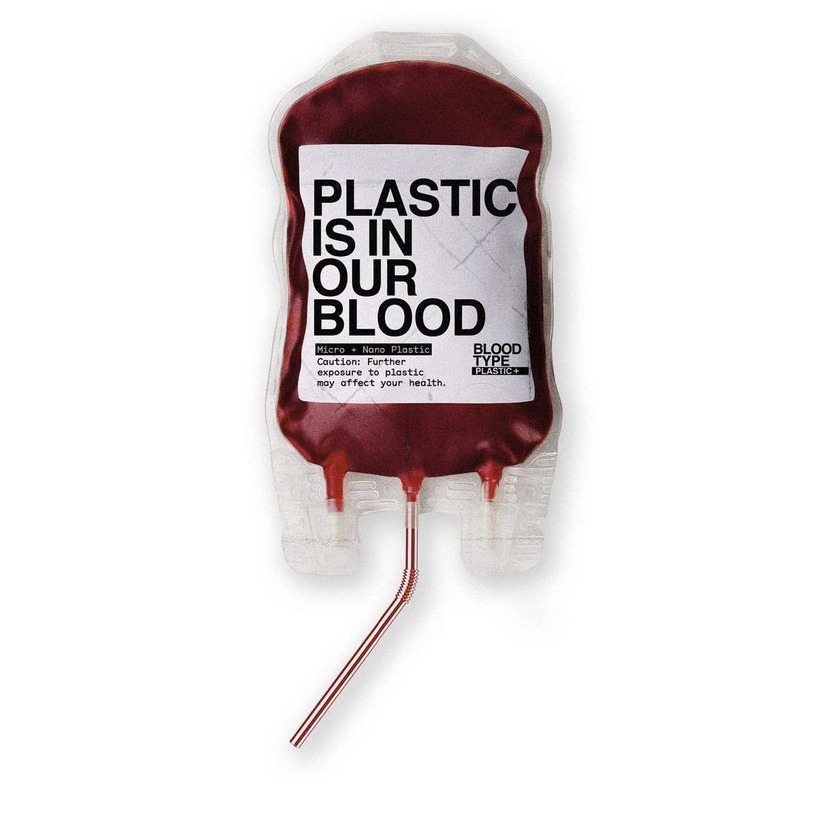
In the UN report, Second World Ocean Assessment (WOA) 2021, it was stated that scientific and medical understanding of the health threat of plastic pollution was inadequate. But since then, scientists have published studies confirming the presence of plastic in our blood and lungs.

These findings have sparked a greater support for more research into the effects of plastic on human health. 

Changes to marine communities are far from being the only effects of pollution.  

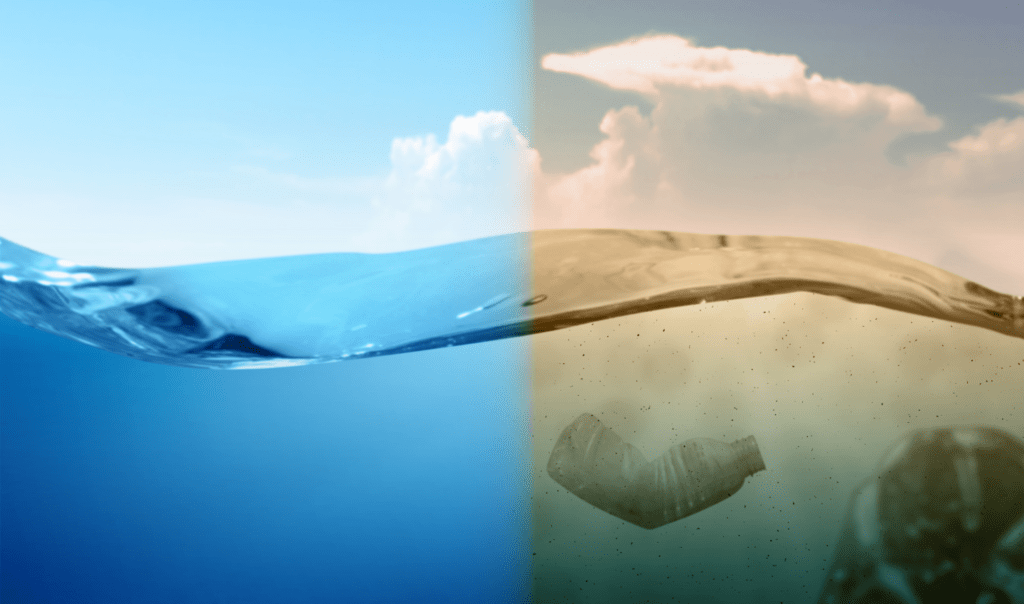
Half of the image shows a beautiful blue, clean Ocean. The other half shows a polluted, grey, Ocean with plastic bottles and nutrient pollution. Ocean Generation shares ways to tackle plastic pollution and other Ocean threats.

The nutrients we allow into the Ocean 

The increasing amount of nutrients seeping into the Ocean aid the excessive growth of algae.

This is called nutrient pollution. When the nutrients in question are nitrogen and phosphorus (from organic matter), this process is called eutrophication. It results in undesired changes to the health of coastal ecosystems.  

Nutrient changes in the Ocean threaten: 

– Carbon sequestration which limits climate change, 
– Fisheries, affecting their mortality, 
– Abundance of biodiversity, 
– Production of oxygen, and the 
– Mitigation of coastal flooding.  

The single largest source of nitrogen and phosphorus are synthetic fertilisers.

Other agricultural inputs include animal husbandry and monocultures of legumes. Another source of nitrogen is the combustion of fossil fuels, releasing nitrogen in the form of NOx. 

The most prevalent source of nutrient pollution is human sewage.

This is not a surprise considering 80% of municipal wastewater being released into the environment is untreated. Regionally, treated sewage varies from 90% in North America, 66% in Europe, 35% in Asia, and 14% in Latin America and the Caribbean to less than 1% in Africa.  

This means that across the Ocean, we see an increase in phytoplankton and a decrease in oxygen levels. This disrupts fish stocks and increases the number of waterborne diseases.  

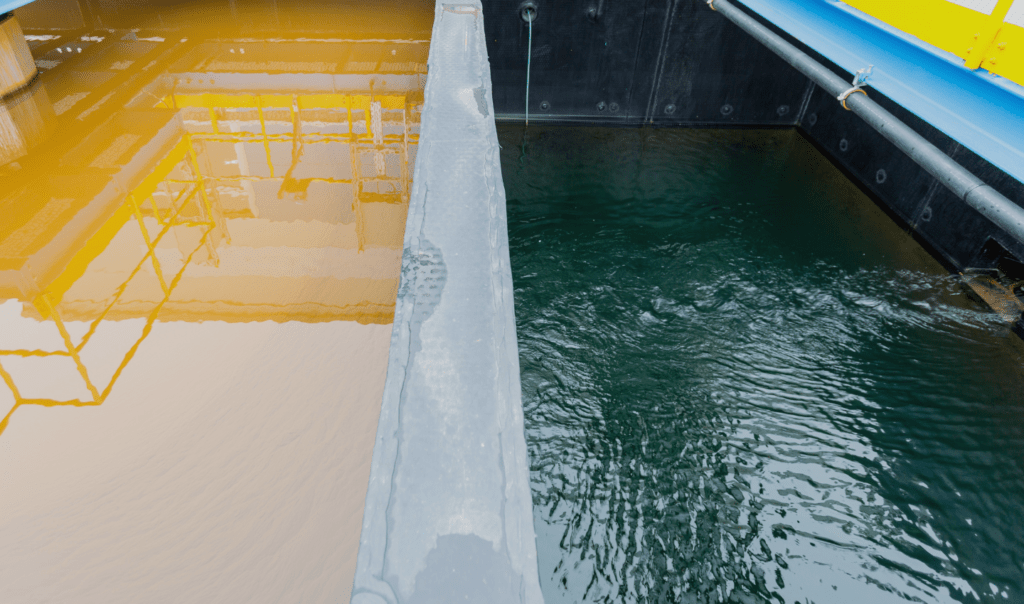
A water treatment plant.

But nutrients are not the only thing to worry about… 

Ocean pollution – in different industries: 

Industrial pollution can be observed from many sources. They are:

Persistent Organic Pollutants (POPs):
They are a complex group of substances known for their ability to endure in the environment. At present, we have observed declines in some regions, thanks to regulatory standards set by the Stockholm Convention but POPs are still a global concern.

For example, cetaceans have been detected with PCB (a kind of POP) concentrations which also affects the food chain, increasing the risk of cancer and infertility in humans. 

Metals:
Humans are responsible for large influxes of metals being released into the environment.

This includes metals such as mercury, lead, and cadmium but also rare earth metals. Metals do not disappear over time and can be trapped in sediments.

It was found that some Artic marine mammals are at high-risk with the concentration of methylmercury in their diet. This poses a risk to the food chain, and subsequently, human health. 

Radioactivity:
The discharge of radioactive substances into the Ocean from nuclear power plants continue to decline with the help of improved technologies. 

Pharmaceuticals and Personal Care Products:
This includes all chemicals used for healthcare, cosmetics, and medical purposes. The process to remove these substances from wastewater is not efficient.

As a result, the most frequently detected compounds are antibiotics. There have been some cases like the antibiotic resistant bacteria and soil found in the Artic and Pacific but overall, there is limited data on the true impact of these products in the Ocean.  

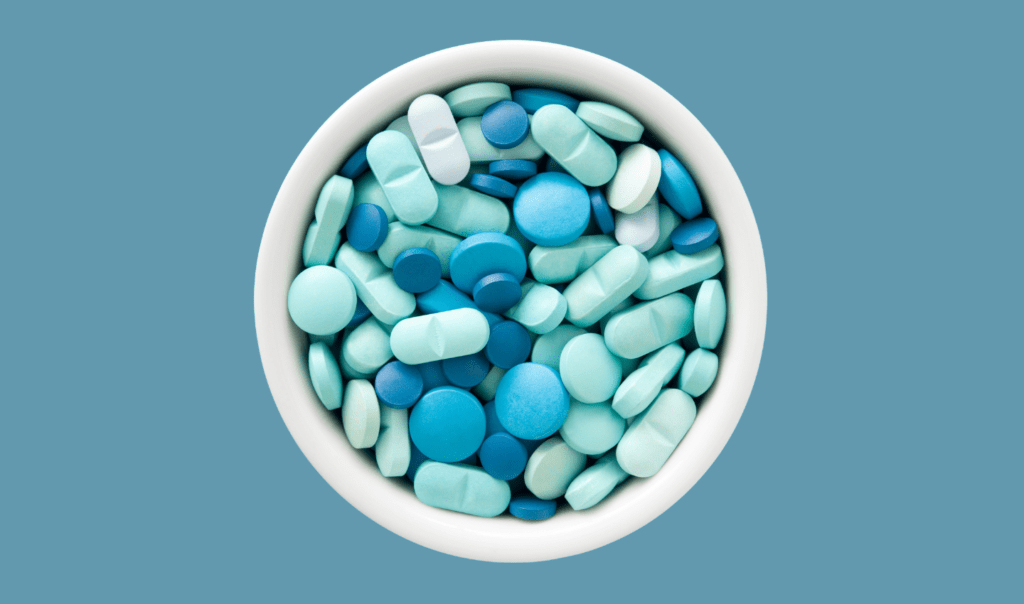
Pharmaceuticals end up in our water stream and impact marine life. The image shows a white bowl filled with pills in different hues of blue.

Shipping:

Globally, there is a decreasing trend in oil spills (over 7 tons), possibly owing to improved surveillance and increased awareness.

Shipping also increases the likelihood of marine litter, with the World Shipping Council estimating that on average, a total of 1382 containers are lost at sea each year.  

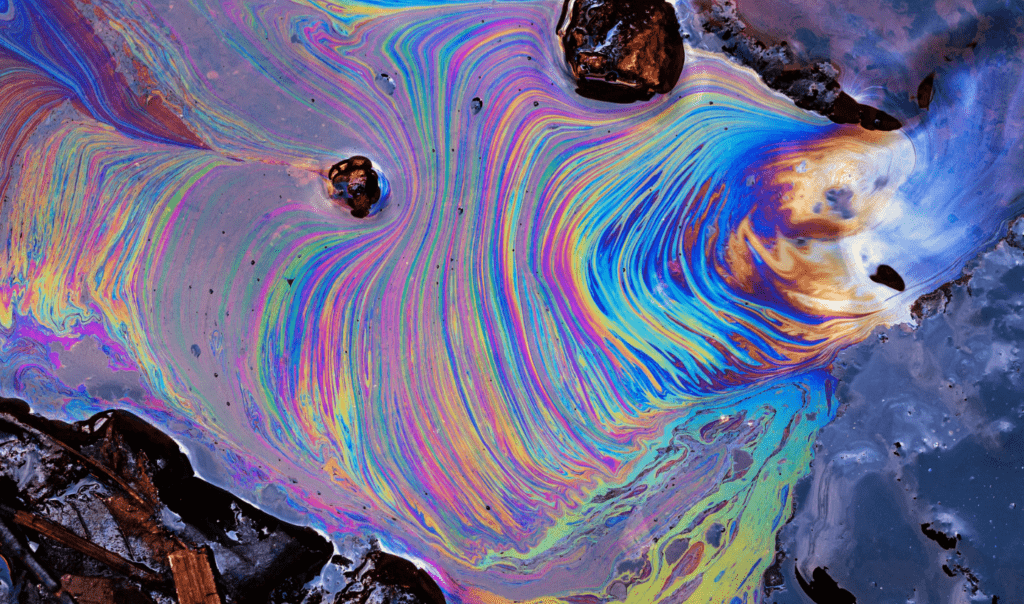
Oil spills are catastrophic to Ocean health and hard to clean up.

Sound pollutes the Ocean (and we’re not considerate neighbours). 

Human-made noise makes its way into the Ocean via vessels, renewable energy development, sonar, and seismic exploration. Marine traffic also contributes to noise pollution.
Over the past 10 years, there’s been increasing interest in developing guidelines to regulate noise in the Ocean.  

We continue to learn and understand the impact of the noise we make on marine animals. Some of the observed examples are as follows: 

– Increased stress levels in North Atlantic right whales 
– Humpback whales: changes in foraging behaviour and vocal calls during breeding season 
– Fish and coral larvae are less able to select appropriate habitats 

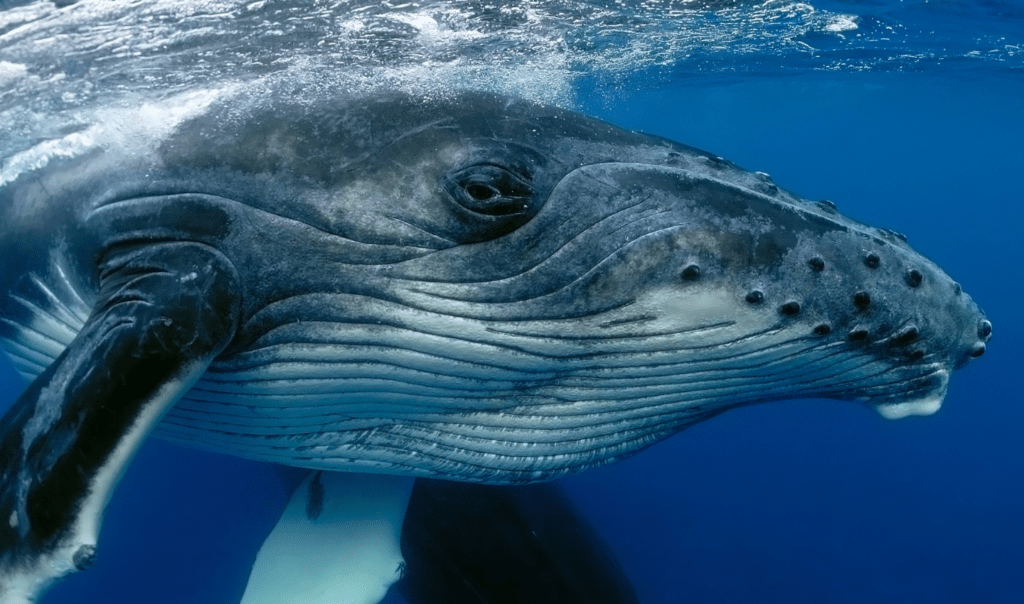
Humpback whales are impacted by noise pollution. Image shows a close up of a humpback whale looking at the camera.

Hit the lights: Do you know how light pollution impacts marine life

Although all living beings are sensitive to light in the environment, if organisms are subjected to light at the wrong place and time with varying intensity, it’s known as light pollution.

This affects the behaviour of many marine mammals. For example, on one Turkish beach, light pollution from a coastal village, paper mill and a tourist resort resulted in less than 40% of logger-head turtle hatchlings being able to reach back to the shore.

They get disoriented and sometimes are at risk of predation.  

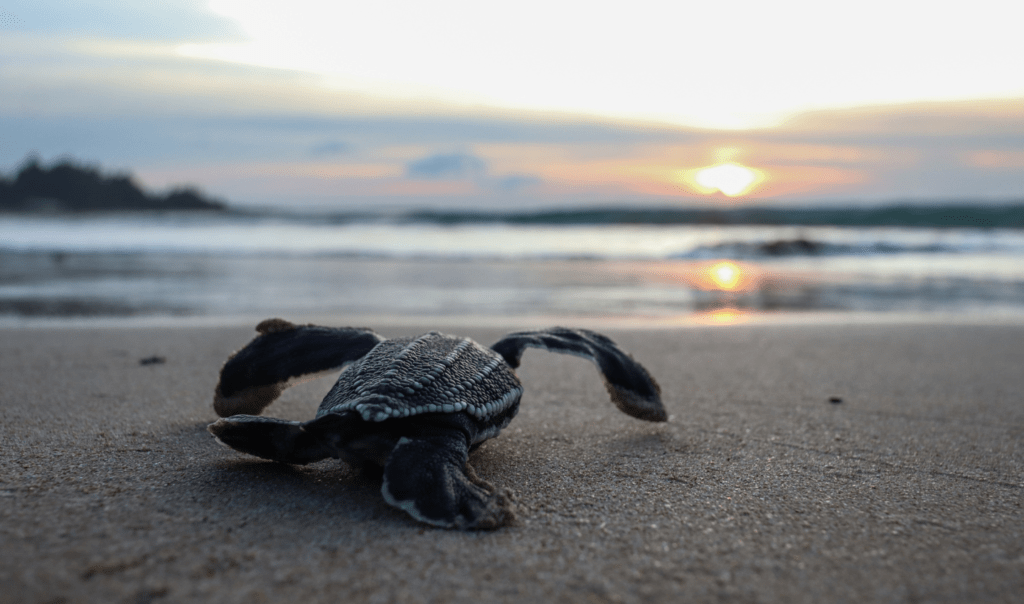
Baby turtle finding its way to the Ocean form the beach.

The most impactful way humans project artificial light is through urbanisation of coastal areas. The light we emit can be seen from space.

In fact, up to three quarters of seafloor close to coastal cities are exposed to artificial light. But other water bodies are not immune. In freshwater ecosystems, melatonin levels which are responsible for sleep or day and night cycles, are affected in freshwater fish. 

In the Ocean itself, offshore development is of concern when assessing light pollution. Artificial light at night can penetrate deep into water (over 40m) depending on the clarity of water, with humans having the most impact in the top one metre of water.  

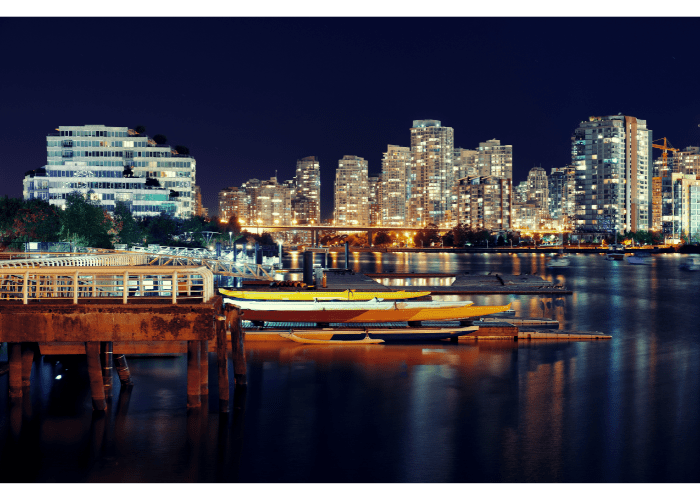
Coastal city lit up at night near the Ocean. Cities never sleep.

What can we do to restore the Ocean?

We need to develop a wide range of solutions to combat the different types of pollution affecting the Ocean.  

To tackle plastic pollution, a Global Plastic Treaty is underway to ensure optimal waste management and promote sustainable consumption and production of plastics.

As a society however, it is still in our best interests to reduce our reliance on plastic where possible. We need to dispose plastic in the safest way possible, not allowing it in our waterways.  

Community garden featuring a middle aged Asian woman and young African child working in the garden.

Nutrient pollution can be curbed with the help of top-down approaches but also public awareness.

As a community, we can take a stronger stance and equip ourselves to monitor water quality, pushing for stronger policies. Those who have lawns and gardens can also minimise their pollutant run-off through many ways.  

Moreover, better sewage systems are needed to achieve standards set by the World Health Organisation (WHO). In India, for example, despite efforts to operate better systems, nutrient pollution still persists. Industry stakeholders must develop and promote solutions to address pollutants in the agricultural sector. Innovative solutions are needed to reduce emissions and spills in shipping.  

Lastly, there is a need to promote and fund the research required in further understanding all these issues because our Ocean is running out of time, awaiting solutions for the threats we’ve created.  

There is only one Ocean, and it connects us all. 

Narwhals and Unicorns: How the magic of the Arctic has changed

Subscribe

Monthly: Impact in your inbox.

OceanGeneration-Join

Mangrove Trees: A climate change solution

Along the fringes of coastlines, where land and Ocean meet, grow the world’s mighty mangrove trees.

These resilient trees grow along shorelines, with their complex root networks stretching deep into the mud. These coastal ecosystems are found on every continent except Antartica.

Although mangroves may not look like much, they have unique adaptations that allow them to live in saltwater environments and provide crucial habitats for many marine species. 

Why are mangrove trees an Ocean solution 

Mangrove ecosystems are a potent, nature-based solution tackling Ocean threats like climate change and loss of biodiversity.

They are the only forests situated at the confluence of land and sea in the world’s subtropics and tropics and are often called “coastal woodlands”, “tidal forests” and “mangrove forests.”

So, what makes mangroves a climate solution? 

Here are 5 ways mangroves trees tackle climate change:

Mangroves are carbon sinks 

Mangrove trees are highly effective carbon sinks. They sequester (the process of removing carbon from the atmosphere) 3 – 5 times more carbon per hectare than rainforests and they store up to 5 times more carbon per equivalent area.  

Carbon stored in mangrove forests is considered blue carbon as it’s stored on the coast.

“The soil of mangrove forests alone can hold more than two years of global emissions – that’s 22 billion tons of carbon,” according to Project Drawdown. This is why they are a huge Climate Action solution!    

Mangrove forests are biodiversity hotspots 

There are up to 25 more species of fish and other wildlife in mangroves than in areas where they have been cut down.

Mangroves also provide nesting and breeding habitats for fish and shellfish, birds and sea turtles. 

How do mangrove trees improve food security

For people living in coastal regions, healthy mangrove forests provide a healthy ecosystem from which to fish – and healthy farmland from which to grow crops and other produce.   

Mangroves are storm protectors 

Mangroves act as natural protection for coastal communities as they protect them from increased storm surges, flooding and hurricanes.  

Your coastal water quality ensurer 

The heavy network of mangrove roots helps filter sediments, heavy metals and other pollutants. This prevents the contamination of waterways and preserves delicate habitats like coral reefs and seagrass beds.  

We’re losing mangrove forests at an alarming rate 

Mangroves are some of the world’s most valuable coastal ecosystems and yet we’ve lost around 50% of Earth’s mangroves in the past 50 years alone. 

If this trajectory continues, we could lose all mangroves within the next 100 years.

By destroying mangrove habitats we not only take away a source of carbon sequestration, we also release all the carbon stored back into the atmosphere.   

Take climate action: Plant a mangrove

At Ocean Generation, we recognise the that planting mangrove trees is a simple and effective step to take Ocean action – and it’s accessible to everyone.  

Introducing: The Mangrove Mandate

We’re partnering with local experts to restore mangrove forests in Madagascar. Not only does it give you a chance to take Ocean action at the click of a button but it embodies the way we see the Ocean: as part of the solution; not a victim to the world’s problems.

“How can I plant a mangrove tree?”

  • Follow Ocean Generation on Instagram 
  • For every follow, we’ll plant a Mangrove tree in your name.

We can regenerate a Madagascar Mangrove together!

Ocean Generation is the Ocean charity that teaches people about the Ocean and helps them take action to mitigate the climate crisis. In 2022, Ocean Generation planted 1,027 mangrove trees to sequester carbon and protect the planet.

Terms and Conditions

Want to know more ways you can take Ocean action?

Join the Ocean Generation for monthly Ocean news, stories, and ways you can restore the Ocean – backed by science and driven by storytelling.

Subscribe for simple Ocean Science and pop-culture stories

* indicates required

View previous campaigns.

Ocean Generation will use the information provided here to be in touch with updates and marketing.

You can unsubscribe at any time.

Narwhals and Unicorns: How the magic of the Arctic has changed

Subscribe

Monthly: Impact in your inbox.

OceanGeneration-Join

The History of Plastic Pollution

Understanding the plastic problem

Worldwide, up to five trillion plastic bags are used every year and up to 422 million tonnes of plastic are being produced annually.

As if that isn’t bad enough, half of all plastic produced is for single-use purposes, meaning it’s used once and then thrown away. In reality, there is no ‘away’ for a material designed to be indestructible.

For decades, our Ocean has been a dumping ground for plastic, sewage, industrial and chemical waste. While the Ocean is vast, it’s not bottomless and it’s certainly not a landfill site.

Single-use plastics are the biggest contributors to marine litter and pose severe threats to marine life, human health, and the planet. But how did we get here? When was plastic created? What can we do to take action and reduce the plastic polluting our blue planet?

YouTube player

What is the history of Ocean pollution?

We’re used to having our rubbish collected, sorted, recycled or put into landfill – but for millennia, people didn’t dispose of their waste as we would today.

Instead, waterways were used as a means of waste disposal or rubbish would be burned. As a result, pollution would end up in our Ocean or in the atmosphere.

Before the advent of plastics, and with a relatively small population, the amount of waste in the Ocean was rather small. 

The invention of plastic: The dawn of pollution

In 1862, Alexander Parkes developed the first man-made plastic. The product, called ‘Parkesine’, wasn’t a commercial success, but it was an important step in the development of man-made plastic.

A staggering number of plastic innovations emerged in the period surrounding World War II, from 1933 – 1945. Plastic technology came to the forefront because copper, aluminium, steel and zinc became highly sought-after metals used only for the war effort.

In the 1960s, it became clearer how polluted our Ocean was getting.

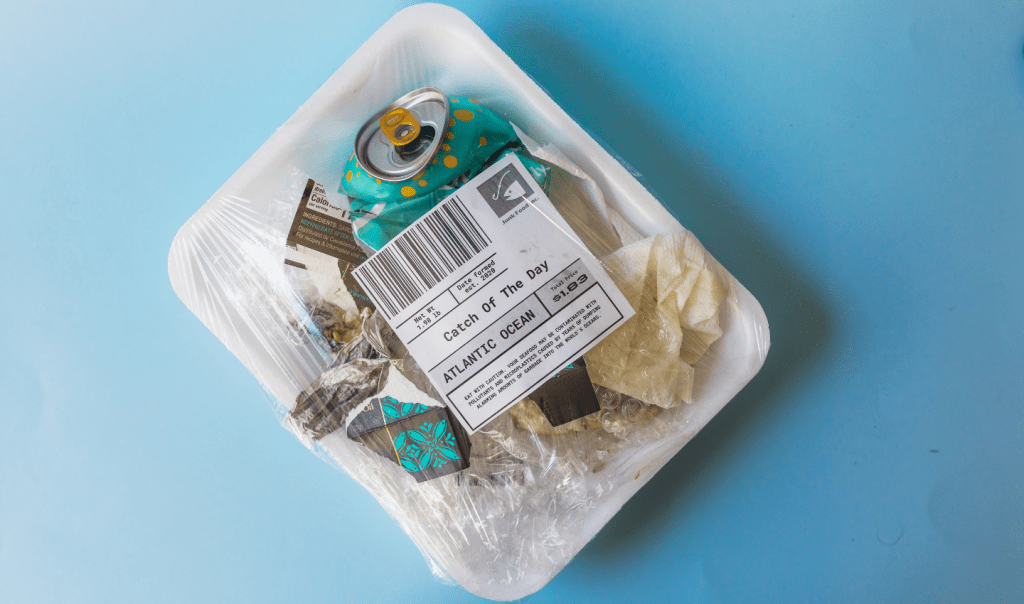
A styrofoam food pack from a grocery store, which usually contains meat or fish, is filled with plastic pollution found in the Ocean: a discarded can of soda snack wrappers, tissues, and plastic packaging. A label on the front reads: Catch of the Day. Atlantic Ocean. In this article, Ocean Generation shares the history of plastic pollution.

Hold on: What is marine pollution?

Marine pollution refers to waste ending up in the Ocean and causing adverse effects. Specifically, marine pollution is a result of human impacts. A combination of chemicals and trash – most of which comes from land – is tossed, washed, or blown into the Ocean.

When was Ocean pollution – specifically, Ocean dumping – first reported?

We can assume that Ocean dumping has been in practice before anyone investigated it, partly because scientists didn’t attempt to research this issue before the 1960s. Many organisations used to dump their chemical by-products into waterways to remove their waste. 

In the 1960s, scientists from the National Academy of Sciences discovered some alarming news: More than 100 million tonnes of waste had been dumped in our Ocean.

This report discounted plastic pollution, which we now know is one of the major pollutants in our Ocean, because it had just recently become a mainstream material. Instead, the Ocean pollution that these scientists reported largely relates to chemical, industrial and sewage waste. 

How have plastics developed into a major Ocean polluter?

Between the 1970’s and 1990’s,
plastic waste generation more than tripled.

Realisation hit in the 1970’s: Plastic doesn’t ‘go away’ and it doesn’t break down; it breaks up into smaller and smaller pieces, called microplastics. 

During this period, there was a significant rise in plastic production too, which resulted in more and more pollution. Scientists also discovered that seabirds were ingesting plastic materials and seals were getting trapped in plastic netting.

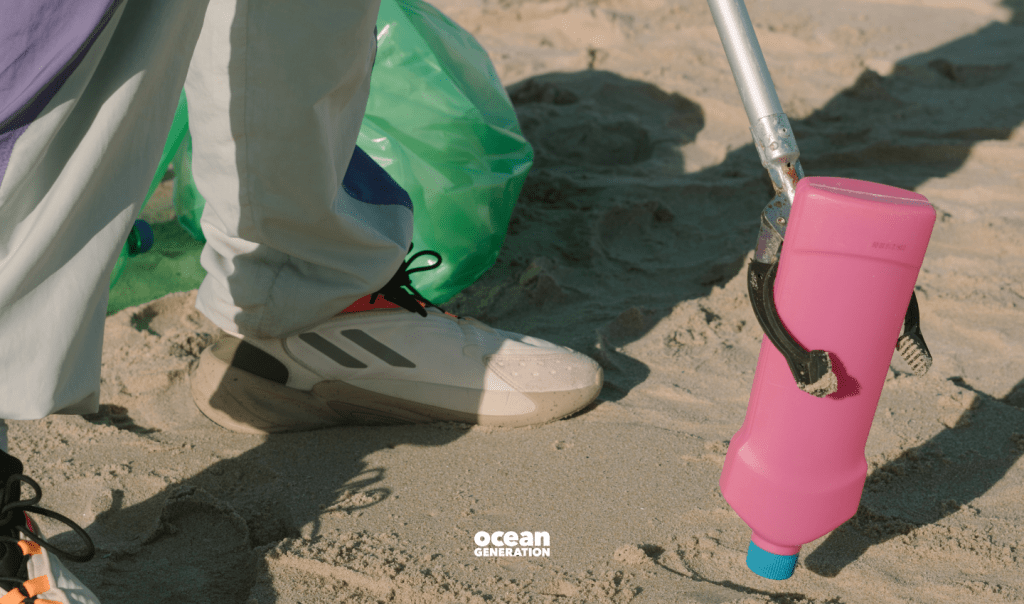
Scene from a beach clean. White tennis shoes of a litter picker are visible. The beach cleaner is picking up a pink plastic bottle off the beach. In the background, a plastic trash bag can be seen. Ocean Generation shares the history of plastic pollution in this blog.

How have we tried to de-pollute the Ocean?

There have been legislative attempts to de-pollute the Ocean and remove plastic from our waterways. 

Four years after the National Academy of Sciences scientists discovered how much waste had really been dumped into the Ocean, the U.S Congress passed the Marine Protection, Research and Sanctuaries act.

By the 1980s, the Society of the Plastics Industry developed the plastic resin identification code, to make recycling and disposing of plastics easier. But our reliance on plastic had already taken hold. 

In the early 2000s, the amount of plastic waste we generated rose more in a single decade than it had in the previous 40 years.

Plastic pollution has negative consequences for all life on Earth.

Even though we know plastic pollution is bad for our blue planet, we continue to produce millions of tonnes of plastic from plastic bottles and plastic forks to plastic shopper bags to giant plastic commercial containers.

A key reason plastic continues to contribute to marine pollution is lack of awareness.

From individuals to businesses to governments – if we don’t understand the problems associated with plastic pollution and the importance of having a healthy Ocean, we won’t do anything to change our ways.

As of 2022, there are 8 billion people on Earth. We need millions of those people understanding that a healthy Ocean is essential to a healthy future for all life.

Necessary legislation to reduce plastic production and pollution will only be implemented when the masses understand how necessary that legislation is.

Up to 422 million tonnes of plastic is being produced annually.

What does the future of our Ocean look like?

We make decisions about what to purchase and what to wear daily. Choices made about how we live right now will impact the Ocean for decades to come.

So, the future health of our Ocean isn’t set. We have the ability to decide the magnitude of the plastic pollution problem. We can start making choices today to turn the tide.

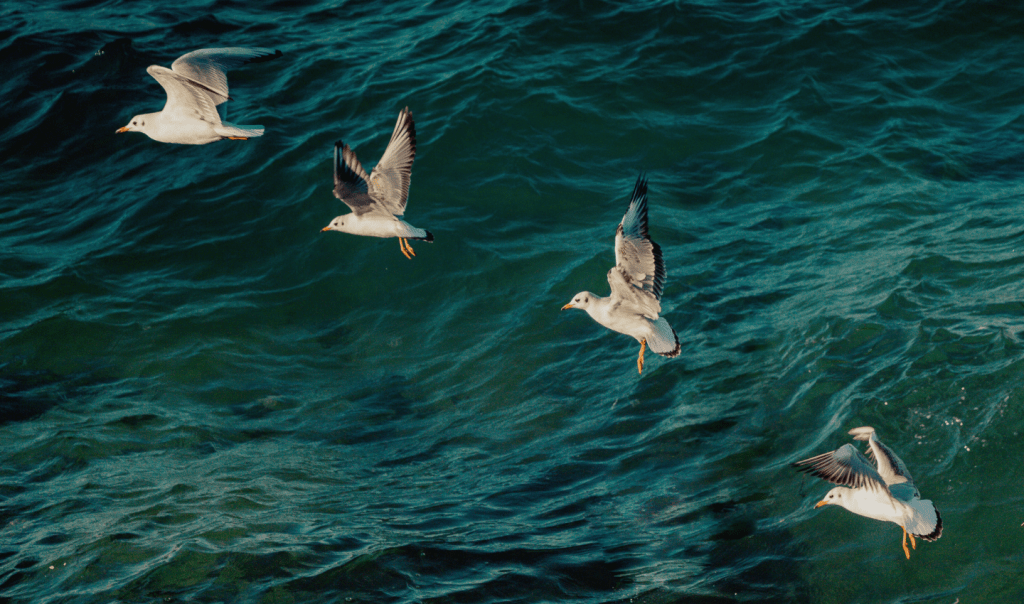
Seagulls in flight. With the Ocean int the background, four seagulls are in various stages of taking flight; their wings flapping as they set off. Ocean Generation - experts in Ocean health since 2009 - shares the history of plastic pollution in this article.


We can right the wrongs of our plastic pollution history, and embrace the Ocean as the life supporting ecosystem that it is, rather than use it as a dumping ground. 

We are the first generation to deeply understand Ocean issues, and the last generation who can stop them. We are all the Ocean Generation.

How can I start taking Ocean and climate action?

Get informed. Our monthly newsletter provides Ocean positive news, easy to understand Ocean science, and engaging pop-culture pieces to help you understand the human-made threats our Ocean faces and what you can do to make a difference. 

Narwhals and Unicorns: How the magic of the Arctic has changed

Subscribe

Monthly: Impact in your inbox.

OceanGeneration-Join

15 Plastic Pollution Facts You Should Know

15 science-backed plastic pollution facts, shared by Ocean Generation: experts in Ocean health since 2009. Read to learn about marine pollution, microplastics, and how plastic impacts human health.

We’ve become dependent on single-use plastic products.

And the reason why isn’t hard to find. Plastic is cheap, convenient and was made to last forever – but as plastic pollution has severe environmental and health consequences for our blue planet.

Understanding key facts about plastic pollution is the first step to rethinking our relationship with it, and ensuring a healthier, more sustainable future all life on Earth.

We’re breaking down 15 facts about plastic pollution – backed by science and our expertise as experts in Ocean health since 2009. Find out how plastic enters the environment, its impact on wildlife, what microplastics are, and how it effects our health below. 

15 Plastic pollution facts you need to know:

1. Up to 422 million tonnes of plastic are being produced each year.


The amount of plastic produced every year weighs more than all of humanity (estimated at 316 million tonnes in 2013).

2. Up to 12.7 million tonnes of plastic enter the Ocean every year.


If waste management practices don’t improve, scientists predict this amount could increase tenfold by 2025.

Single-use plastic items are the biggest contributors to marine litter (it is estimated that 1 – 5 trillion plastic bags are consumed worldwide each year).

3. Plastics make up to around 75% of marine litter, although this can be up to 100% at some sites. 


Plastic in the Ocean breaks up into smaller fragments called microplastics, which have been identified in commercial fish and thus, consumed by humans.

4. Plastic in the Ocean breaks up into smaller fragments called microplastics.


Plastic will never go away. These microplastics have been identified in commercial fish consumed by humans.

What are microplastics?

Microplastics are small plastic pieces measuring less than 5 millimetres.

While some microplastics are intentionally made small (like microbeads in facial scrubs and industrial abrasives used in sandbags), others have been formed by breaking away from larger plastic products.

Due to large amounts of plastic pollution, microplastics can now be found everywhere on Earth – from Mount Everest to the Mariana Trench; the deepest part of our Ocean.

Explained: What are microplastics, where do they come from and what can we do about them?
Read: For the first time, in March 2022, plastic was found in human blood.

5. Half of all plastics are single-use applications, meaning they’re used just once and disposed of.


We are all guilty of using single-use plastic items. From shampoo bottles to make-up products, plastic forks, and straws – single-use plastic is part of our daily lives.

Small behaviour changes can make a massive impact in reducing the flow of plastic pollution to the Ocean.

The next time you’re at the store, reaching for a single-use plastic item, stop and consider: Is there a more sustainable product I can use? If not, think of ways you can reuse your plastic items instead of discarding of them once you’re done.

6. Plastic was invented 150 years ago.


When we see the stat, ‘Plastic takes 450 years to decompose’ we reply, ‘How is that known?’ Plastic hasn’t been around long enough for us to confirm that.

Instead of breaking down, it’s more accurate to say plastic breaks up.

Plastic is indestructible; it was designed to defy nature, and designed not to decompose. Plastic just gets smaller, making it harder to remove from the Ocean.

7. Birds are highly susceptible to plastic ingestion.


It is estimated that over 90% of all seabirds have ingested plastic.

8. There is no giant floating island of plastic at the centre of the Pacific or any other parts of the Ocean.


The so-called Great Pacific Garbage Patch is invisible from the surface.

Plankton nets, however, reveal the true nature of the plastic problem: An accumulation of microplastics that fill up each net in concentrations that increase towards the Ocean’s centre.

9. Plastic acts as a sink for chemicals in the environment, and transports them.


When plastic is mistakenly consumed by marine life, plastic chemicals are released and stored in the fatty tissue of the animal. 

Those chemicals travel up the marine food chain, magnifying in concentration on their way up. Eventually, the plastic in fish reaches and gets consumed by people.

10. Chemicals are added to plastic during its production.


Chemicals are added to plastics to give the products certain properties. Some of the chemicals, known endocrine disruptors, have been linked to critical diseases including birth defects, cancer, autoimmune disease, infertility and cognitive and behavioural disorders.

So, plastic isn’t just polluting our Ocean – it’s polluting our bodies.

11. Crustaceans tested at the deepest point of our Ocean have ingested plastic.


Animals from the deepest places on our blue planet have been found with plastic in their stomachs, confirming fears that man-made fibres have contaminated the most remote places on Earth.

12. People living along rivers and coastlines are the most impacted by plastic pollution.


It’s been reported that China, Indonesia, the Philippines, Thailand, and Vietnam are the most impacted by plastic pollution.

13. Low-income communities face more health impacts near plastic production sites.


Communities with low incomes have greater exposure to toxins and plastic waste, and bear the brunt of the impacts of improper plastic disposal and incineration.

14. Annual plastic production has skyrocketed since the early 1950s, reaching 322 million tonnes in 2015.


These numbers do not include synthetic fibres used in clothing, rope and other products which accounted for 61 million tonnes in 2016.

The World Economic Forum (WEF) predicts a 3.5 – 3.8% growth in plastic production per year through 2050. As of 2019, we’re seeing proof of this – with production of single-use plastics increasing despite our growing awareness of their negative impacts.

15. Bioplastics are not not as green as they seem. Approach with caution.


Though companies often market bioplastics under the same umbrella as biodegradable products, they are not necessarily biodegradable.

Most bioplastics require very specific conditions to break down effectively. They also do not solve the litter or throwaway culture problem.

What is plastic – really?

YouTube player

To ensure a healthy future for our Ocean and planet we must decrease our plastic dependency.

Subscribe for simple Ocean Science and pop-culture stories

* indicates required

View previous campaigns.

Ocean Generation will use the information provided here to be in touch with updates and marketing.

You can unsubscribe at any time.

Narwhals and Unicorns: How the magic of the Arctic has changed

Subscribe

Monthly: Impact in your inbox.

OceanGeneration-Join

Our Ocean

The Ocean is a vital life-support system to all life on Earth

Everything that we rely on in our day to day lives – from our water, food, and every second breath – leads back to the Ocean.

Somewhere along the way, we’ve become disconnected from our blue planet.

YouTube player

Why is our Ocean so important?

If we were in space and looked down at Earth, we would mostly see the colour blue.

Our Ocean covers over 70% of the planet, which is why we call it our Blue Planet. It produces over 50% of the oxygen we breathe; meaning that every second breathe we take comes from the Ocean. 

Our Ocean helps regulate the temperature on land and is responsible for global weather patterns like storms and heatwaves (which we’ve been seeing more of in the recent years).

It absorbs the sun’s heat, transferring it to the atmosphere and distributing it around the world – warming in the winter and cooling in the summer. Our Ocean is a key driver of how our world functions and yet it’s usually low down on governments agendas. 

How many of these Ocean facts do you know?

Containing roughly 97% of the world’s water, our Ocean supports all life on Earth.

It is home to thousands of plants and organisms. And yet, scientists estimate that 91% of species are still to be discovered. Should we stop looking for aliens on Mars and start looking for our own E.T in the Ocean?

From the oldest species in the entire world to the largest living animal in the world – the blue whale – the Ocean’s biodiversity is astonishing. 

With only roughly 5% of the Ocean explored until now, we are only just beginning to scratch the surface of the mystical world that exists below the surface of our deep blue sea.

For all of our reliance on the Ocean, a majority of it is a vast, underwater realm that remains unmapped, unobserved, and unexplored. It’s time to unlock more of the Ocean’s secrets. 

How the Ocean supports all life

Our Ocean provides us with food and facilitates pleasure, as well as livelihoods for millions, if not billions of people.

But it’s not just a commodity. The Ocean is restorative. It calms and connects us. The positive impact it can have on our wellbeing is incredible.

As humans, we depend on the Ocean for a huge part of the oxygen, water and food we need to survive.

Did you know that 17% of animal protein that is eaten around the world comes from the Ocean?

To this day, many people’s jobs rely on fishing and water-based transport. The Ocean is a crucial component of entire global economies.  

5 ways the Ocean helps our wellbeing:

  1. The movement of gentle Ocean waves and fish in an aquarium is known as Heraclitean Motion. These peaceful, repetitive movements are psychologically calming.
  2. Studies have shown that people perceive nature as a positive, and spending time amongst it is known to improve mood.
  3. Various studies have shown improved mental and physical health in those who spend time near the coast.
  4. When swimming, breathing patterns affect the brain and increase positive hormones.
  5. The sounds of waves support meditation techniques.

So, why are so many of us so disconnected from the Ocean?  

Do you think of the Ocean as something you only see while on holiday? Or perhaps you live in a city or town, so you feel it’s too far away for you to feel connected to it?

You may be shocked to know, 1 out of every 2 people in the world live near coastal areas. 

And because the Ocean provides every second breath, the Ocean has an impact on our lives no matter where we live. Our actions have an impact on the Ocean too. 

Did you know that there is now new water made on Earth? The same water cycles around. This water cycle is a closed loop that has existed for billions of years. 

We are deeply connected to this global water body, influencing our everyday lives in so many ways, like every single thing we eat, breathe and drink.

Without a healthy Ocean, we will not have a healthy future.

We all need to understand how important the Ocean is to our daily lives to be continually motivated to protect it. 

Want to learn about the Ocean? Join the Ocean Generation.

Subscribe for simple Ocean Science and pop-culture stories

* indicates required

View previous campaigns.

Ocean Generation will use the information provided here to be in touch with updates and marketing.

You can unsubscribe at any time.

Narwhals and Unicorns: How the magic of the Arctic has changed

Subscribe

Monthly: Impact in your inbox.

OceanGeneration-Join

Myths about Plastic Pollution

We're debunking 5 widely believed myths about plastic pollution. 1. There is no floating island of plastic in the Ocean...
Breaking down 5 myths about plastic pollution 

There are many plastic pollution myths out there. We’re here to dispel myths about plastic pollution and provide science-backed facts about plastic pollution.

What equips Ocean Generation to bust plastic misinformation? Science underpins all of our work; we’ve been experts in Ocean health since 2009 and released an award-winning documentary ‘A Plastic Ocean’ in 2016. Learn more about us.

Fact VS Fiction: Here’s what you need to know about plastic.

Myth: ‘There is a huge floating island of plastic out in the Pacific Ocean, 3 times the size of Texas called, ‘The Great Pacific Garbage Patch.’

Simply, there isn’t.

This is a common myth about the Ocean.

There is no giant floating island of plastic at the centre of the Pacific or any other parts of the Ocean.

The so-called ‘Great Pacific Garbage Patch’ is invisible from the surface. Plankton nets reveal the true nature of the problem which is an accumulation of microplastics that fill up each net in concentrations that increase towards the Ocean centre.

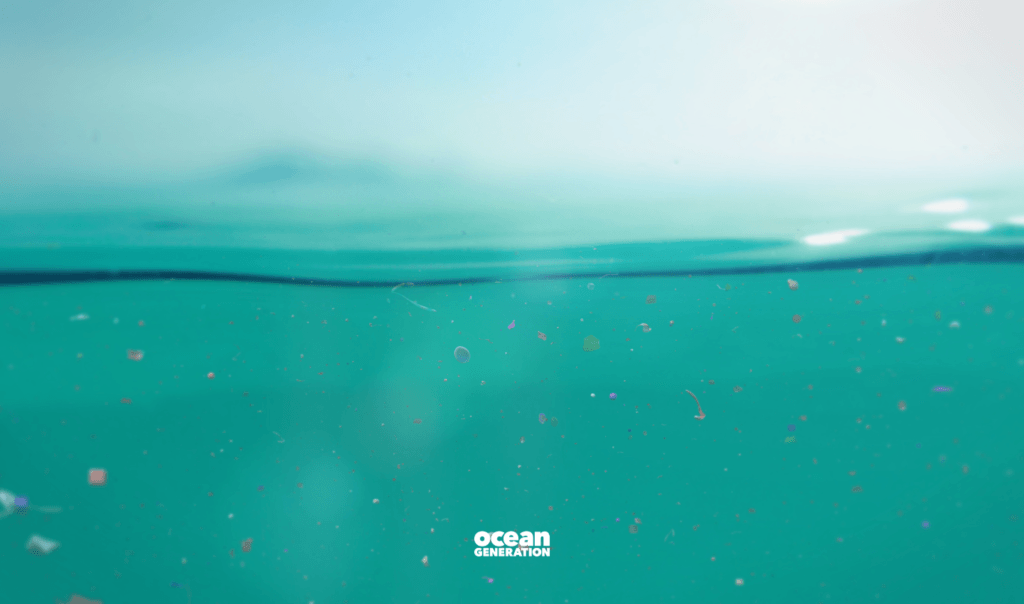
Plastic pollution is one of the biggest threats our Ocean faces. In this waterline image of the Ocean, microplastics are visible.

Myth: ‘A plastic bottle will take 450 years to break down.’

Plastic taking 450 years to break down is one of the biggest plastic myths.

The truth is: Plastic doesn’t breakdown; it breaks up into smaller and smaller pieces.

Plastic has only been around for 150 years – so, we also can’t put a timeframe on how long it will be around for. Read: The History of Plastic Pollution.

This statistic – about plastic breaking down – come from old educational materials released by the American National Oceanic and Atmospheric Administration.

The original source adds the caveat that “many scientists believe plastics never entirely go away. These decomposition rates are estimates for the time it takes for these items to become microscopic and no longer be visible.” As well as oversimplifying the risk, this irresponsible statistic about plastic pollution ignores the threat of microplastics.

Plastic is indestructible, it was designed to defy nature, designed not to decompose.

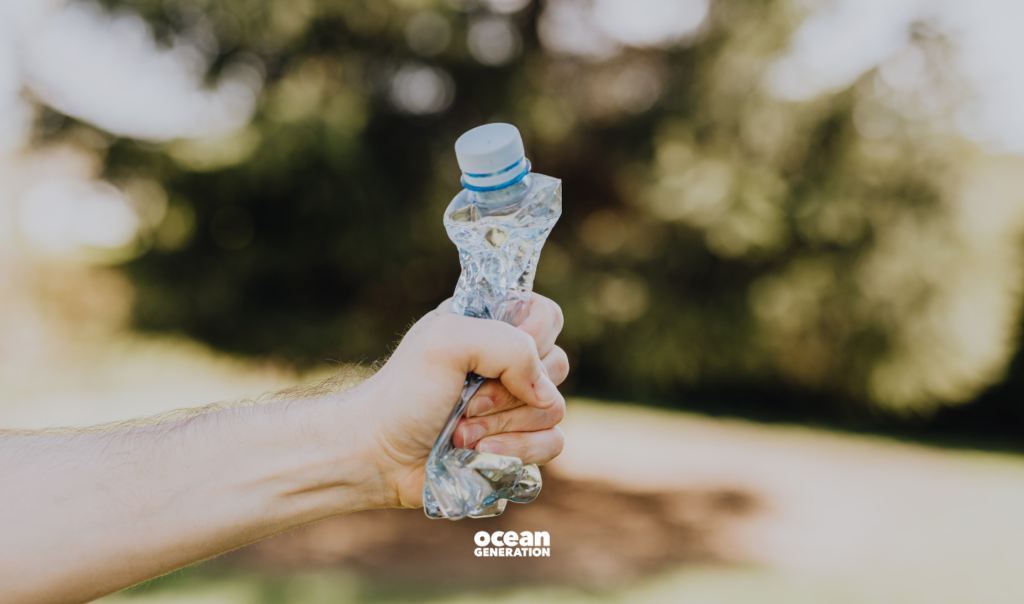
Does a plastic bottle take 450 years to breakdown? No. This is a plastic pollution myth. A hand, crumpling a plastic bottle is visible. Ocean Generation is sharing the facts behind this widely believed myth.

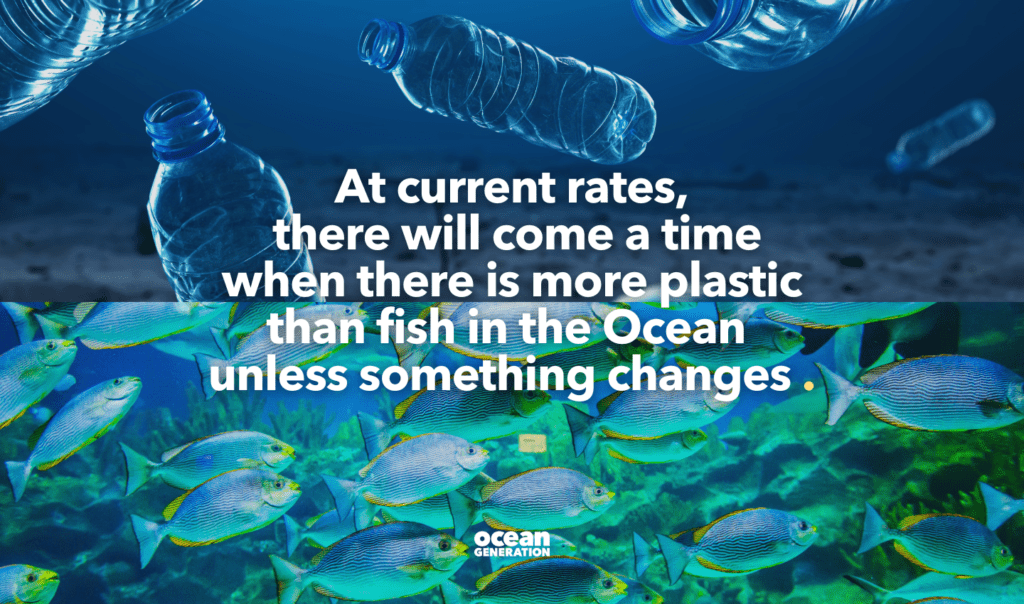
Myth: ‘By 2050 there will be more plastic than fish in the Ocean.’

This statement first appeared on a report written by Ellen MacArthur Foundation and the World Economic Forum (WEF) and has since been used widely by the public and some organisations.

However, there are a few issues with it. 

The estimation number of fish (fish stock) in the Ocean is based on a prediction from a 2008 article. The statistic assumes that fish stocks will stay constant until 2050. This is incredibly unlikely due to pressures from overfishing, climate change, and plastic pollution itself. The authors have since predicted higher Ocean biomass than previously thought. 

Our concern is that we are destroying the deep Ocean bed before we even begin to know and understand the marine life there as new species are being discovered all the time. 

The projection for the amount of plastic in the Ocean by 2050 was drawn from the well-known 2015 study which only quantifies Ocean plastic up to 2025. According to BBC’s investigation, the lead author voiced their lack of confidence.  

Due to these uncertainties, it is best not to use this statement to get across the crux of the message, i.e., we cannot allow the current rate of plastic production to continue, and we must sever our reliance on plastic where possible.  

At current rated, there will come a time when there is more plastic than fish in the Ocean. Ocean Generation is sharing facts about plastic and debunking plastic pollution myths.

Myth: ‘We can recycle our way out of our plastic pollution problems.

We need to stop thinking that we can recycle our way out of this mess. Recycling is not the answer to the our wide-scale plastic production and consumption behaviours.

The plastic recycling process is now a circular process.

Only 9% of plastic get recycled and only 1% of plastic produced goes through the recycling process twice. 

Plastic production must decrease, yet it is currently increasing exponentially and recycling does nothing to abate this. This is because most plastic decreases in quality each time it is recycled, until it loses its value entirely and virgin plastic must be created.

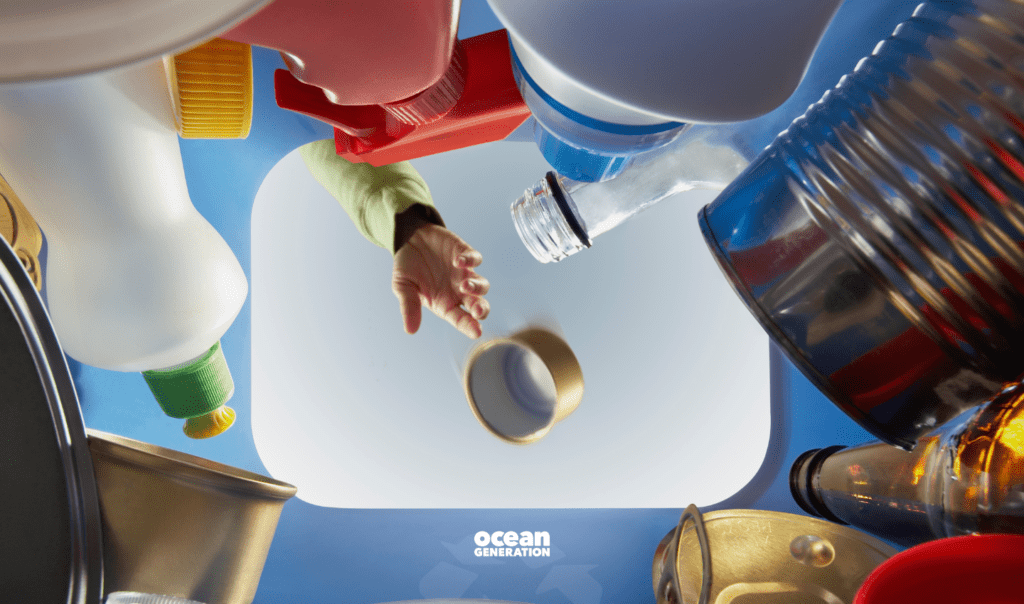
View from inside a recycling bin: A hand is visible, throwing something into recycling. Ocean Generation is sharing why recycling is not the solution to our plastic pollution problem.

Myth: ‘We should replace tarmac with recycled plastic for our road surfaces.’

This is a measure supported by some of the biggest producers of plastic waste, yet it is rife with risks.

Studies have already revealed that the second biggest input of microfibres into our Ocean are the fibres that come from car tyres.

How might that increase if we start covering our roads with plastic too?

Research is only beginning into the nanoplastics in the air that we breathe. How might vast stretches of plastic-covered roads contribute to these, especially on hot days?

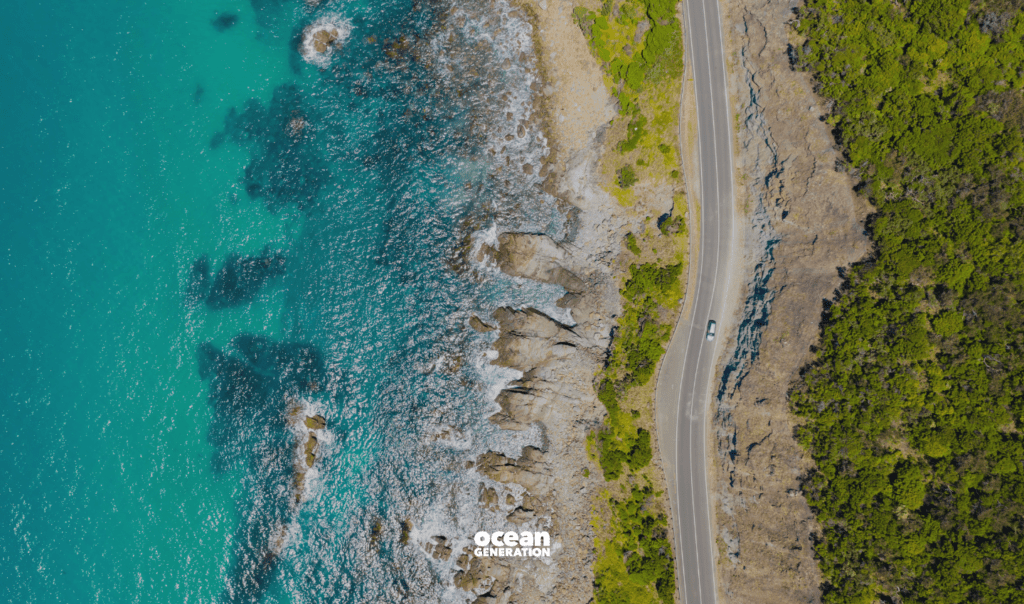
Car driving on a coastal road beside the Ocean. In this article, Ocean Generation shares why having roads made with recycled plastic has a negative impact on planet and human health.

What can I do about plastic pollution?

You’re already taking action to protect our blue planet: You’re getting informed.

Tackling a problem as big as plastic pollution can feel overwhelming – but it doesn’t have to. 

Action you can take against plastic pollution right now

  1. Add impact to your inbox.

    We send our a monthly newsletter with practical actions you can take, Ocean positive stories, and understandable environmental science. No fear-mongering. No big data. No expectations that you become a ‘perfect’ environmentalist.

  2. Read: 20 actions you can take against plastic pollution daily.

  3. Read: 15 Plastic pollution facts you should know.

  4. Watch: What is plastic?

Narwhals and Unicorns: How the magic of the Arctic has changed

Subscribe

Monthly: Impact in your inbox.

OceanGeneration-Join