How did the End of the Dinosaurs Affect Marine Life?
How did the end of dinosaurs affect marine life? Explained by Ocean Generation.

A lot of people know about the meteorite that killed the dinosaurs, but how were marine creatures affected by this event? 

66 million years ago, the age of the dinosaurs came to an end, becoming the known as the K-Pg (the geological abbreviation for Cretaceous-Palaeogene) Mass Extinction. A meteorite impact sent the world into darkness, leading to the downfall of the once dominant dinosaurs and many other creatures. Despite the fame of this event, little thought is given to the effects on the past Ocean.

How did the dinosaurs become extinct

The famous driver for the extinction of the dinosaurs was, of course, the meteorite that struck the Chicxulub Impact Site in Mexico. But this wasn’t the only cause for extinction. The volcanoes of the Deccan Traps in India were violently erupting too, spewing massive amounts of lava. Together, these two events were the drivers for the mass extinction. However, the meteorite and eruptions themselves didn’t directly cause the extinction, instead it was their aftermath. So, what happened?

The world – 66 million years in the past 
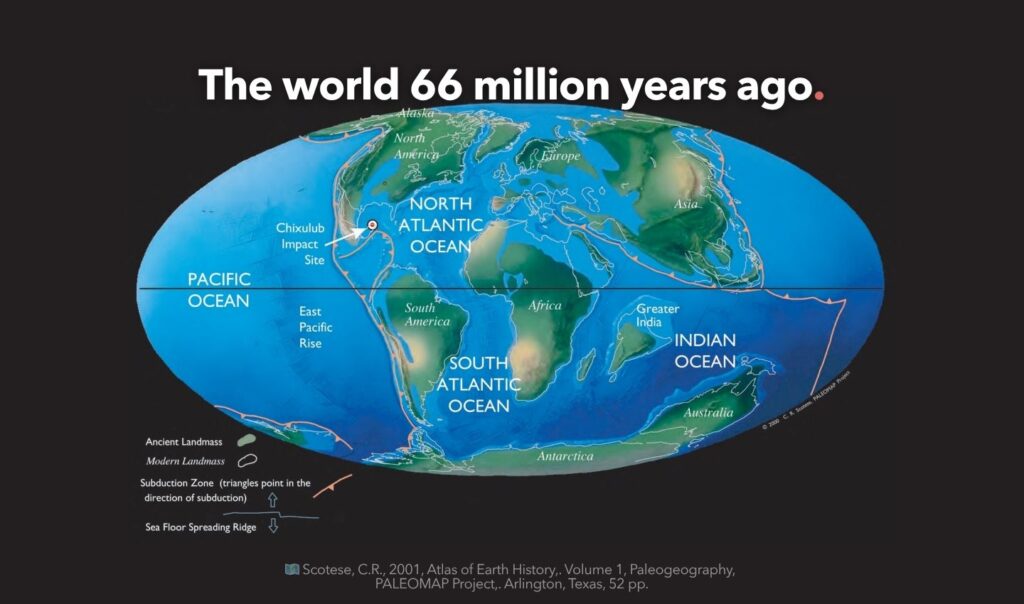
Due to plate tectonics, the world looked slightly different 66 million years ago (Ma) compared to now. Despite the similarities, the world, and so the shape of the Ocean, were different. Firstly, there were more connections between Oceanic bodies, for example from the Atlantic to the Pacific. Next, the Atlantic was much younger and much narrower. Lastly, as there were no ice caps and the climate was warmer, sea level was higher by about 200m.

What is plate tectonics?
The Earth is made up of multiple large sections called “plates”. Plate tectonics is the idea that these plates move around and past each other very slowly. This means that over many millions of years, they can move into completely different arrangements and positions. 

What did Ocean life look like before the extinction

The life found in this Ocean of the past was quite different to the present, but we do see some familiar faces. Sharks, crocodiles and fish still existed, while algal ecosystems (the photosynthesisers of the Ocean) supported the food chain. These weren’t the only things found in the marine world of the Cretaceous period, though.

Cephalopods, which are the group containing modern octopuses and squids, had multiple representatives. Ammonites had been abundant before the extinction, although were on a gradual decline in diversity towards the extinction. These animals had a spiralled shell shape a little like their living cousins, the nautiluses, and lived throughout the Ocean. Alongside them, the nautiluses were also present but made it through the extinction.

Of course, there were also the famous predatory marine reptiles of the time, commonly (incorrectly) included when referring to dinosaurs.

The relatives, the long-necked plesiosaur and the short-necked pliosaur, were two notable groups, the former having a nearly complete fossil discovered by Mary Anning. However, pliosaurs didn’t die in the K-Pg extinction, instead going extinct over 20 million years before (still considered the “late Cretaceous period”, the geological periods are long!).

Instead, the dominant predator at the K-Pg was the mosasaur, which were predatory marine reptiles, like the pliosaur. The difference was that the mosasaurs were better suited to live in the Ocean, as they could adapt better to changes in conditions, becoming more successful and thriving until the extinction.
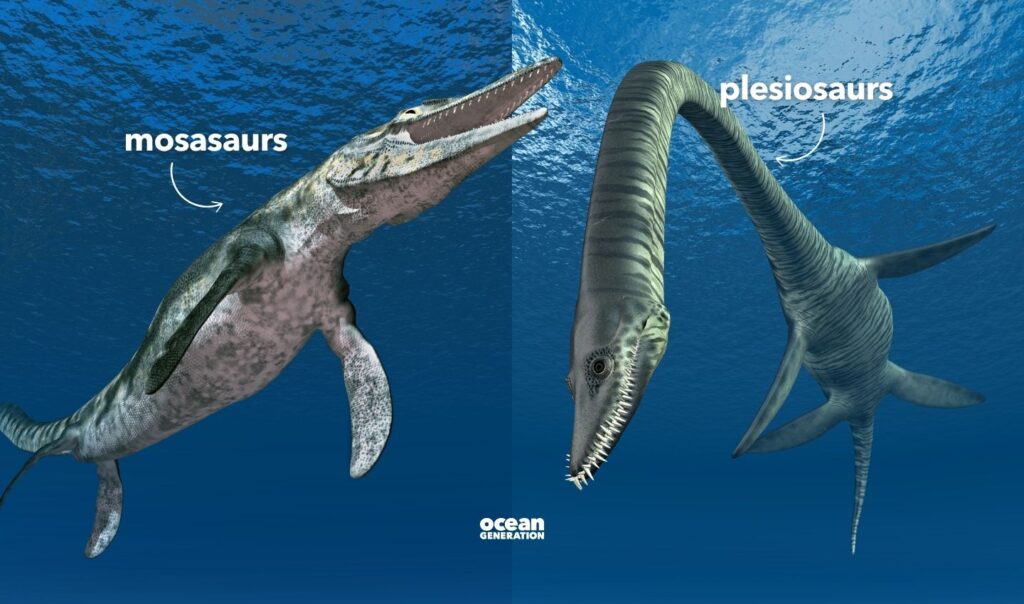
Mosasaurs and plesiosaurs went extinct. Explained by Ocean Generation

What happened to Ocean life during the Extinction

As per the name “K-Pg Mass Extinction”, a lot of species went extinct. It’s estimated that around 76% of all species died, being about the same for marine species, from the results of the meteorite and volcanism.

The meteorite and volcanoes weren’t the direct causes; the impact and the lava were nowhere near global scales. Instead, secondary factors caused by the impact and eruptions led to the extinction. The main effect of each was their effect on the food chain, with the death of algae.

The death of algae was a main cause of the marine extinction 

When the meteorite hit the Earth, it sent high amounts of dust and debris into the atmosphere, leading to a sort of “curtain”. This curtain of dust blocked out the Sun for a considerable time, leading to an “impact winter” (a period of extreme cold, due to the meteorite blocking the Sun), and darkness. This period of darkness decreased both plant and algae numbers, with both requiring the Sun for energy.

Just as plants are the bottom of the food chain (what we call “primary producers”) on land, algae are the primary producers in the Ocean. The decrease in numbers means that the animals that eat algae would have less food and die, meaning the animals that eat those animals would have less food and die. This knock-on effect up the food chain is one of the main causes of the mass extinction, both on land and in the Ocean.
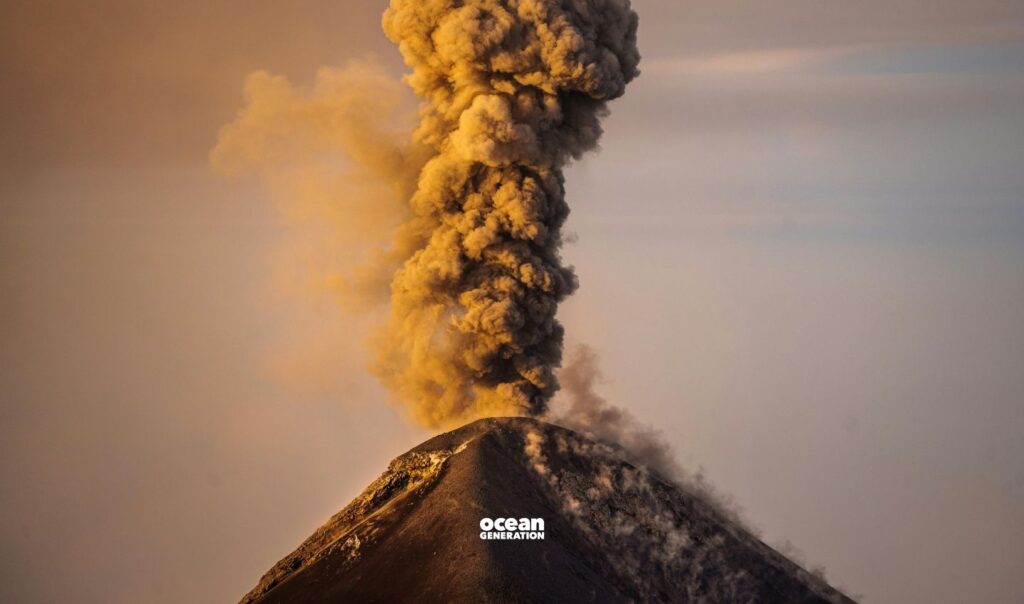
What happened during the K-Pg extinction? Explained by Ocean Generation.

The volcanoes of the Deccan Traps, along with releasing vast amounts of lava, released considerable amounts of volcanic gases too, notably carbon dioxide and sulfur dioxide. Carbon dioxide, along with being the infamous greenhouse gas, can lead to Ocean acidification and carbon dioxide poisoning. Sulfur dioxide is a potent ingredient in acid rain, also contributing to Ocean acidification.

The reason this is so important is that some algae are dependent on the Ocean being a certain acidity to live. This fast, significant change in acidity led to the death of these algae, having an impact on the marine food chain.

What happened to Ocean life after the extinction

If all of this happened, why did anything survive at all? A key player in the extinction of animals was starvation. The longer an animal could survive without food, or the more accessible food that an animal had, the more likely it would be to survive.

Mammals and fish: the survivors of the extinction 

This applies to both land and the Ocean. Mammals were able to outlive the dinosaurs as they could live off of insects and dead plant matter, paving the way for their domination.

In the Ocean, the major surviving group was the “ray-finned fish”, which make up the vast majority of fish species today. They were able to survive due to some algae thriving shortly after the extinction, leading to the success of these fish.

What happened with marine predators? 

For the predators, replacement with fish also occurred. The mosasaurs and plesiosaurs that lived in the Cretaceous period had disappeared, with sharks surviving into the modern day.

The advantage that sharks had on the marine reptiles isn’t well researched, but it could have been to do with the reptiles being warm blooded, hence needing more food than the cold-blooded sharks.
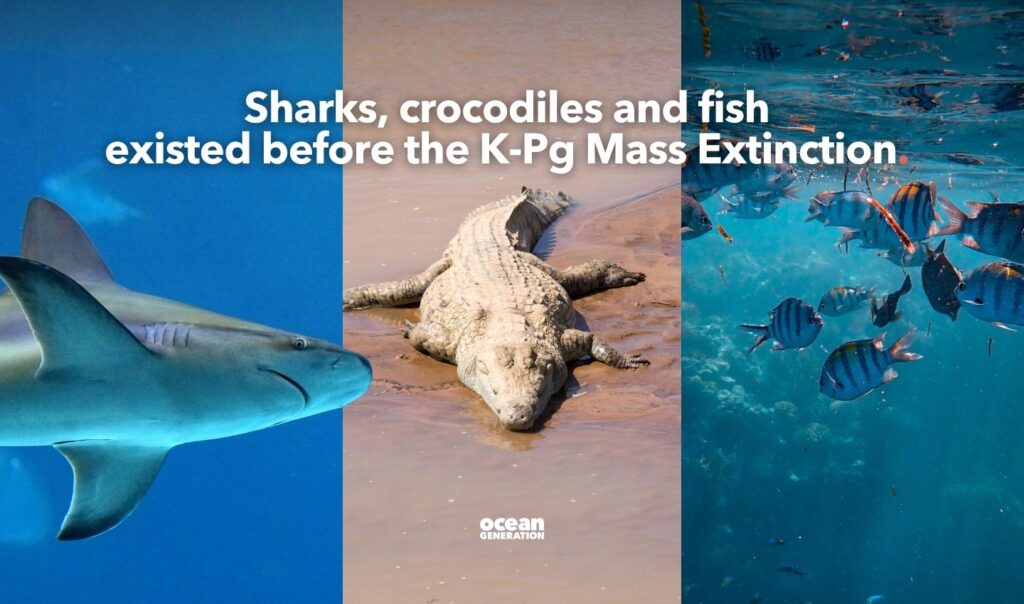
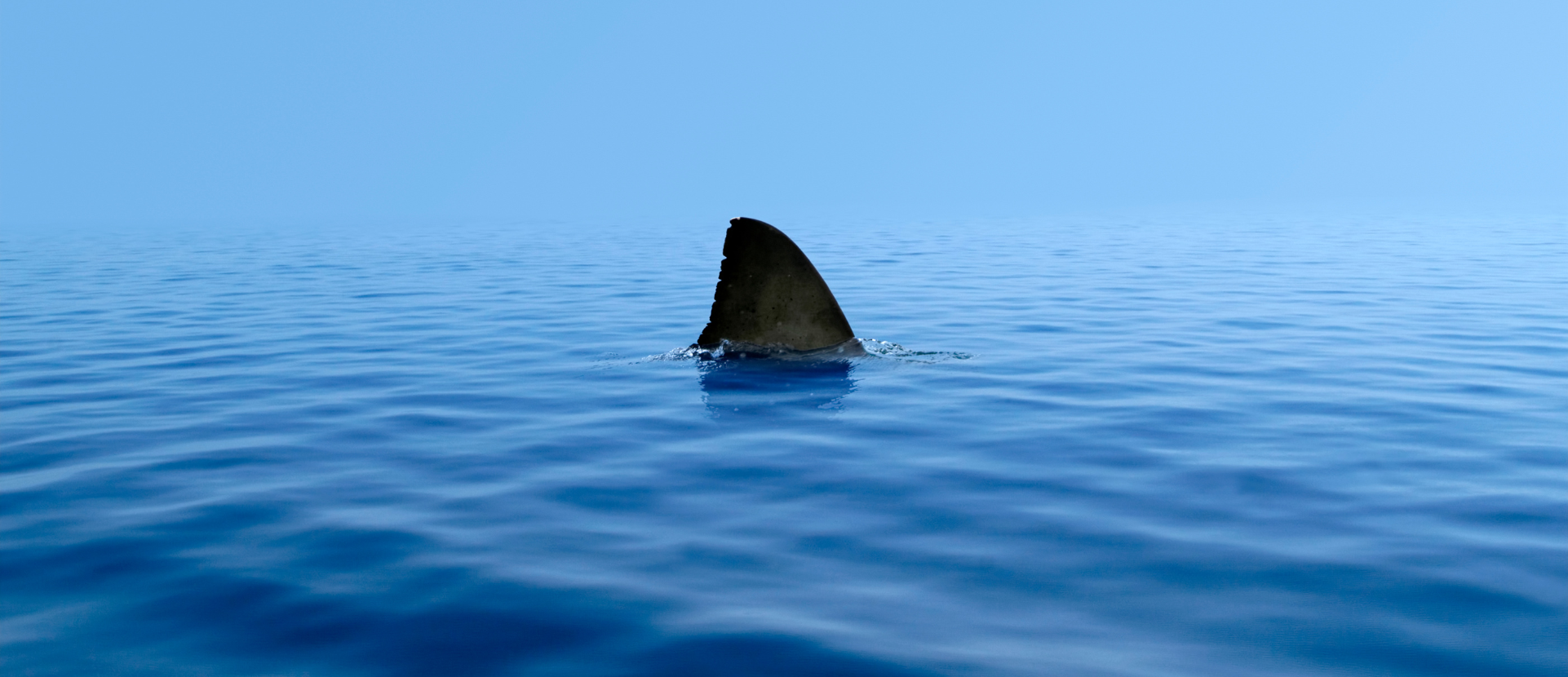
Sharks, crocodiles and fish existed before the K-Pg extinction. Posted by Ocean Generation, leaders in Ocean education.

How did algae survive? 

Some algae also had the adaptations required to survive the extinction, with some having an inactive state that they can go into when water conditions aren’t ideal. This means they could live through the cold and lack of light from the impact winter.

Also, reproduction methods likely influenced their survival, as some algae could reproduce by themselves, but others required a partner to reproduce. During times of reduced population numbers, like the extinction, it is more efficient to not require a partner.

Different survival strategies of young cephalopods 

Finally, between the ammonites and the nautiluses, they have different survival methods when young. The young nautiluses are birthed in eggs with a yolk to feed from, but young ammonites were thought to have had eaten algae, rather than having a ready food source. Reduced algae decreased the young ammonites’ survival.
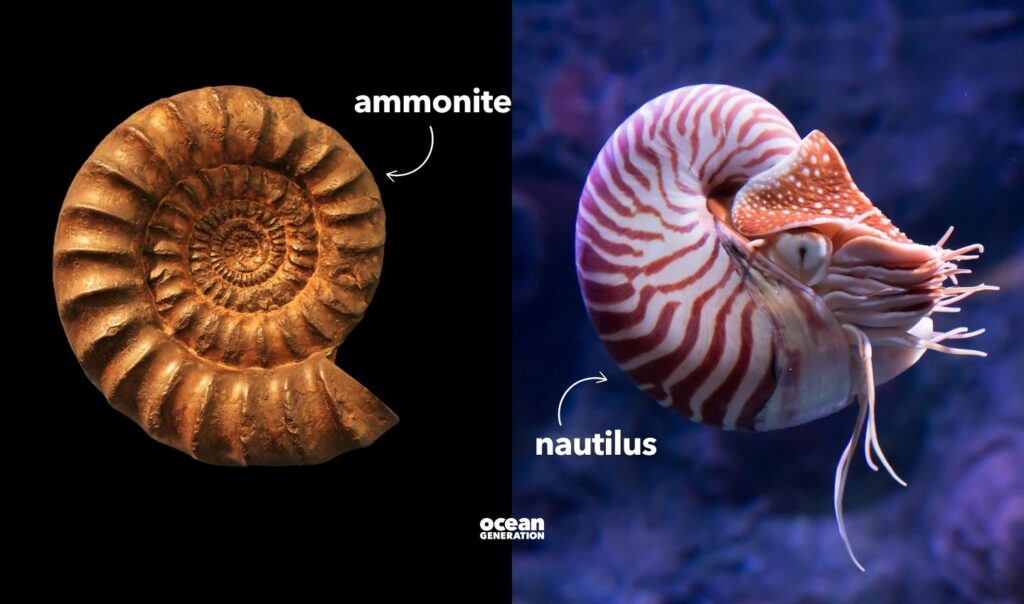
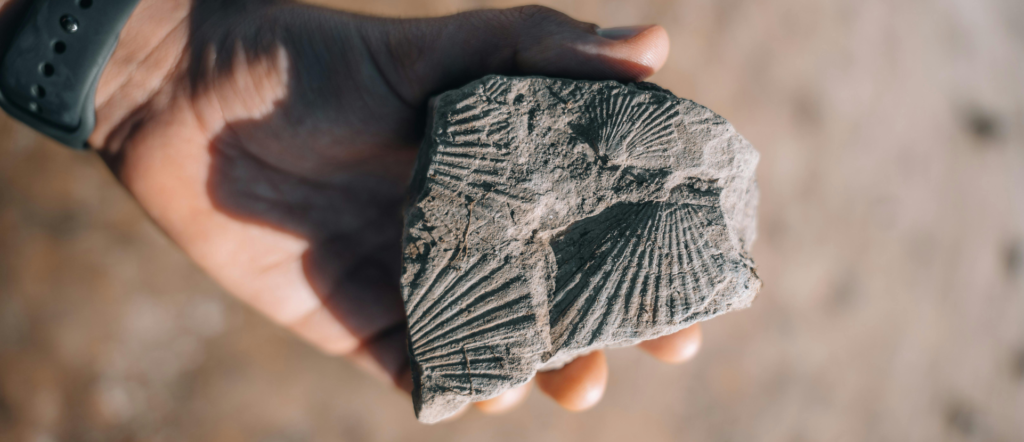
Ammonite fossil and nautilus. Posted by Ocean Generation.

How do we know what happened during the extinction? 

There is uncertainty about details of the past, because we are 66 million years in the future of the event. This means we must take logical guesses at what happened because we can’t observe events directly. To do this, we look at the rocks and fossils from the past, called the geological and fossil records.

A useful inference we can make is that if a fossil appears in rocks of a certain age, but not in younger rocks, it is likely that the animal has gone extinct. We have applied this to many of the organisms of the K-Pg extinction, like the dinosaurs, which tells us around when they went extinct.

This method is not foolproof though, as this assumption is susceptible to misinterpretations and mistakes. For example, there was a group of fish called the coelacanths that were thought to have gone extinct during the K-Pg, as it hadn’t appeared in the geological record since. However, modern relatives were later found, leading to the realisation that they hadn’t gone extinct, but just happened to not preserve as fossils after the K-Pg extinction.

Why does this matter

It may seem like studying the past life is just for fun, and while it’s fun, it’s also useful. Understanding the mechanisms and effects of past mass extinctions, especially for the Ocean, can help us prevent a human-made one. Lots of the present-day organisms affected by modern extinction, like whales and corals, live in the Ocean.

Many species could and have disappeared due to human activity, with the current rate of extinction being at least 50 times higher than the background rate (i.e. the rate without human influence). By studying the past, we can understand the effects of our actions and possibly prevent another mass extinction.

The other side of this is that the Ocean is largely unexplored in space, but also in time. Exploring past life can tell us what has once lived on our planet and the environments that they lived in telling us more about our Ocean and Earth.
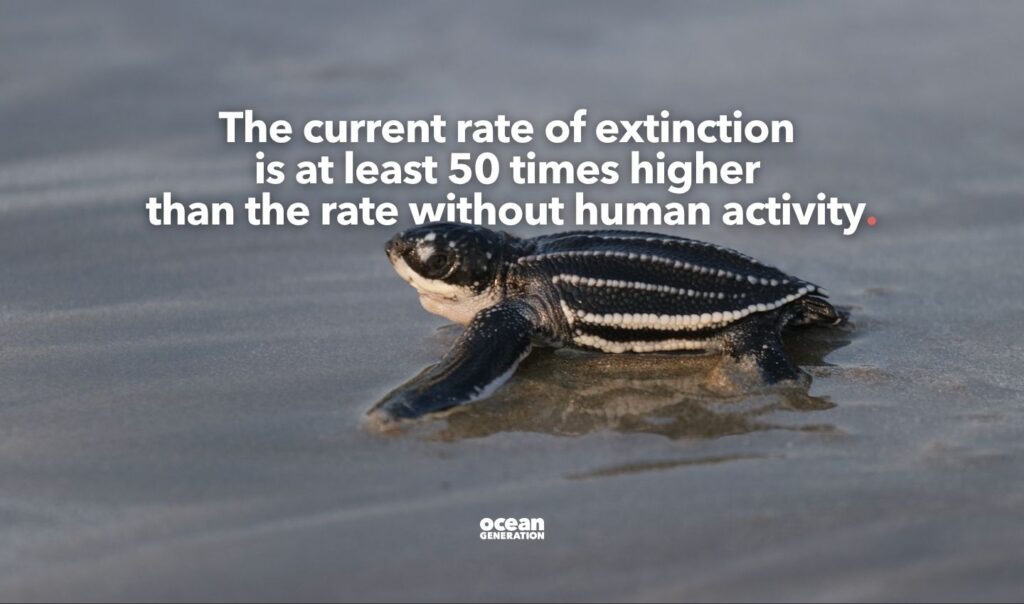
The current rate of extinction is higher than the rate without human activity.

Who are the orca outlaws sinking boats, and why are they?

Subscribe

Monthly: Impact in your inbox.

OceanGeneration-Join

Fact file: Fun facts about orca (killer whales)

Orca fact file, posted by Ocean Generation.

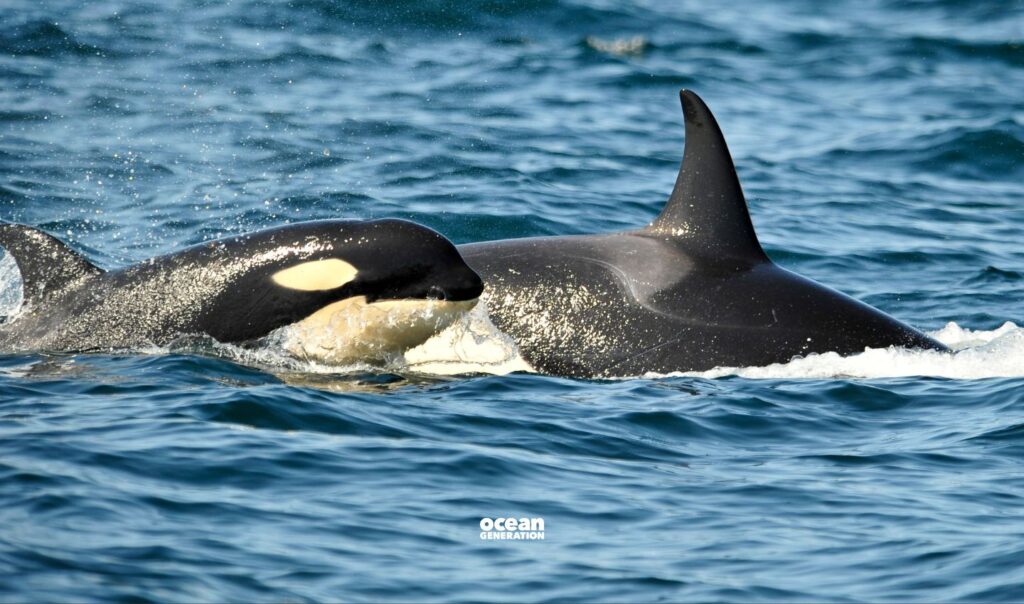
Orca (also known as killer whales) are famous residents of the Ocean. They are fast, fashionable and family-oriented. Frankly, they are fantastic.  

Are orcas whales or dolphins? 

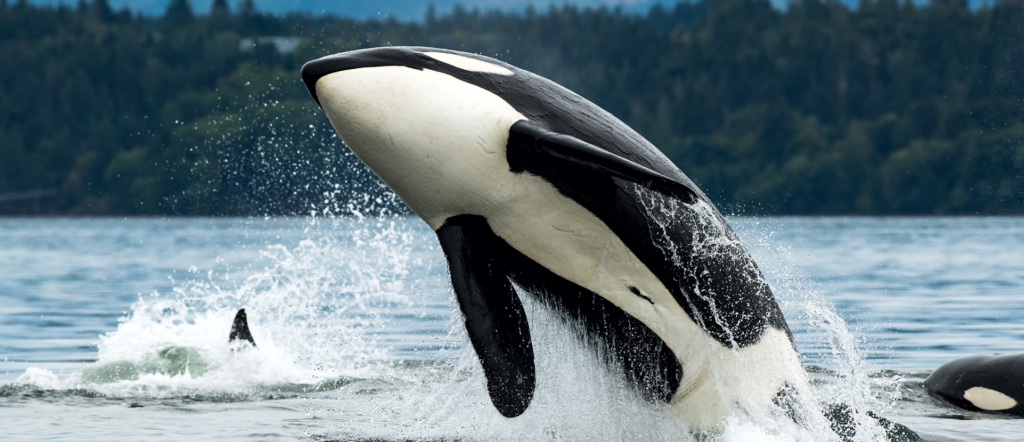
Orca aren’t whales, they’re dolphins.

The commonly used name, killer whales, can cause confusion. Early sailors became familiar with orca hunting the great whales, naming them “whale killers”. Somewhere in history, that got flipped to become “killer whale”, even though orca are actually dolphins. They are the biggest of the dolphins.

Are all dolphins whales?

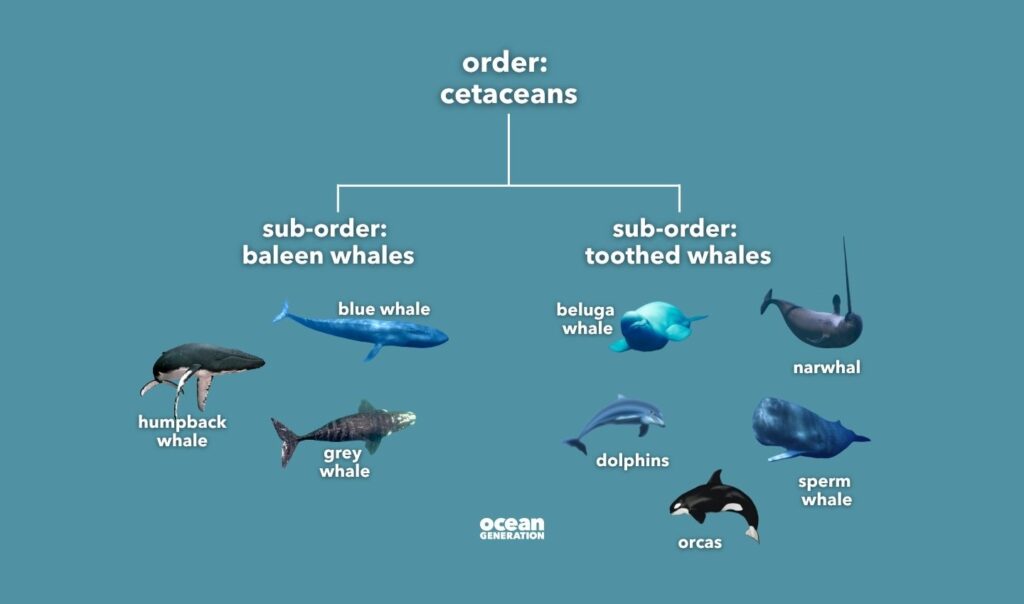
Technically, the whole dolphin family, the Delphinoidea, belong to toothed whales – the Odontoceti. Along with the Mysticeti (baleen whales) they make up the cetaceans. 

So, you could argue all dolphins (and therefore orca) are in fact whales but they have dolphin-specific traits so, they’re not ‘true whales.’

Orcinus orca is currently a single species, although scientists have suggested dividing it into races, sub species or even different species.  

Different groups of orcas are known as ecotypes which inhabit different parts of the Ocean and show physical and cultural differences. They speak different dialects, eat different food and grow to different sizes with different colouration. In many ways they are much like humans.  

Order cetaceans explained by Ocean Generation.

Where do orca live?  

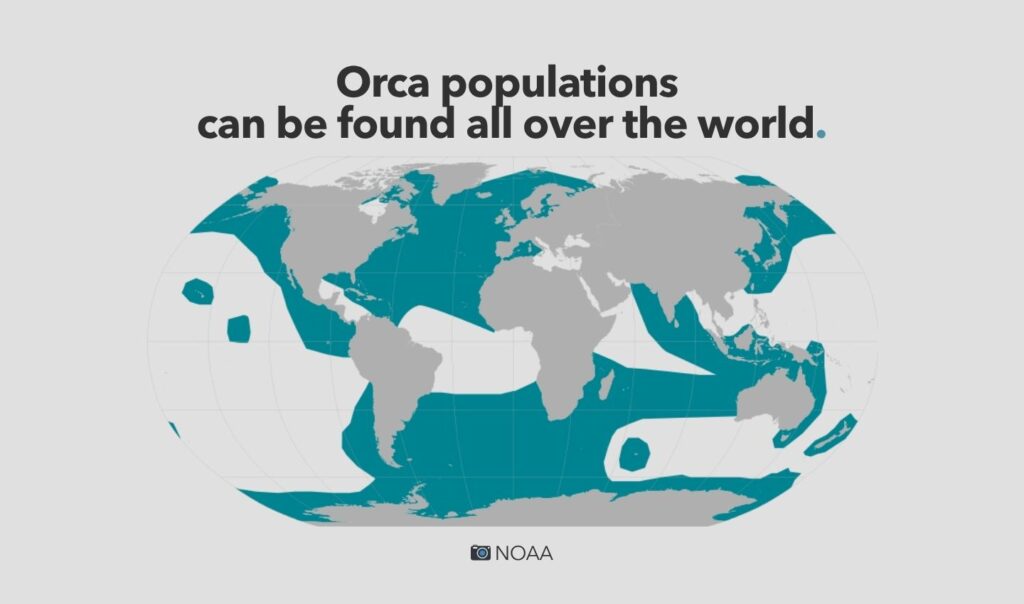
Populations can be found all over the world, typically preferring coastal seas to the open Ocean, and the higher latitudes closer to the poles. The main population centres for orca are in the Southern Ocean, the north-eastern Atlantic and in the northern Pacific, but orca can be found from Hawaii to the Arctic. 

How many orcas are there? 

There is an estimated global population of 50,000 orca, including 25,000 in the Southern Ocean, and 10,000 in the waters of Norway, Iceland and the Faroes.

The global population of orca has not been assessed by the International Union for Conservation of Nature (IUCN). We don’t know enough to say whether orca populations are increasing, decreasing or stable.  

We do know about the different orca sub populations around the world. Some, such as the Iberian orca population which has been sinking boats, are critically endangered. The West Coast Community of the UK is thought to only have two members remaining: Aquarius and John Coe, who at over 60 years old may well be the oldest male killer whale in the world.  

Other orca populations are doing better. Antarctic populations are hard to study, but thought to be stable. Northern Resident orca of the west coast of North America are listed as threatened, but their numbers are increasing by an average of 2% per year after protective measures were introduced for them and their main prey – harbour seals.  

Where do orca live: explained by Ocean Generation.
Image by NOAA

What do orca eat? 

All orca are carnivores but different populations of orca have different preferred diets. Norwegian orca have specialised in herring, northeast Pacific orca hunt salmon and New Zealand orca focus on elasmobranch species such as eagle rays, stingrays and shark species.  

Two orca brothers in South African waters, Port and Starboard, are infamous for targeting great white sharks, flipping them onto their backs into a trance-like state known as tonic immobility and eating their livers. As a result, great whites leave the area when orcas are about. Other orcas have been recording other shark species such as whale sharks, seven gill sharks, mako sharks and white sharks

Nothing is off the menu. Orca will hunt marine mammals, including walrus, dolphins, narwhals, beluga and whales. Orca have been recorded recently hunting the largest animal that has even lived: blue whales.  

Being out of the water doesn’t always help. A population in Patagonia will beach themselves to catch the young sea lions learning to swim in the shallows. A population in Antarctica has perfected a technique of swimming together to create waves to break up ice and wash any seals taking refuge on it into the water.

Their most surprising prey? Orca are one of the main predators of moose, who swim between islands and even dive down to eat aquatic foliage.  

Nothing is off the menu, apart from humans – no human has ever been killed by a wild orca.  

Orcas are also known as killer whales. Posted by Ocean Generation, leaders in Ocean literacy

Killer Facts about Orcas 

Who are the orca outlaws sinking boats, and why are they?

Subscribe

Monthly: Impact in your inbox.

OceanGeneration-Join

17 Science-backed ways the Ocean keeps you alive

Science-backed ways the Ocean keeps us alive.

You’re alive because of the Ocean.  

We’re exploring some of the many ways the Ocean keeps us all alive. It gives us the air we breathe, the rain that waters our food, climate stability and incredible biodiversity that keeps our planet thriving.  

And yet, most of us don’t realise just how much we rely on the Ocean every single day. 

Here are 17 science-backed ways the Ocean keeps us, and all life on Earth, alive.  

1. The Ocean is an oxygen factory  

Over 50% of the oxygen you breathe comes from marine plants (who rely on a healthy Ocean to survive. Big shout out to microscopic phytoplankton, doing the heavy lifting!). 

Btw, that’s more than all the rainforests combined. 

Over half of our oxygen is provided by the Ocean. Posted by Ocean Generation.

2. Heat absorber  

Our Ocean absorbs +90% of excess heat trapped by greenhouse gases. 

Without the Ocean, Earth would be scorching. 

3. Climate regulator  

Ocean currents redistribute heat, making life liveable. Ocean currents make it cooler in summer and warmer in winter all across the world.

4. Carbon sink  

The Ocean is one of the largest carbon sinks on Earth. Various marine ecosystems store carbon plus allllll the animals and plants = natural carbon capture technology.  

When animals pass away and sink to the bottom of the Ocean, they lock carbon deep in the Ocean.  

The Ocean is heat absorber, climate regulator and carbon sink

5. Key player in the water cycle 

The amount of freshwater we have on Earth is fixed. And the Ocean? It powers the water cycle: evaporation, precipitation, and storm formation. 

No Ocean = no rain = no drinking water = no crops = no people. 

How does the water cycle work? Posted by Ocean Generation

6. Food source  

+3 billion people rely on fish as a key source of protein. Fisheries also support jobs, economies, and cultures.

And ecosystems like coral reefs and mangrove forests nurture little fish (like Ocean nurseries). 

7. Ocean = weather controller  

Ocean temperatures drive weather events like monsoons, hurricanes and El Niño. So, a warm Ocean = stronger storms (bad). A cooler Ocean = more weather stability (good). 

Until it’s too hot, our Ocean will keep regulating the world’s weather patterns. 

8. Biodiversity  

Most biodiversity = within the Ocean.  

Coral reefs, deep-sea ecosystems, the open Ocean: they all have unique ecosystems that are VITAL to the overall balance of our planet.  

Biodiversity in the Ocean. Posted by Ocean Generation

9. Blue carbon ecosystems = defence systems  

Coral reefs, mangroves, and seagrasses protect our coastlines. They guard against erosion, flooding, tsunamis and other disasters. 

Considering about a third of the global population (2.5 billion people) live within 100 km of the coasts, this is a very important way Ocean ecosystems support us. And these ecosystems will be CRUCIAL as sea level rises.  

10. Dr Ocean, reporting for duty  

There are MANY marine compounds (over 20) that are used/ studied for medicines. The Ocean, and its creatures, help us develop medicines for: cancer, Alzheimer’s, infections and general pain. 

11. Ocean currents keep food webs healthy 

Ocean currents move nutrients across the world. These nutrients fuel marine food webs. One example is marine snow (tiny bits of decaying matter from dead organisms that slowly drifts from the surface which becomes food for deep-sea animals.  

12. Culture and economic impact  

There are numerous Ocean-based industries that generate trillions. Think of shipping, tourism, fishing and marine renewable energy. These industries, which rely on the Ocean, support millions of jobs and centuries of cultural heritage. 

The Ocean keeps us alive, no matter where we live.

13. The origin of ALL LIFE ON EARTH  

Scientists predict that all life began in the Ocean (in hydrothermal vents in the deep-sea.)  

14. Cooling Earth’s core 

Cool Ocean water is carried to Earth’s mantle which regulates geothermal heat flow over extended periods of time. 

15. Solar radiation, be gone 

Sea ice and the surface of our Ocean act as a reflector of solar radiation. Losing ice = more heat absorption = hotter planet = not good.

16. Ice cores hold the secrets of our climate 

Ocean sediments and ice cores preserve millions of years of Earth’s climate and carbon dioxide history. This makes our Ocean a vital archive of climate science and information. We use these findings to model future predictions of our climate and weather patterns.  

Ice cores hold the secret of our climate. Explained by Ocean Generation.
Image credit: NASA’s Goddard Space Flight Center/Ludovic Brucker

17. Speedy carbon storage 

I already mentioned blue carbon ecosystems (like mangroves, salt marshes and seagrasses and how they protect our coastlines). But! These ecosystems store carbon up to 10x faster than land-based forests.  

No matter where you live, the Ocean is keeping you alive.  

Whether the Ocean is stabilising the climate, powering the water cycle, feeding billions, or buffering us from storms, it’s Earth’s life support system. 

But here’s the catch: our Ocean can’t keep protecting us if we don’t protect it. 

As you scroll, sip, breathe and go about your day, remember a healthy Ocean is essential for a healthy future. For you. For me. For ducks. For everyone. 

If the Ocean thrives, so do we. Posted by Ocean Generation.

Who are the orca outlaws sinking boats, and why are they?

Subscribe

Monthly: Impact in your inbox.

OceanGeneration-Join

What is the water cycle?

Why there is no water cycle without the Ocean.

Our planet is known as the blue planet, over 70% of it is covered in water, most of which is the Ocean.

This water shapes our landscapes, influences where life thrives, affects the health of our Ocean and the weather in our skies. 

The Ocean is always closer than you may think (not in a sinister, about-to-jump-out-at-you way. It’s more of a realising-it-is-Thursday-and-the-weekend-is-only-round-the-corner-kind-of-way). 

Take a moment, think: what is different from the water you drank this morning (if you haven’t had any, this is your reminder to drink some) and the water lapping up a warm tropical beach? Every drop of water, from what’s come out of your tap to the water five kilometres deep in the middle of the Pacific, is connected.   

It is all just at different points in the water cycle. 

How does the water cycle work? 

There are four processes that drive the water cycle: evaporation, transpiration, condensation and precipitation.  

How does the water cycle work? Explained by Ocean Generation.

Water is warmed and evaporates, becoming water vapour. Amongst the many good things plants do, they release water into the atmosphere through transpiration. These two processes are responsible for putting water vapour in our air, our atmosphere.  

Water vapour is invisible.  

The steam we see when we boil the kettle (or the clouds in the sky) is water becoming liquid again, on contact with the cooler air. That is condensation, the transition back from gas to liquid. When enough of this cloud cools and turns to water, it will clump together and fall as precipitation (snow, hail and rain).  

How is the Ocean connected to the water cycle? 

This water then starts its journey back to the centrepiece of the cycle: the Ocean. 

The Ocean holds 97% of the Earth’s water – approximately 1.34 billion cubic kilometres. 86% of evaporation is from the Ocean, and 78% of precipitation re-enters the Ocean, directly. You can’t have the water cycle without the Ocean. 

Ice holds 2% of global water and just 0.001% is in the atmosphere – that is all the clouds in the sky.  

But if we add all that up, there’s a little still on the table – or more accurately, on land. That is the groundwater, lakes, swamps and the rivers. Rivers make up only 0.0002% of the total water on Earth.
The Ocean holds 97 percent of water. Posted by Ocean Generation, leaders of Ocean education.

What does the water cycle do? Why is it important? 

There are five main points of importance for the water cycle: 

1. Regulating Climate:  
The water cycle helps distribute heat around the globe, influencing weather patterns and climate conditions. It absorbs and releases energy during evaporation and condensation, which affects temperature and weather. 

2. Sustaining Ecosystems:
The water cycle provides the water necessary for plant growth and supports all forms of life by delivering freshwater to ecosystems through precipitation.

3. Shaping Landscapes:  
The water cycle contributes to erosion and sedimentation, reshaping geological features over time. 

4. Circulating Minerals and Nutrients:
Water transports minerals across the globe, enriching sea and soil and supporting plant life. 

5. Maintaining Freshwater Supplies:
The cycle replenishes freshwater sources, such as rivers and lakes, which are essential for human consumption and agriculture. 

Imagine a world without a water cycle – what would it look like?  

Why is the water cycle important? Explained by Ocean Generation.

How is the water cycle changing 

Human activity is interfering with the hydraulic cycle at every stage.  

Deforestation means less trees to transpire and absorb rainfall. Urbanisation interrupts drainage and can increase surface runoff. When it rains, the water that would have been absorbed by the ground now hits tarmac and runs down the road. 

The single greatest threat to the water cycle, and therefore to all life on Earth, is climate change.  

How is climate change impacting the water cycle?  

Climate change is intensifying the hydraulic cycle. Higher temperatures lead to more evaporation, more water vapour in the atmosphere, which results in more intense storms and rainfall. At the same time, droughts are becoming harder to predict and more severe.

These changes directly threaten our lives. 

Water related events from 2024
2024 Summary Report – Global Water Monitor

Water is the life blood of our planet, and the water cycle is the pulse that keeps it alive. 

The hydraulic cycle regulates our climate, fertilises and maintains our ecosystems and shapes our world. We are changing it through our actions and activities.  

Understanding this cycle is the first step, but acting to protect it is the most important. The question is: what will we do to safeguard the blue heart of our planet? 

Who are the orca outlaws sinking boats, and why are they?

Subscribe

Monthly: Impact in your inbox.

OceanGeneration-Join

Why is the Ocean salty?

Why is the Ocean salty? Explained by Ocean Generation

Everyone knows the Ocean is salty. But how did it get salty? Where did the salt come from? Is it getting more salty?  

These are all great questions to bring up as you ask for the salt over dinner. And after this explainer, you can answer them.  

Why is the Ocean salty: Explained 

Imagine a bowl. Now pour some slightly salty water into the bowl and put it into the sun on a hot day. Eventually, the water will evaporate, leaving that little bit of salt behind.  

Now, add some more slightly salty water to the bowl. The left-behind salt dissolves and mixes, making saltier water. Leave it in the sun again, the water will evaporate and leave salt behind. If you now attach a constant stream of slightly salty water into the bowl, you have a little model of our Ocean.  

Just like in the above example, rivers (the stream) bring tiny amounts of salt into the Ocean (the bowl) and the sun evaporates the water, leaving behind the salt. These amounts have built up over huge periods of time.  

Why is the Ocean salty: Explained by Ocean Generation

Where does the salt in the Ocean come from? 

Most of the salt in our Ocean comes from rocks on land. Carbon dioxide in the atmosphere dissolves into rainwater, making it slightly acidic. When it rains, this slightly acidic water can dissolve the rocks it falls on and over, in the form of ions (charged molecules).  

These ions, mostly sodium and chloride, are carried into rivers, which carry them into the Ocean.  

Some salt also comes from volcanic activity, where elements from the Earth’s core can be released into the Ocean through underwater volcanoes and hydrothermal vents.  

Why aren’t rivers salty? 

Rivers are, very slightly salty. Depending on what the water has run over on its journey (rocks, decomposing plants, your ex’s belongings etc.), the contents of each river, including salt levels, varies. 

For water to be considered freshwater, its salt content must be less than 0.05% salt (saltiness is also commonly shown as parts per thousand or ppt: 0.05% is 0.5ppt). This means freshwater can still have a little salt in. 

Between 0.05 and 3% salt content is brackish water, and saltwater is between 3 and 5% salt. Above 5% (or 50ppt) salt is brine.

Where does the salt in the Ocean come from: Explained by Ocean Generation.

What are the saltiest bodies of water in the world?  

One of the saltiest bodies of water is the Dead Sea. It was cut off from the river Jordan by damming in the 1950s, so there is no significant freshwater input. This means the water is gradually disappearing, as the water level drops close to 1.21 metres (4 feet) every year.  

Think back to our bowl of water example – the water evaporating leaves its salt behind, so the sea is getting more salty. Salinity is roughly 337ppt (33.7% salt) – ten times the average of the Ocean.  

But it isn’t the saltiest – that title goes to the Gaet’ale Pond in Ethiopia. It is a volcanic spring, with a salinity of 433ppt. You wouldn’t want to swim there – CO2 bubbling up presents the risk of suffocation and the hot, acidic water could leave painful burns.    

The saltiest bodies of water on Earth
Gaet’ale Pond photo by A.Savin

Does the Ocean vary in saltiness? 

Yes. Where there is more freshwater entering the Ocean, it’s less salty. This can be in places that rain a lot, have lots of rivers entering, or have ice melting. On average the Ocean has a salinity of 35 ppt. 

Have a look at the picture below. The red areas show high salinity, purple areas are low salinity. Try and work out why each area is the colour it is.

Snapshot of Ocean salinity
Snapshot of salinity on 2 March, 2025 as observed on SOTO.

The Baltic Sea is very enclosed, has lots of river input and rain, and little evaporation, so the Ocean surface can be around 10ppt. The Red Sea is much higher, 40ppt. This is due to very little rain or river input, and high evaporation.  

Is the Ocean getting saltier? 

The Ocean is now more in balance. If we go back to our bowl example, there is a bit we didn’t tell you about. Salt can mineralise at the bottom of the bowl – solidifying into rock, leaving the water. The amount of salt that mineralises is the same as the amount entering, so the Ocean stays the same level of salty.

So, with the next salty mouthful of Ocean water you get – thank the rocks and the rivers (and the rain and the sun).

Who are the orca outlaws sinking boats, and why are they?

Subscribe

Monthly: Impact in your inbox.

OceanGeneration-Join

Why there’s no health without the Ocean.

A healthy Ocean is our greatest ally against climate change.

Our health depends on the Ocean.  

This statement is true, of course, but it’s very easy to become desensitised to this idea when it all seems so abstract. 

In this modern world, it’s easy to overlook the fundamental basis of our survival that we often take for granted.

It can be hard to directly link our everyday lives and habits to the Ocean, especially for those of us who don’t live anywhere near the coast, and don’t interact with the sea on a regular basis. 

This can leave many of us feeling disconnected and disengaged from Ocean action. 

A quote saying "Our health depends on the Ocean" in a science article discussing why a healthy Ocean is key to our survival.

But let’s dive deeper into this statement to find out what a healthy Ocean really means to us (humanity), and why we should must care.

A healthy Ocean is key to our survival 

In fact, the Ocean provides all the fundamental resources that we need to survive:

1. Air: The oxygen in every second breath we take comes from the Ocean.

It’s also believed that tiny, single-celled algae called Cyanobacteria provided the atmospheric conditions suitable for our very existence around 2.4 billion years ago.  (That’s referred to as the Great Oxidation Event.)  

2. Water: All water on the planet is connected by a system known as the hydrological cycle.

Water evaporates from the Ocean’s surface to form clouds, which provide us with the fresh water that we use to drink, shower, and cook with.  

It’s all connected via rivers, streams, and groundwater tables.

Even the water that makes up 60% of your own body was part of the Ocean at some point. 

Our Ocean provides air, water, food and shelter for our survival.

3. Food: Seafood provides a primary source of protein for over 3.3 billion people.

That’s over 40% of the global population (8.1 billion in 2023). The Ocean also drives the rain systems and climate patterns which help our crops to grow.

So even if you don’t eat fish, the Ocean still indirectly provides the food that you eat.

4. Shelter: The Ocean has been present during every element of our evolutionary history as human beings and continues to shape the way our society functions. 

River basins, where land meets the sea, represent the earliest relationship between human society and nature. These areas of fertile plain fields, rich soil and abundant water resources allowed for the very first human civilisations to thrive.  

Over time, the development of ports also provided a gateway of connectivity and transportation between societies.  

This relationship continues today.  

As of 2020, almost 1 billion people live within 10km of the coastline, and more than one third of the world’s population (2.75 billion people) live within 100km from the coast. 

What’s more, over 3 billion people depend on the Ocean as a primary source of income, the majority of these from Ocean-based industries such as fisheries and tourism in developing countries. 

Why healthy people need a healthy Ocean: explained by Ocean generation, leaders in Ocean literacy.

Healthy people need a healthy Ocean 

The Ocean contains a vast biodiversity of life, with over 250,000 known species and many more (at least two thirds) yet to be discovered.  

Each life form has a unique method of adaptation against disease and pathogens. We’re constantly learning from this strange and alien world to apply these mechanisms to our own needs.  

We depend on this marine biodiversity to develop modern medicines. In fact, between 1981-2008, around 64% of all drugs used to fight infection, and 63% of anti-cancer drugs were derived from natural sources.  

For example, the Horseshoe Crab is commonly referred to as a “living fossil” and has survived almost unchanged for around 200 million years. Its blue blood contains special cells called “granular amoebocytes” which can detect and clot around even the tiniest presence of toxic bacteria.  

Humans harness the special property of this blood to test whether the drugs and vaccines that we produce are free from contamination.

A healthy Ocean is our greatest ally against climate change.

A healthy Ocean is our greatest ally against climate change. 

A healthy Ocean stabilises our entire planetary system and acts as a buffer against the worsening impacts of climate change.  

It regulates global air temperatures by absorbing 26% of total CO2 emissions and storing over 90% of the excess heat from the atmosphere.  

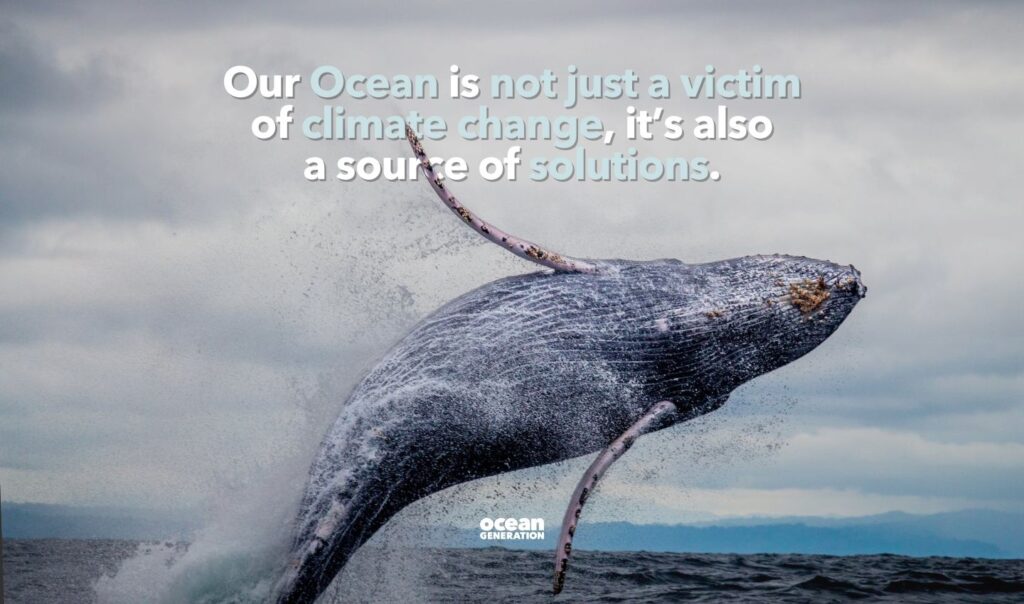
But the Ocean is not just a victim of climate change, it’s also a source of solutions.

Our Ocean provides all the fundamental resources that we need to survive. Written by Ocean Generation.

Coastal “blue carbon” ecosystems, such as mangroves, tidal marshes and seagrass meadows remove and store carbon dioxide from the atmosphere. These ecosystems can lock away carbon in their soils at rates up to an order of magnitude faster than terrestrial forests.

Protecting and restoring these vital coastal ecosystems offers us a chance to ensure a sustainable future for people and planet.  

If the Ocean thrives, so do we.  

So, next time you’re having a drink of water, catching your breath after exercising, or waiting at the doctor’s surgery for some medicine, take a moment to stop and thank the Ocean for providing the fundamentals to make all this possible. 

Our Ocean is not just a victim of climate change, it's a source of solutions.

Who are the orca outlaws sinking boats, and why are they?

Subscribe

Monthly: Impact in your inbox.

OceanGeneration-Join

Why is the Ocean so important?

Ocean wave crashing on a rock. Shared by Ocean Generation in an article about why the Ocean is important.

Introducing the Ocean: Our most precious, life-giving, climateregulating, yet recklessly exploited, undervalued, and underfunded resource.  

Covering over 70% of our blue planet and holding roughly 97% of the world’s water, the Ocean provides the foundation for all living things. From the smallest plankton to the largest animal to have ever lived (the blue whale). And that’s just the beginning of why the Ocean is important.

Energy is cycled across its single, interconnected system; keeping everything in balance. It allows all life to exist together in harmony. 

The Ocean makes up over 90% of all habitable space on Earth.  
Just think about that. All the rainforests, grasslands, mountain ranges and deserts combined with every town, city and village of human civilisation make up less than 10% of the liveable space on our planet.  

Everything else is Ocean.  

The Ocean exists on a scale beyond our understanding. ocean facts shared by Ocean Generation: Experts in Ocean health.

An Ocean which is home to the world’s largest mountain range (the Mid Ocean Ridge is over seven times longer than the Andes).

And the world’s deepest canyon. (Challenger Deep is six times deeper than the Grand Canyon and could easily swallow Mount Everest.) 

This vast, interconnected body of water exists on a scale so large that it’s almost beyond the realm of our understanding. 

But we need to understand why the Ocean is important.  

The Ocean defines our planet and provides the very foundation of our existence 

If it could talk, the Ocean would be able to tell us all about the dinosaurs, the ice age, and how Stonehenge or Egypt’s pyramids were really built. The Ocean watched as the earliest Homo Sapiens (that’s us) took our first footsteps. It may even hold the secrets to the very beginning of life on Earth.  

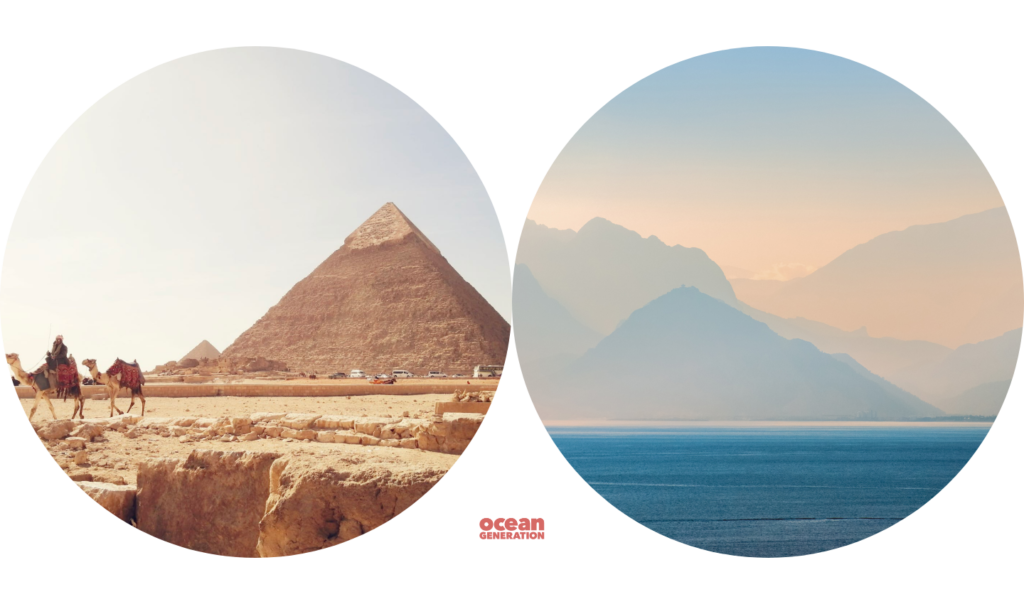
Two circle images beside each other: One of the pyramids in Egypt and another of a calm Ocean scene. Ocean Generation is sharing why the Ocean is so important in this article.

To look back at the history of the Ocean is to look back at the history of life itself.  

For millions of years, the Ocean has provided the conditions required for the evolution of all living things. The Ocean burst into life during the Cambrian explosion (the *relatively* sudden radiation and divergence of complex life forms) around 538.8 million years ago and has seen all five mass extinction events since. 

Make that six.  

At this very moment, we are living through the sixth mass extinction event. Research shows that species are now going extinct between 100 and 1,000 times faster than natural, background extinction rates.  

The delicate balance of life which has been slowly ticking along for millions of years has taken decades to unravel.  

According to the IUCN Red List, over 44,000 assessed species are threatened with extinction.  

It’s almost impossible to comprehend that we are hurtling towards destruction on a scale comparable to that caused by a colossal asteroid collision 66 million years ago. (That, the last mass extinction event, wiped out the dinosaurs).   

Except this time, humanity are both the asteroid and the dinosaurs.  

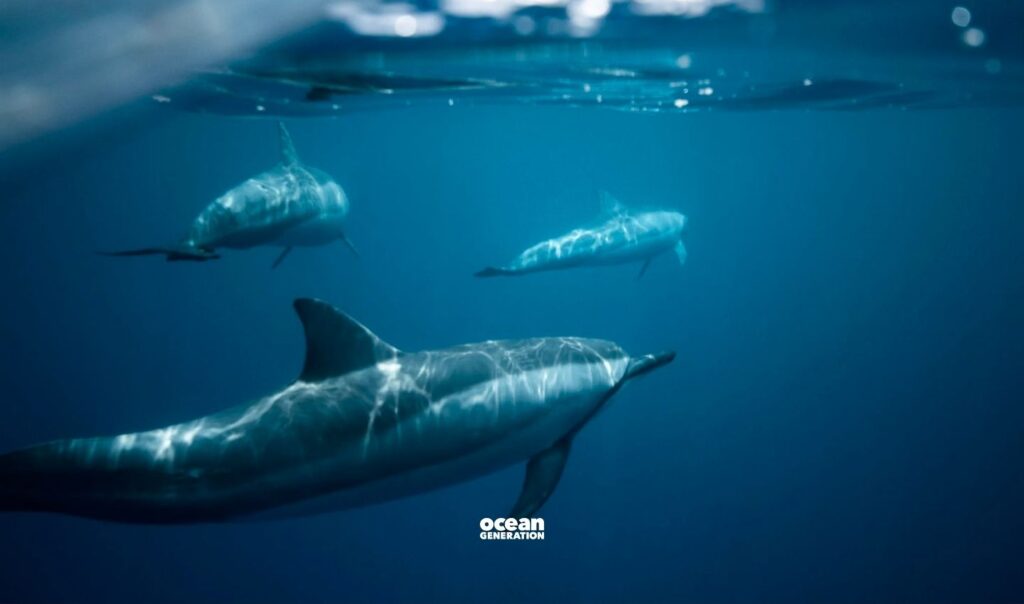
A pod of dolphins swimming in the Ocean shared by Ocean Generation.


Is the Ocean too vast to feel our impact?  

People used to think the Ocean existed on such an infinite, untouchable scale that nothing we, people, could do would affect its limitless bounty.  

“Man marks the earth with ruin – his control stops with the shore…”

– Lord Byron, Nineteenth Century.
Sunset image of the Ocean and a pink sky. Shared by Ocean Generation the global charity providing Ocean education to everyone, everywhere.

We now know that this is wrong.  

Throughout the last decades, our Ocean has been heating up. It’s becoming more acidic, choking in plastic, drained of its fish stocks, and pumped with toxic chemicals at a rate far beyond which it can sustain.  

We have borne witness to record breaking temperatures, mass coral-bleaching and glacial melting events. Now, we are hurtling towards a ‘new normal’ in which instability and volatility are centre stage. 

We have been recklessly exploiting our Ocean system.  

We have watched as records are broken time and time again.  

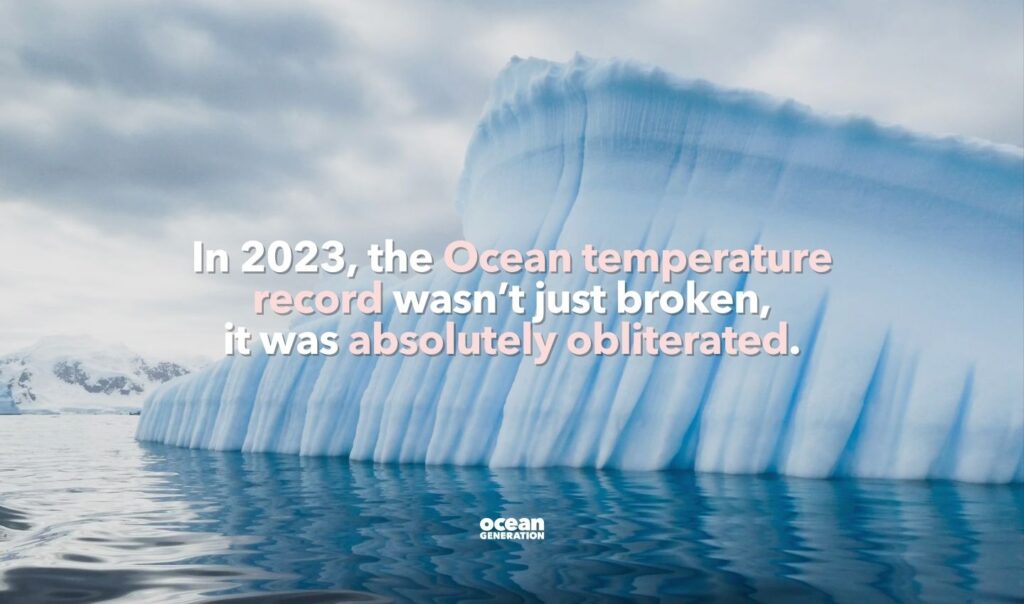
But in 2023, the Ocean temperature record wasn’t just broken, it was absolutely obliterated. 

In fact, the entire upper 2000m of the Ocean experienced shatteringly high temperatures. As this surface layer heats up, it’s less able to mix with deep water below. As a result, surface oxygen content has decreased.  

Image of a glacier in the Ocean with the quote: In 2023, the Ocean temperature record wasn’t just broken, it was absolutely obliterated.

This isn’t only detrimental to marine ecosystems, but it also slows the Ocean’s life-saving ability to sequester (remove and store) atmospheric carbon dioxide.  

The global water cycle has also been amplified by our warming Ocean. For us on land, this means stronger, longer droughts as well as intensified rainfall, storm, and flooding events.  

Restoring the Ocean starts on land – with us.

Just like how people once thought the Ocean was too large to feel our impacts. Now, it may seem like our impacts are too large to solve. But we know this isn’t true.  

We have the technology, the knowledge, and the power to turn the tide and reverse our trajectory. 

We know this because we’re in many parts of the world, it’s already happening.  

Effectively managed Marine Protected Areas, Maximum Sustainable Yields (the maximum catch size that can be removed from a population to maintain a healthy and sustainable fish stock), and the rise in renewable energy technologies are all ways in which humanity has learned to collaborate more fairly with nature.  

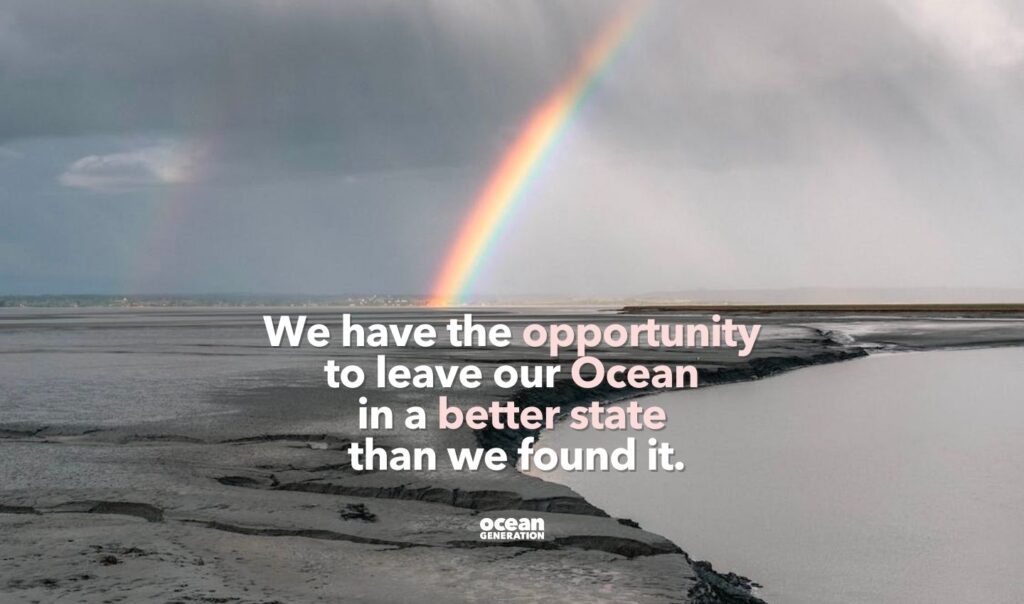
Rainbow over a beach and the Ocean with the quote: We have the opportunity to leave our Ocean in a better state than we found it. Shared by Ocean Generation, leaders in environmental education.

Working with the Ocean rather against it can reap limitless benefits for both people and planet. If the Ocean thrives, so do we.

This knowledge is power.  
Power to be part of the solution, to consider the cost of inaction and unite to ensure our Ocean’s health is considered in all decisions – personal, business, and government policies.  

We have a unique opportunity to be the first generation to leave our precious Ocean in a better state than we found it. 

Your actions may feel like a drop in the Ocean, but together we can make waves of change.  

Start by signing up to our newsletter and reading about 15 climate actions you can take to restore our Ocean. Learn more about why the Ocean is important by adding it to your scroll via your favourite social platform:

Who are the orca outlaws sinking boats, and why are they?

Subscribe

Monthly: Impact in your inbox.

OceanGeneration-Join

Say Ocean, not oceans: Why there is only one Ocean

There is only one Ocean.  

At school, we may learn that the Ocean has five separate regions, namely, the Pacific, Atlantic, Indian, Artic and Southern. 

But our Ocean has no borders. It’s connected as one and it works as a whole to help make all life on Earth possible.  

Connection with our Ocean

Talking about ‘our Ocean’ as one, unified system reinforces the notion of its interconnectedness. 

What happens in one part of the Ocean can affect the entire system.

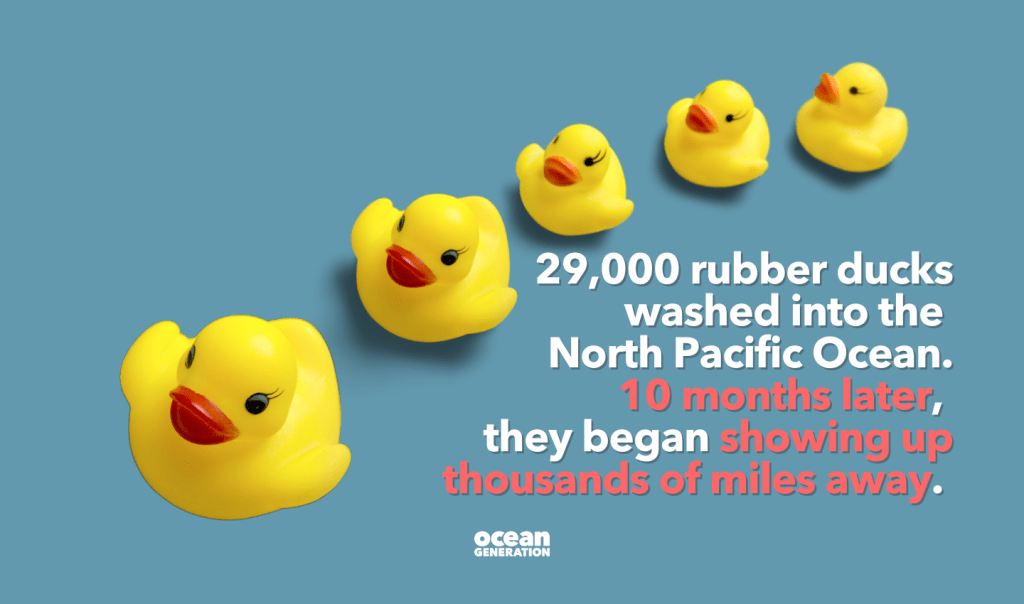
Here’s proof: When 29,000 rubber ducks were washed into the North Pacific, they began showing up thousands of miles away in Alaska, Washington just 10 months later.

This became known as “the quack heard around the world” and proved that a rubber duck (or a plastic bottle or other object) thrown or coastal waterway into a river can travel across the Ocean and end up on the other side of the world. 

29,000 toy rubber ducks washed into the Ocean. 10 months later, they were showing up all around the world. It proved that our Ocean is one, connected system.

A similar story unfolded, when almost five million pieces of Lego spilled into the Ocean from a cargo ship, off the coast of Cornwall, UK. Today, over 25 years later, the tiny, plastic toys are still washing up on the beaches of Cornwall

These stories don’t just show how connected our Ocean is. They show how human actions can have long-lasting, global impacts on marine environments.

What is your relationship with the Ocean?

We are all connected to the Ocean through weather, climate, and the very air we breathe. But each of us also has our own personal experience with the Ocean.

Maybe you swim, sail, or relax by the sea. Maybe you enjoy sushi, or listen to Ocean sounds on Spotify to help you sleep. You likely use products every day that are imported, by boat, from other parts of the world.

Biologist Wallace J Nichols, the author of Blue Mind, says, “We are beginning to learn that our brains are hardwired to react positively to water and that being near it can calm and connect us, increase innovation and insight, and even heal what’s broken.”

But the ways the Ocean keeps us all alive – like how the sea supplies over 50% of the oxygen we breathe, regulates the climate, nourishes the crops we eat and feeds billions of people – are often less understood.

This is where we come in.

At Ocean Generation, we’re rebuilding the connection between people and the Ocean. We’re an Ocean education charity that uses science, storytelling and pop-culture to make marine science interesting and relevant to your daily life.

When we understand why the Ocean is important, we feel connected to it. When we feel connected, protecting it is simply the next obvious step. A healthy Ocean is essential for a healthy planet.

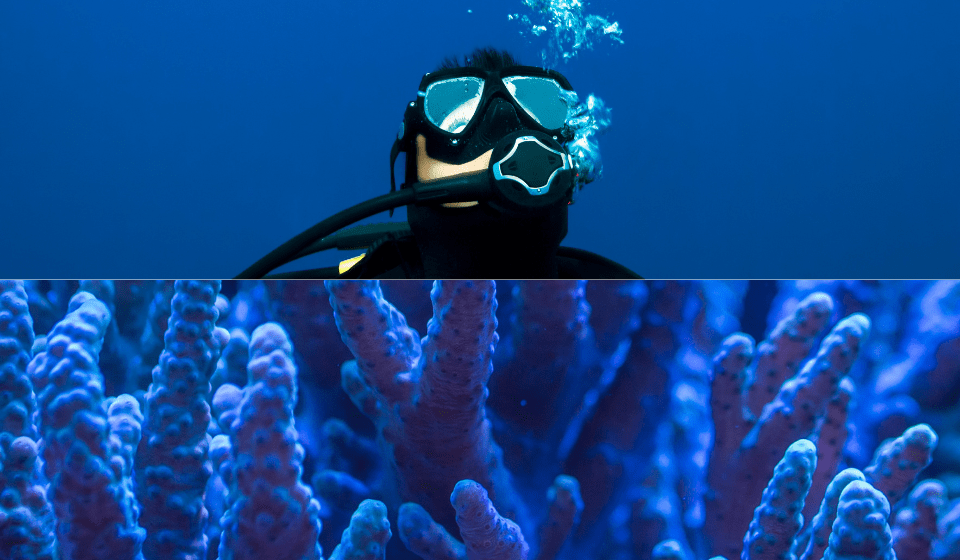
A diver in the Ocean, representing our connection with the Ocean. The Ocean supports all life on Earth and Ocean Generation wants to rebuild this human, Ocean connection so we can understand its importance.

Every drop of water is connected.

We don’t usually think of the water that comes from our taps as Ocean water. But to quote a little fish…

All drains lead back to the Ocean.

Finding Nemo

Every waterway (rivers, drains, the water in your coffee) eventually flows into the Ocean. Even the 60% of water that makes up your body has passed through the Ocean at one point.

The Ocean breathes air into our lungs, it nourishes our food, it controls our weather. We depend on our Ocean in more ways than we realise.

That means all our choices all ripple back, and impact, our blue planet. Everyday actions, even when they feel small, make a difference.

Want to feel more connected to our blue planet?

Join the Ocean Generation

  • We share bite-sized environmental education through science, storytelling and popular culture.
  • Translate complex Ocean science into engaging content on social media.
  • Run Youth Engagement programmes for people 3 – 25 years old (online and in-person).
  • Host talks for companies and corporates in the UK.

    Subscribe to receive the Ocean in your inbox (and get links to any of the above) or add the Ocean to your daily scroll on Instagram.

Who are the orca outlaws sinking boats, and why are they?

Subscribe

Monthly: Impact in your inbox.

OceanGeneration-Join

How many Oceans are there?

How many Oceans are there?

Mos of us are taught about five Oceans at school: the Pacific, Atlantic, Southern, Indian and Arctic Ocean. But here’s the thing: There is only one Ocean.

Our Ocean isn’t separated by borders. The Ocean is one, interconnected ecosystem.

The five Ocean regions have evolved for a variety of cultural, historical, geographical, and scientific reasons. But what happens in one part of the Ocean impacts the whole. Energy and nutrients cycle across the whole Ocean system, keeping everything in balance.

At Ocean Generation, we say Ocean — not ocean or oceans. We capitalise the O and drop the s, to reinforce the importance and connection of the ecosystem keeping us all alive.

The Ocean is a vital life-support system to all life on Earth

Everything that we rely on in our day to day lives – from our water, food, and every second breath – leads back to the Ocean.

Somewhere along the way, we’ve become disconnected from our blue planet.

YouTube player

Why is our Ocean so important?

If we were in space and looked down at Earth, we would mostly see the colour blue.

Our Ocean covers over 70% of the planet, which is why we call it our Blue Planet. It produces over 50% of the oxygen we breathe; meaning that every second breathe we take comes from the Ocean. 

Our Ocean helps regulate the temperature on land and is responsible for global weather patterns like storms and heatwaves (which we’ve been seeing more of in the recent years).

It absorbs the sun’s heat, transferring it to the atmosphere and distributing it around the world – warming in the winter and cooling in the summer. Our Ocean is a key driver of how our world functions and yet it’s usually low down on governments agendas. 

How many of these Ocean facts do you know?

Containing roughly 97% of the world’s water, our Ocean supports all life on Earth.
It is home to thousands of plants and organisms. And yet, scientists estimate that 91% of species are waiting to be discovered. Should we stop looking for aliens on Mars and start looking for our own E.T in the Ocean?
From the oldest species in the entire world to the largest living animal in the world – the blue whale – the Ocean’s biodiversity is astonishing. 

With only roughly 5% of the Ocean explored until now, we are only just beginning to scratch the surface of the mystical world that exists below the surface of our deep blue sea.

For all of our reliance on the Ocean, a majority of it is a vast, underwater realm that remains unmapped, unobserved, and unexplored. It’s time to unlock more of the Ocean’s secrets. 

How the Ocean supports all life

We have a non-exhaustive article about 17 ways the Ocean keeps us alive. In summary, Our Ocean provides us with over half of all oxygen on Earth, provides us with food, facilitates travel, as well as livelihoods for millions, if not billions of people.

But it’s not just a commodity. The Ocean is restorative. It calms and connects us. The positive impact it can have on our wellbeing is incredible.

As humans, we depend on the Ocean for a huge part of the oxygen, water and food we need to survive.

5 ways the Ocean helps our wellbeing:

  1. The movement of gentle Ocean waves and fish in an aquarium is known as Heraclitean Motion. These peaceful, repetitive movements are psychologically calming.
  2. Studies have shown that people perceive nature as a positive, and spending time amongst it is known to improve mood.
  3. Various studies have shown improved mental and physical health in those who spend time near the coast.
  4. When swimming, breathing patterns affect the brain and increase positive hormones.
  5. The sounds of waves support meditation techniques.

So, why are so many of us so disconnected from the Ocean?  

Do you think of the Ocean as something you only see while on holiday? Or perhaps you live in a city or town, so you feel it’s too far away for you to feel connected to it?

You may be shocked to know, 1 out of every 2 people in the world live near coastal areas. 

And because the Ocean provides every second breath, the Ocean has an impact on our lives no matter where we live. Our actions have an impact on the Ocean too. 

Did you know that there is now new water made on Earth? The same water cycles around. This water cycle is a closed loop that has existed for billions of years. 

We are deeply connected to this global water body, influencing our everyday lives in so many ways, like every single thing we eat, breathe and drink.

Without a healthy Ocean, we will not have a healthy future.

We all need to understand how important the Ocean is to our daily lives to be continually motivated to protect it. 

Want to learn about the Ocean? Join the Ocean Generation.

Subscribe for simple Ocean Science and pop-culture stories

* indicates required

View previous campaigns.

Ocean Generation will use the information provided here to be in touch with updates and marketing.

You can unsubscribe at any time.

Who are the orca outlaws sinking boats, and why are they?

Subscribe

Monthly: Impact in your inbox.

OceanGeneration-Join