The impact of overfishing and what you can do about it

The impact of overfishing and what you can do about it: Explained by Ocean Generation.

Fish is one of the most important food sources on the planet with more than 3.3 billion people relying on it as an important part of their diet.

Fishing is an ancient practice first thought to emerge 40,000 years ago, and for many people, it is central to their culture and way of life.  

However, with our population on the rise and the demand constantly increasing, pressure from commercial fleets is causing fishing to become a problem. 

Fisheries ideally harvest the Maximum Sustainable Yield (MSY), which is the most that can be continually extracted from a population without causing it to decline.

However, more and more of our wild fish stocks are being harvested at a rate faster than the fish populations can naturally regenerate. This is known as overfishing. Advancements in modern technology have exacerbated this by allowing modern fleets to track, target and process huge amounts of seafood.

According to the 2024 FAO report, 37.7% of global fish stocks are fished at unsustainable levels.

However, a recent study of 230 fisheries has revealed that the computer models used to set catch limits often overestimate the size of fish populations. This new research suggests that 85% more fish populations have collapsed than is recognised by the FAO estimate.  

This high level of uncertainty when counting fish stocks poses a greater risk of overfishing and highlights the need for extra precautions to be taken.

37.7 percent of global fish stocks are fished at unsustainable levels. Posted by Ocean Generation.

Fishing in the open Ocean

Countries are allowed to exploit Ocean regions within 200 nautical miles of their coast, called the Economic Exclusion Zone (EEZ). Beyond these areas is whatโ€™s known as the high seas: 60% of our Ocean which lies beyond national jurisdiction.

The risk of overfishing is high here, as thereโ€™s great difficulty regulating such a huge expanse of Ocean that belongs to no one. 

One of the principles of the high seas is the freedom for any state to have passage and engage in fishing.

However, itโ€™s companies that rule these regions, not countries.  

The combined impact of illegal fishing, and legal fishing that fails to follow scientific advice has led to 65% of straddling (fish that migrate between the high seas and EEZs) and high seas fish stocks to become overfished and for species richness to decline. 

The challenges of regulating the Ocean and fisheries lead to the damage of one of our most important resources.  

Threats such as over-exploitation, destructive fishing methods, and bycatch endanger the health of our Ocean and Ocean biodiversity. Therefore, thereโ€™s an immense need for change.  

We need to improve the sustainability of fisheries

How can we make the fishing industry more sustainable?  

Improving the sustainability of fisheries can be done in many ways. Just to name a few: increased regulation on catches and fishing gear, more legislative protection on different areas or cooperation between nations.

One important way is to influence the market and demand sustainability, which can be achieved through consumer action. 

When you step into your local market, opting for sustainable seafood helps to place pressure on suppliers and drives the industry to improve โ€“ as it all comes down to consumer demand. 

So, what can I do as a consumer? 

1. Check the certification. 

The Marine Stewardship Council (MSC) completes an assessment of a fishing operator. They look at the sustainability of their fishing, minimisation of environmental impact and how effective their management is.

Sustainable fisheries will be awarded an MSC blue badge, which appears on the packaging of their fish in store. It’s an easy way to identify sustainably caught fish while shopping. The MSC blue label is found on more than 25,000 seafood products all over the world.  

However, itโ€™s worth noting that while the MSC blue badge is the worldโ€™s most widely used certification programme for wild fisheries, itโ€™s not without its limitations.  

An independent review by โ€˜On the Hookโ€™ in 2023 argued that the certification process is insufficient as an indicator of sustainable fishing and doesnโ€™t meet consumer and market expectations.  

Nevertheless, if consumers favour MSC approved seafood whenever possible, this will encourage fisheries to improve their sustainability and meet standards โ€“ as itโ€™s currently the best sustainability certification we have. 

Opting for sustainable seafood helps the industry to improve. Posted by Ocean Generation

2. Educate yourself on your options. 

Another way to direct your decision to the most Ocean-friendly option is through education.  

The Marine Conservation Society has a Good Fish Guide, designed to have a traffic light system to represent the environmental impact of your food. It uses scientific advice on the species and how and where it was caught to help inform the consumer on the best possible choice. The guide can be downloaded onto a phone and therefore accessed at any time! 

Similar resources such as  Seafood Watch and GoodFish assess Canadian and U.S markets and Australian markets respectively, who will also help you navigate the most sustainable choices. 

3. Choose your supplier. 

Rather than asking consumers to make the effort, some retailers will make the choice for them, and only stock sustainably produced goods.   

For example, in the UK, M&S has worked with the WWF since 2010, focusing on their supply chains and ensuring traceability and sustainability in their seafood products. Sainsbury’s won both the MSC and ASC (Aquaculture Sustainability Council) awards in 2023, celebrating their achievements in sustainable fishing and responsible aquaculture.

So, if possible, try to consider buying seafood from retailers such as these, as more hassle-free way of making more fish friendly decisions.  

The management of our Ocean resources is vital in allowing them to provide for us in the future. For those who choose to, fish is a favourite, but it will taste much better for having made it to your plate in the most sustainable way, minimising the harm to our Ocean.  

What can I do to make the fishing industry more sustainable: Explained by Ocean Generation

From classroom to COP30: Questions from children to climate leaders about Ocean protection

Subscribe

Monthly: Impact in your inbox.

OceanGeneration-Join

Why do marine animals migrate: Everything you need to knowย ย 

Migration across the Ocean is such an extraordinary phenomenon that scientists today are still trying to discover how and why itโ€™s done. 

  • How does a turtle find the same exact beach where it hatched after an epic journey across the Ocean? 
  • How do gray and humpback whales navigate record-breaking migrations: 14,000 miles of deep blue sea over 172 days? 
  •  Why do sardines, whales, turtles, hammerheads, great whites, manta rays and all manner of smaller creatures undertake these incredible journeys across our seas? 

Why do marine animals migrate across the open Ocean? 

Crossing an entire Ocean is extremely tiring. You could get lost or caught in a storm and youโ€™re exposed to various risks along the way, so why do it? 

Migration comes down to a need for a resource that an animal doesnโ€™t have in its current environment. Theyโ€™re often seasonal, long-distance movements in search of food, mates, habitat or to escape predation.

Long journeys across the Ocean come with many challenges for migrants. Posted by Ocean Generation, leaders in Ocean education

Food: One of the biggest reasons for migration. 

Baleen whales, like humpbacks and gray whales, will migrate to northern latitudes during the spring and summer to feed in cold arctic waters, rich in krill and shrimp like crustacea. The long, tiresome journey from the south is made worthwhile for the feast of food that awaits them there.  

Turtles also make their way north, with species like leatherbacks spotted in the waters off Canada, Alaska or Nova Scotia. Leatherbacks are some of the most highly migratory animals on Earth, the longest recorded journey being 12,744 miles from Indonesia to Oregon, USA.

Here during the summer months, there is an increasing abundance of a turtleโ€™s favourite food: jellyfish.

But of course, the food can move too.

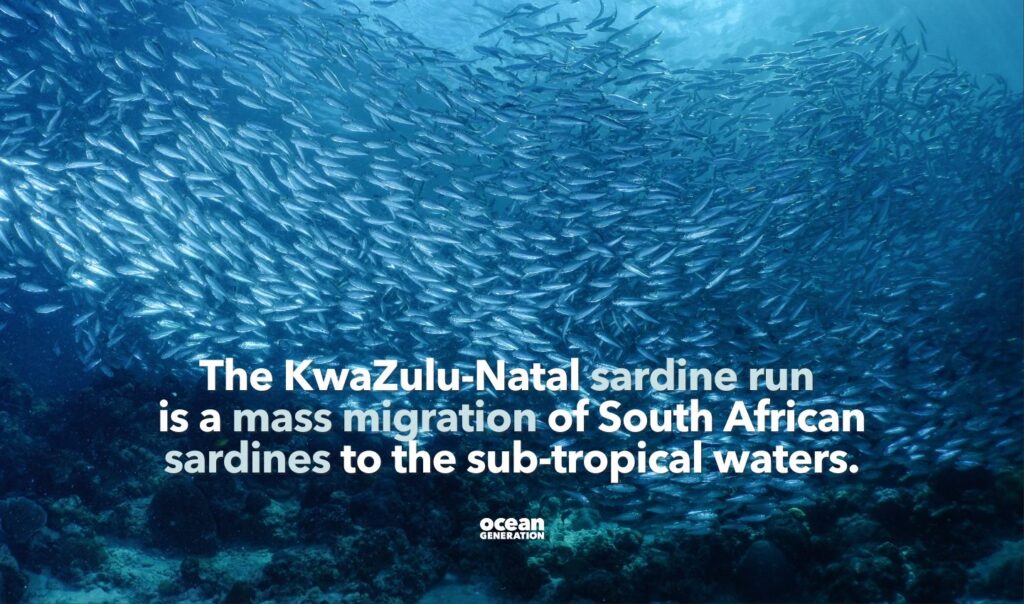
Fish are one of the most important sources of food on Earth, preyed upon by numerous different animals, including humans. The KwaZulu-Natal sardine run, also known as the โ€œgreatest shoal on Earth,โ€ is a mass migration of South African sardines to the sub-tropical waters of the Indian Ocean.  

Estimated to rival Africaโ€™s wildebeest migration as being the largest biomass migration on Earth, this shoal becomes a โ€˜moveable feastโ€™ for opportunistic predators like sharks, dolphins, gannets, seals and whales.  

KwaZulu-Natal sardine run is a mass migration of sardines. Posted by Ocean Generation.

Whales also migrate to find a mate.

Whales, like humpback and gray whales, feed in cold arctic and sub-arctic waters but thatโ€™s not a suitable place to find a mate and give birth to their offspring. They could breed here but there are serious risks to the mothers and their calves with the cold water and predation by animals like orcas. 

Instead they move from north to south during the winter months, giving birth to their young in shallow, warm waters such as lagoons. Popular destinations include Baja California, Mexico, Hawaii and Japan.  

Frodo the humpback whale, named after the Lord of the Rings character, underwent his record-breaking adventure to find a mate from the Mariana islands to Mexico covering around 7,000 miles. Check out his journey on Happywhale

Whales migrate thousands of miles across the Ocean. Posted by Ocean Generation
Map of Frodo’s travels from Happywhale.com

Humpbacks will often migrate the same routes they were guided on by their mothers. Frodoโ€™s unusually long journey may be relic behaviour of the whaling industry, where depleted numbers require males to travel further in search of a mate.  

Turtles will return to the exact same beach where they hatched to lay their eggs, known as natal homing. Most turtle species spend most of their time in the open Ocean, widely dispersed across the globe.  

But how do they know where they are and where theyโ€™re going? 

Turtles show remarkable navigation skills with pinpoint accuracy using a combination of external cues to calculate their position and route. When they are near the site of their hatching, turtles may use visual cues such as the incline of the beach or the smell of the water or air.  

However, in deeper water turtles must resort to other methods to find their way home.  Loggerhead, green and leatherback turtles have all demonstrated the use of a โ€˜magnetic map senseโ€™ like other long-distance migrants such as bird and butterflies.  

Along a coastline, the inclination and intensity of the magnetic field will vary, giving rise to a unique magnetic signature at a precise location. Scientists suggest that hatchlings imprint on this unique magnetic signature and use it to navigate back across the entire Ocean years later.  

Sea turtles have remarkable navigation skills to migrate across the Ocean

Long journeys come with obstacles that Ocean migrants must face.  

Our Ocean is becoming an increasingly treacherous place for its inhabitants, with threats from entanglement, ship strike, lack of jurisdictional protection and climate change. 

As these migrants make their way along vast journeys, they tend to cross paths with one of the most dominant and widely distributed animals on Earth: people.  

Many important migratory routes for whales and other surface-dwelling animals like turtles and sharks, converge with areas of heavy maritime traffic. This cross over can lead to ship strike, which is harmful if not fatal to an animal.  

Species like the endangered North Atlantic Wright whale are particularly vulnerable as their habitat and migration routes are close to major ports and shipping lanes. There were 37 whales were reported injured in this region between 2010 and 2014 and that is likely to be an underestimate. 

Furthermore, about 640,000 tonnes of discarded fishing gear, known as โ€˜ghost gearโ€™, enters our Oceans every year, posing the major threat of entanglement.  

The animals who travel the most are at higher risk of such encounters. For instance, an estimated 30,000 whales and dolphins die from entanglement each year.

Rising sea surface temperatures due to climate change may also alter where migratory species find food and push them past their heat tolerance. This could disrupt the longstanding migration patterns between feeding and breeding grounds.

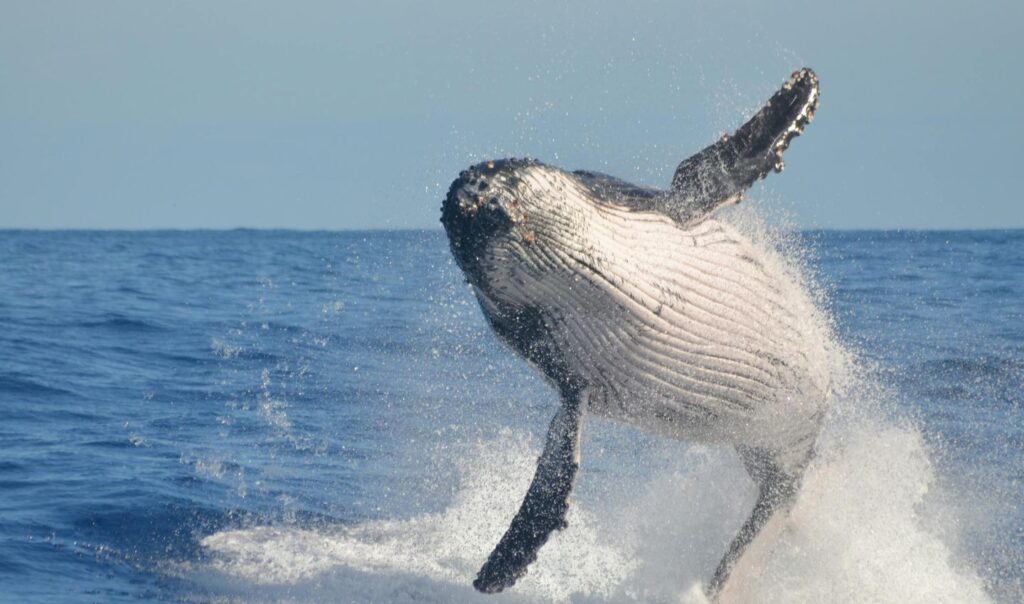
Humpback whales migrate to warmer waters in the Ocean to breed

Nevertheless, thereโ€™s a push for the conservation of these migratory species and a desire to make the Ocean a safer place.

Weโ€™re constantly developing new technologies to help prevent animals from becoming entrapped in fishing gear. For example, Galvanic Timed Releases (GTRs) involve materials that disintegrate over time, opening doors or panels on the gear or allowing lines to break away. 

Restrictions such as vessel speed limits and altered ship routes help avoid collisions with endangered species such as North Atlantic wright whales, as well as establishing temporary precautionary zones around recently sighted whale groups.  

The migration of these marine travellers across the Ocean highway are some of the most extraordinary and treacherous journeys in the world.  

Continuing to learn and understand these journeys is essential for protecting Ocean life and reducing the threat that is posed by humans. 

From classroom to COP30: Questions from children to climate leaders about Ocean protection

Subscribe

Monthly: Impact in your inbox.

OceanGeneration-Join

Re-thinking the shark stereotype

Rethinking the shark stereotype. Posted by Ocean Generation

With torpedo-shaped bodies, forked tails, and dorsal fins, sharks belong to a group known as cartilaginous fishes (meaning their skeleton is made from cartilage, not bone).

As one of the oldest evolutionary groups, the earliest fossil evidence for sharks or their ancestors’ dates to 400 – 450 million years ago.ย 

This means that the earliest sharks may have been around before trees even existed (trees evolved around 360 million years ago).ย ย 

What makes sharks unique?  

Sharks are one of the most diverse groups of predators in the animal kingdom. They come in all shapes and sizes. Sharks can have huge, gaping mouths (like the basking shark), long whip-like tails (like the thresher shark) or flattened, club-like heads (like the hammerhead shark).  

Sharks are one of the most diverse groups of predators

The largest species is the whale shark, reaching lengths of 20m. The smallest is the dwarf lanternshark which grows to just 20cm long. 

Itโ€™s this diversity in shape, size, feeding mechanism and habitat that has enabled sharks to persist throughout all parts of the Ocean over millions of years.  They even live in some freshwater environments.

Sharks come in many shapes and forms

Why are sharks important?  

Sharks can play many roles in ecosystem functioning: from predators to prey, competitors, and nutrient transporters.  

Some species of shark are apex predators, meaning that theyโ€™re at the top of their food chain and exert a top-down control on food webs. Others can sit further down the food chain, yet still play an important role as food for other predators and transporting energy through ecosystems. 

Large scale movements and migrations of sharks also connect even the most widely spaced food webs, transporting nutrients across the open Ocean system.  

Unfortunately, sharks are heavily misunderstood. 

Media and popular culture often demonise sharks, portraying them as senseless killers through sensationalistic headlines and striking imagery. This is designed to incite fear, leading us to believe that the threat posed by sharks is greater than it really is.   

Did you know? Our fear of sharks originates from the โ€˜Jaws Effectโ€™. It’s the powerful influence of the famous 1975 Hollywood thriller on our human perception of risk from sharks. 

Put simply: Few animals are feared more than the shark.

Some sharks are at the top of the food chain

But in reality, sharks have much more to fear from us than we do them.  

The probability of a shark biting a human is very low compared to many other risks that people face in their everyday lives. According to the International Shark Attack File, there were 69 unprovoked shark bites, including 10 unprovoked shark-related deaths globally in 2023.

To put this into perspective, on average, 500 people are killed by elephants each year.  

Sharks donโ€™t actively hunt humans. The most common shark incident is known as a โ€˜test biteโ€™. It means sharks swim away after a single bite once they realise itโ€™s not their preferred prey. Surfers and other board sports make up 42% of reported incidents, as the shape of their boards can bear a resemblance to seals and other prey from below.  

When we do encounter sharks, itโ€™s often because their natural behaviour clashes with our activities, from fishing to recreation.

In contrast, the global population of sharks and rays have plummeted by over 70% over the past 50 years. 

The pressure on shark populations continues to rise. At least 80 million sharks are killed each year and over 1/3 of all shark and ray species now threatened with extinction. 

The population of sharks has plummeted

To put that into perspective, there are only 19 countries in the world whose population is greater than 80 million. As of 2024, the number of sharks killed each year exceeds the total population of Thailand (71.8 million), the UK (68.3 million), and France (68.1 million).  

Sharks are particularly vulnerable to overexploitation 

They grow slowly and take a long time to reach sexual maturity.

Shark mothers put a significant amount of energy and time into the development and care of their offspring. They also take extensive rest periods between pregnancies.  

This makes sharks far less resilient and slower to recover from disturbance and overexploitation than other fish species.

Overfishing is the greatest threat to shark populations worldwide.  

The 70% decline in shark and ray populations is largely attributed to an 18-fold increase in fishing pressure over the past 50 years.

A key incentive for shark fishing is the Shark Fin Trade. This is the practice of removing the fins from a captured shark and discarding the rest back into the Ocean. Shark fins have become one of the most valuable seafood products worldwide, and this globalised market exists largely to meet the demand for the traditional dish: shark fin soup.

However, despite widespread legislation designed to prevent shark finning in recent years, fishing pressure and shark mortality continues to rise.  

Sharks are vulnerable to overfishing. Posted by Ocean Generation: We're rethinking the shark stereotype

Restrictions surrounding the practice of shark finning has driven up the appetite for shark meat. Itโ€™s because it’s often only illegal to land fins with the shark removed, not the whole animal. As a result, largely unregulated fisheries in the high seas continue to put pressure on global shark species. 

These markets are muddied by misidentification (often of protected or endangered species). For example, in Brazil, the meat is labelled โ€œcaรงรฃoโ€: an umbrella term under which both shark and ray meat are sold. 

This lack of transparency leads to consumers being poorly informed, and they often arenโ€™t aware that the animals on their dinner plate are at risk of extinction.

Scientists used satellite tracking to discover that about 24% of the area sharks use each month overlap with large-scale industrial fishing zones. This means that many shark species in the open Ocean spend almost ยผ of their time under the looming shadow of large-scale fishing fleets. 

Climate change compounds these threats.

The Oceanโ€™s oxygen minimum zones (naturally occurring areas of open Ocean low in oxygen) have expanded horizontally and vertically. This is due to higher temperatures and changing circulation patterns associated with climate change.  

The expansion of these oxygen minimum zones has caused the habitat of oceanic sharks to be compressed towards the surface, since they canโ€™t survive in low oxygen conditions.  

Species like the blue shark are being pushed closer towards intense surface fisheries as a result, making them more vulnerable to being caught as bycatch.

Sharks diversity has enabled them to persist through millions of years. Posted by Ocean Generation: We're rethinking the shark stereotype

Despite the alarming statistics, itโ€™s not all bad news for sharks. 


In the northwest Atlantic, the white shark appears to be recovering after a 70% decline over the past 50 years, and hammerhead shark populations are also rebuilding here. This success is owed to strictly enforced fishing bans and quotas throughout their range.

This gives us hope that the successful implementation and enforcement of science-backed management across a species range can reverse shark population declines. 

To protect sharks, we need to change the way we think about them.  


Our irrational fear of sharks is limiting support for their conservation. 

When we portray sharks in a negative light, our sense of risk becomes heightened. This leads people to believe that extreme mitigation measures such as culling are not only appropriate, but necessary.  

This fear also diverts our attention away from the species which are at the highest risk of extinction and ignores the ongoing threats to sharks and their habitats.  

Sharks have survived all five previous mass extinction events. For them to survive the sixth, we must re-evaluate our perceptions of them and show our support for the conservation of these magnificent creatures.  

We need to protect sharks

From classroom to COP30: Questions from children to climate leaders about Ocean protection

Subscribe

Monthly: Impact in your inbox.

OceanGeneration-Join

How can we protect and restore our coastlines?

Protecting and restoring coastlines starts with us.

Coastlines are the gateway to the Ocean.

Vital ecosystems like mangrove forests, seagrass meadows, coral reefs and tidal marshes exist almost exclusively in coastal regions.  

They support a high biodiversity of life and provide key nursery and breeding areas for migratory species.

Theyโ€™re also essential to the livelihoods of coastal populations, and we all rely on the important services they provide, such as carbon sequestration and protecting the coast from erosion.

Our coastlines are under threat. 

If youโ€™re wondering which of the five key Ocean threats impact our coastlines, the answer is all of them.

Because coastlines are the boundary between land and sea, our impacts are often amplified in coastal regions due to their proximity to the cause…us.  

With more than one third (2.75 billion) of the worldโ€™s population living within 100km of the coast, itโ€™s no surprise that coastal regions are heavily concentrated.

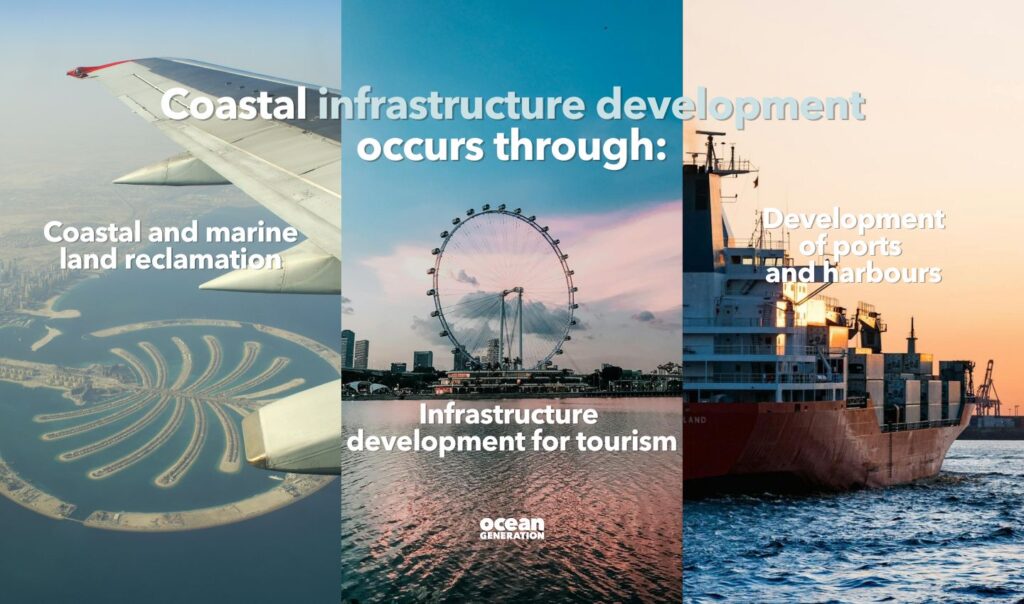
To supply the needs of this ever-growing population, coastal infrastructure development happens through:

  1. Coastal and marine land reclamation, the process by which parts of the Ocean are formed into land. 
  1. Infrastructure development for tourism, such as resorts and recreational facilities.  
  1. Development of ports, harbours, and their management.
Coastal infrastructure development, posted by Ocean Generation.

This is a key driver for habitat destruction (when a natural habitat can no longer support the species present) and biodiversity loss. It also increases the vulnerability of coastal communities to climate change impacts.

With higher frequencies of natural events like cyclones and hurricanes, risk of erosion, saltwater intrusion, flooding and other cascading climate change impacts, coastal regions have never been this vulnerable.

How can we protect and restore our coastlines? 

Enter: Nature Based Solutions (NBS). These are described by the IUCN as:

โ€˜Actions to protect, sustainably use, manage and restore natural or modified ecosystems, which address societal challenges (such as climate change, food and water security) effectively and adaptively, while simultaneously providing human-wellbeing and biodiversity benefits.โ€™ย 

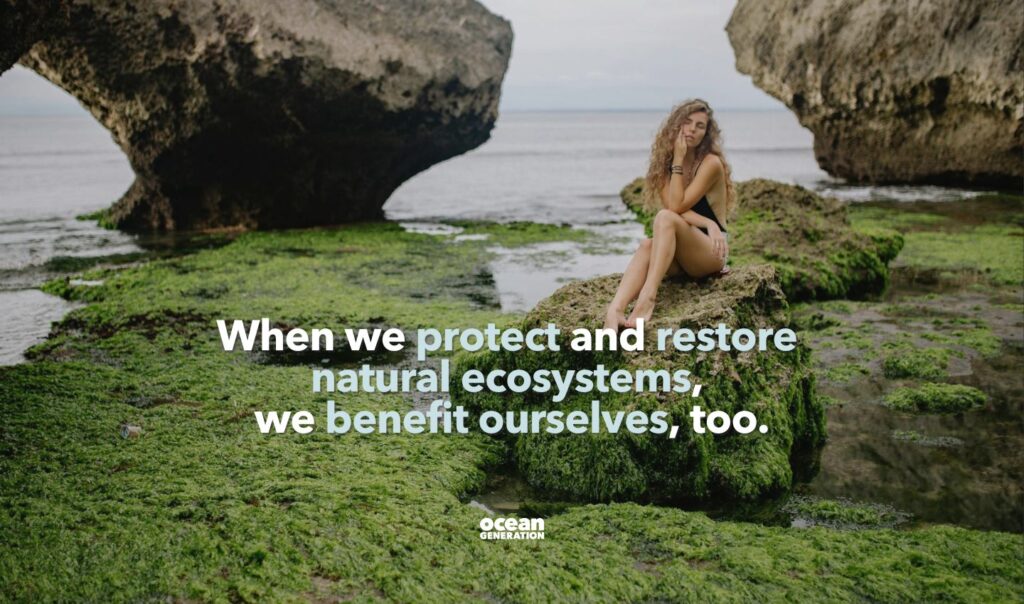
In other words, when we protect and restore natural ecosystems, we provide a whole host of benefits to ourselves, too.ย ย 

This can be done by restoring degraded ecosystems to their former glory and halting further loss of existing ecosystems.

When we restore natural habitats we protect ourselves too.

Ocean Solution: Habitat restoration.

Habitat restoration is the process of actively repairing and regenerating damaged ecosystems.

Restoring coastal ecosystems such as mangrove forests, coral reefs, oyster beds and seagrass meadows allow us to address environmental challenges (such as biodiversity loss). It reduces risks to vulnerable communities (like flooding, erosion, and freshwater supply). It also contributes to sustainable livelihoods by providing job opportunities.

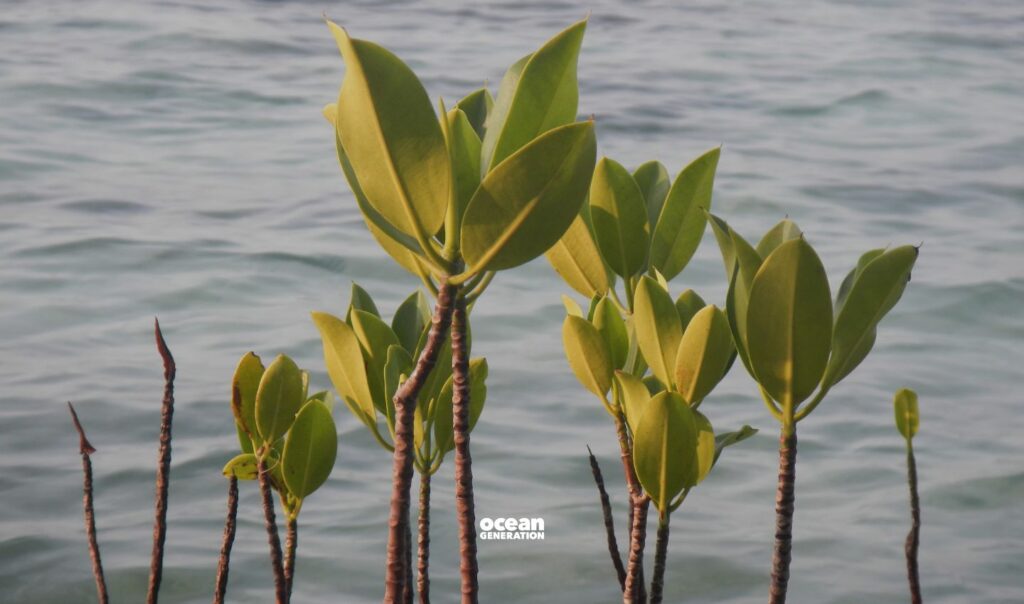
Thatโ€™s why at Ocean Generation, we support a mangrove restoration project in Madagascar, led by Eden Reforestation.

In 2022 alone, this project contributed to:ย 

  • Carbon sequestration and habitat restoration by planting over 4.3 million young mangrove trees.  
  • Creating sustainable livelihoods by employing around 70 people per month at the Maroalika site, with a total of 1,468 working days generated over the year.  

PSA: We plant a mangrove for every new follower on Instagram and newsletter subscriber. Sign up to our newsletter or follow us on our socials to be part of the change today. 

Interest in nature based solutions have surged lately. Posted by Ocean Generation, leaders in Ocean education.

Ocean solution: Marine Protected Areas. 

To halt ecosystem destruction and prevent further habitat loss, we must take measures to protect remaining coastal ecosystems.

One mechanism to achieve this is by implementing Marine Protected Areas (MPAs). These are designated areas of the Ocean established with strict regulations to protect habitats, species and essential processes within them.

If implemented and monitored effectively, Marine Protected Areas can provide a range of benefits across biodiversity conservation, food provisioning and carbon storage

What is the 30 by 30 target? 

In recognition of the importance of healthy and thriving ecosystems, the Global Biodiversity Framework have established a โ€œ30×30โ€ target. This calls for the conservation of 30% of the earthโ€™s land and sea through the establishment of protected areas by 2030.

The Global Biodiversity Framework calls for 30 percent of the sea to be protected.

Spoiler alert: Weโ€™re not on track to meet this goal.

According to the Marine Protection Atlas (2024), only around 8% of the global Ocean area has been designated or proposed for MPAs, and only 2.9% of the Ocean is in fully or highly protected zones.  

Research also shows that 90% of the top 10% priority areas for biodiversity conservation are contained within coastal zones (within 200-miles of the shore). We must ramp up our efforts to preserve these vital coastal ecosystems and ensure that MPAs continue to benefit both people and planet.

What are the main challenges to implementation? 

Over the past 10 years, interest in the potential of Nature Based Solutions to help meet global climate change and biodiversity goals has surged, as we have begun to truly appreciate the importance of natural ecosystems.  

Despite this knowledge and an abundance of opportunities for implementation worldwide, marine and coastal regions still lack uptake.  

We must address the barriers to implementation to accelerate the rate of success of coastal protection worldwide, including (but not limited to):

  • Conflict of interest between stakeholders i.e. blocking of protective legislation by fishing and other extractive industries.  
  • Marine and coastal ecosystems are โ€˜out-of-sight, out-of-mind’. This results in a lack of public and policy awareness of their value. As a result, Nature Based Solutions are often overlooked in favour of grey infrastructure such as seawalls.ย ย 

Increasing our understanding of the vital services provided by coastal ecosystems is critical to overcoming these barriers. 

The more we appreciate what these incredible ecosystems do for us, the more likely we are to succeed in protecting and restoring our coastlines.  

Restoring coastal ecosystems help address environmental challenges

From classroom to COP30: Questions from children to climate leaders about Ocean protection

Subscribe

Monthly: Impact in your inbox.

OceanGeneration-Join

Surviving in the Intertidal Zone: The gateway to the Oceanย 

The intertidal zone is the gateway to the Ocean

The intertidal zone is the dynamic interface between land and sea, which is constantly shifting and changing with the tide.

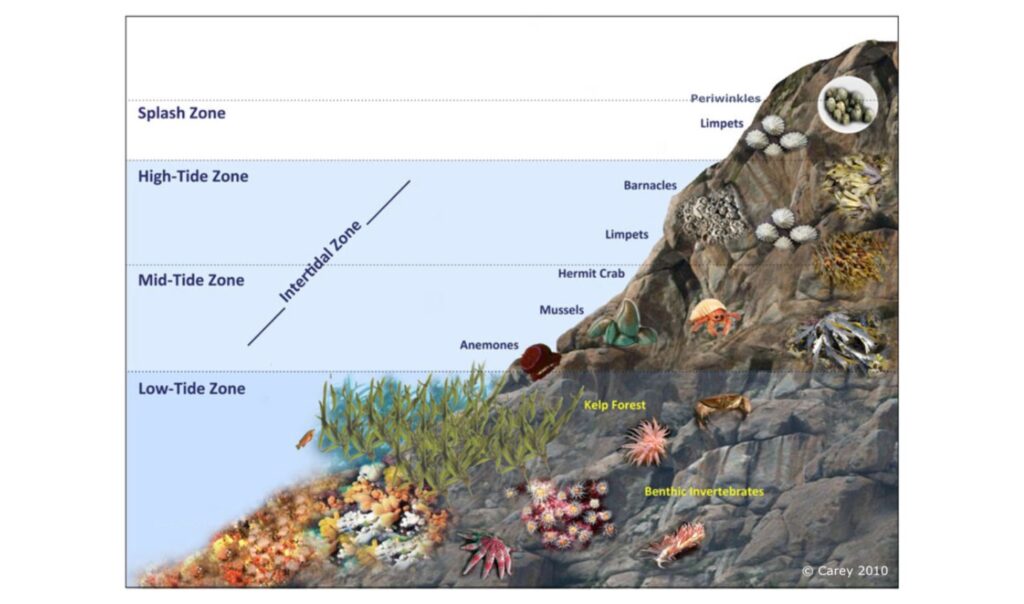
This extreme ecosystem is divided into four vertical zones, based on the amount of time each section is submerged. There are the low tide zone, middle tide zone, high tide zone and splash/spray zone. 

The intertidal ecosystem in the Ocean is divided into four zones
Image credit: Science Learning Hub

Anything that lives in the intertidal zone must withstand dramatic changes in moisture, temperature, salinity, and wave action.  

Marine life and ecosystems respond to these challenges either by short-term, reversible adjustments (phenotypic plasticity), or by long-term adaptations that involve heritable genetic changes (evolution). 

Letโ€™s explore the challenges of living in this dynamic environment, and some of the ingenious ways that intertidal animals have adapted to survive here.

Intertidal animals are exposed to air for a large portion of their lives

The drying out effect of air exposure poses a challenge for these animals, and they must find ways to reduce water loss to survive here.

The most common adaptation is to avoid water loss altogether. Intertidal molluscs (like mussels and oysters) retain water within their shells and tightly seal them shut. Others seal off their shell opening with a door-like structure called an operculum (snails do this).  

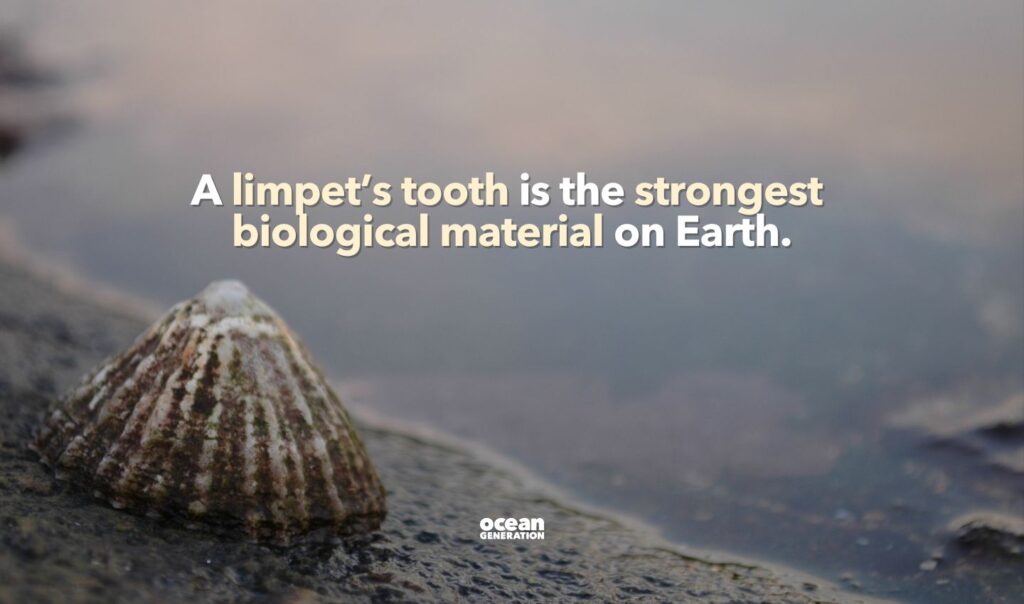
Limpets seal themselves against the hard substrate using suction and produce a mucous layer at this interface to create a watertight seal.  

Limpets seal themselves agains hard substrate in the intertidal zone

Air exposure leads to greater temperature fluctuations and extremes. 

Mobile animals such as crabs avoid the largest temperature changes by shuttling between cooler and warmer environments. This technique is called behavioural thermoregulation.

For less mobile animals, thermal regulation becomes more challenging. 

More sensitive animals such as sea stars/ starfish are limited to the low tide zone where theyโ€™re more frequently submerged.

Others, such as some species of intertidal mollusc, have evolved internal mechanisms such as heat shock proteins and a high freeze tolerance. These help the animals to cope with extreme temperature variations in the high tide zone. 

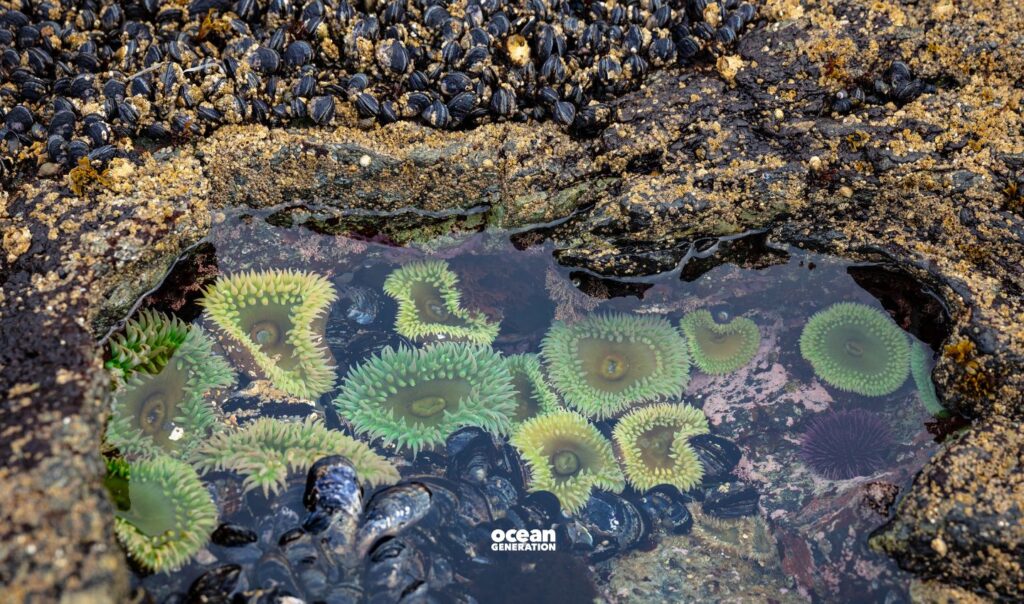
Tidal pool at the beach. Posted by Ocean Generation.

The intertidal zone is characterised by severe changes in oxygen availability. 

Particularly in overcrowded tide pools, when many animals are aggregated together during low tide, increased respiration can reduce water oxygen content to critical levels. 

In response to this, some intertidal animals can switch to aerial respiration and take in oxygen from air instead of water.  

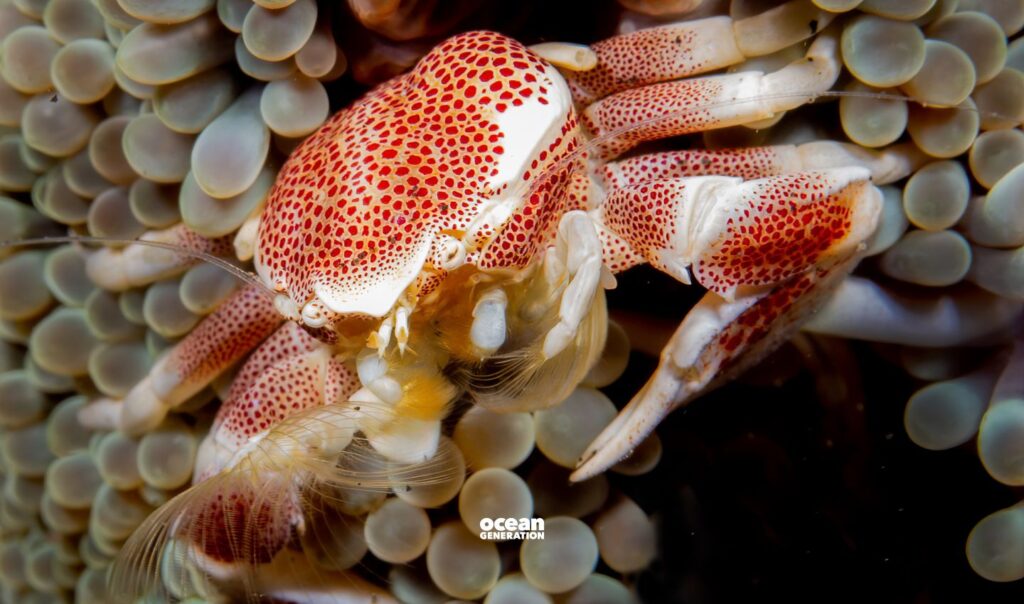
For example, the high intertidal porcelain crab (Petrolisthes) has an aerial gas exchange organ on each of their walking legs for air-breathing during periods of emersion.

Porcelain crabs can take oxygen from air instead of water. Posted by Ocean Generation.

On sandy shores, some species of mudskipper will repeatedly emerge at the surface of their burrows and take in mouthfuls of air. They deposit this air into a specialised chamber within their burrows to protect themselves and their eggs against hypoxic (low oxygen) conditions. 

On sandy shores, activities of some intertidal creatures can influence local oxygen availability.  

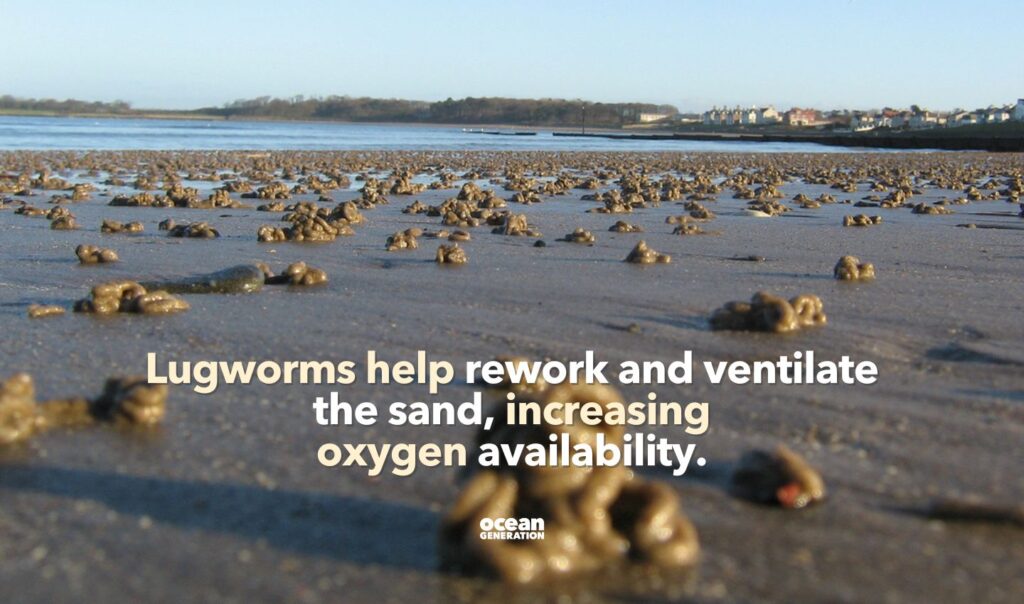
Lugworms burrow deep into the sediment, feeding on organic material in the sand and creating U-shaped burrows deep below the surface. These burrows help to rework and ventilate the sand. This process is known as bioturbation, which increases localised oxygen availability.

They spend their lives filtering out organic material from the sand, pooping out wiggly mounds of undigestible sand to the surface, known as โ€˜castsโ€™. 

Lugworms burrow deep into the sediment in intertidal zones.

All intertidal habitats are impacted by fluctuations in salinity 

Heavy rain or river inputs can make coastal water fresher, and evaporation and droughts can cause hypersaline (saltier) conditions.

On sandy and muddy shores, intertidal worms move vertically up and down their burrows along a salinity gradient until they reach more favourable conditions.

Other animals maintain their internal osmotic (salt and water) balance in the same way that they protect themselves from water loss. Some clamping to the substrate (limpets); others closing their operculum (snails); or moving to more favourable environments (crabs).

The shallows are exposed to ultraviolet (UV) radiation from the sun. 

This can cause DNA mutations and damage to molecules needed for key biological pathways.  

To combat this, the aggregating anemone (Anthopleura elegantissima) contracts during peak levels of UV radiation. It attaches debris to its column for extra protection against harmful sun rays: Just like putting on a sunhat.

Other intertidal animals have even evolved โ€˜sunscreensโ€™. These are absorptive, reflective, or light-scattering pigments in their skin and mucus which help to protect them from the damaging effects of sun exposure. 

For example, Irish moss (Chondrus crispus) is the reddish leafy seaweed that can be found on rocky shores and tide pools across the UK and Ireland. If you look closely, youโ€™ll see that it looks slightly iridescent in the light.

This is because the tips of the growing fronds are covered in multiple, transparent layers. When sunlight hits these layers, itโ€™s reflected away from these delicate regions, protecting this alga from harmful UV rays.

Irish Moss reflects sunlight to protect from harmful UV rays

To avoid being swept away by wave action, intertidal animals must hold on tight. 

Barnacles secrete cement, while mussels produce a sticky thread called Byssus threads to attach themselves to the rock. Once attached, these sessile animals remain in position for most of their lives.  

Other intertidal creatures rely on suction. Sea stars (starfish) have rows of tube feet on their underside. Each of their feet has a sticky, suction cup at its end that help it hold on to the rocky substrate. These also come in useful to prise apart the shells of bivalves to eat.

Sea stars have rows of tube feet to stay in place

Many adaptations are shared among diverse animal groups.  

This is an example of convergent evolution: when similar features independently evolve among different species under the same pressures.

Understanding the challenges overcome by animals living at the interface between land and sea may allow us to better understand our own historical transition from Ocean to land, millions of years ago.  

So next time youโ€™re at the coast, see if you can spot some of these creatures and their adaptations. (Remember, theyโ€™re under enough stress already, so be respectful and donโ€™t touch, poke or prod at them).

Take a moment to appreciate the incredible feat of survival achieved by the Ocean creatures that not only survive but thrive in this extreme environment.

From classroom to COP30: Questions from children to climate leaders about Ocean protection

Subscribe

Monthly: Impact in your inbox.

OceanGeneration-Join

The motion of the Ocean explained: Waves and tides ย 

Motion of the Ocean explained by Ocean Generation.

The Ocean spends its life in perpetual motion.

From the smallest ripple to the largest storm wave, energy from the Ocean is one of the most powerful forces on our planet. They have carved the shape of our coastlines over thousands of years.ย 

Many of us observe the constant motion of waves and tides, but few of us ever stop to consider how these not-so-simple certainties actually work.ย 

What are Ocean waves, and where do they come from?ย ย 

First things first, Ocean waves are the transfer of energy across a body of water, not the movement of water itself.ย ย 

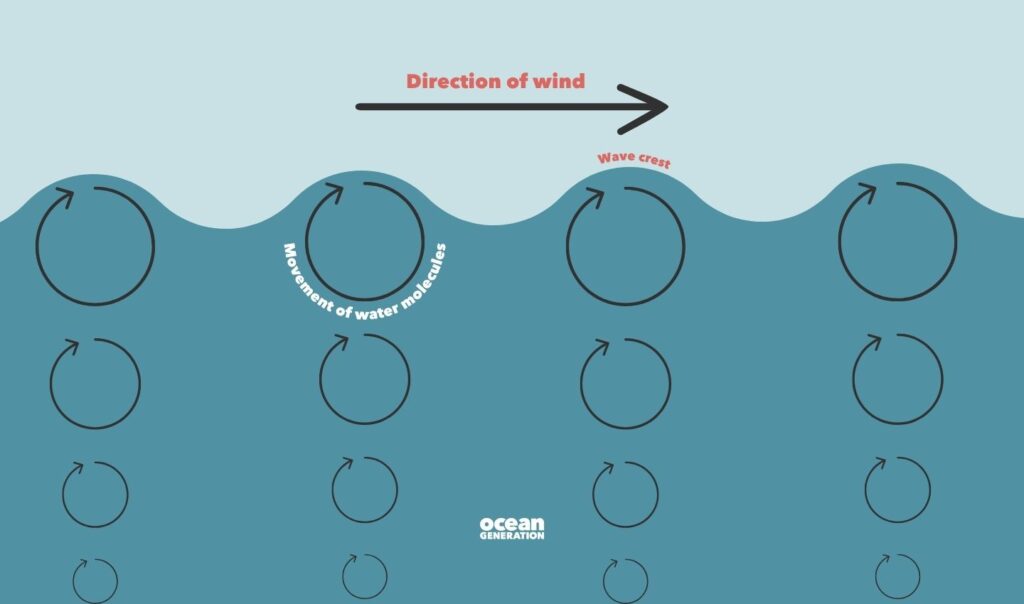
Surface waves are caused by wind out at sea. As the wind blows across the Ocean, particles near the surface are disturbed. Friction and pressure generate ripples, and this wave induced pressure causes each individual water particle to push and pull on its neighbour.

The water molecules begin to move up and down in a circular orbit, creating a wave crest. This motion propagates energy through the water in the direction of the wind.ย 

How waves are created in the Ocean

Once they have enough energy from the wind, these wave crests spread out and begin their journey across the open Ocean as โ€œswellsโ€. These swells can travel uninterrupted for thousands of miles, until they reach the shore and meet their dramatic end.ย 

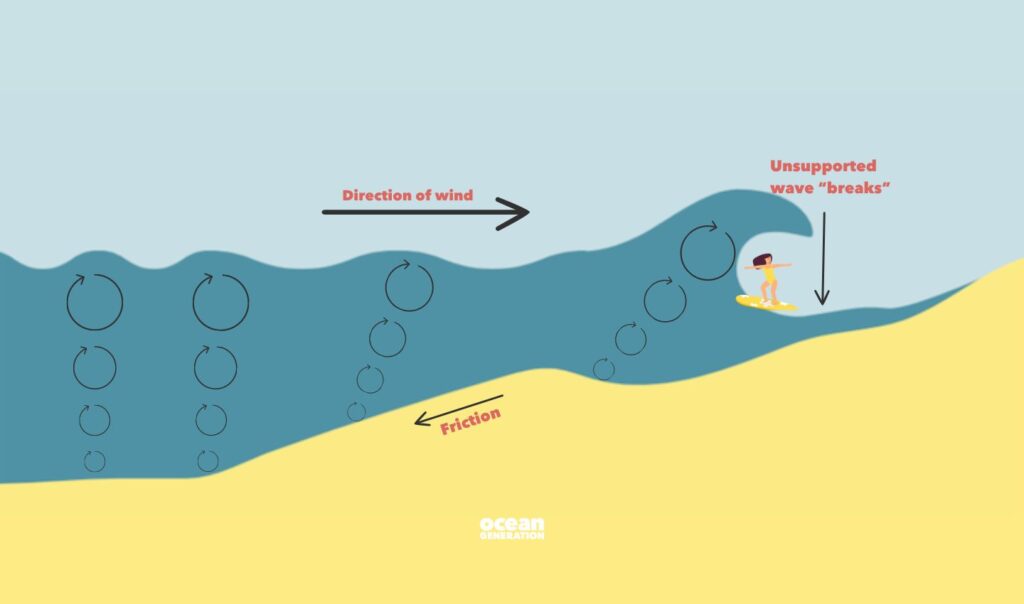
As the wave approaches shallower water, the circular orbits of the water molecules in the lower part of the water column are disrupted by the seafloor and get slowed down by friction.

The water molecules closer to the surface are less effected by friction, so the energy continues to move through them at its original speed.ย ย 

The wave grows in height but is left unsupported as the lower part is dragged along the seafloor. Eventually, the wave finds itself with nothing underneath it, and collapses in a dramatic fashion, known as the wave โ€œbreakโ€.ย ย 

A wave break is when a wave collapses. Posted by Ocean Generation, leaders in Ocean education.

Another form of Ocean waves that move across our planet are tides.ย ย 

The predictable rise and fall of the Ocean along our shores is as certain as the sun rising in the East and the stars coming out at night.

For centuries, humans have learned to predict the tides for navigation, fishing and other recreational activities.

But to fully understand how tides work, we must look up to space.ย ย ย 

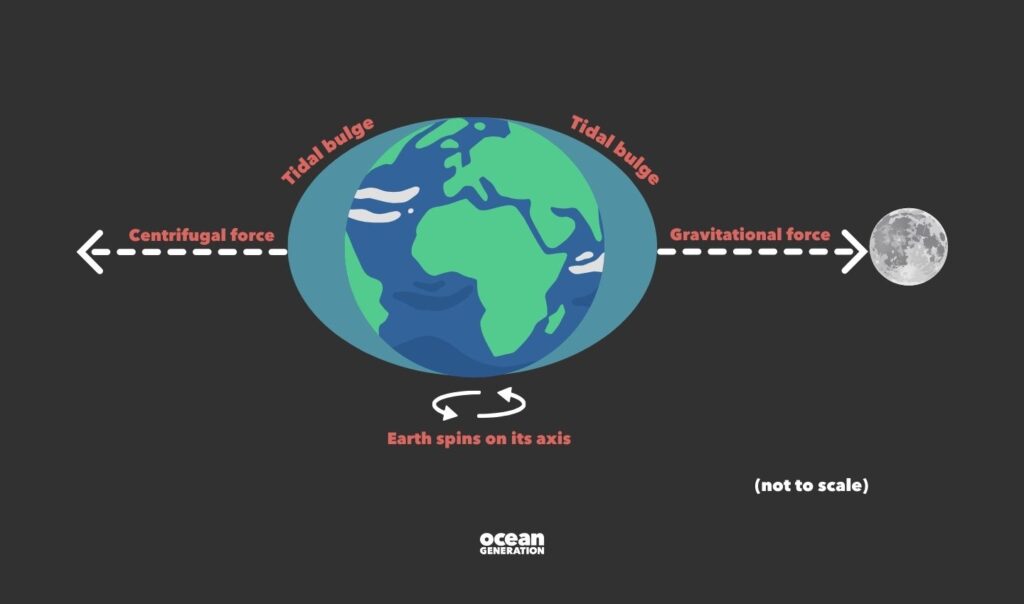
The moon and Earth both exert a gravitational force and are constantly accelerating towards each other in orbit.ย ย 

As our planet accelerates towards the moon, the water on the side closest to the moon accelerates faster than the solid rock in the middle and accumulates to form a slight bulge.

This is known as tidal bulge.

As the Earth rotates, this watery swell stays in the same position relative to the moon. The land rotates into this bulge at high tide, and out of it at low tide.

So, when we stand on the beach and watch the tide going out, what weโ€™re actually observing is the Earth rotating away from the Ocean. ย 

Ocean waves and tides have been shaping the universe. Posted by Ocean Generation.

But wait a second, why are there two high tides per day?ย 

This is where things get a bit more complicated. Put your scientist hats on, and imagine the following:

While the water on the near side bulges towards the moon, the water on the far side bulges away from the moon.

Remember that the moon and Earth are constantly accelerating towards each other in orbit.

A centrifugal force (a force which acts on an object thatโ€™s rotating) acts as a result of this spinning.

On Earth, this centrifugal force is strongest at locations facing away from the moon, causing the water to bulge away from the moon at the far side. 

Earth therefore rotates into two tidal swells each lunar day of 24 hours 50 mins. 

What is a lunar day?

A lunar day is the time it takes for a specific point on Earth to rotate from an exact point under the moon to return to the same point under the moon.

This explains why there are two high and two low tides per day, and each high tide occurs 12 hours and 25 minutes apart. ย 

To understand how Ocean tides work we have to look up to space.

The sun also has a gravitational tidal force on our Ocean: Itโ€™s called a solar tide.ย ย 

However, itโ€™s much smaller since the sun is much further away.ย ย 

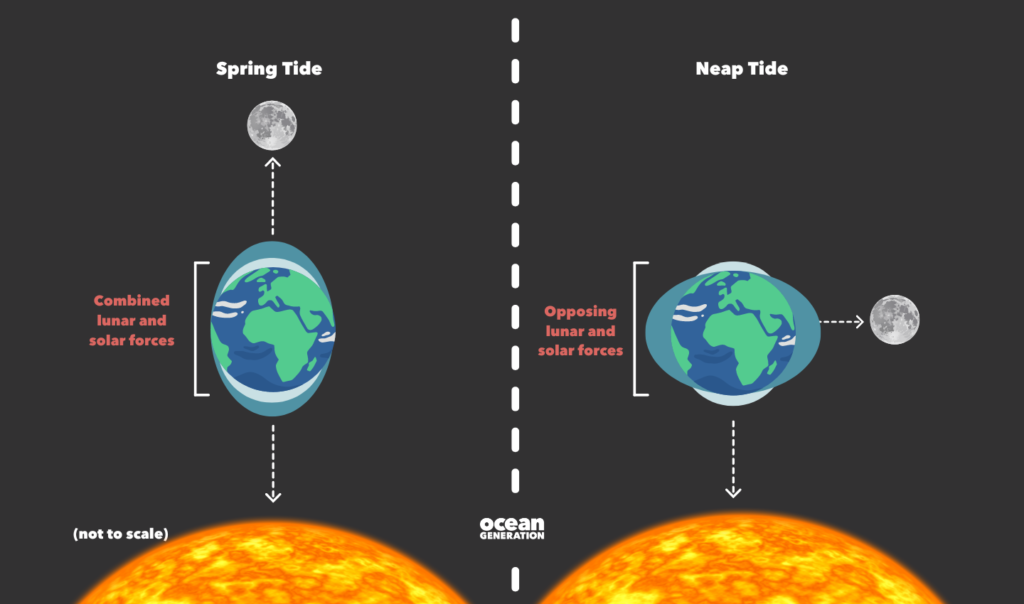
When the sun and the moon are aligned, their lunar and solar forces combine to create a larger tide, known as spring tide.

In contrast, when the sun and moon are at a right angle, their opposing tidal forces partially cancel each other out, creating a smaller tide. This is known as neap tide.

Spring tides and neap tides explained.

Back on Earth, the shape of the coastline can have a dramatic influence on tidal magnitude.ย ย 

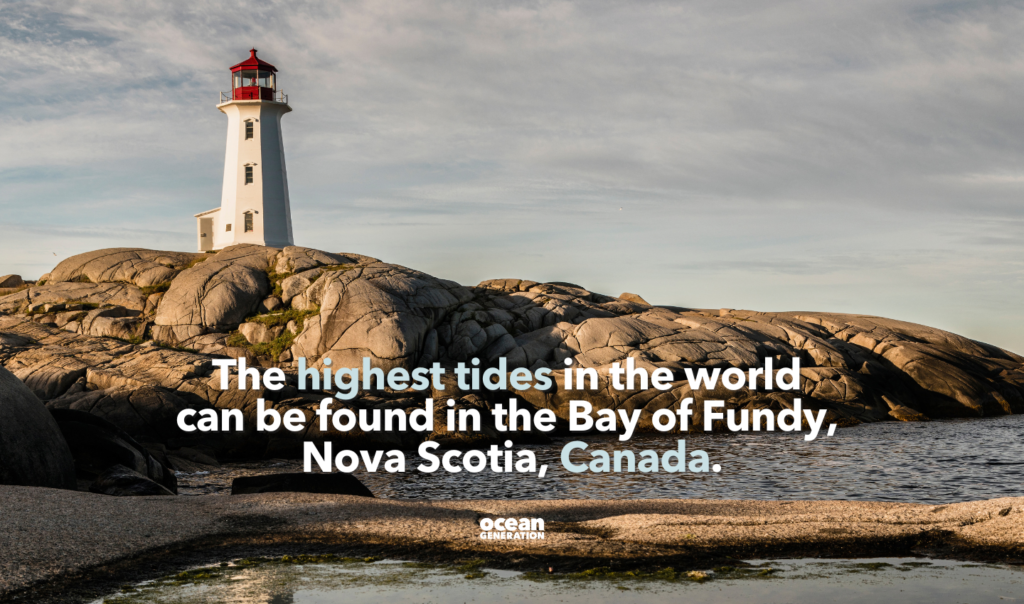
For example, the highest tides in the world can be found in the Bay of Fundy, Nova Scotia, Canada. The size, depth and unique funnel-shape of this coastline causes a natural oscillation (a back-and-forth movement in regular rhythm) of the water in near-perfect sync with the tide, which has an amplification effect.ย ย 

So next time youโ€™re taking a stroll along the coast and listening to waves crashing against the shore, take a moment to consider the forces in play to make it all possible.

Waves and tides are all part of the continuous movement of energy that has formed and shaped our universe since the beginning of time.ย ย 

The highest tides in the world 
can be found in the Bay of Fundy, 
Nova Scotia, Canada.

From classroom to COP30: Questions from children to climate leaders about Ocean protection

Subscribe

Monthly: Impact in your inbox.

OceanGeneration-Join

Are hydrothermal vents the origin of life on Earth?ย 

Hydrothermal vents explained by Ocean generation.

Thousands of metres down in the Galรกpagos Rift valley, a deep-sea camera is towed along the seafloor, capturing our first glimpse of an extraordinary and alien world

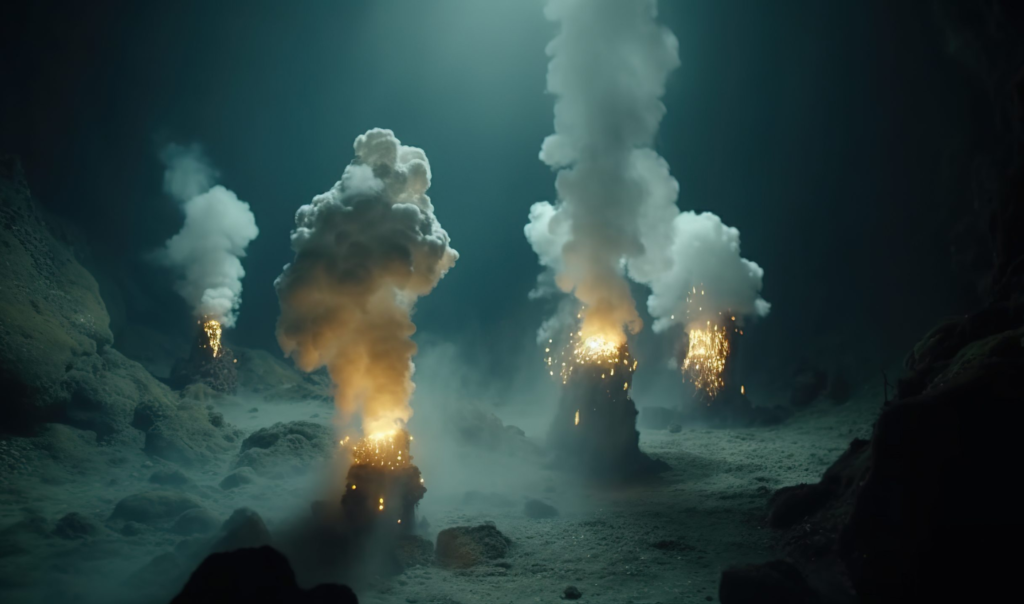
Towering chimneys pumping out plumes of black smoke cover the seabed; these are hydrothermal vents.

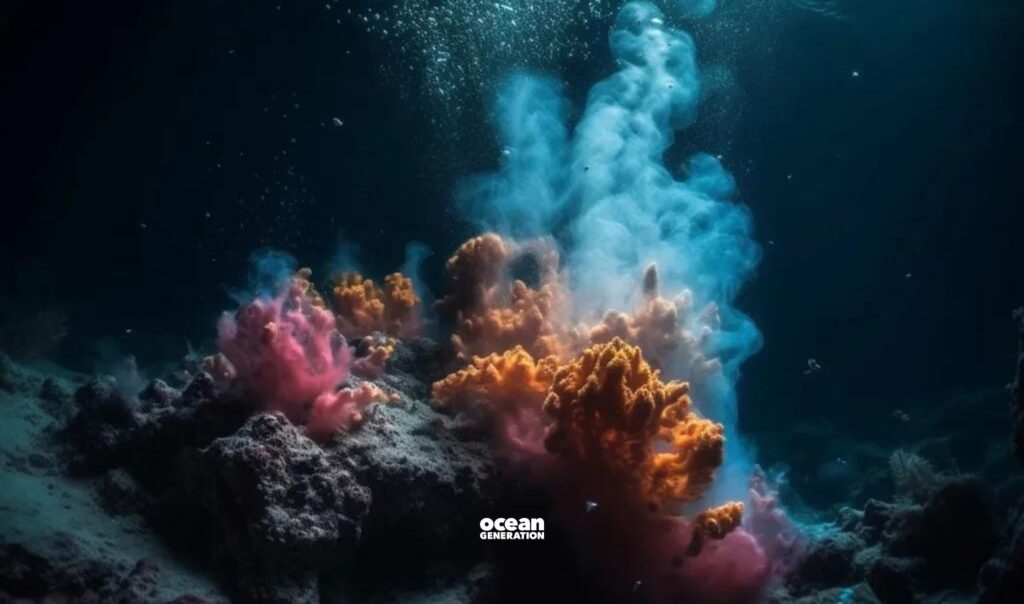
Despite low oxygen levels, high toxicity and fluid temperatures of up to 350ยฐC, hydrothermal vents host a remarkably diverse array of Ocean life.

These Ocean creatures are specially adapted to these extreme conditions: Giant tubeworms, beds of mussels and clams, fluffy crabs, pink vent fish and more.

The discovery of hydrothermal vents in 1976/ 1977 prompted a new branch of deep-sea biology. Since then more and more species have been discovered. 

Hydrothermal vents may hold the secret to the origin of life on Earth.
Image credit: Meteored

Where are hydrothermal vents found?

Hydrothermal vents were one of the first environments to have existed on Earth and have been bubbling away for over 4 billion years. 

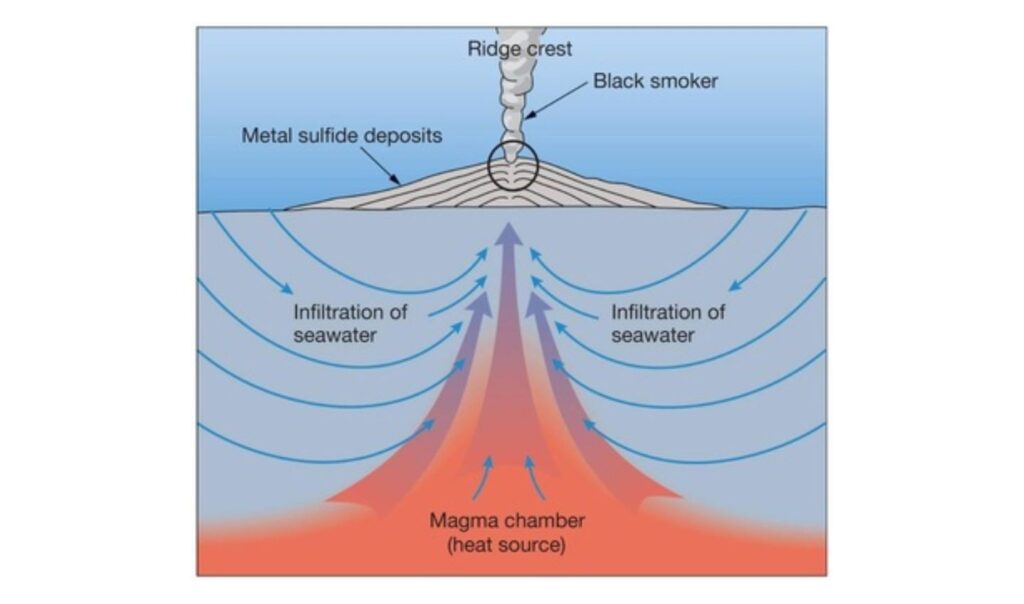
Hydrothermal vents can form anywhere a heat source meets a fluid system. They often occur on the seafloor at tectonic plate boundaries. The hot, upwelling magma heats up seawater which is ejected as mineral-rich plumes. 

They are mostly found in the abyssal zone of the Ocean (3,000 โ€“ 6,000m). While the majority (65%) of the hydrothermal vents are located close to the tectonic plate boundaries, they are also common (12%) along chains of underwater volcanoes, called volcanic arcs.  

In 2000, a new type of vent was discovered, located several kilometres from a divergent plate boundary (tectonic plates that are moving apart) called Lost City vents. They resemble the spires of an underwater metropolis like Atlantis. 

Hydrothermal vents are found at tectonic plate boundaries. Posted by Ocean Generation.
Image credit: Pearson Education

Take a look at some of the weird and wonderful Ocean life found in the deep-sea: 

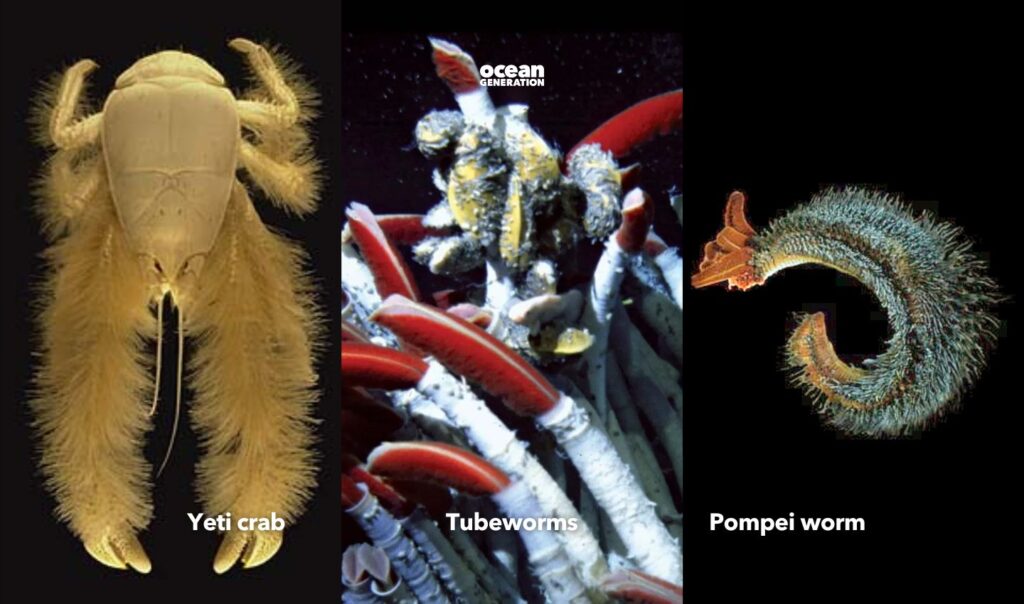
Annelid tubeworms (Riftia pachyptila) 

Also called โ€˜giant tubewormsโ€™, these are extremophiles, meaning theyโ€™re able to live in extreme environments, and can reach over 1.8 metres (six feet) tall.

They have a unique body plan with no mouth or anus and their lifestyle is unique, too as they rely entirely on symbiotic bacteria as a food source.  

The Yeti Crab (Kiwa hirsuta) 

This new family of crab was discovered in 2005 and has claws covered in dense setae (stiff bristles). They get almost all their food from the chemoautotrophic bacteria (bacteria that can turn inorganic chemicals into energy) that live in these bristly structures.

These furry crabs have been seen to wave their claws to help provide a flow of oxygen and minerals to their symbiotic bacteria.  

Pompeii worm (Alvinella pompejana)  

Named after the explosive eruption of Mount Vesuvius in Pompeii, the Pompeii worm is the most heat tolerant animal we know of. They can survive temperatures at high as 80ยฐC. One physiological adaptation Pompeii worms have evolved to survive these extreme temperatures are heat shock proteins. These’re specific proteins which provide cells with thermal stability.  

Some Ocean creatures specifically adapted to these conditions.
Image credit: 1. Yeti crab: MBARI 2. Tubeworms: Britannica, 3. Pompei worm: Wikipedia

So how are these marine animals living in such extreme conditions? 

Photosynthesis often gets all the credit for providing the energy that flows through food webs by converting light energy into food.

However, there is another lesser-known reaction. Chemosynthesis does the same thing but draws from chemical energy instead. This reaction is what supports the diverse communities we see at hydrothermal vents.

Could hydrothermal vents have sparked the origin of life on Earth?ย ย 

Chemosynthetic bacteria found in these communities use the toxic hydrogen sulphide released by hydrothermal vents to convert carbon dioxide into organic carbon molecules.

These form the building blocks to all life on Earth.  

Itโ€™s this nifty reaction thatโ€™s enabled deep-sea organisms to adapt and survive at hydrothermal vents.  

Could hydrothermal vents have sparked the origin of life on Earth?

Animals living here have formed symbiotic relationships with these bacteria which can be incorporated into tissues (endosymbiosis) or on the animal surfaces (ectosymbiosis).

These chemosynthetic bacteria provide energy from the environment for their host. This can be so efficient that some creatures (such as the annelid tubeworm) donโ€™t need to feed at all. 

The discovery of these self-sufficient ecosystems cast new light on the origins of life on Earth. It was here that the unique conditions were suitable for a spontaneous metabolism (the spontaneous formation of molecules that are essential for all life) to occur. 

This discovery gave rise to the question: Does the Ocean hold secret to the origin of life on Earth? 

Theories on the origin of life range from lighting speeding up reactions to comets delivering organic molecules from outer space.

The ancient process of chemosynthesis precedes photosynthesis, and likely sustained the earliest life on Earth. 

Bacteria were some of the first life forms to emerge. The most striking piece of evidence are the parallels between the chemistry spontaneously occurring at these vents and the core metabolic reactions found in these single-celled organisms. 

Thesel vents may hold the secret to the origin of life on Earth.
Image credit: Meteored

Cyanobacteria are an ancient group of photosynthetic microbes which represent one of the earliest forms of life on Earth. With fossils dating back to 2000 โ€“ 3500 million years ago, these single-celled organisms evolved photosynthesis, allowing life to rise up from the darkness below.  

The rest is history. 

Since their discovery, hydrothermal vents have become the most popular theory among scientists for explaining the origins of life on Earth. Yet much remains to be discovered. Secrets still held within these mysterious ecosystems have the potential to revise our life-on-Earth theories once again. 


Cover image via Research Feature.

From classroom to COP30: Questions from children to climate leaders about Ocean protection

Subscribe

Monthly: Impact in your inbox.

OceanGeneration-Join

Interesting animals that use bioluminescence in the deep Ocean.ย ย 

Interesting animals that use bioluminescence in the Ocean.

Bioluminescence: Lighting up a lightless world. 

While bioluminescence is everywhere throughout our Ocean, itโ€™s the only source of light in the deep-sea

A staggering 76% of all Oceanic marine animals are capable of bioluminescence, which means that they can produce their own light through chemical reactions inside their body.  

How does bioluminescence work in the deep Ocean 

Bioluminescence is a chemical reaction that occurs when the light-emitting molecule called luciferin reacts with a luciferase enzyme, releasing energy in the form of light. 

Bioluminescence is the only source of light in the deep Ocean.

Itโ€™s an active process, meaning it can be turned on/off, as opposed to the passive traits of fluorescence and phosphorescence. 

Some bioluminescent organisms generate their own light. Others take up bioluminescent bacteria from the water column and house it in their light organs in a symbiotic relationship. 

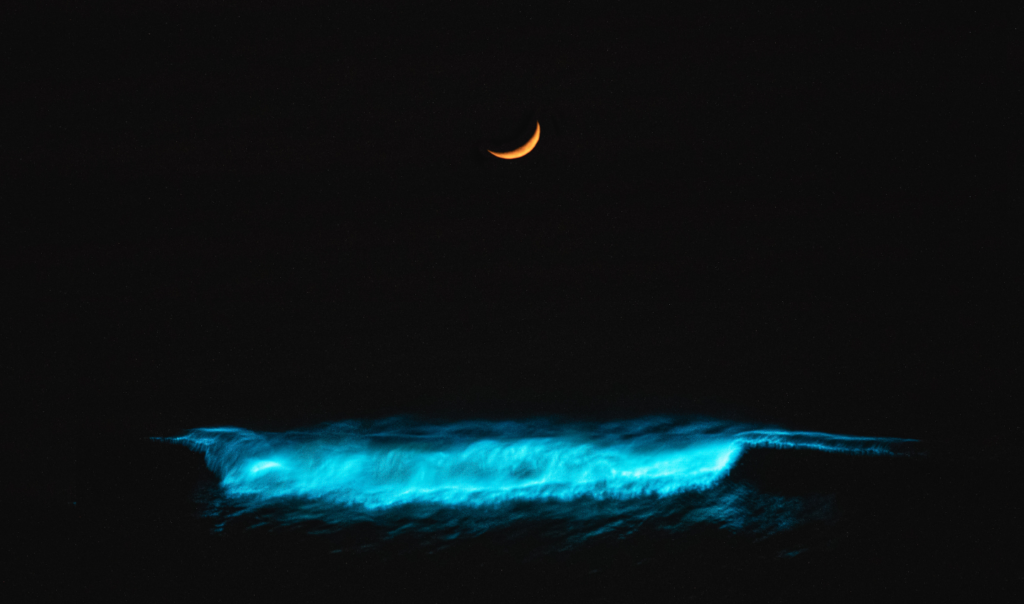
Marine bioluminescence is commonly expressed as blue/green light. This is most likely because these wavelengths travel further distances through the water. They’re more also easily visible in the deep Ocean.   

@oceangeneration

This is how colour gets absorbed as Ocean depth increases. ???? Demonstrated by a sea urchin skeleton. ???? Did you know: Colour is absorbed in ???? rainbow colour order. Red ???? โ€˜vanishesโ€™ first (as shallow as 5m / 15ft), then orange ????, yellow ????, green ????, blue ???? and violet ???? last (around 60m / 200ft). How incredible! ???? Follow along for Ocean positive stories and science. ???? ????: j.kowitz #OceanGeneration #Ocean #OceanEducation #OneOcean #OceanDecade #OceanLover #OceanConservation #SeaUrchin #Art #OceanScience #Diver #rainbow #nature #science #sea #underwaterphotography

โ™ฌ Royalty – Egzod & Maestro Chives & Neoni

In rarer cases, red and yellow bioluminescence have also been observed in marine creatures.  

Why do marine animals emit light at all?   

In the lightless world of the deep Ocean, marine creatures have adapted to use bioluminescence to their advantage:  

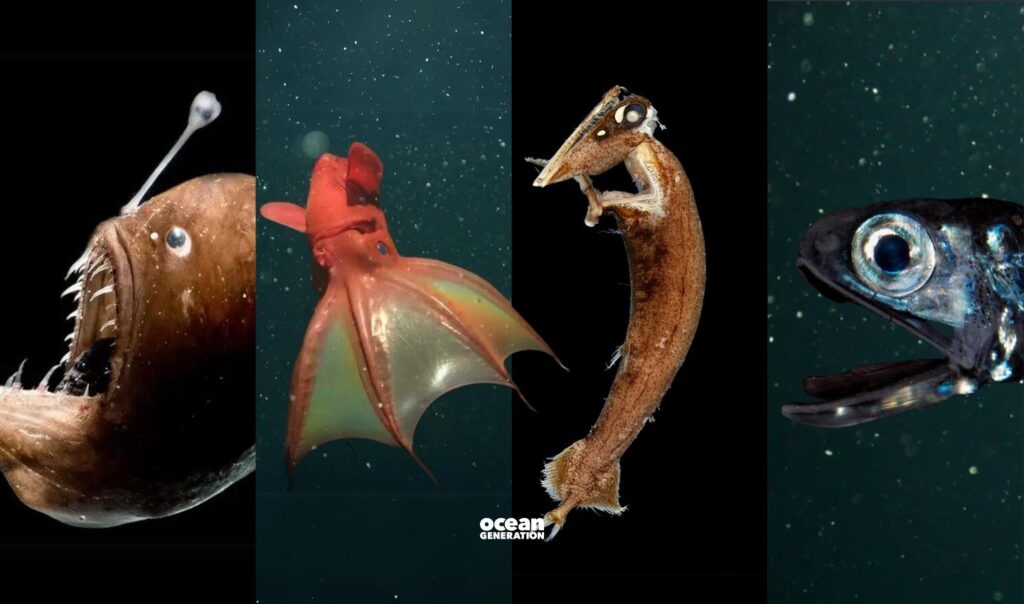
1. Deep-sea anglerfish have a specialised lure to attract prey.ย 

Perhaps the most famous bioluminescent predator is the deep-sea anglerfish.

This ferocious hunter has a large head, incredibly sharp teeth and a long, fishing-rod-like structure that extends out from the top of its head. At the end of this rod is a ball (called the esca) which contains glowing bacteria called Photobacterium. Ringing any bells? You may recognise her from Finding Nemo.

This lure is used to attract curious prey and is also useful for finding a mate in the vast, dark expanse of the deep Ocean. 

2. Vampire squid expel bioluminescent mucus to deter predators.ย 

When threatened, the vampire squid inverts its body, raising its arms over its head to expose rows of spikes to deter attackers.

And if thatโ€™s not deterrent enough, they also eject a sticky, bioluminescent mucus which can startle, disorient, and confuse predators.

This defensive tactic can buy the squid enough time to escape, while also covering its predator in brightly lit fluid, leaving them vulnerable to attack.  

Why do marine animals emit light in the Ocean?
Image credit: 1. Angler fish: Dante Fenolio/Science Photo Library, 2. Vampire Squid: MBARI, 3. Stoplight Loosejaw: Oceana, 4. Lanternfish: Ocean Twilight Zone

3. Stoplight loosejaw dragonfish have red flashlights to see in the dark.ย 

Stoplight loosejaw dragonfish have special red-emitting light organs beneath their eyes that can be activated to look for prey.

The stoplight loosejaw is the only known animal to use chlorophyll pigments (usually found in plants) inside its eyes, which allows it to see red wavelengths of light. 

They use these red beams as a flashlight to search for prey. Since most deep-sea fish can only see blue light, these predators have a huge advantage. They can see their prey, but their prey canโ€™t see them.

4. Lanternfish use light to blend in.ย 

Lanternfish have adapted an ingenious ability to camouflage themselves using light. 

These masters of disguise have rows of photophores (light-emitting organs) on their underside. They emit a faint glow which allows them to blend in with any remaining light that filters down from the surface.

This process is known as counter-illumination and renders them almost invisible to attackers hunting from below.  

Light from bioluminescence 
has the potential to reveal creatures 
that hide in the darkness.  Posted by Ocean Generation.

Some marine animals use counter measures against bioluminescence in the deep Ocean.   

Light from bioluminescence has the potential to reveal the whereabouts of creatures that hide in the darkness of the deep Ocean. 

To counter this, many take measures to disguise themselves or break up their outline. 

Many deep-sea creatures are dark red in colour. Red wavelengths of light are the first to be absorbed in the Ocean, and very few deep-sea creatures can see red light (the stoplight loosejaw being a notable exception). Red-coloured creatures therefore appear black and blend in against the near-lightless backdrop.  

Others have ultra-black skin that can absorb light from bioluminescence. For example, pelican eels are found in the midnight zone (where thereโ€™s no sunlight, and life exists in complete, constant darkness). Their skin can absorb up to 99.7% of light, rendering them virtually undetectable, even when exposed to bioluminescence. 

Transparency is another technique used for camouflage in the deep Ocean. The glass squid has been observed as deep as 2,000m, and is almost completely transparent. The only organ visible through the tissue of this small-tentacled, swollen-bodied squid is the red-coloured digestive gland. This makes it difficult to be spotted by even the most astute predator. 

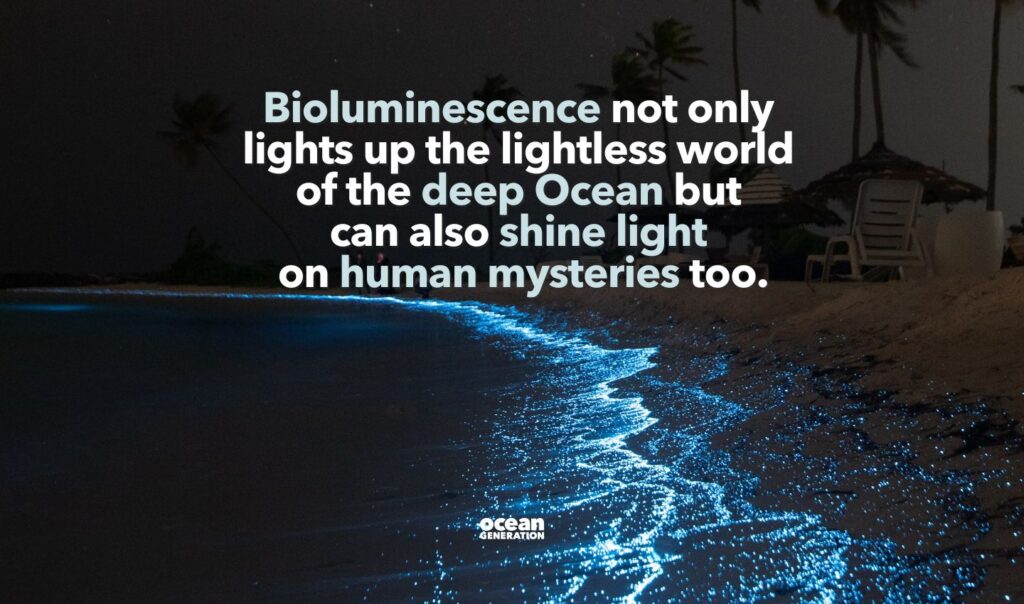
Bioluminescence shines a light on our human mysteries. Posted by Ocean Generation.

Human ingenuity often takes inspiration from nature, and bioluminescence is no exception. 

Due to its unique ability to produce light without the need for an external light source, bioluminescence has been utilised in the field of medical research.

Particularly in imaging and probe techniques for cancer detection and cell culture research, bioluminescence has helped us to detect and respond to disease more effectively.  

With so much of the deep Ocean left to discover, each unique finding may lead to new and exciting medical applications.  

Bioluminescence, therefore, not only lights up the lightless world of the deep Ocean but can also shine a light on our human mysteries too.  

From classroom to COP30: Questions from children to climate leaders about Ocean protection

Subscribe

Monthly: Impact in your inbox.

OceanGeneration-Join

What happens after a whale dies? Life after death in the deep-sea

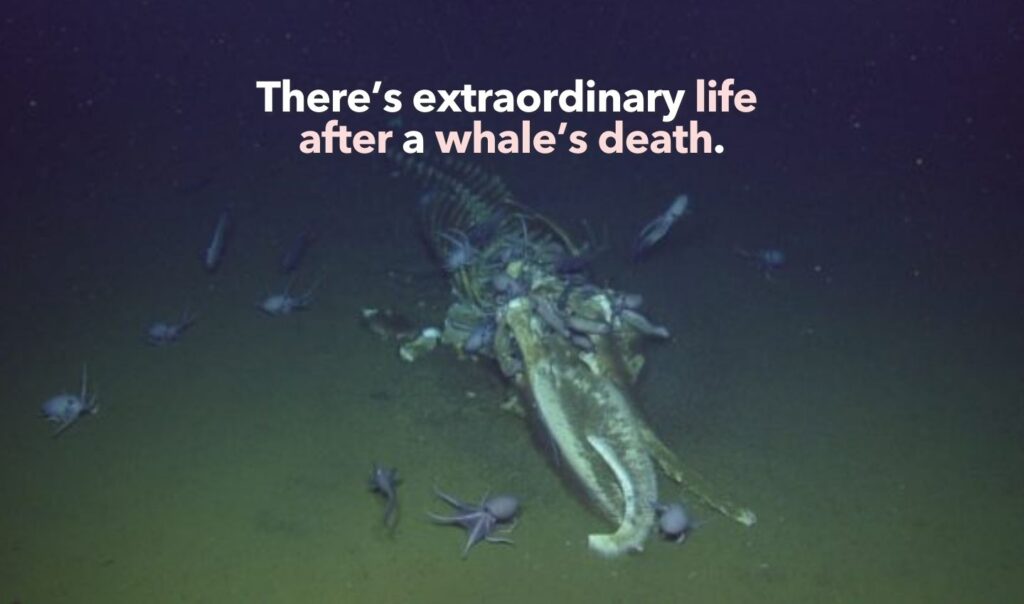
A whale's death is called a whale fall. Posted by Ocean Generation.

A dead whale descends into the darkness of the deep-sea abyss.

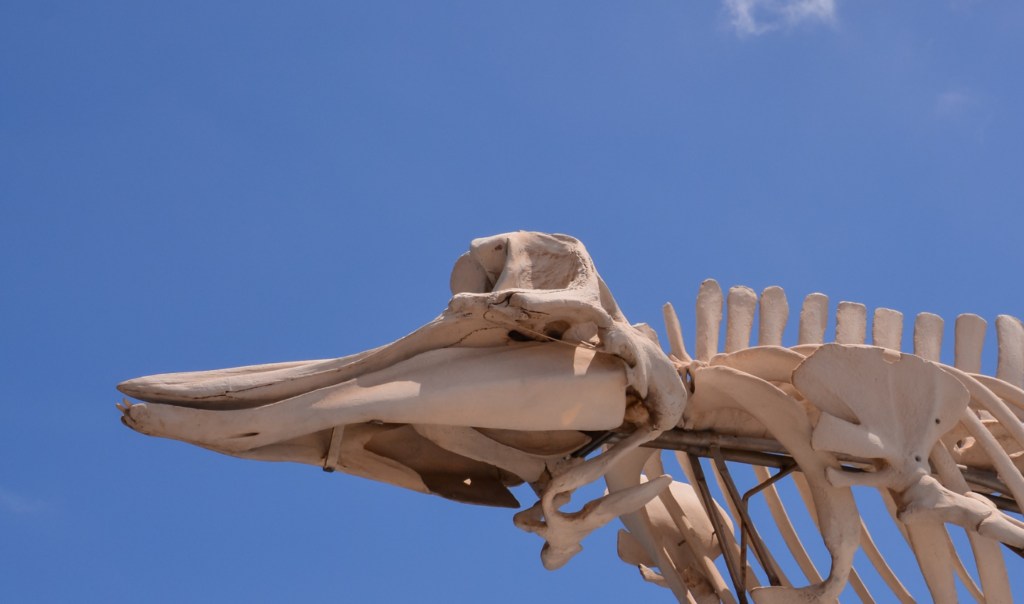
In life, these majestic creatures travel vast distances playing an important role in surface ecology. But even in death, their decaying remains become a haven of life on the black Ocean floor.

Here in the deep Ocean the environment is sparse, offering fewer resources to sustain life. What falls from above, marine snow, is the steady trickle of dead organic material and supports an array of life on the seabed. 

A dead whale is a 30-tonne avalanche of fat and organic carbon, equivalent to more than 1000 yearsโ€™ worth of marine snow across 100 square meters. 

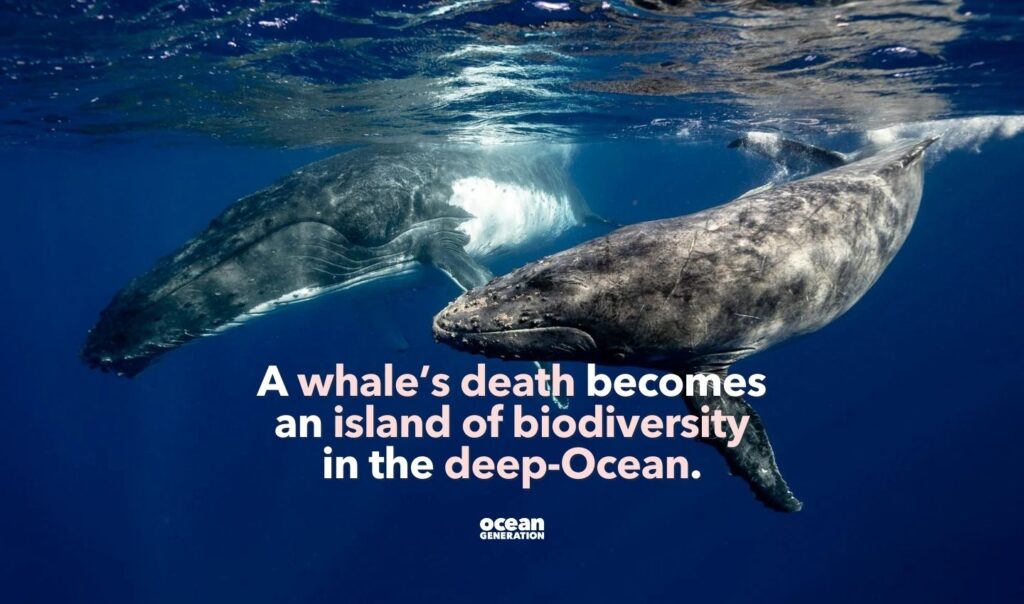
A whale's death becomes an island of biodiversity in the deep Ocean.

Eventually, a whale fall (a whale’s death) becomes an island of biodiversity in the deep-Ocean.

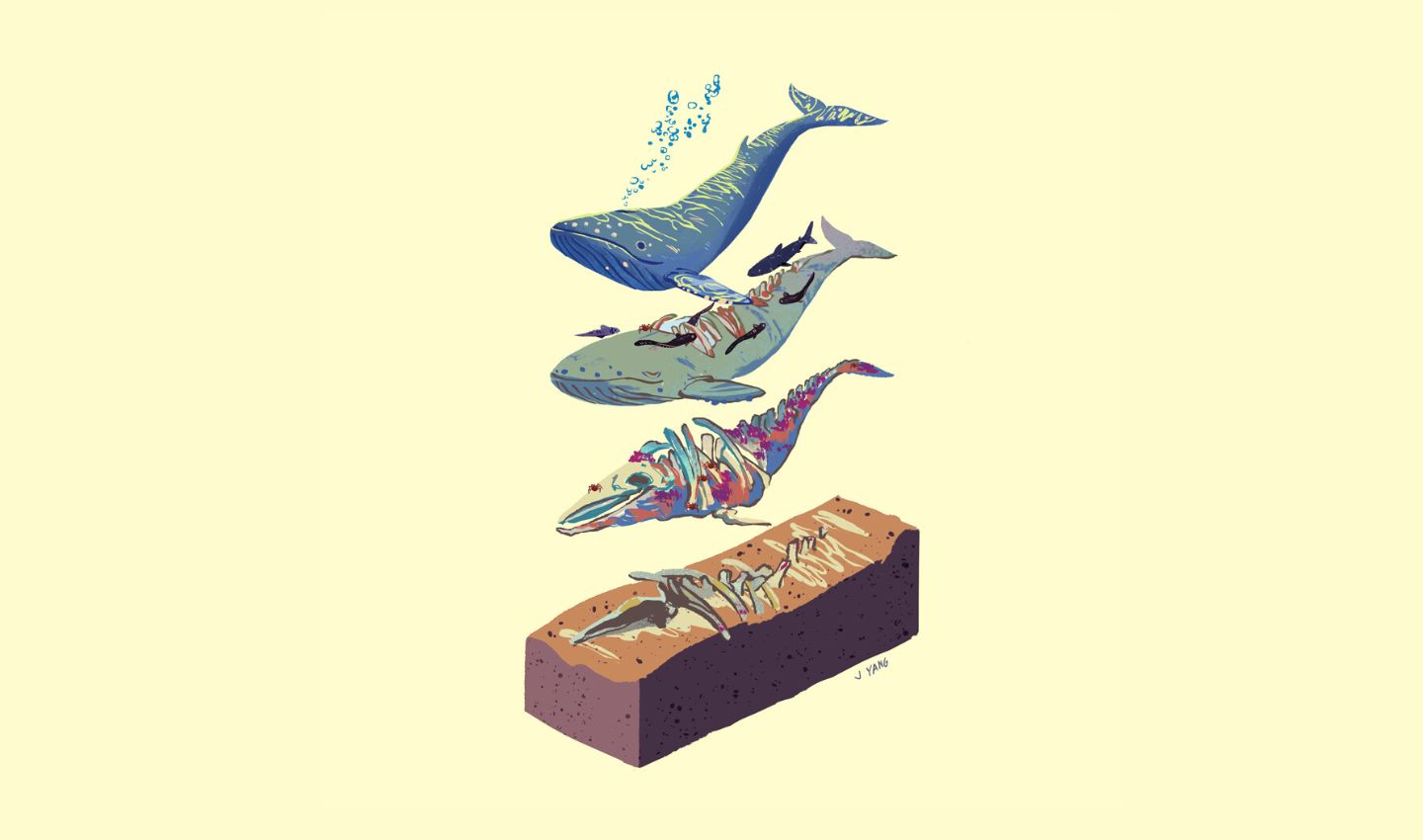
1. It all starts with a feeding frenzy.ย 

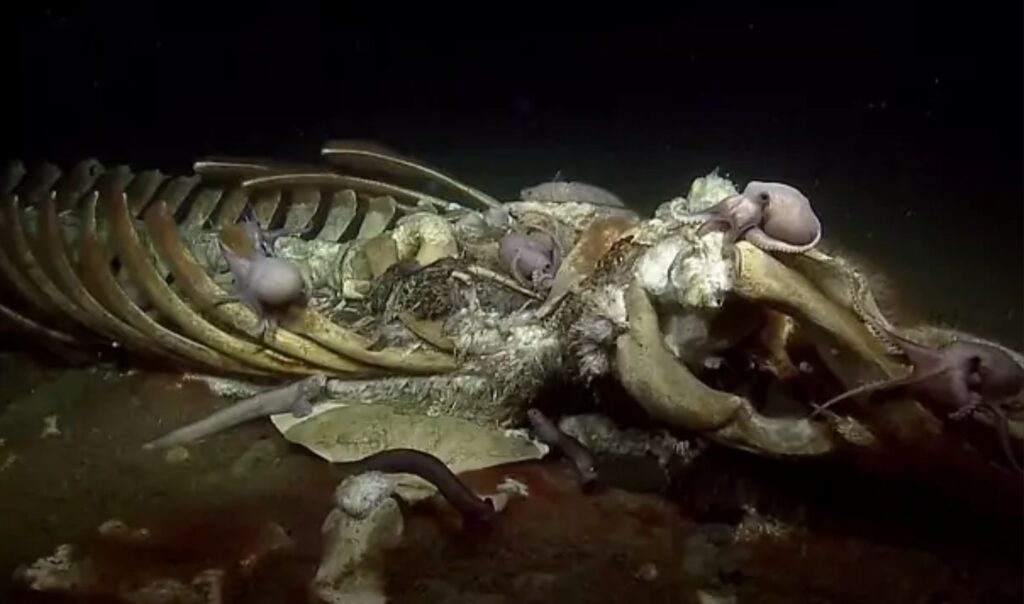
Soon after the whale falls, a variety of species descend upon it and the dinner party begins.

The first to arrive are the large Ocean wanderers such as hagfish (eel-shaped jawless fish) or gigantic sleeper sharks. These mobile scavengers remove soft tissue by rasping or tearing at the flesh exposing the energy-rich skeleton, giving the name of this phase the mobile-scavenger stage.

2. As the pieces get smaller so do the scavengers.ย 

It can take up to two years for the mobile-scavengers to finish feeding on the whale, where the next wave of guests arrives in a second phase known as the enrichment-opportunist stage.

Animals like polychaetes (a class of marine worms) and crustaceans including amphipods (shrimp-like crustacea) will move in to feed on remaining blubber and burrow into the nutrient enriched sediments surrounding the whale.ย ย 

The remains of a whale mean life to many deep-sea animals.
Image credit: National Marine Sanctuary. Photo: OET/NOAA

3. Finally, only the bones of the whale remain.

These would seemingly have no further use. However, ecological diversity is about to flourish in the sulfophilic stage of the whale fall. The whaleโ€™s bones provide a large reservoir of energy-rich lipids, a shining prize to deep-sea organisms.ย 

Bacteria break down fatty lipids in the bones, releasing sulphides. The sulphides can be used to generate energy, in a process called chemosynthesis (producing food using chemicals as an energy source instead of sunlight).

These chemosynthetic bacteria have become resistant to sulphidesโ€™ toxicity and can establish bacterial mats which act as a foundational food source, supporting a huge array of marine biodiversity: sponges, mussels, limpets, sea spiders and snails.

The breakdown of bone-lipids can take 50-100 years and these mini-ecosystems are highly significant for seabed ecology. Even then, after the complete extraction of nutrients, it isnโ€™t over.ย ย 

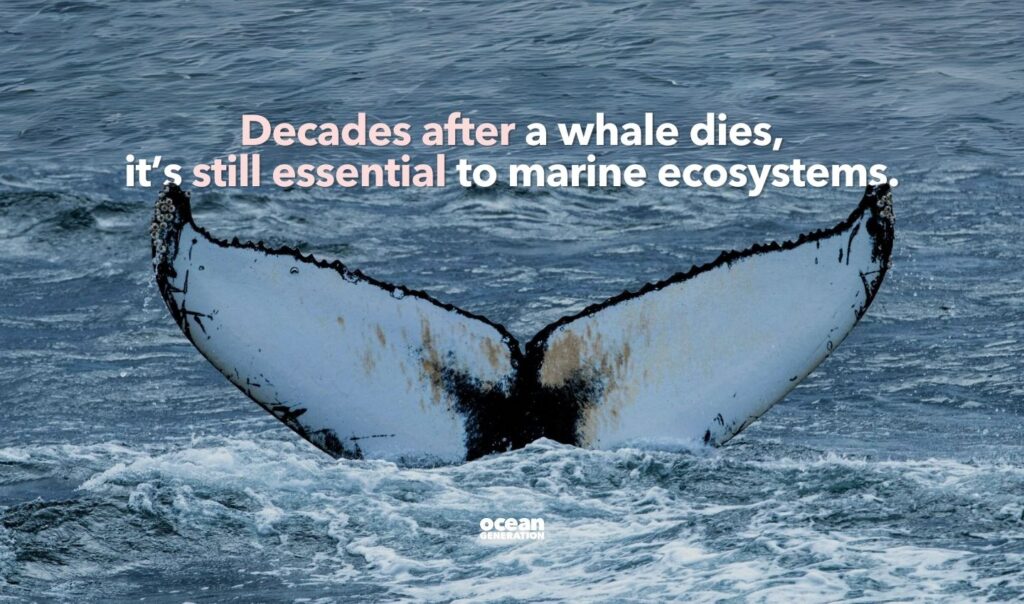
Decades after a whale dies, it's still essential to marine ecosystems.

Decades after a whale dies, the whale-fall is still essential to marine ecosystems: ย 

Some scientists believe thereโ€™s a further stage of succession: the reef stage. Even after the feeding frenzy, the whales’ bones can remain for more than 100 years, acting as hard surface for suspension feeders to settle.

These โ€˜habitat islandsโ€™ act as evolutionary stepping stones between other seafloor ecosystems like hydrothermal vents. This may have allowed sulphide-specialised organisms to spread across the seafloor and diverge into new species. 

What happens after a whale dies? There's extraordinary life.
The remains of a whale fall near the Davidson Seamount in Monterey Bay National Marine Sanctuary. Photo: OET/NOAA

Despite whale-fall ecosystems being poorly sampled, 407 species have been found living off the carcasses globally, which is high for the bottom of the sea. Of these, 21 species can only be found on whale-fall, known as whale-fall specialists.

Whale-fall specialists are species that require a whale carcass to complete their lifecycle and maintain their populations. These marine organisms will jump from habitat island to island to survive.

For example, Osedax, Latin for โ€œbone-eaterโ€, are a genus of polychaetes (marine worms) found worldwide.  They are important ecosystem engineers by eroding whale bones and allowing rarer species to colonise the whale skeleton.  

How whale populations impact the global Ocean?ย 

Whale-falls also contribute to the conversion of inorganic carbon (CO2) into organic carbon (marine life), a set of processes known as the Biological Carbon Pump (BCP). This carbon is sequestered (stored) in the deep Ocean.ย ย 

What happens after a whale dies? Posted by Ocean Generation.
Illustration by J Yang

Whales deliver huge amounts of carbon in their biomass to the seafloor, which is then locked-away for centuries within deep-sea sediments.

Any threat to whale populations will threaten entire ecosystems and disrupt the process of carbon sequestration.

Commercial whaling, for example, has been depleting whale populations for around 1000 years, beginning in 1000CE. Experts agree that tens of millions of whales were likely killed during this period, pushing many whale species to extinction and causing the extinction of whale-fall specialist species, who rely on whale falls for survival.

A single whale-fall can provide everything a whale-fall specialist needs for 50-100 years, meaning there is a lag-time of at least 30-40 years before the decline in whale populations is felt. Which is to say, if whale populations can recover, we may be able to mitigate the impacts on deep-sea ecosystems

Whales make an incredible contribution to our Ocean.

As we follow the timeline of a whaleโ€™s life, we can see the incredible contribution whales make to the Ocean.

From enhancing surface ecology in life, to supporting entire ecosystems in death.ย 

From classroom to COP30: Questions from children to climate leaders about Ocean protection

Subscribe

Monthly: Impact in your inbox.

OceanGeneration-Join

How deep is the Ocean? Explore fascinating creatures of the deep.

Explore how deep actually is our Ocean, and what fascinating creatures live in it.

Long regarded as an empty, desert-like environment with conditions too extreme for life to survive, the deep sea was historically considered insignificant.

However, our outlook on the deep-sea shifted when the HMS Challenger set off to circumnavigate the globe in 1872. It uncovered a diversity of deep-sea life previously thought impossible, and weโ€™ve been making new and exciting discoveries ever since.  

And weโ€™re not finished yet.

According to Ocean Census, weโ€™ve only discovered 10% of Ocean life. Itโ€™s estimated that 1-2 million marine species remain undiscovered.

Whatโ€™s more, a staggering 50% of the Earthโ€™s surface is deep-seafloor below 3,000m. 

The deep sea was historically considered insignificant, until we discovered a diversity of life.

Weโ€™re constantly finding pieces of the puzzle to improve our understanding of this vast and complex world. From new underwater mountain ranges to previously undescribed species of deep-sea octopus, almost every deep-sea exploration mission yields mind-blowing new discoveries.  

When we consider the scale of the deep sea, we realise that itโ€™s not an unusual habitat at all. In fact, itโ€™s the norm for much of our blue planet, and itโ€™s our land-based habitats that are comparatively rare.

So, how deep is the Ocean?

Letโ€™s dive into the deep Ocean and explore this weird and wonderful world. 

Sunlight zone

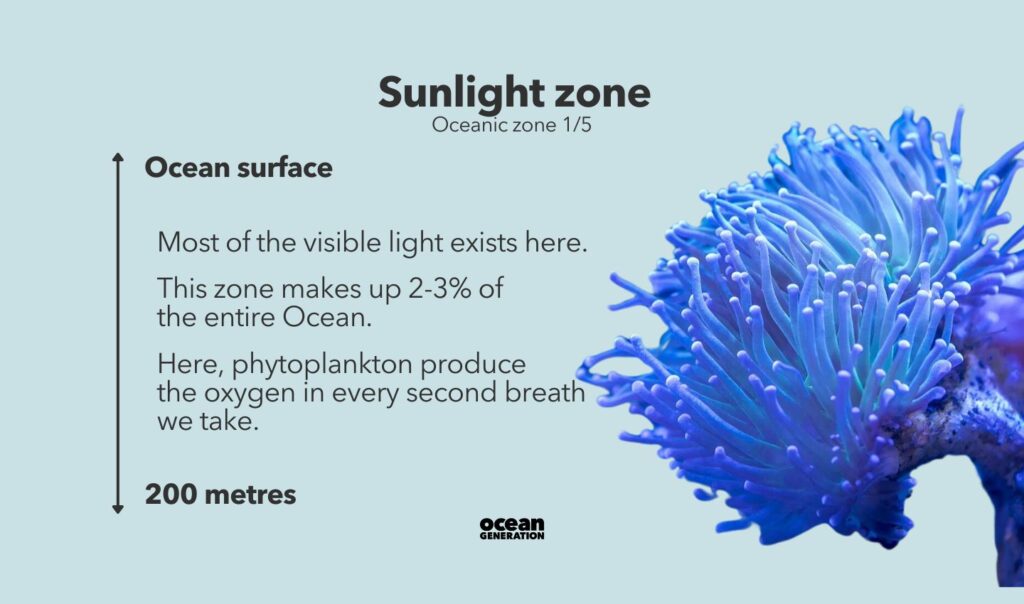
We begin our voyage at the surface, in the sunlight zone. This Ocean surface layer extends from 0 – 200m (656 feet) and is where most of the visible light exists.

Thereโ€™s enough sunlight here for photosynthesis, which forms the basis of the food chain. 

Despite only making up 2-3% of the entire Ocean, the oxygen in every other breath we take is produced in the sunlight zone by photosynthetic plankton (phytoplankton).   

The sunlight zone has the most-visible light in our Ocean. Posted by Ocean Generation, leaders of Ocean education.

Twilight (Mesopelagic) zone

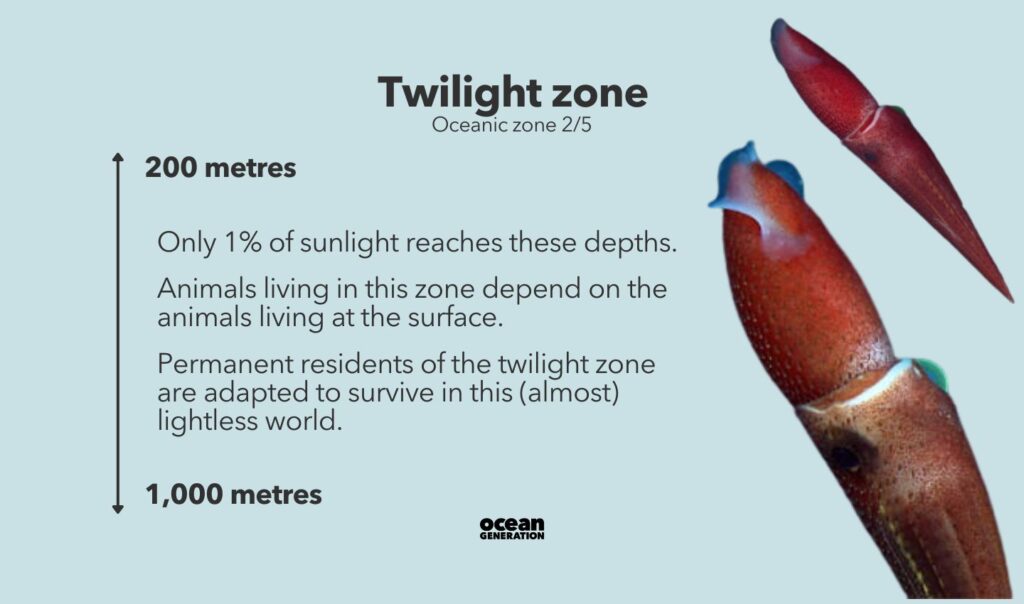
As we descend below 200m, we enter the twilight zone. Only 1% of sunlight reaches these depths, so light is very faint.

Want to see how light disappears as you dive into the Ocean? Watch this. 

Due to the lack of sunlight, there are no primary producers (organisms that get their energy from sunlight or other non-living sources). Animals that inhabit this zone depend entirely on those living at the surface.

Some scavenge on organic waste material that rains down from above, providing a vital source of nutrition. This โ€œmarine snowโ€ largely consists of decaying matter from dead organisms, faecal matter, detritus and other inorganic particles. 

Only 1 percent of sunlight reaches the Twilight zone in the deep Ocean.
Image credit: Monterey Bay Aquarium Research Institute

Other marine life undertake a daily mass-migration to and from the deep known as diel vertical migration.

Like commuters making their way into the city, trillions of tiny deep-sea creatures ascend to more abundant waters during the night to feed. They then descend back to the deep Ocean during daylight hours to avoid predators and UV radiation.

This daily surface-to-deep commute is the largest daily migration of life on Earth, and is mostly carried out by zooplankton, krill, and other small amphipods (crustaceans). 

Permanent residents of the twilight zone are adapted to survive in this (almost) lightless world. One of the most notable features are their eyes.  

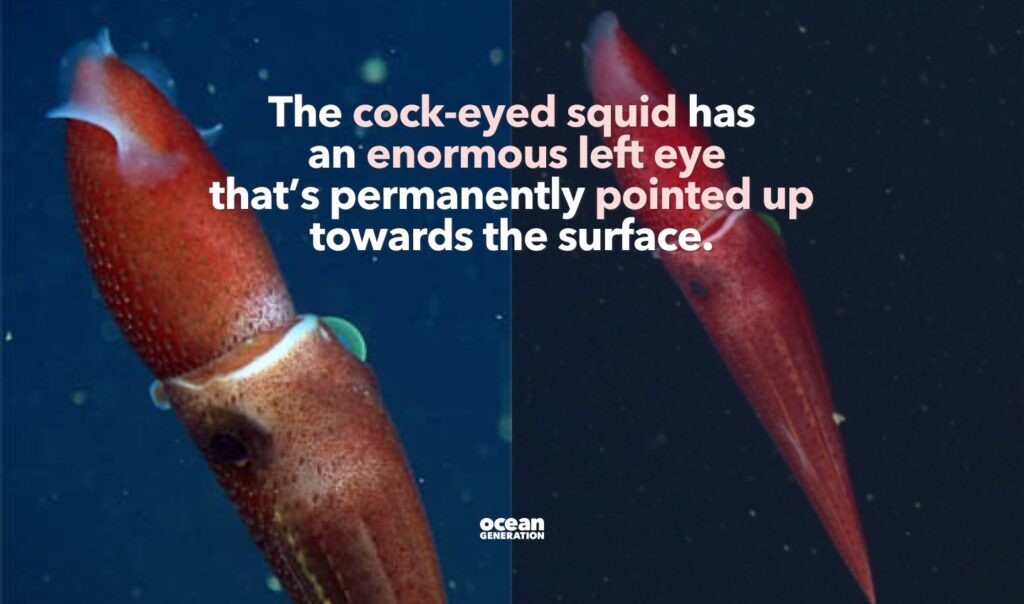
For example, the cock-eyed squid live between 200-1,000m. These lobsided creatures have an enormous left eye thatโ€™s permanently pointed up towards the surface, allowing them to spot the silhouettes of prey against the light from above. 

The cock-eyed squid have an enormous eye that's permanently pointed towards the surface.
Image credit: Monterey Bay Aquarium Research Institute

Midnight (Bathypelagic) zone

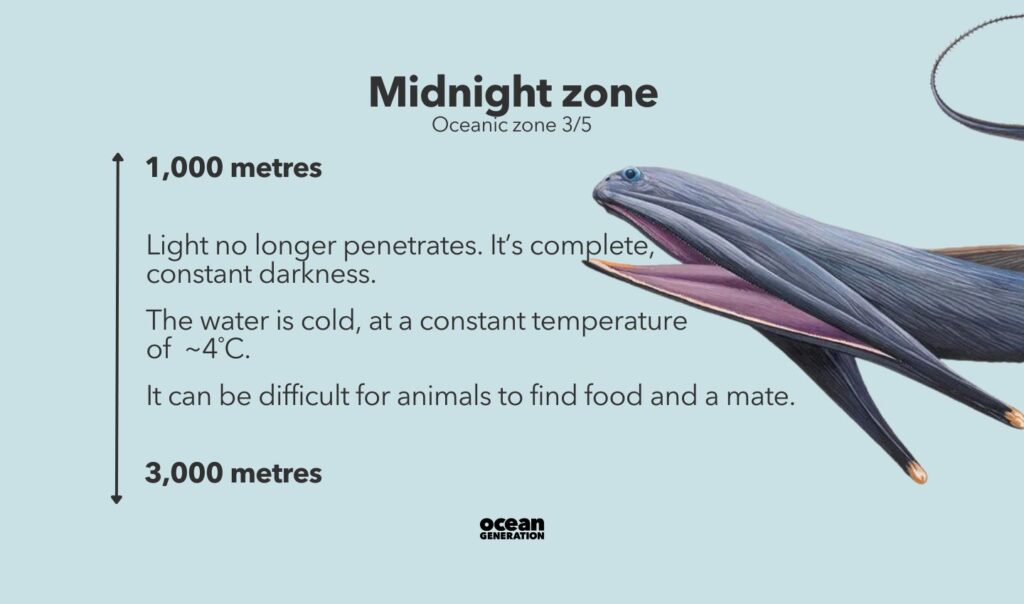
At 1000m (3,280 feet), light no longer penetrates, and weโ€™re left in complete, constant darkness.

We have now entered the Oceanโ€™s midnight zone.

Itโ€™s cold down here, at a constant temperature of around 4หšC, and the only light comes from the bioluminescence of animals themselves.

In this vast, lightless world, it can be difficult for animals to find food and a mate.

Light no longer penetrates the Midnight zone.
Image credit: BBC Science Focus

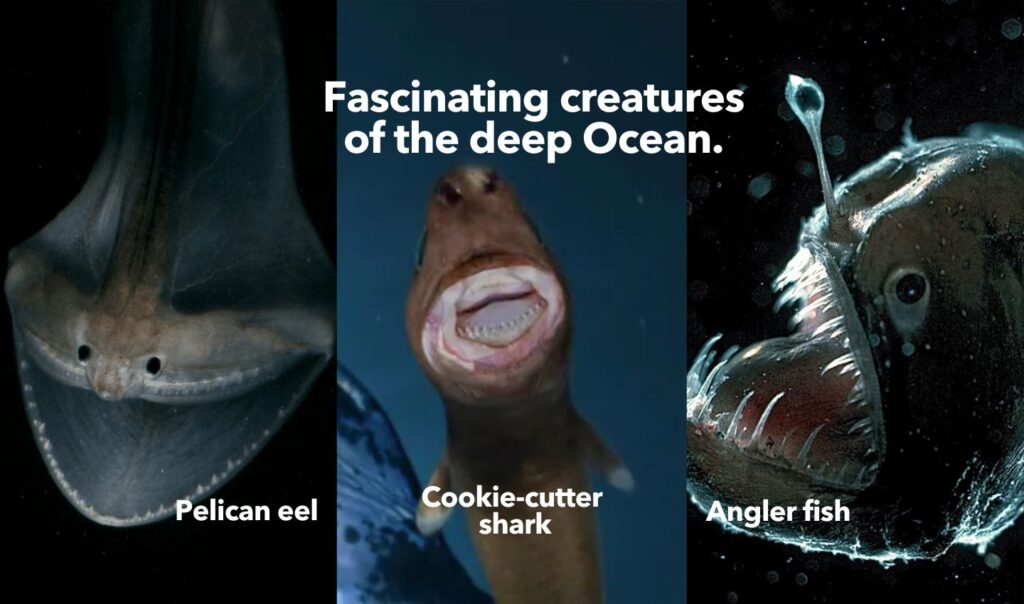
Some extraordinary species have adapted to overcome these challenges in astonishing ways.   

1. Pelican eels have an enormous jaw relative to their body size.  

This can unfold to engulf prey much larger than the eel itself, allowing them to bypass the size-based food web structure (individuals generally only consuming food smaller than their own body size) that usually exists in surface waters. 

2. Cookie-cutter sharks have special suction-cup-like lips and bandsaw-like teeth.  

Their specialised jaw allows this parasitic attacker to attach to much larger animals and gouge out a round chunk of flesh (yes, like a cookie-cutter).  

3. Finding a mate can be equally as challenging: This is how angler fish have adapted. 

Female deep-sea angler fish are famous for their bioluminescent fishing-rod-like lure which extends out from the top of their heads (think *Finding Nemo*). Male variants, however, are much smaller in comparison.

These โ€œdwarf malesโ€ spend their lives scouring the darkness in search of a female counterpart. When he finds her, the male latches on to the female with sharp teeth.

This attachment is followed by fusion of the epidermal (skin) tissues, and eventually his circulatory system fuses with hers. He becomes a permanent appendage to her body, in a process known as sexual parasitism.  

A female angler fish can have multiple males attached to her at any one time. 

Meet fascinating creatures of the deep Ocean: pelican eel, cookie-cutter-shark and angler fish.
Image credit: Pelican eel: Breathing Planet, Cookie cutter shark: Pally/Alamy Stock Photo, Angler fish: Monterey Bay Aquarium

Abyssal (Abyssopelagic) zone

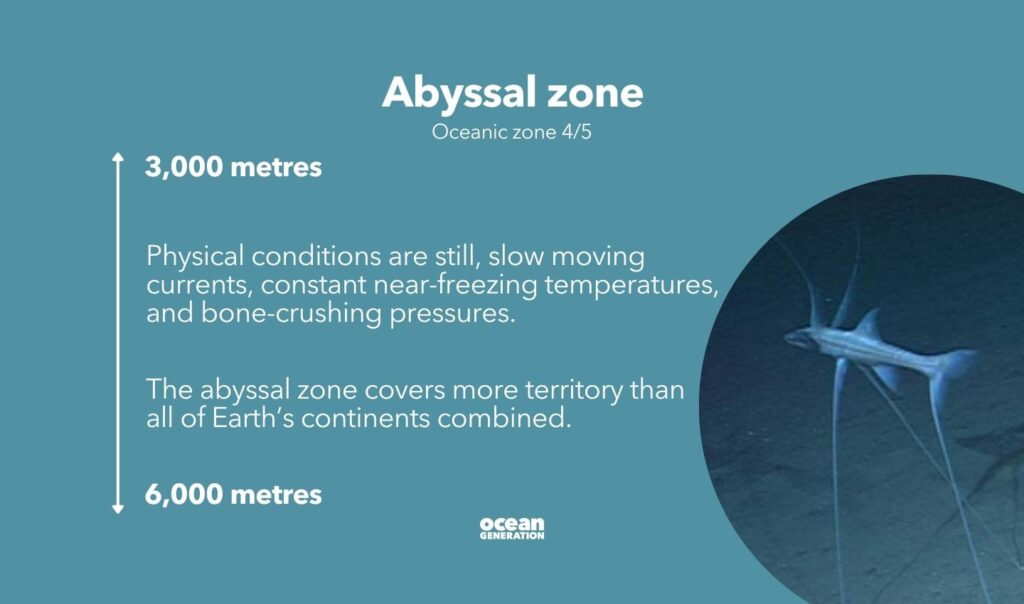
As we descend below 3,000m (9,843 feet) in the Ocean, we reach the pitch-black bottom layer known as the Abyssal zone. Physical conditions down here are still, with slow moving currents, constant near-freezing temperatures, and bone-crushing pressures. 

Time seems to stand still. Thereโ€™s no primary production and most organisms depend almost entirely on the marine snow that slowly rains down from above. 

Physical conditions are still in the abyssal zone.
Image credit: Monterey Bay Aquarium Research Institute

But itโ€™s far from being a lifeless desert: The abyssal zone stretches across wide plains, towering seamounts and hydrothermal vent systems, covering more territory than all of Earthโ€™s continents combined. 

Inhabitants of the abyss move and grow very slowly to minimise energy needs. 

Some individuals have specific adaptations to maximise their chances of survival. Tripod fish have modified pelvic and lower caudal fins which can extend up to a metre.  

This allows the fish to stand on stilts above the seafloor, so that itโ€™s perfectly positioned to eat any small fish or crustacean that come travelling along the currents.  

The slow-growing nature of these abyssal ecosystems means that they take a long-time to recover from any disturbance events (if ever). Consequences of overfishing and proposed deep-sea mining of the abyssal zone will therefore cause devastating, irreversible losses to habitats and biodiversity. 

The slow-growing nature 
of the abyssal ecosystems means that they take 
a long-time to recover

The Trenches (Hadalpelagic zone)

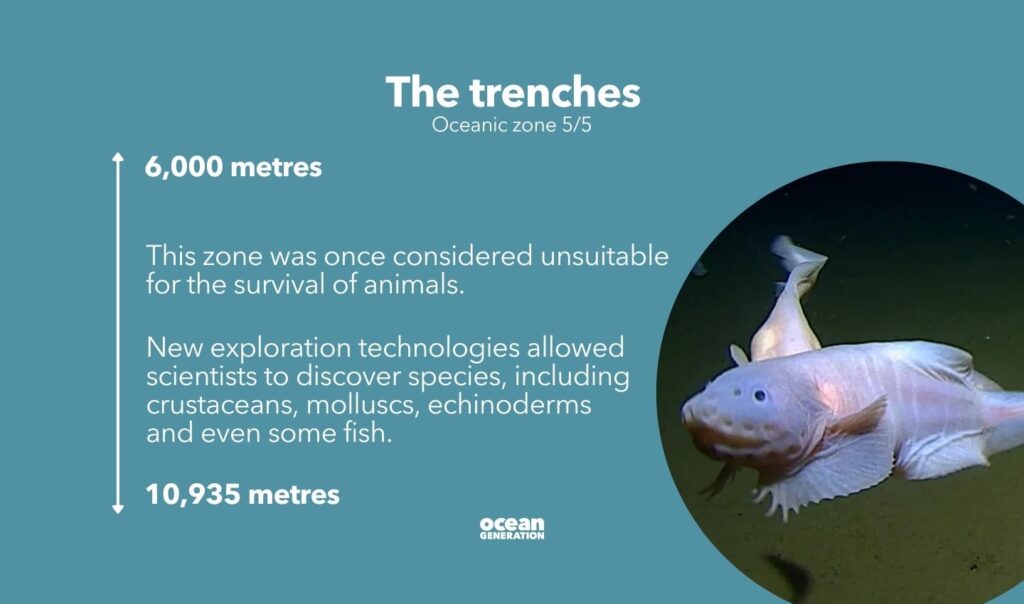
We continue our journey below 6,000m (19,685 feet) to enter the trenches (hadal zone): The deepest part of the Ocean.  

The hadal zone was once considered unsuitable for the survival of animals. However, the rapid development of exploration technologies has allowed scientists to discover species belonging to many of different taxonomic groups at these depths, including crustaceans, molluscs, and echinoderms. 

The Pseudoliparis snailfish is the deepest known fish. It was discovered close to the very limit of survival for all fish in August 2022 at 8,336m (27,349 feet).  

Its adaptations include a flexible skeleton to tolerate extreme pressure, a gelatinous coating to improve energy efficiency, and a large stomach for opportunistic feeding.  

The hadal zone was once considered unsuitable for the survival of animals. Posted by Ocean Generation, leaders in Ocean education.
Image credit: The Guardian

We continue down to surpass the inverted height of Mount Everest at 8,849m. A further two kilometres on, we reach the bottom of the Mariana Trench and the deepest known point in the Ocean (and Earth):  

The Challenger Deep โ€“ 10,935m (35,876 feet)

The weight of all the water overhead here is over 8,000 kg per square inch. Thatโ€™s roughly 1,000 times the pressure at the surface, and equivalent to 1,800 elephants on top of you! 

In 1960, Don Walsh and Jacques Piccard made history by becoming the first people to reach the bottom of the Challenger Deep in the manned submersible Trieste. This record was broken on 26th March 2012 when James Cameron made the first ever solo dive to the Challenger Deep in the Deepsea Challenger.

To this day, reaching the deepest known part of the Ocean remains a challenge for any explorer, and every expedition yields new discoveries as well as other, more ominous findings. 

During the Fendouzhe deep-sea expedition in 2020, researchers discovered plastic bags, electric wire, a beer can and fibre-optic tethers among other forms of plastic pollution in the Challenger Deep.  

This shows that even the most remote, hard-to-reach place on Earth is still not safe from human impacts. 

We canโ€™t treat the deep-sea as out of sight and out of mind. More work needs to be done to safeguard these precious ecosystems and ensure that life in the deep doesnโ€™t disappear before we even have the chance to understand it.  

Every expedition to the deepest part of the Ocean yields new discoveries.

From classroom to COP30: Questions from children to climate leaders about Ocean protection

Subscribe

Monthly: Impact in your inbox.

OceanGeneration-Join

Why there’s no health without the Ocean.

A healthy Ocean is our greatest ally against climate change.

Our health depends on the Ocean.  

This statement is true, of course, but itโ€™s very easy to become desensitised to this idea when it all seems so abstract.ย 

In this modern world, itโ€™s easy to overlook the fundamental basis of our survival that we often take for granted.

It can be hard to directly link our everyday lives and habits to the Ocean, especially for those of us who donโ€™t live anywhere near the coast, and donโ€™t interact with the sea on a regular basis.ย 

This can leave many of us feeling disconnected and disengaged from Ocean action.ย 

A quote saying "Our health depends on the Ocean" in a science article discussing why a healthy Ocean is key to our survival.

But letโ€™s dive deeper into this statement to find out what a healthy Ocean really means to us (humanity), and why we should must care.

A healthy Ocean is key to our survival 

In fact, the Ocean provides all the fundamental resources that we need to survive:

1. Air: The oxygen in every second breath we take comes from the Ocean.

Itโ€™s also believed that tiny, single-celled algae called Cyanobacteria provided the atmospheric conditions suitable for our very existence around 2.4 billion years ago.  (Thatโ€™s referred to as the Great Oxidation Event.)  

2. Water: All water on the planet is connected by a system known as the hydrological cycle.

Water evaporates from the Oceanโ€™s surface to form clouds, which provide us with the fresh water that we use to drink, shower, and cook with.  

Itโ€™s all connected via rivers, streams, and groundwater tables.

Even the water that makes up 60% of your own body was part of the Ocean at some point. 

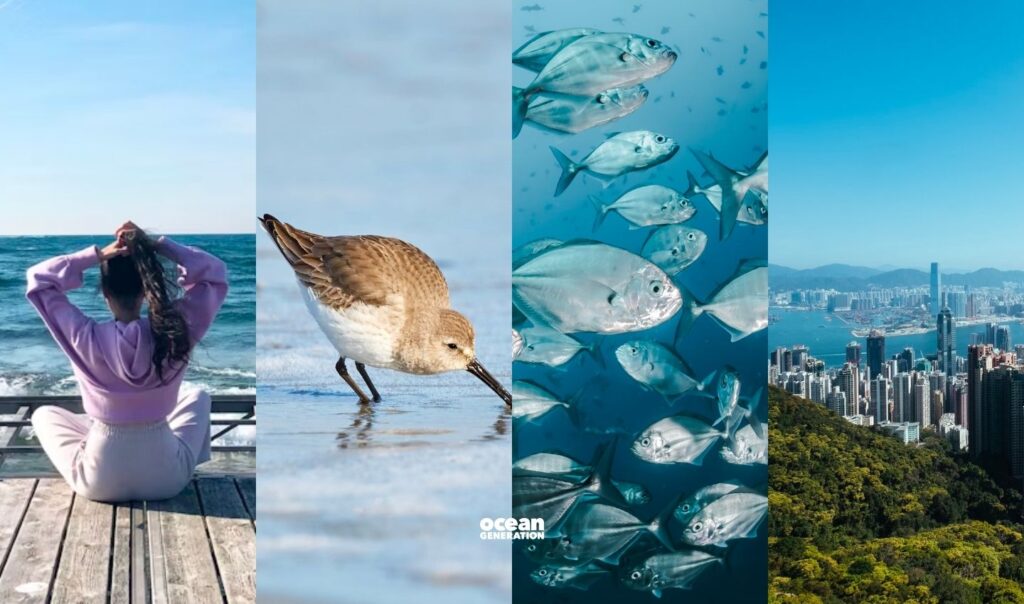
Our Ocean provides air, water, food and shelter for our survival.

3. Food: Seafood provides a primary source of protein for over 3.3 billion people.

Thatโ€™s over 40% of the global population (8.1 billion in 2023). The Ocean also drives the rain systems and climate patterns which help our crops to grow.

So even if you donโ€™t eat fish, the Ocean still indirectly provides the food that you eat.

4. Shelter: The Ocean has been present during every element of our evolutionary history as human beings and continues to shape the way our society functions. 

River basins, where land meets the sea, represent the earliest relationship between human society and nature. These areas of fertile plain fields, rich soil and abundant water resources allowed for the very first human civilisations to thrive.  
Over time, the development of ports also provided a gateway of connectivity and transportation between societies.  

This relationship continues today.  

As of 2020, almost 1 billion people live within 10km of the coastline, and more than one third of the worldโ€™s population (2.75 billion people) live within 100km from the coast. 

Whatโ€™s more, over 3 billion people depend on the Ocean as a primary source of income, the majority of these from Ocean-based industries such as fisheries and tourism in developing countries. 

Why healthy people need a healthy Ocean: explained by Ocean generation, leaders in Ocean literacy.

Healthy people need a healthy Ocean 

The Ocean contains a vast biodiversity of life, with over 250,000 known species and many more (at least two thirds) yet to be discovered.  

Each life form has a unique method of adaptation against disease and pathogens. Weโ€™re constantly learning from this strange and alien world to apply these mechanisms to our own needs.  

We depend on this marine biodiversity to develop modern medicines. In fact, between 1981-2008, around 64% of all drugs used to fight infection, and 63% of anti-cancer drugs were derived from natural sources.  

For example, the Horseshoe Crab is commonly referred to as a โ€œliving fossilโ€ and has survived almost unchanged for around 200 million years. Its blue blood contains special cells called โ€œgranular amoebocytesโ€ which can detect and clot around even the tiniest presence of toxic bacteria.  

Humans harness the special property of this blood to test whether the drugs and vaccines that we produce are free from contamination.

A healthy Ocean is our greatest ally against climate change.

A healthy Ocean is our greatest ally against climate change. 

A healthy Ocean stabilises our entire planetary system and acts as a buffer against the worsening impacts of climate change.  

It regulates global air temperatures by absorbing 26% of total CO2 emissions and storing over 90% of the excess heat from the atmosphere.  

But the Ocean is not just a victim of climate change, itโ€™s also a source of solutions.

Our Ocean provides all the fundamental resources that we need to survive. Written by Ocean Generation.
Coastal โ€œblue carbonโ€ ecosystems, such as mangroves, tidal marshes and seagrass meadows remove and store carbon dioxide from the atmosphere. These ecosystems can lock away carbon in their soils at rates up to an order of magnitude faster than terrestrial forests.

Protecting and restoring these vital coastal ecosystems offers us a chance to ensure a sustainable future for people and planet.  

If the Ocean thrives, so do we.  

So, next time youโ€™re having a drink of water, catching your breath after exercising, or waiting at the doctorโ€™s surgery for some medicine, take a moment to stop and thank the Ocean for providing the fundamentals to make all this possible. 

Our Ocean is not just a victim of climate change, it's a source of solutions.

From classroom to COP30: Questions from children to climate leaders about Ocean protection

Subscribe

Monthly: Impact in your inbox.

OceanGeneration-Join

Why is the Ocean so important?

Ocean wave crashing on a rock. Shared by Ocean Generation in an article about why the Ocean is important.

Introducing the Ocean: Our most precious, life-giving, climateregulating, yet recklessly exploited, undervalued, and underfunded resource. ย 

Covering over 70% of our blue planet and holding roughly 97% of the worldโ€™s water, the Ocean provides the foundation for all living things. From the smallest plankton to the largest animal to have ever lived (the blue whale). And that’s just the beginning of why the Ocean is important.

Energy is cycled across its single, interconnected system; keeping everything in balance. It allows all life to exist together in harmony. 

The Ocean makes up over 90% of all habitable space on Earth.ย ย 

Just think about that. All the rainforests, grasslands, mountain ranges and deserts combined with every town, city and village of human civilisation make up less than 10% of the liveable space on our planet.ย ย 

Everything else is Ocean.ย ย 

The Ocean exists on a scale beyond our understanding. ocean facts shared by Ocean Generation: Experts in Ocean health.

An Ocean which is home to the worldโ€™s largest mountain range (the Mid Ocean Ridge is over seven times longer than the Andes).

And the worldโ€™s deepest canyon. (Challenger Deep is six times deeper than the Grand Canyon and could easily swallow Mount Everest.)ย 

This vast, interconnected body of water exists on a scale so large that itโ€™s almost beyond the realm of our understanding.ย 

But we need to understand why the Ocean is important. ย 

The Ocean defines our planet and provides the very foundation of our existence.ย ย 

If it could talk, the Ocean would be able to tell us all about the dinosaurs, the ice age, and how Stonehenge or Egyptโ€™s pyramids were really built. The Ocean watched as the earliest Homo Sapiens (thatโ€™s us) took our first footsteps. It may even hold the secrets to the very beginning of life on Earth.  

Two circle images beside each other: One of the pyramids in Egypt and another of a calm Ocean scene. Ocean Generation is sharing why the Ocean is so important in this article.

To look back at the history of the Ocean is to look back at the history of life itself.  

For millions of years, the Ocean has provided the conditions required for the evolution of all living things. The Ocean burst into life during the Cambrian explosion (the *relatively* sudden radiation and divergence of complex life forms) around 538.8 million years ago and has seen all five mass extinction events since. 

Make that six.  

At this very moment, we are living through the sixth mass extinction event. Research shows that species are now going extinct between 100 and 1,000 times faster than natural, background extinction rates.  

The delicate balance of life which has been slowly ticking along for millions of years has taken decades to unravel.  

According to the IUCN Red List, over 44,000 assessed species are threatened with extinction.  

Itโ€™s almost impossible to comprehend that we are hurtling towards destruction on a scale comparable to that caused by a colossal asteroid collision 66 million years ago. (That, the last mass extinction event, wiped out the dinosaurs).   

Except this time, humanity are both the asteroid and the dinosaurs.ย ย 

A pod of dolphins swimming in the Ocean shared by Ocean Generation.

ย 

Is the Ocean too vast to feel our impact?ย ย 

People used to think the Ocean existed on such an infinite, untouchable scale that nothing we, people, could do would affect its limitless bounty. ย 

โ€œMan marks the earth with ruin โ€“ his control stops with the shoreโ€ฆโ€

โ€“ Lord Byron, Nineteenth Century.
Sunset image of the Ocean and a pink sky. Shared by Ocean Generation the global charity providing Ocean education to everyone, everywhere.

We now know that this is wrong.ย ย 

Throughout the last decades, our Ocean has been heating up. It’s becoming more acidic, choking in plastic, drained of its fish stocks, and pumped with toxic chemicals at a rate far beyond which it can sustain.ย ย 

We have borne witness to record breaking temperatures, mass coral-bleaching and glacial melting events. Now, we are hurtling towards a โ€˜new normalโ€™ in which instability and volatility are centre stage.ย 

We have been recklessly exploiting our Ocean system.ย ย 

We have watched as records are broken time and time again.  

But in 2023, the Ocean temperature record wasnโ€™t just broken, it was absolutely obliterated. 

In fact, the entire upper 2000m of the Ocean experienced shatteringly high temperatures. As this surface layer heats up, itโ€™s less able to mix with deep water below. As a result, surface oxygen content has decreased.  

Image of a glacier in the Ocean with the quote: In 2023, the Ocean temperature record wasnโ€™t just broken, it was absolutely obliterated.

This isnโ€™t only detrimental to marine ecosystems, but it also slows the Oceanโ€™s life-saving ability to sequester (remove and store) atmospheric carbon dioxide.  

The global water cycle has also been amplified by our warming Ocean. For us on land, this means stronger, longer droughts as well as intensified rainfall, storm, and flooding events.  

Restoring the Ocean starts on land โ€“ with us.

Just like how people once thought the Ocean was too large to feel our impacts. Now, it may seem like our impacts are too large to solve. But we know this isnโ€™t true.  
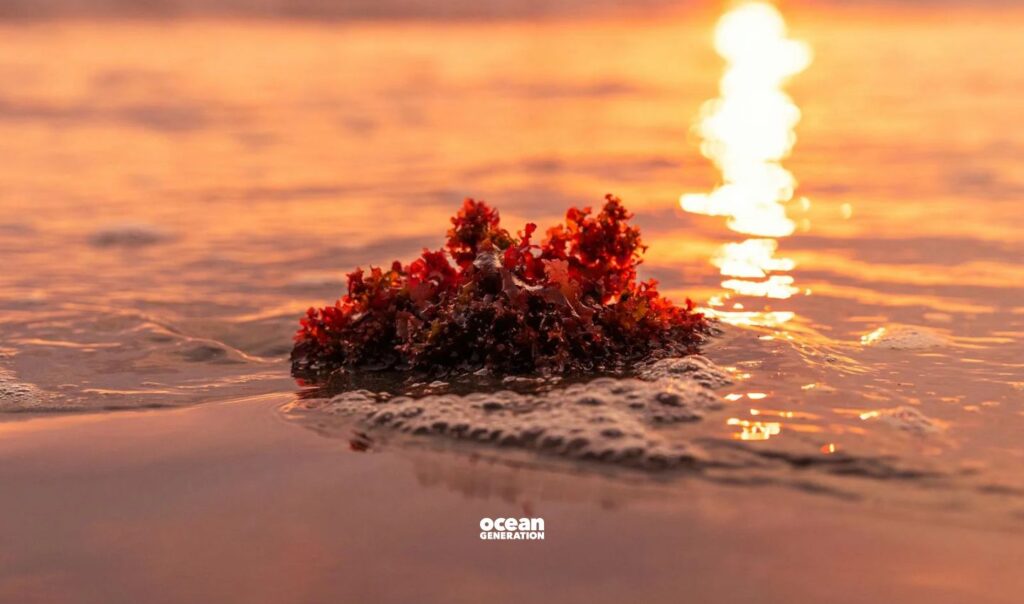
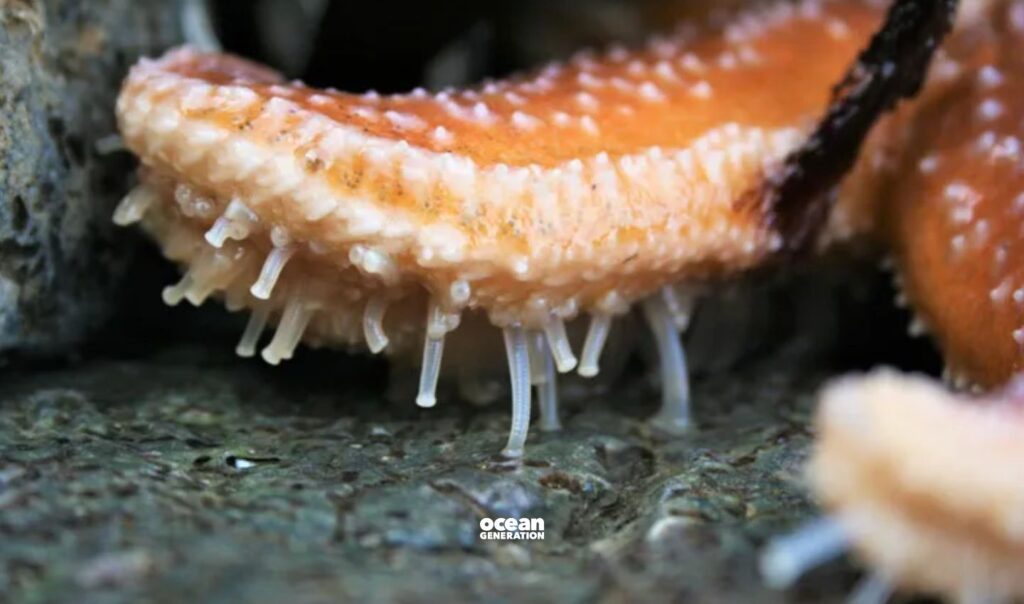
We have the technology, the knowledge, and the power to turn the tide and reverse our trajectory. 
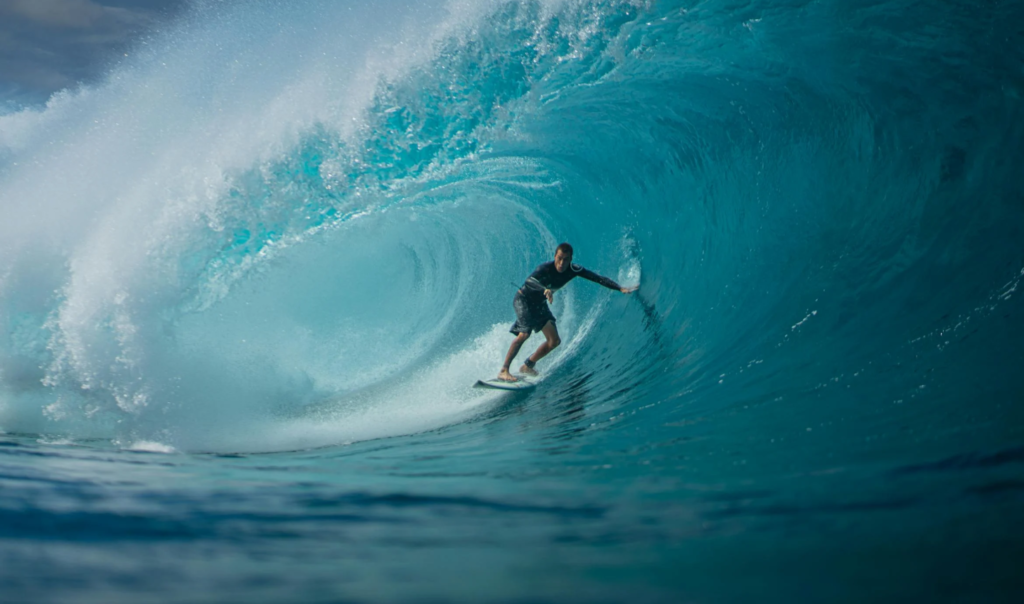
We know this because weโ€™re in many parts of the world, itโ€™s already happening.  

Effectively managed Marine Protected Areas, Maximum Sustainable Yields (the maximum catch size that can be removed from a population to maintain a healthy and sustainable fish stock), and the rise in renewable energy technologies are all ways in which humanity has learned to collaborate more fairly with nature.  

Rainbow over a beach and the Ocean with the quote: We have the opportunity to leave our Ocean in a better state than we found it. Shared by Ocean Generation, leaders in environmental education.

Working with the Ocean rather against it can reap limitless benefits for both people and planet.ย If the Ocean thrives, so do we.

This knowledge is power.ย ย 
Power to be part of the solution, to consider the cost of inaction and unite to ensure our Oceanโ€™s health is considered in all decisionsย โ€“ personal, business, and government policies. ย 

We have a unique opportunity to be the first generation to leave our precious Ocean in a better state than we found it.ย 

Your actions may feel like a drop in the Ocean, but together we can make waves of change. ย 

Start by signing up to our newsletter and reading about 15 climate actions you can take to restore our Ocean. Learn more about why the Ocean is important by adding it to your scroll via your favourite social platform:

From classroom to COP30: Questions from children to climate leaders about Ocean protection

Subscribe

Monthly: Impact in your inbox.

OceanGeneration-Join