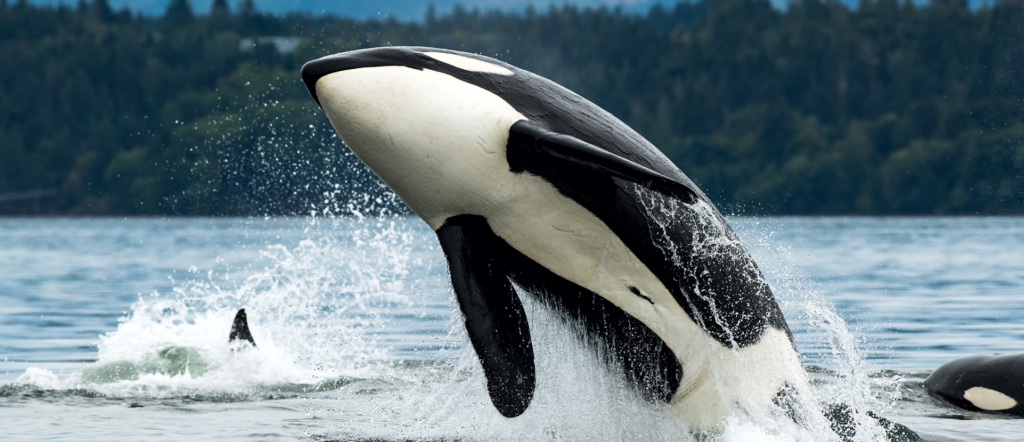
Orca (also known as killer whales) are famous residents of the Ocean. They are fast, fashionable and family-oriented. Frankly, they are fantastic.
Are orcas whales or dolphins?
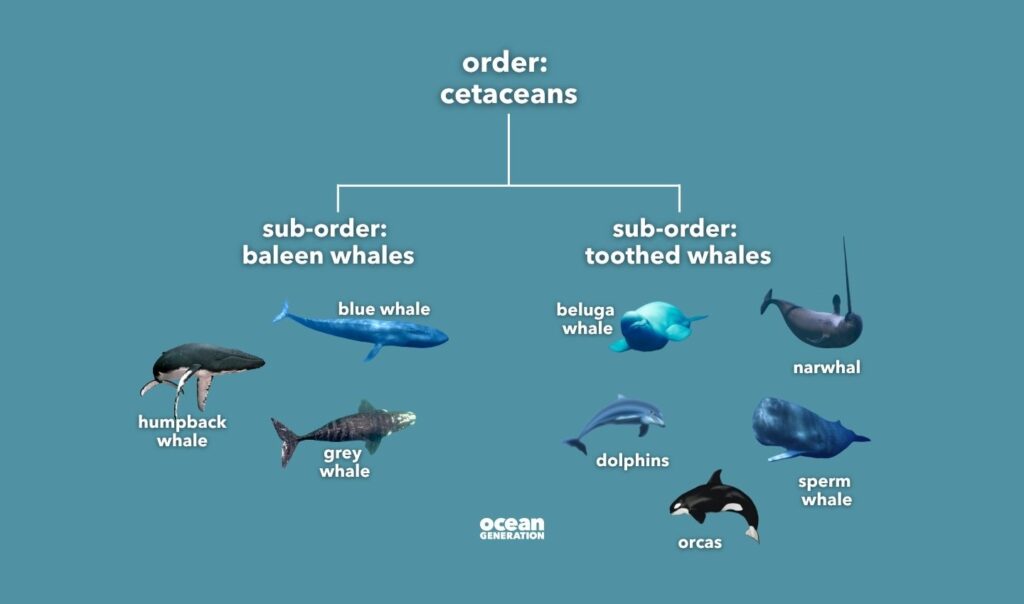
Orca aren’t whales, they’re dolphins.
The commonly used name, killer whales, can cause confusion. Early sailors became familiar with orca hunting the great whales, naming them “whale killers”. Somewhere in history, that got flipped to become “killer whale”, even though orca are actually dolphins. They are the biggest of the dolphins.
Are all dolphins whales?
Technically, the whole dolphin family, the Delphinoidea, belong to toothed whales – the Odontoceti. Along with the Mysticeti (baleen whales) they make up the cetaceans.
So, you could argue all dolphins (and therefore orca) are in fact whales but they have dolphin-specific traits so, they’re not ‘true whales.’
Orcinus orca is currently a single species, although scientists have suggested dividing it into races, sub species or even different species.
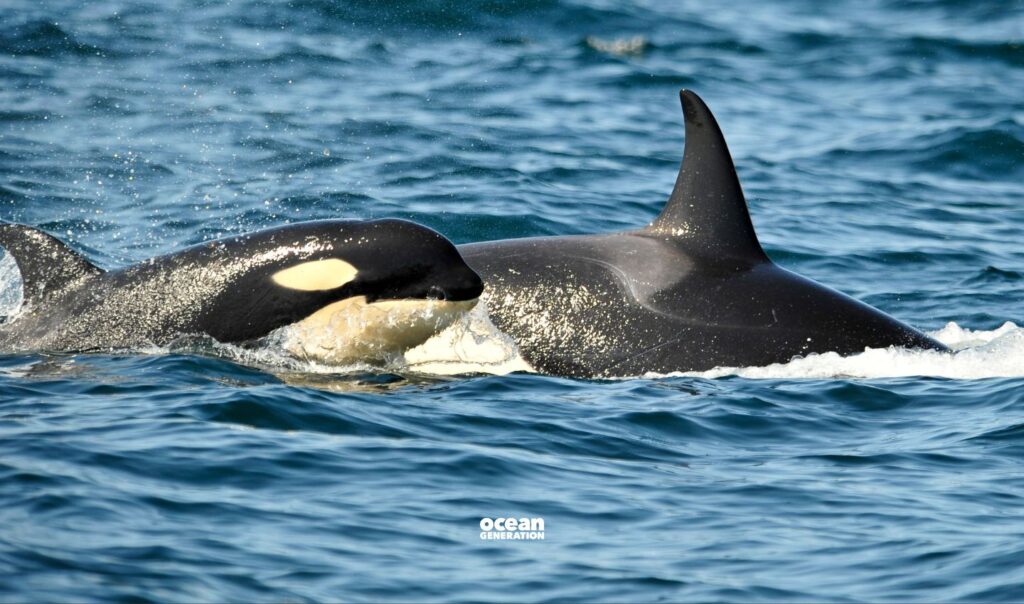
Different groups of orcas are known as ecotypes which inhabit different parts of the Ocean and show physical and cultural differences. They speak different dialects, eat different food and grow to different sizes with different colouration. In many ways they are much like humans.
Where do orca live?
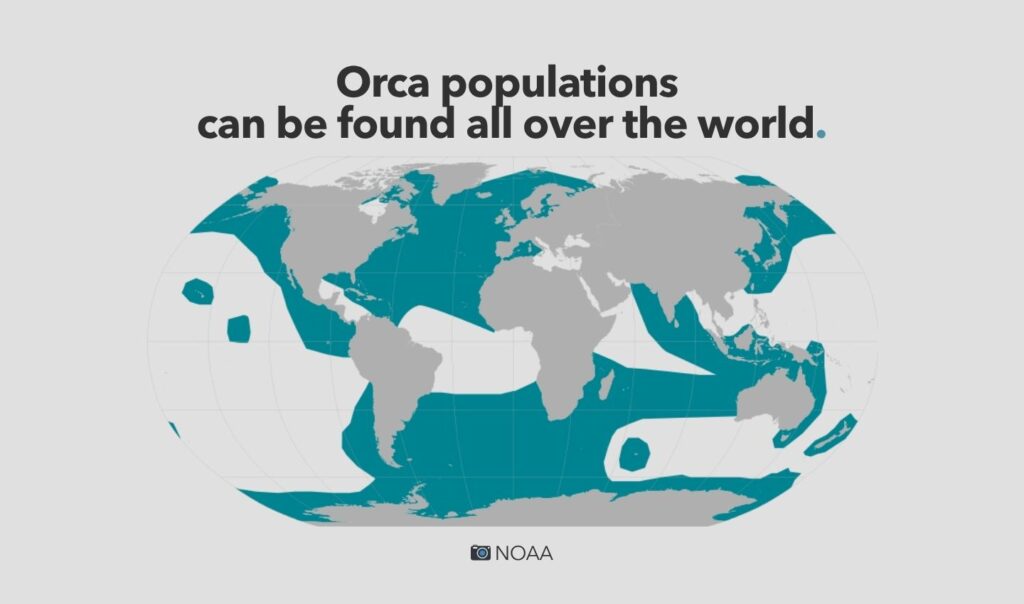
Populations can be found all over the world, typically preferring coastal seas to the open Ocean, and the higher latitudes closer to the poles. The main population centres for orca are in the Southern Ocean, the north-eastern Atlantic and in the northern Pacific, but orca can be found from Hawaii to the Arctic.
How many orcas are there?
There is an estimated global population of 50,000 orca, including 25,000 in the Southern Ocean, and 10,000 in the waters of Norway, Iceland and the Faroes.
The global population of orca has not been assessed by the International Union for Conservation of Nature (IUCN). We don’t know enough to say whether orca populations are increasing, decreasing or stable.
We do know about the different orca sub populations around the world. Some, such as the Iberian orca population which has been sinking boats, are critically endangered. The West Coast Community of the UK is thought to only have two members remaining: Aquarius and John Coe, who at over 60 years old may well be the oldest male killer whale in the world.
Other orca populations are doing better. Antarctic populations are hard to study, but thought to be stable. Northern Resident orca of the west coast of North America are listed as threatened, but their numbers are increasing by an average of 2% per year after protective measures were introduced for them and their main prey – harbour seals.
All orca are carnivores but different populations of orca have different preferred diets. Norwegian orca have specialised in herring, northeast Pacific orca hunt salmon and New Zealand orca focus on elasmobranch species such as eagle rays, stingrays and shark species.
Two orca brothers in South African waters, Port and Starboard, are infamous for targeting great white sharks, flipping them onto their backs into a trance-like state known as tonic immobility and eating their livers. As a result, great whites leave the area when orcas are about. Other orcas have been recording other shark species such as whale sharks, seven gill sharks, mako sharks and white sharks.
Nothing is off the menu. Orca will hunt marine mammals, including walrus, dolphins, narwhals, beluga and whales. Orca have been recorded recently hunting the largest animal that has even lived: blue whales.
A population off the western coast of North America has revived a fashion fad last seen in the 1980s of swimming around with dead salmon on their heads. Fashion experts compare this to the revival of the bucket hat.
Orca are among the very few species to go through menopause in the wild. Beluga, narwhals, short-finned pilot whales and false killer whales join humans in this exclusive group. This allows orca grandmothers to act as vital sources of knowledge in food location and hunting techniques, while avoiding them competing reproductively with their daughters.
Orca are estimated to eat nearly 800kg a week (roughly 1600 loaves of bread or 8,000 apples).
What is Ocean circulation – and why does it matter?
Share this page
Copied
The Ocean is in constant motion.
Why does Ocean water move? Think about it. What do you need to move the Ocean? What is Ocean circulation, and why does it matter?
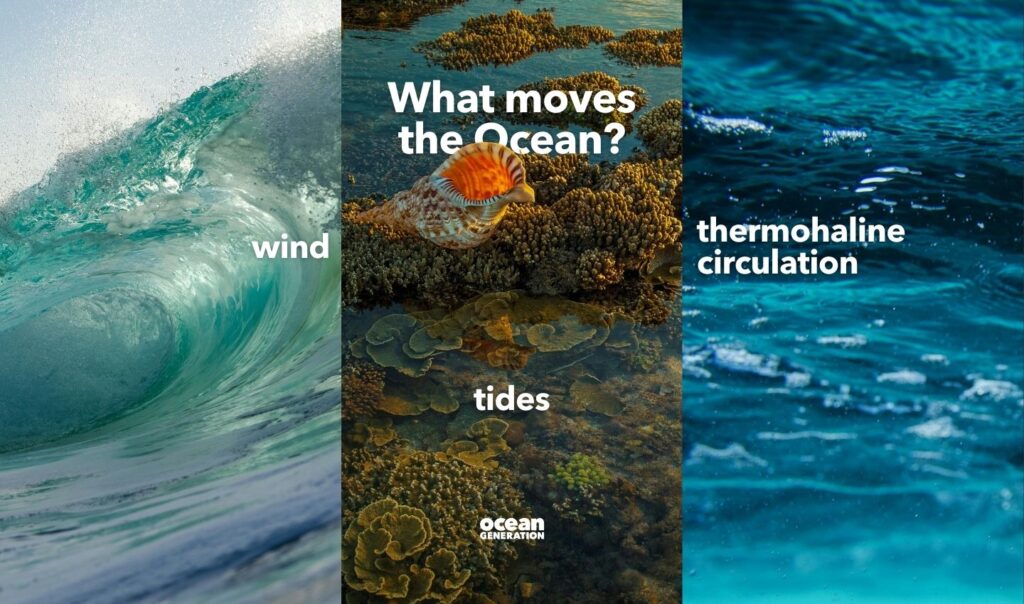
There are three drivers of Ocean currents.
The most visible driver of Ocean circulation is the wind. Big storms can whip up the waves, send them crashing into the rocks or barrelling over surfers. Waves can seem like the Ocean is moving a lot, but the water itself is moving mostly in a circular motion. We explain more in our article on the motion of the Ocean.
Prevailing winds can push the waters below in a consistent direction, such as the Gulf Stream, which does drive larger scale circulation. But usually, the wind is only moving the surface, and the Ocean is a lot deeper than the surface.
Next comes the tides. The moon, with a little help from the Sun, shifts the Ocean back and forth, changing sea level by metres in some places. The Bay of Fundy in Canada has the largest tidal range in the world, with almost 12m difference between high and low tide.
However, the tides are always changing. If tides were the only thing responsible for moving the water, then the same water would just be moved in and out. Out in the middle of the Ocean, the water would travel in a big vertical circle, like a giant Ferris wheel. To move the Ocean properly, we need something else.
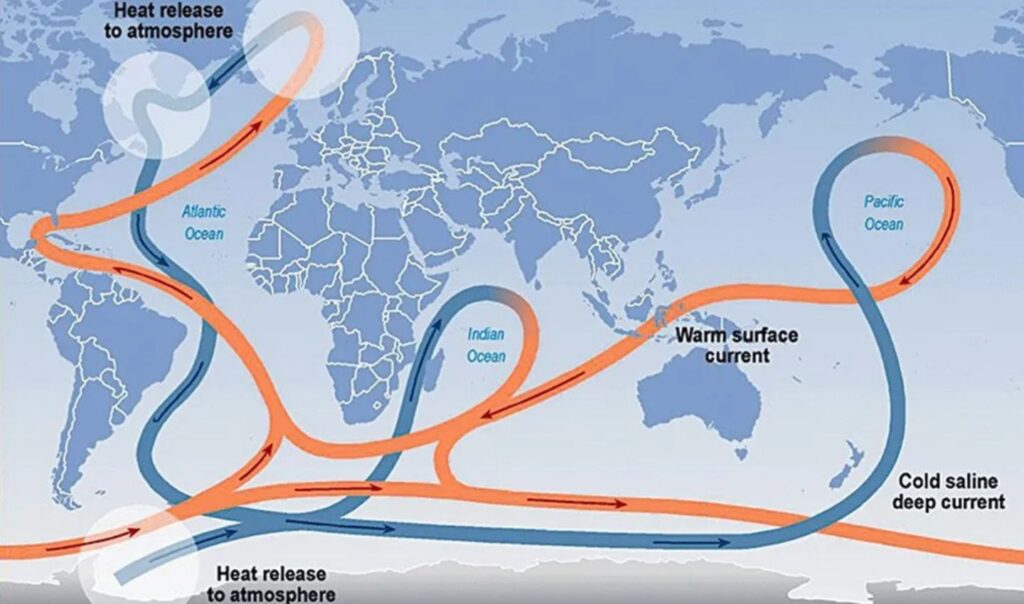
The third driver of global Oceanic currents is more understated than crashing waves or retreating seas. It takes thousands of years to move water through the deep Ocean, from pole to equator to pole. It’s known as the Ocean Conveyor, or Thermohaline Circulation, and the polar Ocean is a focal point for its activity.
Why is Ocean circulation important?
This movement of water is the heartbeat of the Ocean. It carries oxygen-rich waters to the depths, and where it returns to the surface (known as upwelling), the nutrients it brings with it create the richest waters on the planet.
The Ocean can circulate and ‘drop off’ heat and carbon dioxide in the deep. If the circulation of the Ocean slows, the surface Ocean will get hotter and more acidic. With less circulation, the Ocean’s ability to trap and store two major drivers of climate change suffers.
IPCC via Smithsonian
What is Thermohaline Circulation?
Thermohaline circulation is the slow, powerful pump behind Ocean circulation, the main driver of water movement in the Ocean. The name sounds complicated, but it tells us exactly what we are talking about.
Let’s break it down; Thermo-: we are talking about temperature; -haline about salinity, or saltiness. These two characteristics of seawater influence global climate and biological richness.
Temperature and saltiness have influence because they change how dense Ocean water is. Cold water is more dense than warm water, and salty water is more dense than freshwater. If water is denser, it will sink below less dense water.
These simple differences drive a slow, unseen conveyor belt from the poles to the equator and back again. It would take over 1,000 years for one drop of water to complete the whole Ocean circulation.
What will the cold, salty water now disappearing into the depths in the North Atlantic see when it re-surfaces in the Pacific in 3026?
Why are the Poles important for Ocean circulation?
If the poles are known for one thing, it is that they are cold. So cold in fact, they can chill seawater to the point of freezing (which happens around –1.8 to -2 degrees C / 28.76- 28.4 °F, lower than normal water due to the salt content).
When seawater freezes, it leaves its salt behind. As ice forms, the water left behind gets more salty, which lowers the temperature it will freeze at. More salt = lower freezing temperature. Very salty, very cold water is very dense, and will sink below other seawater.
This downward movement is known as downwelling. Downwelling pushes water along the depths and pulls water across the surface. This is the pump that moves the Ocean.
So begins the Ocean conveyor.
When does cold water become deadly?
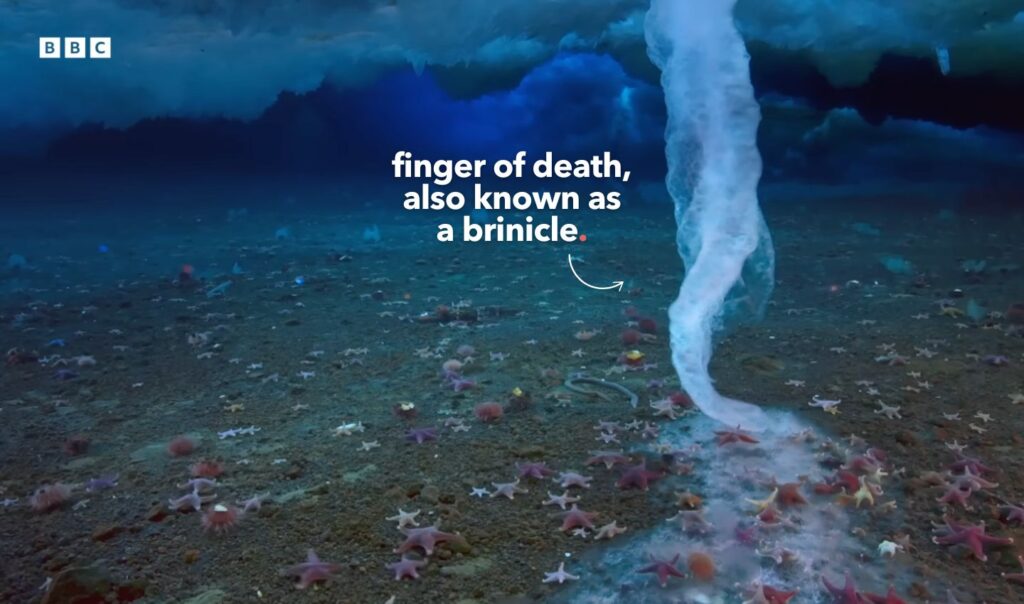
Maybe you didn’t think water movement could be exciting. Maybe you haven’t heard of the finger of death.
We know as sea ice forms, it “spits out” salt, creating channels of brine (very salty water), which is colder than freezing. This brine travels down through channels in the ice, collects more salt and cools further.
It reaches the bottom of the ice super salty and super cold. It is so cold it freezes the sea water it touches below the ice, creating beautiful brinicles.
The brine is still too salty to freeze, so travels through the centre of the brinicle, growing it. If this is in a shallow area, the brine could reach the seabed before warming and diluting enough.
This ethereal beauty then becomes a sinister threat. It is so cold it freezes anything it touches. The sea stars, brittle stars, sea cucumbers living below the ice are at the mercy of the finger of death.
Most Ocean movement isn’t as dramatic as the finger of death, but it runs on the same mechanisms.
Ocean circulation relies on the cooling and sinking of water at the poles. As the release of greenhouse gases raises the temperature of our planet, especially at our poles, the water is not getting as cold.
We are seeing less sea ice form and the water has more fresh meltwater diluting it. The water is getting less cold, and less salty. Both mean the surface water is less dense, meaning it will sink less. Is the circulation of the Ocean slowing?
One way to study if it is slowing is by looking at how old the water is – older water means slower circulation.
How do you measure how old water is?
At the surface, chemicals and elements are constantly being exchanged between the air and the Ocean. Scientists can look at the chemical composition of the water, looking for indicators for when the water was last in contact with the surface.
Using Carbon-14 as a time marker
Carbon-14 is the usual way, a radioactive isotope of carbon that is used in radiocarbon dating methods from geology to archaeology. It’s also called carbon dating.
How does carbon dating work?
Carbon-14 is an isotope (type of atom) that decays slowly. Half of it will decay every 5700 years or so, known as the half-life.
Measuring the amounts of Carbon-14 can be like reading a timer. Carbon-14 is created naturally when cosmic rays hit our atmosphere, but in much larger amounts by nuclear weapons – levels doubled in the 1950s and 1960s.
Track the amount of Carbon-14 and you can approximate when it was last in contact with the atmosphere, which gauges age.
Measuring human-made chemicals
Industrial chemicals such as CFC-12 and sulphur hexafluoride are other chemical clues used to age water. Chlorofluorocarbons (CFCs) were widely used in refrigerants and spray cans until they were identified as depleting the ozone layer.
Through global cooperation and effective science, the Montreal Protocol was introduced, preventing the use of CFCs and allowing the ozone layer to recover (learn more about international treaties here). The presence of CFCs can indicate exactly when that water is from.
Using oxygen to estimate water’s age
We can also look at the Apparent Oxygen Utilisation. The principle is that deep water can’t have oxygen added, so the older the water, the more oxygen will be used up from it, meaning older water has less oxygen.
Despite fluctuations caused by other Ocean movers (e.g. the wind), the waters in the deep North Atlantic are getting older, implying the water is not being replenished as quickly, and therefore that the circulation is slowing. The same is happening at the other pole.
The Ocean is made up of many different ‘bodies’ of water, with different characteristics and names. North Atlantic Deep Water is formed in the Arctic by cold, salty water sinking and flowing south. This water travels all the way to the Southern Ocean, where it meets another body of water.
Antarctic Bottom Water is formed at the South Pole and is the coldest and the densest of them all, the real powerhouse of Ocean circulation. But it is warming and there is less of it. The frost-fuelled engine is slowing.
What would a broken Ocean conveyor mean?
The Ocean would suffer.
Deep sea creatures relying on delivery of oxygen and nutrients would be left waiting, as deoxygenated areas grow. The same would happen for surface species that need the upwelling of nutrients from the deep.
If Ocean circulation stopped, there would be dead zones without oxygen in the deep and starved surfaces with no nutrients to support phytoplankton.
It would impact life on land too. If the circulation of the Ocean slows, global climates will shift. Increased storm intensity, more extreme weather patterns and changes to rainfall. Europe could face far cooler temperatures as the tropical water that brings warmth from the equator slows.
Every reduction in greenhouse gases, every degree of warming prevented, reduces the stress on our Poles and on our Ocean circulation. Keeping our poles cool keeps our Ocean moving.
Why krill matter: Krill fishing and conservation in the Southern Ocean
Share this page
Copied
The Southern Ocean is one of the most remote places on the planet.
It was only in 1911 that the first human, Roald Amundsen, reached the South Pole. For context, the first powered aircraft, the Wright Flyer, took to the air in 1903. Humanity conquered the skies before it managed the southern continent. The waters here are cold, barely above freezing, yet full of life. These are some of the richest waters in the world.
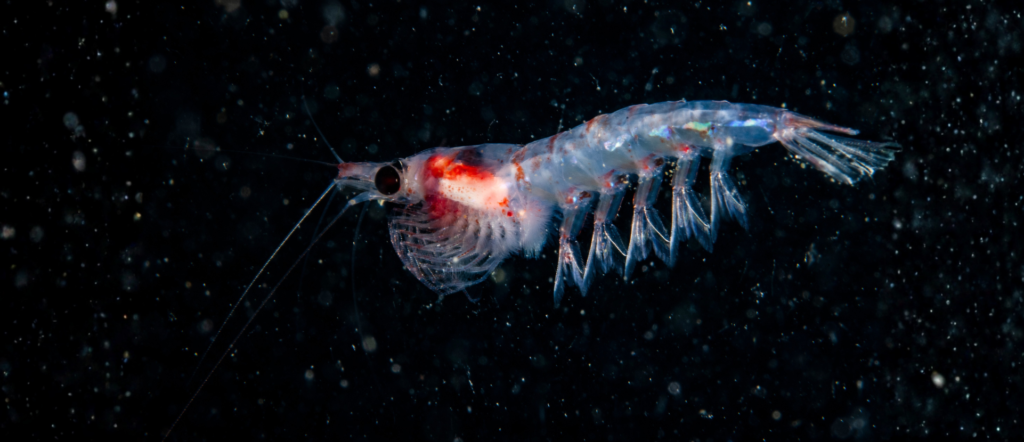
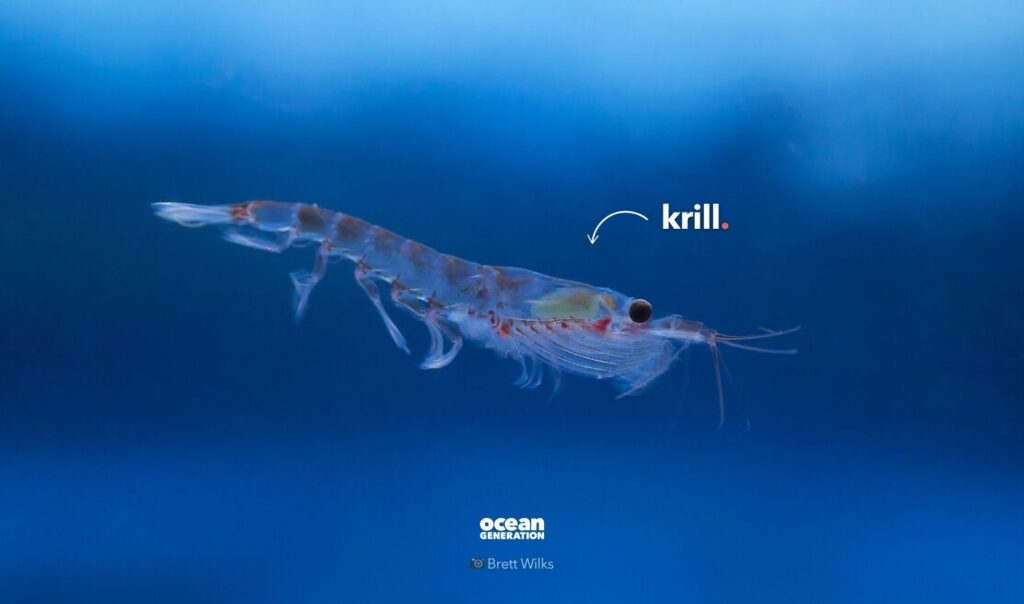
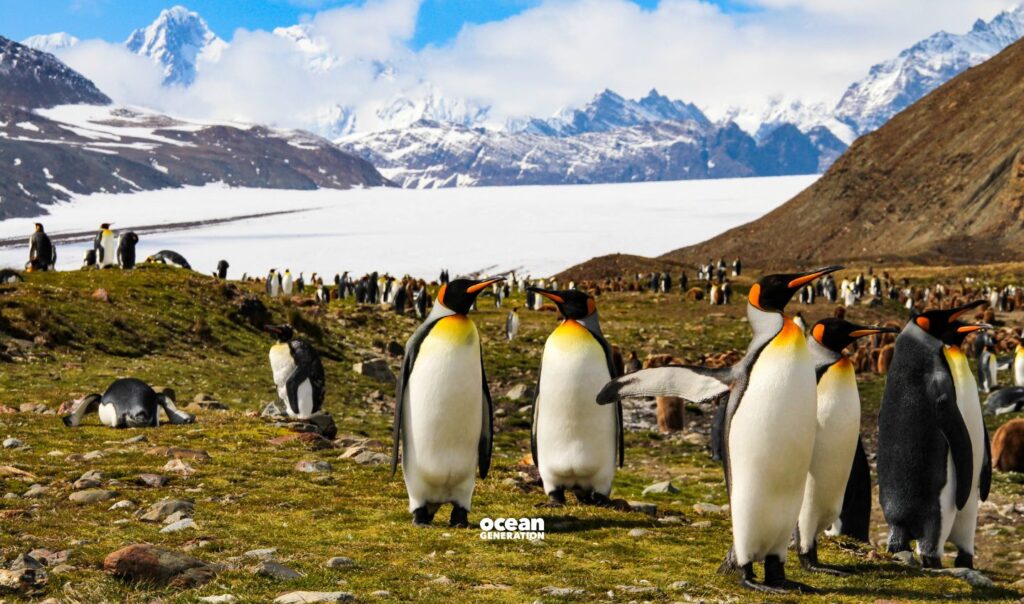
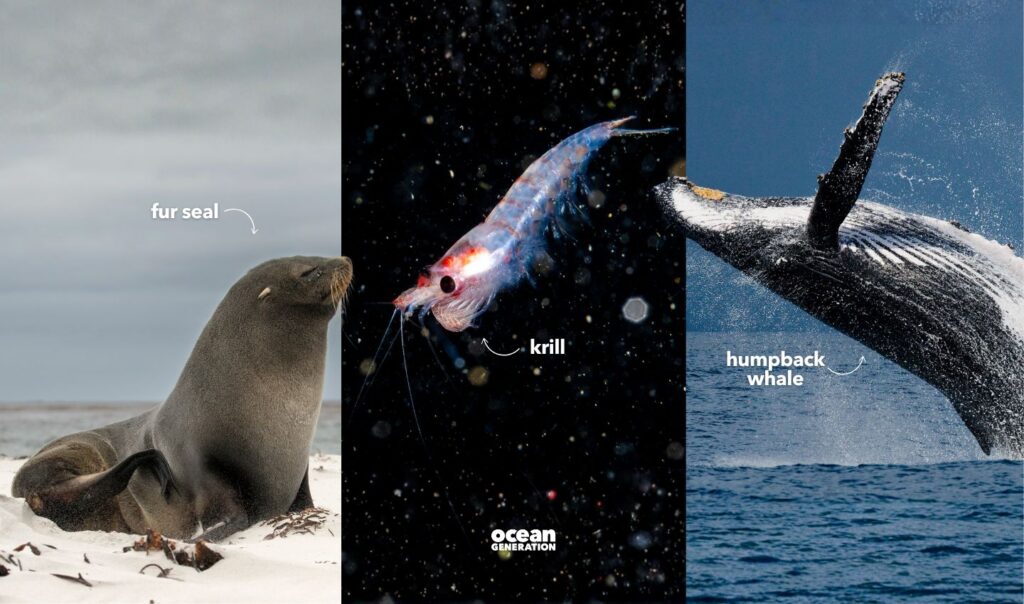
Their importance lies in their numbers: krill swarms are vast. The rust-coloured clouds are filled with billions of individuals and can be visible from space. They sustain most of the life around Antarctica. Penguins, seals, whales, fish and sharks all rely on this buffet: krill are a keystone species. More recently, people have joined the party.
To understand where we are going, first we can look at where we have been. Why are krill important? What is our history in the Southern Ocean? What is our future?
Photo credit: Brett Wilks
How did we get here?
In 1775, Captain James Cook returned to England from a voyage around the world, in which he had searched for new lands. He found there wasn’t a new continent in the Pacific Ocean (at least not where one was predicted to be) and hypothesised on the existence of Antarctic land behind the ice (which he was correct about).
He had discovered some land on his travels: an island populated by seals and penguins, which was named ‘Isle of Georgia’ in honour of King George III of England. We know it now as South Georgia.
Sealing and whaling in the Southern Ocean
The element of Cook’s report that got attention was the abundance of fur seals on South Georgia and neighbouring islands. These pinnipeds were highly sought after, and between 1778 and 1822 an estimated 1.2 million fur seals were killed for their pelts. The species was almost completely wiped out on South Georgia and the islands.
The rise of industrial whaling then turned focus on to the waters of the Southern Ocean around South Georgia. Factory ships and explosive harpoons reduced the great whales to 18% of their original population. 5% of blue whales were left, and just 3% of humpback whales survived. When the last two whaling stations closed on South Georgia in 1965, 175,250 whales had been killed in those waters.
When did krill fishing start?
Industrial fishing had been largely unmanaged, and everyone raced to benefit from the natural resources the Southern Ocean had to offer. One by one the marine species of the south had been targeted to great effect, and populations crashed. The focus then shifted to krill.
Industrial fishing for krill in the Southern Ocean increased through the 1960s and 1970s. As the species that formed the foundation of the ecosystem, the alarm bells rang, loud, at the prospect of the krill suffering the same fate as the seals and the whales.
Why are krill important?
Krill are a keystone species
The loss of krill would be disastrous for many different species. Whales, seals, penguins and fish are all krill predators. Less krill means less food for these species.
Without krill, life in the Southern Ocean could collapse.
To relay it in economic terms, krill are a vital piece of an ecosystem that provides, conservatively, $180 billion annually in ecosystem services – about 70% of New Zealands GDP in 2024.
Krill are climate champions
It isn’t just the animals in the Southern Ocean that depend on these. Krill are big players in the balancing of our atmosphere. They trap (sequester) a lot of carbon.
As phytoplankton photosynthesise, they take in carbon dioxide. When they are eaten by krill, the krill take on that carbon, some of which is then… dropped off. Krill faecal pellets (poo) alone are estimated to sequester 20 million tonnes of carbon dioxide per year. Depending on the price of carbon, this is worth between $4 and $46 billion.
How is krill fishing managed in the Southern Ocean?
Those alarm bells over the fishing of krill led to the creation of the Commission for the Conservation of Antarctic Marine Living Resources (CCAMLR). It was formed in 1980 and entered force in 1982.
The CCAMLR is made up of 27 member states (as of January 2026), with a further 10 ‘Acceding’ states – that support but don’t contribute to the budget or take part in decision making.
The stated aim: to protect and conserve the ecosystem of the Southern Ocean. Article II of the convention states:
The objective of this Convention is the conservation of Antarctic marine living resources.
For the purposes of this Convention, the term ‘conservation’ includes rational use.
This captures a crucial distinction: fishing is an element of conservation, rather than an adversary.
How do you prevent overfishing?
Catch Limits
A general rule of thumb is that you can’t remove so much the population can’t sustain itself. That will vary with species – some animals reproduce a lot faster than others.
Understanding how much of a resource there is, is fundamental to managing it. This is one of the biggest obstacles in the Ocean: the water means you can’t just see (sea). In a field you can see how many cows there are, not true of a shoal of fish.
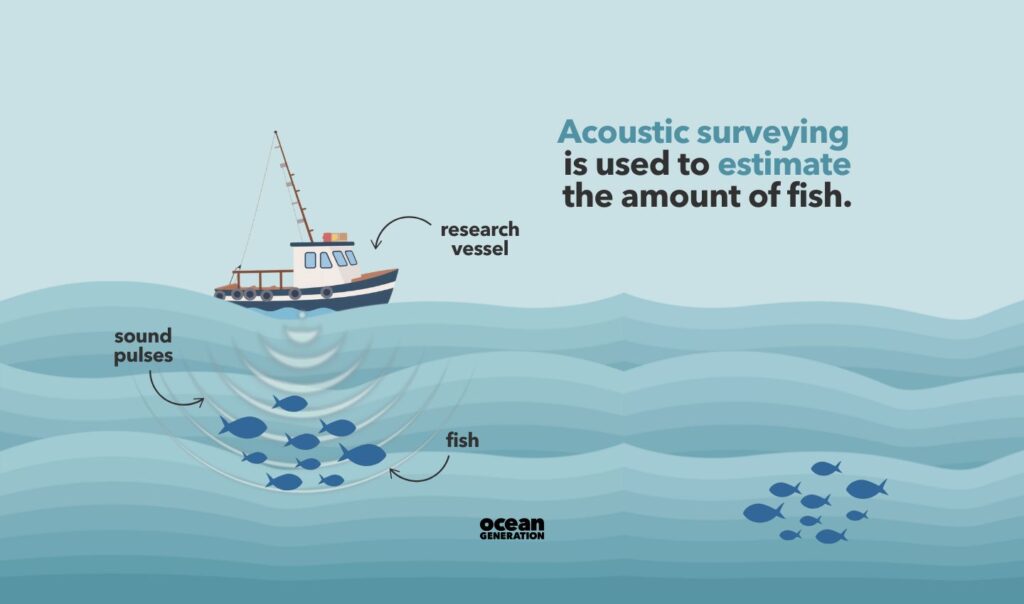
Acoustic surveying (using noise to find out what is there, like a bat) gives us estimates for the amount of krill. In short – a lot. We estimate there are over 300 million tonnes of Antarctic krill, roughly the same as the biomass of humans.
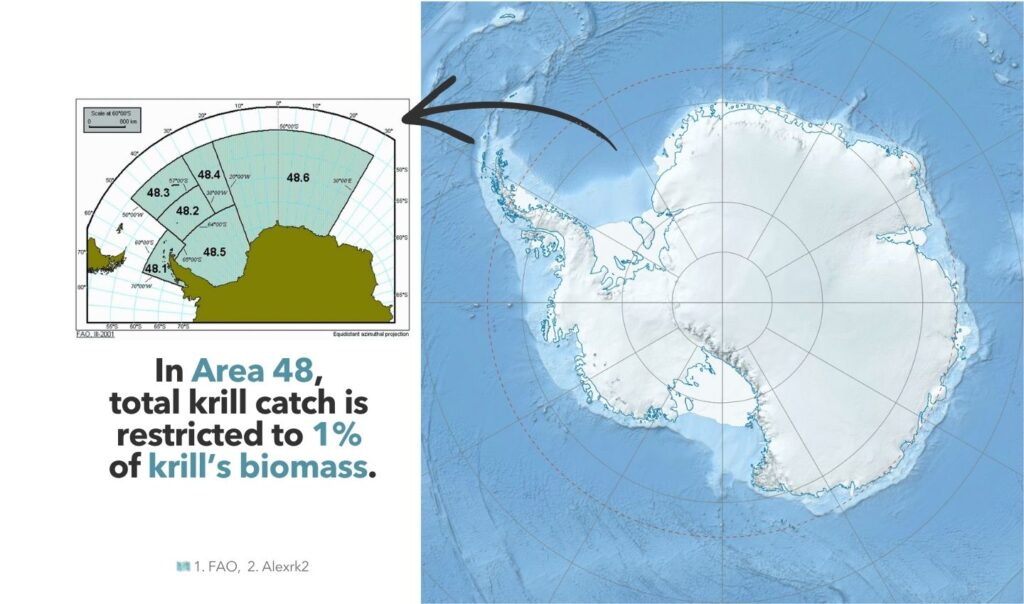
In the specific area targeted for krill fishing (known as Area 48), the biomass is estimated at 62 million tonnes (coincidentally, roughly the same mass as annual e-waste produced). So, CCAMLR adopted Conservation Measure 51-01. CM 51-01 set a trigger level at 1% of that biomass (620,000 tonnes) – when that is reached, all krill fishing stops, no questions asked. August 2025 was the first time this happened.
Marine Protected Areas
Another tool in the toolbox is protected areas – designated places with specific rules. Choosing to avoid fishing in nursery areas, or places with high densities of predators, can ensure the health of the fishery.
The Southern Ocean is home to the first MPA on the high-seas (outside of the jurisdiction of any one country) and the largest. The South Orkney Islands Southern Shelf MPA was created in 2009, and is a no-take zone protecting penguin foraging areas.
The Ross Sea MPA was created in 2016 and is 2.09 million square kilometres, 72% of which is a no-take zone. The MPA has a controversial “sunset clause”, meaning the MPA will expire in 35 years unless renegotiated.
The krill fishery is one of the most closely managed in the world. Every single ship has an independent scientific observer on board to ensure catch and bycatch amounts are accurately reported. There is zero illegal, unreported or unregulated (known as IUU) fishing putting additional pressure on stocks.
Bycatch rates are very low. In 2004, after pressure to report bycatch, it was revealed 292 fur seals had been killed as bycatch. This prompted the fishery to adopt mitigation measures, and since 2010, 39 fur seals have been killed. This is alongside 7 humpback whales and 80 seabirds.
In many senses, this is a great success. Krill populations are stable and there have been little ecological impact from fishing. No other large-scale fishery in the world is as well-monitored, as efficient (in avoiding bycatch) or conservative with catch limits. The industry refers to these points as support for increasing the limits.
It’s not just ‘how much’: Why location-specific catch limits matter
The numbers look excellent. However, the risk lies in local depletion. Taking 1% isn’t much unless you take it all from one place.
Penguins, seals and whales need the krill within reach. They can travel to find them, but the further they go, the more energy they spend to get there and the less far the meal will go.
To make an analogy:
It is like buying sweets. If you have £10 to spend on sweets, you could either buy lots of different types of sweets or spend all the money just on fudge. If you do the latter, Timmy from down the road might not get the fudge he wants because you bought it all.
To avoid krill fisheries removing the entire quota from one area and leave the local penguins hungry, CCAMLR introduced Conservation Measure 51-07 (CM 51-07). CM 51-07 divided the catch limits in area 48 into Subarea 48.1 (25%, 155,000t), 48.2 (45%, 279,000t), 48.3 (45%, 279,000t) and 48.4 (15%, 93,000t). It added another layer of protection to CM 51-01, but was a temporary measure with an expiry date, to incentivise agreement on long term measures.
In 2024, the CCAMLR failed to agree on new “move on” rules. These would ensure fishing vessels leave an area once they have caught a certain amount, tackling the issues of local depletion. CM 51-07 expired without replacement at the end of the 2024 fishing season, leaving the krill fishery with only CM 51-01 (when 620,000 tonnes of krill is caught, fishing automatically stops) as guidance.
The CCAMLR currently doesn’t have any special measures to prevent the full quota being taken from the same place.
What is next in the Southern Ocean?
The krill fishery isn’t just dealing with changing policies, but also a changing Ocean.
The Southern Ocean is getting warmer.
The areas of sea ice coverage are decreasing, and a record low in 2023 was 1.02 million square kilometres less than the 1979-2022 average daily minimum. That is the same size as Egypt. The previous four years have seen the minimum sea ice extent drop below 2 million square kilometres.
Krill depend on sea ice. The changing amounts of ice impact the krill’s food – phytoplankton. As juveniles, they stay close for protection and graze off the algae that can grow on it. Less ice means less shelter and less food, which leads to a lot less krill before any fishing has happened. Maximum sea ice extents impact the following summer blooms of krill – more ice means more food and shelter for young krill, who then visibly blossom in the summer. 2025 had the third lowest sea ice maximum, behind only 2023 and 2024.
Since the 1970s, we have been seeing a reduction in the density of krill adults, and in the occurrence of very dense swarms around the Antarctic peninsula. These environmental changes also mean the krill are moving south – staying closer to the pole, where it is colder. This means that the northern ecosystems are losing access to their main food supply. It also means the areas divided up for krill fishing may not capture where the krill are anymore.
One of the biggest wins for nature and conservation is the return of the whales.
After population depletion by industrial whaling, whale populations are increasing to their historic levels. As whales return, the amount of krill they eat increases.
Acceptable krill catch limits from 20 year ago may no longer cater for the larger whale populations, which is why re-assessment is so important.
Even if the amounts of krill taken are acceptable, the fishing vessels can still affect the whales. The vessels disturb the whales and can spread krill swarms out more. This means that whales can spend more energy getting the same amount of food, which decreases their body condition and reduces their capacity to reproduce.
The CCAMLR operates on a consensus decision making model. Everyone has to agree before new measures can be introduced. New MPAs haven’t been agreed because one or two countries have blocked them on the grounds of a lack of scientific evidence and their right to fish for krill and other target species.
What have we learned from exploitation in the Southern Ocean?
There is a lot of hope to be found in the Southern Ocean. Fur seals were given protection in 1909, and their numbers have now recovered to over 3 million. Whaling stations on South Georgia are relics of the past, rusting microcosms of the industry they supported.
The CCAMLR is different to any other fishery. It has learned from previous mistakes and has made decisions based in robust science. A well-managed fishery will always be called too conservative, too limiting, too safe, because it will never reach the point of collapse or decline. So far, krill populations have remained steady, unaffected by us.
The Southern Ocean is changing, and so the fishery must change with it. Climate change, more whales and improved understanding of the ecosystem should all be considered in new fishery management. There are three things to take from this:
We are capable of facilitating the recovery of the Ocean.
The Southern Ocean, and its krill, are facing new challenges.
We all benefit from the Southern Ocean, and its krill, flourishing.
Krill are small but mighty. They fuel giants and balance our climate. The continuing battle to protect them demonstrates how far we have come. We can understand better than ever the benefits this tiny crustacean imparts as a part of its ecosystem.
We don’t have all the answers, but the progress is reassuring. A relationship with the Ocean that is based in our understanding of the impacts of our actions will be much more productive than one based on the potential profits.
Krill are not the impressive, charismatic Ocean animals that whales and penguins are. But if we fail krill, we stand to lose the rest. Krill can be the species that marks a new chapter in our relationship with the Ocean – one in which we work with our Ocean rather than at the cost of it.
Narwhals and Unicorns: How the magic of the Arctic has changed
Share this page
Copied
Are unicorns real? Look to the Arctic Ocean.
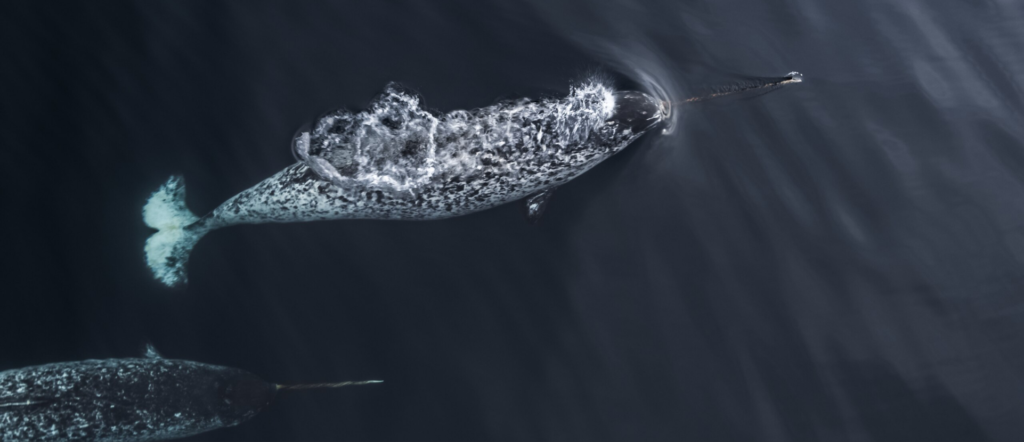
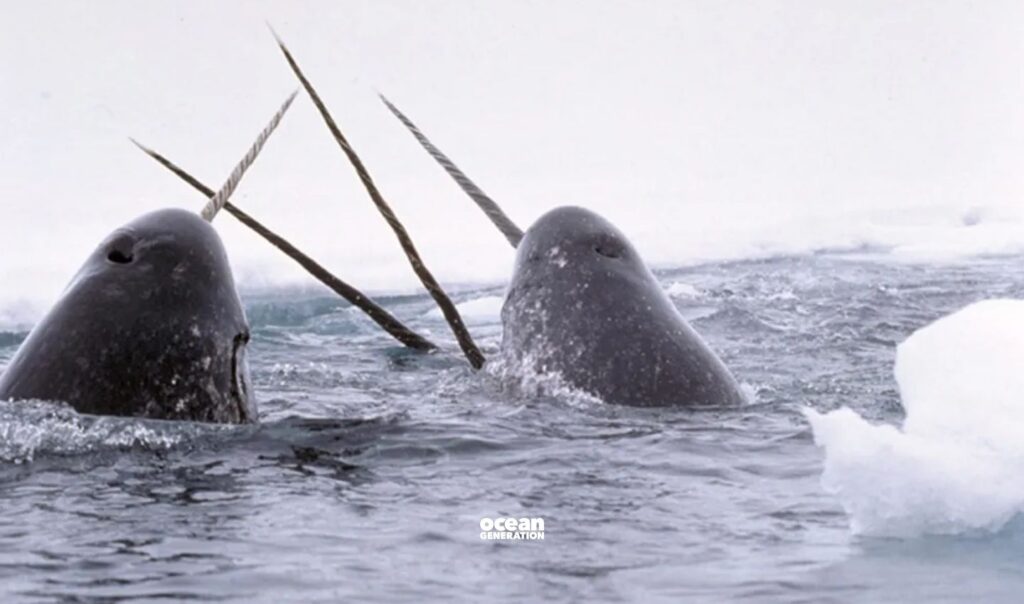
Under a clear blue sky, icebergs silently sparkle as they float in the Ocean, occasionally nudging each other. The water between them is a deep blue and still, undisturbed.Until a twisted ivory lance pierces the air, sliding out of the water inch by inch until two metres of tusk are followed by a mottled grey head. The head directs the tusk down again, exhales through the nostrils on top and takes a deep breath, slipping into the frigid waters.
Maybe not quite how you would picture seeing your first unicorn.
Except there’s some bad news. Unicorns aren’t real. We are as disappointed as you are; the closest we can come to a unicorn is a whale that lives in the Ocean:narwhals.
But there was a time not so long ago that people believed the unicorn existed.
Why did people believe unicorns existed?
In the first half of fourth century BC the Greek physician Ctesias provided the first description of a unicorn.He outlined an Indian wild ass(a horse-like animal);with a crimson head and a tri-coloured horn about 28 inches long. He wrote that powdered unicorn horn acted as an antidote to deadly poisons.
Aelian, a Roman writer in 200AD fleshed out the description and noted that only noblemen could afford the horns, they were so expensive.
Early Christianity adopted the unicorn as a symbol of Christ, with the horn as a symbol of the cross of Christ.Through the belief in protection for the self and the soul, the unicorn horn – known as alicorn – became a highly sought after asset.
Unicorn horns were symbols of wealth and power, often displayed in positions of prominence on banquet tables. It was thought that the horn would bubble if dipped in a poisoned chalice, saving the wielder – a popular tool in the medieval banquet hall.
At the peak of its popularity, a complete horn was worth 20 times its weight in gold*, and even powdered horn once cost ten times.
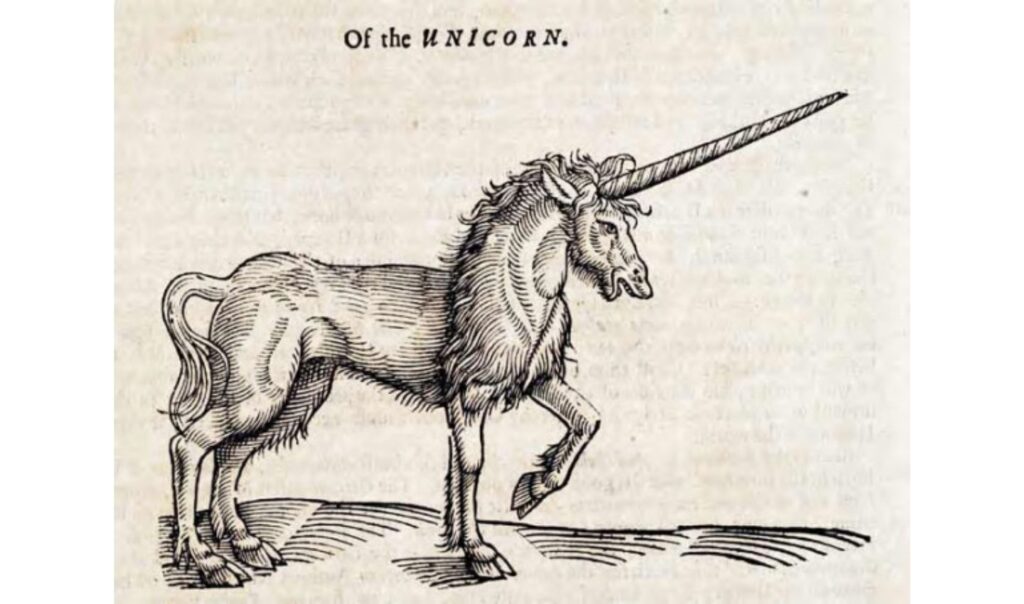
Illustration from the book The history of four-footed beasts and serpents by Edward Topsell.
Unicorn horns were sought after by nobles, kings and religious leaders in Europe:
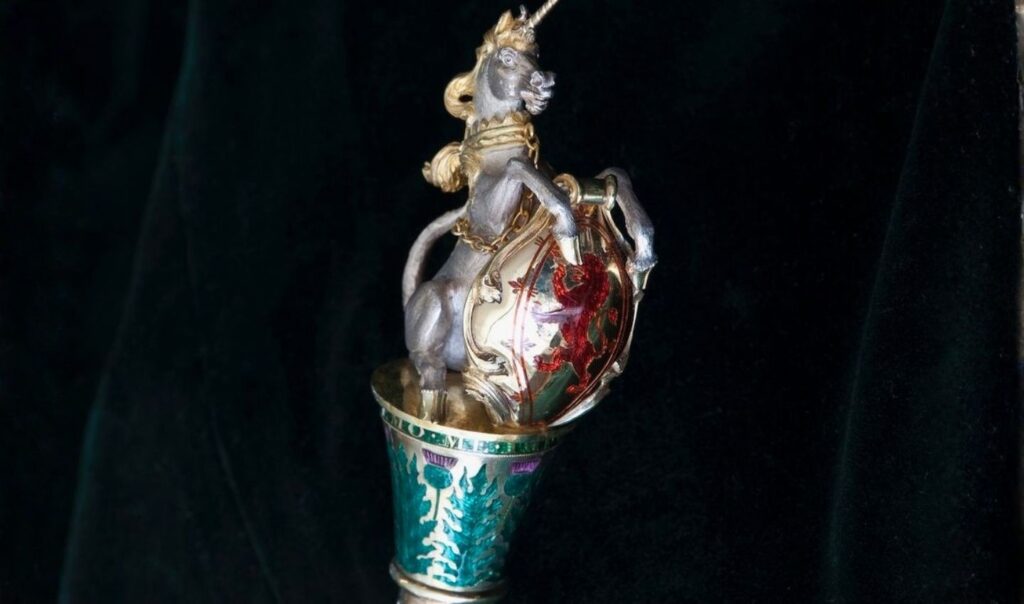
Such a powerful tool befits a queen, and on hearing that Mary Queen of Scots was using unicorn horn to test her food for poison, Elizabeth I offered a handsome reward for another.Privateer and Arctic explorerMartin Frobisher(or&Humphrey Gilbert, both were on the expedition, but different sources credit them) found a narwhal washed ashore in Canada and gifted it to the queen.She was enamoured with it and covered it in jewels. It was said to be valued at £10,000*, approximately £3 million in modern terms. She also handed a gilted and bejewelled unicorn horn drinking vessel down to James I.
In the 1660s, King Frederick III ordered the building of a coronation chair. This chair was made using several unicorn horns and served as the centrepiece of Danish coronations until 1840.
But as we know, unicorns aren’t real. Where are these horns coming from?
The Trustees and Factor and Commissioner of the Walker Trust / National Museums Scotland
Where did tales of unicorn horns come from?
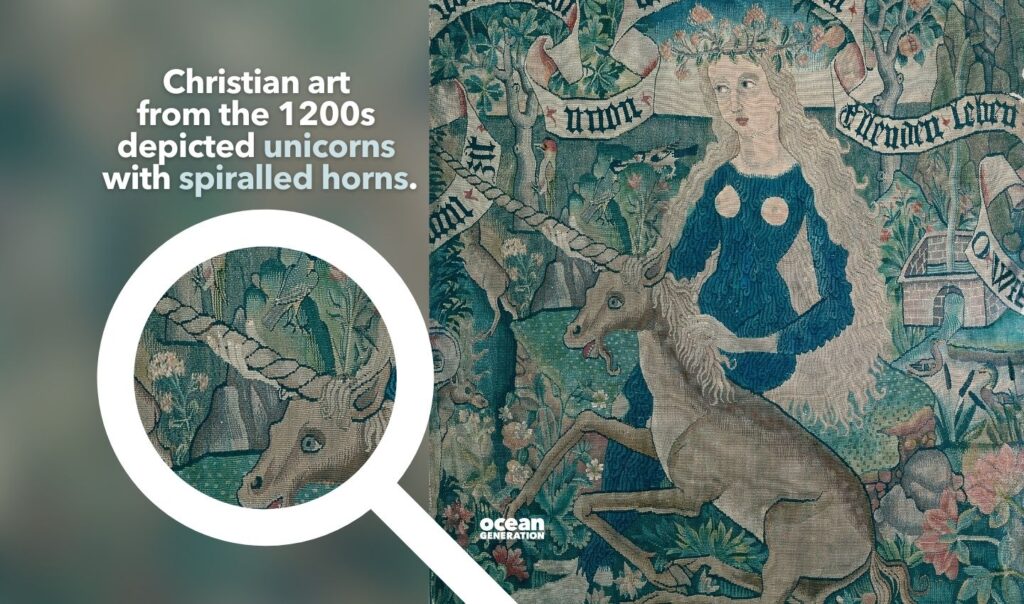
Most of the Roman and Greek accounts of unicorns were;likely based on stories from travellers coming across rhinoceros in India and Africa. But after these initial accounts describing the horn as straight, Christian art from about 1200 changed its view of the unicorn.
Unicorns now had spiralled horns. There is only one animal that possesses a straight, spiralling ‘horn’ – the narwhal (Monodon monceros).And it isn’t a horn at all, but a tooth.
What you need to know about narwhals: unicorns of the sea
The name comes from the Old Norse nárhval, meaning corpse whale. Narwhals have mottled grey skin not dissimilar to rotting flesh and like to lounge at the surface – behaviour known as logging. Combine the two and you can understand why the Viking explorers named them.
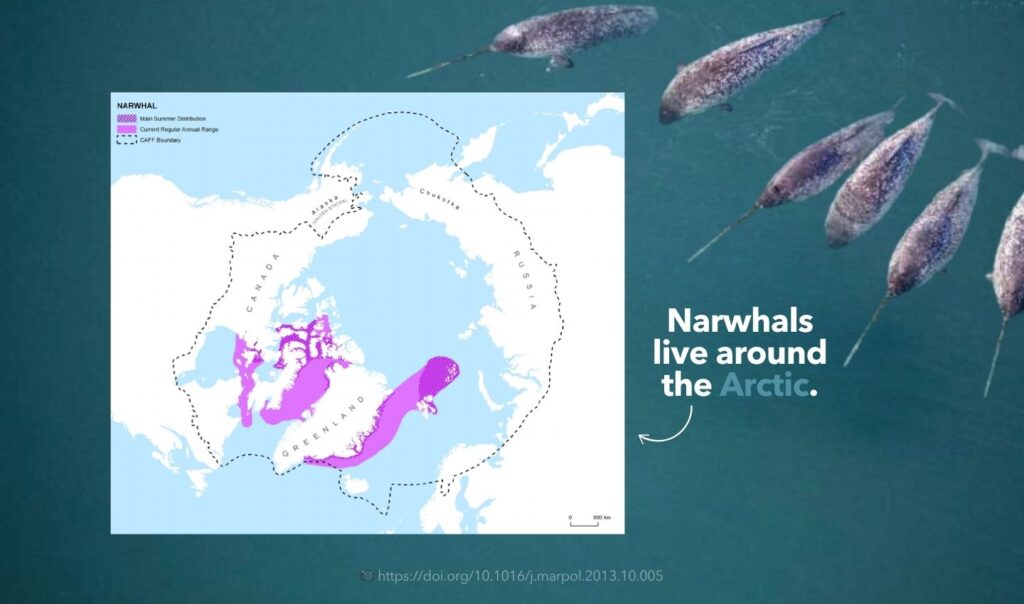
Narwhals are homebodies. They have ‘high site fidelity’ -meaning they stick to the places they like and will go back to their favourite spots. They can be found in the Canadian Arctic, through to East Greenland,Svalbard and the western Russian Arctic.
What is a narwhal’s ‘horn’?
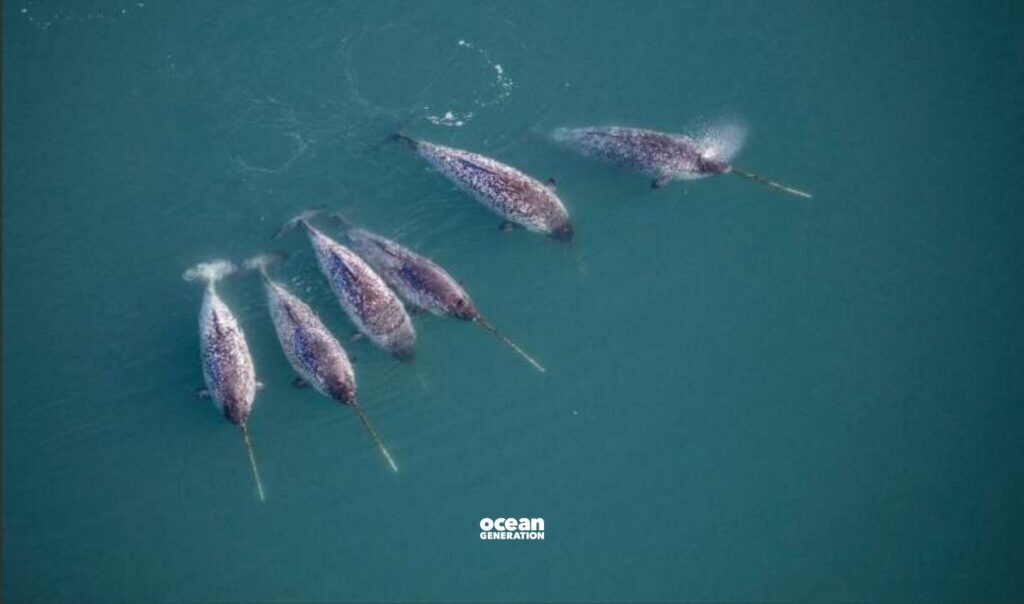
The ‘horn’ of a narwhal is one (or in rare cases two) of the incisors,so is a tusk rather than a horn at all. All narwhals have two tusks embedded in their top lip.
Most commonly, males in their 2nd or 3rd year will have the front left tusk erupt through their top lip, growing with age to reach 1.5-2.5m long. Around 3% of narwhals are anomalies, with some females growing tusks, some males growing two or none at all.Double tusks in narwhals are about as common as an extra finger in humans.
What do narwhals use their tusk for?
The use of the tusk is still under debate.
The first theories were that narwhal tusks were used for piercing prey or breaking up ice to make breathing holes. Observers supposed they could also function as a defensive mechanism or a cooling system. However, these theories are either discredited or unproven. The real uses are even more spectacular.
NIST/Glenn Williams
Dental Displays
Studies suggest that narwhal tusks are sexually selected. Male narwhals will use their tusk as a display feature in competition with each other, and bigger is better. The size of the tusk has been shown to positively correlate with teste size – so could be an easy indicator for the females to see which males are most fertile. Sometimes, size does matter.
Where males with similar tusks meet, they may fight –male narwhals show far more scarring on their heads than juvenile and female narwhals and 40-60% have broken tusks, but this hasn’t ever been observed.
What is sexual selection? Sexual selection is a special type of natural selection, where traits that increase reproduction will be passed on.
Fish Fencers
But it isn’t just for showing or skirmishing. Using drones to study the narwhals’ behaviour, researchers saw the tusks in action. They could use the tusk to guide the fish, chasing it. They even saw the tusk being used, as a thresher shark uses its tail, to hit the fish, stunning it ready for eating. The scientists involved think there could even have been an element of play.
Temperature Taster
In 2014, we discovered that a narwhal tusk was full of holes and nerves. This could mean that it can operate as a water sensing tool for the narwhal, and they can ‘feel’ changes in water saltiness (salinity) and temperature. They show elevated heart rate when the horn is exposed to very salty water and fresh water, suggesting they can detect it.
‘Feeling’ your surroundings can be very useful for navigation, when diving deep and moving between their favourite spots. It could also save their lives. Seawater freezing depends on the temperature and salinity of the water – saltier water needs to be colder before it freezes. By knowing the temperature and salinity of the water they are in, they are detecting when the water is likely to freeze, trapping them from the air to breathe.
This could also be used in hunting – those narwhals we’ve seen using their tusks to ‘chase’ fish? They could be using their swirly sensor to detect the fishes’ movements through pressure changes in the water, even faster than they can see them
So, we have a tooth that helps guide them through the icy waters like Rudolph’s nose, zero in on prey like a laser guided missile and show off their suitability to be a parent.
A narwhal’s tusk could enable them to tell when ice is going to form and find prey hiding in the dark as they can dive over a kilometre (3,281 ft) down, where no light can reach.
Unicorns might not be real, but this all sounds like magic.
Does something lose its magic just because we understand how it works?Whether it is magic or incredible biology, the enchantment of the narwhal is threatened by a changing world.
How is the narwhals’ world changing?
The opinions and doting of nobles across Europe and the world meant nothing to the narwhal.After years of hunting operations, narwhals are now enduring other changes, this time in their home. Climate change, caused primarily by the human burning of fossil fuels, is hitting the polar regions, where narwhals live, the hardest.
It could also be to do with their supreme adaptions for the coldest places on the planet – they may overheat at higher temperatures. No one wants to be wearing a thick winter coat on a hot summer’s day.
Ice is an important part of the lives of every animal living in the polar seas.The loss of sea ice has been shown to change the diet of the narwhal as they can’t eat ice-based (known as sympagic) prey, so they eat more open-water (pelagic) species instead.
Through burning coal and mining for gold, humans have increased the amount of mercury in the environment.Less ice means there is more bioavailable mercury. The result: the narwhals are exposed to more mercury.Increased mercury levels can impact the reproduction and immune systems of narwhals. How do we know this? Through analysing narwhal tusks, which give us an insight into their life history. The magic tusks are whispering to us.
Narwhal hunting is monitored and almost every whale caught is for the subsidence of the indigenous Inuit people. The population is difficult to track, especially without a reliable baseline. However, the International Union for the Conservation of Nature assessed the population in 2017 and shifted the status from Near Threatened to Least Concern. The narwhal is doing well so far.
The isolation of the Arctic and the changing attitude towards cetaceans means the narwhal hasn’t had to deal with a multitude of human pressures. But more than ever, those pressures are finding them where they log.
Research will continue to develop quieter boats, and policy will increase protected areas. The narwhal is one example of a bit of remote magic we are trying to keep.
Climate change is being tackled head on, with an energy transition in full flow, electric vehicles going from strength to strength and global emission increases are slowing. We will be the generation to see the transition to human flourishing not coming at the cost of our natural world, for the first time.
But within this, driving this, is being able to see the magic of the unicorn, not as a made-up money-making monopoly manufacture, but in the reality of the narwhal and its beautiful, magical tooth. See the magic, spread the magic – that is what will lead to us protecting the magic.
*Wexler, P. (2017). Toxicology in the Middle Ages and Renaissance. Academic Press. Cover image by Проектный офис Нарвал
How Climate Change threatens polar species: Polar bears, Orcas and Narwhals
Share this page
Copied
Many polar species depend on sea ice for essential activities like resting, hunting, and avoiding predators but climate change poses a threat.
Polar species have finely tuned their behaviours, and physiological traits to the seasonal advance and retreat of sea ice.
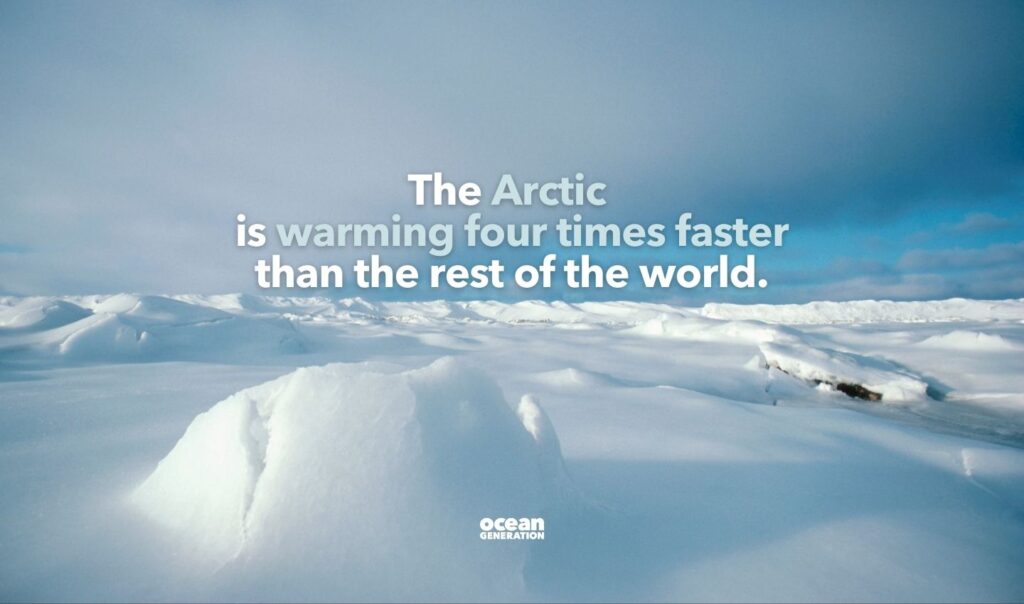
However, as sea temperatures rise and the Arctic (in the Northern Hemisphere) warms at four times the global average rate, sea ice is shrinking and breaking up earlier each year.
This trend presents growing challenges for polar species that rely on ice, highlighting just how important it is to tackle climate change to ensure their survival.
How polar bears are impacted by climate change
Characterised by their large size, dense white fur, and flattened cranium, polar bears are apex predators in the Arctic ecosystem. Their primary prey are ice-dependent seals, particularly ringed and bearded seals.
Seals use the ice as a platform for resting, breeding, and giving birth. Using an ambush technique, polar bears wait at seal breathing holes, catching seals as they come up for air. This saves them energy compared to more active hunting methods.
Polar bears’ hunting success peaks in the spring and early summer, coinciding with the weaning period of seal pups. This makes it a critical time for the bears to build fat reserves essential for survival through winter.
Climate change delays sea ice formation in autumn, and it’s reducing the time available for hunting seals later in the year. As a result, it’s becoming increasingly difficult for polar bears to build or maintain their fat reserves.
Increased fragmentation of sea ice also forces polar bears to swim longer distances to reach stable ice. In some regions, polar bears have been recorded swimming over 50km. This is an energy draining task for these not-so efficient swimmers, due to their paddling motion and the added drag of swimming at the water’s surface.
With summer sea ice disappearing, polar bears are becoming more dependent on food sources on land. These offer far less nutrition compared to the energy-rich blubber of seals and increases human-wildlife conflict.
They are currently listed as Vulnerable under the IUCN Red List (last assessed in 2015), facing threats from residential and commercial development, human disturbance and climate change.
How narwhals are impacted by climate change
Narwhals, distinguished by their long, protruding tusks, are remarkable divers capable of reaching depths of up to 1,500 meters in pursuit of prey. Their diet primarily consists of fish (Greenland halibut in particular), cephalopods (such as squid), and crustaceans.
To support their slow, endurance swimming, narwhals have evolved a high proportion of specialised slow-twitch muscles, which make up about 90% of the muscle fibre in their bodies. These muscles are rich in myoglobin. This is an oxygen-binding protein that enhances their ability to store and use oxygen efficiently during extended dives.
Narwhals, like other marine mammals, depend on the stability of breathing holes in the ice to survive. However, climate change has made these ice conditions increasingly unpredictable, leading to entrapment and fatalities for narwhals when they can’t locate a breathing hole.
Their narrow temperature range coupled with strong attachment to specific locations and migratory routes makes them particularly vulnerable in the rapidly warming Arctic.
Currently listed as Vulnerable on the IUCN Red List (last assessed in 2023), narwhals are increasingly threatened by climate change, as well as energy production and mining activities.
How orcas are impacted by climate change
Orcas inhabit the Oceans worldwide, ranging from polar regions to tropical waters. They are categorised into three distinct forms, A, B and C, with type B exhibiting cooperative hunting behaviour in pursuit of seals. In these strategies, family group members work together to create synchronised waves that wash seals off the ice.
When searching for potential prey, orcas adapt their travel behaviours to the surrounding ice conditions. In open water with minimal ice, they tend to stay close together, while in pack ice, they spread out and often travel as individuals or pairs.
Near ice floes (thin sheets of frozen seawater), individuals engage in spy-hopping to locate seals, taking multiple views from various angles around the edge of the floe.
After observing, they swim away briefly to vocalise and communicate with other group members before returning.
Before attacking, the whales swim together in loose formation, often rolling at the surface. They move side-by-side away from the ice floe before charging back rapidly in a coordinated manner, generating waves as they approach.
Depending on the size of the floe, they create two distinct wave types. One is a breaking wave for smaller floes that can wash seals directly into the water, the other is a non-breaking wave for larger floes that shatters the ice and drives seals off.
Many Arctic marine species use frozen areas as a refuge from orcas.
Bowhead whales, which can break through the sea ice to create breathing holes, face few predators besides humans and orcas. However, as sea ice shrinks, orcas are increasingly detected in Arctic waters.
While this provides new prey opportunities for these apex predators, it could significantly stress prey species, potentially altering their behaviour and population sizes. For example, the specialised locomotor muscles of narwhals make them too slow to escape orcas.
Moreover, the increased presence of orcas may impact indigenous communities that rely on subsistence hunting to sustain their way of life.
Orcas are currently listed as Data Deficient under the IUCN Red List (last assessed in 2017). This highlights the need for more research to comprehensively understand population trends and conservation priorities.
Turning climate challenges into opportunities
The survival of polar species is increasingly threatened by climate change, which leads to shrinking sea ice and altered ecosystems.
These changes not only challenge the feeding and breeding behaviours of these animals but also affect indigenous communities that depend on these species for their livelihoods.
We can help through supporting conservation organisations, taking climate action, advocating for policy change, engaging in sustainable practices, and raising awareness about our impacts on polar ecosystems.
Surviving the Polar Regions: Animal strategies and adaptations
Share this page
Copied
The polar regions are among Earth’s most unique environments
Characterised by low temperatures, limited food availability, harsh climates and extreme seasonality, it’s challenging to live in the polar regions. Species inhabiting the Arctic and Antarctic have evolved various physiological, morphological (structural), and behavioural adaptations to survive in these challenging conditions.
Where is the Arctic? Where is the Antarctic?
The Arctic is in the Northern hemisphere whereas Antarctica is in the Southern hemisphere.
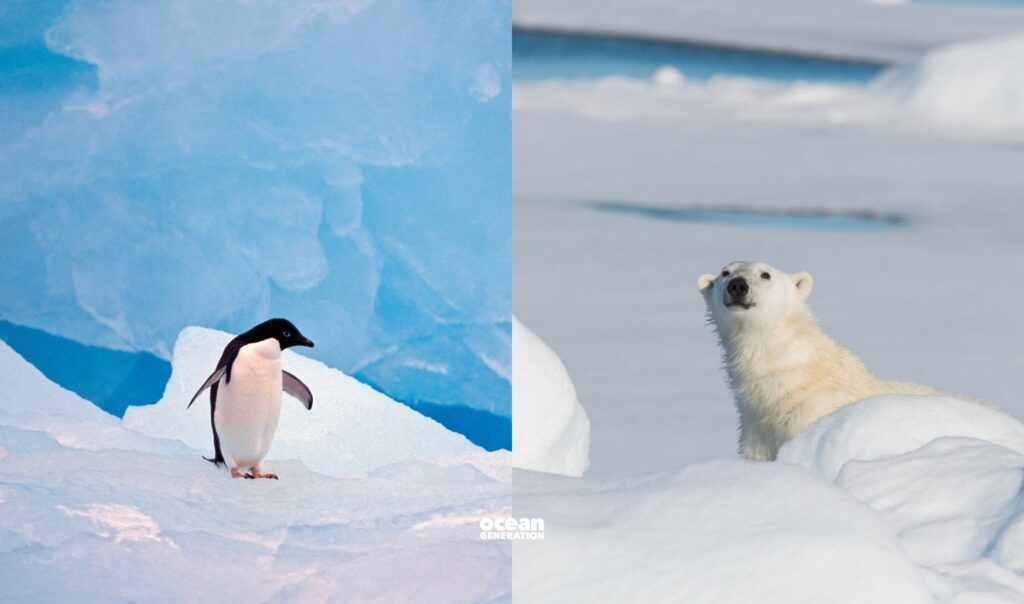
Iconic Arctic species include the polar bear, Arctic fox, narwhal, walrus, and bearded seal.
In contrast, the Antarctic is home to species such as the leopard seal, Emperor and Adélie penguins, and rock ptarmigan (a medium-sized game bird).
Slow and steady is key to survival.
Temperature has a major impact on how fast species develop. A pattern of slow development rates has been observed among Antarctic marine ectotherms (species that rely on the environment to regulate their body temperature).
For example, the development rates of marine larvae are slower at low temperatures compared to those in temperate and tropical regions. This is likely due to lower temperatures reducing protein synthesis and folding, resulting in fewer functional proteins available for growth.
With the close link between metabolism and development, polar species tend to have slower metabolic rates and use up minimal energy. Antarctic Nototheniodei fish, for instance, have evolved with reduced quantities of red blood cells and haemoglobin , the protein responsible for transporting oxygen throughout the body.
This reduction in haemoglobin reflects their lower metabolic rates and oxygen demands compared to species in warmer, temperate climates. Slow metabolism and development are key to surviving with the limited food available in the polar regions.
How species cope with food scarcity in the polar regions
The polar regions experience dramatic seasonal shifts in solar radiation, with continuous daylight in the summer and nearly total darkness in the winter.
This is accompanied by blizzards, freezing temperatures and limited food availability.
During winter, reduced sunlight limits the growth of primary producers like phytoplankton and plants, which in turn affects the entire food chain. Additionally, the sea ice that forms over the Ocean restricts access to open water, where many marine animals feed. Snow cover makes it more challenging for land animals to access their food sources.
For some animals, these harsh winter conditions are too extreme, and they migrate to more favourable areas. For those that remain, many build up fat reserves during the summer and early autumn to prepare for the limited food availability.
In the Svalbard rock ptarmigan, for example, these fat reserves are primarily used during episodes of acute starvation rather than supplementing daily energy needs.
Some animals also exhibit surplus killing and hoarding behaviour in the summer, such as the Arctic fox. The fox has been observed storing food, with one cache containing as many as 136 seabirds.
Many animals will limit physical activity to conserve their energy and reduce their resting metabolic rate. This refers to the amount of energy the body uses at rest to maintain basic physiological functions.
Adult King penguins can go without food for up to one month. Meanwhile, chicks can endure fasting for up to five months during the subantarctic winter, losing up to 70% of their body mass while relying mostly on stored fat reserves.
Small invertebrates that live on the seafloor, or meiofauna, have adapted to polar environments by feeding on degraded organic matter, which remains available year-round.
In many Arctic marine mammals, the milk produced for their young is exceptionally rich in energy and nutrients, which is vital for the pups to survive in the harsh, cold environment.
How species cope with freezing temperatures
Air temperatures in the polar regions can occasionally drop to -60°C, while Ocean temperatures are close to freezing. To maintain a stable core temperature, organisms must employ strategies to minimise heat loss through conduction, convection, radiation, and evaporation.
One common adaptation is the evolution of a rounded body shape to reduce exposed surface area. For instance, walruses have a large, tubular body with minimal projecting extremities, such as visible ears or a tail, reducing heat loss through conduction and convection.
Many polar species develop dense fur for insulation, such as reindeer and caribou (also a species of deer), whose hollow guard hairs provide air-filled cavities for additional warmth. In marine animals, where fur offers little insulation value, a thick layer of blubber becomes essential for protection against cold seas. It also serves as a food reserve.
Many species have evolved sophisticated blood flow regulation systems in body parts exposed to the cold. In marine mammals, a network of blood vessels in the flippers operates as a counter-current heat exchange system. This is when warm blood flows to the flipper transferring heat to cooler blood returning from it. This adaptation allows them to conserve heat in critical areas while maintaining functionality in their extremities.
Moreover, both Arctic and Antarctic fish have independently evolved antifreeze glycoproteins, which are secreted into their blood to prevent the formation of harmful ice crystals. These compounds are produced during the cold winter months in Arctic fish and year-round in Antarctic fish.
Behavioural adaptations also play a key role in survival
Emperor penguins form large huddles in extreme Antarctic cold and wind, with groups consisting of hundreds of individuals. The penguins take turns occupying the warmer centre of the huddle, where ambient temperatures can reach 37.5°C, helping conserve energy and incubate eggs during the winter.
Snow place like home
Survival in the polar regions requires a combination of physiological, morphological and behavioural adaptations, enabling species to endure extreme cold, limited food availability and harsh climatic conditions.
As climate change continues to alter these environments, the ability of polar species to adapt will be crucial for their ongoing survival in an increasingly warming world.
Balancing conservation and community in polar wildlife conflicts
Share this page
Copied
Addressing human-wildlife conflict is essential for both wildlife conservation and human well-being.
As human populations expand into natural habitats, finding solutions that promote coexistence between people and wildlife becomes increasingly important. By fostering harmony, we can support thriving species, healthy ecosystems, and positive relationships between local communities and conservation efforts.
Reducing conflicts benefits wildlife and eases financial losses for local communities. It also aligns with the UN’s Sustainable Development Goals by enhancing livelihoods, building community resilience, and creating economic opportunities for local populations.
Mitigating human-wildlife conflict on land
Climate change intensifies human-wildlife conflict by changing the historical range and behaviour of wild species, increasing the frequency of interactions between humans and wildlife.
While addressing climate change is key to reducing these conflicts, communities can adopt strategies to minimise interactions with conflicting species. Some of these approaches are listed below:
Fencing key resources, such as livestock, and securing protected areas. Planting buffer crops could also reduce wildlife consuming important resources.
Implementing animal-safe food storage facilities and improving waste management systems can prevent wildlife from being attracted to human food sources.
Integrating guarding measures, such as specialised livestock-guarding dogs or patrol officers, into resource protection could provide early warning signs to alert residents to potential conflicting wildlife.
The use of non-lethal deterrents, such as visual, chemical, and acoustic repellents, can further discourage wildlife from approaching human settlements and resources.
Economic costs of conflicts could also be reduced through compensation schemes, alternative income generation, or increasing wildlife-related tourism.
A better understanding of animal movement can help predict high-risk areas and times, allowing for more targeted mitigation efforts. For example, researchers studying moose found that the risk of vehicle collisions increases in winter when snow depth is below 120 cm and nighttime traffic is higher due to longer nights.
This highlights the need for seasonally adaptive strategies to mitigate such risks.
Mitigating human-wildlife conflict in the Ocean
Fishers have several options to minimise encounters with marine mammals.
Mammals often collide with or become entangled in vertical lines attached to buoys, which mark where nets have been set. To prevent wildlife harm and gear damage, fishers could reduce the number of vertical lines in the water column or use ropes in colours more visible to mammals.
Common rope colors like yellow, green, or blue may be difficult for whales to detect. Switching to colours such as white, black, or striped patterns could make the ropes more visible to whales, potentially helping them avoid entanglement.
Another approach involves weakening lines so that entangled animals can break free more easily. However, this solution can result in financial losses due to reduced catch and replacing lost gear.
Technological innovations, such as acoustic buoy releases that surface only when triggered, could eliminate the need for vertical lines. Another potential solution is the use of pingers, which are devices placed on lines that emit noises at specific frequencies to warn whales and other marine mammals away from boats and fishing gear.
While these strategies could help reduce human-wildlife conflict in fisheries, more testing is needed to see how effective they are. Supportive initiatives, like financial compensation programs to cover losses from wildlife, can ease the economic strain on fishers and encourage the use of non-lethal deterrents.
Collaboration between scientists and communities is key to solving these challenges. For example, the Alaska Longline Fishermen’s Association partnered with biologists and bioacoustic experts in 2003 to study whale behaviour and minimise interactions with longline boats. This led to the creation of the Southeast Alaska Whale Avoidance Project (SEASWAP), a successful project improving our understanding of depredation.
Balancing conservation and community needs
The key to addressing human-wildlife conflict involves recognising and valuing the diverse attitudes towards conservation that influence both the conflict and resolution.
By appreciating the different perspectives of stakeholders, conservation plans can be designed to address the needs and interests of everyone involved. Engaging meaningfully with communities is key to developing policies that are not only effective but also widely supported.
Bearly coexisting: Human-wildlife conflict in the polar regions
Share this page
Copied
As human populations grow, we’re getting closer to natural habitats, leading to increased interactions with wildlife.
Conflict arises when wildlife presence poses real or perceived costs to human interests or needs, like loss of livestock, crop raiding or attacks on humans.
Human-wildlife conflict can have negative impacts on wildlife and can also affect community dynamics, commodity production, and sustainable development.
Conservation biologists are increasingly concerned about human-wildlife conflict in the polar regions – the Arctic in the Northern Hemisphere and Antarctic in the Southern Hemisphere.
Why is human-wildlife conflict increasing in the polar regions?
The polar regions are characterised by low temperatures, extreme seasonality, and the seasonal advance and retreat of sea ice. Both polar regions are home to numerous endemic species, but their survival is threatened by climate change, fishing, tourism, invasive species, and pollution.
These pressures often lead to more frequent encounters between people and wildlife, especially in the Arctic where around 4 million people live.
A recent study on protecting Antarctic biodiversity found that current conservation efforts are insufficient. It’s predicted that around 65% of land animals and land-associated seabirds could decline by 2100 if global greenhouse gas emissions continue on their >2°C trajectory. The study suggests several ways to boost conservation efforts, such as:
Improving the quality of land that has been polluted or negatively impacted by human use
Managing infrastructure
Protecting areas
Controlling non-native species and diseases
How does human-wildlife conflict appear in the polar regions?
Encounters between people and polar bears
Polar bears are an iconic Arctic species, distributed across 19 subpopulations within five countries: the United States, Canada, Greenland, Norway, and Russia. They rely on sea ice for hunting (primarily seals), breeding, and resting.
With climate change accelerating and sea ice diminishing, polar bears are forced to spend more time on land. Here finding natural food sources becomes challenging, so they often seek out human settlements for a predictable source of nutrition.
The town of Churchill, Manitoba, Canada, is famously known as the ‘polar bear capital of the world’ due to the Western Hudson Bay population that pass through the town each summer and autumn.
Between the 1940s and 1980s, these bears regularly visited a waste disposal site, feeding on scraps that caused property damage, human injuries, and malnutrition for the bears. The food waste was often insufficient in fat and contaminated with plastics, metals, and wood.
Efforts to manage the problem included better waste management, relocating bears, temporarily housing them at a holding facility until Hudson Bay froze, or, in some cases, lethal removal.
The Government of Manitoba has since closed the dump site and established the Polar Bear Alert Program to minimise the need for lethal measures and reduce conflicts with bears.
As polar bear encounters become more frequent, the significance of this program is expected to grow.
How orcas and Arctic foxes hunting impact communities
Sometimes predators feed on animals of economic and ecological importance to people. These are depredation events (events that cause damage or destruction).
Mammals in the Arctic Ocean are increasingly observed preying on fish caught by commercial and recreational fishing boats. Longline fishing, which involves the use of baited hooks on a long line, is currently the most severely affected by depredation across both hemispheres, primarily by toothed whales, such as orcas and sperm whales.
These depredation events can result in financial losses for fishers who face difficulties due to reduced catch and often face costs for repairing damaged fishing gear. These interactions can also harm wildlife through injuries or fatalities caused by entanglement with fishing gear and responses from fishers.
Orcas, otherwise known as killer whales, are frequently involved in depredation events in polar regions. It’s been suggested that their group hunting behaviour enables orcas to effectively remove fish from longlines.
These animals are highly social and live in tightly knit family groups, known as pods. Research suggests that pods which overlap geographically can communicate and share information. It’s thought that this cultural transmission is causing depredation behaviour to spread throughout western Alaska.
Depredation on land is also a concern, particularly with Arctic foxes preying on reindeer calves
In the Yamal Peninsula, traditional reindeer herding practices are central to the lives of the indigenous Nenet people of Arctic Russia. However, reindeer mortality has increased due to factors such as pasture icing (explained later), disease outbreaks, and predation by Arctic foxes.
The population growth of arctic foxes has been fueled by the collapse of the fur trade in the 1990s, which reduced hunting pressure. Industrial expansion also provided waste for foxes to feed on, further supporting their population increase.
Climate change worsens the issue by causing abnormal weather conditions, such as freezing rain and rapid temperature fluctuations, which lead to pasture icing. This occurs when a thick layer of ice forms over grazing land, trapping vegetation and making it inaccessible to livestock and wildlife. As a result, weakened reindeer become easier prey for foxes, while more carcasses are left for scavenging.
Finding solutions for people and wildlife
Human-wildlife conflict in the polar regions presents challenges, especially with the added pressures of climate change and other stressors.
However, finding solutions that harmonise conservation goals with community needs can lead to positive outcomes for both people and wildlife. Check out our article on Balancing Conservation and Community in Polar Wildlife Conflicts for strategies to effectively manage and resolve human-wildlife conflict.
What can Antarctic ice cores tell us about the history of our climate?
Share this page
Copied
Ice cores are the key to the ancient climate and can help us unlock the mysteries of the future.
Scientists can drill into ice sheets to obtain a cylinder of ice, called an ice core.
Ice cores are “time capsules” of the climate. Over time, annual and seasonal snow with different chemical compositions, particulates (like dust), and bubbles of air are compressed into ice.
One of Antarctica’s ice cores, Dome Concordia, shows the climate record for the past 800,000 years through the Quaternary period (2.58 million years ago – present).
Annual temperatures are estimated using oxygen’s heavy (O18) and light (O16) varieties, called isotopes. When atmospheric temperatures increase, more energy is available to evaporate water containing more O18 from the Ocean. This water is precipitated in Antarctica and turns to ice. Scientists can relate the isotopic ratio in an ice layer to the temperature.
Trapped air is analysed for which/how much atmospheric greenhouse gases were present annually. Scientists can estimate carbon dioxide (CO2) and methane (CH4)to determine the degree of global warming.
Using this data and more, scientists can piece together past climates.
What’s the story, ice cores?
Ice cores tell us that the climate swings between stable bounds of warm interglacials happening every 100,000 years which last 15,000 – 20,000 years, and cold glacials (ice ages).
Ice cores show these key events:
1. 800,000 years ago in the Pleistocene, ice cores show an interglacial Earth. The glacial-interglacial pattern continued from here…
2. 430,000 years ago, the Mid-Brunhes Event marked the sudden increase in the temperature range of climate cycles.
3. The penultimate deglaciation event, seen in Antarctic ice cores extends from 132,000 -117,000 years ago.
4. From 24,000 – 17,000 years ago, the Earth was glacial, with temperatures 20°C below pre-industrial levels.
5. Deglaciation began 16,900 years ago, punctuated with tiny ice ages, called the “Bøllering-Allerød” and “Younger Dryas”, thanks to the “bi-polar seesaw” (the Northern Hemisphere cools whilst the Southern Hemisphere warms and vice versa).
6. 15,000 years ago, ice sheets began to shrink. This heating continued into the Holocene (the official period of geological time which we currently live in)
7. This interglacial’s temperature peaked between 14,500 and 14,000 years ago.
8. From 13,800 – 12,500 years ago, Antarctica experienced a Cold Reversal, where temperatures plummeted.
9. The Holocene interglacial began 11,000 years ago, with temperatures fluctuating between warm and cold again.
10. 1,000 years ago, the Medieval Warm Period allowed crops to flourish, cities to rise, and populations to more than double.
11. The Little Ice Age, from the 14th-19th centuries, caused Viking colonies in Greenland to fail.
12. 1750 – the Industrial Revolution began. Ignorant to environmental consequences, humans started emitting greenhouse gases.
13. Scientists mark 1800 as initiating the Anthropocene, an unofficial epoch where humans effect the climate more than natural forcings.
14. Humans have continued global warming at an unprecedented rate. Summer 2024 was the world’s warmest on record. August was the 13th in a 14-month period where global average temperatures exceeded 1.5°C above pre-industrial levels.
Levels of greenhouse gases are higher than in the past 800,000 years, with average CO2 at 419.3ppm as of 2023.
Paleoclimatology records like ice cores and marine sediments help scientists to understand past climates and estimate future climates. They can compare different emission scenarios with the past to see how future climates may respond.
The Intergovernmental Panel on Climate Change (IPCC) have estimated several trajectories.
The aggressive mitigation scenario expects CO2 concentrations to remain at Pliocene-like concentrations (>350ppm) until 2350. It will still take 100s -1000s of years for concentrations to return to pre-industrial levels.
Under a middle-of-the-road scenario, CO2 peaks at 550ppm, remaining above Pliocene levels for 30,000 years.
If CO2 reaches 1000ppm, the worst-case scenario suggests concentrations will remain at Mid-Cretaceous levels for 5000 years, Eocene levels for 10,000 years, and Pliocene levels for 300,000 years. It will take 40,000 human generations for CO2 to return to pre-industrial levels.
Scientists and governments can then prepare for the extreme consequences of climate change and make net-zero emission targets.
Although the Earth has recovered in the past, the future is uncertain. What will happen to our Ocean and our species? We all have opportunities to ensure a “best-case scenario”.
Antarctic ice cores unlock the past, our actions will unlock the future.
Why the Arctic is the fastest warming region on the planet
Share this page
Copied
A polar biome brimming with glaciers, permafrost, and sea ice. Home to countless species, but for how much longer?
The Arctic is extremely sensitive to environmental changes. The increase in global mean air temperature is linked to the excessive melting of Arctic sea ice: one of the most unambiguous indicators of climate change. Since 1978, the yearly minimum Arctic sea ice extent has decreased by ~40%.
Global warming is rapidly taking place due to our greenhouse gas (like carbon dioxide (CO2)) emissions. Our current emission rates of ~40 Gt CO2/year could leave the Arctic ice-free by 2050.
“The hotspot of global warming” – not the nickname you want!
Unfortunately, this is the nickname the Arctic’s Barents Sea is bestowed. Atlantification (the process by which the warming climate alters the marine ecosystem towards a more temperate (milder) state) is to blame.
Scientists (though they’re still not 100% sure of all processes involved) have noticed drastic changes in our Ocean where Arctic and Atlantic conditions collide.
Arctic water is colder and less salty than Atlantic water. Thawing ice releases freezing freshwater into the Ocean, keeping Arctic water buoyant. Atlantic water, being warmer and more saline, should sink beneath Arctic water, creating a salinity gradient called a halocline.
The halocline protects ice from thawing by blocking warm water from rising.
However, because atmospheric temperatures are increasing and melting the ice, and less ice is imported into the Barents Sea, freshwater supplies are dwindling. This disrupts the halocline. Surface winds stir up the Ocean, drawing Atlantic heat upwards to melt the ice.
Design by Grace Cardwell
Throughout the 2000s, the Barents Sea experienced a 1.5°C warming of the upper 60m of its water column, with sea ice thickness decreasing by 0.62m/decade.
Plenty of fish in the sea – but are they the right ones?
Birds are indicators of a changing marine ecosystem.
After hot winters in Kongfsjord (Norway), Black Legged Kittiwake diets shifted in 2007 from Arctic cod to Atlantic capelin and, as of 2013, herring as their main meal. Whilst Kittiwakes seem to have adapted to their new diet, some species aren’t so lucky…
The most abundant sea bird in the North Atlantic, the Little Auk, should eat Arctic zooplankton.
The Little Auks decreased in fitness (the ability to survive and reproduce in a competitive environment) due to Atlantic water inflow. Chick growth rate decreased from six to five grams per day when Atlantic water inflow increased between 5-25% in Horsund (Norway).
Atlantic zooplankton are a suboptimal food source for the Little Auk because they provide less energy than Arctic zooplankton. Because there is less Arctic prey, chick parents spend time and energy foraging for it and might favour their own maintenance over their chicks.
Scientists anticipate the Arctic will have the largest species turnover globally, predicting a northward marine fish species migration of 40km/decade. Atlantic species are already outcompeting Arctic species, which could lead to extinction and changes in the food web.
Could the killer whale overthrow the polar bear, which has reigned as the top Arctic predator for over 200,000 years?
Feedback. But not the helpful kind…
In 1896, scientist Svante Arrhenius noticed that Arctic temperature changes were higher relative to lower latitudes. This is known as Arctic Amplification and has occurred for over three million years.
The main driver of this is the albedo effect. This effect is a positive feedback mechanism, where the result of the mechanism causes the mechanism to repeat itself – in a loop.
Dark objects absorb 93% of the sun’s energy. When the Arctic receives solar radiation in the spring, melting ice, darker areas are exposed amongst the ice which absorb more solar radiation. This reveals the even darker Ocean, repeating the loop.
Melt seasons are becoming longer as a warming climate leads to an earlier spring melt and exposes darker areas for longer. The Barents Sea’s ice-free season increases by 40 days per decade.
Where ice has melted, vegetation replaces tundra. Plants are darker than ice, so this furthers the albedo effect. Permafrost also melts, releasing CO2 and methane (which has 84x the warming effect of CO2 in the first 20 years after its release), contributing to the greenhouse effect and exposing darker ground.
We are amplifying these positive feedbacks with greenhouse gas emissions. Since 1979, the Arctic has warmed nearly four times faster than the rest of the globe, with the most Arctic Amplification observed in autumn and winter.
Positive feedbacks are taking place very quickly, perhaps too quickly for negative feedbacks (like cloud cover) to balance them. Scientists are uncertain about future trajectories.
In the past, the Palaeocene-Eocene thermal maximum saw an ice-free Arctic. Is this a mirror of the future?
What can be done to slow down Arctic warming?
Local knowledge aids global governance and monitoring of organisms and landscapes.
Regional plans like Alaska’s 2017 “Climate Action for Alaska” set targets for reducing emissions.
Canada’s ArcticNet scheme distributes knowledge for policy development and adaptation strategies, helping Canadians face the challenges and opportunities of socio-economic and climate change.
The Arctic Council involves international cooperation towards marine and science research. Arctic and non-Arctic states, indigenous representatives and NGOs engage in binding agreements, for example: committing to enhance international Arctic scientific cooperation.
On a smaller scale, the Arctic Ice Project wants to spread silica beads across the ice to increase reflectivity.
But it’s clear: further global cooperation is needed. In 2015, The Paris Agreement stated that temperatures shouldn’t rise 2°C above pre-industrial levels, yet global warming is continuing.
What can we do?
Every tonne of CO2 we emit melts three m2 of Arctic sea ice in the summer.
To reduce emissions, hold yourself, your country, and the businesses who produce the goods you consume accountable. Walk instead of drive. Switch off lights. Support others fighting for the Arctic.
Don’t just leave it to the scientists. The Arctic isn’t a disappearing, far-away land. Your help, regardless of scale, is necessary for our Ocean to thrive.
To provide the best user-experience for our website, we use cookies. Consenting to these allows us to process data such as browsing behaviour on our site.
Functional
Always active
Technical storage or access strictly necessary for the legitimate purpose of enabling the use of a specific service on our site.
Preferences
The technical storage or access is necessary for the legitimate purpose of storing preferences that are not requested by the subscriber or user.
Statistics
Technical storage or access that is used exclusively for statistical purposes.The technical storage or access that is used exclusively for anonymous statistical purposes. Without a subpoena, voluntary compliance on the part of your Internet Service Provider, or additional records from a third party, information stored or retrieved for this purpose alone cannot usually be used to identify you.
Marketing
Technical storage or access is required to create user profiles to track the user on a website or across several websites for similar marketing purposes.
What if £5 could send you on an once-in-a-lifetime Arctic voyage?
The lucky winner, and their guest, will enjoy up to 15 unforgettable days sailing through icy glaciers while spotting whales and polar bears on a sustainable adventure.