What Happened to the Steller’s Sea Cow? Explained. 
What happened to the Steller's sea cow? Explained by Ocean Generation.

There are two theories about what happened to Steller’s sea cow. Let’s unpack them. 

Steller’s sea cow was a 7-metre-long, 5-tonne cousin of the manatee; known to graze peacefully in kelp forests. But just 30 years after the sea cow’s discovery – it vanished from the Ocean forever.  

In this article we’re going to explore two theories for why this marine species disappeared. Both involve hunting, but one requires an understanding of the habitat that Steller’s sea cow called home: the kelp forest.  

By looking at this complicated history, we can begin to understand the complex interactions going on under the Ocean surface, and learn lessons about how we can best preserve these incredible ecosystems in the present. 
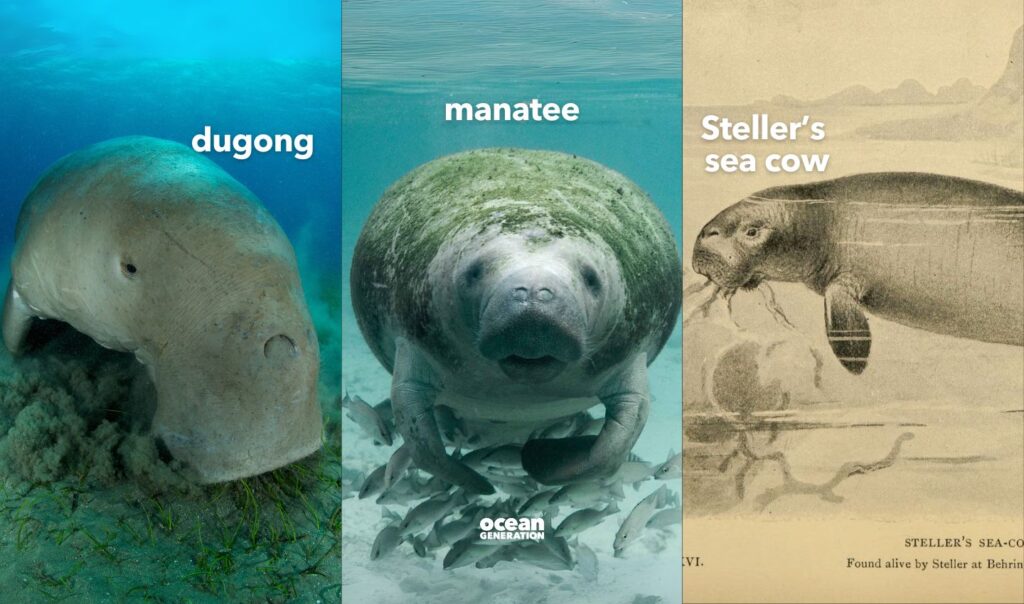
Steller's sea cow was a 7-metre-long, 5-tonne cousin of the manatee. Posted by Ocean Generation.
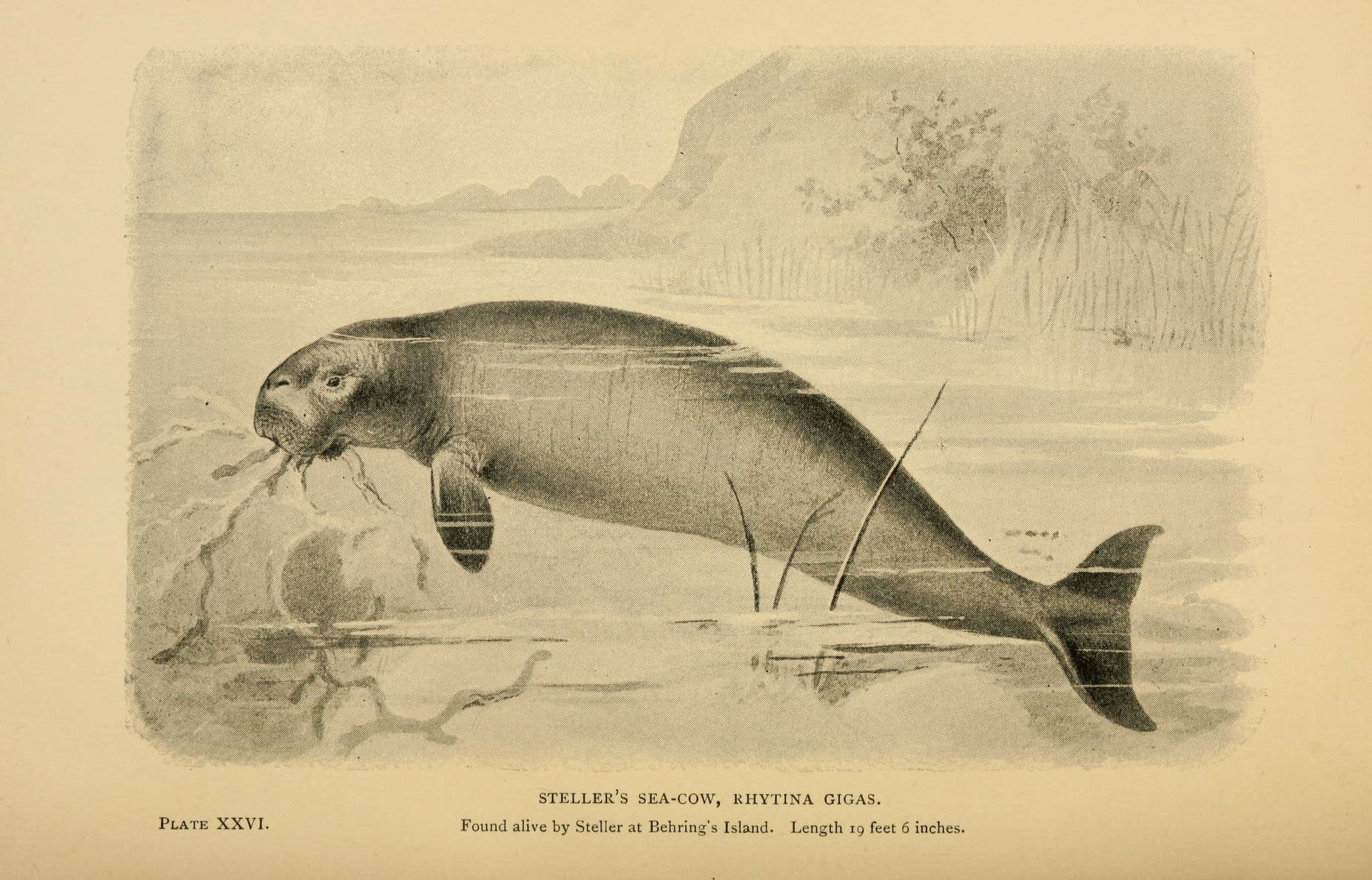
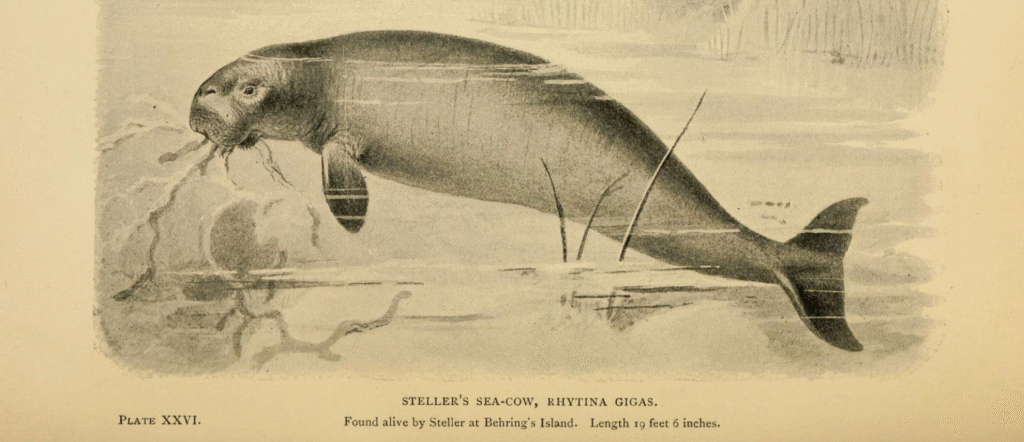
Steller’s sea cow sketch by Biodiversity Heritage Library

The story of Steller’s sea cow starts with a shipwreck. 

On the 6th November 1741, the Svyatoy Petr was shipwrecked on an isolated and uninhabited island, now known as a part of the Commander Islands chain. For several months, the crew of sailors, cartographers, geographers, and natural historians had been carrying out one of the first scientific explorations of the North Pacific.  

Stranded for nearly a year, the remaining crew salvaged materials from the wreckage, and built a ship that could cross the Ocean back to Russia.  

One of the most consequential outcomes of this failed expedition was the presence of a curious and observant  naturalist, George Wilhelm Steller. For almost a year, he made meticulous observations, sketches, and notes on the unfamiliar and captivating wildlife that surrounded him, which have been left to us as an invaluable historical and ecological artefact.  

From a massive population to extinct: 

One creature left a particularly strong impression on George Steller. He wrote in his journal of ‘gigantic manatees grazing all about the island’s lagoons’. These cousins of the manatee would often exceed 5,000kg in weight. He observed that they were very sociable creatures, sticking in large herds and eating kelp floating at the Ocean surface as though it were grass, ‘in the same way as horses and cattle’.  

Although Steller wrote that they were so numerous that ‘that they would suffice to support all the inhabitants of Kamchatka’, a twist of fate left them extinct by the 1760s. To understand them, scientists have had to look at historical evidence and their closest living relatives, dugongs and manatees. 
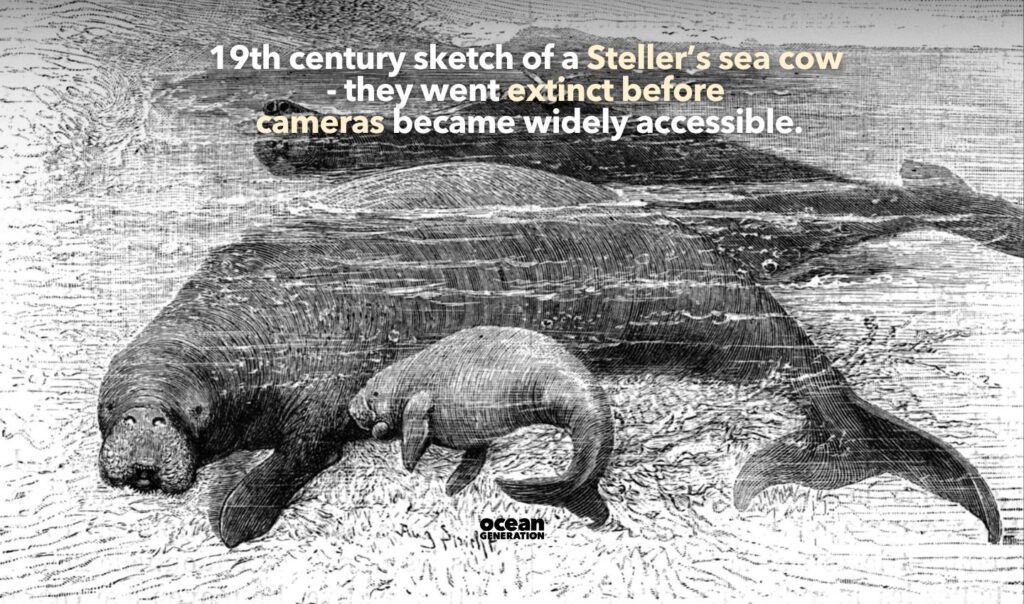
Sketch of a Stellers sea cow. Posted by Ocean Generation.

Story One: Hunting 

Steller’s crew hunted sea cows as a source of food whilst stranded on Bering Island. Steller recalled a story in his journal about the psychological stress this placed on them. Whilst hunting a female sea cow, a male aggressively followed and tried to ram their boat, following all the way to shore long after the female had died. They also hunted other creatures including otters and seals. 

This is the most common theory for the extinction of the sea cow: they were exploited for their meat, fat, and hides, the latter of which would be used in the construction of boats. This theory suggests that the hunting was so widespread and unsustainable that the population was put under great stress and collapsed within 30 years. 

Story Two: Loss of Keystone Species 

In the past few decades, a group of scientists have put forward an alternative theory.  

This theory pays attention to the complex dynamics of kelp forests, and the role that sea otters play as ‘keystone species’: species that play a disproportionate role in managing the ecosystems they call home. As we explained in a recent article, sea otters’ appetite for sea urchins prevents overgrazed ‘urchin barrens’ emerging – desolate stretches of rock with little to no vegetation – in the place of lush and biodiverse kelp forest. Do read this article if you want to learn more! 
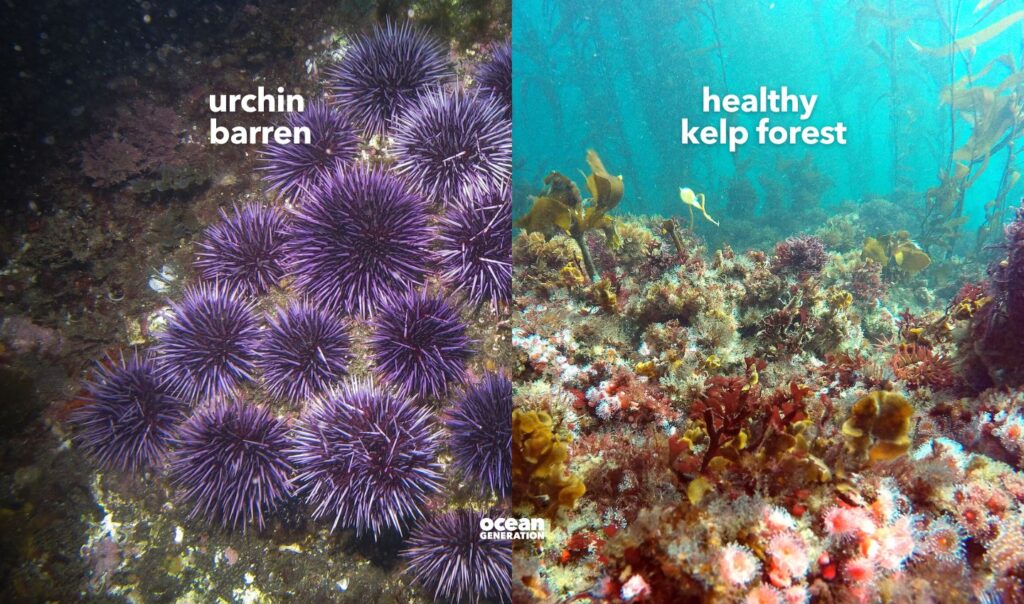
Difference between an urchin barren and healthy seafloor. Posted by Ocean Generation.
Urchin barren photo by Ed Bierman, healthy seafloor photo by Zachary Randell

Whilst Steller’s sea cows were hunted on these expeditions, sea otters were the main pursuit. When the first groups returned with the fur pelts of sea otters, traders were so astonished at their thickness and quality that they sold for nearly 100 rubles a pelt – 25 times more than the equivalent pelt from land animals. It’s been said that they were, at some points, worth more than gold! In the wake of the euphoria that ensued, the sea otter population collapsed so quickly and dramatically that they were observed to be at the brink of extinction around the Commander Islands by 1753

Kelp forests create a complex habitat for a diversity of species, with one study in Norway suggesting that the average piece of kelp in their study site supported 8,000 individual organisms. If sea otters are lost to hunting, the kelp forests can be transformed into urchin barrens, as there are no otters to control sea urchin populations. As kelp is lost, the Steller’s sea cow loses their source of food, a change to their environment that might have ultimately resigned them to extinction.  
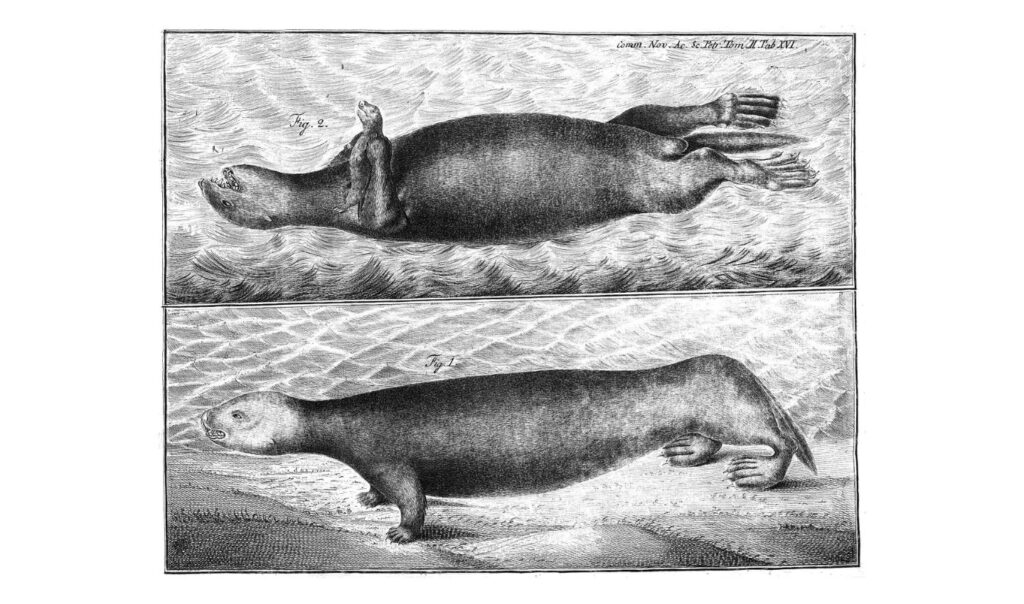
Sketch of a sea otter by Steller.
Sketch of a sea otter by Steller

Which theory about the extinction of Steller’s sea cow is it? 

Both theories are reasonable. Ecosystems are complex and difficult to understand completely, and it is probably a bit of both. As I have been reminded by one of the scientists who proposed the second theory, ‘the lack of good data from the extinction of sea cows means that we are unlikely to ever really know.’  

Sea cows may be extinct, but this story is not irrelevant, and shouldn’t be the cause of doom and gloom or eco-anxiety.  

As scientists have better understood the role of sea otters as a ‘keystone species’ that maintain kelp forests, we have become more capable of putting conservation programmes in place that work. The recovery of sea otter populations in the Pacific is arguably one of the greatest success stories of conservation, bringing back both populations of sea otters and the coastal ecosystems they engineer such as kelp forests. At the moment, we can look to innovative projects such as the Monterey Bay Aquarium’s surrogacy programme for hope, which raises orphaned pups so that they can be reintroduced back to the wild. (You can see them on the aquarium’s live stream here!)  

We may have lost Steller’s sea cow, but we can still restore kelp forests for the countless other species that call it home. 

Steller had a sense for the value of sea otters, though he may have primarily seen them as creatures to hunt. He even wanted to bring some home as pets. ‘The sea otter,’ he wrote, ‘deserves the greatest respect from us all’. Although he couldn’t have understood the complex work that they do as a ‘keystone species’ as we do today, we can all wholeheartedly agree with him. 
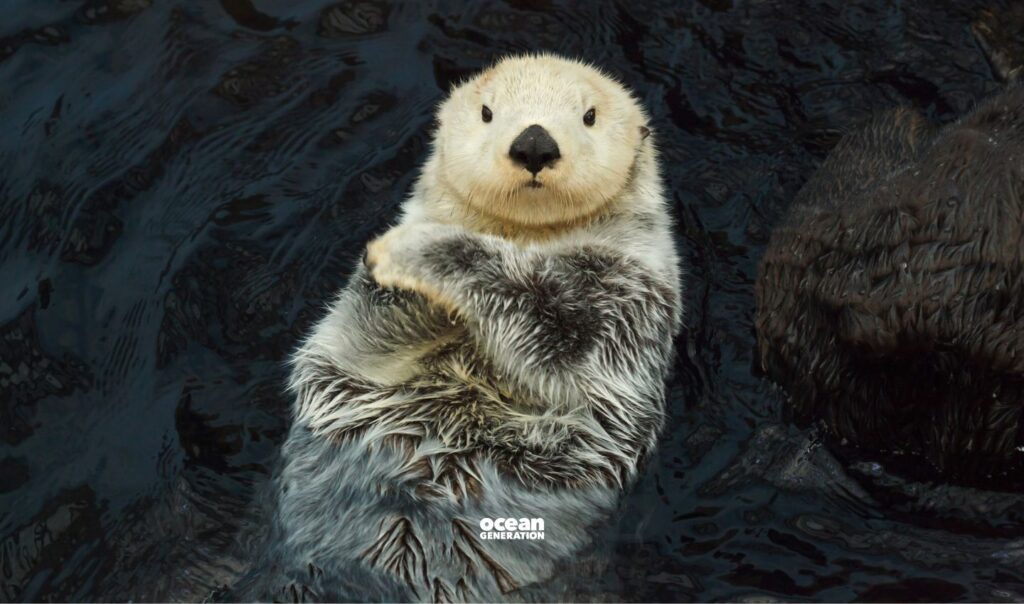
Sea otters are guardians of kelp forests. Posted by Ocean Generation.

Cover image via Biodiversity Heritage Library

Narwhals and Unicorns: How the magic of the Arctic has changed

Subscribe

Monthly: Impact in your inbox.

OceanGeneration-Join

How Do Sea Otters Make Themselves at Home in the Kelp Forest?

How do sea otters make themselves at home in the kelp forest?

What comes to mind when you think of sea otters?

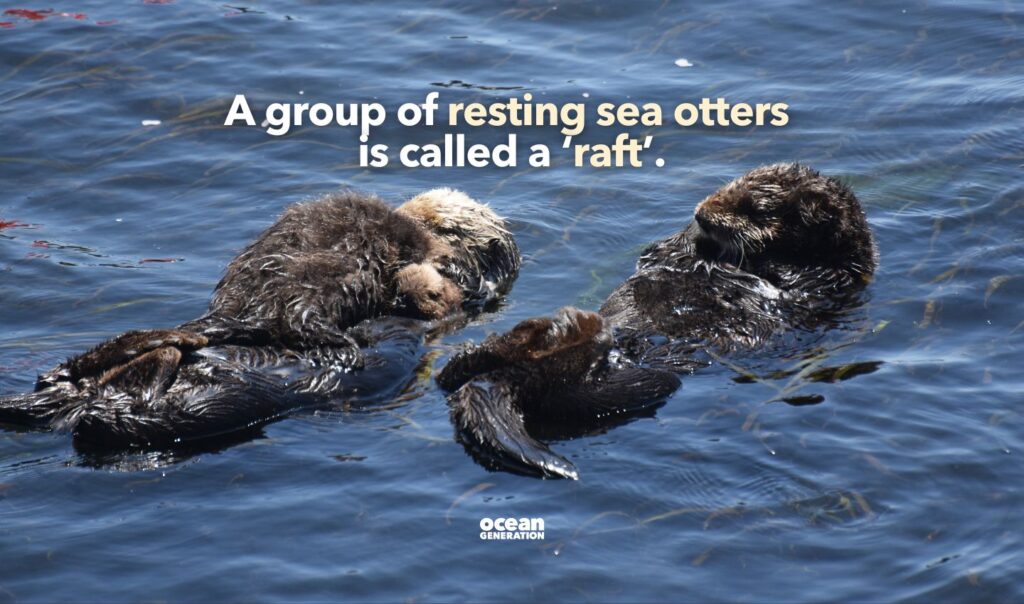
The internet is filled with videos of pups snuggled against their mother’s chest, ‘rafts’ of sea otters holding hands or wrapping themselves in kelp so they don’t drift apart as they nap, and cracking open shells or showing off the pouches in their armpits where they stash their favourite rocks and snacks. They are undoubtedly one of the Ocean’s most adorable and loved creatures.

But more complicated things are going on below the surface.

As well as capturing our hearts, they are ‘keystone species’: species whose everyday eating, resting, and playing has a disproportionately large role in maintaining the entire ecosystem around them. This article will explore how otters make themselves a home in the kelp forest, and how they’re otterly (sorry!) essential to maintaining one of our Ocean’s most vibrant ecosystems.

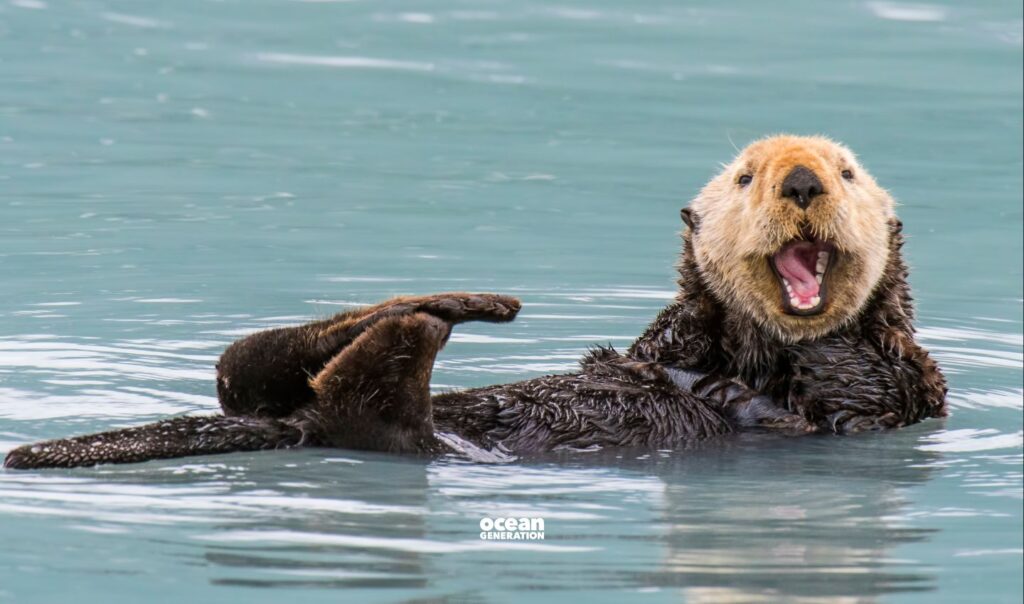
A group of resting sea otters is called a raft. Posted by Ocean Generation.

Where do sea otters live?

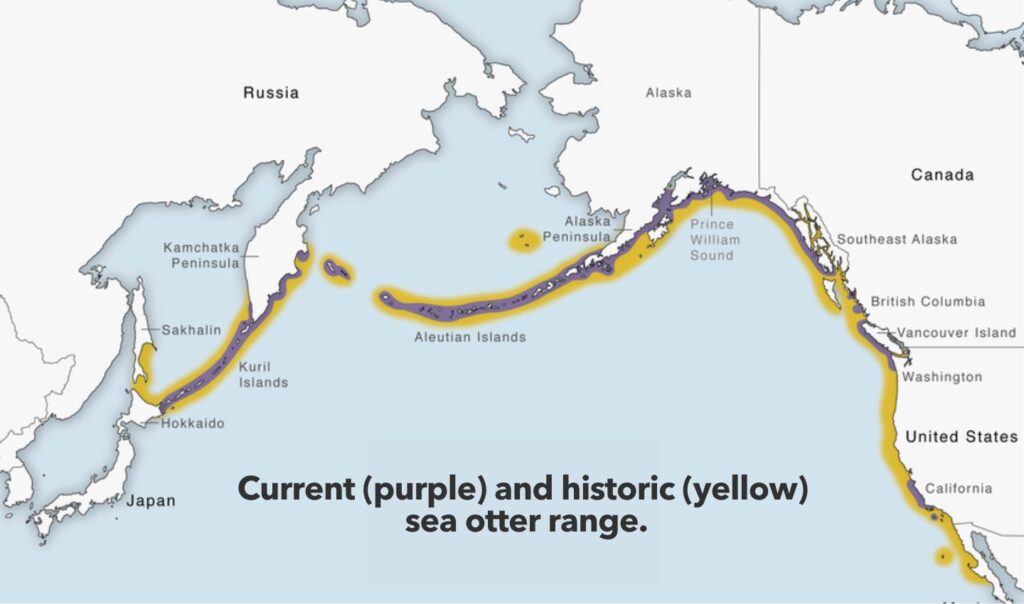
Sea otters (Enhydra lutris) have a range that covers the North Pacific, stretching around a coastline that extends between Japan, Russia, Alaska, and California.

Current and historic sea otter range, posted by Ocean Generation.
Map: Future Directions in Sea Otter Research and Management

What connects all these places? Offshore – out of sight and below the surface – this whole stretch of coastline is a chain of ‘kelp forests’: magical ecosystems that are teeming with life. Whilst sea otters don’t only live in kelp forests, they are most at home in them as it provides them with food and shelter.

Kelps are a range of brown macroalgae (seaweed, to you and me) that grow up to 50m in length. The brown colour comes from a particular pigment that allows them to capture light below the Ocean’s surface. Like plants on land, they photosynthesise sunlight into organic material, which produces the energy for an entire complex food web around it.

This is the base for an incredibly rich and diverse habitat, and one study in Norway found that the average piece of kelp provides habitat for 8,000 individual organisms, with some even providing habitat for over 80,000!

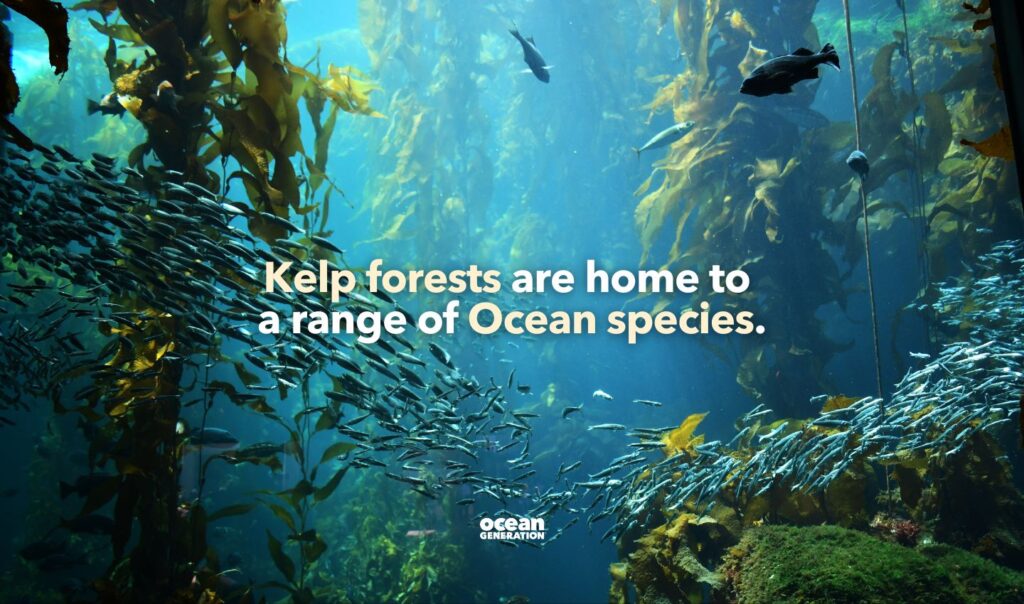
Kelp forests are home to a range of Ocean species. Posted by Ocean Generation, leaders in Ocean education.

What do sea otters eat?

If there’s one thing sea otters can do, it’s eat. Studies have estimated that they need to eat between 19% and 39% of their body weight in food to meet their basic needs. To put this in perspective, this would be the equivalent of a person needing to eat about 20 pizzas every day!

As well as sea otters, kelp forests are home to a wide range of other species including fish, seals, and seabirds, and invertebrates such as molluscs, lobsters, and sea urchins. Many of these invertebrate species are found in sea otter diets, but at the top of the menu are sea urchins. 

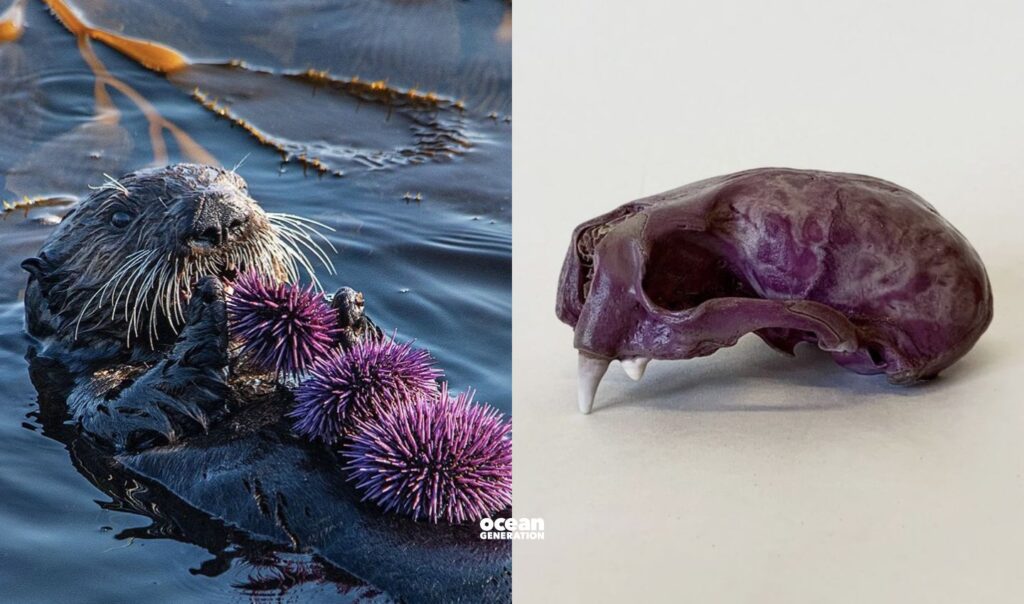
In fact, some sea otters crack open and eat so many purple sea urchins that their bones are dyed a pink to purple colour from the compounds they contain.

Sea otters love eating sea urchins. Posted by Ocean Generation.
Sea otter skull image by Peter Monteforte

How are sea otters ‘keystone species’?

A ‘keystone species’ is a species ‘whose impact on its community or ecosystem is large, and disproportionately large relative to its abundance’. This means that if they are lost from an ecosystem, it can disrupt everything else within it. In the case of the sea otter, losing them can even indirectly lead to the loss of kelp. We have explored a historical case where this happened in an explainer article here.

But how does this happen?

The greatest threat to many kelp forests – especially, but not only, in temperate parts of the Ocean – is overgrazing from sea urchins. When their numbers are left unchecked, sea urchins sweep their way across the seabed, devour all the kelp they come across, and leave nothing but a desolate rocky seafloor known as an ‘urchin barren’.

The varied heights of kelp creates a habitat with different levels that can be compared to the differences between the canopy and floor of forests on land, meaning a diversity of species can call it home. Once an urchin barren forms and kelp is taken out of the ecosystem, the many other species that rely on it for food and shelter can also be lost.

Kelp is a complex habitat that supports a range of small species, which makes it a healthy breeding ground and nursery for fish. This  attracts larger species such as seals and seabirds, who suffer knock on effects along with fish when kelp forest is lost.

Difference between an urchin barren and healthy seafloor. Posted by Ocean Generation.
Urchin barren photo by Ed Bierman, healthy seafloor photo by Zachary Randell

This is where our sea otter’s taste for urchins can come in handy. Sea otters can break through sea urchins’ tough, prickly exterior for food, and do so in such large numbers that they play a crucial role in managing populations. They’re accidental conservationists!

How are sea otters part of conservation efforts?

Sea otter populations had declined very significantly by the 20th century. At the time when much of the initial research was being done on the relationships between sea otters, sea urchins, and kelp, one marine scientist publicly shared his worries that the kelp forests of the Pacific had gone through ‘irreversible degradation’

However, we now know that just as marine ecosystems can be lost much faster than those on land, some can also be restored much faster. The abundance of sea urchins in overgrazed urchin barrens means that sea otters can quickly recolonise their former range.

Sea otters have a long history of being at the heart of conservation efforts. Hunting them in parts of Alaska and Russia was banned in 1911 in the first ever piece of wildlife conservation policy, and banned throughout the United States in the 1970s.

More recently, sea otter ‘translocations’ – where populations are moved to parts of their former range so they can recolonise it – have reintroduced sea otters to parts of the North Pacific such as Southeast Alaska, British Columbia, Washington, and San Nicolas Island in California. As the relationships between them and the kelp forests they live in has become better understood, reintroducing otters has become more than just about them, but the whole kelp forest ecosystem they can create too.

How are sea otters part of conservation efforts? Explained by Ocean Generation.

An exciting project has been taking place over the past few decades at the Monterey Bay Aquarium in California, where orphaned sea otter pups are rescued, rehabilitated, and released back into the wild. Between 2002 and 2016, they reared and reintroduced 37 individuals, with benefits not only for sea otter populations but the integrity of the ecosystem as a whole.

The North Pacific kelp forest: A place to call home

Marine scientists have carried out experiments where they observed the differences between how sea otters behave in parts of the Ocean which have kelp forest in comparison to those places without. As a result, it’s possible to see that the otters themselves benefit from their unwitting conservation work.

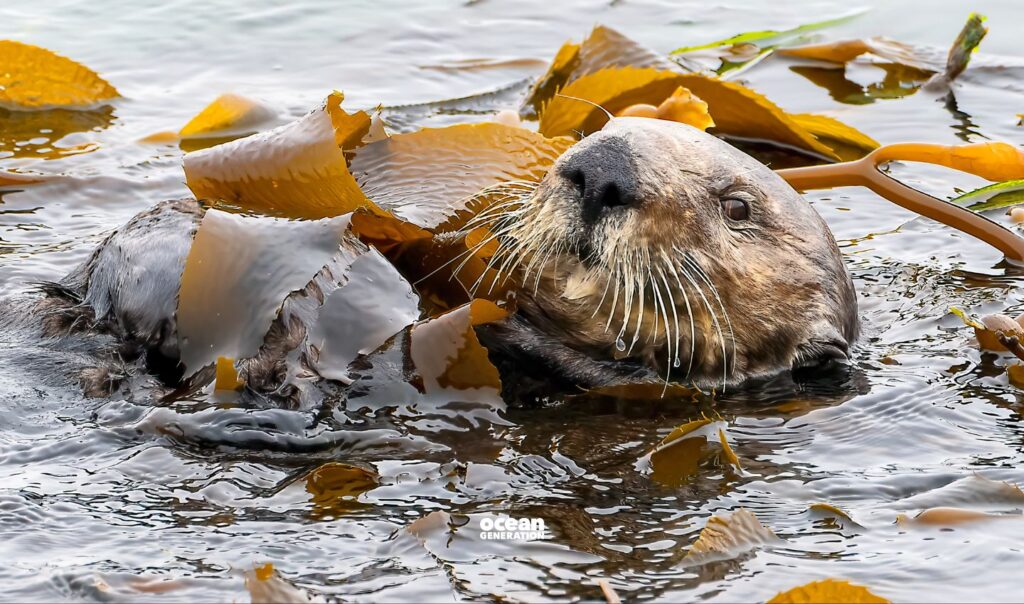
Firstly, sea otters love to be around kelp as it is a safe habitat for them. At low tide, kelp sits on the surface of the Ocean, and sea otters wrap up their pups in the strings of kelp so they don’t drift away while they nap or hunt. Their role in clearing the urchin barrens can be really kelpful – restoring the very kelp in which they live!

Secondly, the sea urchins that sea otters catch from urchin barrens are not as nice as the ones in kelp forests. They are small, bad quality, and have poor nutrition. Scientists have estimated that due to the difference in quality, sea otters living outside of kelp forests in the Aleutian Islands in Alaska would need to eat about 1,085 urchins every day to meet their basic needs, compared to just 484 in areas with healthy kelp forests. This means that by restoring kelp ecosystems, sea otters save time and get an extra hour and a half every day to nap or frolic around on the Ocean surface.

Kelp forests can also sustain a more biodiverse and complex food web than urchin barrens. Those otters with a taste for fine foods aren’t stuck with urchins for dinner every day. If you had to eat sea urchins every day, you’d probably be bored and want a change too, right? Kelp forests offer sea otters a more varied diet, from a much larger range of sea creatures including crabs, clams, sea snails, scallops, and mussels.

Why sea otters love kelp forests: Explained by Ocean Generation.

Just an-otter brick in the wall?

So, how do otters make themselves at home in the kelp forest? The answer is simple: just by being their adorable and authentic selves. If there is one take away from this article, it’s that the health of sea otters are entangled in that of the kelp forest ecosystem they call home. 

If you ever find yourself scrolling through cute videos of otters on the internet, just remember, they are not just cute and furry, but truly precious and wonderful engineers of the Ocean’s ecosystems.

Narwhals and Unicorns: How the magic of the Arctic has changed

Subscribe

Monthly: Impact in your inbox.

OceanGeneration-Join