
- Science: Explained
Does the Meg exist? Here’s what scientists actually found.
Yes, the Meg exists. No, it isn’t the one you are thinking of.
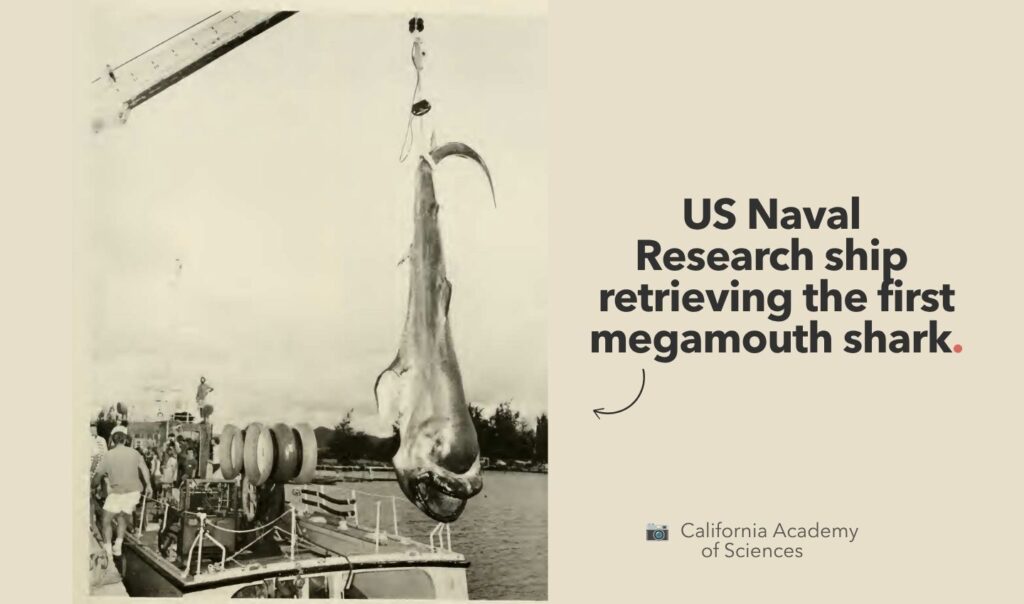
On the 15th November 1976, the US Naval Research ship with the catchy name AFB-14 was on a mission 42 km (26 miles) off the coast of Oahu, Hawaii. Suddenly, the sea anchor, a parachute-like tool for stabilising a ship at sea, caught and pulled. The crew hauled it up to find 4.5m (14.7 ft) of fish.
The crew brought the 750kg (1,653.5 lbs) shark on board with “much difficulty” and brought it back to Kaneohe Bay, tying it alongside the dock overnight.
The shark was so heavy it needed a Navy crane to lift it. During the operation the caudal fin (tail) broke off, dropping the shark into the water where it needed recovery by divers. Finally, though, it could be examined by the experts.
Amongst the first on the scene was the director of Waikiki aquarium, Leighton Taylor. Along with other marine biologists, they recognised a species that was entirely new to science.
Leighton Taylor had the honour of naming the species, and settled on Megachasma pelagios – from the Greek meaning “the large yawning hole of the open Ocean”. It is known more commonly as the megamouth shark – the largest shark you’ve probably never heard of.
50 years on, what do we know about this elusive shark? And after discovering this, does that mean there could be other huge shadows lurking in the depths?
What does the megamouth shark look like?
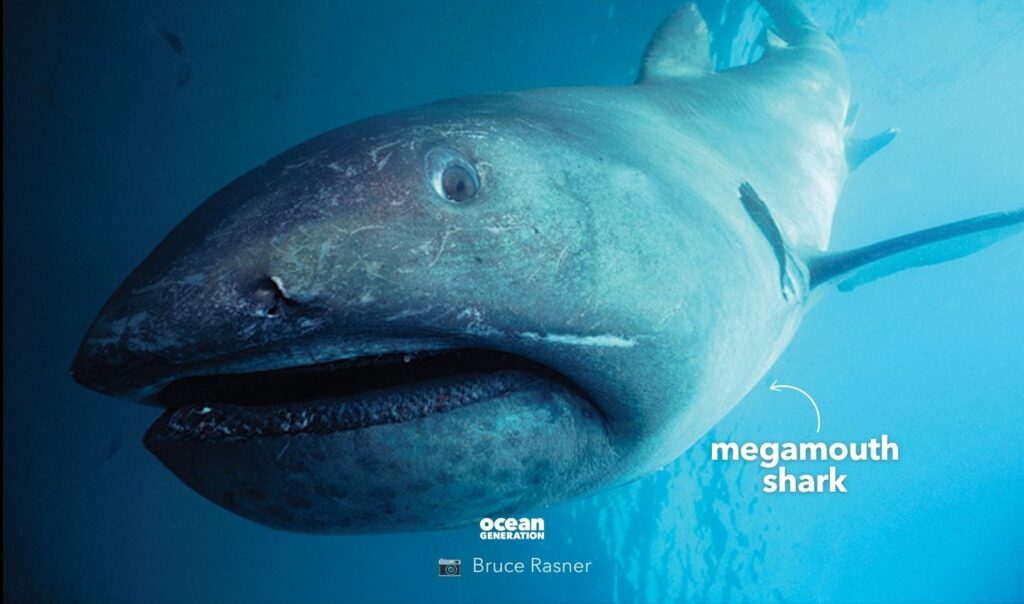
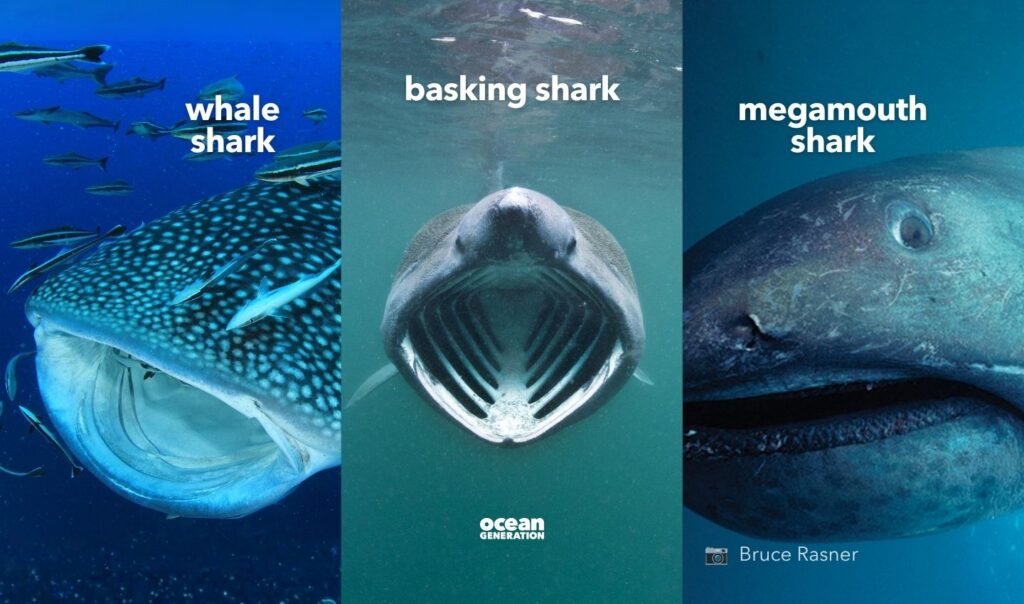
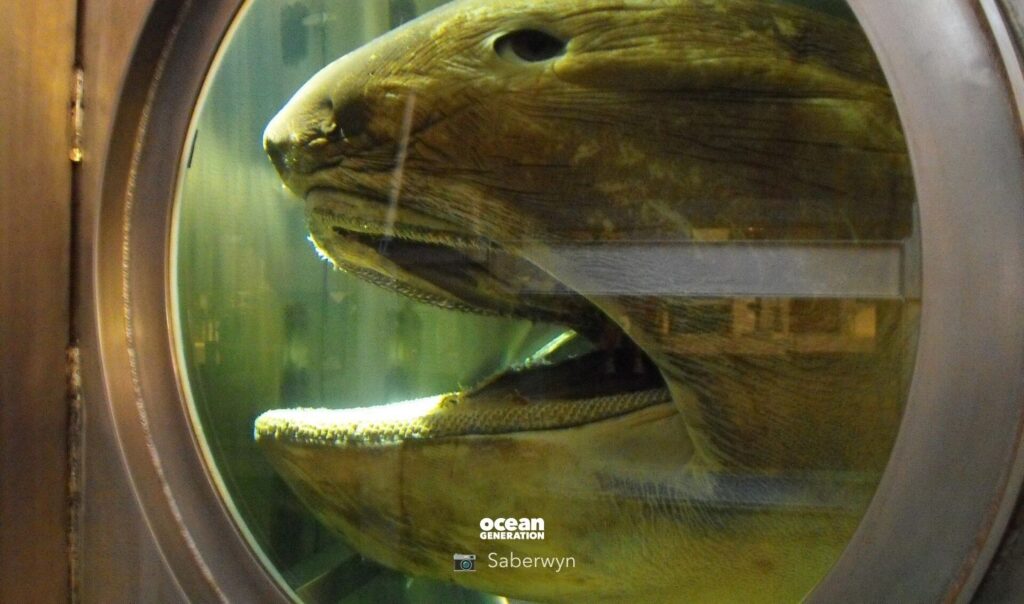
As the name suggests, the main feature of the megamouth is its vast mouth, which is housed in a huge bulbous head. This mouth is full of tiny teeth, not big white sharp things like its cousins, leaving the megamouth with a gummy grin. The tail also deserves a mention – similar to the thresher shark, the megamouth has a large upper lobe of its tail, which can be as big as a person.
The megamouth is the third biggest species of shark behind the two other filter feeding sharks – the whale shark (Rhincodon typus) and the basking shark (Cetorhinus maximus).
Megamouth sharks can reach sizes of up to 8.2m long, maybe up to 9m, with females reaching larger sizes.
What is filter feeding?
Filter feeding is utilised by animals of all different shapes and sizes in the Ocean. The premise is to filter out the tiny algae and animals floating in the water. Whales do this using their baleen, flamingos with their special beaks, and most forage fish have gill rakers, catching anything in the water moving over their gills.
On the 14 November 2023, a stranding gave us amazing insight into the reproduction of the large-lipped fish. A female megamouth was washed ashore while giving birth. 1 pup was found next to her, with 6 more in her belly. They measured 1.65m to 1.83 m (5.41-6 ft) long. That is approximately one Ocean Generation Marine Science Officer (not a scientifically accepted measurement) long.
The first descriptions of megamouths are less than kind. A “soft, flabby body and fins, low-flow branchial filter apparatus and small gill openings”. Taylor suggested that this pointed to an animal far less active than the other filter feeding sharks.
To confirm this, we had to find a live one.
When was the first live megamouth shark found?
On October 21, 1990, the sixth megamouth shark ever was found, caught up in a drift gill net off California. The big difference with megamouth number 6? He was still alive. We shall name him Luis, after the Luiseno people indigenous to the Californian coast he was caught off.
When the fisherman, Otto Elliot of the vessel Moonshiner, pulled up Luis, he recognised that this was a rare find. He managed to get a rope around the peduncle of the shark (the base of the tail) and towed it for five and half hours back to harbour.
Otto was asked by scientists to keep the shark alive until measurements had been taken, and so Luis was left tied by a short tail rope in the harbour. Quite remarkably, Luis survived.
The researchers formulated a release plan, and towed Luis back out to open water. Here, he become the first live megamouth shark to be filmed, and was released with a tag, giving us nearly 51 hours of insight into the lives of these mysterious sharks.

What did we learn from tagging megamouth number 6?
The research vessel R/V Discovery was assigned to tracking Luis, ensuring it was collecting data from his tag. It wasn’t difficult to keep up – Luis cruised at around 1.15 kilometre (0.73 miles per hour), although a current going against him led scientists to estimate his true speed: 1.5-2.1 km/h (0.73-1.3 miles). As predicted by the initial discovery, Luis was no speedster.
Luis showed us that megamouth sharks follow a crepuscular vertical migration: crepuscular meaning at dawn and dusk, vertical migration meaning moving up and down. He spent his days in the depths around 150m (492 ft), returning to shallow waters of around 20m (65.6 ft) during the nighttime. Luis used the light (or more accurately the dark) to guide his movements: a sharky anti-moth.
Why was he making this migration every day? Could he be chasing food?
What do megamouth sharks eat?
Researchers can use the chemical properties of tissue from an animal to work out where it has been eating, and what it has been eating.
A large study compared the diet and location of 91 megamouth sharks and 90 whale sharks.
Whale sharks tended to eat up the food chain as they got bigger (and older): they moved from phytoplankton to fish to bigger fish and so on. They had a far more varied diet than our mega-mouthed friends.
The very first megamouth was found with a stomach full of krill, and this was no coincidence. Megamouths love krill and jellyfish and that is kind of it. No matter how big they get, they don’t grow out of their krill phase. Imagine being stuck with that food you were obsessed with when you were young, for life.
The researchers also found that male and female megamouths were quite distinctly separated – they were eating in different places.
Why? We aren’t entirely sure yet, the researchers suggested that males may roam further to find mates while females stay in the productive, safer waters near birthing grounds. There is still plenty to find out about these secretive sharks, but why are they so good at remaining hidden?
Why do we not see many megamouth sharks?
The Ocean is huge. Think of an Ocean creature – starfish, seahorse, the famous clownfish (find out how scientifically accurate Finding Nemo actually is here). Chances are, you are thinking of a coastal animal, that we land-dwellers cross paths with regularly.
The megamouth is from a different world, that we are not regular visitors to. During the day, they cruise through the darkness of the twilight zone, and only at night do they come more shallow. There are only nine sightings of megamouths in natural conditions – humans and megamouths don’t overlap.
230 of the 301 sightings (as of June 2026) come from megamouths caught up in fishing gear. And we are seeing more. 170 of the 301 megamouths ever found came in the last ten years, 131 coming in the 40 years before that. Why are we seeing more now?
Given the large portion that are found due to fishing, the increase is likely to be related to fishing. Maybe an increase in fishing activity is seeing more caught, or new equipment at different is catching more megamouths. Or maybe these fisheries have always caught megamouths, but the reporting of the catches has got a lot better. Being aware of our impact on the Ocean is the first step to controlling it.
Anyway, now we know there is a massive, nearly 10m (32.8 ft) shark swimming around out there that we only discovered 50 years ago: there is only one question to follow that.
Is the megalodon still alive and hiding in the deep?
No. There are two main reasons for this.
1. Amount of food – can’t hide the evidence.
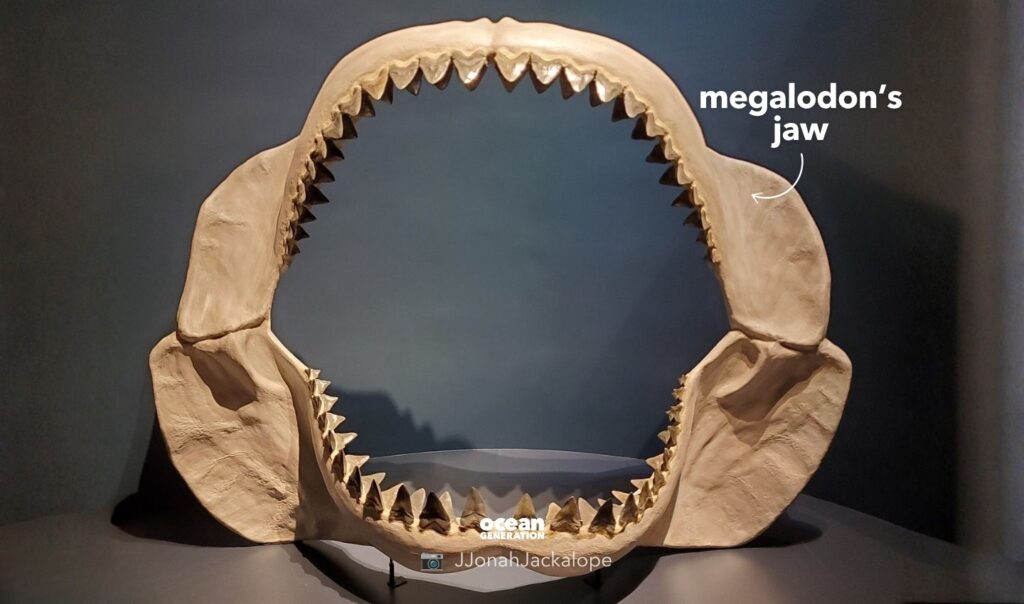
An active hunter that is estimated to have been over 24m (78.7 ft) long, the megalodon had huge teeth which it would have used to eat other sharks, fish and whales. Prey species like whales are mostly found in the surface Ocean, increasing the likelihood of even the stealthiest hunter being seen.
If not seen directly, the effects of having a huge hunter would be visible. Bite marks and teeth would be regularly spotted, and they aren’t. We haven’t found a megalodon tooth younger than 3.5 million years old, which is when we think megalodon went extinct.
2. Location – megalodon isn’t hiding in the depths.
We know megalodon was a tropical and subtropical dweller, that thrived in the warm waters. Suggestions that they could be hiding in the cold, dark depths of the Ocean are impossible. Especially when we consider the compound that protects sharks’ cells from the crushing pressures of the deep Ocean stops being effective around 3,000m (1.81 miles), suggesting that sharks absolutely can’t go below 4,000m (2.5 miles) deep.
The megamouth is a big shark, but smaller than megalodon, and eats tiny prey that lives in the pelagic depths (deep, open water). That is why it wasn’t discovered for so long.
Could there be another huge species of shark still undiscovered?
We can’t rule it out completely (the Ocean is on average 3,682m (2.28 miles) deep – plenty of space for something to hide), but it is unlikely. We understand our Ocean more than ever, and large species would have been found if not by scientists, by the commercial fishing fleets that drag nets through most layers of the Ocean.
The most likely shark hiding out there would be a sleeper shark, similar to the Greenland shark. As the name suggests, these fish like life in the slow lane, cruising the Ocean depths for food. Their un-rushed lifestyle means low demand for food, and they can survive on less food, such as occasional whale falls (read more about how a dead whale means new life in the deep here).
What do we still not know about megamouth sharks?
There is plenty we still have to discover about megamouth sharks. Why are they usually separated like a school disco, the boys and girls staying far apart from each other? Do individuals migrate like whale sharks, or have their favourite spots they stay in? Do they have glowing mouths to attract prey?
How do they hunt? Is it like basking sharks, swimming with mouths agape? Or whale sharks, opening mouths quickly to create suction, drawing prey in? Or something else, more like a whale drawing its large mouth over prey?
The megamouth story is full of mystery and excitement. It also shows us our increasing presence in the Ocean. It does not mean the megalodon is still alive. That mystery has been solved. Trust us.