
- Science: Explained
Secret life of algae: From oxygen to algae blooms
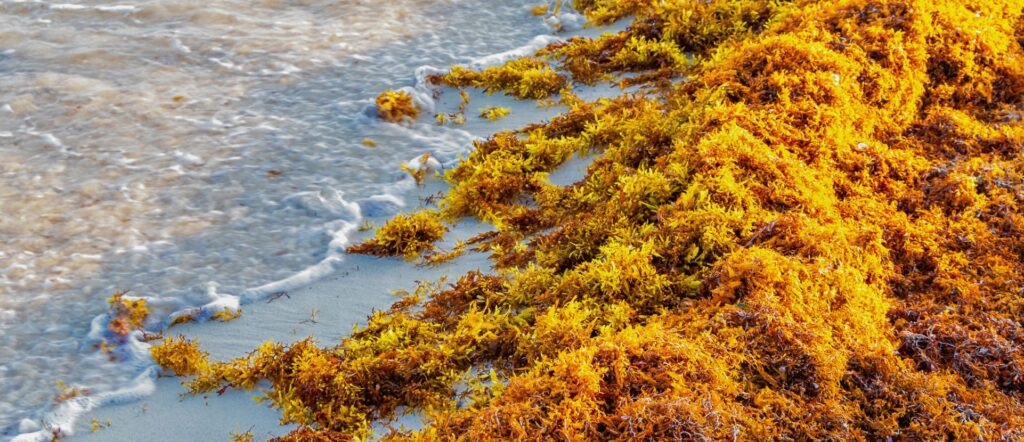
Every second breath we take comes from the Ocean. More specifically, it comes from algae in the Ocean (thank you, algae).
When the conditions are right, algae flourishes, creating an algal bloom. These blooms can be spectacular, leading to a blossoming of life and a sparkling Ocean, or they can cause serious problems for life in the Ocean and on land.
What do the white cliffs of Dover, the oil fields in the North Sea and Colorado oil shales and the clarifying agents used to make beer and wine have in common? They are all made of algae, a diverse group of incredible organisms which support most of the life in the Ocean.
But you can have too much of a good thing.Large amounts of algae can kill a lot of marine life and be toxic to humans. These events can have huge impacts, as we will see, from modern day Australia to the Bible.
What are algae?
This isn’t as simple an answer as it should be, so bear with us. Unlike mammals or birds or sharks (don’t get us started on “fish”), “algae” doesn’t refer to a single evolutionary group of species.
Instead, the things we call algae are a group of organisms that do the same kind of things, dotted around the tree of life. A group of roughly 50,000 species.
The name comes from the Latin for “seaweed”. The study of algae is called phycology, and algal experts are phycologists, who are still figuring out exactly how they all fit together.
As a good rule of thumb – if it photosynthesises, and it isn’t a land plant, it is algae (we will get to the differences between algae and plants in a minute).
Some of those 50,000 species are very basic organisms such as cyanobacteria, that lack a nucleus and the other advanced bits of cellular equipment that animals have.
Other species are single-celled, floating around in the Ocean. Some are macroalgae like kelp, growing over 50m tall, creating vast forests filled with life and noise (ever wondered what the kelp forest sounds like?).
The magic of algae is something they share with plants. They produce oxygen and grow using sunlight – photosynthesis.
This magic is what nearly all life on our planet is dependent on.
How are algae different from plants?
Fuelled by the sun’s energy, algae filled the Ocean and some conquered the land, becoming the plants that dominate our planet.
Plants evolved from ancient freshwater algae over 440 million years ago. Trees appeared around 400 million years ago. Psst…for context, sharks first appeared around 450 million years ago, so sharks have been around for longer than trees. 1-0 to the sharks.
Plants have developed into some beautiful, complex forms, conquering the land and making up around 82.5% of total biomass (the weight of living things) – humans are only about 0.01%.
Meanwhile, algae have evolved to master the aquatic world.
Physical differences between algae and plants
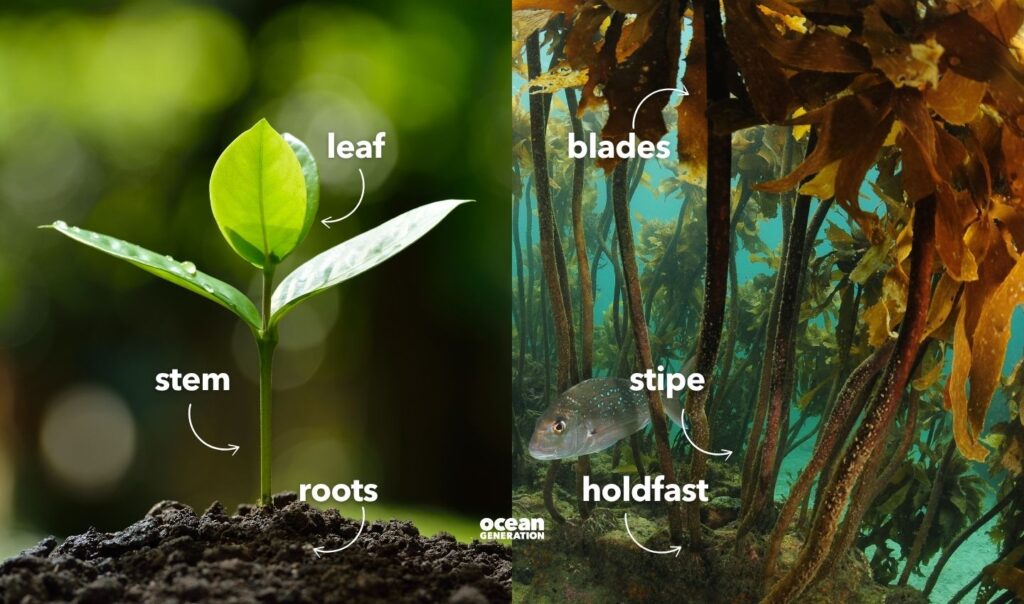
Plants developed a number of structures as they conquered the land, with roots to hold them in place and specialised structures for capturing sunlight – leaves.
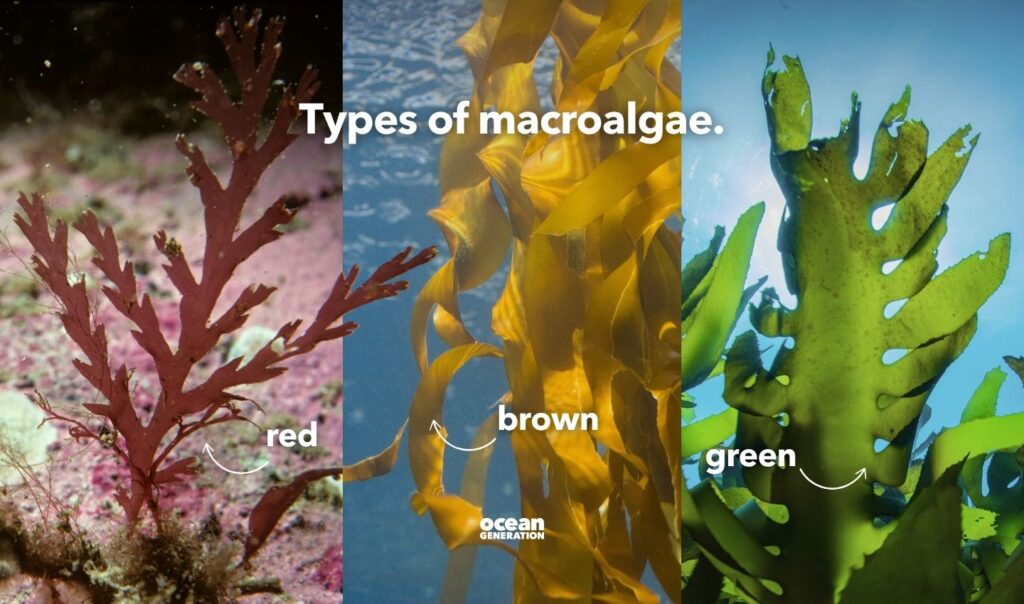
Looking at seaweed there are clear similarities. The “roots” of seaweed are holdfasts, the “stem” is a stipe, and the “leaves” are blades. They look similar, but these structures don’t transport nutrients or gases between each other as the plant equivalents do.
Microscopic algae lack these structures completely.
What are the biochemical differences between algae and plants?
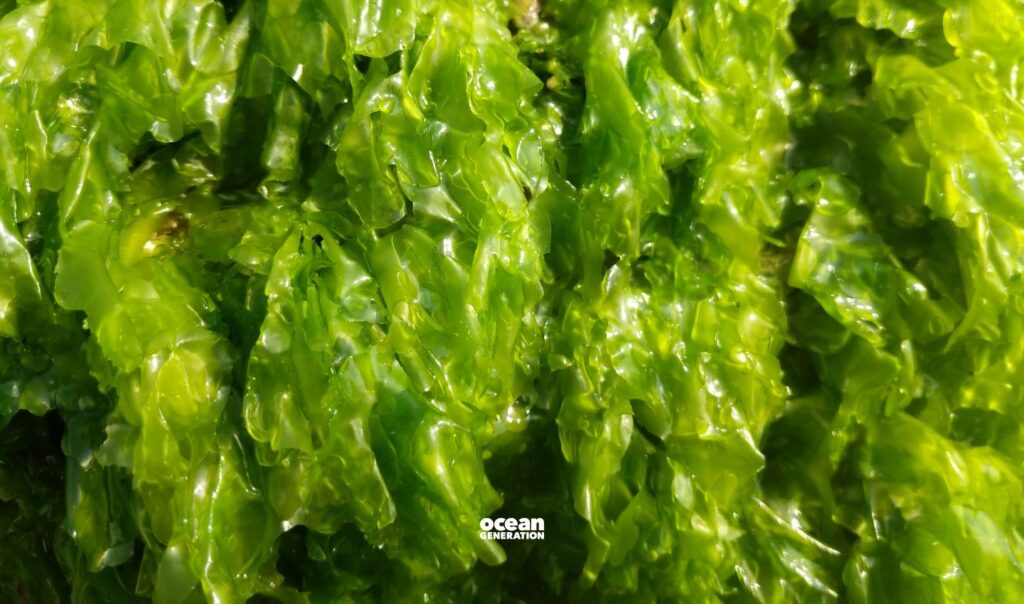
We won’t get too technical, but there are some big differences in the biochemistry of the two. Algae are much more varied in their structures, using a wider variety of building materials. Some use silica (glass) and some create chalk. Green algae use a compound called cellulose – the sugar that makes up paper, cotton t-shirts and wood.
Plants, evolving from these algae, adapted cellulose into compounds such as lignin for structural support in their ongoing battle against gravity.
Many algae are named after their eclectic use of photosynthetic pigments.
Red algae use phycoerythrin and phycocyanin (which appear red), brown algae use fucoxanthin giving them a golden-brown colour and green algae use the same chlorophyll a and b as their green, leafy land-based relatives.
The different pigments are utilised to ensure that the algae are most efficiently gathering the sun’s light, which is filtered by the water, modifying the wavelength (and therefore colour) of light that most gets through. More on that another time.
Where can you find algae?
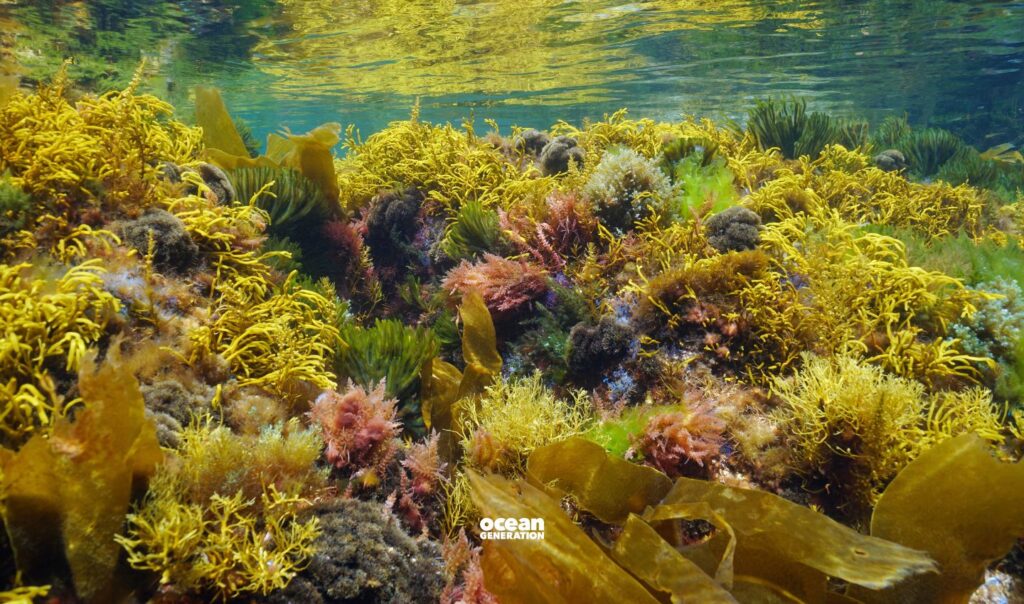
You can find algae everywhere, and each habitat has its own name. They can be found in ice (cryophilic) and hot springs (thermophilic).
Algae are also in soil (edaphic) and in the Ocean (planktonic in the water column and neustonic on the surface). On rocks and in coral (epilithic and endolithic), on fungus and other plants (epiphytic), on turtles and sloths (epizoic) and even inside other organisms (endozoic endosymbiotic) – there is an alga for any location.
Someone should make a song about it.
Why do algae bloom?
When algae grow very fast into large numbers, it’s referred to as a bloom. This can happen at small scales in a pond or at huge scales visible from space. These blooms can be the start of a great flourishing of life, or a deadly threat.
To understand why algae might bloom we need to realise why it wouldn’t and identify what is limiting its growth. Both plants and algae growth are limited by several things: water, temperature, light and nutrients.
We are focusing in on the marine, where water is less of a concern, so short term variation is typically controlled by the rest (although how salty the water is does matter).
Different algal species will have different preferred conditions, but warming the Ocean, with more sunlight and more nutrients, would generally result in more algae.
To refine it further, algal blooms typically refer to large amounts of microscopic algae, kelp forest is technically an algal bloom too, but in headlines, ‘algal bloom’ usually means the small stuff that can produce massive blooms.
Increasing light and temperature
Algal blooms are a normal part of the seasonal Ocean, as light and temperature increase in spring and summer, they allow algae to grow. This growth, like the arrival of spring on land, can be spectacular, as the sea sparkles with bioluminescent algae such as Noctiluca sp. which can give off a blue glow.
What happens in spring that might cause this? The days get longer and the temperature rises. More light and higher temperatures encourage algae to bloom, and they will until one of the other conditions becomes the limit.
Increased nutrients
When light and temperature are in plentiful supply in the summer months, the growth of marine algae is limited by nutrient levels, especially nitrogen (as opposed to freshwater, where it is phosphorus).
Human activities, primarily the use of fertiliser in agriculture, which is rich in nitrates, have altered the cycling of nitrogen. Some areas of Ocean receive much higher levels of nitrogen from water running off farms, giving the algae all the ingredients they need to thrive and bloom.
Lowered salinity
A lower level of salinity (saltiness in the water) means a higher concentration of water, enabling more growth. An increase in rainfall or ice melting could then lead to an algal bloom.
What makes an algae bloom harmful?
Broadly speaking there are two ways algal blooms can make life a bit rubbish for everything around it – by choking or poisoning them.
Choking blooms
When a large bloom of algae happens, it can disrupt the balance of the ecosystem.
But the real dangers come in the aftermath. As the bloom subsides, it is decomposed by bacteria and other organisms, which use oxygen. This can leave little or no oxygen in the water left for fish and other aquatic residents to breathe.
Which Bible story might have an algal bloom?
You may not think to go to the Bible for marine science but let us look at the story of Moses and the plagues of Egypt in Exodus 7: 20-21: “…all the waters that were in the river were turned to blood. And the fish that were in the river died; and the river stank, and the Egyptians could not drink the water of the river”. If we assume the bit about blood is descriptive rather than literal, we have a good description of a bloom of red algae.
Following this, we can link some of the other plagues that befell Ancient Egypt. To recap, the ten plagues were: river of blood, frogs, mosquitoes, flies, death of livestock, boils, hail, locusts, darkness and the death of each firstborn son.
If there was an algal bloom that suffocated the Nile, killing many of the fish, then the things the fish ate would benefit, if they could survive low oxygen conditions. Something like a tadpole, which can respond physiologically to low oxygen conditions and thrive. With no fish, you could end up with a lot of tadpoles surviving, and… a plague of frogs.
Another winner would be mosquitos – they lay their eggs on water surface, and the larvae feed on algae. With less predators (the fish are dead) to eat them and a banquet of food, you get a plague of mosquitos.
The death of much of the life of the river could poison the waters, resulting in the deaths of many of the livestock which depend on those waters to drink. The decay attracts flies, meaning one big algae bloom could be exactly the tool a deity would wield to cause five plagues.
Another algal alternative is that the red “blood” came as a result of heavy rainfall in the Ethiopian mountains that are the source of the Nile. The soil there is clay – reddish in colour – and could have suffocated the river by reducing how clear the water is (its turbidity), meaning the opposite of our theory – there were very few algae to produce oxygen for the fish.
In either case, the algae hold the key to the ecosystem, and impacts to algae can have biblical effects.
Toxic blooms
There are three main types of phytoplankton that can make harmful toxic blooms: diatoms, dinoflagellates and cyanobacteria. These produce toxins themselves. When their abundances reach high enough levels, they become toxic to species in the water, and to humans – directly and indirectly.
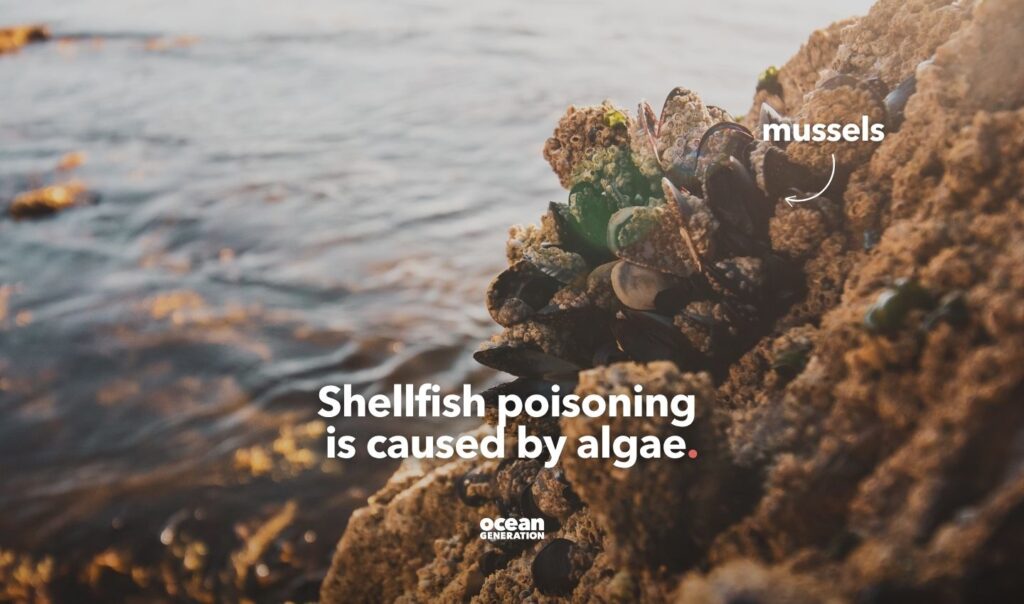
Shellfish poisoning in the US is caused by algae such as Alexandrium catenella or Karenia brevis (both dinoflagellates) which, when ingested by shellfish such as mussels, can make them deadly to humans.
More directly, blooms of toxic algae threaten life through the water column. K. brevis is amongst the best studied, as it occurs off the coast of the United States in “red tides”. Fish, marine mammals, elasmobranchs, turtles, birds and even coral suffer in waters stocked with high quantities of the toxic algae. K. brevis produces brevetoxin, potent neurotoxins which interfere with normal neural function. It essentially causes nerves to continuously fire, leading to behavioural change, muscular dysfunction and disorientation.
Blue-green algae are another commonly referred to algal bloom. It is named after the colour of the cyanobacteria that causes it, which can produce a wide array of toxins depending on species, none of which are good in high quantities.
Australia saw a harmful algal bloom start in March 2025
In March 2025, South Australia began to feel the effects of a huge algal bloom. As of February 2026, the bloom has impacted 20,000 square kilometres and roughly 30% of Australia’s coastline. Over a million marine animals have died, from over 550 different species. Humans have suffered from eye and skin irritation, coughing and shortness of breath.
The finger was initially pointed at Karenia mikimotoi, a well-known species that often blooms around the world. But after brevetoxins were identified, which K. mikimotoi doesn’t make, researchers took another look using DNA sequencing. This identified K. cristata, which had only been previously found in Newfoundland, Canada in 2014 and in South Africa in 1988.
This is one of the largest and longest harmful blooms recorded, affecting a huge range of marine animals. Leafy sea dragons are one of the state symbols for Southern Australia, but the bloom has hit their populations hard enough that their populations are being reassessed for risk of extinction.
When does an algal bloom become deadly?
The simple answer is when there is too much.
Too much of any one species results in imbalance. Harmful algae blooms come when the balance is lost, for example with an excess of nutrients or an Ocean that is much warmer than usual. Pollution and climate change are increasing the frequency of harmful algal blooms. Not every algal bloom is caused by human activity, but more of them are, and they are more likely to be harmful. Tackling climate change and pollution protect animals like the leafy sea dragon.
Algae facilitated life on our planet, filling the atmosphere with oxygen. Still today, every second breath you take comes from the Ocean, specifically the little algal friends at work. They continue to be the foundation of marine food chains. Algae are amazing; you just don’t want too much.