
- Ocean Conferences
- Our Impact: Threats
From classroom to COP30: Questions from children to climate leaders about Ocean protection
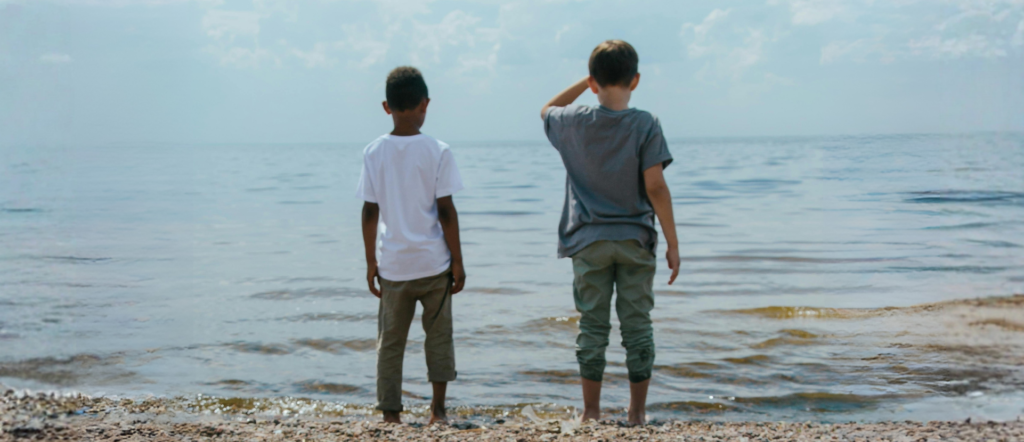
If a group of 7–11-year-olds could interview delegates at COP30, what would they ask?
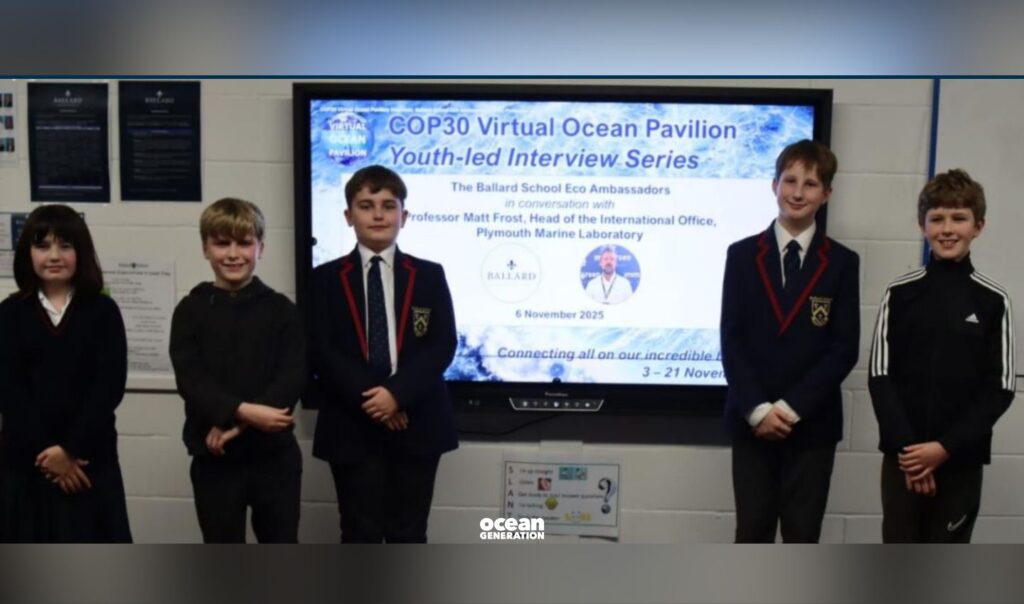
Well in November 2025, Ocean Generation made this happen. We worked with 5 young Eco Ambassadors at Ballard School in New Milton, UK as they interviewed Professor Matt Frost, Head of International Office at Plymouth Marine Laboratory as part of the COP30’s Virtual Ocean Pavilion’s series of youth-led interviews.
What is COP?
COP (Conference of the Parties) is the UN’s annual climate summit. During the conference, parties negotiate climate action and review progress. COP is also a platform for scientific studies and activism. Read more about COP here.
Ocean Generation’s Youth Engagement Lead, Dr Gemma Connell, mentored the young people through the process and was so proud when they wrote their own (very difficult!) questions for Matt, giving him a bit of a grilling!
It was heartwarming to witness Matt’s honesty in his responses to the young people. He discussed where the problems are in the COP space, and most importantly – what we can all do to protect our Ocean.
Join the Eco-Ambassadors as they ask Professor Matt Frost the important questions around COP30, the importance of the Ocean and what his favourite sea creature is.

So, you wake up at COP30, what are you doing? What does you day look like? (Freddie’s question)
Matt’s answer:
Wake up, check the times on everything. You don’t want the changing time zones to lead to you missing events and meetings.
Planning where to be that day, making a list of places and times I need to be somewhere.
The first day and the start of every day includes a lot of security. Making sure everyone has identification and the right badges to get through the security measures that are in place protecting some of the world’s most important people.
COP can involve hundreds of thousands of people, so just working out where everything and everyone is, is a challenge. Got to make sure you know where the good coffee shops are.
“The fun bit is that you walk around, and you meet all sorts of people.”
Not just meetings or speaking events, but you might find yourself doing some media as well.
“Recently I was at a COP when I bumped into Tom Heap, who is one of the presenters on Countryfile. He said, ‘do you mind doing an interview while you’re here that we can put on Sky News?’”
Every evening there will be a reception, meeting all sorts of people from government ministers to scientists.
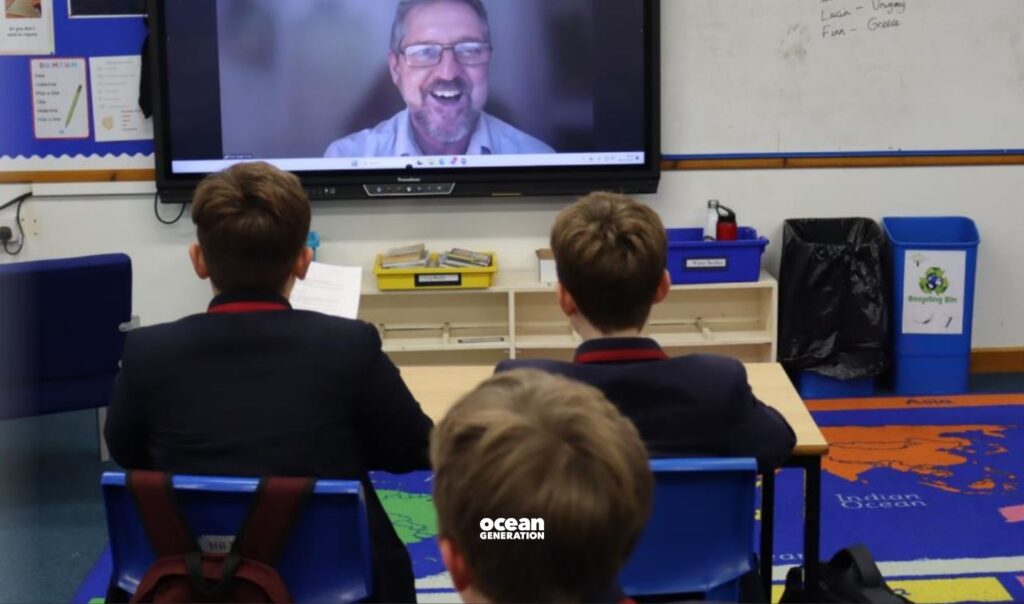
What are your expectations coming to the COP30 and what would you consider a successful result for the Ocean? (Toby’s question)
Matt’s answer:
“For many years, when people came to these meetings, they were all worried about what was going on on the land.” Matt noted how the conversations would focus more on forests, trees and farming, “but nobody really thought about the Ocean.”
“So, over the years, we’ve had to explain to people that our planet – and I’m sure you know this, being Eco Champions – is mostly water. The Ocean is most of our planet. So, one of the main things that is a success every time we go to these meetings is to make sure that everybody is talking about the Ocean.”
Every leader talking about the Ocean is a success. The next step is encouraging action.
The people at these meetings don’t have the power, they can go back to their governments to convince them to act.
For example, the UK government going home and taking direct action to address the issues in the Ocean through laws and funding would be a real success from COP30.
The Ocean has gradually grown in prominence on the global stage.
Ocean Generation’s note:
Six years ago, COP25 recognised the connection between Ocean and climate, COP26 called for Ocean action to be integrated in work programs and COP27 encouraged countries to include the Ocean in their national climate goals.
At COP30, the Ocean was formally included in the COP30 Action Agenda. It was the first time a COP decision included a specific Ocean angle, with goals and commitments. This included investing in marine conservation and renewable energy, reducing the environmental and ecological impacts of shipping, supporting aquatic food solutions and reducing the impact of coastal tourism.
Practical tools were launched at COP30 to help achieve the goals. An Ocean Breakthrough Implementation Dashboard was launched to monitor country progress across those five areas (nature conservation, renewable energy, shipping, marine food and tourism). The Marine Biodiversity and Ocean Health Breakthrough and Roadmap gives the standards and methods to tackle Ocean assessment and actions.
While COP30 included the Ocean more deeply than previous COPs, there was a lack of financing and binding agreements to ensure countries take action. It is now over to them to build on the outcomes of COP30 and take Ocean action.
How can governments encourage private companies to not use single use plastic? (Leo’s question)
Matt’s answer:
If I could get a brilliant answer to that it would solve one of the world’s biggest problems. So, I will do my best and honestly, Leo, if you and your friends have got ideas… we need some help with this.”
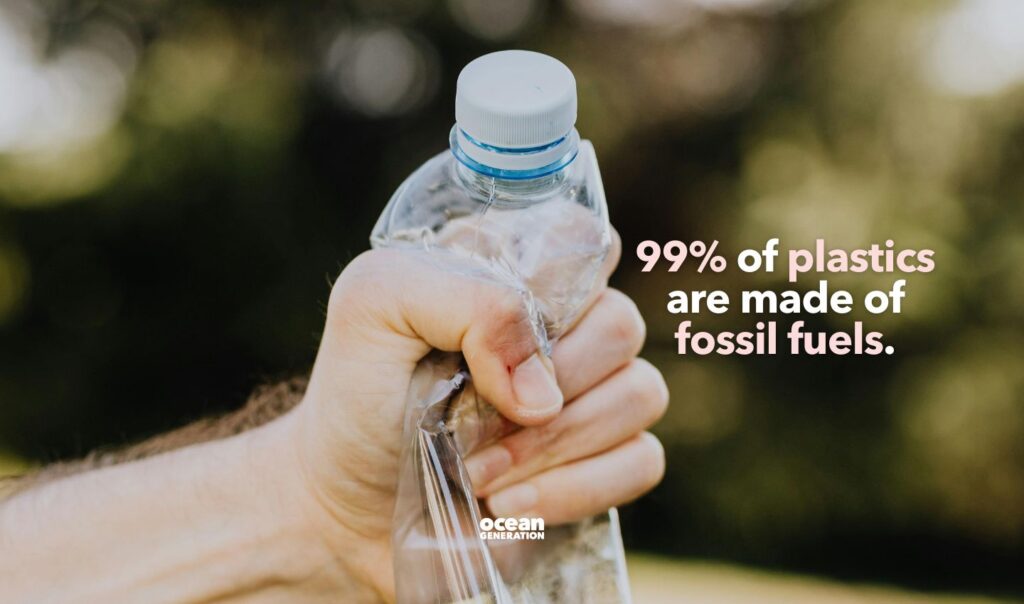
As well as a pollution problem, plastic is also a climate problem, as 99% of plastics are made from fossil fuels.
Governments like the UK have been banning things like plastic straws, microbeads in cosmetics and charging for plastic bags.
Should we ban everything? “I don’t think that will help ultimately…”. It is a global problem and needs to be addressed globally. The Global Plastics Treaty is an opportunity for governments to make a real difference. Read more about the treaty here.
Companies are willing to cut down on plastic but need incentives to do so. Encourage is a great word in the question.
“They [world leaders] can make it difficult by putting taxes [on plastic] and making it more expensive to use single use plastic. But ultimately… governments will only do so much.”
Government action can be encouraged by what we buy and say.
Ocean Generation’s note:
The difficulty in banning all plastics, is where we haven’t yet found an affordable alternative which does the same thing as plastic but doesn’t have the impact on the environment.
This is particularly difficult in industries such as healthcare, where single use plastic is often used to keep patients, doctors and nurses safe. We can’t ban all plastics without looking at the other consequences that might have – context is very important! Read more about if plastic is good or bad here.
Are there plans to introduce whale friendly cruise routes to reduce noise pollution in the seas? (Lily’s question)
Matt’s answer:
Yes there are plans for whale friendly shipping, but we really need the shipping companies to start doing this now.”
Ships are big contributors to climate change, producing air pollution as they burn fossil fuels to power their engines.
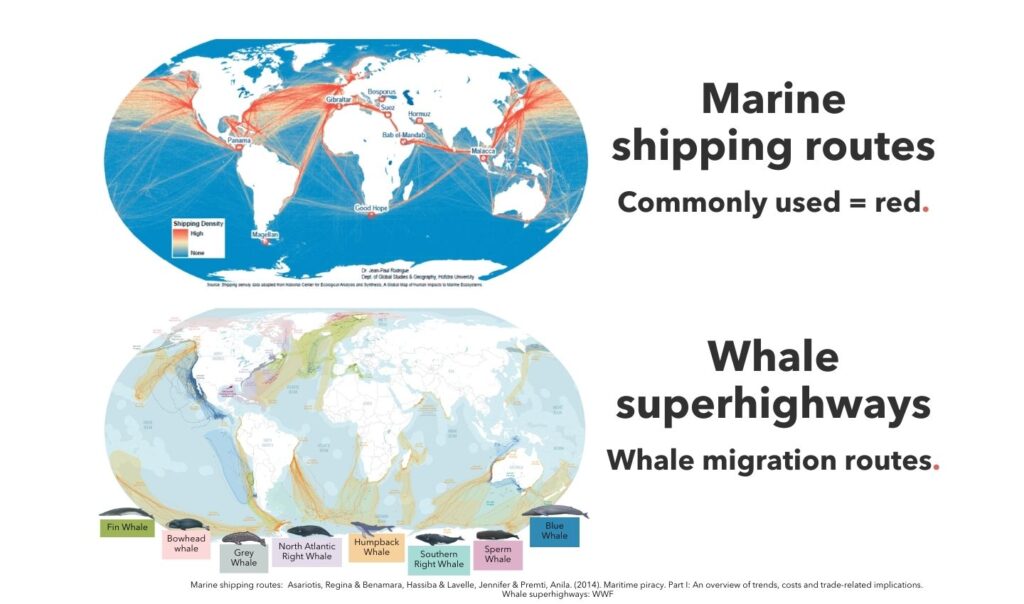
There are much more ships on the Ocean at any one point – over 70,000. There are two main ways they cause issues for marine life such as whales – noise pollution and ship strikes.
Whale friendly cruise routes hope to minimise the impact of both of those things. The International Maritime Organisation and the International Whaling Commission are trying to implement rules on shipping. These include go slow zones where whales are known to feed and live, and special routes that avoid whale “hotspots”.
It is down to the individual ships, shipping companies and cruise companies to act on the advice of the IWC and IMO.
Ocean Generation’s note:
Exact numbers of whales killed by ship strike are difficult to quantify, as data suffers from underreporting. But recent work has shown that global shipping traffic overlaps with about 92% of whale species’ ranges. Of that, only 7% of the areas that are high-risk for whale-ship collisions have any protective measures. Protecting just 2.6% more of the Ocean would eliminate many high-risk areas with minimal impact to shipping times.
As Matt says, there are two main solutions. Slower ships give all marine life more time to dive or swim away, avoiding collision. Slowing ships to 10 knots can reduce the the number of whale deaths by 30%.
The other approach is by re-routing ships from collision hotspots. In the Mediterranean, rerouting ships away from the Hellenic Trench has reduced the risk of collision by an estimated 27%.
95% of hotspots fall within the exclusive economic zones of a country, so, each country can implement protective measures in coordination with the IMO recommendations. Whale safe routes are in reach.
Does creating the infrastructure in order to host COP30 and transporting leaders there outweigh the positive outcomes of the conference? Do you assess the carbon footprint and is there a plan to offset this? (Sean’s question)
Matt’s answer:
The concern is that we might not have these conversations if we weren’t all in the same room. Yes, we carbon offset but there is going to be some environmental impact. We think the positives outweigh the negatives.
“At the moment we feel that if we didn’t go, who’s going to be there to speak up for good science, to speak up for the Ocean, to speak up to actually look after things? And the danger is that, if all the people who feel very strongly about carbon decide not to go to the COP for the reasons you’ve said, then it could be left with the people that don’t really care much about it.”
Ocean Generation’s note:
One of the intentions of hosts Brazil was to deliver a carbon-neutral COP30. They delivered this by offsetting their calculated emissions. They calculated that COP30 produced 130,000 tonnes of carbon dioxide or equivalent greenhouse gases. To counter this, they purchased 130,000 UN-certified carbon credits. The money for these credits goes towards carbon-negative projects, so COP30 is carbon-neutral in principle.
However, this calculation only considers the emissions generated by hosting. The bulk of emissions are likely generated by the travel of attendees. There is no comprehensive calculation of these emissions. A large part of that relies on the attendees doing what they can to reduce environmental impact.
“You can ask me again next year and maybe I’ll answer differently, but this year the positives outweigh the negatives.”

Is COP30 going to be used for fossil fuel deals like the last one? (Sean’s question)
Matt’s answer:
“I can’t promise that that will never happen at any COP.”
Some people will want to see things stay as they are, but there are enough people with good intentions there to know that good things will come out of it. Multilateralism (global cooperation), connecting climate change messages to individuals and accelerating implementation are all main aims of this COP.
I’m hoping the good things will outweigh the others.
Ocean Generation’s note:
At COP29, there was backlash against the hosts, Azerbaijan, as one of their senior officials was found to be conducting meetings to coordinate fossil fuel deals. Find out more of what happened at COP29 in our article here.
What is the extent of the impact of pumping carbon back into the Ocean underneath the seabed? (Lily’s question)
Matt’s answer:
It’s possibly helpful, capturing carbon dioxide from the atmosphere and tapping it. However, there are risks – if it leaks it can cause harm to marine life and return the carbon to the atmosphere.
We’re asking that we [humans] don’t do it until we know more about the effects of it.
“If you went to the doctor and said, ‘I feel really poorly,” and the doctor said ‘well, I’ve got some medicine for you… I don’t know if it works very well, and it might make you really ill, but I don’t actually know that we haven’t tried it.’ Would you take that medicine?
What key messages would you like us to share with our school community in order to look after the Ocean better? (Freddy’s question)
Matt’s answer:
There is an ongoing problem that people don’t really understand the Ocean. They don’t know what is in it, they don’t really understand it, and they don’t know that we rely on it.
We need to remind people that most of our planet is Ocean. When the Ocean is healthy, we are healthy.
We rely on the Ocean for our food, our breathing air and our mental health.
If we look after the Ocean, it will look after us.
Read more about how the Ocean keeps us alive here.
Toby’s surprise question: What is your favourite marine animal?
Matt’s answer:
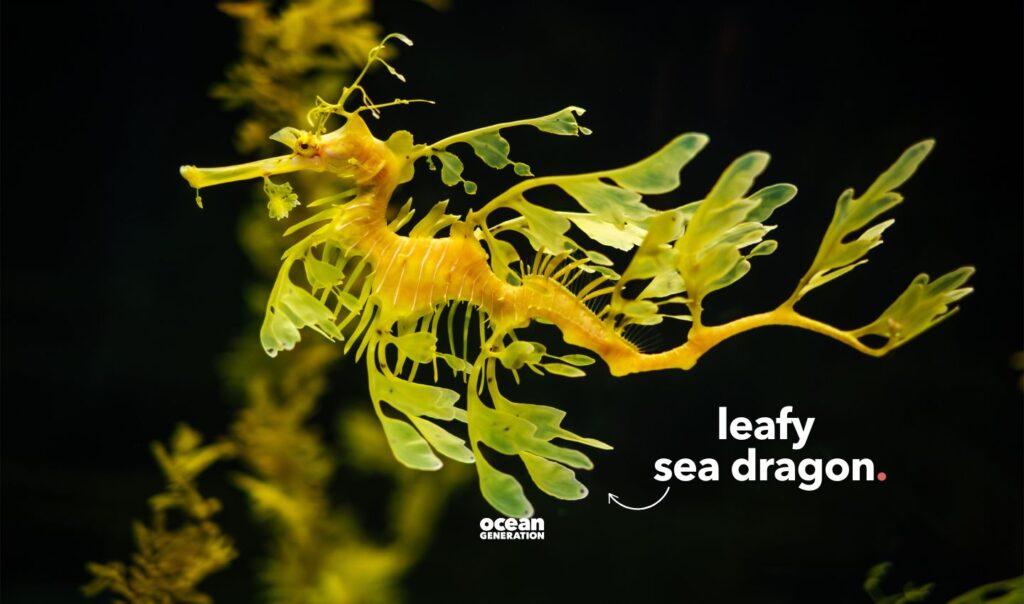
Matt’s answer: the leafy sea dragon!
Ocean Generation’s note:
The leafy sea dragon is a fish closely related to seahorses and pipefish. The name of its genus, Phycodurus, comes from the Greek words for seaweed (phûkos) and skin (derma), encapsulating its amazing camouflage. It can change the colour of its skin to match the seaweed around it and moves through the water like a drifting frond.
Leafy seadragons typically swim solo, but will court each other through dance, mirroring each other’s movements. Males carry the eggs for 6-8 weeks on a specialised patch under their tail, before ‘giving birth’ to 100-250 20mm baby leafy sea dragons (about the size of a peanut).
Matt asked the students: what would the Eco Ambassadors’ message be for him to take to COP30?
Toby answered, “Plant more trees!”
A week later, the Eco Ambassadors planted 30 saplings after school, doing their bit to live up to Toby’s “plant more trees!” answer.
Alex Bellars, teacher at Ballard School said:
“Our Eco-Ambassadors absolutely loved taking part in the Virtual Ocean Pavilion interview with Professor Matt Frost on 6th November, 2025. It was inspiring to know that their voices and ideas formed even a tiny part of the global conversation at COP30!
It was especially cool to know that our pupils were the youngest participants in the Virtual Ocean Pavilion – and therefore possibly at the whole of COP30 itself. And it was wonderful to see Toby grab the chance to put Matt on the spot with an unplanned bonus question!”